
Reviewed · HISTORICAL TOURS
Asakusa: 1400-year history exploration
Asakusa has a living 1400-year pulse. I love how this tour strings together the major temple gates with the street-level scenes around Nakamise. I also like the simple, satisfying touch of included Japanese snack sampling that keeps the whole route from feeling like schoolwork.
One thing to consider: this is a half-day walking route through crowded, noisy lanes, so hearing the guide takes focus, and comfortable shoes matter.
Small-group size helps, too. When guides like Amy, Sachi, or Aki are in a good rhythm, you get room for questions, and the history actually lands. Still, you’ll be walking at a steady pace for about 3.5 hours, so if you want a super short, quiet visit, this format might feel long.
Key Highlights Worth Packing Into Your Day
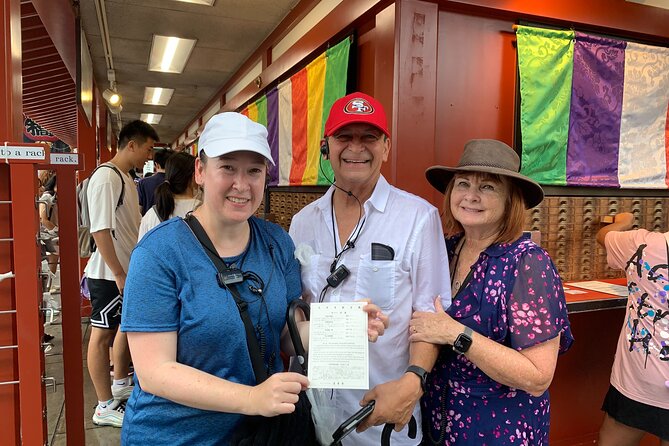
- Licensed, English-speaking guides with an earphone system, so you can follow the story even in crowds
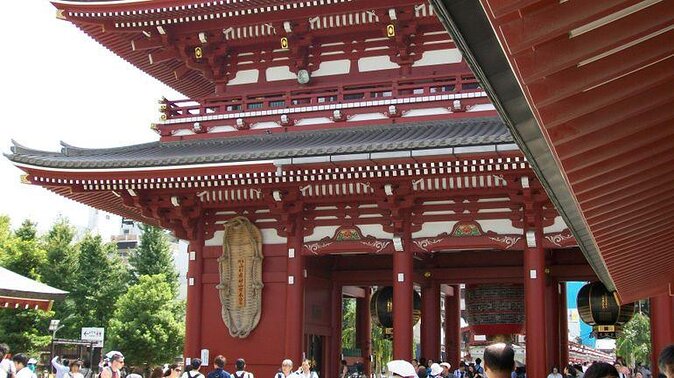
- Senso-ji’s gate sequence (Kaminarimon to Hozomon to the main grounds) mapped in a way that feels logical, not chaotic
- Nakamise-dori snack sampling with familiar favorites like melon pan and sweet puffed rice
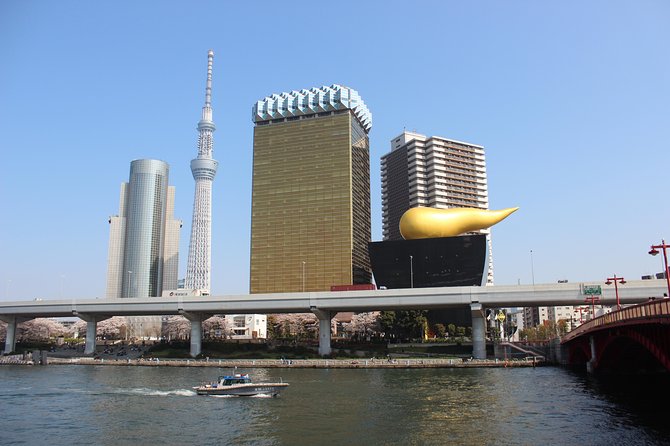
- Sumida River start for big Tokyo views, including Tokyo Skytree and Asahi’s golden-flame landmark
- Rokku area after the temple surge, with Denboin Street leading into a more old-school entertainment-district vibe
Starting on the Sumida River, Not at the Temple
The tour kicks off with a smart choice of opening scene. You start at the Sumida River and cross over by Azumabashi Bridge, which gives you an easy way to understand where Asakusa sits in the city. You also get those “only Tokyo” visuals right away, including Tokyo Skytree in the distance and Asahi Breweries headquarters with its famous golden flame object.
This matters because Asakusa can feel like one big tourist zone until you see the river connection. Once you have that geography in your head, the next stops feel less random.
A few more Tokyo days worth comparing
- Tokyo: Imperial Palace and Shogun Historical Walking Tour
★ 5.0 · 2,251 reviews - Tokyo: Imperial Palace Japanese History Walking Tour
★ 4.9 · 987 reviews - Yanaka Walking Tour: Historic and Traditional District of Tokyo
★ 5.0 · 530 reviews
Asakusa Culture Tourist Information Center, a Useful “Control Room”
Next you walk to the Asakusa Culture Tourist Information Center. It’s described as more than just a typical info stop, and it’s also one of Asakusa’s newer sightseeing anchors. It’s an 8-story building, which makes it the kind of place where you can grab orientation fast.
I like this stop because it sets you up for better decisions right away. Even if you do not plan to spend long inside, it helps you understand the shape of the neighborhood, and that turns the rest of the walk into a guided path rather than wandering.
Kaminarimon Thunder Gate: The Photo Moment With Context
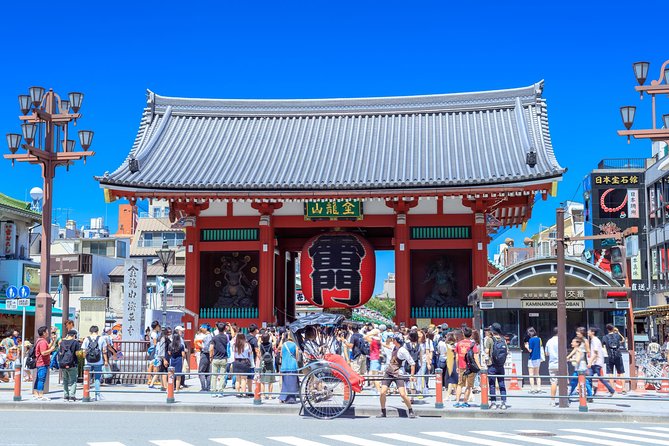
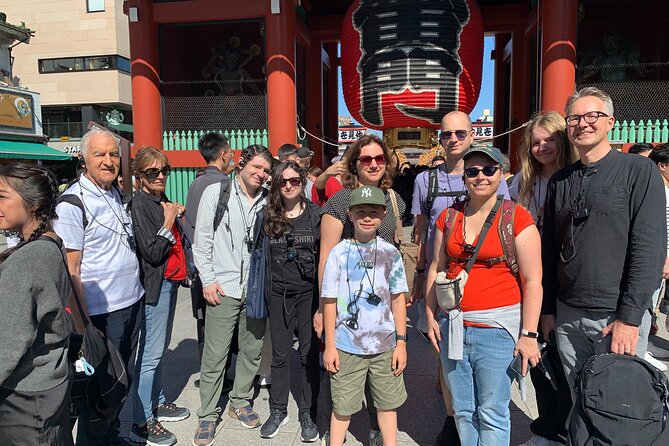
Then you’re at Kaminarimon, the outer gate that leads toward Sensō-ji. The big red lantern and the statues are exactly why people come here, but a good guide makes the scene feel more than just a snapshot.
Kaminarimon is a useful checkpoint for your brain. Once you stand under it, you know you’re entering the core of the temple approach, and you can start watching how the crowd flows.
If you’re sensitive to noise, take a breath here. This is usually when Asakusa’s energy turns up. The earphone system helps, but you still need to stay close enough to hear clearly.
Nakamise-dori: Snacks, Souvenirs, and the 250 m of Temptation
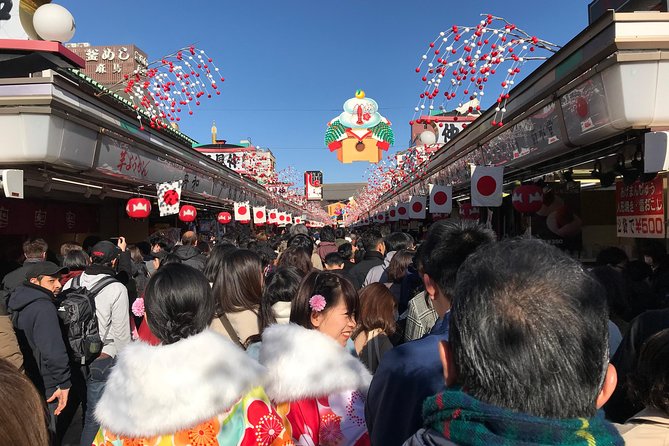
After Kaminarimon comes Nakamise-dori shopping street, the approach lane that links Kaminarimon to Sensō-ji’s main gate. It’s short, about 250 meters, but it’s lined with souvenir shops and food stalls.
Here’s where the tour’s value shows up for me. Included snack sampling keeps you from guessing. You get a selection of classic Japanese treats such as melon pan, rice dumpling, rice cracker, and sweet puffed rice. That’s more than “a little tasting.” It’s enough variety to match different tastes, and it also gives you a baseline so you know what to look for if you keep shopping after the tour.
Your guide also points out where to buy souvenirs. That helps because Nakamise can blur together. With direction, you avoid the “grab the first thing you see” trap and instead buy with purpose.
Same corner of Japan, a different kind of day:
- Mt Fuji and Hakone 1-Day Bus Tour Return by Bullet Train
★ 5.0 · 26,383 reviews - 1-Day Tokyo Bus Tour
★ 5.0 · 14,250 reviews - Tokyo: TOKYO SKYTREE® Admission ticket
★ 4.5 · 11,192 reviews - Tokyo: teamLab Planets TOKYO Digital Art Museum Entry Ticket
★ 4.6 · 9,779 reviews
Hozomon Treasure-House Gate: Where the Walk Starts to Feel Deeper
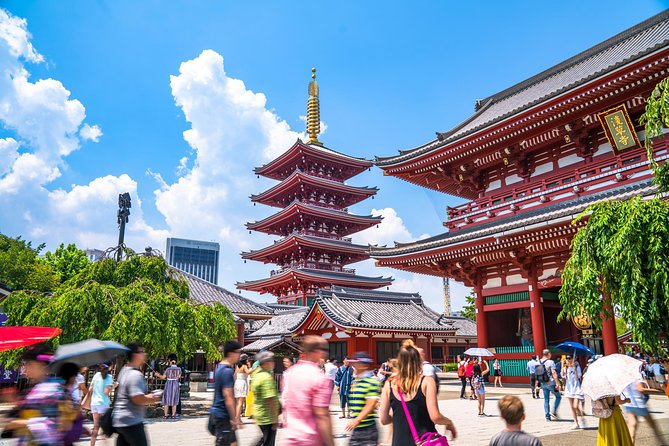
Next is Hozomon, the inner gate called the Treasure-House Gate. It’s described as a two-story structure, which is a nice contrast after the single-plane feel of the outer gate. This is one of those transitions that helps you understand why temple grounds often have layered entrances: each gate changes the mood.
This stop is brief, but it’s a key mental shift. Once you pass Hozomon, you’re not just walking through a shopping approach anymore. You’re moving into the bigger spiritual and historic heart of the complex.
Sensō-ji Grounds and the 1400-Year Story
Then comes the main event: Sensō-ji Temple. Between Hozomon and the main hall, you get plenty to see, and the walk is timed so you have a chance to actually look rather than just follow.
Two things stand out in how this stop is framed.
First is the story of origin. You learn that Sensō-ji dates back about 1,400 years, and that it was founded by two fisherman brothers. Whether you’re a big history nerd or just curious, this kind of origin story gives the buildings meaning. It’s not random stone. It’s part of a long chain of Tokyo life.
Second is the visual anchor points. You’ll see the five-storied pagoda, described as the second highest in Japan at 53 meters, built in 942. The pagoda also holds Buddha’s ashes, which gives you something grounded to look for while you’re moving through the grounds.
Crowds can get intense here, especially during peak hours. The earphone system is helpful, but your best trick is simple: keep your attention on the guide cues. If you wander too far to look at something specific, you might miss the explanation that makes that something worth your time.
Asakusa Shrine: When Buddhism and Shinto Share Space
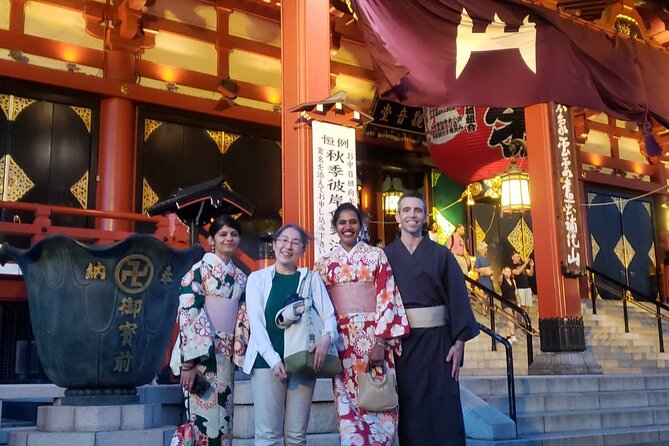
After Sensō-ji, the route transitions to Asakusa Shrine. This stop has a neat cultural angle: the area is known for the coexistence of a Buddhist temple and a Shinto shrine on the same premises, sharing origins and worshipers.
That’s the kind of fact that’s easy to hear and hard to picture until you see the physical reality of the space. The tour’s job is to help you make that mental bridge, and this is a good place for it.
If you’re curious about Japanese religion, this shrine stop is also a good moment to ask follow-up questions. The tour format is built for that small-group interaction.
Denboin Street and Rokku: The After-Temple Neighborhood Feel
Finally, the walk moves into Rokku, Asakusa’s traditional entertainment district area. You go through Denboin Street, described as a street that takes you out of the temple spotlight and into a more old-fashioned, always-moving local scene.
I like the way this ending is timed. Sensō-ji can overwhelm your senses if you’re there too long. By pushing into Rokku after, you get contrast. Temple drama up front, then real street atmosphere.
The tour describes Denboin Street as a route that lets you walk through the Meiji period into the present, with stops along the way. Even if you do not memorize every detail, the shift in architecture and street energy helps you understand how Asakusa keeps changing without fully losing its older identity.
Price, Inclusions, and What You’re Paying For
At $91.17 per person for about 3 hours 30 minutes, the price makes sense if you value three things: guided interpretation, convenience, and snack sampling.
You get:
- An English-speaking guide
- An earphone guide system so you can hear while walking
- Included Japanese sweet snacks (the melon pan, rice dumpling, rice cracker, and sweet puffed rice list is specifically mentioned)
- A set route that hits the big landmarks plus the Rokku-area contrast
Not included are hotel pickup and any drinks beyond what the tour specifies. That means you should plan to buy water or other items yourself if you’re thirsty, especially on hot or humid days.
I’d call this good value if your goal is to leave Asakusa with a clearer sense of what you saw and why it matters. If your goal is only photos and casual wandering, you might decide you can do it on your own. But if you want story, snack breaks, and a guided flow through confusing crowd zones, the included structure is the part you’re really paying for.
Pacing, Crowds, and How to Stay Comfortable
This tour includes a moderate amount of walking, and it runs in all weather. That sounds standard until you remember where you’re going: gates and market lanes around Sensō-ji can get loud and packed.
Here are the practical things that make or break your experience:
- Wear comfortable footwear, because the route relies on steady walking.
- Bring water if you’re sensitive to heat. Vending machines are available.
- If the area is crowded, stay close enough to the guide so the earphones work well for you.
- If you tend to get distracted by shops, remind yourself that snack sampling is included, so you can shop after the explanation rather than during it.
Also note the group is capped at 8 travelers. That size helps you hear the guide and ask questions, without turning the walk into a free-for-all.
Who This Asakusa Tour Fits Best
This works especially well for:
- First-time visitors who want the main temple experience plus neighborhood context
- People who like history, but also want street-level culture and food
- Travelers who prefer a small group, not a big bus-and-queue style tour
It may be less ideal for:
- Anyone who needs a very short visit, because the route is built as a half-day walk
- People who dislike crowds at temples, since Sensō-ji draws large numbers
Families are welcome, and children under 6 can join without charge but are not entitled to the inclusions.
Should You Book This Asakusa History Walk?
Book it if you want a guided path through Asakusa that covers the highlights in a way that makes sense. The combination of Sensō-ji storytelling, the gate-by-gate structure, and included snack sampling is the right mix for an afternoon walk.
Skip it if you want a quick photo stop with no explanation, or if you plan to avoid temple crowd areas at all costs. In that case, a self-guided plan might feel better.
My quick take: if you’re the type who likes to understand what you’re looking at, you’ll get your money’s worth.
FAQ
How long is the Asakusa 1400-year history exploration tour?
It runs about 3 hours 30 minutes.
What is included in the tour price?
You get an English-speaking guide, an earphone guide system, and a selection of Japanese sweet snacks (including items like melon pan, rice dumpling, rice cracker, and sweet puffed rice).
What snacks will I get?
The tour includes Japanese sweet snacks such as melon pan, rice dumpling, rice cracker, and sweet puffed rice.
Where do I meet for the tour?
Meet at Burger King Asakusa Azumabashi in Taito City, near Kaminarimon. The tour ends back at the meeting point.
Do I need to arrange hotel pickup?
No. Hotel pickup and drop-off are not included.
Is the tour all weather?
Yes, it operates in all weather conditions, so dress appropriately.
What if I have dietary needs?
If you have special dietary requirements, contact the provider when booking so they can do their best to accommodate you. Bottled water is recommended, and vending machines are available.
Fresh options around Tokyo
- Tokyo: Nikko Kegon Falls Lake Chuzenji Toshogu Temple & More★ 4.9 · 12 reviews
- Tokyo: Samurai History Walking Tour★ 5.0 · 12 reviews
- Harajuku: Kawaii Fashion and Pop-Culture Tour★ 4.7 · 12 reviews
- Tokyo: Mt. Fuji & Lake Kawaguchi Instagram Full Day Trip★ 4.1 · 12 reviews
- Shibuya Tokyo: Modern Kintsugi Workshop in Shibuya★ 5.0 · 12 reviews
- Tokyo: GTR Guided Daikoku Experience at Night★ 5.0 · 12 reviews
- Tokyo: Daikoku JDM Car Culture Tour★ 4.6 · 12 reviews
- Mt Fuji Private Day Trip from Tokyo with English speaking driver★ 5.0 · 13 reviews
Historical Tours, compared.
World Heritage Shirakawa-go and Experience Tours from Kanazawa
Read our review →
Imperial Palace and Shogun Historical Walking Tour
Read our review →
World Heritage Kyoto & Nara Uji Authentic Matcha Experience
Read our review →
Kyoto Gion: 2-Hour Geisha Culture & History Walking Tour
Read our review →
World Heritage Shirakawa-go Morning Guided Tour
Read our review →
Hiroshima Historical Walking Tour – Why A-Bomb was Dropped
Read our review →
Hiroshima Peace (Heiwa) Walking Tour at World Heritage Sites
Read our review →Browse the lists this tour appears in