Reviewed · KYOTO TOURS
Let’s make only one original onigawara in the world!!
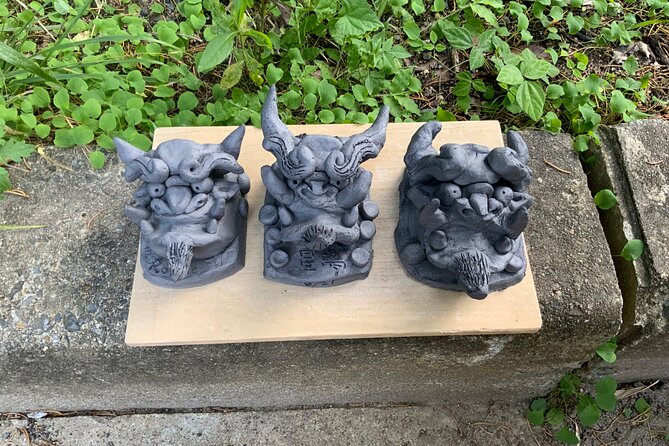
Some things are better than souvenirs. In this onigawara workshop in Honshu, you get to make Onigawara by hand, and I love how Mr. Yuya keeps the process clear and encouraging while you build the demon face in clay. The one drawback is simple, you should expect soil on your clothes, so wear something you do not mind getting dirty.
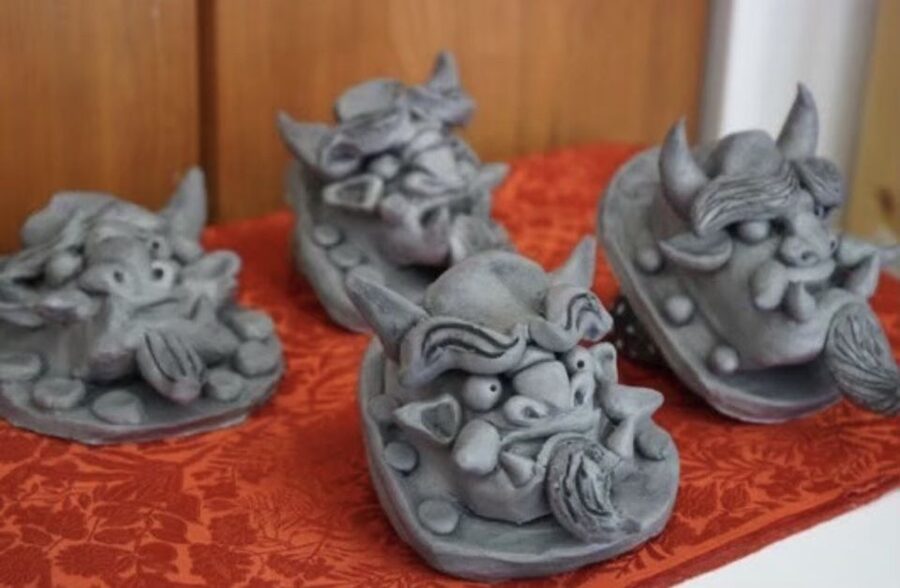
You will start at the Kawarakoubouyouya workshop, shape a small tile the traditional way, and then Mr. Yuya fires it in a kiln at the factory. After that, your piece is shipped to your home, and the color shift takes time, typically 1 to 2 months as it develops the traditional silver look.
This is also a great choice if you like quiet, hands-on time with culture in the background. The group stays small, limited to 5 participants, and the host greets you in English and Japanese, which helps when you want to ask questions and still focus on your hands.
Key things to know before you go
- Hands-on onigawara making, not just watching
- Mr. Yuya’s step-by-step guidance, even if you feel clumsy
- Kiln firing happens after class, at the workshop’s factory
- Color changes over 1 to 2 months as the tile develops its traditional look
- Shipping is extra, paid separately on the day
- Wear work clothes, because the process uses soil
Entering The Kawarakoubouyouya Onigawara Workshop
I like workshops where the craft does not feel like a performance. This one, set at Kawarakoubouyouya, is built around making one small piece of roof-tile art you can take home later, and it stays practical from start to finish.
You meet at the shop, search for Kawarakoubouyouya on Google Maps, and plan to arrive with enough buffer time to find the right entrance and get settled. One useful heads-up: some people have found the GPS to be off by about 40 meters to the east, so do a quick street check if you do not see the workshop right away.
The vibe is friendly and focused. In a small group, you get time to concentrate on the clay and ask questions without feeling rushed, and that matters because onigawara is not complicated in theory, but it is detail work in practice.
A few more Kyoto days worth comparing
- PERFECT KYOTO 1-Day Bus Tour
★ 5.0 · 13,518 reviews - Kyoto: Fushimi Inari, Kinkakuji, Bamboo Grove 1 Day Bus Tour
★ 4.8 · 4,316 reviews - Kyoto: Tea Ceremony in a Traditional Tea House in Kiyomizu
★ 4.9 · 3,519 reviews
What is an onigawara, really?
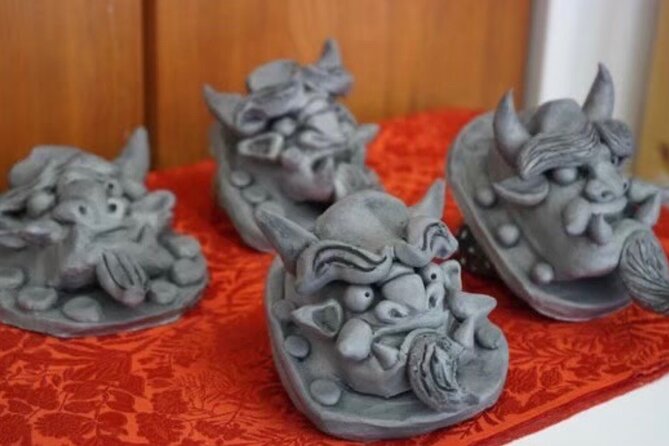
Onigawara are the carved roof ridge tiles famous for their ogre and guardian faces. They have connected to Japanese roof protection for roughly 1,400 years, guarding against evil and helping with rainwater run-off at the roof’s ends.
This experience translates that meaning into something you can physically do. Instead of learning about it only through photos, you shape a miniature version that carries the same idea: your hands make the form, and time plus firing finishes the transformation.
Making Your Own Demon-Faced Tile, With Soil and Patience
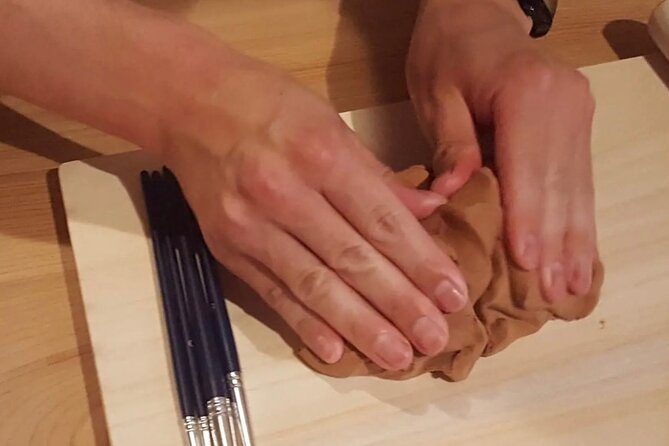
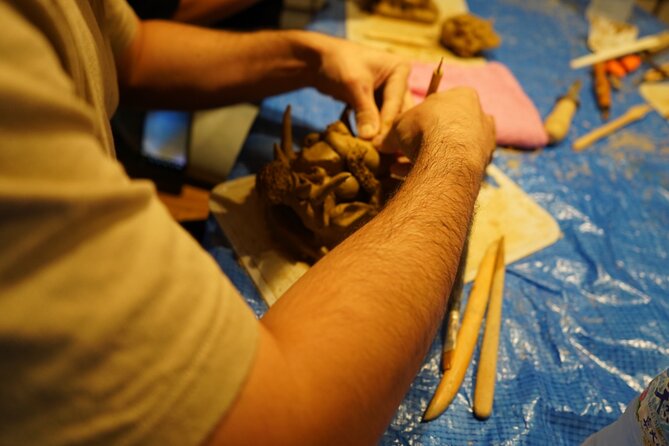
The core of the class is simple to describe and fun to do: you make a small handmade onigawara tile by hand. You start with a lump of clay and work it into pieces, then assemble the face and details so it reads as a recognizable guardian form.
I love that the process is designed to be approachable. Mr. Yuya explains the steps, and you get guidance on how to manipulate the clay so your pieces hold together, especially when you are making small parts that have to match up cleanly.
The class method: shape, assemble, and get the face right
You will work through multiple steps. The goal is not just to make a blob, it is to build a demon face with enough structure to look intentional after drying and firing.
A helpful way to think about it: you are doing two jobs at once.
First, you are sculpting the form so it feels right in your hands.
Second, you are planning for how it will survive drying and kiln firing, which means clean edges and steady assembly.
If you are worried about having clumsy hands, do not overthink it. The class is built around an established procedure that helps you get to a finished tile without needing prior sculpture experience.
Same corner of Japan, a different kind of day:
- Kyoto Geisha Walking Tour: Gion District & Hidden Gems
★ 4.7 · 3,273 reviews - Kyoto: Tea Ceremony Ju-An at Jotokuji Temple
★ 4.9 · 3,207 reviews - Kyoto: Gion Magical Night Walking Tour with Geisha Trivia
★ 4.9 · 2,393 reviews - Kyoto: 45-Minute Tea Ceremony Lesson Experience
★ 4.3 · 2,378 reviews
Who the workshop fits best
This is a good fit if you want hands-on culture and you like making something you can later compare to what you see on Japanese rooftops.
It also works for different age groups. The experience is described as catering to children and people with clumsy hands, which is a nice way of saying you do not need to be an artist to succeed.
If you feel anxious about getting things wrong, you may like this even more. The step-by-step pace and the small group setting make it easier to stay calm, focus on the next task, and move forward.
From Workshop Clay to Factory Kiln: What Happens After You Finish
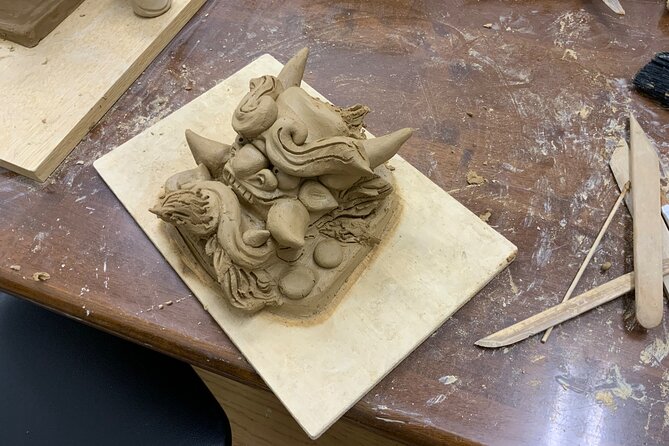
When you finish shaping and assembling your onigawara, you do not wait around for firing. Mr. Yuya fires the tile in a kiln at the factory after the workshop.
That separation is worth planning for. You leave with the satisfaction of completion, but you do not leave with the final fired result in the same moment. Your finished tile comes later when the firing and color development are complete.
This workflow also helps the quality. Clay crafts depend on proper drying and firing temperatures, and having the firing handled by the workshop means your piece follows their process rather than guesswork at home.
The Waiting Game: Silver Color Changes in 1 to 2 Months
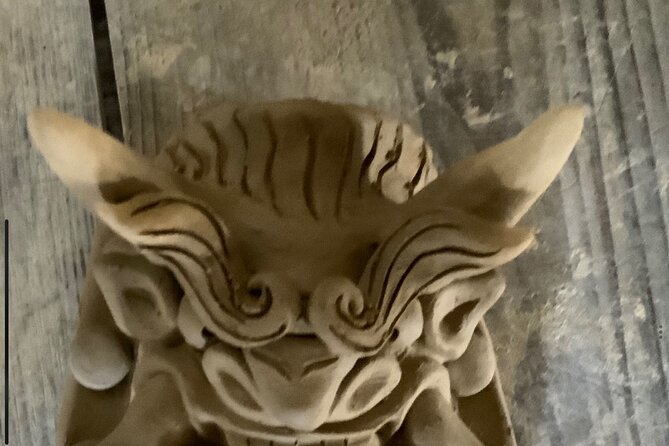
Here is the coolest part, the time between making and receiving.
After firing, your onigawara tile is shipped to your home, and the color transition takes time, typically 1 to 2 months. During that period, the tile changes to the traditional silver color and then arrives.
I think this is a smart touch for a travel souvenir. It stops the usual pattern where you buy something and it sits in a bag the whole trip. Instead, you make something now, then you get a real parcel later, with a visible reminder of the moment you created it.
Just manage your expectations. You are not getting an instant finished tile for immediate display today. If you are planning a move or you are not sure you will be home for deliveries, you should plan around that shipping window.
Price and Value: Is $90 Worth It?
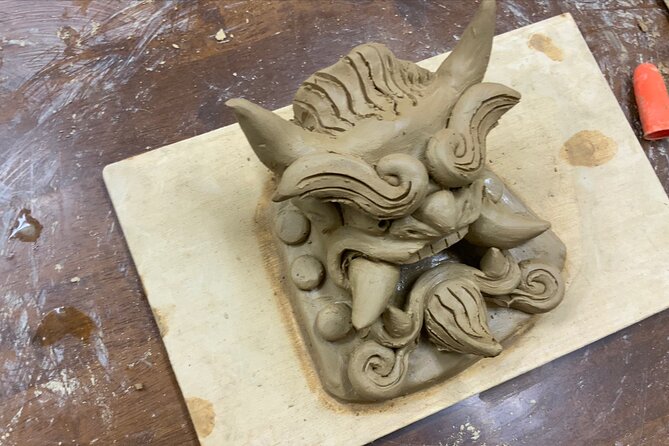
The price is listed at $90 per person for a duration of 2 hours.
At first glance, that may feel like a premium workshop cost, but value-wise it makes sense when you look at what is included versus what is not.
Your class time includes the hands-on process, the materials used during the workshop, and the kiln firing step handled afterward.
Shipping is not included and is paid separately on the day, as a shipping fee.
So the true cost for your final tile depends on shipping to your home. Still, the experience is not just a quick craft session. You are making a culturally specific roof tile form, you are getting guided help, and you are letting the workshop handle the technical firing part.
If you compare this to buying a finished onigawara as a souvenir, making one yourself also adds the meaning. The finished piece becomes personal, because you built the face, piece by piece, with instruction rather than just purchase.
Small group value
You are limited to 5 participants. That small size matters because it supports real feedback during the clay steps, and it helps you avoid feeling like you are on a conveyor belt.
This also makes it easier for the host to offer help in English and Japanese without slowing everyone down.
What to Wear and How to Plan for Mess
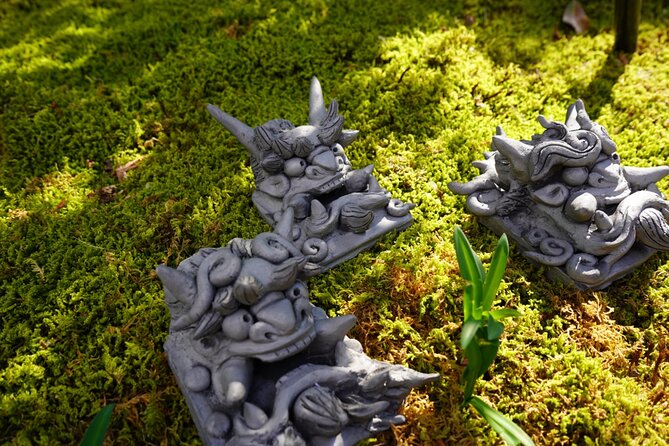
Because the experience uses soil, plan to get a little messy.
Wear clothes you can tolerate getting dirty. Closed-toe shoes are a smart move, since you will be working around clay and handling pieces that might break apart if you are overly careful or overly cautious.
It is also a good idea to keep your phone and valuables secured, then focus on the hands-on work. You do not need to worry about special gear, but you do need comfort and freedom to move your hands.
One more small planning tip: if you are combining this with sightseeing, schedule it earlier rather than too late. Clay work makes you slow down, and you will likely feel more focused right after it ends, before fatigue sets in.
Timing: A 2-Hour Workshop With a Long Finish Line
The experience duration is 2 hours.
That sounds short, and it is, but the time is not wasted. You are moving through multiple steps of making the tile, and you will benefit from the pace because onigawara requires careful assembly.
If you are the kind of person who likes structured activities while on vacation, you will probably like the format. You get a clear start and finish for the making, then the firing and shipping happen behind the scenes.
After your tile is fired, shipping is handled to your home, and delivery follows after the color develops into the traditional silver look.
Practical Details That Prevent Headaches
Meeting point
You meet at KAWARAKOUBOUYOUYA, the workshop shop. Search for it on Google Maps.
Because the GPS can be a bit off, give yourself a little extra time and be ready to walk about 40 meters east if needed.
Shipping and payment
Shipping is not included. You pay the shipping fee separately on the day.
You also should know that you are receiving your tile after firing, shipped to your home. The timing for arrival is tied to the 1 to 2 months color change, so plan for a later delivery rather than expecting it to land right after class.
Languages
The host or greeter speaks English and Japanese.
That matters if you want to ask questions while you work. You can also point at what you are trying to do, and you are more likely to understand the instructions clearly.
Cancellation
Free cancellation is available up to 24 hours in advance for a full refund. If your Kyoto or Honshu schedule is still shifting, this helps you keep flexibility.
Should You Book This Onigawara Workshop?
If you want a souvenir that is more than pretty, book it.
You should go if you like:
- Hands-on making, with guidance you can actually use while your clay is still soft
- Traditional Japanese roof culture, especially the demon-face roof tile idea
- A small group craft experience where the host can slow down and explain
You might skip or rethink it if:
- You need your finished item immediately for your trip plans, since the tile arrives after firing and a color shift over 1 to 2 months
- You are not comfortable with soil being part of the process, because you will need work clothes
For most people visiting Kyoto or nearby, this is one of the more meaningful ways to take a cultural object home. You make the form, you understand its protective role, and then you wait for the silver color to finish the story.
FAQ
How long is the onigawara workshop?
The experience lasts 2 hours.
Where is the meeting point?
You meet at KAWARAKOUBOUYOUYA. Search for it on Google Maps.
What languages does the host speak?
The host or greeter speaks English and Japanese.
How much is the experience, and what are the extra costs?
The price is $90 per person. Shipping is not included, and you pay the shipping fee separately on the day.
Do I get the finished onigawara tile immediately?
No. After your tile is fired in a kiln, it will be sent to your home. The tile typically changes to the traditional silver color after 1 to 2 months and arrives after that.
Is the workshop suitable for kids or beginners?
The experience is described as catering to children and people with clumsy hands, and you do not need to be a sculptor to make a tile.
What should I wear?
The class uses soil, so wear clothes that may get dirty.
Fresh options around Kyoto
- Sushi or Traditional Japanese Cuisine in a Kyoto Home with Emika★ 5.0 · 20 reviews
- Hammer Pattering Experience of Ring★ 5.0 · 20 reviews
- Kyoto Customized Private Tour: See Top Attractions in 1 Day★ 4.7 · 20 reviews
- Kyoto UNESCO World Heritage Site Private Tour with a Premium Van★ 5.0 · 20 reviews
- Private photo shoot & walk in Kyoto – Professional photo shoot★ 5.0 · 20 reviews
- TREASURES of Kyoto: Fushimi Inari, Kiyomizu Temple, and more!★ 5.0 · 20 reviews
- Kyoto Private Tour Full Day with Local Guide&Nara Option(PerGroup★ 5.0 · 20 reviews
- Kyoto: Discover Every Bit of Kyoto Imperial Palace★ 4.4 · 21 reviews
Kyoto Tours, compared.

Fushimi Inari, Kinkakuji, Bamboo Grove 1 Day Bus Tour
Read our review →
Tea Ceremony in a Traditional Tea House in Kiyomizu
Read our review →
Kyoto Geisha Walking Tour: Gion District & Hidden Gems
Read our review →

Gion Magical Night Walking Tour with Geisha Trivia
Read our review →