
Reviewed · WORKSHOPS
Calligraphy Class for Beginners in a Century-old House
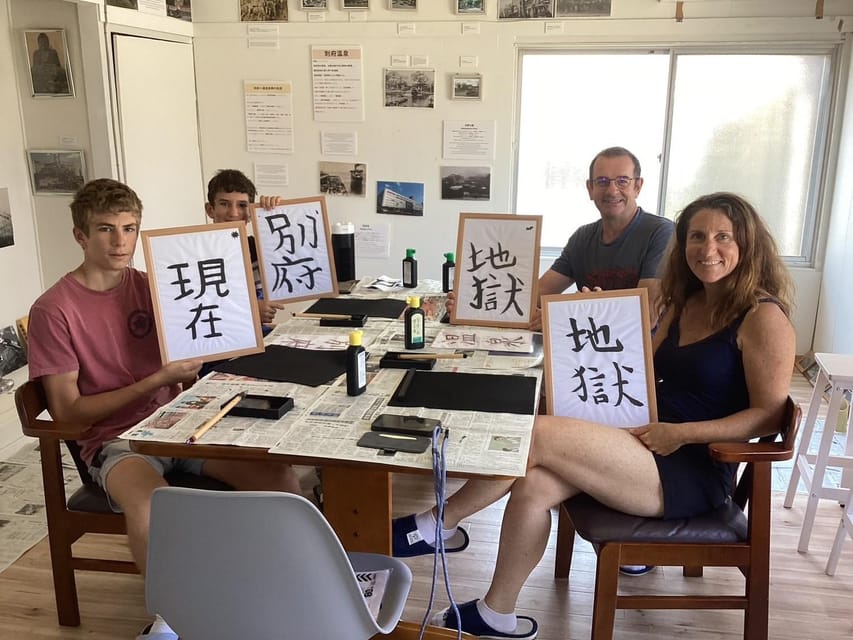
Ink beats souvenirs in Beppu. This hands-on Japanese calligraphy class lets you learn simple characters tied to the area, then leave with a framed masterpiece you can display at home. The setting is part of the appeal too, since the lesson happens in a century-old house that makes the whole hour feel calm and personal.
Two things I like a lot are the small group setup and the way you practice immediately. You also get guidance on both technique and calligraphy etiquette, so it is not just brush movements. One consideration: the workshop is not suitable for people with mobility impairments.
Quick Highlights for Your Calligraphy Class in Beppu
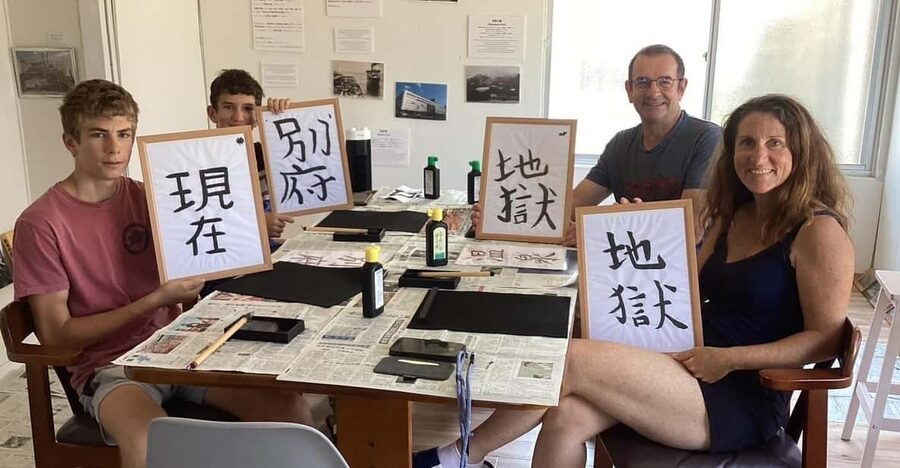
- Century-old house setting that feels authentic, not staged
- Beginners welcome, with no prior calligraphy needed
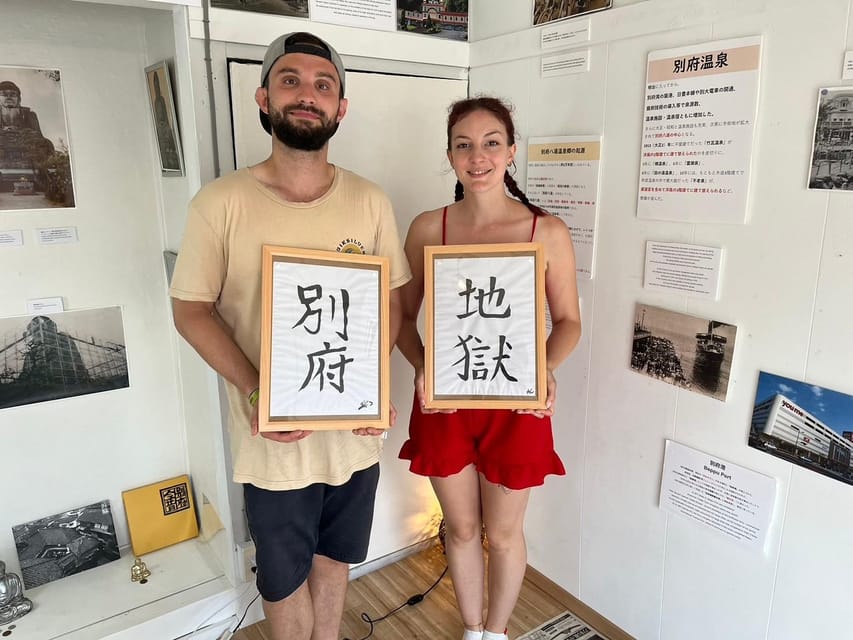
- Local character themes like 温泉 (onsen) and 地獄 (jigoku)
- Tools and frame provided, so you can focus on learning
- Small group of 4 max, which keeps feedback personal
- A take-home piece, so your practice turns into something real
Inside a Century-Old House, Where Japanese Calligraphy Feels Personal
Beppu in Kyushu has a way of giving you variety in one place. You can soak in hot springs, then switch gears and do something quiet and precise. This class fits that switch perfectly. Instead of racing through big-ticket sights, you get a skill you can actually use, even if you only ever write a few characters again.
The workshop takes place in a traditional, century-old house. One reason I think that matters is simple: it changes your mindset. You tend to slow down. You are not fighting noise or crowds, and the physical space gives you a strong sense that calligraphy is something people do at a human scale.
The atmosphere is also beginner-friendly. You are not expected to be artistic. You are expected to learn. In practice, that means you get time to get comfortable before you start producing the character you will take home.
One more plus, based on how the classes are described, is that the instructor is attentive and encouraging. Names that come up include Liko and Hana, and the common thread is warmth, patience, and feedback that helps you feel steady instead of rushed.
More of Beppu worth an open tab:
- Open-air theater “Tao- no-Oka” Drum TAO Live performance
★ 4.8 · 191 reviews - Become a local! A Walking Tour of Arts, Crafts & Onsen Culture
★ 5.0 · 36 reviews - Bamboo Lantern Workshop
★ 5.0 · 25 reviews
What You Learn: Onsen, Jigoku, and Etiquette Behind Each Stroke
The core of the class is learning how to write Japanese characters with traditional tools. You will focus on local-flavored words, including 温泉 (onsen), meaning hot spring, and 地獄 (jigoku), meaning hell. Yes, hell. It sounds dramatic, but that contrast is exactly why this works as a cultural souvenir. You are not just copying random kanji, you are connecting the writing to Beppu’s identity.
You also learn the etiquette side of calligraphy, not only the technique. That is valuable because it is part of what makes the art feel respectful and intentional, not just decorative. Even if you never become a calligraphy person, picking up those small rules helps you understand why Japanese calligraphy has a reputation for discipline and form.
A practical detail you should plan for: the class is run in English and Japanese. The instructor can also work with Chinese and Traditional Chinese, which can be helpful if you speak those languages better than English. If you are comfortable with at least some Japanese, you may feel extra confident, but the class is still designed for true beginners.
There is also an honesty point worth knowing. The instructor is described as highly experienced, but not a professional calligrapher. That usually means you should expect a friendly learning experience and clear teaching, rather than a “master-level” artistic display. For beginners, that is often a better fit.
Brush Basics in a Small Group of 4
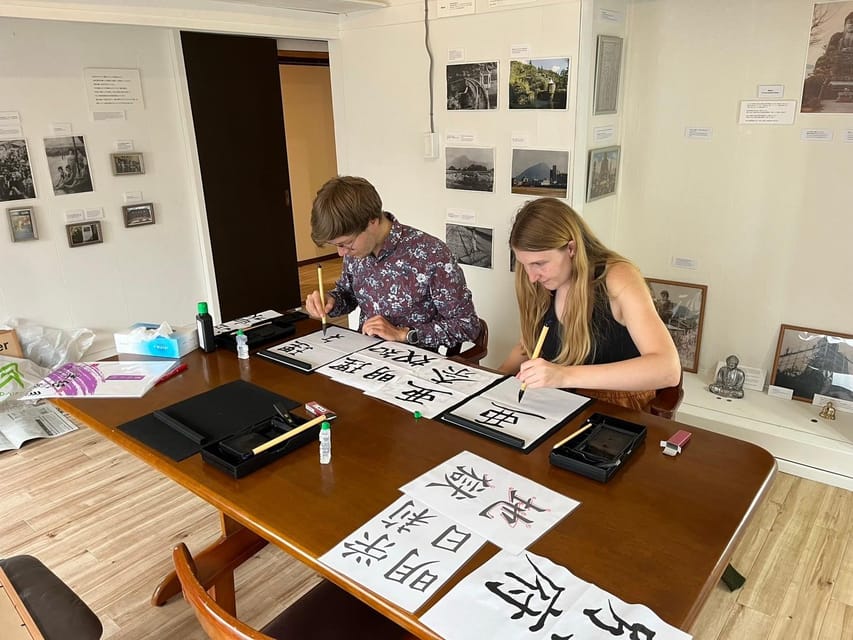
This is a short class, 1 hour, and it is organized as a small group limited to 4 participants. That cap matters more than it sounds. When you are learning something physical and precise, you need quick feedback. With a tiny group, you are less likely to get stuck guessing.
The typical flow is:
- First you learn basic elements and how to hold and guide the brush
- Then you practice the foundational strokes
- After that, you start writing your first full character or word
One technique detail that comes up in the descriptions is getting the stroke weight right, basically understanding that brush pressure and timing change how the character looks. In other words, the goal is not perfect handwriting in one try. The goal is learning how a character is supposed to be shaped so it looks intentional.
Because you get enough practice time before your final attempt, you will not feel like you are being graded. The whole point is building confidence. One-on-one attention can even happen if the group ends up smaller.
So if you worry you might be “bad at art,” this is the right kind of art lesson. Calligraphy is learnable. It is about method, not talent.
The Words You Can Choose, and Why That Matters
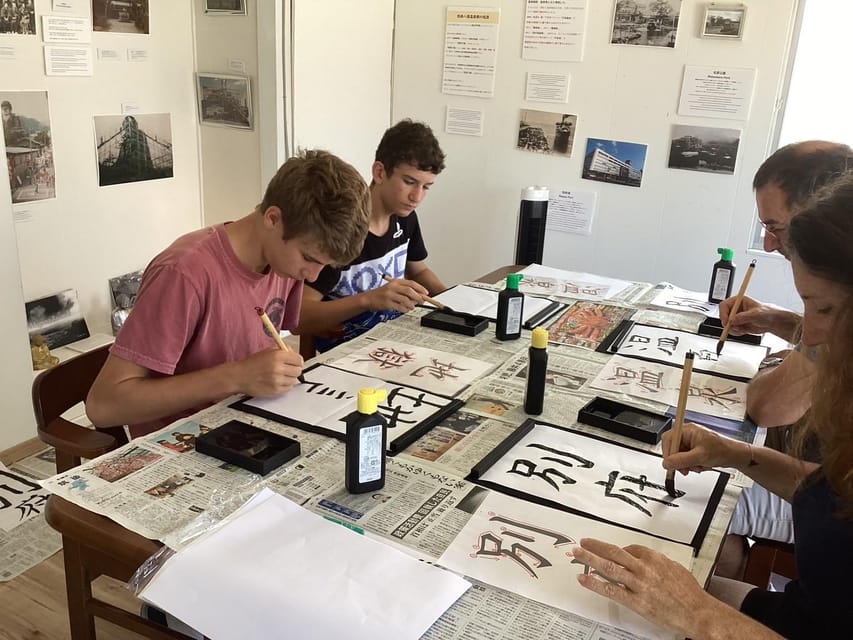
The class is built around Beppu-related characters, with 温泉 and 地獄 named as examples. But you are not limited to only those two forever. In the descriptions, people mention choosing what they write, and at least one class includes writing 桜 (sakura) instead of a Beppu word.
This flexibility is important for two reasons:
- It turns the workshop from copying into decision-making. You get to choose what you will remember.
- It helps you match the lesson to your interests. If Beppu is your base, go with onsen or jigoku. If you are thinking of Japan more broadly, picking something like sakura can feel more personal.
Even if you choose one word, you still benefit from the technique you learn. Your strokes carry over to any character you try later.
Same corner of Japan, a different kind of day:
- Calligraphy Class for Beginners in a Century-old Japanese House
★ 5.0 · 18 reviews - Beppu: Bamboo Lantern Workshop
★ 5.0 · 14 reviews - Become a local! A Walking Tour of Arts, Crafts&Onsen Culture
★ 5.0 · 13 reviews
Your Take-Home Framed Masterpiece, Plus What to Expect After
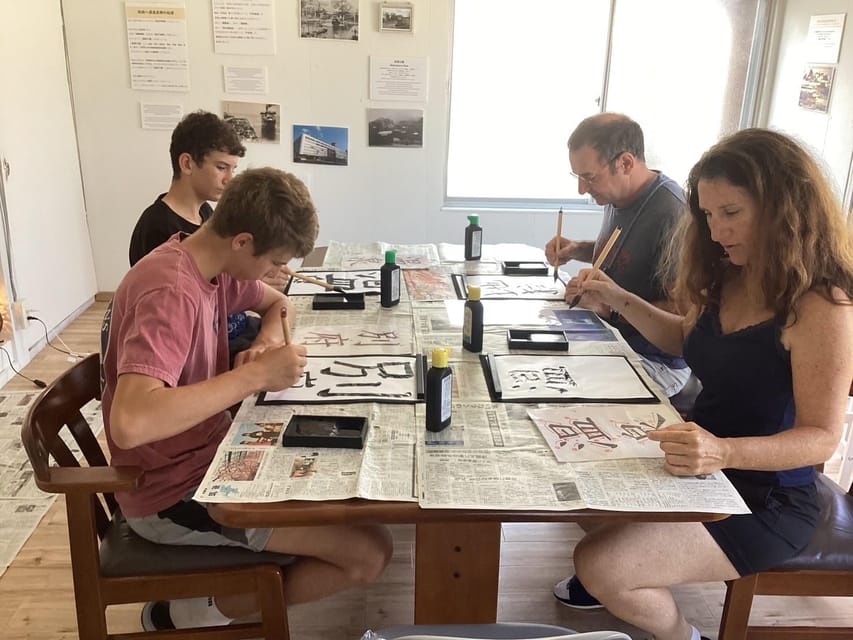
You get a full set of calligraphy tools provided, and you also get a frame. That is a big part of the value because buying supplies in Japan is not complicated, but it can get surprisingly expensive once you include paper, brushes, ink, and the right display.
At the end, you produce a personalized masterpiece. Then you take it home framed, which means you do not need to figure out how to dry, store, or display your work. You can just hang it.
This also affects how you approach the lesson while you are in the room. Because you know you will take something home, you tend to stay focused. You practice the strokes with a purpose, and the final attempt feels more meaningful than a disposable worksheet.
One thing to set expectations: because the class is 1 hour, you are not learning “everything about calligraphy.” You are learning the basics well enough to write at least one word with confidence. Think of it as a strong starter kit, not a lifelong apprenticeship.
Price and Value: What $32 Includes (and Why It’s a Fair Deal)
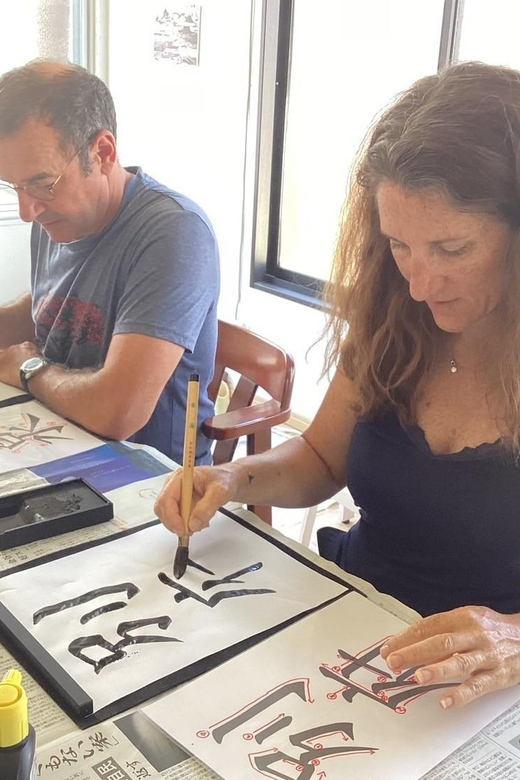
At about $32 per person, this class is priced like a simple cultural activity. But it is not just paying for time. You are also paying for materials and a finished product.
Here is what you get:
- Full calligraphy tool set provided
- Frame provided
- Your finished piece to take home
That changes the math. If you tried to recreate this experience on your own, the supplies and the proper framing would add up fast, and you would still need an instructor to show you how to hold the brush and get the stroke weight right.
So for value, I would call it a smart “learn and keep” purchase. It is not a tour of attractions where you pay to be delivered to a viewpoint. It is more like buying a skill lesson that ends with a tangible result.
One note on what is not included: meals and drinks, and transportation to the workshop location. That is normal, but it means you should plan your timing around your Beppu base. Wear comfortable clothes so you can sit comfortably and move easily while practicing.
Before You Go: What to Wear, When to Arrive, and How to Prepare
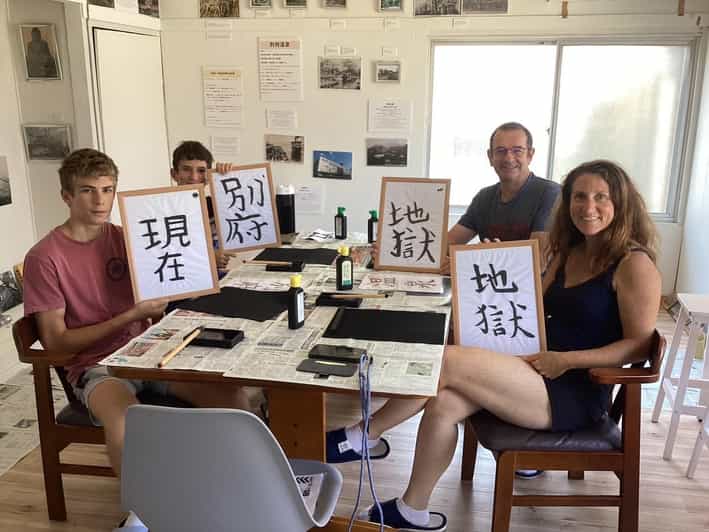
This class is beginner-friendly, but you do want to show up prepared. Wear comfortable clothes. You are working at close range with paper and brush, and you will likely be sitting for part of the session while practicing strokes.
Arrive about 10 minutes early. That extra time helps you settle in, get oriented, and start when the instructor is ready.
Pets are not allowed. If you are traveling with animals, you will need a different plan for your Beppu day.
Also keep your expectations realistic. The workshop is not suitable for people with mobility impairments, so check that before booking if accessibility is a concern.
Who Should Book This Calligraphy Class in Beppu
This class is a great fit if:
- You want a low-pressure creative activity in Japan
- You like hands-on lessons more than museum-style listening
- You want a take-home souvenir that is made by you
- You are the type of traveler who enjoys cultural details like etiquette and technique
It is also a good option if you are visiting Beppu and want something different from hot springs and sightseeing. The hot spring theme pairs nicely with 温泉, and the more dramatic word 地獄 adds personality to your final piece.
If you are an advanced calligrapher looking for strict master-level refinement, you might find the beginner structure limiting. But if you want a solid first step, this is exactly the right size of lesson.
Should You Book This Beginner Calligraphy Class?
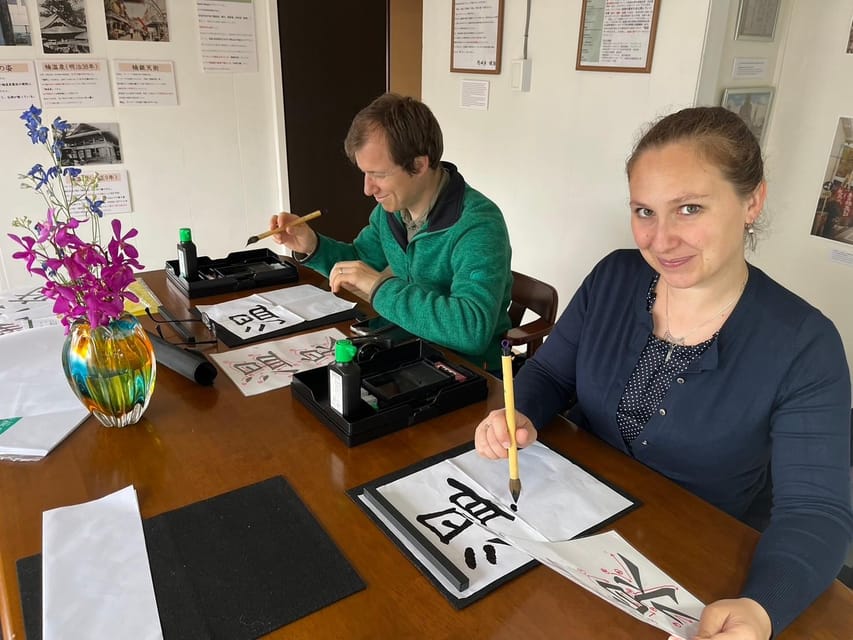
If you like the idea of learning something you can actually do, and you want to leave with a framed piece, I think you should book it. The combination of a small group (4 max), an instructor who teaches in English and Japanese, and tools plus framing included makes it feel like more than a quick activity.
I would pass only if mobility access is an issue for you, or if you are someone who really hates sitting and practicing basic strokes. Otherwise, this is one of those experiences that makes Japan feel close up, not far away.
FAQ
How long is the calligraphy class?
The class lasts 1 hour.
How much does the calligraphy class cost?
It is priced at $32 per person.
Is prior calligraphy experience required?
No prior experience is required. The class is for beginners.
What words will I learn to write?
The class includes learning words such as 温泉 (onsen) and 地獄 (jigoku). You may also be able to choose what to write.
Can I take my work home?
Yes. You take home your one-of-a-kind calligraphy masterpiece, and a frame is provided.
What supplies are included?
A full set of calligraphy tools is provided.
What language is the class taught in?
The workshop is conducted in English and Japanese, and the instructor can also work with Chinese and Traditional Chinese.
What should I wear and bring?
Wear comfortable clothes. The class provides the tools.
Is the class suitable for people with mobility impairments?
No, it is not suitable for people with mobility impairments.
What about cancellation or reserving?
You can cancel up to 24 hours in advance for a full refund. You can also reserve now and pay later.
Fresh options around Beppu
- Beppu: Bamboo Lantern Workshop★ 5.0 · 14 reviews
- Become a local! A Walking Tour of Arts, Crafts&Onsen Culture★ 5.0 · 13 reviews
- Open-air theater “Tao- no-Oka” Drum TAO Live performance★ 4.8 · 191 reviews
- Bamboo Lantern Workshop★ 5.0 · 25 reviews
- Calligraphy Class for Beginners in a Century-old Japanese House★ 5.0 · 18 reviews
- Become a local! A Walking Tour of Arts, Crafts & Onsen Culture★ 5.0 · 36 reviews
Workshops, compared.
Sushi Making Tokyo Roll and Authentic Japanese Sushi Class
Read our review →
Roll and Authentic Sushi Making Class in Asakusa
Read our review →
Ramen Cooking Class at Ramen Factory in Kyoto
Read our review →
Sushi Making Class in a Happi Coat near a Famous Spot
Read our review →
Sushi Making Osaka Roll and Authentic Japanese Sushi Class
Read our review →Browse the lists this tour appears in