
Reviewed · CYCLING TOURS
Kyoto: Full Day Bike Tour
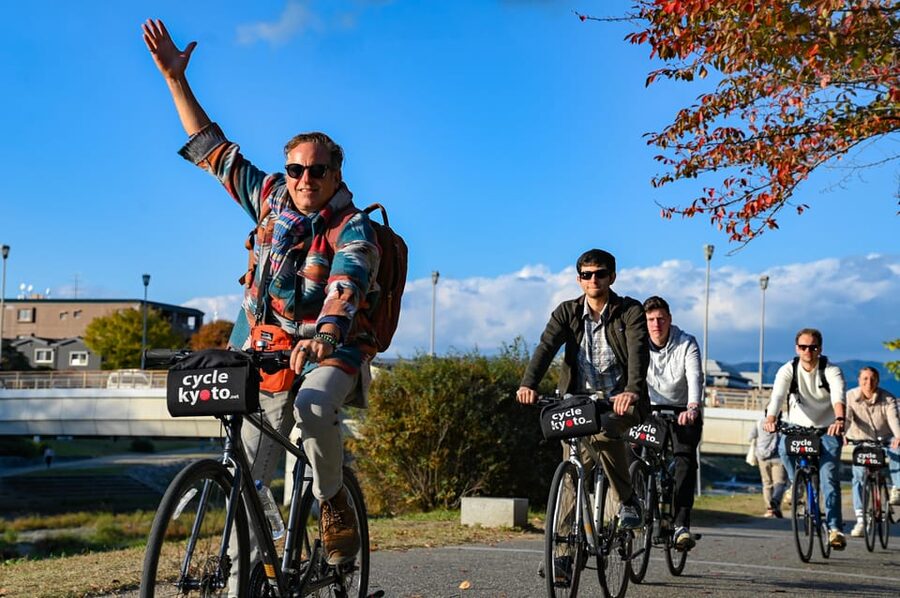
Kyoto on two wheels feels like you beat the crowds. This full-day bike tour mixes famous sights with quiet backstreets so you get the real feel of the city.
I especially like the English-speaking guides who have lived in Japan for a long time, and whose storytelling has shown up in past departures led by Shawn, Juan, Jay, and Karl. I also love that you are not left to plan your own break, because traditional Japanese lunch is included and it can be the kind of meal you would not easily find on your own.
One thing to consider: this is a true full-day experience built for people who can ride comfortably, and it does not run in all weather.
Key points before you ride
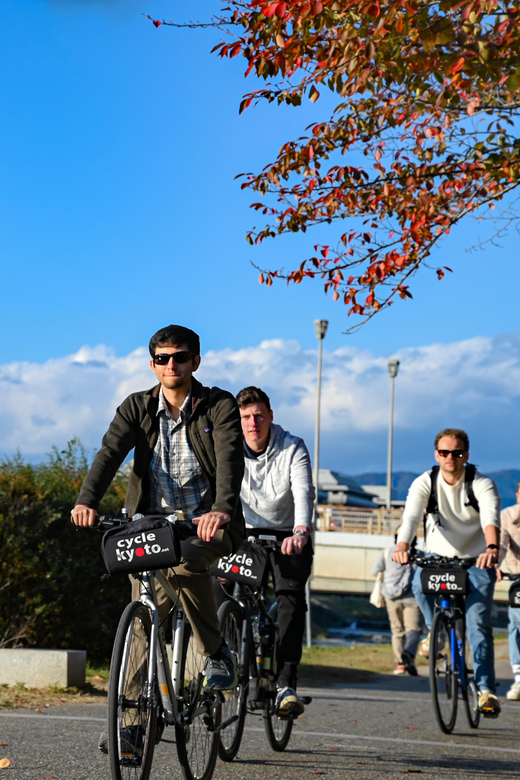
- Small group, up to 9 people, so you spend less time waiting and more time moving through neighborhoods.
- Giant and Trek cross bikes are provided, plus a helmet for the ride.
- E-bikes on request, handy if you want extra help without changing the route.
- Golden Pavilion entry is included, so you spend your time sightseeing, not sorting tickets.
- You get both major icons and lesser-visited streets, including Gion backstreets rather than only the postcard lanes.
A bike-first way to see Kyoto’s temples and backstreets
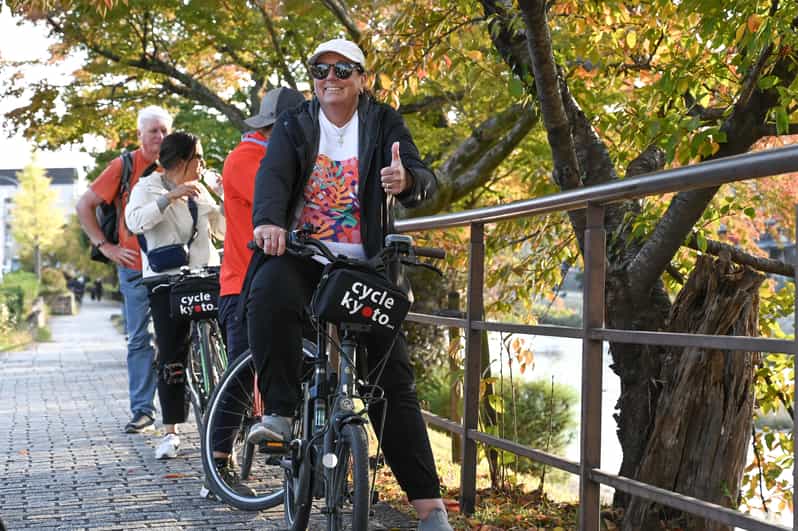
A day in Kyoto can feel like a checklist: temple, shrine, photo, repeat. This tour flips that approach. By riding between stops, you get the shift in scenery that Kyoto is famous for, from temple grounds to neighborhood streets to riverside pauses.
What makes it work is the pace and the route style. You start early, you ride through shopping streets and residential blocks, and you finish with one of Kyoto’s most dramatic shrine walks. With a small group capped at 9, the tour feels more like moving with a local than queuing with a busload.
The guides are the secret ingredient. They are fluent in English and have lived in Japan for a considerable time, and the difference shows in how they explain what you are looking at and how to enjoy it. In past departures led by Shawn, Juan, Jay, and Karl, the consistent theme was practical guidance plus little cultural notes that make each stop click faster.
More Bike Tours in Kyoto
- Hidden Kyoto E-Biking tour
★ 5.0 · 1,843 reviews - Bike Tour Exploring North Kyoto plus Lunch
★ 5.0 · 1,087 reviews - Arashiyama Bamboo Forest & Hidden Gems Bike Tour (Early Bird)
★ 5.0 · 613 reviews
Price and value: what $116 actually buys you
At $116 per person for about 450 minutes (7.5 hours), the value comes from three included items that usually cost extra on your own: bike rental, helmet, and a traditional Japanese lunch. On top of that, you also get the entrance fee to Kinkaku-ji (Golden Pavilion), which can be one of the pricier add-ons if you are self-planning.
The tour also gives you time-structured access to places that are best enjoyed with context. You are not just dropped at the gates. You get guided time at key shrines and temples, plus a route that strings together famous highlights and quieter streets.
Is it expensive compared with doing it on your own? Maybe, if you already know the transit options and plan your tickets tightly. But if you want fewer decisions, safer routing, and less time lost between sites, this price is easier to justify.
Getting started at Cycle Kyoto, and planning your morning
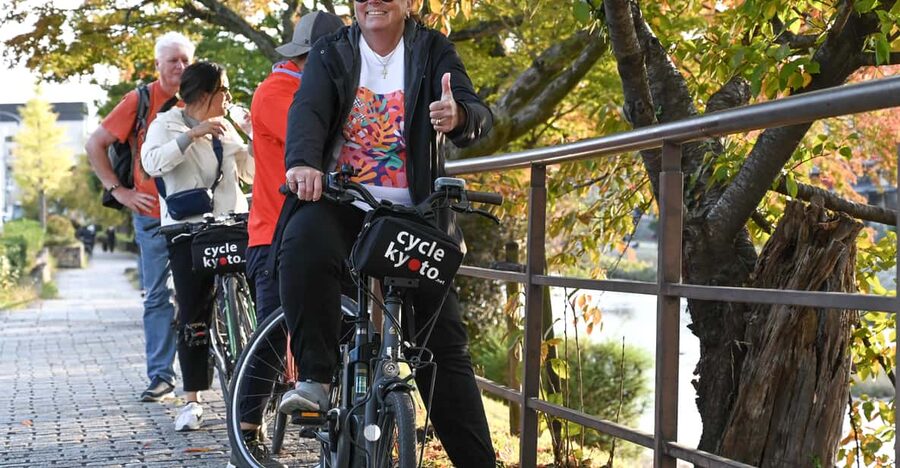
The tour starts at 9:30 AM sharp, and you should be there about 15 minutes early for bike fitting. The meeting point is Cycle Kyoto. That early start matters in Kyoto, because temples and popular areas tend to draw bigger crowds later in the day.
Wear clothes that you can bike in comfortably. Bring comfortable shoes, and avoid high-heeled shoes. You will want a hat, sunscreen, water, and a camera if you like taking photos.
Because storage on bikes is limited, keep personal belongings to a minimum. You can leave larger luggage in the secure shop space during the tour, which saves you from trying to bike around with a backpack that feels like dead weight.
Safety briefing first, then Toji: starting with a major foundation
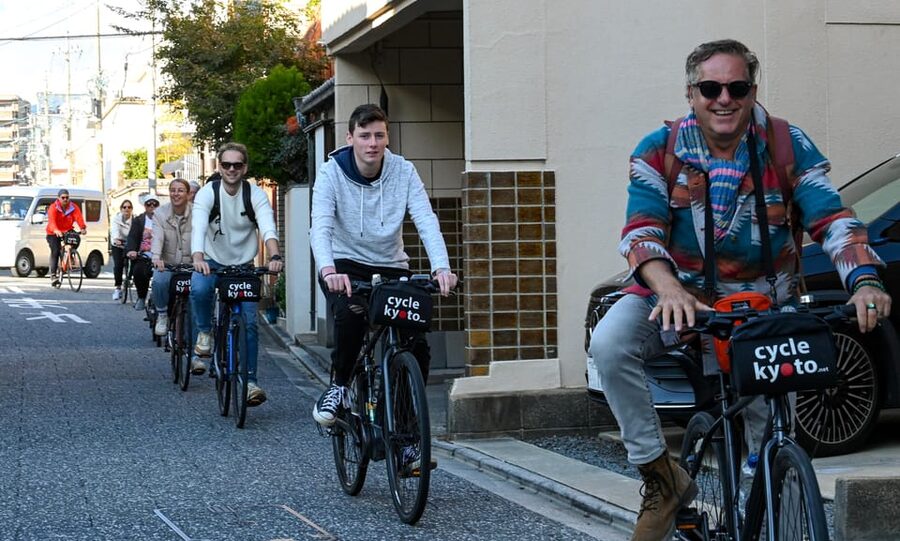
Before you ride anywhere, you get a 25-minute safety briefing at Cycle Kyoto. It is not just about helmets. It sets expectations for how the group moves and how you should handle traffic situations along the way.
Your first real stop is Toji, and it is a smart choice to begin here. Toji is described as the oldest temple in Kyoto, so you get an immediate sense of depth right away. The visit time is about 30 minutes, which is long enough to take in the main temple vibe without turning the morning into a slow crawl.
Then you ride a short stretch to Nishi Hongan-ji, where you get guided time for about 50 minutes. This stop is a good example of why a bike tour is more than transport. You arrive ready to look around, and you have enough guided time to understand what you are seeing before you move on.
Same corner of Japan, a different kind of day:
- PERFECT KYOTO 1-Day Bus Tour
★ 5.0 · 13,518 reviews - Kyoto: Fushimi Inari, Kinkakuji, Bamboo Grove 1 Day Bus Tour
★ 4.8 · 4,316 reviews - Kyoto: Tea Ceremony in a Traditional Tea House in Kiyomizu
★ 4.9 · 3,519 reviews - Kyoto Geisha Walking Tour: Gion District & Hidden Gems
★ 4.7 · 3,273 reviews
Sanjo arcade to Shinsen-en gardens to Kitano Tenmangu
After the temple leg, you shift into street life. You ride north through the Sanjo Shopping arcade, which feels different from temple compounds. It is a reminder that Kyoto is not only shrines and walls, it is also shops, daily errands, and everyday movement.
Next comes a quick stop at Shinsen-en gardens. Even with limited time, garden pauses work well on a bike tour because they reset your eyes and break up the schedule. It is also a chance to cool down and regroup.
Then you head to Kitano Tenmangu Shrine. Here you get guided touring for about 1 hour, including walking the grounds. This is a strong anchor for the middle of the day because shrine time is different from temple time, and the guide helps you notice details that you might miss if you were just snapping photos quickly.
Golden Pavilion at Kinkaku-ji, with entry included
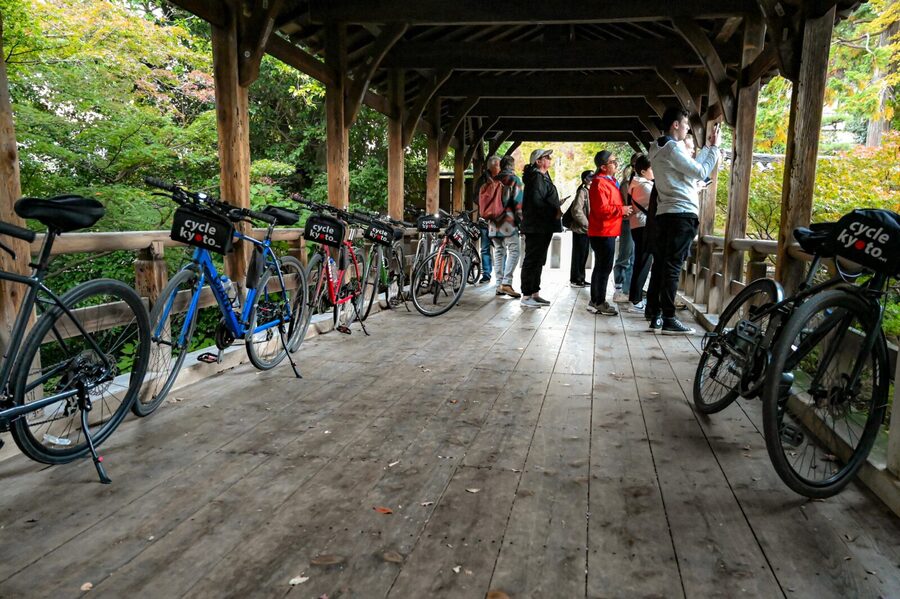
From Kitano Tenmangu, you move toward one of the most recognizable sights in Kyoto: Kinkaku-ji, the Golden Pavilion. The big advantage here is that entrance fee is included, so you do not have to stop and manage ticket time during the busiest part of your trip.
You spend about 25 minutes exploring the Golden Pavilion, and you still get enough total time around the area to take photos and enjoy the setting. The guided framing helps because the pavilion is so visually dominant that it is easy to look only at the surface. With a guide, you can slow your viewing down just enough to see why it became such an icon.
Lunch in a local restaurant, then Imperial Palace and Kamo River photos
After Kinkaku-ji, you get a real break at a local restaurant for about 1 hour. The lunch location can vary depending on availability, but the lunch itself is included and is traditional Japanese food.
One past meal described by a guide-led group was ramen with a special duck broth. You cannot count on the exact menu every time, but it is a good reminder that the lunch stop is chosen to feel local, not like a generic tourist set meal.
Next up is the Kyoto Imperial Palace area, with guided time for about 1 hour. This is a good contrast after temples and shrines. Even if you are not a history nut, it helps you understand Kyoto’s shift from religious sites to governance and landscape planning.
Then you pick up the Kamo River. You get a photo stop for about 40 minutes. This part of the day is also where biking tours shine: you are not trapped in one place trying to force a great photo. You get a pause to take pictures and rest your legs before the final stretch through famous streets.
Gion backstreets and the walk from Tofukuji to Fushimi Inari
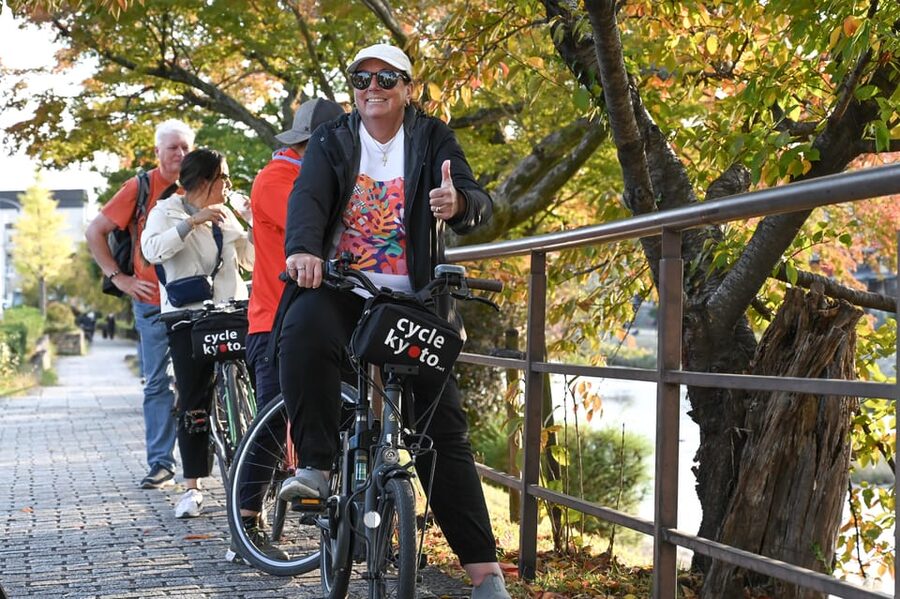
The tour reaches Gion, Kyoto’s famous geisha district, with guided touring for about 1 hour. The standout here is that you are not only looking at the most obvious streets. You ride and walk through backstreet sections, which can feel more atmospheric and less like a theme park.
Gion can be crowded if you arrive without a plan. Having a guide and staying within a structured movement keeps the experience enjoyable and helps you notice the details that make the neighborhood feel like Kyoto, not just a place people visit.
After Gion, you head to Tofukuji Temple, where you have a 30-minute photo stop. This is shorter than earlier visits, but it works as a setup for what comes next.
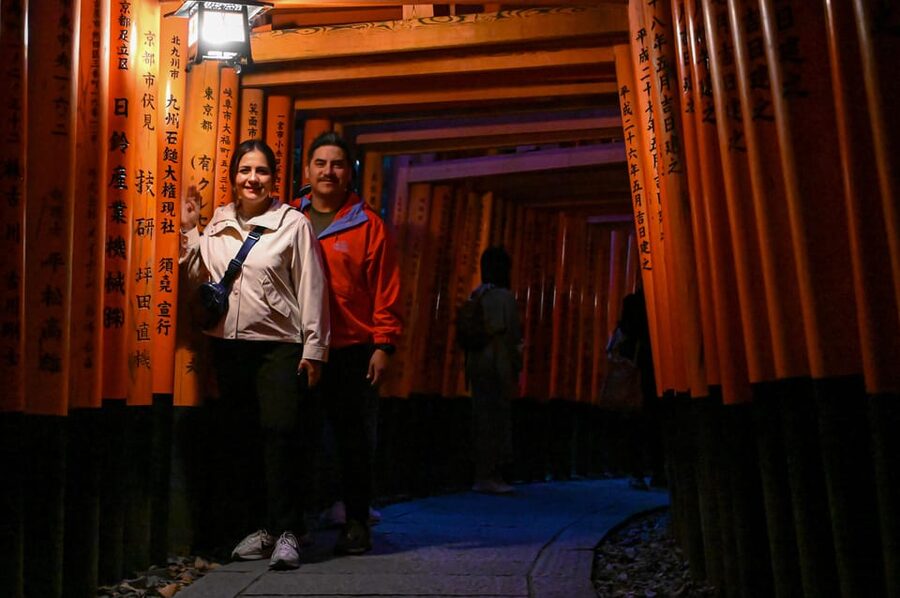
Finally, you reach Fushimi Inari Taisha Shrine Senbontorii, guided for about 1 hour. The famous torii gates are the reason people come here, and the guided format helps you pace the walk so you can enjoy the visual rhythm of the gates without feeling like you are sprinting.
How the ride feels: bikes, e-bikes, and comfort tips
This tour uses well-maintained cross bikes by Giant and Trek, plus a helmet. That matters because an okay bike turns a long day into a chore. A comfortable setup keeps you focused on scenery, not sore wrists and numb seats.
The route style is also built for sightseeing. Expect that you will ride through low-traffic stretches and back alleys as you connect neighborhoods. On one departure, a group logged a little over 18 miles of riding plus short walks through mini sites. Your total mileage can vary with pace and on-the-ground adjustments, but the overall idea is clear: you ride enough to feel mobile, and you walk enough to enjoy the sites properly.
If you are worried about energy, ask for an e-bike. The option is available upon request, and it can be a smart choice even if you are an experienced cyclist, because it keeps the day fun rather than survival mode. If you are on a regular bike, the city itself can feel manageable for biking since Kyoto’s riding sections are not described as extreme.
Bring water, and take advantage of breaks. A hat and sunscreen are not optional in practice, especially if the day is sunny. You do not want to waste your sightseeing time wiping sweat or hunting for shade.
Weather, pacing, and who this tour suits best
The tour does not operate in all weather conditions. If heavy rain hits, the tour cancels and refunds are provided. So you should dress appropriately for the forecast, and keep a flexible mindset.
Pacing is built for stamina. You are out for roughly 7.5 hours, and the schedule includes multiple guided segments plus rides between them. It is a good fit if you like moving and you are comfortable staying on a bike for sustained stretches.
This is not suitable for everyone:
- Children under 12 years old
- Pregnant women
- People who cannot ride a bike
For most visitors who are comfortable cycling and want to see a lot without wasting time between spots, this tour is a strong choice. It is also a great option for people who want a first big Kyoto day, because it covers major icons plus neighborhood feeling in one flow.
Should you book this Kyoto Full Day Bike Tour?
I think you should book it if you want a high-value way to cover iconic Kyoto plus everyday neighborhoods, without spending time piecing together tickets and transport. The included Golden Pavilion entry and traditional lunch help the economics, and the small group size keeps the experience personal.
I would pass if you know you will struggle with a full-day biking rhythm, or if you need a slower pace with fewer transitions. If you are unsure about your biking comfort, requesting an e-bike can change the day from effort-heavy to genuinely fun.
If your goal is to see Kyoto in a way that feels connected rather than segmented, this is the kind of day that can genuinely make the city click.
FAQ
What time does the Kyoto full day bike tour start, and where do we meet?
The tour starts at 9:30 AM sharp. You should arrive about 15 minutes early. The meeting point is Cycle Kyoto.
How long is the tour?
The full tour duration is 450 minutes, which is about 7.5 hours.
What is included in the $116 per person price?
The price includes bike rental, a helmet, the entrance fee to the Golden Pavilion (Kinkaku-ji), and a traditional Japanese lunch.
Can I request an e-bike?
Yes. E-bikes are provided upon request.
How many people are in the group?
This is a small group limited to 9 participants.
Is Kinkaku-ji entry included?
Yes. The entrance fee to the Golden Pavilion is included.
What should I bring, and what should I avoid wearing?
Bring comfortable shoes, a hat, a camera, sunscreen, and water. High-heeled shoes are not allowed.
What should I do with luggage during the tour?
Keep personal belongings to a minimum. You can leave larger luggage in the tour operator’s secure shop space during the ride.
What happens if there is heavy rain?
If there is heavy rain, the tour cancels and refunds are provided. The tour does not operate in all weather conditions.
Fresh options around Kyoto
- Kyoto Aquarium Admission Ticket★ 4.7 · 12 reviews
- Kyoto Gion Photoshoot – Private Session | Pro Photographer★ 5.0 · 12 reviews
- Gyoza Cooking Class in Kyoto: Traditional Japanese Dumplings★ 5.0 · 12 reviews
- Kyoto: Guided Food Tour with 12 Dishes & 3 Drinks★ 5.0 · 12 reviews
- Kyoto: Avoid the Crowds at the Hidden Gems of Arashiyama★ 4.9 · 13 reviews
- Kyoto Early Bird English Tour: Gion & Higashiyama(Private opt)★ 5.0 · 13 reviews
- Otsu-e Folk Art Workshop & Local Culture Walk Near Kyoto★ 5.0 · 13 reviews
- Kyoto, Osaka, Nara Full Day tour by Car English speaking Driver★ 3.5 · 13 reviews
Cycling Tours, compared.
3h Tokyo E-Bike Tour: Hidden Gems, and Local Life with guide
Read our review →
Arashiyama Bamboo Forest & Hidden Gems Bike Tour (Early Bird)
Read our review →
Hiroshima in a Nutshell: Morning Bike Adventure
Read our review →Browse the lists this tour appears in