
Reviewed · DINNER EXPERIENCES
Kyoto: Lunch or Dinner with Maiko
A visit to a Maiko world beats just watching from afar. You get face-to-face etiquette, music, and seasonal dance, plus a proper Kyoto-style meal in the same 90-minute block. It is the kind of experience where you leave with a story, not just photos.
What I like most is how hands-on it feels, you get close-up photo time and a Q&A that actually explains daily life and tradition. I also like that the program is built around two elegant dances, not a rushed performance between course changes.
One thing to consider: the setting is not an ochaya, and the dining and show spaces are in a building. A few details, like food quality and room atmosphere, can feel more basic than you might hope, depending on the specific group flow.
Key things you should know before you go
- Up-close Maiko time, including a photo right beside her and a gift called a Senjyafuda
- Two dances that highlight Kyoto’s seasons and stories through movement
- A structured run of events: tea ceremony demo, meal, Q&A, dance, then a short interactive game
- The “traditional” part is real, but the venue is not a classic tea house, expect a relaxed building setup
- Stairs only at the building, there is no elevator
Maiko Up Close, Not Just a Show
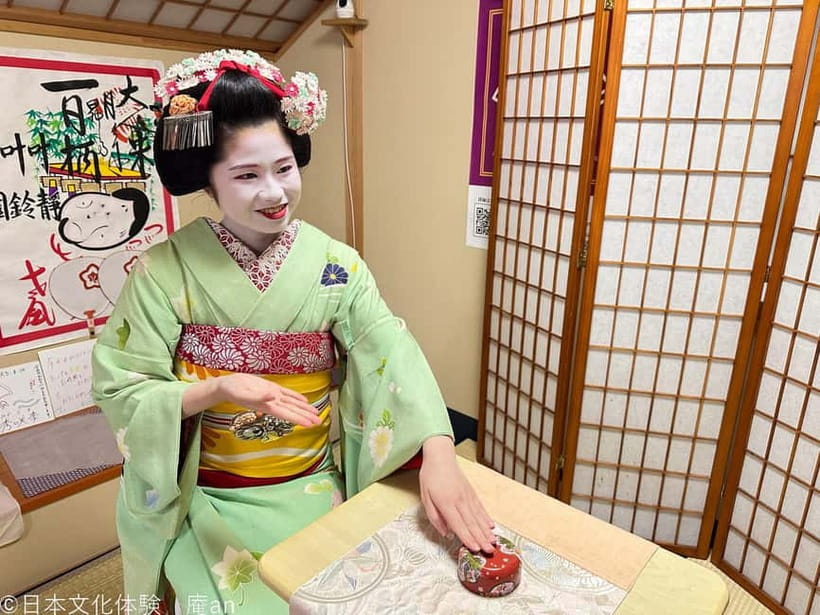
This is one of those Kyoto programs where the point is proximity. Instead of watching from a distance, you get to sit in the same room while a Maiko shares parts of her world. The package is designed to connect three things that usually stay separate: performance, conversation, and food.
I like the focus on routine and respect. Maiko life is presented through manners, careful movement, and the kinds of small details you only notice when you are close. You are not just seeing costumes, you are seeing how tradition lives in daily habits.
Also, don’t expect this to feel like a museum demo. It is structured, yes, but it keeps turning toward you. There is time for questions, and there is also an interactive game where your participation is welcomed.
More geisha experiences in Kyoto:
- Kyoto Geisha Walking Tour: Gion District & Hidden Gems
★ 4.7 · 3,273 reviews - Kyoto: Gion Magical Night Walking Tour with Geisha Trivia
★ 4.9 · 2,393 reviews - Kyoto: Gion Geisha District Walking Tour – Stories of Geisha
★ 4.7 · 2,187 reviews
What You Pay For in a 90-Minute Dinner
At $63 per person for about 90 minutes, this is priced more like a “cultural evening with access” than a standard meal. The value is in what you get bundled together:
- Dinner with a Maiko
- A tea ceremony demonstration (with an add-on option for extra tea experience)
- A Q&A session
- Photo opportunity beside the Maiko
- Two dance performances
- A small hospitality game with the Maiko
When you break it down like that, the meal stops being the main product. The meal is the vehicle, the real package is conversation plus staged cultural performance, with a gift at the end.
There is also a small practical consideration. The schedule is tight, and the program does not adjust for delays. You will want to arrive early, even if you think you are right on time.
The Program Flow: Tea, Dinner, Q&A, Photo, Then Dance
Here is how the experience is designed to unfold, and why each step matters.
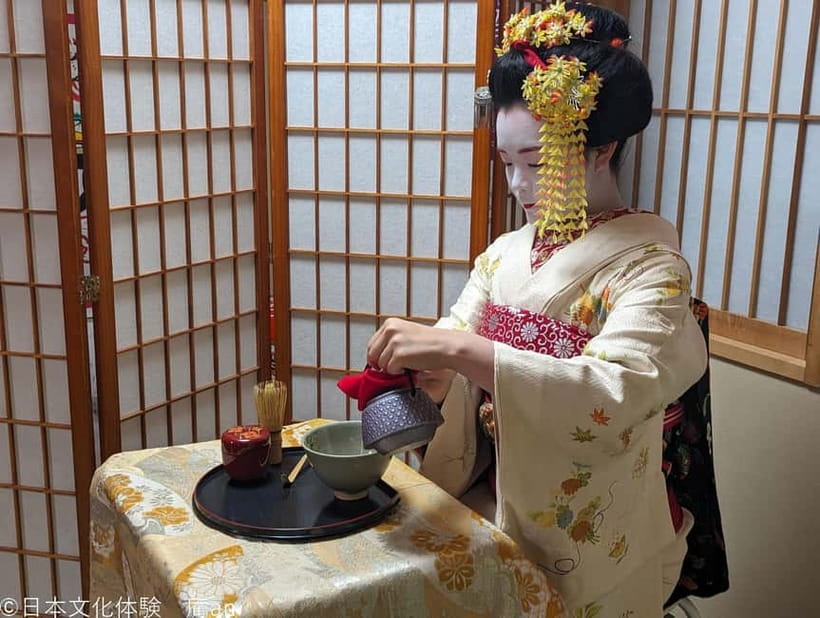
Tea ceremony demonstration first
The program starts with a tea ceremony demonstration by the Maiko. This is not random. It sets the tone with etiquette and calm gestures before the meal and performance.
If you want to do more, there is an option to add a tea ceremony experience. There is also a chance to make your own tea, but you would need to request it when arranging your participation. Even if you do not add anything, the demo is part of the core program rhythm.
A few more Kyoto days worth comparing
- Kyoto Gion Cultural Walk & Geisha Show with Dining Options
★ 5.0 · 518 reviews - Kyoto Gion Cultural Walk & Geisha Show with Dining Options
★ 5.0 · 483 reviews - Dinner with Maiko in a Traditional Kyoto Style Restaurant Tour
★ 5.0 · 175 reviews - Kyoto: Geisha Dinner & Gion Cultural Walk
★ 5.0 · 73 reviews
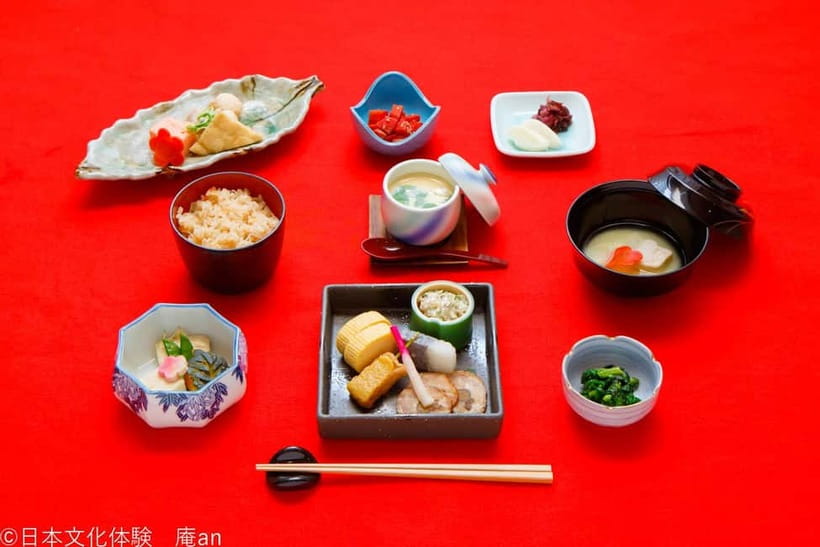
Dinner, Kyoto style
Next comes the Kyoto dinner prepared by a long-established restaurant. The food leans traditional, and one flavor you will see a lot in Kyoto cooking is dashi, soup stock.
Kyoto also includes practices like delivery that keep a traditional feel. You might hear this described as shidashi, meaning dishes are handled in a traditional style rather than a modern restaurant rush.
Q&A session, where the Maiko becomes a person
This is a standout. The Q&A is not “where are you from” small talk. It is your chance to ask direct questions about her daily life and what the role means. You should plan on listening closely, because the point is learning how she thinks and lives, not just confirming facts.
I like that this moment is placed after the tea and before the dance. By then, you have a framework for what you are watching, so the performances land with more meaning.
Photo beside the Maiko, plus Senjyafuda
After the Q&A, you get a photo opportunity right beside the Maiko. This is one of the most practical parts of the whole experience. It is close, and it is timed, so you are not scrambling while everyone is shifting seats.
Then, as a special gift, she presents you with Senjyafuda, a lucky charm. It is a nice touch that turns the program into a souvenir with cultural intent.
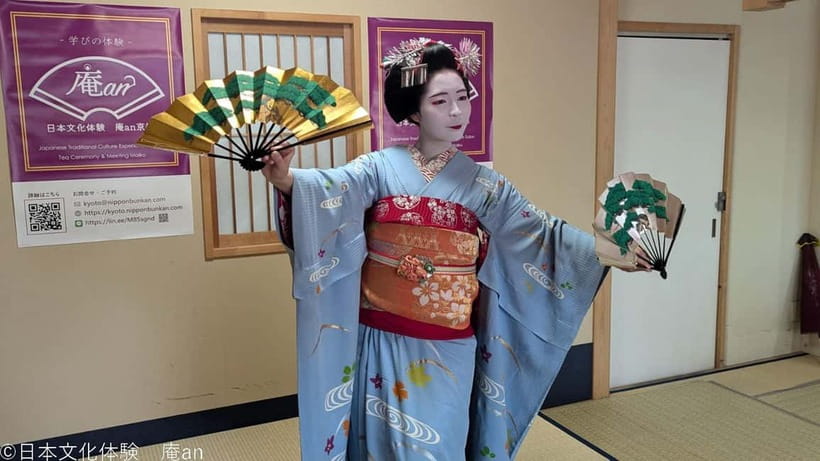
Two dances, with different flavors of tradition
The finale is two traditional dances. They aim to show seasonal beauty, love stories, or everyday life through movement. If you only care about one dance, you still should watch both, because the contrast is part of how you understand the craft.
In some cases, depending on the situation, a Geiko may join or replace the Maiko. Either way, the program keeps the same idea: you are watching elite performance plus direct conversation.
The Dance Performances: Why Two Shows Feel Like More Than One
Two dances might sound like a small number, but the structure matters. Instead of one highlight, you get an opening mood, then another piece that shifts tone.
That matters for appreciating how Maiko performance works. The artistry is not only in big gestures. It is also in pacing, posture, and the way the body communicates stories. Watching two pieces in sequence helps you spot patterns and differences, not just admire one moment.
If you are thinking about what to photograph, focus on the whole-body shapes rather than only faces. A lot of the “seasonal story” is carried by arm lines, footwork, and the pause between motions.
Interactive Game With the Maiko, and How to Join Without Stress
After the dance performance, there is an interactive game. You are welcome to join, but even if you just watch, it still has a role in the program. It is part of hospitality, and it helps break the formal stage energy.
A helpful mindset: treat it like a short, fun Kyoto cultural moment, not a performance you can fail. Clap and cheer along. If you volunteer, keep it simple and follow the cues.
This is also one place where program dynamics can vary. In some situations, groups may be part of the same time block for meal and tea preparation, which can create a slightly mixed feel. That does not change the core experience, but it can affect how smoothly everything flows.
The Food: Traditional Kyoto Dashi and the Restaurant Touch
The dinner is traditional Kyoto cooking, and dashi is a big theme. If you like broths, clear soups, and flavors built on stock, you are in the right place.
That said, food is also the part that can vary the most from person to person. Some people have felt the food was very traditional and a good match for Kyoto. Others have found the meal less impressive, and a few described it as basic and not very decorated.
So how should you plan?
- If you care most about the Maiko program, treat the meal as a cultural bonus that keeps the evening moving.
- If you expect a restaurant-style feast with lots of visual flair, you might be slightly disappointed.
You will get a Kyoto-style meal, but this is not presented as a high-end dining showpiece. It is paired with performance and conversation.
Venue Reality Check: Not an Ochaya, But Friendly and Relaxed
Here is the honest expectation. The venue is not an ochaya or a classic traditional house. It is located in a building. The atmosphere is described as relaxed, with friendly staff.
That can be a good thing. You do not need special preparation. You also do not have to wear a “theme outfit” to feel like you belong.
Still, do not expect cinematic set dressing. Depending on the situation, the room setup may feel more straightforward than you imagined. This is especially relevant if you are the type of traveler who wants screens, partitions, and highly staged decor.
The good news is you are there for the human experience, the dance, and the close-up access. Those elements do not depend on wallpaper.
Logistics That Actually Matter on the Day
This program runs from 10:00 to 17:00. If you send a reservation request after 17:00, it is processed the next day.
You meet near Gojo Station on the Karasuma Line. It is about a 1-minute walk from Exit 1. The store entrance faces Gojo-dori, so you should have an easier time finding it than in some Kyoto side-street spots.
Duration is about 90 minutes, and the program is timed. They will not be able to accommodate delays, so plan buffer time.
One more practical note: there is no elevator. You will need stairs to reach the venues inside the building. If you have mobility concerns, plan around that.
Language support: English translation is provided as much as possible, and if you want extra help, you can contact in advance.
Who This Program Fits Best
This is a strong match for travelers who want more than photos. If you like cultural explanation, want to understand the role behind the kimono, and enjoy etiquette-focused performance, you will feel right at home.
It also works well for people who want a compact Kyoto experience. In 90 minutes, you get tea demo, meal, Q&A, dance, photo, and a gift. For a busy Kyoto itinerary, it is a time-efficient way to add something distinctly traditional.
It might be less satisfying if your top priority is a fancy restaurant experience with lots of visual styling. In that case, you will probably enjoy the Maiko portion more than the dinner itself.
Families can also consider it. Children under 2 are free if they sit on a parent’s lap. If a child needs a seat or meal, the same fee applies as a person.
Should You Book Kyoto Lunch or Dinner With Maiko
I think this is worth booking if you want direct access to Maiko culture in a short time, with real performance plus conversation. The combination of tea ceremony etiquette, Q&A, close photo time, Senjyafuda, and two dances is a lot packed into one evening.
I would book with your expectations set correctly on two points. First, the venue is in a building, not an ochaya, so decor is not the selling point. Second, the meal is traditional Kyoto style, but food impressions can be mixed, so it should be treated as part of the cultural program, not the main event.
If you’re excited by etiquette, stories, and the feeling of meeting tradition face to face, this is one of the more focused Kyoto experiences you can choose.
FAQ
Is this lunch or dinner?
The experience is offered as a Kyoto Maiko meal option, you’ll have either lunch or dinner depending on your booking and available time slots.
How long is the Maiko meal program?
The program lasts about 90 minutes.
Where is the meeting point?
You meet about a 1-minute walk from Exit 1 of the Subway Karasuma Line Gojo Station. The entrance faces Gojo-dori.
What do I get during the experience?
You’ll get a tea ceremony demonstration, a traditional Kyoto dinner, a Q&A session, a photo opportunity next to the Maiko, a Senjyafuda lucky charm gift, a Maiko dance performance with two dances, and an interactive game with the Maiko.
Is there an option to add a tea ceremony experience or tea-making?
Yes. There is a tea ceremony option available for an additional 1,600 JPY. If you want to make tea, you can add that option by contacting them.
Will I always meet a Maiko?
Depending on the situation, a Geiko may be invited instead of a Maiko.
Are there reserved seats available?
Yes. SS seat (first row) is an additional 3,300 JPY, S2 seat (second row) is 2,200 JPY, and S3 seat (third row) is 1,100 JPY.
Is the venue in a traditional Japanese house?
No. It is not an ochaya or a traditional Japanese house. It is located in a building with a relaxed atmosphere and friendly staff.
Is the experience in English?
Languages are Japanese, and English translation is provided as much as possible. You can contact them if you want to add English support.
Are children allowed, and do they pay?
Children under 2 years old are free if they sit on their parents’ laps. If a seat or meal is required for them, the same fee as one person will be charged.
Fresh options around Kyoto
- Kyoto Aquarium Admission Ticket★ 4.7 · 12 reviews
- Kyoto Gion Photoshoot – Private Session | Pro Photographer★ 5.0 · 12 reviews
- Gyoza Cooking Class in Kyoto: Traditional Japanese Dumplings★ 5.0 · 12 reviews
- Kyoto: Guided Food Tour with 12 Dishes & 3 Drinks★ 5.0 · 12 reviews
- Kyoto: Avoid the Crowds at the Hidden Gems of Arashiyama★ 4.9 · 13 reviews
- Kyoto Early Bird English Tour: Gion & Higashiyama(Private opt)★ 5.0 · 13 reviews
- Otsu-e Folk Art Workshop & Local Culture Walk Near Kyoto★ 5.0 · 13 reviews
- Kyoto, Osaka, Nara Full Day tour by Car English speaking Driver★ 3.5 · 13 reviews
Dinner Experiences, compared.
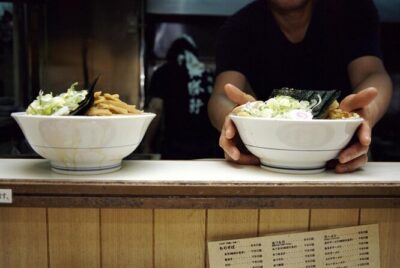
Tokyo Bar Hopping Tour in Shinjuku (All-You-Can-Drink + Dinner)
Read our review →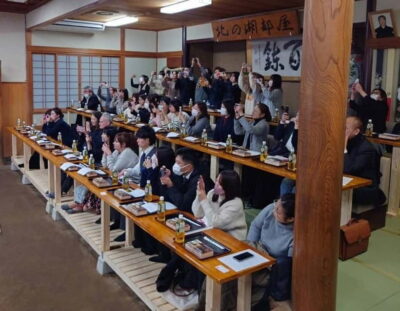

Deep Backstreet Osaka Tours (Option to add Dinner)
Read our review →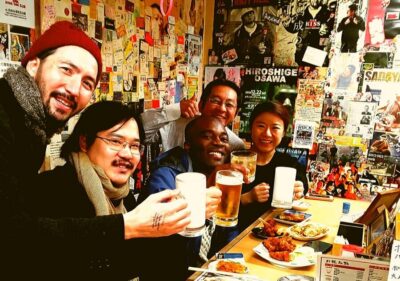
Deep Backstreets Walking Tour with Dinner Option
Read our review →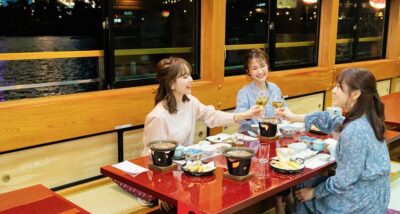
Sumida River: Japanese Traditional Yakatabune Dinner Cruise
Read our review →
Kyoto Gion Cultural Walk & Geisha Show with Dining Options
Read our review →Kyoto Gion Cultural Walk & Geisha Show with Dining Options
Read our review →
Tokyo Bay Yakatabune Dinner/Day Cruise with Japan Show and Drinks
Read our review →Browse the lists this tour appears in