
Reviewed · TEMPLE & SHRINE TOURS IN KYOTO
Kyoto: Kiyomizu-dera, Fushimi Inari & Gion Geisha District
One good morning, Kyoto makes sense fast. This half-day route connects Fushimi Inari, Kiyomizudera, and Gion in about 4 hours, with clear explanations and real-world tips from Kyoto City Certified Tourist Guide Roberto. I like that you get practical culture context, not just names and photos, and I also like that you can ask for as many pictures as you want while he guides your timing. One consideration: it is a lot of walking on uneven temple paths, so plan for comfortable shoes and take it slow if you have any mobility limits.
You start at a super easy meeting point, right by JR Kyoto Station, then you ride a bit of public transit and spend the rest on foot. If you want the Kyoto highlights without the stress of figuring out what matters and what is just crowd noise, this tour hits the sweet spot.
Key points to know before you go
- Kyoto City Certified Guide Roberto keeps the day clear, polite, and well paced
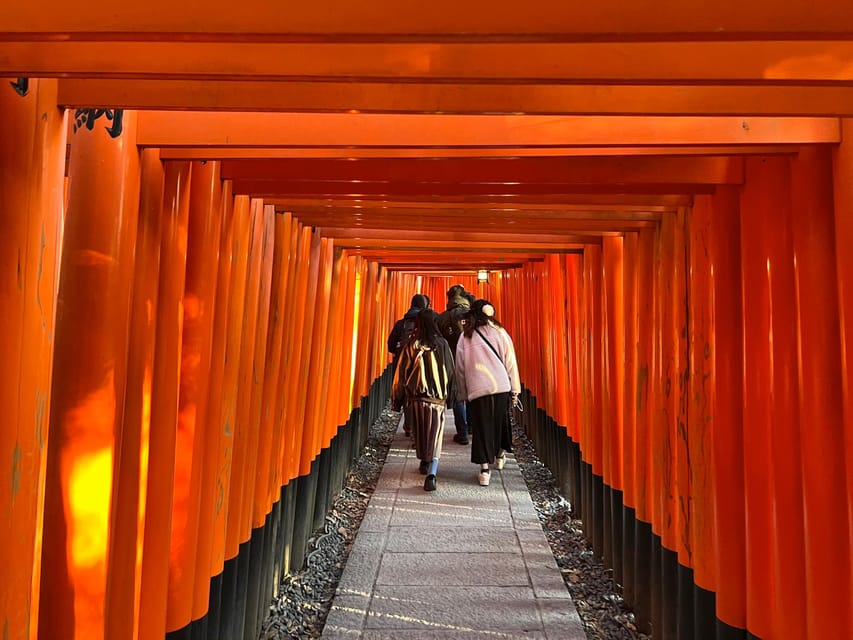
- Fushimi Inari’s torii trail is guided for meaning, not just selfies
- Kiyomizudera power spots are explained in a way that helps you know where to look
- Ninen-zaka and Sannenzaka give you old Kyoto street atmosphere on foot
- Gion geisha and maiko basics help you understand what you are seeing around ochaya
- Photo support plus iPad explanations to make the stops click
A 4-hour Kyoto walk that strings together three icons
Kyoto can feel like a choose-your-own-adventure, which is fun until you lose half the day to lines and logistics. This tour is designed like a compact best-of: Fushimi Inari, Kiyomizudera, the old streets of Ninen-zaka and Sannenzaka, then finishes in Gion. In four hours, you get three major visual anchors plus the neighborhoods that give them context.
The value is not only that the sights are famous. It is that you do not wander blindly. Your guide explains what you are looking at, including Shinto ideas at Fushimi Inari and the spiritual significance of certain spots at Kiyomizudera. Then the day turns toward culture you can feel in the streets, with the walk through traditional-merchant-house Kyoto before ending in Gion.
A smart touch: your guide uses an iPad with images. That helps when you are standing in front of something complex, like shrine symbolism or the differences between geisha and maiko, and you want to understand without stopping every ten steps.
More Temple & Shrine Tours in Kyoto
- Kyoto: Fushimi Inari, Kinkakuji, Bamboo Grove 1 Day Bus Tour
★ 4.8 · 4,316 reviews - Kyoto: Tea Ceremony Ju-An at Jotokuji Temple
★ 4.9 · 3,207 reviews - Fushimi Inari Hidden Hiking Tour (Private Option Available)
★ 5.0 · 1,750 reviews
Starting at JR Kyoto Station, then straight into Fushimi Inari
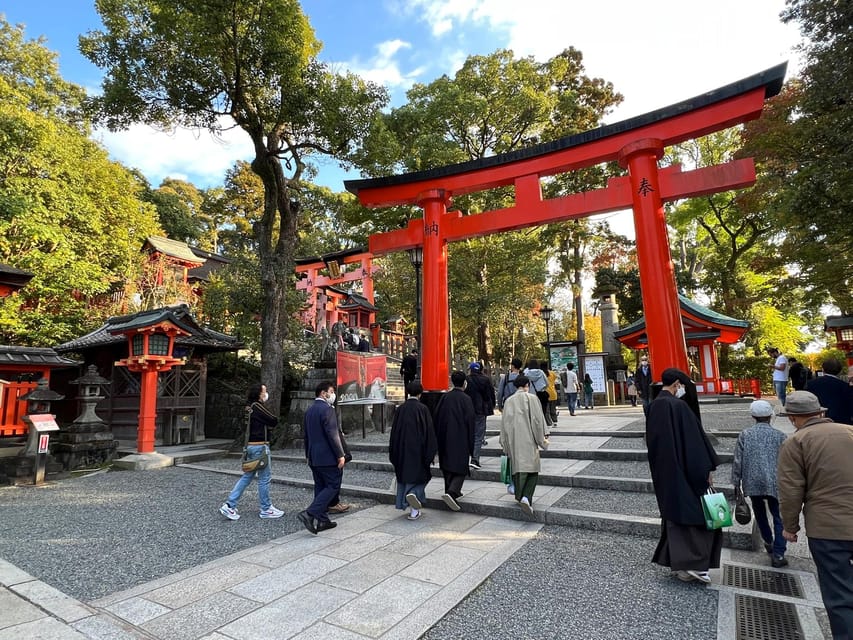
Meet in front of the 7-Eleven Heart-In at JR Kyoto Station, Bldg. 1F, using the Kyoto Tower side Exit. Your guide will hold an iPad and a red card that says RBRT. From there, you use public transit for a short transfer, then you head to Fushimi Inari Taisha.
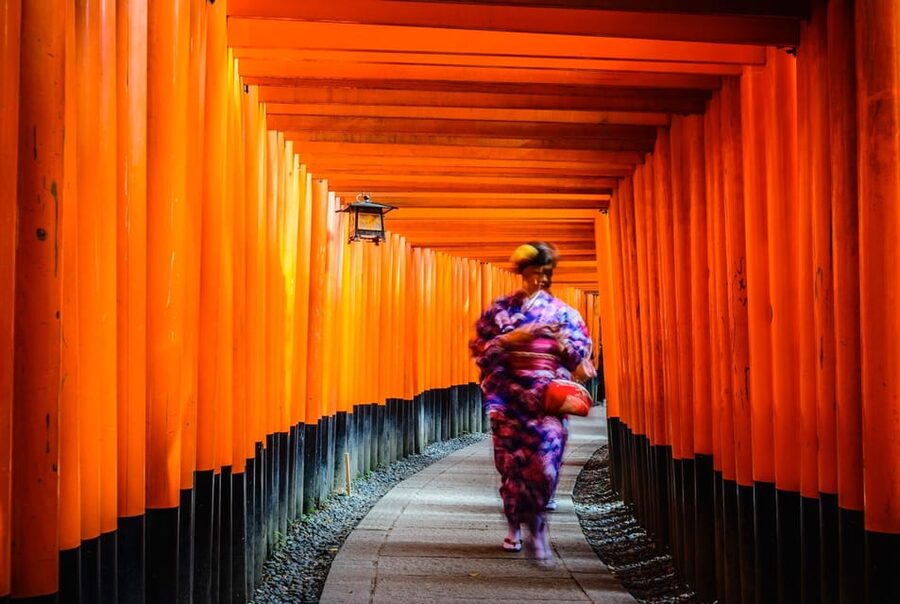
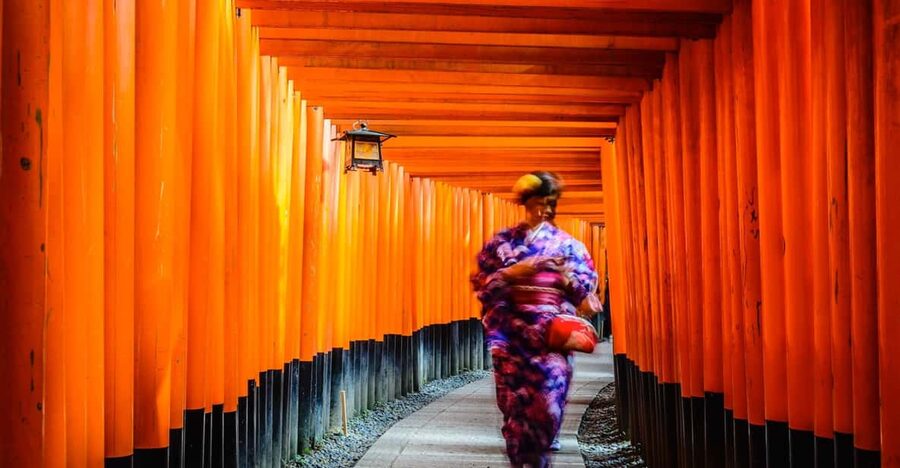
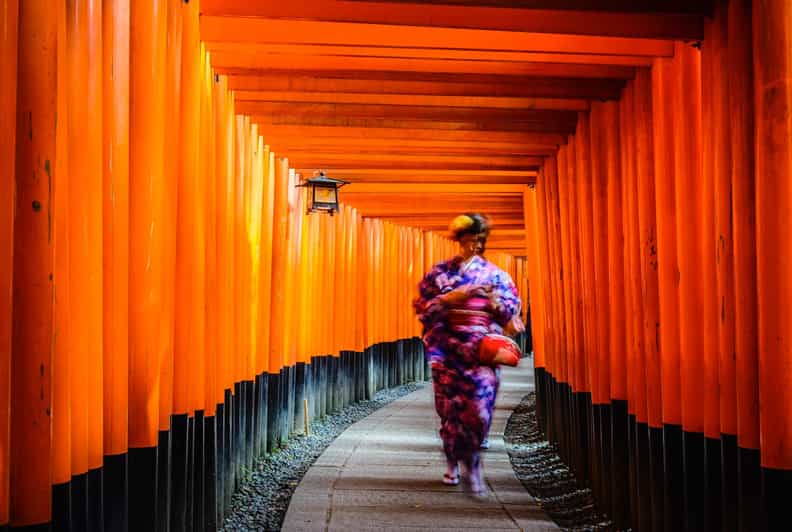
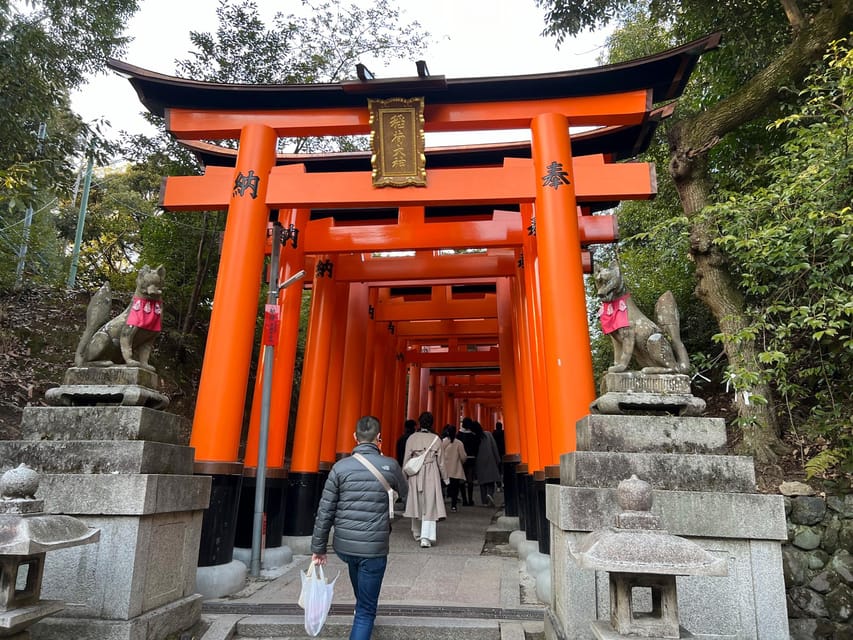
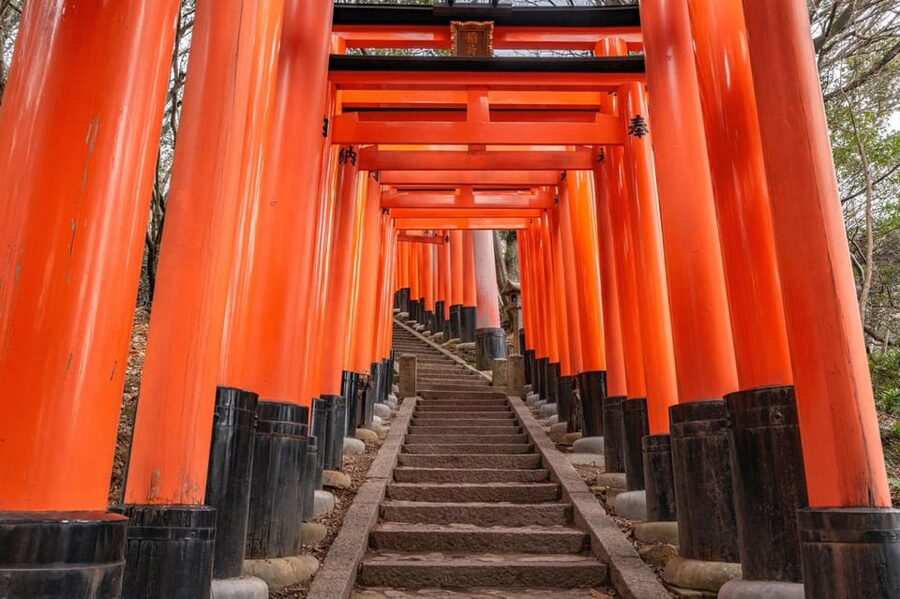
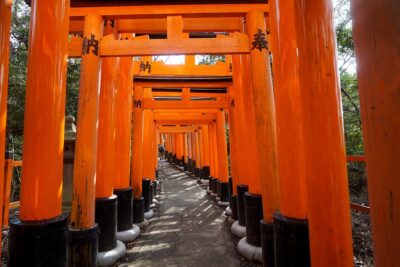
Fushimi Inari is not just a photo wall. The reason it works is the sheer rhythm of the torii gates, painted vermilion, stepping forward as you walk. You will trek through the famed trail of 1,000 torii gates, and the guide’s job is to keep that walk from feeling like a blur. You learn the shrine’s ancient origins and the Shinto ideas behind the site, so the gates become more than a pattern.
One practical reality: you will cover ground on foot. The torii trail can feel long because it is immersive visually, and because the route naturally pulls you onward. If you like to pause often and look closely, you will enjoy having a guide who can help you prioritize what to notice first. If you prefer a shorter route, still go, just pace yourself and keep water nearby.
Kiyomizudera power spots and how to look like you mean it
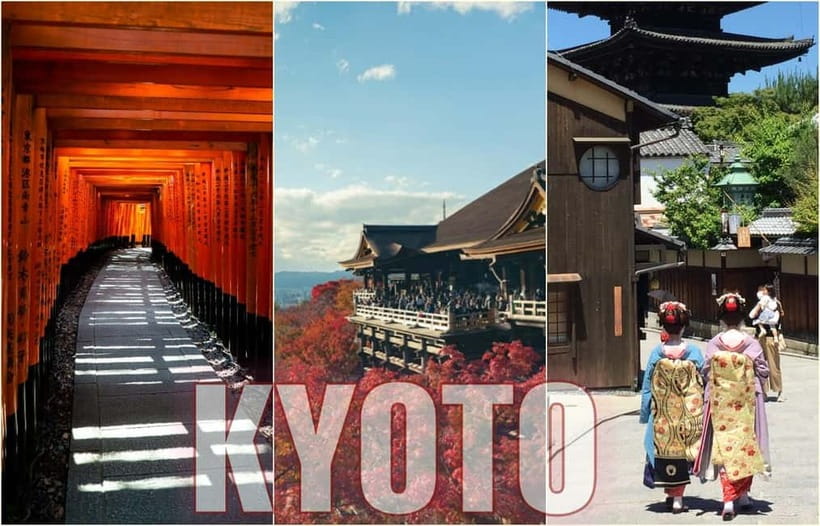
Kiyomizudera is one of Kyoto’s most recognizable temples, and for good reason. Even if you have seen it in pictures before, standing there gives you scale and detail you cannot capture on a phone screen.
This tour focuses on the parts people often miss: the idea of Kiyomizudera’s power spots. You will visit the areas tied to blessings associated with love, longevity, and academic success. What makes this useful is knowing what you are seeking while you are there. Instead of treating the temple like a backdrop, you move with purpose and pay attention to the cues your guide points out.
There is also a key logistics note. Entrance to Kiyomizudera is not included. Plan for a 500 yen entrance fee, roughly US$3.10. That is normal for Japan, but it is worth having cash ready so the moment does not get delayed while you search for a payment method.
During Kiyomizudera, your guide also uses an iPad with images for better comprehension. That is especially helpful when symbolism, prayers, and temple layouts are not intuitive at first glance.
Ninen-zaka and Sannenzaka: old streets, real Kyoto vibes
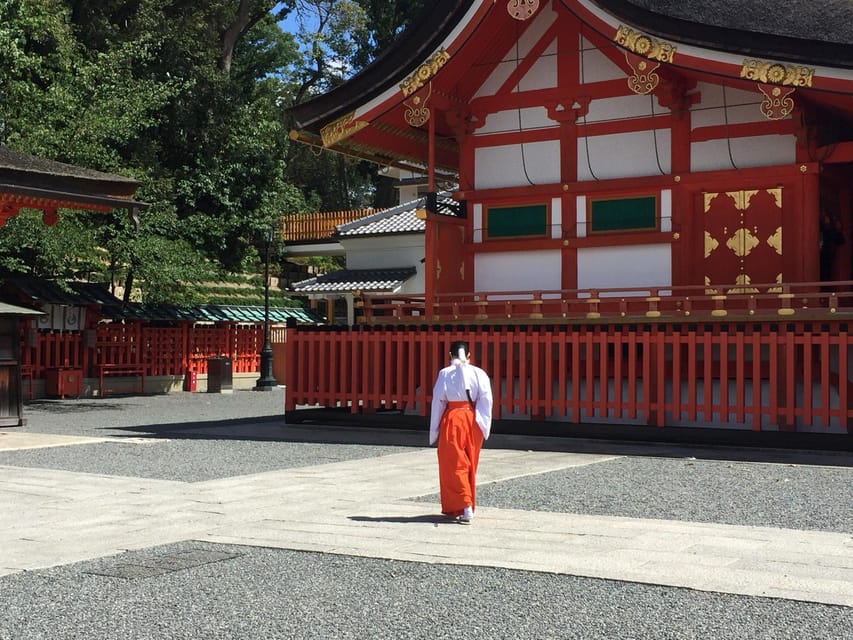
After Kiyomizudera, you step into the pedestrian-friendly storybook lanes of Ninen-zaka and Sannenzaka. This is where Kyoto shifts from major sights into everyday atmosphere: wooden buildings, traditional merchant shops, and the feeling of moving through old capital streets rather than hopping between landmarks.
The walk sections are short, but they matter. These lanes are a strong reset for your senses after temple intensity and stairs. You get a chance to see how people built and lived in Kyoto long before modern grids took over. Even if you do not buy anything, you will notice the pace is different here. The streets gently slow you down.
Practical tip: wear shoes that can handle stone slopes and steps. This part is not just flat walking, and your feet will thank you for not trying to look stylish at the cost of comfort.
More geisha experiences in Kyoto:
- Kyoto Geisha Walking Tour: Gion District & Hidden Gems
★ 4.7 · 3,273 reviews - Kyoto: Gion Magical Night Walking Tour with Geisha Trivia
★ 4.9 · 2,393 reviews - Kyoto: Gion Geisha District Walking Tour – Stories of Geisha
★ 4.7 · 2,187 reviews - Best of Kyoto: Gion, Geisha, Pagodas & Cobblestones
★ 4.9 · 2,058 reviews
Gion and the geisha and maiko basics you actually need
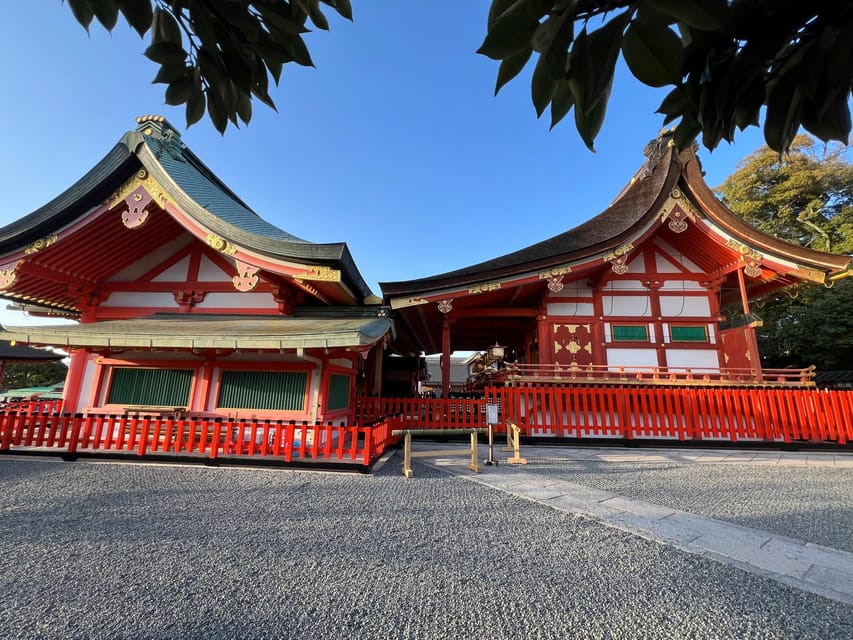
The tour finishes in Gion District, and by then you are ready for a different kind of Kyoto. Gion is Kyoto’s well-known geisha district, and it is full of traditional wooden machiya merchant houses. You will also pass places connected with ochaya, teahouses where entertainment is offered.
If you have ever felt confused about what you are seeing in Gion, this tour helps. You get facts about geishas and maiko, including what terms mean and how the roles fit into the district. That guidance matters because Gion can look like a stage set to visitors. A little cultural grounding keeps you respectful and focused.
One good thing about ending here is logistics. Once the tour is done, you are in the right neighborhood to keep going. You can take a city bus or taxi back to your hotel without having to backtrack to the station.
Price and logistics: what $90 gets you in real terms
At about $90 per person for a 4-hour private tour, the price is competitive for what you get. You are paying for a few things that add up quickly in Japan: a certified guide, guided time at multiple major sites, iPad-based explanations, and transport coordination using public transit.
Transportation fees are not included. Entrance fees are not included either, with Kiyomizudera specifically called out at 500 yen. That is a normal, expected extra cost, but it is still something you should plan for.
So what is the value, beyond the “famous places” checklist?
- You save time by not having to figure out what to prioritize at each stop.
- You get context you can use while you are standing in front of the shrine, not after you leave.
- You get photo help. Your guide can take as many pictures as you wish, which helps if you are traveling as a couple or you want fewer blurry angles.
The tour is private group, which also changes the feel. You can go at a comfortable pace, and it is easier to ask questions when you are not managing a larger crowd’s timing.
Roberto’s guide style: explanations that stay useful
The strongest recurring theme is the guide experience. Roberto is repeatedly described as polite, on time, and very good at explaining culture in a way that feels natural. The best kind of guide for Kyoto is the one who makes you look smarter for understanding what you are seeing, not the one who lectures nonstop.
A detail I especially like for this kind of day is the iPad with images. It is one of those small tools that can turn confusion into clarity fast, especially at sites where visitors often look at the wrong things first.
There is also photo support. People specifically highlight that Roberto takes amazing photos and even helps with videos, which is great because Kyoto’s best angles are rarely the ones you happen to stumble into on your own. Combine that with the guided timing, and you get a better shot and a better memory.
Timing, walking intensity, and what to pack
This is a half-day tour built around public transit and walking. Expect a short train ride between stops and short walk segments, including the old street lanes before finishing in Gion. The total time is 4 hours, so you should treat it as an active morning or afternoon, not a casual stroll.
Bring:
- Comfortable shoes
- Water
- Comfortable clothes
- Cash
Not allowed:
- Smoking
- Luggage or large bags
Two small realities that help your day go smoothly:
- If you are sensitive to stairs, go slower on the temple approaches.
- Carry cash for entrance fees like Kiyomizudera so you do not have to scramble at the last minute.
Who should book, and who might want a different plan
This tour is a strong match if you want big-name Kyoto sights with explanations and you like moving through places with a plan. It works especially well for couples and small private groups who want photos, cultural clarity, and a simple end point in Gion.
It is not suitable for:
- People with back problems
- People with mobility impairments
- Wheelchair users
- Visually impaired people
- People over 75 years
- People with low level of fitness
That is not a judgment call, it is just the walking and temple terrain. If any of those apply to you, you may feel uncomfortable on steps and uneven paths, and the schedule leaves little room for detours.
Should you book this Kyoto tour?
Yes, I think you should book it if you want a focused Kyoto highlights route with a certified guide who explains the meaning behind what you are seeing, from Shinto shrine origins to the power-spot idea at Kiyomizudera, then on to the geisha and maiko basics in Gion. The biggest reason to choose this is value per hour. You pack three major experiences plus the old streets without needing to plan every turn.
Skip it if you have mobility limits or you dislike walking on steps and uneven surfaces. Also budget for the Kiyomizudera entrance fee and any transit costs not included.
If your goal is to come away feeling like Kyoto made sense, not just looked impressive, this is a solid way to do it in one half day.
FAQ
How long is the Kyoto tour?
It lasts about 4 hours.
Is this a private group?
Yes, it is a private group.
What is included with the tour price?
You get a Kyoto City official certified guide, explanations with images on an iPad, and your guide can take as many pictures as you wish.
Do I pay entrance fees during the tour?
Entrance fees are not included. Kiyomizudera has an entrance fee of 500 yen (about US$3.10).
Are transportation costs included?
Transportation fee is not included. The tour uses public transportation such as city bus and train.
Where do we meet the guide?
You meet in front of the door of 7-Eleven at JR Kyoto Station Bldg. 1F, using the Kyoto Tower side Exit. The guide holds an iPad and a red card with RBRT.
What languages are available for the guide?
The live guide is available in English and Spanish.
Is food and drinks included?
No, food and drinks are not included.
Is the tour suitable for seniors or limited mobility?
The tour is not suitable for people with back problems, mobility impairments, wheelchair users, visually impaired people, people over 75 years, or people with low level of fitness.
Fresh options around Kyoto
- Shamisen Discovery in Kyoto 【Group】★ 5.0 · 24 reviews
- Kyoto: Personalize, private tour (3h, 5h, 8h) [W/Car Option]★ 4.9 · 24 reviews
- Kyoto Geisha Show Cultural Hour with an apprentice geisha, Maiko★ 5.0 · 25 reviews
- Kyoto Full Course Tour: Explore 10 Must-See Sights & Hidden Gems★ 4.5 · 25 reviews
- Kyoto kiyomizu Temple : Maiko and Samurai Couple Photoshoot★ 4.8 · 25 reviews
- Kyoto: Private Tea Ceremony at local home with tea master★ 5.0 · 25 reviews
- Slow Cycling Tour at Uji’s Matcha Green Tea Fields and Heritage★ 5.0 · 25 reviews
- Kyoto: Zen Meditation at a Private Temple with a Monk★ 5.0 · 25 reviews
Temple & Shrine Tours in Kyoto, compared.
Fushimi Inari, Kinkakuji, Bamboo Grove 1 Day Bus Tour
Read our review →
Fushimi Inari Hidden Hiking Tour (Private Option Available)
Read our review →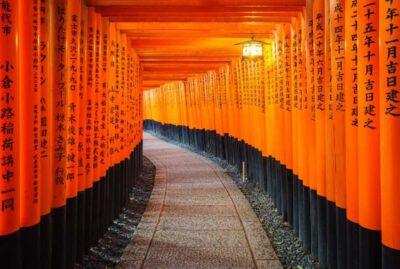
Osaka/Kyoto:Kinkakuji,Arashiyama,FushimiInariShrine,NaraPark
Read our review →
Kyoto/Osaka: Nara, Fushimi Inari Taisha, Arashiyama Bus Tour
Read our review →
Arashiyama Bamboo, Temple, Monkeys, or Secret Sake Brewery
Read our review →
Arashiyama Bamboo Forest, Monkeys, Matcha & Temple Tour
Read our review →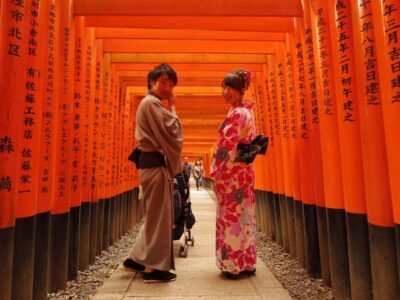
Osaka/Kyoto: Arashiyama, Nara & Fushimi Inari Shrine w/Lunch
Read our review →Browse the lists this tour appears in