
Reviewed · TEMPLE & SHRINE TOURS IN TOKYO
Kamakura Temples Private Guided Tour from Tokyo
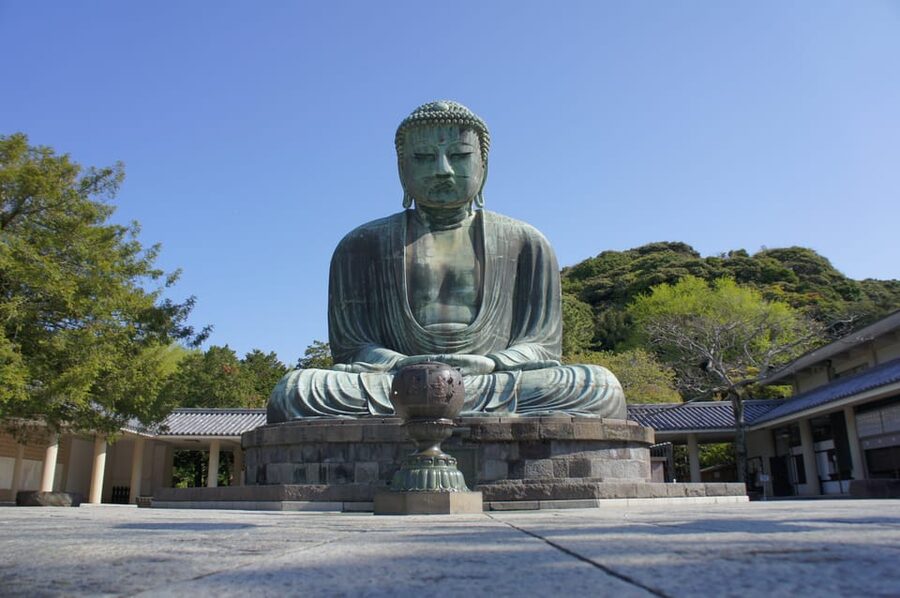
Kamakura feels worlds away, yet close. This private day trip lines up the big spiritual hits, from Hase-dera to the 13-meter-high Great Buddha, with an expert English guide to stitch it all together. I love the calm, private pacing that helps you take photos without turning the day into a sprint. One thing to plan for: the tour price does not cover train rides, temple entrances, or your lunch, so your day budget will be higher once you add those.
The guides you could meet, like Mizuma-san, Steve, Take, or Richie, are the real reason this works well. The best experiences come from having a licensed guide explain what you are seeing, and how it all fits into Japanese history and culture, even when the crowds get tight. The itinerary also gives you set guided time at each stop, plus a chunk of your own time on Komachi Street.
Wear comfortable shoes, because you will walk. Expect about 3 to 4 km total across the day, plus extra foot movement between areas. If you hate crowds, Kamakura can still feel busy at the temples, but a good guide helps you move smart instead of getting stuck.
Key things to know before you go
- Private, licensed English guide: you get guided time at Hase-dera, Kotoku-in, and Tsurugaoka Hachimangu.
- A tight “greatest hits” route: Hase-dera, Great Buddha at Kotoku-in, then the city’s main Shinto shrine.
- Plan for extra costs: train travel, entrance fees, and lunch are not included.
- You will walk 3 to 4 km: bring supportive shoes, especially if you are visiting in warmer months.
- Komachi Street is your lunch and shopping window: you get about 1.5 hours to decide how you spend it.
- Pickup and drop-off are on foot: your guide meets you near your hotel, not at a hotel lobby pickup by car.
Why Kamakura temples in one day work well from Tokyo
Kamakura is one of those places that feels distinct the moment you arrive. The city mixes Buddhist temples, Shinto shrines, and that coastal-era atmosphere you just do not get in Tokyo. What I like about this format is that it concentrates your time on the sites most people come for, without forcing you to self-navigate every transfer.
You are not just “checking boxes.” Each stop connects to a bigger theme: mercy and enlightenment (Hase-dera), Buddhist presence and monumentality (Kotoku-in’s Great Buddha), and local spirit and authority in Kamakura (Tsurugaoka Hachimangu). With a licensed guide, you get the storyline behind the architecture and statues instead of only the photo ops.
This is also a smart choice if you want a low-stress day. The tour organizes the rhythm for you: train in, guided stops, lunch break with free time, then train back to Tokyo around 4 to 5 pm.
More Temple & Shrine Tours in Tokyo
- Tokyo: Meiji Shrine, Asakusa, Skytree Bus Tour and Cruise
★ 4.7 · 1,986 reviews - Tokyo: Asakusa Walking Tour with Sensoji Temple Visit
★ 4.8 · 1,583 reviews - Nikko: Kegon Falls, Lake Chuzenji & Toshogu Temple
★ 4.6 · 1,577 reviews
The day starts with on-foot hotel pickup and a timed train ride
The tour begins with pickup from your Tokyo-area hotel, then you travel to Kamakura by train. The outbound train ride is about 70 minutes, and the full schedule is set up so you are at Hase-dera first, then Kotoku-in, then Tsurugaoka Hachimangu.
A key logistics detail: pickup and drop-off are on foot. So you should be ready to walk a bit near your lodging when the guide meets you. Also note that the public transportation costs for you and the guide are not included, and you should expect roughly 2000 yen per person for transit.
You will likely spend some energy between stations and temple approach paths, so consider this not a “nap on the train and relax” day. It is more like: arrive, walk, see, learn, eat, and head back.
Hase-dera’s Kannon statue and the Jizo-do Hall
Hase-dera is often called the Temple of Flowers, and it lives up to the nickname when you arrive. Your first guided stop includes a short photo stop and then about 30 minutes of guided sightseeing.
The main draw is the Hase Kannon, a Buddhist statue tied to Kannon, the Goddess of Mercy. You will hear how the statue is understood as an eleven-faced form, with each face linked to different phases in the search for enlightenment. That kind of explanation matters here. Without it, the statue is impressive, but you might miss the reason it is treated as so important.
Another reason this stop feels rewarding is the variety around it. You can wander the gardens, and you can also spend time at the Jizo-do Hall, known for housing hundreds of small Jizo Bodhisattva statues. These tiny figures can be almost overwhelming at first glance. With a guide pointing out what you are looking at, the hall becomes more than a pile of stone. It becomes a place with meaning you can actually sense.
Practical tip: bring a phone with enough battery and storage. Between the main statue area and all the smaller Jizo scenes, you will take more photos than you expect.
Kotoku-in and the 13-meter-high Great Buddha
Next comes Kotoku-in Temple and its most famous sight: Japan’s Great Buddha. You get another photo stop and about 30 minutes of guided time here.
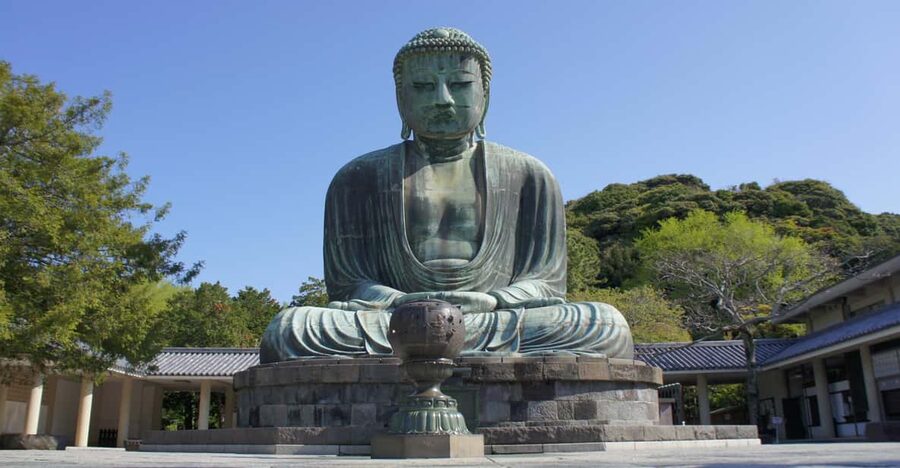
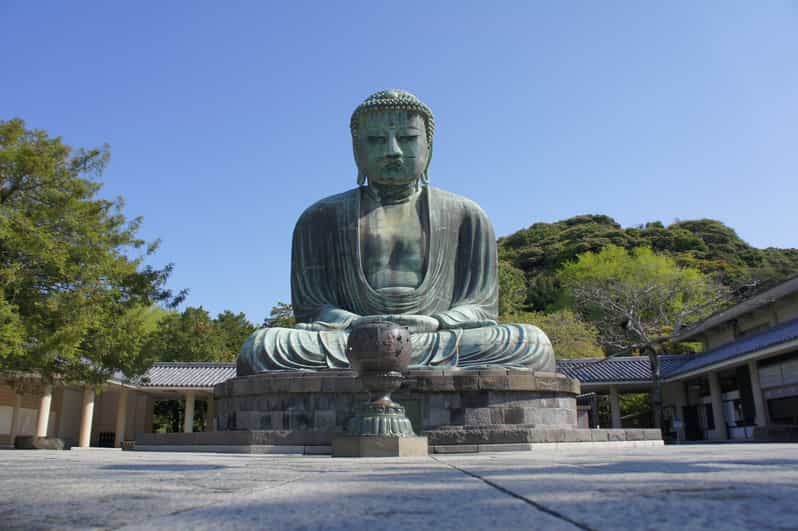
This statue is huge, about 13 meters high, and the tour explains its significance and history, including that it dates back to 1292. The scale is the obvious part. The less obvious part is why that date and that style of monument matter, especially in a temple complex built around Buddhist teachings and communal faith over centuries.
Also, the Great Buddha entrance is typically paid on-site, and entrance fees are not included in the tour price. The listed cost is 300 yen per person. Hase-dera’s entrance is listed at 400 yen per person. So even though the guide covers your route and context, you still need to budget for admissions.
How to make this stop better: arrive with a plan for photos. Pick one angle for the full statue, then move a little for closer details. If you only shoot one perspective, you will miss how different the Buddha looks from various positions.
More temple and shrine tours in Tokyo:
- Tokyo: Nikko Toshogu Shrine and Kegon Waterfall Tour
★ 4.5 · 1,266 reviews - Tokyo Panoramic 1 Day: Meiji Shrine, Asakusa, Odaiba and SKYTREE®
★ 4.5 · 1,222 reviews - Tokyo: Zen Meditation at a Private Temple with a Monk
★ 5.0 · 510 reviews - Mt. Fuji Heritage Tour: Traditional Villages, Lakes & Shrine
★ 4.5 · 509 reviews
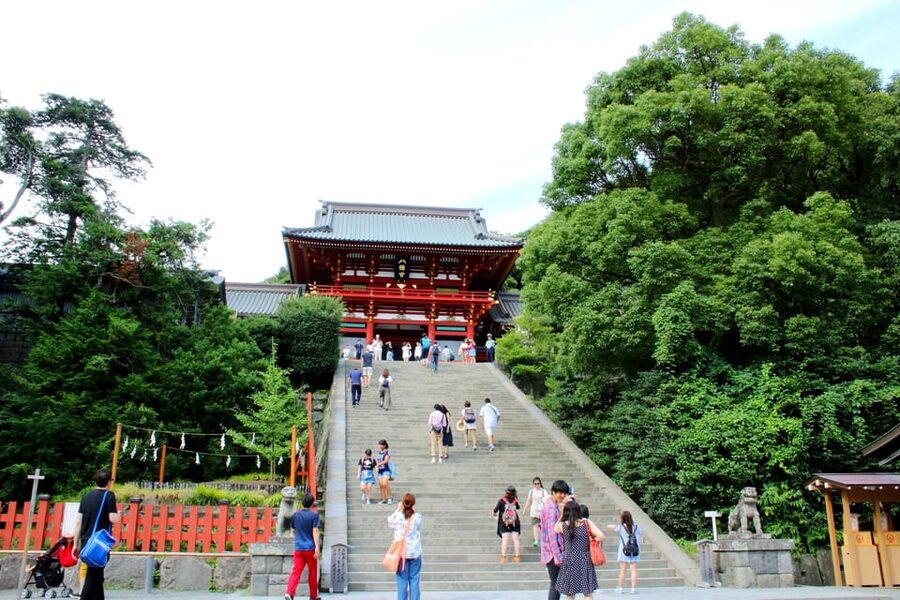
Tsurugaoka Hachimangu Shrine, Shinto Kamakura at the center
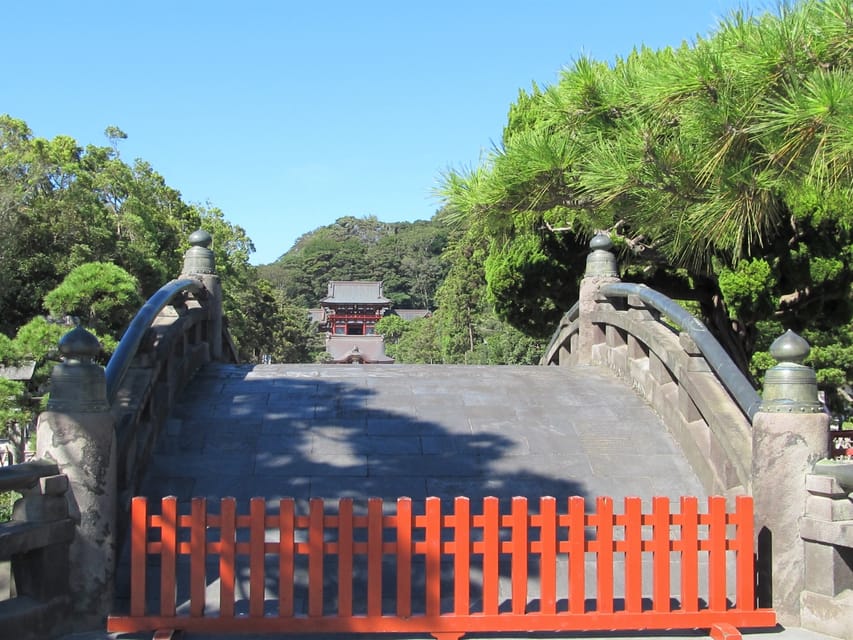
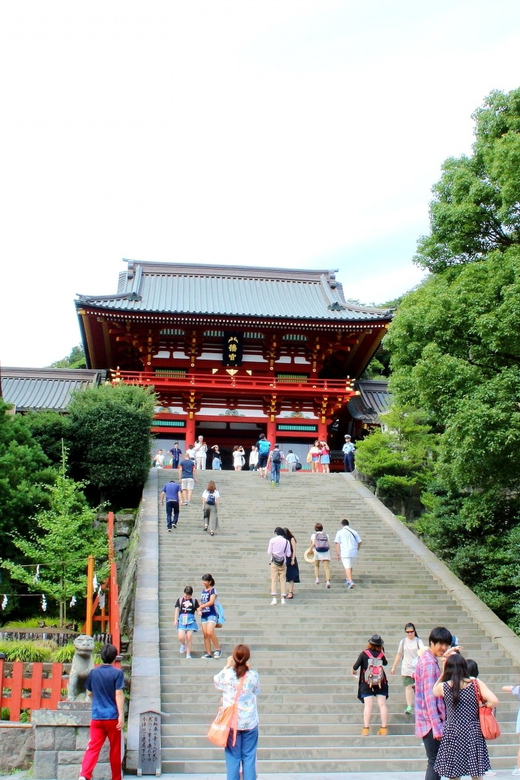
After lunch in Komachi Street, the tour shifts to Shinto at Tsurugaoka Hachimangu Shrine. This stop is about 30 minutes of guided sightseeing with a photo stop.
The shrine is dedicated to Emperor Ojin, who is also associated with the God of War. It was built in 1063 and is described as the most important Shinto shrine in Kamakura. It also sits at the city’s geographical center, which is a useful framing. You start to see Kamakura not as random temples on hills, but as a planned spiritual map.
This is the quieter, more reflective part of the day for many people. You will get background as you explore the complex, and that explanation helps you understand why certain areas feel ceremonial and why the shrine layout feels so intentional.
Practical tip: keep a little patience here. Shinto shrine approach paths can feel crowded, but moving steadily with your guide makes it easier to follow the story without constantly waiting.
Komachi Street lunch and shopping in your 1.5-hour window
Lunch happens on Komachi Street, with about 1.5 hours of free time for eating and shopping. The guide includes time for getting your bearings and some guidance on what to do with that window, but you are not locked into one style of lunch.
This is where you get to personalize the day. If you want a simple meal and a short walk for souvenirs, you can. If you want to browse snacks and small items, you can do that too. Just keep an eye on time, because Tsurugaoka Hachimangu comes after lunch.
One budget note that matters: lunch and drinks are not included. So the tour price is only part of your day cost. You will pay for your meal directly in town.
Price and extra costs: when $145 is good value
On paper, the tour price is $145 per person for an 8-hour private day. The big value here is the guide: a National Government Licensed Guide Interpreter, plus guided time across multiple major sites from a single organized route.
But you should not treat that price as all-in. The tour explicitly does not include:
- public transportation for you and the guide (around 2000 yen per person)
- entrance fees (Hase-dera 400 yen, Kotoku-in Great Buddha 300 yen)
- lunch and drinks
If you add those together, the total is higher than the base price, and that is where expectations can get tangled. I like this approach only if you go in with a budget mindset, not a surprise-avoidance mindset.
When this is worth it most:
- You want a private schedule instead of hopping between trains alone.
- You value explanations at each stop, not just sightseeing.
- You are visiting with family or friends and want one adult to handle navigation while you focus on the sites.
When you might reconsider:
- If your budget is tight and you cannot absorb entrance fees, transit, and meals.
- If you mainly care about quick photos and do not want much guided context.
In one lower rating experience, the complaint was not about kindness, it was about not receiving as much information as expected for the price. So pick this tour for the guide role. If you treat it like a simple escort, you may feel disappointed.
Crowds, pace, and getting through Kamakura without stress
Kamakura can be busy, especially around the major temples and shrine entrances. The positive experiences emphasize that a good guide can maneuver through crowds and keep things moving. One guide used maps and pictures to help explain what was going on, which is exactly how you stay oriented when you are surrounded by people, stairs, and side paths.
For you, that translates into a simple strategy:
- Keep moving as the group moves. Do not stop randomly.
- If you want photos, let your guide know your goal. They can often help you position for the shot and still keep the schedule.
- Wear shoes that handle steps and uneven ground.
Also note the walking total: 3 to 4 km for the tour. That is not a marathon, but it is enough to make bad footwear a deal-breaker.
Who this private Kamakura tour suits best
This tour is a strong fit if you:
- want one day to cover the core Buddhist and Shinto highlights in Kamakura
- prefer a private plan with an English-speaking licensed guide
- enjoy learning while you travel, including why statues and shrines matter
- do not mind paying entrance fees and lunch directly
It is also a good choice for first-timers to Kamakura who do not want to study transit in advance. The train timing and stop order removes most of the mental work.
If you are very price-sensitive, go in with a realistic total budget. The base price covers the guide and the private structure, but not admissions, transit, or lunch.
Should you book this Kamakura Temples Private Guided Tour from Tokyo?
I would book it if you want a guided, structured day that hits Hase-dera, Kotoku-in’s Great Buddha, and Tsurugaoka Hachimangu without you having to plan every step. The guide-driven context is the point, and the strongest experiences come from guides like Mizuma-san, Steve, Take, and Richie bringing the places to life.
I would think twice if your plan is mostly photos-only, or if you want strictly all-in pricing. Because entrance fees, transit, and lunch are not included, you will pay more than the headline number.
If you go in prepared, you get a very efficient, meaningful Kamakura day: Buddhist mercy at Hase-dera, a monumental Buddha at Kotoku-in, and the city’s main Shinto shrine at Tsurugaoka Hachimangu, plus Komachi Street for food and browsing before you head back to Tokyo.
FAQ
How long is the Kamakura temples private guided tour from Tokyo?
The tour duration is 8 hours.
What does the tour include and not include?
It includes a licensed English live guide and hotel pickup and drop-off (on foot). It does not include transportation for you and the guide, entrance fees, or lunch and drinks.
What temples and sites are visited?
You visit Hase-dera, Kotoku-in (Great Buddha), and Tsurugaoka Hachimangu Shrine. You also have time on Komachi Street for lunch and shopping.
Are entrance fees included?
No. Entrance fees are paid on the tour day, with Hase-dera listed at 400 yen per person and the Great Buddha entrance at 300 yen per person.
Do I need train tickets for the day trip?
Public transportation to and from attractions for customers and the guide is not included, and 1-way train tickets are listed at around 1200 yen.
How much walking is involved?
The tour includes 3 to 4 km of walking.
What language is the guide?
The guide provides live interpretation in English.
Fresh options around Tokyo
- Tokyo Bay Yakatabune Cruise with Traditional JapaneseShow Drinks★ 4.5 · 20 reviews
- Kintsugi Experience with Arita Ware in Tokyo (English Guide)★ 4.8 · 20 reviews
- Ebisu Local Food Tour: Shibuya’s Most Popular Neighborhood★ 5.0 · 20 reviews
- Mt Fuji Day Trip from Tokyo by Car with Photographer Guide★ 5.0 · 20 reviews
- Sumi-e Ink Painting Suiboku-Ga Workshop in a Japanese Teahouse★ 5.0 · 20 reviews
- Hide’s Table A Unique Dinner Gathering Every Wednesday Night★ 5.0 · 20 reviews
- Explore Kichijoji: Walk Through One of Tokyo’s Beloved Districts★ 5.0 · 21 reviews
- Tokyo: Matcha Tasting and Making Experience★ 4.9 · 21 reviews
Temple & Shrine Tours in Tokyo, compared.
Meiji Shrine, Asakusa, Skytree Bus Tour and Cruise
Read our review →
Asakusa Walking Tour with Sensoji Temple Visit
Read our review →
Nikko: Kegon Falls, Lake Chuzenji & Toshogu Temple
Read our review →
Nikko Toshogu Shrine and Kegon Waterfall Tour
Read our review →
Tokyo Panoramic 1 Day: Meiji Shrine, Asakusa, Odaiba and SKYTREE®
Read our review →
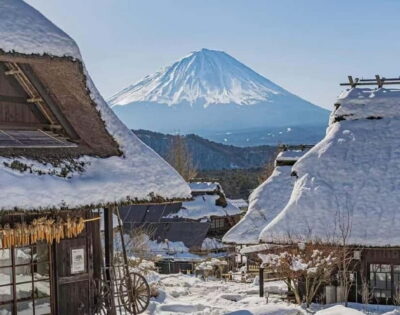
Mt. Fuji Heritage Tour: Traditional Villages, Lakes & Shrine
Read our review →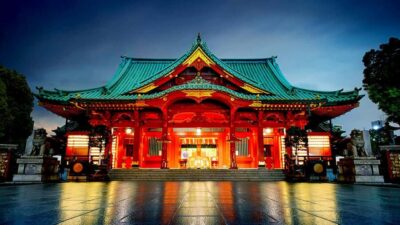
Samurai Entertainment Night Show in Kanda Shrine
Read our review →Browse the lists this tour appears in