
Reviewed · FOOD & DRINK
Tokyo: Matcha Tasting and Making Experience
Green tea has a personality. This 90-minute class turns matcha into something you can actually compare, then repeat at home. I love the chance to taste 10 matcha from 5 production areas, and I also love that you whisk your own matcha with a bamboo tea whisk. One heads up: the tasting includes two samples sold as matcha internationally even if they are not defined as matcha, so strict purists may want to pay attention to how those taste versus the ceremonial-grade ones.
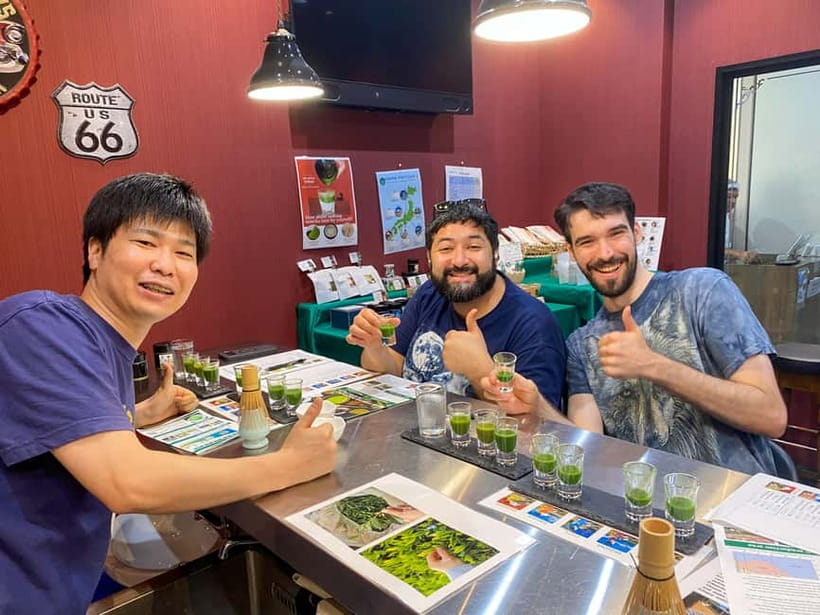
The guide, former tea farmer Chisei, keeps things practical and clear. He grew tea for six years in Kyoto, and he uses that firsthand experience to explain how matcha is produced and why the flavor changes from one area to another. This is a small-group format limited to five people, taught in English, so questions do not get lost.
You meet at the cafe inside Henn na hotel Asakusa Tawaramachi, then head up to the 2nd floor. After your matcha comparison, you finish with matcha latte, hojicha latte, and matcha sweets. If your schedule is tight, this is a good fit, but it is still a “learn and taste” session, not a slow tea ceremony.
Key moments you will remember
- Taste 10 types of matcha linked to 5 different production areas in Japan
- Compare 8 matcha in small portions at once, using color, aroma, and taste as your guide
- Learn from Chisei, a former Kyoto tea farmer who grew tea for six years
- Whisk your own Ousucha with a bamboo tea whisk, choosing the matcha you liked best
- Pair your matcha with drinks and sweets, including matcha latte and hojicha latte
Getting to the cafe in Asakusa, and what the setup teaches you
This experience starts inside Henn na hotel Asakusa Tawaramachi. You enter the hotel, then go to the 2nd floor for the cafe. There is a FamilyMart on the 1st floor, which makes it easy to spot before you head inside.
Why this matters: matcha tasting works best when you are not juggling directions, lines, or confusion. Here, the class feels like a “sit down, compare, then make” flow. The 90-minute duration also keeps it focused. You are not spending half your day commuting to a far-out tea farm. You are getting the tea lesson in the middle of real Tokyo.
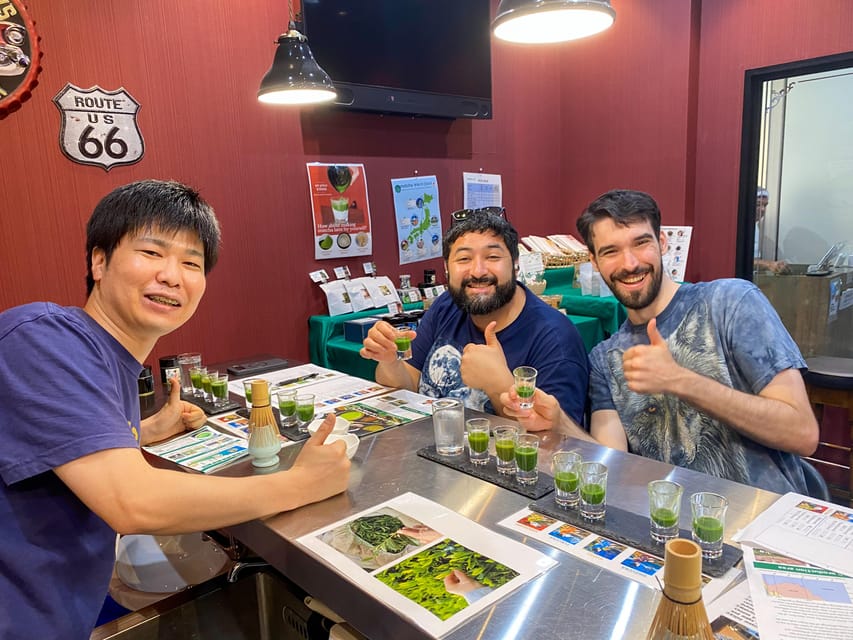
The group size stays small, capped at five participants. That is a big deal for a hands-on class. You get time to ask questions while the matcha is fresh and the guide is right there with you.
More Food Tours in Tokyo
- Tokyo: Shinjuku Food Tour (13 Dishes at 4 Local Eateries)
★ 5.0 · 6,603 reviews - Tokyo Tsukiji Fish Market Food and Culture Walking Tour
★ 5.0 · 3,184 reviews - Tokyo: Shinjuku Food Tour (15 Dishes and 4 Eateries)
★ 4.9 · 2,033 reviews
Welcome drink and matcha basics from Kyoto tea farmer Chisei
Before you start tasting, you get a welcome drink. While you sip, you get the matcha story in plain language: what matcha is, how it is cultivated, and how production affects flavor.
Chisei is the reason this section works. Instead of talking in broad terms, he connects the farming side to what you will taste later. He has practical experience, having grown tea for six years in Kyoto, so he can point out how cultivation methods influence the cup.
You should expect the class to focus on comparisons. That means you are not just learning facts. You are learning what to notice. Color matters. Fragrance matters. Taste matters. The goal is that by the time the tasting arrives, you know what you are looking for, not just what you are drinking.
In a small group, this is where your curiosity pays off. If you have questions like why some matcha looks lighter or why certain ones feel more bitter, this is the time to ask.
The 8-part color and aroma test, plus what 10 matcha actually means
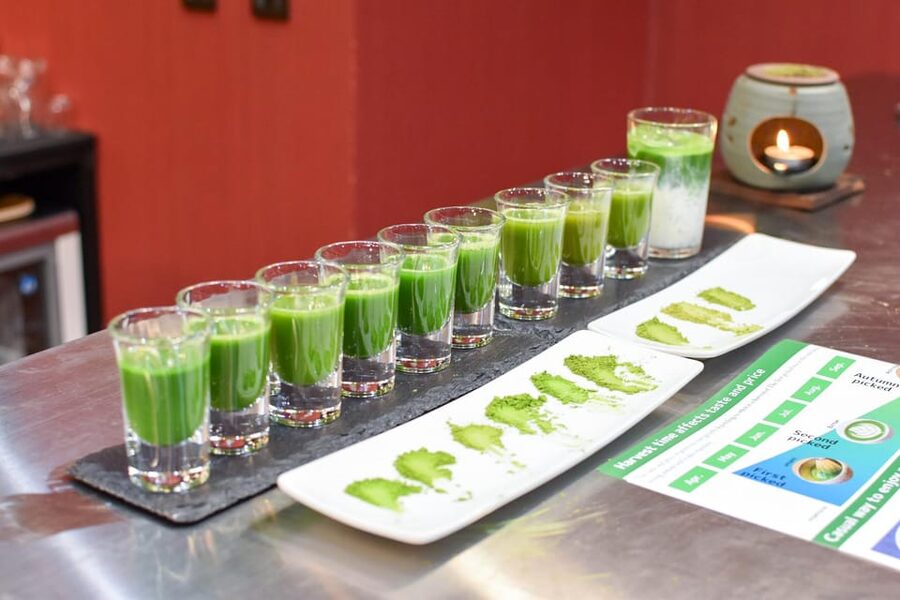
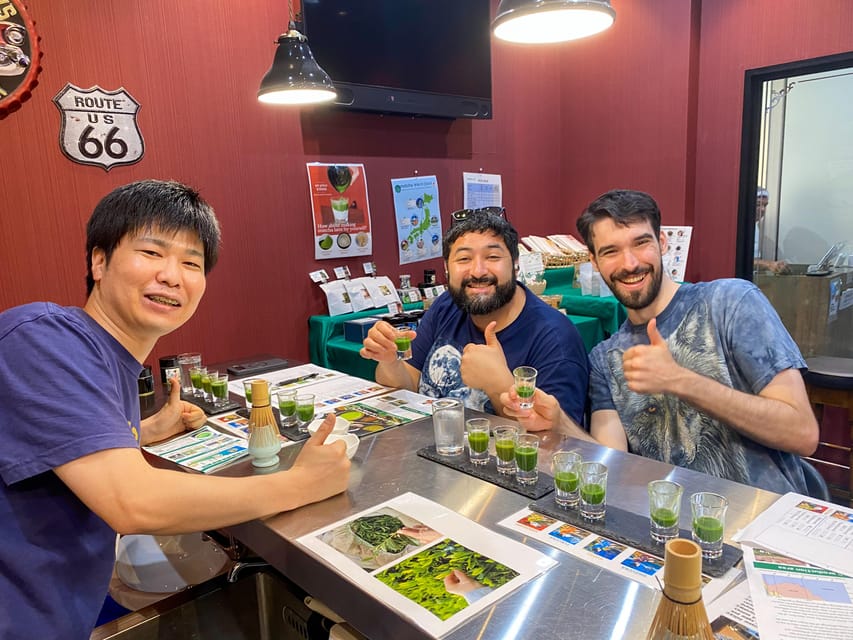
Here is the heart of the class. You taste matcha from multiple production areas. The highlights say you will taste 10 different matcha types from 5 production areas. The tasting flow then serves 8 types for the guided comparison in small portions at once.
So what does that look like in practice?
- You get a structured comparison segment where you look, then smell, then sip.
- You might also taste additional matcha beyond the 8 that are part of the main side-by-side comparison.
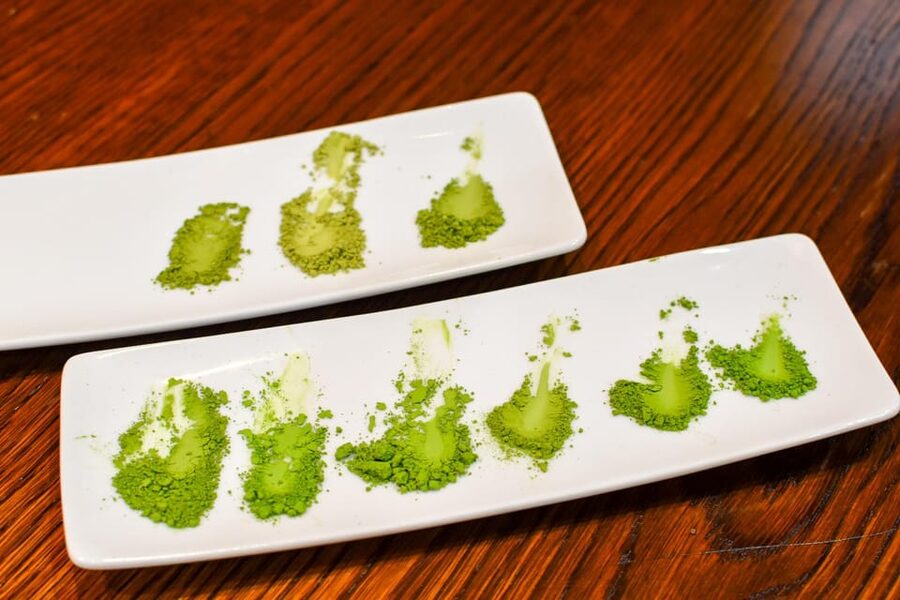
The class explicitly teaches you to pay attention to the color before the matcha is whisked or fully served. Then, for each sample, you get to experience the fragrance and taste. This is not random snacking. You are training your palate to notice how matcha changes.
One important detail for your expectations: the guided comparison includes six ceremonial grade matcha and two samples sold as matcha internationally even if they are not defined as matcha. Translation: not every cup in the lineup will match your idea of what “real matcha” must be. That is not a bad thing. It helps you understand why the matcha market looks the way it does, and why labels can confuse people shopping later.
If you only care about the ceremonial side, start paying attention to the ones that are positioned as ceremonial as you compare colors and tastes. If you want matcha for milk drinks, the broader lineup may help you learn what tends to play nicely when mixed.
Practical tip: take small sips and let your brain do the work. Your notes do not need to be fancy. Just remember which one tasted smoother, which one felt more grassy, and which one made you want another sip.
Whisking your own matcha with a bamboo whisk (and what to aim for)
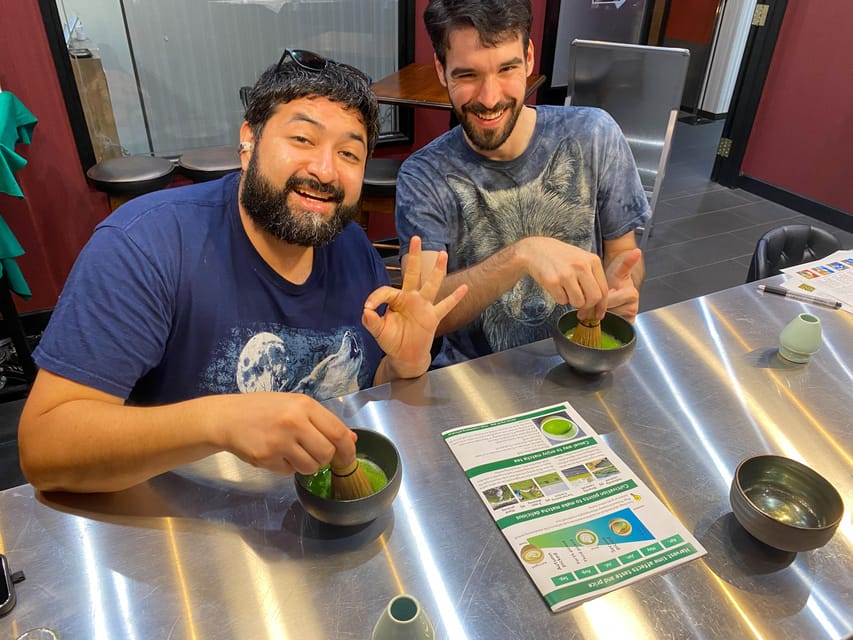
After the tasting, you choose the matcha you liked best. Then you make your own matcha using a bamboo tea whisk. The class ends with you enjoying Ousucha, the matcha you whisk yourself.
This is where a tea lesson becomes a skill. You learn how to turn powder into the drink, and you learn the difference between drinking matcha and making it. Even if you do not become a matcha professional, you will leave with the confidence to buy matcha and actually use it instead of letting it sit in your cabinet.
The bamboo whisk matters because it is part of the traditional process. You are not just mixing. You are whisking in a way that helps the matcha combine properly. The class structure keeps it simple: you make matcha from the option you picked during the tasting, so the drink you create connects directly to what you already liked.
Another payoff: you are told that you will still be able to make matcha at home. That is the real value here. A lot of experiences end with photos. This one ends with a method you can repeat.
More Tea Ceremonies in Tokyo
- Matcha Making Class in Tokyo with Authentic Japanese Sweets Set
★ 5.0 · 744 reviews - Tokyo: Traditional Tea Ceremony with a Tea Master
★ 5.0 · 528 reviews - Tokyo: Matcha Making Experience with Mochi Sweets in Asakusa
★ 4.9 · 388 reviews - Tokyo: Matcha and Kimono Experience
★ 4.7 · 219 reviews
Matcha latte, hojicha latte, and sweets, plus why milk changes everything
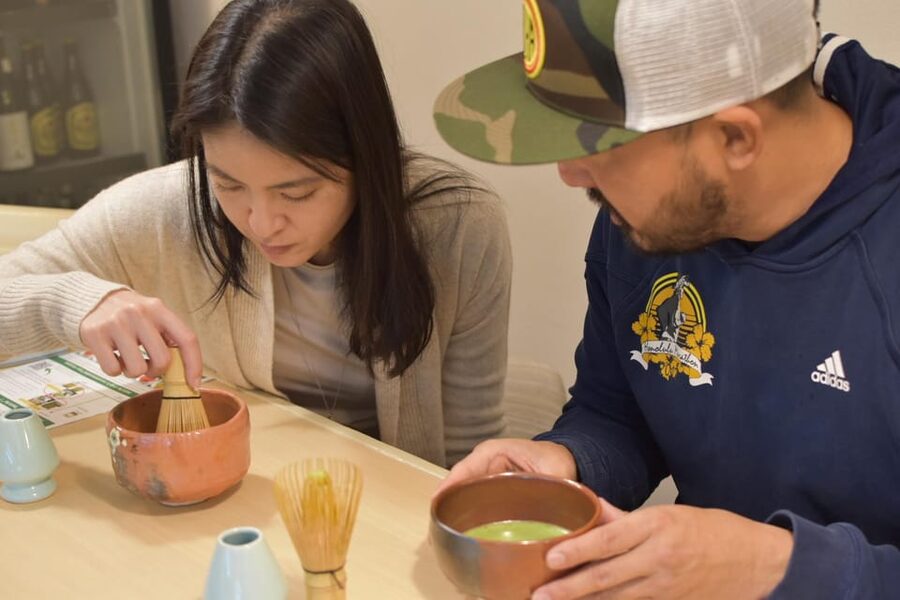
Once the hands-on part is done, you shift to relaxing. You get to enjoy matcha latte and hojicha latte along with matcha sweets.
The class uses an original blend matcha that is designed to go perfectly with milk. That detail matters because matcha flavors can be intense if you drink it straight. Milk changes the balance. It softens bitterness, rounds out sharp notes, and turns matcha into something that feels friendly for first-timers.
It is smart that hojicha latte is included too. Hojicha tends to bring a different flavor direction than matcha, so you get a quick contrast. If matcha straight feels too strong for you, the latte versions show you a practical way people enjoy matcha day to day.
For sweets, the point is not just dessert. It is another pairing test. How does your chosen matcha taste with sugar? Does milk make the matcha feel different again? If you are a “use matcha in desserts and drinks” kind of person, this pairing section helps you decide how you will use what you buy later.
Price of $63 for 90 minutes, and why it can be good value
$63 per person can feel high if you only think about drinking tea. But this class is not just a beverage stop. You get:
- a welcome drink
- tasting across multiple matcha types from multiple production areas
- a hands-on matcha making experience with a bamboo whisk
- matcha latte, hojicha latte, and matcha sweets
You are also getting a former tea farmer guide, English instruction, and a small group limited to five participants. That combination is what makes the price make sense. The cost is paying for expertise and time, plus the chance to compare and then make.
Also, transportation is not included. That is the one cost to factor into your day. If you are staying near Asakusa, it is usually easy to fit in without a major detour. If you are coming from far away, check how long it takes you to reach Henn na hotel Asakusa Tawaramachi so the 90 minutes stays enjoyable, not stressful.
If you are deciding between “buy matcha and watch videos” versus an actual guided class, the hands-on whisking plus the tasting comparisons are what tip the balance here.
Who this matcha tasting fits best
This experience is built for general tea lovers, and it works especially well if:
- you are new to matcha and want clear guidance on what to notice
- you like learning from a real tea farmer, not just reading labels
- you want a small group class instead of a crowded food tour
- you want to leave with the ability to make matcha at home, not just tasting notes
It may be less ideal if you only want one narrow style of matcha and nothing else. Remember, the guided comparison includes both ceremonial grade matcha and two items sold as matcha internationally even if they are not defined as matcha.
Practical tips so you get more from your 90 minutes
Plan your timing so you are not rushing. The experience is 90 minutes, so you want to be seated and ready when it starts.
Come with a beginner mindset. That sounds obvious, but it helps. The class is built around noticing color, fragrance, and taste, then using that info to choose what you whisk yourself.
Ask questions during the welcome and explanation portion, not only at the end. That way, when you taste and compare, you already understand what the guide is pointing out.
Finally, if you are worried about bitterness, do not panic. The class includes matcha latte and hojicha latte later, plus sweets. You will get a milk-forward way to enjoy matcha too.
Should you book this matcha tasting and making experience?
Book it if you want a short, focused class that teaches you how matcha differs by production area and then gives you the real skill of whisking your own matcha at home. The small group size and the guide background with Kyoto tea farming are exactly the kind of ingredients that make a tea class feel worth your time.
Skip it only if you are looking for a long, silent tea ceremony or if you want zero variation in matcha styles. This class is a comparison plus hands-on workshop, and it includes a wider set of matcha examples than some purist-only tastings.
If that sounds like your kind of day, you will likely walk away with two things you can actually use: better tasting instincts and a simple matcha method you can repeat back in your own kitchen.
FAQ
Where is the meeting point for the matcha experience?
The cafe is in Henn na hotel Asakusa Tawaramachi. Enter the hotel and come to the 2nd floor.
How long is the experience?
The duration is 90 minutes.
What is the price per person?
The price is $63 per person.
What language is the instruction?
The instructor teaches in English.
How big is the group?
The group is limited to 5 participants.
What matcha do you taste during the class?
You taste matcha from 5 different production areas. You also taste 10 different types of matcha, and the comparison portion includes 8 types served in small portions at once.
Do you get to make matcha yourself?
Yes. After tasting, you choose the matcha you like best and make matcha using a bamboo tea whisk.
What drinks and sweets are included?
You get a welcome drink, plus matcha latte and hojicha latte, along with matcha sweets.
Is transportation included to reach the experience location?
No, transportation to the experience location is not included.
Can I cancel or pay later?
You can cancel up to 24 hours in advance for a full refund. You can also reserve now and pay later, which means you pay nothing today.
Fresh options around Tokyo
- Tokyo: Nikko Kegon Falls Lake Chuzenji Toshogu Temple & More★ 4.9 · 12 reviews
- Tokyo: Samurai History Walking Tour★ 5.0 · 12 reviews
- Harajuku: Kawaii Fashion and Pop-Culture Tour★ 4.7 · 12 reviews
- Tokyo: Mt. Fuji & Lake Kawaguchi Instagram Full Day Trip★ 4.1 · 12 reviews
- Shibuya Tokyo: Modern Kintsugi Workshop in Shibuya★ 5.0 · 12 reviews
- Tokyo: GTR Guided Daikoku Experience at Night★ 5.0 · 12 reviews
- Tokyo: Daikoku JDM Car Culture Tour★ 4.6 · 12 reviews
- Mt Fuji Private Day Trip from Tokyo with English speaking driver★ 5.0 · 13 reviews
Food & Drink, compared.
Shinjuku Food Tour (13 Dishes at 4 Local Eateries)
Read our review →
Tokyo Tsukiji Fish Market Food and Culture Walking Tour
Read our review →
Shinsekai Food Tour with 13-15 Dishes at 5 Eateries
Read our review →
Osaka Food Tour: 13 Dishes at 5 Local Eateries
Read our review →
Shinjuku Food Tour (15 Dishes and 4 Eateries)
Read our review →
Best of Shinjuku: Izakaya Food Tour (4 Stops, 14+ Tastings)
Read our review →
Kyoto Night Foodie Tour in Gion (9+ dishes + 6 Sake tastings)
Read our review →
Hungry Osaka Street Food Tour:15 Tastings & 3 Drinks with a Local
Read our review →Browse the lists this tour appears in