
Reviewed · CYCLING TOURS
3h Tokyo E-Bike Tour: Hidden Gems, and Local Life with guide
Three hours, endless Tokyo shortcuts. This tour is built for seeing history and everyday life without turning your legs into toast, and the e-bike assist makes pacing feel relaxed instead of rushed. I also like how the guides keep things practical, with clear explanations and patient group control, which matters when you are cycling around busy central streets. The main thing to consider: you need real comfort riding a bicycle through traffic and staying with the group.
You’ll start right by Kanda Station, in easy reach of the action, then roll through neighborhoods that feel different street to street. It’s a small-group format (up to 6), and you get useful extras like helmet, simple rain gear, and luggage storage so you can travel light and keep your focus on the ride.
Key Things I’d Plan Around
- One-minute walk near Kanda Station makes the start stress-free
- Morning vs afternoon routes change the vibe and stop list
- Imperial Palace area viewpoints like the moat and Otemon Gate bring big landmarks into bike range
- Tsukiji Outer Market timing works well for short shopping and snack stops
- Afternoon subculture stops can include Akihabara, plus Kappabashi tool streets
- Less-crowded backstreet segments help you orient fast without wall-to-wall crowds
Why an E-Bike Changes the Tokyo Game in 3 Hours
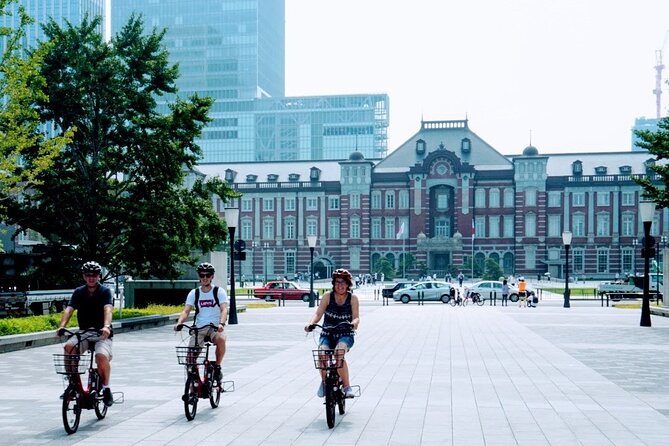
Tokyo is packed. If you try to do it by train plus walking, you end up spending more time transferring than actually seeing. With an e-bike tour, you trade that friction for motion, so the tour feels like a guided “city overview” you can build the rest of your trip on.
You also get a more natural rhythm. Your guide can stop for photos, explain what you’re looking at, and then you roll on quickly. Even on a hot day, the electric assist helps you keep a steady effort instead of constantly straining.
More Bike Tours in Tokyo
- Tokyo Guided Small-Group Biking Tour
★ 5.0 · 1,250 reviews - Tokyo Great Cycling Tour
★ 5.0 · 811 reviews - Tokyo Top Highlights 3h Guided E-bike Tour
★ 5.0 · 714 reviews
Where You Start Near Kanda Station (and Why That Matters)
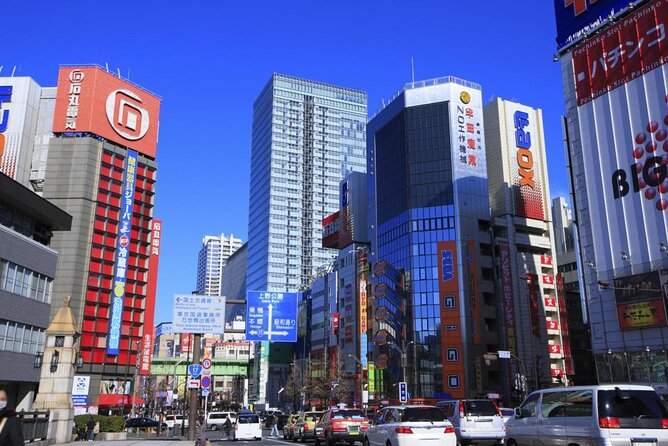
The meeting point is Cycling Holiday Tokyo, near Kanda Station, with a very short walk from the JR Kanda Station west exit. That sounds small, but it is huge for Tokyo days when you are bouncing between neighborhoods. If you are trying to maximize a first morning or last afternoon, this kind of convenient start buys you time.
The shop setup is also practical. You get a waiting room, restroom access, and luggage storage (just note valuables stay with you). That means you can bring a day bag without the usual “where do I leave this” headache.
The Kanda Start: Business-Town Streets and Local Bar Energy
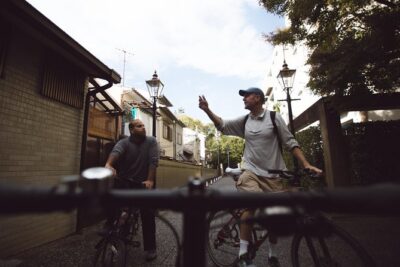
Most routes begin in Kanda, a downtown pocket that feels geared toward working life rather than sightseeing. You’ll see small Japanese-style bars tucked into side streets, plus a sense of neighborhood scale that disappears once you only ride the major tourist corridors.
This is also the part of the tour where the electric bike tends to feel most useful. You can get comfortable with handling and pacing early, while your guide sets expectations for where you’ll ride and when you’ll stop.
Tokyo Station and the Imperial Palace Area, Seen From a Bike-Friendly Angle
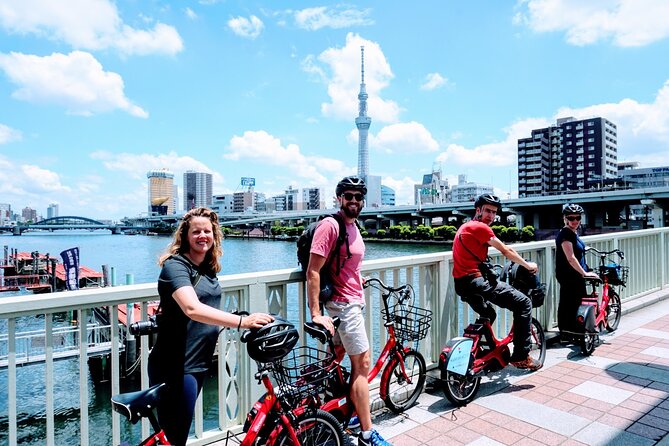
If you choose the morning option, you’ll get a classic highlight mix. Tokyo Station’s Marunouchi area is photogenic, and your guide explains the station’s history as you look at the building from a nearby street.
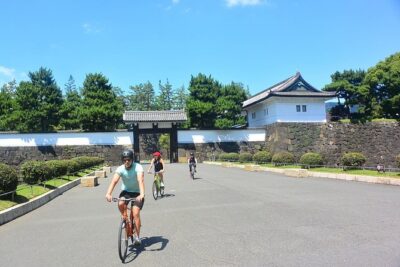
Then comes the Imperial Palace zone. You’ll pass Kokyo Otemon Gate, where you get a view across the moat toward structures like the “Fujimi yagura” tower. It’s one of those moments where you suddenly understand why people take photos here, even if you are not stepping inside.
A bike also changes how you experience the park areas near the Imperial Palace. Instead of a long walk between distant points, you move short distances and keep your bearings. That makes the whole area feel more connected, not like a list of separate stops.
Same corner of Japan, a different kind of day:
- Mt Fuji and Hakone 1-Day Bus Tour Return by Bullet Train
★ 5.0 · 26,383 reviews - 1-Day Tokyo Bus Tour
★ 5.0 · 14,250 reviews - Tokyo: TOKYO SKYTREE® Admission ticket
★ 4.5 · 11,192 reviews - Tokyo: teamLab Planets TOKYO Digital Art Museum Entry Ticket
★ 4.6 · 9,779 reviews
Sakuradamon and Backstreet Ginza: The Luxury Side With Local Streets
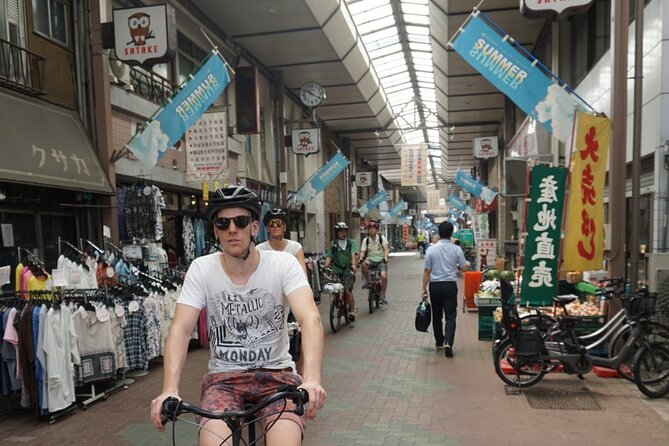
From the Imperial Palace area, the morning route can include Sakuradamon, the traditional castle gate that helps bridge the modern city to older Tokyo forms. After that, your route may head into Ginza backstreets, where luxury brands exist, but the street feel can get more local depending on the day and traffic.
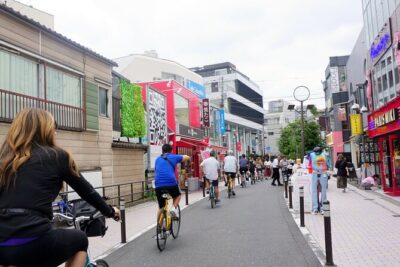
I like this segment because it’s not just about big landmarks. It’s where you learn how Tokyo neighborhoods interlock. Riding the smaller streets helps you notice transitions, like how storefront types and sidewalk energy change block by block.
One practical note: this is also where you feel cycling in real city conditions. Expect cars, bikes, and pedestrians moving with purpose. If you are new to riding in traffic, take your time adjusting your pace and stay close to your guide.
Tsukiji Outer Market Stops, Without Turning It Into a Food Marathon
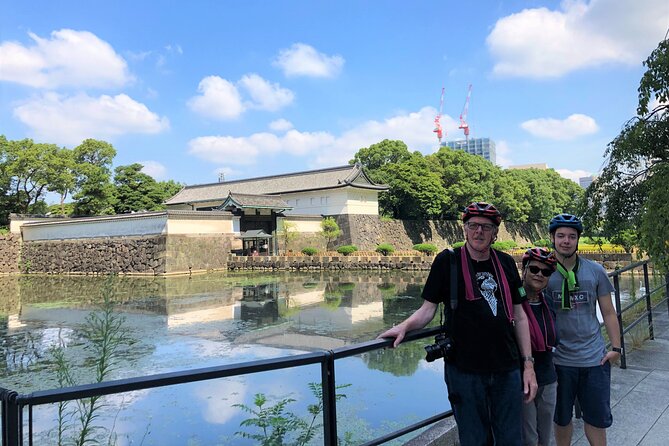
Tsukiji Outer Market is one of those places where you can learn a lot in a short time. On the tour, you’ll have a brief stop where small, older-style food shops line the streets, selling interesting items and snacks.
This stop works best when you treat it like a sampler. You are not forced into a meal plan, since food and drinks are self-pay. Instead, you can pick a quick bite, buy something small, and keep moving while the rest of the group continues.
Also, remember the goal here is context. A market like Tsukiji is loud, crowded, and layered. Your guide helps you understand what you’re seeing so you can shop with confidence later on your own.
Akihabara in the Afternoon: Subculture, Not Just One Landmark
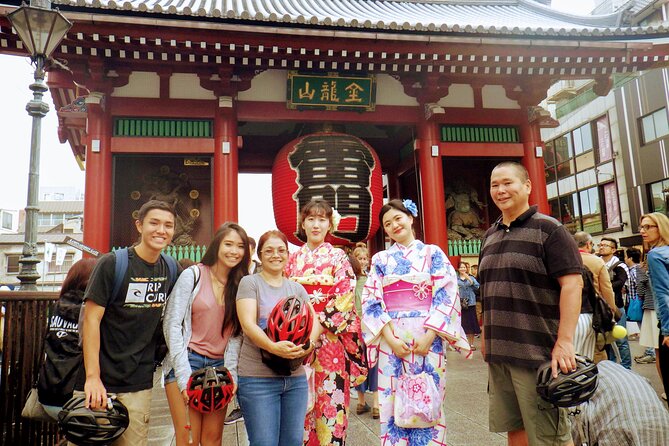
The afternoon course shifts the mood. You can get Akihabara, a subculture hub tied to youth and geek culture. It’s a quick stop designed to give you orientation, so you leave knowing the neighborhood identity, not just checking a single photo point.
If you worry you’ll miss the “real” meaning of Akihabara beyond internet stereotypes, this stop is useful because your guide frames what you’re looking at. You also avoid spending your whole day scanning storefronts without a plan.
Kappabashi Tool Street: Knife and Kitchen Culture on a Short, Fun Loop
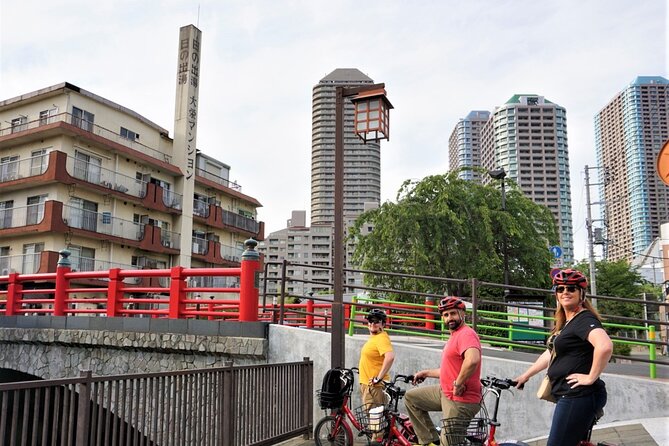
Kappabashi Street, also called Kappabashi Dogugai, is a big reason people love this kind of guided cycling route. You’ll pass through a zone packed with kitchen utensils, professional cooking tools, and traditional Japanese knives.
If you want to shop, this is one of the most practical places to do it on the tour because it is focused and compact. It’s also a good “souvenir with a use” target. If you’re not buying, even just browsing the variety helps you understand Tokyo’s food culture.
Asakusa and Ryogoku: Temple Energy and Sumo Area Time
Asakusa is a classic must-see, and the tour handles it with a short, efficient stop approach. You get time at the area known for the oldest temple in Tokyo, and you’ll feel the immediate recognition of being in the right place.
On the afternoon route, you can also reach Ryogoku, the sumo wrestler area. The tour may include a chance to meet real sumo wrestlers if you are lucky. Even if you don’t see anyone, you still get a feel for the neighborhood identity tied to the sport.
One more detail I really like: guides on this route often pay attention to customs and how to behave around temples. In particular, some guides were praised for explaining temple rituals and etiquette in a way that sticks with you for the rest of your Japan trip.
Small-Group Riding: How the Guides Keep It Fun and Safe
This tour caps at 6 people, and it runs with at least 2 guests. That size matters. In a bigger group, it’s hard to hear instructions or feel comfortable when the route gets busy. In a small group, the guide can keep track of spacing and help everyone stay together.
The guide experience stands out across many rides. Names you might encounter include Yo, Ted, Take, Jenny, Kazu, Ninja, and Yoppi. What they share in the feedback is a mix of clear explanations, friendliness, and patience, including during harder conditions like heat or rain.
If you want an example of what “guide quality” looks like here, look for cues in the feedback: guides answering questions, stopping for useful explanations, staying safety-minded, and keeping the pace easy enough that first-time e-bike riders can manage.
What You Actually Get Included (and How It Helps on the Road)
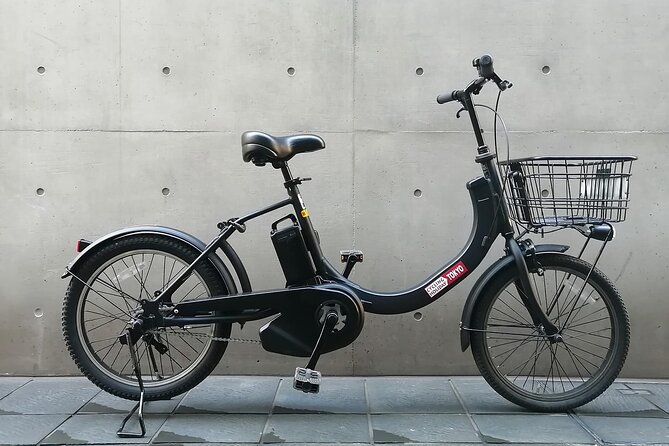
You get the rental e-bike, helmet, and an English guide. Insurance is included too, which is a comfort factor when you are cycling in a dense city.
Weather support is also built in. You’ll get simple rain gear. In winter, simple gloves are provided, and in summer, cooling products are provided. Even though the tour can be canceled due to rain, the fact that you are not entirely on your own for light weather bumps is a practical plus.
There’s also luggage storage at the shop during the tour, except valuables. This lets you travel with less stress, especially if you are combining the e-bike ride with other sightseeing that day.
The Real Tradeoffs: Riding Ability, Busy Streets, and Weather Limits
Let’s be honest. This is not a gentle stroll tour. It is cycling through central Tokyo, and you need the ability to ride a bicycle. If you cannot ride a bike, you can’t join.
You should also plan for crowds and traffic patterns on the ground. One of the most direct pieces of feedback was that you need to be comfortable riding through busy streets and keeping up with your guide.
Weather matters too. If rain forces cancellation, the tour will be canceled. If the forecast was sunny and rain starts during the tour, the guide decides whether to continue or stop. In summer, there is extra heat safety logic, using a heat stress index as reference, and the tour can be canceled or stopped if conditions become dangerous.
What to Bring for Comfort (Heat, Sun, and Simple Extras)
Even when cooling products exist, Tokyo heat can catch you off guard. I’d plan to bring towels and sunscreen in summer, plus water. In winter, warm clothes and gloves are a smart move even with simple gloves provided, since conditions can still feel sharp.
If it looks like rain, you should still come prepared. You receive simple rain gear, and some guides were praised for being thoughtful in rainy situations, but comfort is easier when you pack with the assumption that weather can change.
Also consider your own bike comfort needs. Some riders mentioned a front basket on the bike that helped store water and bags. If you have a bag or bottle, you’ll appreciate having a place to put it.
Price and Value: Why $63 for 3 Hours Can Make Sense
At $63.01 per person for about 3 hours, you are paying for more than a bike rental. You’re getting a guide, an e-bike, helmet, insurance, weather extras, and the advantage of a planned route that strings together major landmarks plus side streets.
If you tried to DIY this, you would spend time figuring out safe routes, where to stop for photos, and how to avoid wasted bike energy on long detours. Paying for the guided structure is often worth it when your time is limited.
Also, because the routes differ by morning vs afternoon, you can choose based on what you want to see most. That makes the price feel more targeted rather than generic sightseeing.
Should You Book This Tokyo E-Bike Tour?
Book it if you want a fast, guided orientation to Tokyo that mixes big names with neighborhood-feeling streets, and you like cycling enough to handle real traffic moments. This is especially good for first-timers who want to get confident quickly, and for groups who want an easy activity that still feels like Tokyo, not just a checklist.
Skip it if you are not comfortable riding a bicycle through busy areas, if you are expecting a low-effort, no-pressure ride, or if weather is unreliable during your dates and you cannot be flexible with possible cancellations.
If you decide to go, I’d pick the route by your personal priorities. Want Imperial Palace views and Tsukiji with a classic morning flow? Choose the morning option. Want Akihabara, Kappabashi tools, and Asakusa with an afternoon shift into Ryogoku? Choose the afternoon option.
FAQ
How long is the Tokyo e-bike tour?
It runs for about 3 hours.
What does the tour cost?
The price is $63.01 per person.
Where does the tour start and end?
It starts at Cycling Holiday Tokyo at 3-chōme-8-6 Uchikanda, Chiyoda City, Tokyo, and ends back at the meeting point.
Is food included?
No. Food and drinks are self-pay at shops.
What is included in the price?
You get an e-assist bike rental, helmet, English guide, insurance, simple rain gear, and simple gloves in winter or cooling products in summer. You can also leave luggage (except valuables) with them during the tour.
Do I need to know how to ride a bicycle?
Yes. People who cannot ride a bicycle cannot join the tour.
What are the minimum age and height requirements?
Minimum age is 12, and minimum height is 147 cm.
Does the route differ between morning and afternoon tours?
Yes. There are different routes and different stops depending on whether you book the morning or afternoon.
What happens if it rains?
In case of rain, the tour will be canceled. They check the weather forecast the day before. If it starts raining during a tour that had a sunny forecast, the guide decides whether to continue or stop.
Can I get a refund if I cancel?
Yes, you can cancel for free up to 24 hours in advance for a full refund.
More E-Bikes in Tokyo
- Tokyo: 3-Hour Bike or E-Bike City Highlights Tour
★ 4.8 · 435 reviews - Tokyo: 3-hour Guided E-Bike Tour of the City’s Hidden Gems
★ 4.8 · 251 reviews - Tokyo: 3-Hour Bike/E-Bike Tour of the City’s Highlights
★ 5.0 · 209 reviews - 3-Hour Tokyo Private E-Bike Tour Starting from Your Hotel
★ 5.0 · 117 reviews
Fresh options around Tokyo
- Tokyo: Nagano Snow Monkeys and Zenkoji Tour with Temples★ 4.9 · 19 reviews
- Yokohama Port: Private Customizable Tour with Transfer★ 5.0 · 19 reviews
- Explore Unique Tokyo Streets / Learn with a Pro Photographer★ 5.0 · 19 reviews
- Sushi Making with Interactive Samurai Experience at JIN-ASAKUSA★ 5.0 · 19 reviews
- DAIKOKU excursion by car DRIFT automobile encounter★ 4.5 · 19 reviews
- Official Street Go Kart Tour Akihabara 2nd★ 5.0 · 19 reviews
- Cosplay Experience with Professional Makeup and Photo Shoot!★ 5.0 · 19 reviews
- Japanese Traditional Sweets making★ 4.1 · 19 reviews
Cycling Tours, compared.
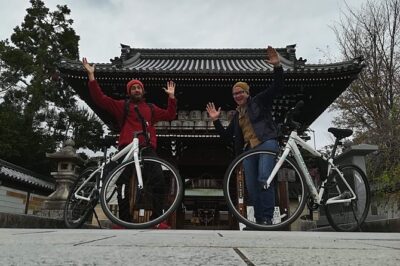
Arashiyama Bamboo Forest & Hidden Gems Bike Tour (Early Bird)
Read our review →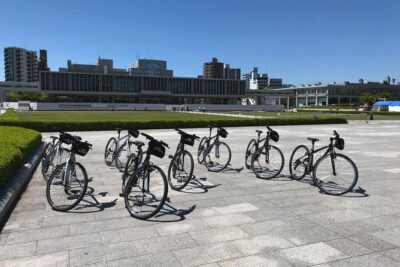
Hiroshima in a Nutshell: Morning Bike Adventure
Read our review →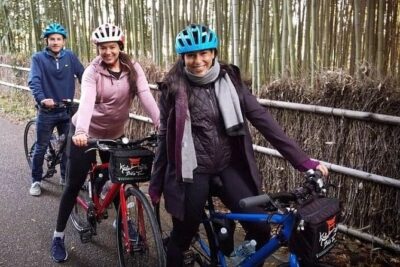
5 Top Highlights of Kyoto Full Day Bike Tour (E-bike option)
Read our review →Browse the lists this tour appears in