
Reviewed · CYCLING TOURS
Tokyo: 3-hour Guided E-Bike Tour of the City’s Hidden Gems
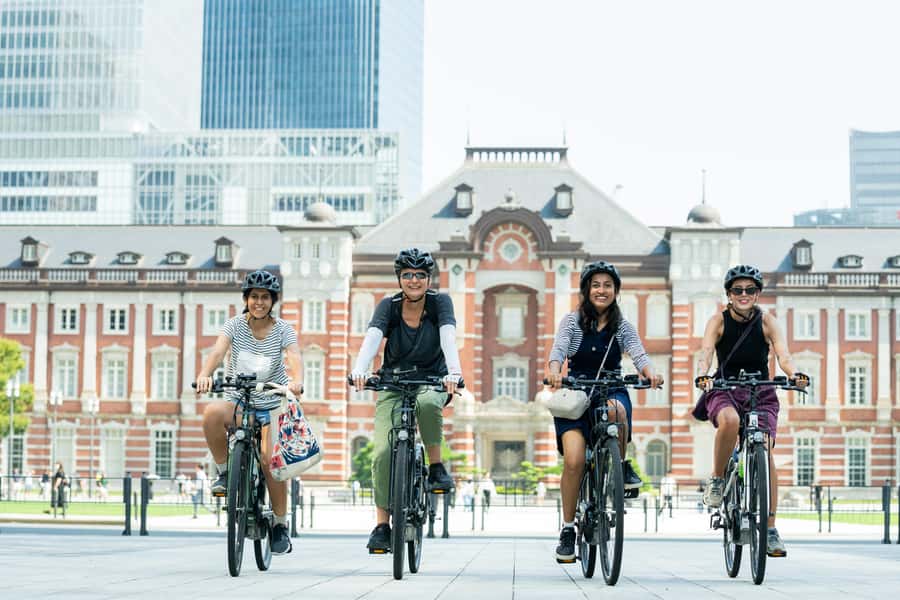
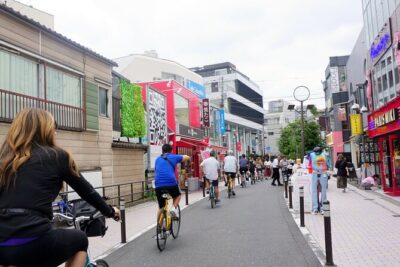
Tokyo moves fast, so ride smart. This 3-hour guided e-bike tour helps you cover big landmarks like Tokyo Station and the Imperial Palace, then sends you onto calmer neighborhood streets. I especially like the easy e-bike assist and the English-speaking guide commentary. The main drawback to plan for is that parts of the ride include shared space with pedestrians and moving traffic, so you should feel comfortable staying alert on a bike.
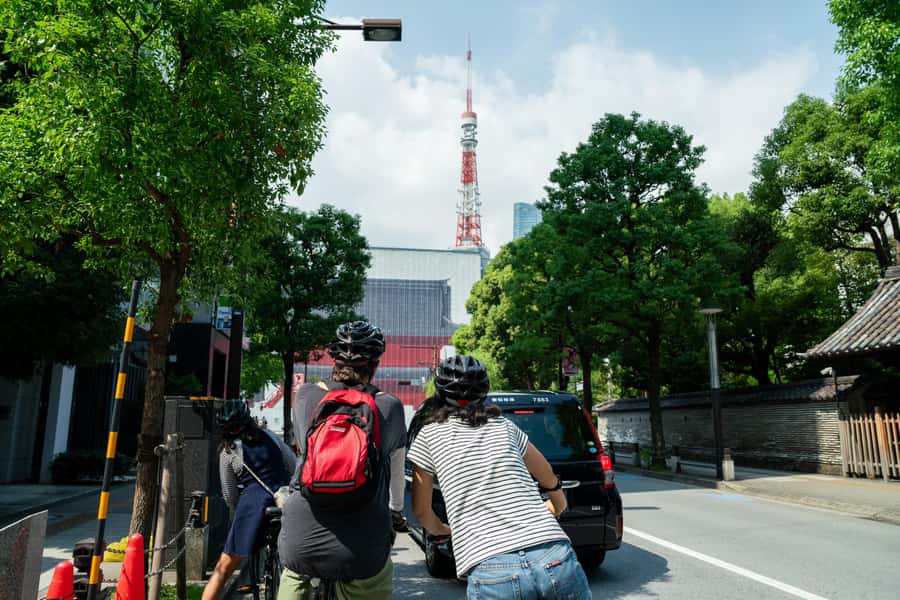
Pick your route and Tokyo feels different fast. You can choose a City Route for classic sights plus a Japanese garden, a Tokyo Bay Route for bridges and harbor skyline views, or a Tokyo Tower Route for temples, shrines, and hilly streets with motor help. You also get a snack stop, plus a helmet and luggage support, which keeps the whole thing practical, not precious.
At $65 per person, this is a value play if you want efficiency without giving up local detail. You’re paying for a guide to steer the schedule and route, not just a bike rental, and that matters in a place like Tokyo where getting “close” usually means a lot of time on trains and walking.
Key highlights to know before you book
- Route choice is the whole point: City, Bay, or Tokyo Tower each has a different vibe and set of stops.
- The ride is designed for real sightseeing: e-assist means you can cover more ground with less fatigue.
- English guidance keeps the trip moving: you stop, learn, and ask questions without guessing your way through Tokyo.
- Expect a real street feel: you will share footpaths at times, so keep an eye out for pedestrians.
- Snack and culture breaks are built in: traditional bites, plus garden and shrine time.
Why Tokyo’s e-bike format works so well
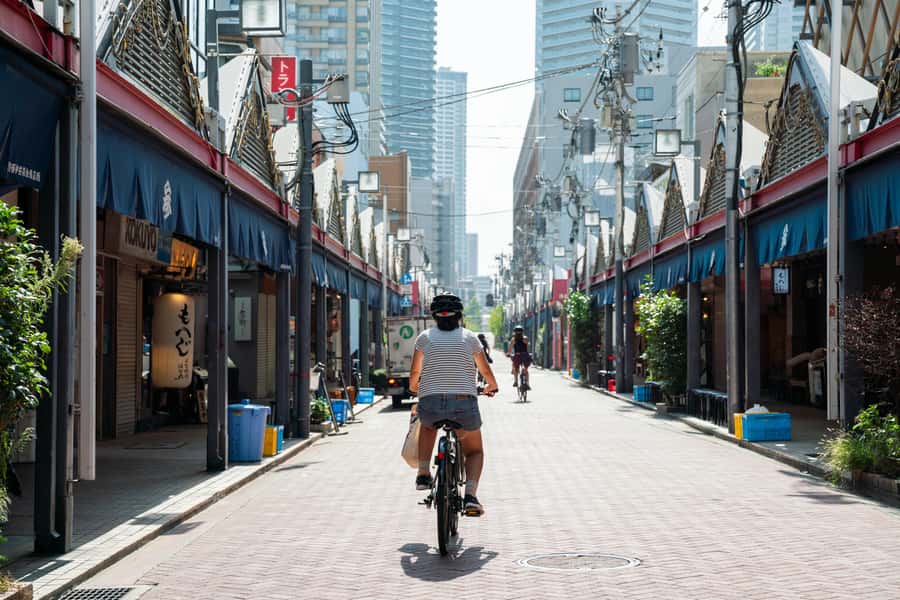
Tokyo is made for trains, but trains are not great for seeing how neighborhoods actually feel at street level. This kind of e-bike tour gives you that in-between view: you travel like a local, but with the timing and guidance of a tour.
The e-assist does two important things for most people. First, it lets you keep pace with the group without feeling wrecked at the end. Second, it makes the route choices possible, especially on a city that includes crowded crossings, compact streets, and occasional hills.
What makes the experience click is the mix of famous and quieter stops. You get passes by Tokyo Station and the Imperial Palace on one route option, then you shift into places that feel more lived-in. That blend is what turns a bike ride into a guided Tokyo day, not just transportation.
More Bike Tours in Tokyo
- Tokyo Guided Small-Group Biking Tour
★ 5.0 · 1,250 reviews - Tokyo Great Cycling Tour
★ 5.0 · 811 reviews - Tokyo Top Highlights 3h Guided E-bike Tour
★ 5.0 · 714 reviews
Price and what you truly get for $65
$65 sounds simple, but here is what you are really buying.
You are getting:
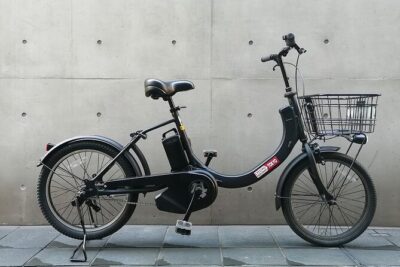
- an e-bike rental
- a guide
- a helmet
- luggage storage
- a traditional Japanese snack
- knapsack if you need it
- gloves in winter season
That bundle matters because it reduces the “extra costs” that pop up with DIY biking. You do not have to solve helmet rules, storage, or route logistics on your own. And the guide does more than point out landmarks. People repeatedly praise the way guides build in stories and local context, with names like Hiro, Yugo, Yota, Miki, and Yuki showing up in that role.
Is it still a spend? Yes. But for most visitors, 3 hours of guided e-bike time can save hours of planning and walking, and it gives you views you would not reliably get from buses or subway stations.
The three routes: which one matches your Tokyo mood
Before you book, you need to choose the route style that fits your day. The tour is the same overall format, but the stops change by route.
City Route: classic Tokyo plus garden and shrine time
This option leans into “Tokyo landmarks” while still aiming for close-up street views. It is a great fit if you want a balanced first look, or if you have already seen some neighborhoods and want something different for your second or third day.
Same corner of Japan, a different kind of day:
- Mt Fuji and Hakone 1-Day Bus Tour Return by Bullet Train
★ 5.0 · 26,383 reviews - 1-Day Tokyo Bus Tour
★ 5.0 · 14,250 reviews - Tokyo: TOKYO SKYTREE® Admission ticket
★ 4.5 · 11,192 reviews - Tokyo: teamLab Planets TOKYO Digital Art Museum Entry Ticket
★ 4.6 · 9,779 reviews
Tokyo Bay Route: bridges, water, and skyline at night or sunset
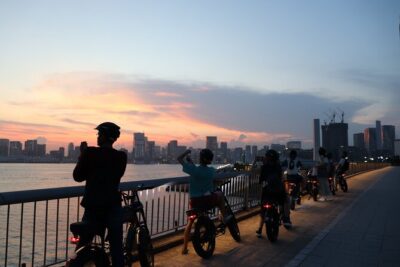
This is the best match if you care about views. You cruise through flatter, wider-feeling waterfront areas, and you ride across bridges with breeze, with strong attention on harbor scenery and big Tokyo night views depending on timing.
Tokyo Tower Route: temples, shrines, and a hilly feel with motor help
This option focuses on iconic city contrast and photogenic moments, including a Tokyo Tower photo stop. It also includes a park break and shrine stops, while still keeping the ride manageable thanks to the e-assist.
City Route itinerary: Ginza passes, Tokyo Station, and Kiyosumi Garden breaks
If you choose the City Route, expect a smooth sweep across central Tokyo with a few “touchdown” moments that slow you down in the best way.
Itinerary flow includes:
- Ginza district (pass by)
- Imperial Palace (pass by)
- Tokyo station
- Nihonbashi (pass by)
- a snack stop for a traditional Japanese treat
- Kiyosumi Japanese Garden
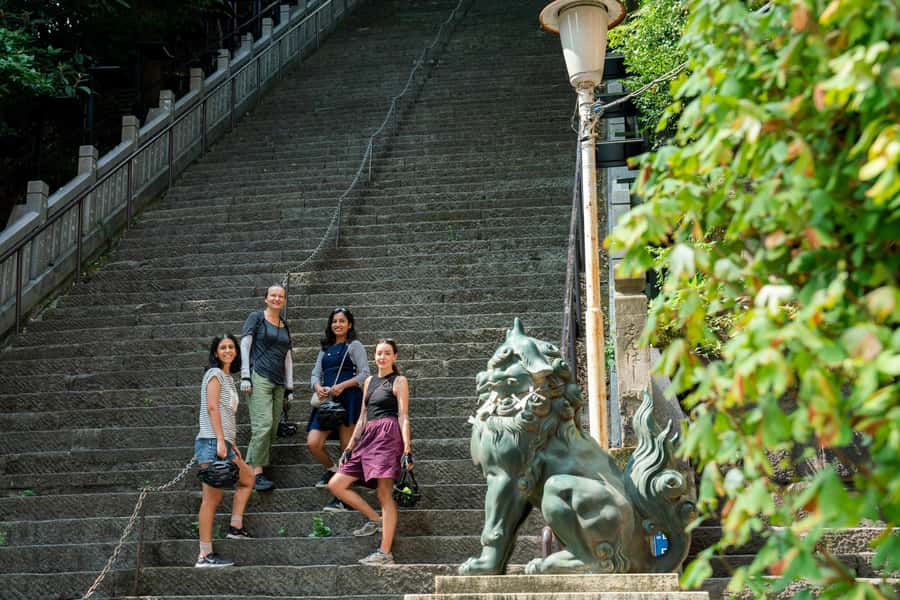
- Tomioka Hachimangu Shrine
Here is why these stops work.
Ginza and Imperial Palace as pass-by anchors
Even when you are only passing, seeing these areas from the street level is different from getting photos only from afar. You feel the rhythm of central Tokyo while keeping the overall ride time efficient. If you like classic “postcard Tokyo,” this gives you a strong baseline without turning the day into a museum crawl.
Tokyo Station and Nihonbashi for scale
Tokyo Station and the Nihonbashi area help you understand how Tokyo thinks in terms of transport and commerce. From an e-bike, you get motion and context at the same time. The main benefit is that you spend less time fighting for good angles and more time actually moving through the city.
Traditional snack stop
This is more than a sugar break. The snack stop gives you an easy moment to chat with your guide, ask what you should see next, and reset before the calmer garden segment. It also breaks the mental load of riding through busy streets.
Kiyosumi Japanese Garden for a nature pause inside the city
A garden stop is one of the biggest reasons this route feels worth it. You get a direct “Japan in miniature” moment without leaving Tokyo. Several guides incorporate the garden as a walking break, which makes the contrast between city streets and quiet paths feel real.
Tomioka Hachimangu Shrine for cultural grounding
A shrine stop adds the religious and cultural texture that modern Tokyo can sometimes hide. It is also a nice moment to slow down, take photos, and absorb the setting without rushing.
Potential drawback on this route? Central Tokyo means lots of pedestrians. If you are nervous around foot traffic, keep your pace steady and let the group guidance do the heavy lifting.
Tokyo Bay Route itinerary: Sumiyoshi Shrine, bridges, Gundam, and the sunset skyline
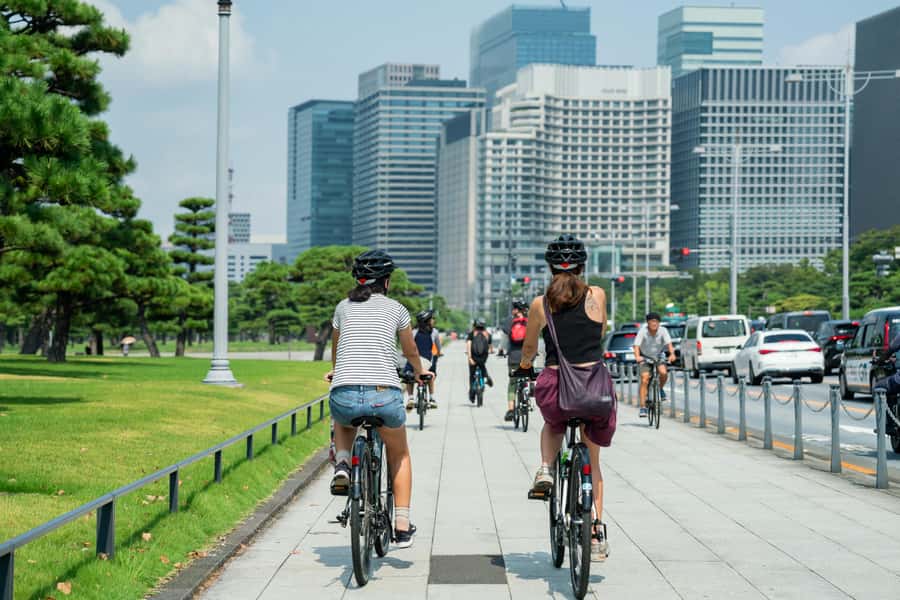
The Tokyo Bay Route is built for people who want postcard views plus a ride that feels more open than the city center.
This route includes:
- Sumiyoshi Shrine
- Tsukuda Tendai temple (hidden temple)
- teamLab Tokyo (pass by)
- Tokyo Big site (pass by)
- Gundam Statue
- Statue of Liberty in Odaiba
- Odaiba Aqua city (traditional snack stop)
- Rainbow Bridge (pass by)
What you will feel here is “water Tokyo.” The ride often feels flatter and wider, and that matters because you are spending a lot of time enjoying horizon lines instead of worrying about steep routes.
Shrines and temple before the harbor
Starting with Sumiyoshi Shrine and Tsukuda Tendai temple gives the bay route a grounded start. It keeps the day from becoming only entertainment and views. If you like a sequence that moves from cultural anchors to modern waterfront, this is your best match.
Odaiba icons: Gundam and Liberty Statue views
The Gundam Statue and the Statue of Liberty reference point give you those immediate Tokyo Bay talking points. If you like photographing recognizable landmarks, this route has built-in targets.
Bridges and big skyline moments
Rainbow Bridge is listed as a pass-by, but that usually means your guide chooses a route line so you can see it clearly while still keeping the group moving. Reviews repeatedly highlight the timing for sunset and night skyline views, which is the real reason to pick a Bay Route departure window.
Snack stop at Odaiba Aqua city
You get a traditional snack during the bay segment. It is a practical break, and it also helps the tour feel like a day out, not just a ride between sights.
One thing to know: in the review comments, people call out how smooth the e-bike help feels even for a “sunset bay” ride. That is a theme, but you still ride in shared areas near pedestrians. Keep a little extra space in your decision-making and you will be fine.
Tokyo Tower Route itinerary: Zojo-ji, Atago Shrine, and a photo stop with views
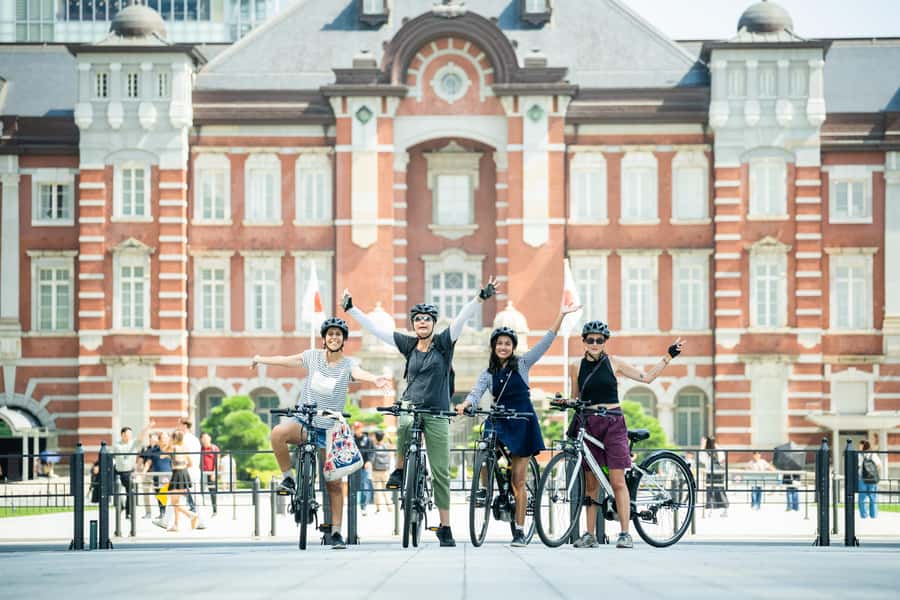
This route is for people who want a classic Tokyo skyline symbol plus a more varied street feel, including higher or hilly areas where the e-assist is a lifesaver.
Itinerary includes:
- Zojo-ji temple
- Tokyo Tower (take a picture at photo spot)
- Atago shrine
- a snack stop for a traditional Japanese treat
- National diet building
- Imperial Palace (pass by)
- Hibiya park
Why this route works.
Zojo-ji and Atago Shrine for old-meets-city energy
Temple and shrine stops act like cultural punctuation marks. You get a sense of Tokyo beyond the tall buildings, and you can step off the bike for a moment of calm. It also helps balance the ride intensity.
Tokyo Tower photo spot
This is not just a pass-by. You get a picture stop, which makes it feel like a must-do Tokyo moment. If you want that “I really saw Tokyo Tower” feeling, this route delivers it in a scheduled way.
National diet building and Imperial Palace passes
These pass-by stops are helpful for orientation. You learn the geometry of the city without spending your time walking in tight circles looking for viewpoints.
Hibiya park as a green reset
A park stop adds breathing room. It also makes the Tokyo Tower contrast make sense, because you see the urban edges and then the green pocket right inside the city.
The ride itself: comfort, safety, and how to avoid surprises
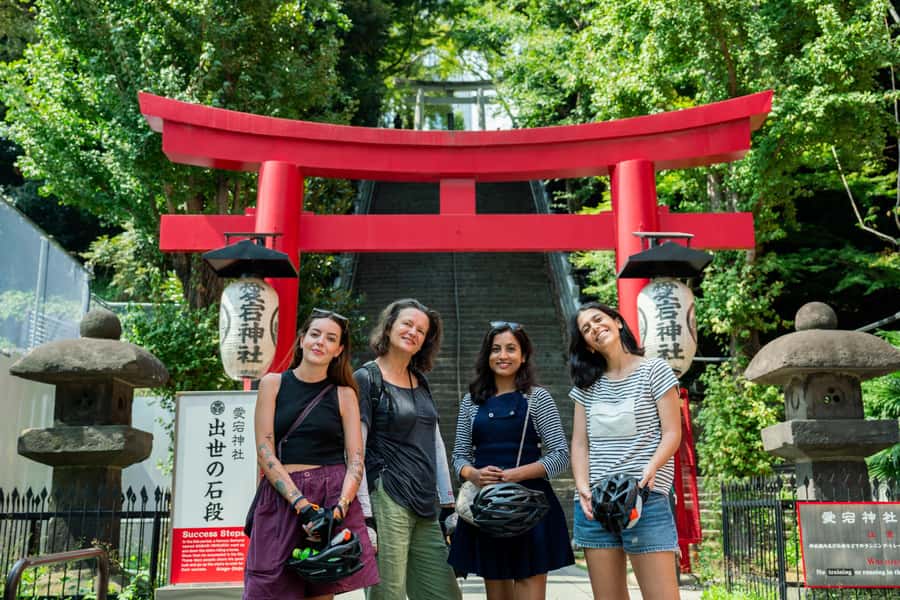
The e-bike part is usually the biggest relief. The bikes are described as easy for anyone to ride, and multiple reviews echo that the machines feel less intimidating after the first minutes. Guides like Shibonu, Shinobu, Hiro, Miki, and Yota are praised for helping people get comfortable and staying attentive to safety.
That said, you still ride in a real city.
Here is what to consider before you go:
- Parts of the route use paths shared with pedestrians.
- You will be near moving traffic at times.
- Comfort level matters more than fitness level.
One clear review tip: there can be shared footpaths with many pedestrians, so plan to be ready to anticipate their movement. That means slow down at crossings, scan ahead, and keep your line smooth.
Also, remember the “group tour” rule. If you are late, you cannot join mid-way. You will want to treat the 15 minutes early briefing time as non-negotiable, both for safety instructions and for getting sized up and rolling on time.
Practical pro tip I recommend: wear gloves if you are cold. The tour mentions winter gloves, which suggests they think about temperature and comfort. Even outside winter, closed-toe shoes and a steady, relaxed grip will make the ride feel easier.
Luggage, snacks, and the little touches that make it feel guided
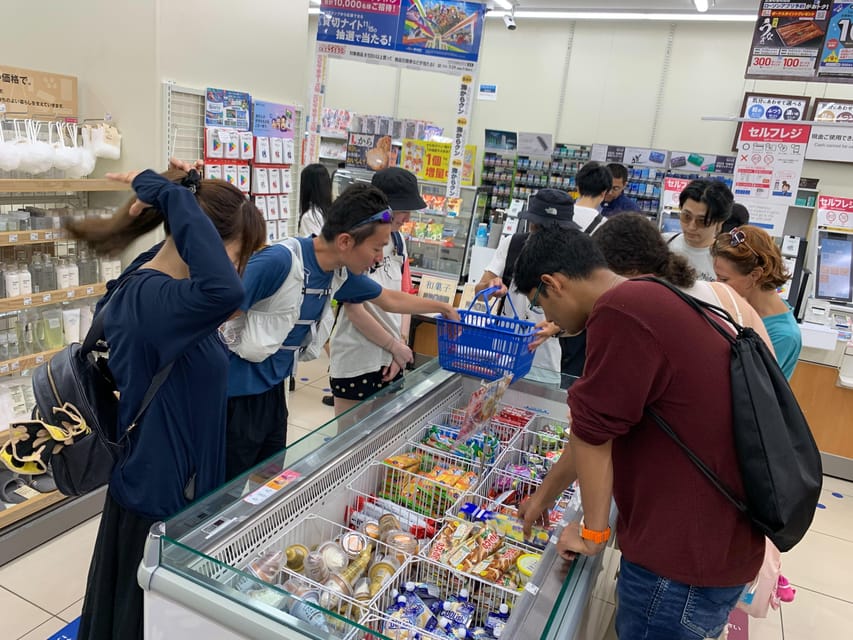
These tours work when logistics disappear.
You get:
- luggage storage
- a knapsack if you need it
- traditional Japanese snack
- helmet
- winter season gloves
Luggage storage matters because it reduces awkward carrying. It also keeps your hands free for safe riding and hand signals.
The snack stop is also a rhythm tool. It gives you time to regroup, talk with your guide, and get local recommendations without turning the day into a break-only schedule. Names like Hiro and Yugo show up with praise for guiding, humor, and fun facts, plus taking care of photo moments.
If you care about photos, this is one of the best places to ask. Reviews mention guides being patient when people want pictures, and that can make a big difference in the flow of the ride.
Who this e-bike tour is best for
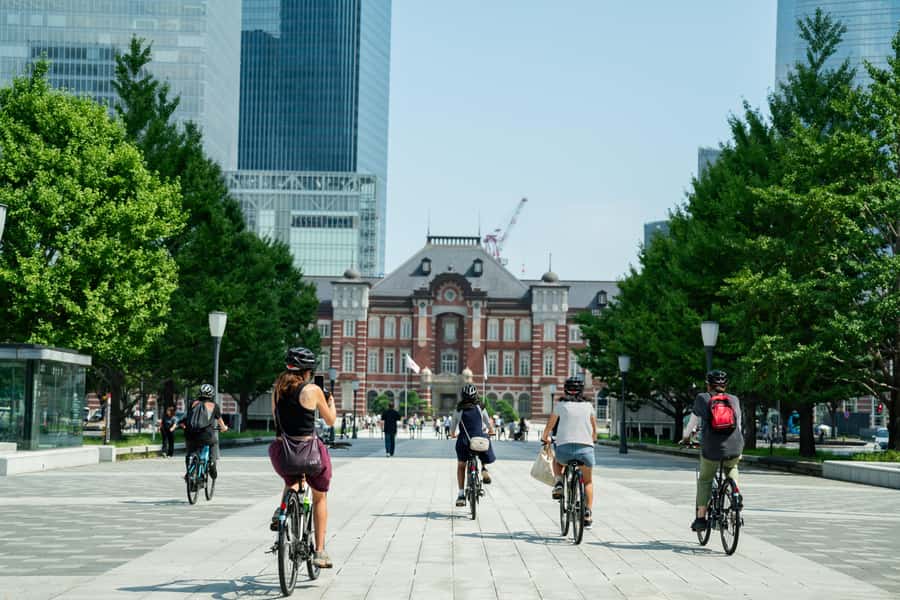
This tour is designed for people who want to move efficiently through Tokyo without feeling like they are spending the whole day walking.
It is a strong fit for:
- first-time visitors who want a guided orientation
- repeat visitors who want a different way to see familiar sights
- travelers who want culture stops like gardens and shrines without intense physical strain
- people who like street-level city views and bridges
It is less ideal if:
- you cannot comfortably ride an e-bike in busy urban areas
- you need wheelchair access, since this is not listed as wheelchair-friendly
- you have medical limitations like heart problems
- you are pregnant, since it is listed as not suitable
There are also clear limits to note:
- Children under 13 are not permitted.
- Height should be at least 147 cm.
- Weight should be under 120 kg.
If any of those apply, double-check your fit before you book.
Should you book the Tokyo hidden-gems style e-bike tour?
Yes, if your goal is a fast, fun Tokyo day with real street views. I like this option because it combines classic anchors with calmer breaks, and the e-assist makes it realistic for a wide range of visitors. The guides, from Hiro to Yota to Miki, are repeatedly singled out for safety, storytelling, and keeping the ride enjoyable.
Skip it if you hate the idea of riding near traffic or you get stressed by crowds and pedestrian-shared paths. Even though the bikes help, it is still a city ride, not a closed-course cycling event.
If you want the best match on route:
- Choose City Route for central sights plus Kiyosumi Japanese Garden and Tomioka Hachimangu Shrine.
- Choose Tokyo Bay Route for sunset or night views, bridges, Odaiba icons, and skyline energy.
- Choose Tokyo Tower Route for temple and shrine stops, a Tokyo Tower photo moment, and Hibiya park downtime.
Either way, go in with a relaxed, attentive mindset, and you will get the kind of Tokyo pictures and memories that do not come from standing still on a platform.
More E-Bikes in Tokyo
- 3h Tokyo E-Bike Tour: Hidden Gems, and Local Life with guide
★ 5.0 · 670 reviews - Tokyo: 3-Hour Bike or E-Bike City Highlights Tour
★ 4.8 · 435 reviews - Tokyo: 3-Hour Bike/E-Bike Tour of the City’s Highlights
★ 5.0 · 209 reviews - 3-Hour Tokyo Private E-Bike Tour Starting from Your Hotel
★ 5.0 · 117 reviews
Fresh options around Tokyo
- Tokyo: Nikko Kegon Falls Lake Chuzenji Toshogu Temple & More★ 4.9 · 12 reviews
- Tokyo: Samurai History Walking Tour★ 5.0 · 12 reviews
- Harajuku: Kawaii Fashion and Pop-Culture Tour★ 4.7 · 12 reviews
- Tokyo: Mt. Fuji & Lake Kawaguchi Instagram Full Day Trip★ 4.1 · 12 reviews
- Shibuya Tokyo: Modern Kintsugi Workshop in Shibuya★ 5.0 · 12 reviews
- Tokyo: GTR Guided Daikoku Experience at Night★ 5.0 · 12 reviews
- Tokyo: Daikoku JDM Car Culture Tour★ 4.6 · 12 reviews
- Mt Fuji Private Day Trip from Tokyo with English speaking driver★ 5.0 · 13 reviews
Cycling Tours, compared.
3h Tokyo E-Bike Tour: Hidden Gems, and Local Life with guide
Read our review →
Arashiyama Bamboo Forest & Hidden Gems Bike Tour (Early Bird)
Read our review →
Hiroshima in a Nutshell: Morning Bike Adventure
Read our review →Browse the lists this tour appears in