
Reviewed · HISTORICAL TOURS
Hiroshima: Peace Walking Tour of World Heritage Sites
Hiroshima hits you in quiet footsteps. This peace-focused walking tour connects major World Heritage landmarks with real local stories, moving from solemn history to small acts of hope.
What I like most is the way you get guided context at each stop, not just a quick look at buildings. The Atomic Bomb Dome visit is especially powerful when a guide explains what you are seeing and why it still matters.
I also love the mix of places, because it is not all museum time. You get the paper-crane peace ritual at Orizuru Tower, plus Hiroshima’s recovery stories in the open air. It turns a heavy topic into something you can carry forward.
One thing to plan for: the subject matter is emotionally heavy, and the museum in particular can feel intense and crowded. If you get overwhelmed easily, go slow and take breaks when your guide suggests it.
Key things that make this tour worth your time
- Local English guides who bring personal, on-the-ground perspective that you will not get from a self-guided loop.
- Peace Memorial Museum first, so the rest of the walking makes sense as one connected story.
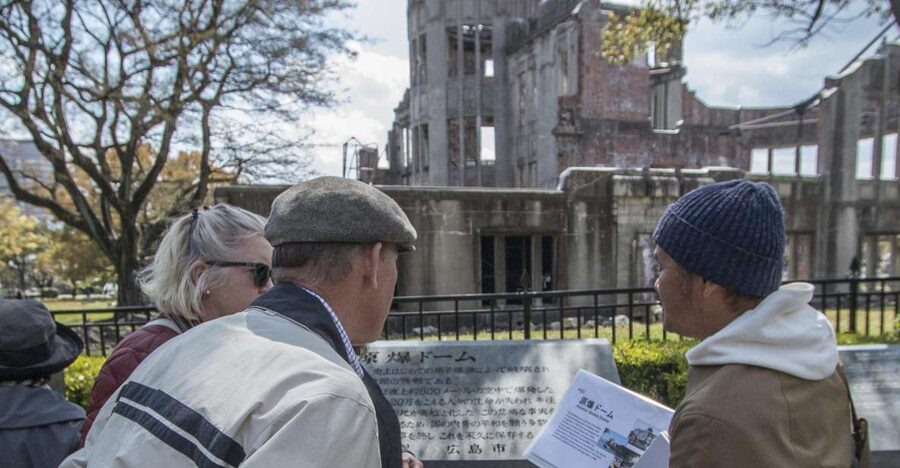
- UNESCO Atomic Bomb Dome with guided explanation, not just a photo stop.
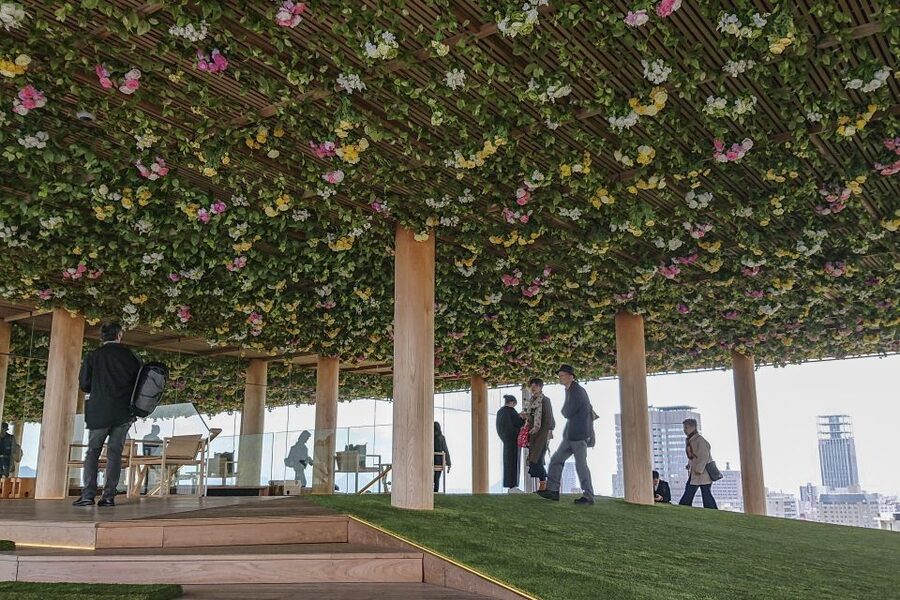
- Orizuru Tower peace activity, including paper-crane making and a citywide view from up high.
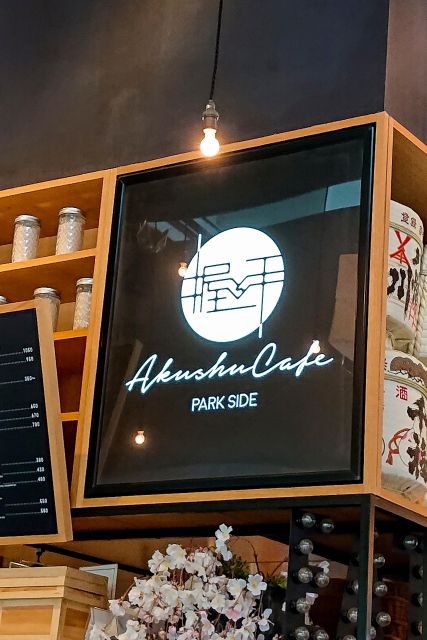
- Lunch included at Akushu Cafe inside Orizuru Tower, with Hiroshima-style okonomiyaki pancakes.
- Tour photos included, handy when you want one less thing to think about.
Meeting near Kamiya-cho-nishi, then starting calmly at Shirakami-sha Shrine
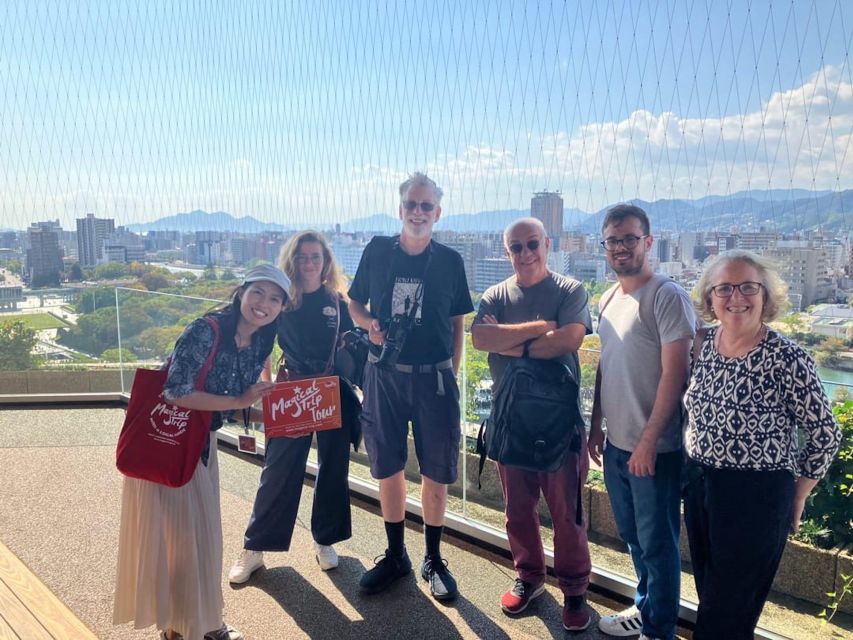
The day begins right where it is easy to find it: in front of the mont-bell store near Kamiya-cho-nishi Station. You are looking for a guide holding an orange sign that says Magical Trip Tour. This matters more than it sounds. When your day includes a serious museum, you want a smooth start.
After meeting, the first stop is Shirakami-sha Shrine. You will spend about 25 minutes there, and you get guided context for how to enter respectfully. People in the reviews also describe this as a helpful reset, a quiet start before you move toward the Peace Memorial area.
I like how this opening gives you a rhythm. You are not immediately thrown into the hardest parts of Hiroshima. Instead, you build a little patience and awareness first, then the day hits with full meaning.
Practical tip: wear comfortable shoes. Even though this is described as a walking tour, you will still spend time standing in lines and at viewpoints. Take small breaks when you need them, especially later at the museum.
More Walking Tours in Hiroshima
- Hiroshima Historical Walking Tour – Why A-Bomb was Dropped
★ 4.8 · 893 reviews - Hiroshima Peace (Heiwa) Walking Tour at World Heritage Sites
★ 5.0 · 872 reviews - Hiroshima City 4hr Private Walking Tour with Licensed Guide
★ 5.0 · 437 reviews
Hiroshima Peace Memorial Museum, where the artifacts have a human voice
The core of the tour is the Hiroshima Peace Memorial Museum, with a guided visit of about one hour. The museum is the place where you learn the horrors of the atomic bombing and, just as importantly, how people of Hiroshima coped afterward.
The best value of a guide here is simple. The exhibits can be overwhelming if you hit them cold. With a guide, you get a path through the museum, plus the kind of explanations that turn objects and photos into lived experience. In the reviews, guides like Etsko and Kaz are singled out for clear explanation and staying with the emotional weight of the day.
You should expect a full range of feelings. Many people find the museum the hardest part, even if they already know the basic facts. If you are sensitive to intense historical material, go at your own pace within the group flow. One review even praised the guide’s care when a participant became emotional, which tells me this is not a rushed “see everything” style.
Crowding is another real consideration. The museum can be busy, so you may have limited space at peak moments. The upside is that a guide helps you prioritize, so you do not feel like you are missing everything.
If you want one tip that actually helps: carry tissues or something similar. Even if you think you are ready, the museum can surprise you.
Peace Memorial Park, moving through a city shaped by remembrance
Right after the museum, you move into Hiroshima Peace Memorial Park for another guided hour. This is where the story stops being just about the event and starts becoming about space, memory, and how a city organizes grief and hope.
A guide is especially useful here because parks can feel like you are just walking from sign to sign. With a local explanation, you start noticing the intention behind what you see: how memorial areas line up, how visitors are meant to reflect, and how Hiroshima has built a place for peace education.
You also get the benefit of pacing. The museum can take everything out of you. In the park, you can breathe a little while still learning. Several guides named in the reviews, including Yuji and Yasue, were praised for their sensitive narration, and that tone matters when the subject is so difficult.
If you are traveling with teenagers, this stop can be a turning point. One family described it as one of their top highlights because the guide helped their kids connect the history to present-day responsibilities.
Practical tip: stay hydrated and take shade breaks when you can. The day runs about 270 minutes total, so there is time for fatigue to sneak up.
Atomic Bomb Dome, UNESCO and the power of standing in place
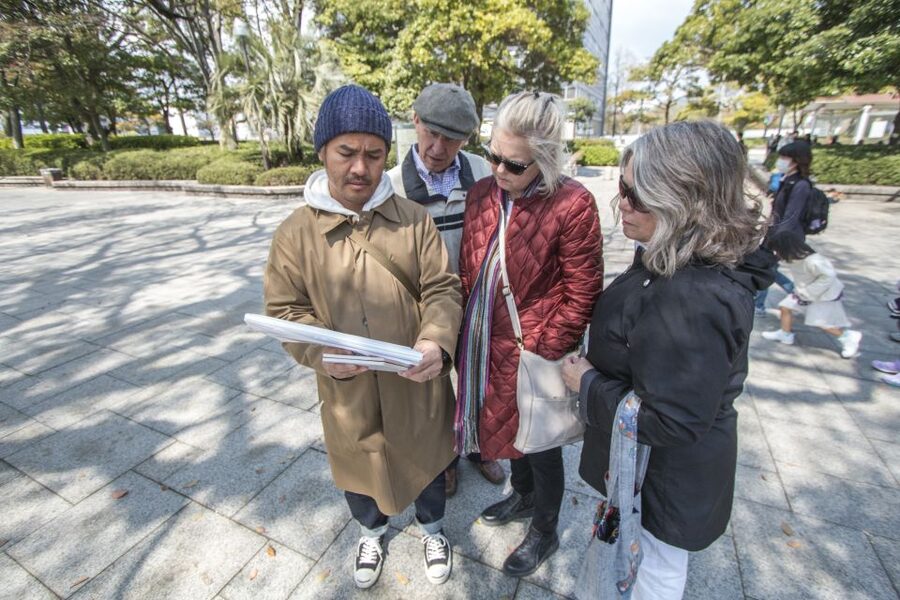
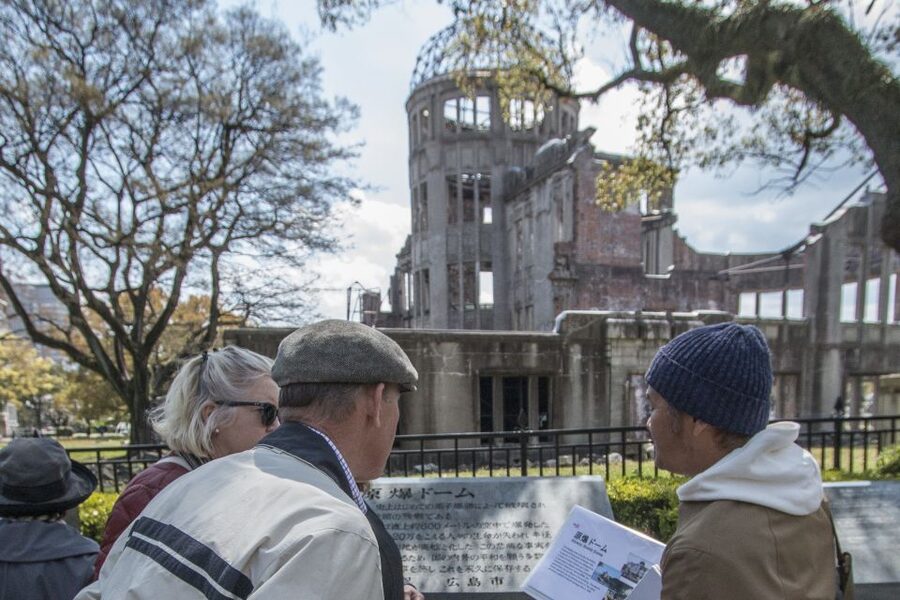
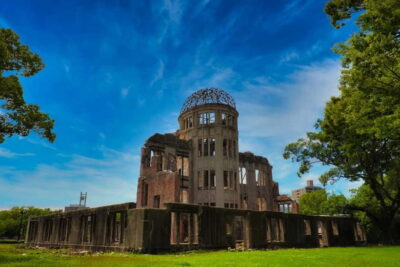
Then you reach the big visual anchor of the day: the Atomic Bomb Dome, a UNESCO World Heritage site. The tour includes a guided visit of about one hour here, which is a good length for a site that is both historic and still very much emotionally charged.
The Atomic Bomb Dome is not just a landmark for photos. With a guide, you learn what makes it significant today, how Hiroshima frames its meaning, and why people keep returning to it rather than treating it like a closed chapter.
This is where you will feel the contrast between history and present life. In the reviews, participants mention how guides helped them connect the Dome with the recovery and the city’s message of peace. That is exactly what you want. Otherwise, you might just see a famous building in a war zone.
Another reason the guided time pays off: the best viewpoints and the best moments for quiet reflection are not always obvious when you are holding a phone and trying to read everything at once. A guide helps you slow down and look.
If you are planning your own photos, step back every so often. Look with your eyes first. Then take the picture. It sounds small, but it changes how the site lands.
Same corner of Japan, a different kind of day:
- Peaceful Hiroshima & Miyajima UNESCO 1 Day Bus Tour
★ 5.0 · 5,309 reviews - Hiroshima: Hiroshima and Miyajima UNESCO Sites 1-Day Tour
★ 4.9 · 2,330 reviews - Hiroshima / Miyajima Full-day Private Tour with Government Licensed Guide
★ 5.0 · 1,298 reviews - Hiroshima in a Nutshell: Morning Bike Adventure
★ 5.0 · 524 reviews
Orizuru Tower and paper-crane peace: views plus a hands-on ritual
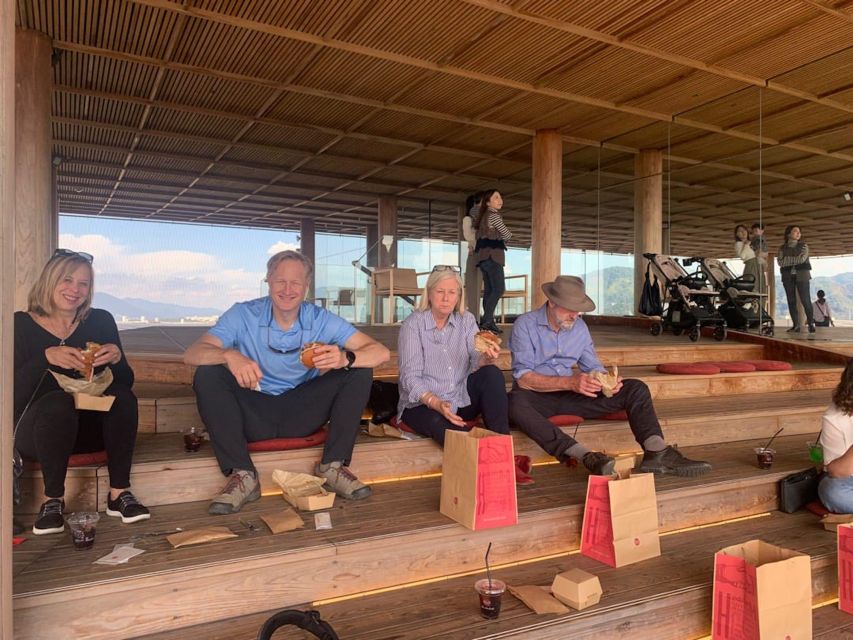
After the memorial sites, the tour heads to Hiroshima Orizuru Tower, where you get lunch plus time for the peace ritual. You will spend about 1.5 hours at Orizuru Tower, and this is one of the most memorable transitions in the whole experience.
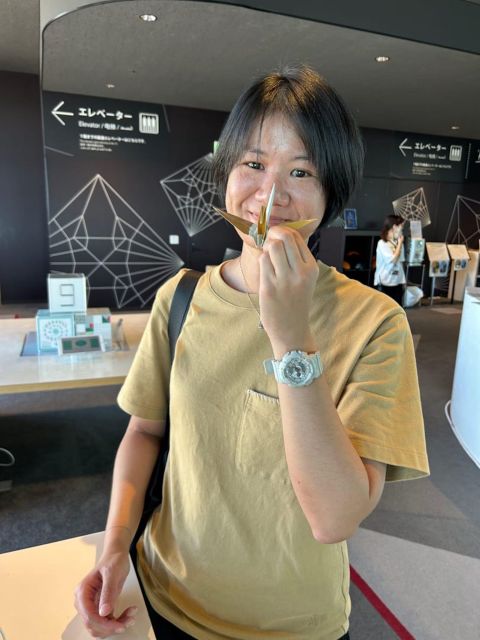
Orizuru Tower is tied to the paper crane, Orizuru. The crane is treated as a symbol of peace, and your visit includes learning how to make a paper crane and making a wish for peace. This activity gives you something active to do, and it helps you shift from absorbing history to participating in its meaning.
In multiple reviews, people highlight how beautiful the crane experience feels in the tower. One review described watching cranes spiral down to join the millions in the building’s glass wall, which turns your small paper crane into part of a larger message. That is a powerful mental trick in the best way.
You also get an observatory area with a wide view of Hiroshima. This matters because it reminds you that the city is alive, and the people who rebuild it are still here.
Expect questions, small moments of quiet, and plenty of time to look out. Your guide can also point out what to notice from above, which is great if you are trying to orient yourself for the rest of your trip.
Aorigi Tree: a small stop with big meaning after the bombing

At Orizuru Tower, the day also includes a visit to the Aorigi Tree, described as a source of hope after the atomic bomb. Even though it is a shorter part of the experience, this is the kind of stop that makes the tour feel balanced.
The museum and park focus on tragedy and remembrance. The Aorigi Tree is a reminder of survival and the slow return of life. It is not a distraction from the history. It is another way of reading the city’s recovery.
I like that you do not leave the day with only heavy images. You get proof of endurance in a real, visible form. And because it is paired with the crane ritual and the view from the tower, you leave with a message that feels personal, not scripted.
If you are traveling with someone who worries that peace tours become too abstract, this stop helps ground it in something you can see and point to.
Lunch at Akushu Cafe: okonomiyaki, plus planning for dietary reality
Lunch is included, served at Akushu Cafe inside Hiroshima Orizuru Tower. In the reviews, lunch is often described as delicious, and okonomiyaki is specifically mentioned, including the Hiroshima-style pancake dish.
This is not a random add-on. It fits the tour well because you are already at the tower. You do not spend your precious half-day hunting for food, and it helps the tour keep a steady pace.
That said, plan smart for dietary needs. Vegetarian options are limited because most Japanese restaurants are not fully equipped for vegetarian menus. You should inform the provider at least one day before the tour if you have dietary requests or allergies. Even then, the tour cannot guarantee allergy-free meals, because meals are prepared in kitchens not operated by MagicalTrip.
Also, the tour is not suitable for people with gluten intolerance. If gluten is a serious issue for you, this is a dealbreaker, not a “bring your own snacks” situation. Skip this one and choose a tour designed for your needs.
Practical tip: if you are vegetarian, consider eating lightly before the tour so you are not stressing at lunch time. Then be realistic about what you might be able to eat.
Price and time value: what $92 buys you in Hiroshima
The price is $92 per person, and at first glance it might feel like a lot for a walking tour. But the value is in what is included and what the guide handles for you.
You get a five-hour local guided experience, admissions to the Peace Memorial Museum and Orizuru Tower, lunch, and tour photos. That is a bundle that would cost you time and planning if you tried to build it yourself: museum entry, tower entry, coordinating multiple sites, and finding an English guide who can explain everything in context.
You also get the emotional and educational lift of narration. Guides named in the reviews, like Etsko, Yasue, Yuji, and Fumiko, are praised for clarity and for handling questions with patience. That is hard to replicate on your own when the subject is sensitive and dense.
One more value point: the tour is described as private or small groups available. Smaller group dynamics can make it easier to pause, ask questions, and absorb the day without feeling shoved along.
Is this tour for everyone? Not necessarily. If you want a light sightseeing day with lots of casual stops, you may find it too intense. If you want meaning, structure, and a locally guided peace message, this is one of the more efficient ways to do Hiroshima in half a day.
Should you book this Hiroshima Peace Walking Tour of World Heritage Sites?
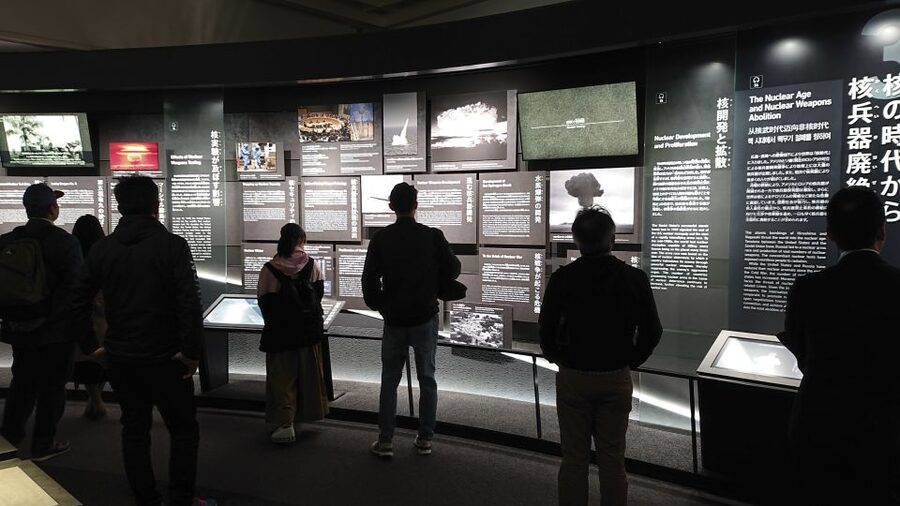
Book it if you want a guide-led route that connects the Hiroshima Peace Memorial Museum, Peace Memorial Park, and the Atomic Bomb Dome into one understandable story. You will also appreciate the hope-based elements at Orizuru Tower, especially the paper-crane ritual and the view from the observatory.
Skip it or choose something else if:
- You cannot handle emotionally heavy history at close range.
- You need gluten-free food, because this tour is not suitable for gluten intolerance.
- Your diet requires strict allergy guarantees, because the tour cannot ensure allergy-free meals and vegetarian options are limited.
My final take: this is a thoughtful, well-paced experience that balances tragedy with recovery. The $92 price makes sense because you are paying for guidance, museum and tower access, lunch, and photos in one package. If you want Hiroshima to feel real and explained, not just photographed, this is a smart booking.
FAQ
How long is the Hiroshima Peace Walking Tour?
The tour duration is 270 minutes, which is about 4.5 hours.
Where do I meet the guide?
Meet in front of the mont-bell store near Kamiya-cho-nishi Station. The guide will be holding an orange sign with the local partner name, and it is about a one-minute walk from the station.
Is the tour in English?
Yes. The live tour guide provides English.
What’s included in the tour price?
Entry to the Hiroshima Peace Memorial Museum and Hiroshima Orizuru Tower, lunch, a guided 5-hour tour with local guide, and tour photos.
Is vegetarian food available?
Vegetarian options are limited. If you have dietary requests or allergies, you need to inform the provider at least one day before the tour. The tour cannot guarantee allergy-free meals.
Is there a refund if I cancel late?
Free cancellation is available up to 24 hours in advance for a full refund. Arrivals more than 15 minutes late from the meeting time cannot join the tour, and no refund or reschedule is offered.
More Historical Tours in Hiroshima
- Miyajima Half-day Trip Historical Walking Tour
★ 5.0 · 284 reviews - Hiroshima: History of Hiroshima Group Walking Tour
★ 4.8 · 266 reviews - Walking Through History: Hiroshima’s Path to Peace
★ 4.9 · 156 reviews - Hiroshima: Miyajima Half-day Historical Walking Tour
★ 4.7 · 100 reviews
Fresh options around Hiroshima
- Mitaki Peace Tour Beyond Central Hiroshima★ 5.0 · 18 reviews
- Hiroshima and Miyajima Full Day Private Tour★ 4.5 · 19 reviews
- 4 Hour Miyajima PRIVATE Tour★ 5.0 · 19 reviews
- Hiroshima Private Walking Tour with a Local★ 4.5 · 19 reviews
- Hiroshima Scenic Cycling Guided Tour★ 5.0 · 19 reviews
- Miyajima Guided Tour and Fresh Oyster Farm Tour★ 5.0 · 20 reviews
- Hiroshima: Atomic Bomb Dome and Peace Memorial Museum 3 hours★ 5.0 · 20 reviews
- Hiroshima: Tour of Atomic Bomb Dome & Peace Memorial Museum★ 5.0 · 20 reviews
Historical Tours, compared.
World Heritage Shirakawa-go and Experience Tours from Kanazawa
Read our review →
Imperial Palace and Shogun Historical Walking Tour
Read our review →
World Heritage Kyoto & Nara Uji Authentic Matcha Experience
Read our review →
Kyoto Gion: 2-Hour Geisha Culture & History Walking Tour
Read our review →
World Heritage Shirakawa-go Morning Guided Tour
Read our review →
Hiroshima Historical Walking Tour – Why A-Bomb was Dropped
Read our review →
Hiroshima Peace (Heiwa) Walking Tour at World Heritage Sites
Read our review →Browse the lists this tour appears in