
Reviewed · WALKING TOURS
Private Osaka Walking Tour: Highlights & Hidden Gems
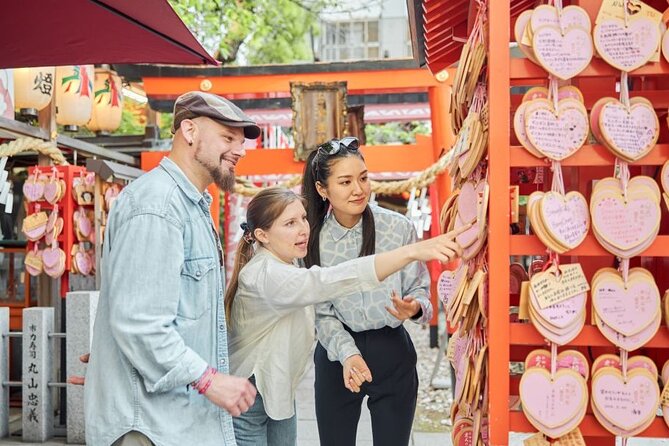
Osaka changes street by street, and this tour follows that logic. I like the private, customized route approach, plus the way it mixes major sights with quieter corners you would miss on your own. You’ll get a real local flow, not a checklist march.
Two things I especially like: you answer a pre-tour questionnaire so the day fits your interests, and you have a guide who can explain Osaka through neighborhoods like Namba, Umeda, and the temple area around Shitennoji. One possible drawback: it’s still a walking tour, so expect solid steps over 2 to 8 hours, even with breaks and public transport if you request them.
Key takeaways before you go
- Private pacing: Your group only, with flexible duration and start times.
- Smart customization: A short online questionnaire helps shape what you see.
- Great neighborhood mix: Umeda shopping, Namba entertainment, temples, and side alleys.
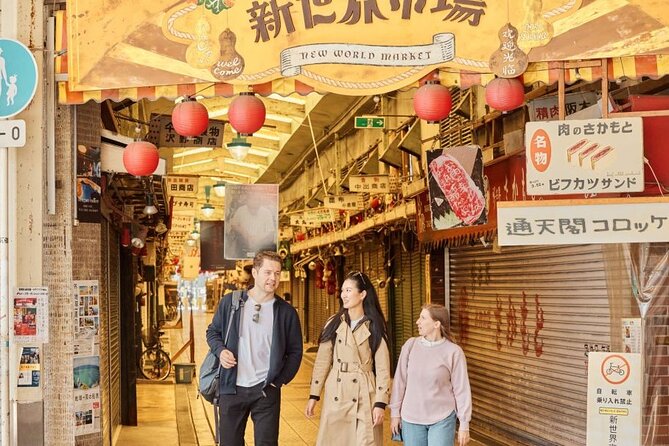
- Iconic Osaka, plus off-street character: Arcades, Hozenji area, canal views, and smaller shrine moments.
- Comfort options if you ask: Public transport or taxis can be used between sites at your request.
- You choose the tone: Day can lean shopping, history, culture, or food stops.
Osaka on foot, with a plan you actually control
This isn’t the kind of tour where you stand in a line and follow a script. It’s a private walking tour designed around you. After you book, you fill out a questionnaire, then your guide works from that to shape the day.
That matters in Osaka because the city is basically a set of mini-worlds. One block can feel like office towers and department-store glow. The next block can feel like you dropped into a temple courtyard. On this kind of walk, you don’t just see places, you understand why those neighborhoods exist and what people do there day to day.
More Walking Tours in Osaka
- Osaka: Hotspots & Hidden Gems Walking Tour Private or Group
★ 4.9 · 1,300 reviews - Osaka Local Foodie Walking Tour in Dotonbori and Shinsekai
★ 5.0 · 985 reviews - Osaka Bar Hopping Night Walking Tour in Namba (3 bars, 6 tastes)
★ 5.0 · 958 reviews
Price and what you truly get for $81.07

At $81.07 per person, you’re paying for three things that add up fast in any major city: a local guide, a private format, and a flexible plan. Public walking tours can be cheaper, but you usually lose two value drivers here: customization and pacing.
Because you’re not tied to one fixed route, you can spend time where you care most. If you love shopping, you can linger around Umeda and the big arcades. If you want culture and temple context, you can let the day lean into places like Shitennoji and the Hozenji area. If you want photos, you can build in time for Osaka’s canal views and neon streets.
Also, your reviews data point is strong: the experience has a 4.8 rating with a high recommendation rate. That usually means guides are doing the “human” parts well, like adjusting pace and explaining what you’re looking at.
Meeting point, hotel pickup, and how you’ll start moving
The tour starts at DAISO2-chōme-2-17 Nanbanaka, Naniwa Ward, Osaka, 556-0011, Japan and ends back at the meeting point.
If your hotel is centrally located, pickup is offered, which can save time when you’re juggling trains, jet lag, or just trying to get going. If pickup isn’t used, you’ll still be near public transportation, so getting to the start point is usually manageable.
One practical note: this is a walking tour, so there is no private vehicle included. If the route needs transfers, public transport or local taxis may be used if requested, and any costs get discussed with your host after you reserve.
How the guide customizes your day (and what that feels like)
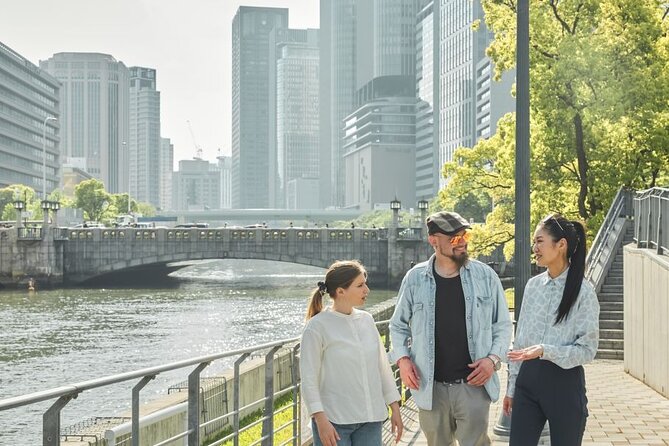
After booking, you’ll receive a short online questionnaire. It’s your chance to say what you want to prioritize, what you’d like to avoid, and any must-sees.
In practice, the customization shows up in two ways. First, the guide selects the order and emphasis of neighborhoods. Second, your pacing becomes part of the plan. In past experiences with hosts like Maria, Karim, Loys, Kai, Taku, Ryan, Max, Khalid, and Mayura, guests specifically praised how the guide matched the tour to family needs, interests, and comfort.
English quality also comes up often. Some of the hosts have been highlighted for excellent English, which matters when you want more than surface facts.
Same corner of Japan, a different kind of day:
- Osaka Go Karting Tour with Funny Costume
★ 5.0 · 2,658 reviews - Osaka Castle: Museum and Tower Entry Ticket
★ 4.5 · 2,380 reviews - Osaka: Shinsekai Food Tour with 13-15 Dishes at 5 Eateries
★ 4.8 · 2,204 reviews - Osaka Food Tour: 13 Dishes at 5 Local Eateries
★ 5.0 · 2,149 reviews
Nakanoshima Island stroll: museums, early 1900s architecture, and park time
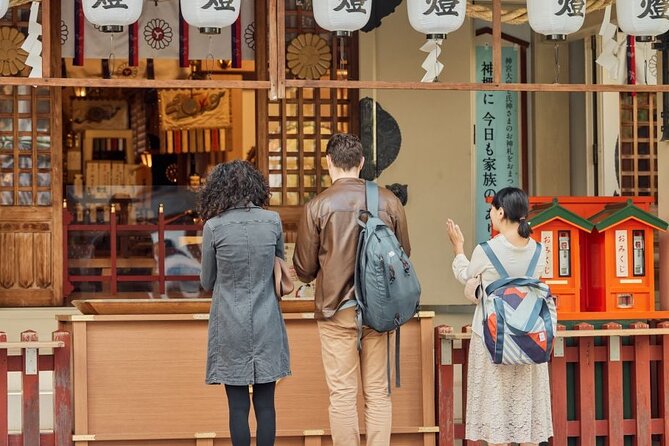
One stop type on this walk is a serene island oasis with art museums, early 20th-century architecture, and a picturesque park. This kind of moment is why the tour feels more “Osaka” and less “only sightseeing.”
Why it’s worth it:
- You get a breather from the shopping and nightlife zones.
- The architecture and museum setting helps you see Osaka as a city of culture, not only neon.
- If you’re traveling with kids or tired feet, a park setting is an easy place to slow down.
A small drawback to consider: the exact feel depends on the time of day and how long you spend there. If you’re super focused on shopping, you might want to tell your guide you prefer shorter park breaks so you can keep moving toward arcades and food streets.
Umeda department-store labyrinth and White Umeda underground
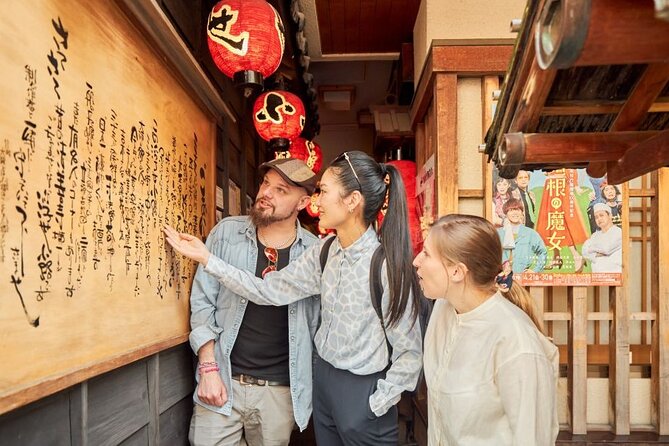
Next up, expect a stop centered on one of Osaka’s major department stores, plus time in White Umeda, one of the city’s famous underground shopping malls.
Underground shopping in Japan is not just about buying stuff. It’s about convenience, weather-proof movement, and the kind of “everyday Japan” you don’t always get by sightseeing above ground. Here, you’ll likely see how Osaka merges shopping culture with urban planning.
What to do with this stop:
- Bring a shopping list, but also leave room to wander.
- Use it for practical souvenirs, snacks, and character goods.
- Treat it as a navigation hub, since underground routes can help you reach other areas efficiently.
Consideration: underground spaces can get crowded, especially around peak hours. If you don’t like dense indoor crowds, ask your guide for a calmer time window within the same area.
Osaka shopping arcades: cafés, character finds, and easy browsing
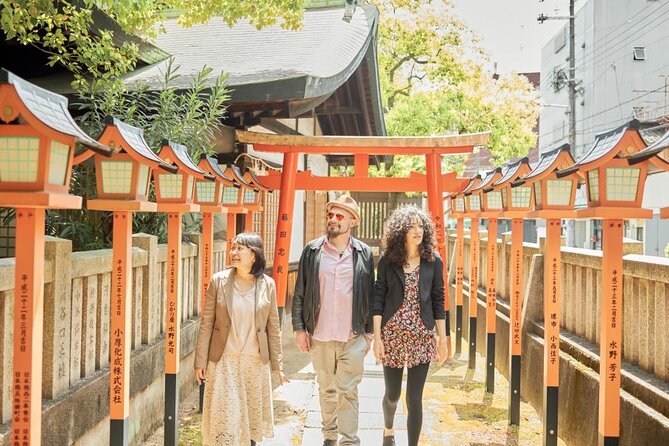
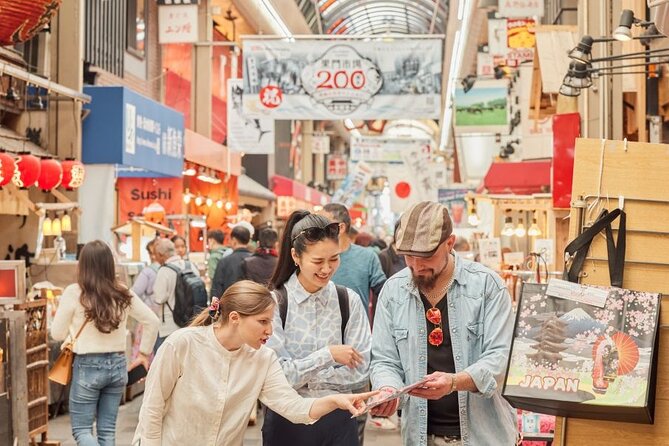
From Umeda, the day can shift into a top shopping arcade. This kind of street is built for browsing: shops, cafés, small restaurants, and the specific kinds of items that make people say, I never knew I wanted that.
Why I like arcades on a guide-led walk:
- A local can point out which sections are actually worth your time.
- You can get ideas for quick eats, even though food and drinks are not included.
- You avoid the trap of spending an hour in the wrong lane of stores.
If you care about souvenirs, this is one of your best chances to find variety in a compact area. If you’re not a shopper, tell your guide. You can use the same route for people-watching, street snacks planning, and photo time.
Namba’s lion-spirit shrine moment in the entertainment zone
In the Namba area, the tour includes a shrine scene with a massive lion-shaped structure, said to devour evil spirits and bring good luck.
Even if you’re not deeply into shrine rituals, this is one of those Osaka moments that is hard to understand unless you stand there. The setting is also useful. You’re in the entertainment district zone, so the contrast between lively streets and a protective shrine element is part of the story.
Practical tip: if you’re heading out later in the evening, ask your guide whether you should see this part earlier or later. If your tour timing allows, pairing a shrine stop with neon later often makes the day feel more like a movie.
Shitennoji Temple: a 593 starting point and real quiet
One of the big historical anchors on the walk is Shitennoji, described as Japan’s oldest official temple, founded in 593.
This is where the day gains context. The temple setting helps you understand Buddhism’s arrival and how religious sites shaped urban life. And because the ambiance is tranquil compared to shopping streets, you get a change of pace that feels earned, not forced.
What I think works best here:
- Give yourself a few minutes to just stand and look.
- Use your guide to connect what you see to why it matters in Osaka.
Possible drawback: temple hours and crowds can change your experience. If you’re booking during a busy time, ask your guide for the best order to keep lines and congestion minimal.
Amerikamura: American-inspired youth culture, thrift, and indie energy
Next is Amerikamura, known as the heart of American-inspired youth culture in Osaka. Expect indie music vibes, hipster fashion, lively galleries, and thrift shops.
This is not a “museum district.” It’s a place where people experiment with style, and where Osaka feels younger and more playful than the traditional temple areas.
Why it’s a great mix on a private walk:
- You’ve seen old and formal space, now you see modern self-expression.
- Your guide can help you navigate shop clusters quickly, so you don’t waste time backtracking.
If shopping is your main interest, this area pairs well with arcades. If fashion is not your thing, Amerikamura is still useful for photos and for understanding how locals define their cool.
Hozenji Temple alley: water blessings, moss statues, and a restaurant maze
The Hozenji area adds one of the most memorable street scenes on this walk. You’ll visit a quaint, stone-paved alley lined with over 60 traditional Japanese restaurants and bars.
Then there’s a standout detail at Hozenji Temple: a moss-covered statue of Fudomyoo, where visitors pour water for blessings.
Why this stop works:
- The alley layout means you naturally slow down and look at storefronts and signs.
- The water-for-blessings ritual gives you a clear action to understand, not just a photo opportunity.
- It feels like you’re in a local evening space, not a curated tourist corridor.
One consideration: because it’s a restaurant alley, the energy varies by time. If you go earlier, you’ll see more “everyday setup.” If you go later, it leans more into nightlife vibes. Either way, your guide can adjust timing based on your preferences.
Dotonbori canal neon: arcades, entertainment district energy, and photo targets
The walk typically ends with Osaka’s iconic canal area, illuminated by neon lights, plus views connected to Dotombori and the entertainment district.
This is the payoff zone. If you’re taking photos, this is where you’ll want your camera ready, because neon reflections and signage look best when the light is doing its thing.
A couple of useful ways to enjoy this section:
- Ask your guide for the best spots to see the canal and arcade frontage.
- Use the arcades as your “last look” zone, especially if you want character goods or small gifts.
If you’re not into nightlife, don’t worry. You can treat it as a visual farewell to the city. Then your guide can steer you toward the simplest route back to the meeting point.
Food stops are optional, and your guide helps you choose wisely
Food and drinks are not included, but that does not mean you’ll eat nothing. The better way to think about it: you and your guide decide if you want lunch, snacks, or sweets during your walk.
In real examples tied to this experience, guides have helped guests find places for things like curry lunch, kushikatsu, hot chocolate, and even a sukiyaki restaurant inside Osaka station on request. That’s the practical benefit of a private guide. They can point you to options that fit your day and your energy.
My advice: tell your guide what you want to eat in plain terms, like Japanese comfort food, street snacks, or a sit-down meal. Then ask for one solid choice near where you are already walking.
Steps, comfort, and the pacing that makes or breaks a walking day
This tour ranges from 2 to 8 hours. That range matters because Osaka walking adds up fast.
Some past experiences included very high step counts, like around 15,000 steps on a 4-hour walk and over 20,000 steps in other cases. So yes, you should plan for movement. Bring comfortable shoes. Wear breathable socks. If you have knee issues, tell the guide early.
The good news: the format is flexible. Guides have helped guests adjust by using public transport or ride options as needed. Since public transport or taxis may be used between sites if requested, you can avoid turning your tour into a foot injury plan.
Who this private walking tour is best for
This is a strong choice if:
- You’re visiting Osaka for the first time and want both big-name areas and smaller side streets.
- You like learning through neighborhoods, not just through facts.
- You want a private setup that fits your pace, your group, and your interests.
- Shopping and pop culture are on your list, but you also want temple and historical context.
It may be less ideal if:
- You want a mostly seated, minimal-walking tour. This is walking.
- You don’t like crowded shopping or entertainment areas. Parts of the route can get busy, so plan on choosing quieter moments with your guide.
The guides: what to expect if you get Maria, Max, or Karim
Because this is a private guide experience, the host you get can shape the vibe. Names that have been highlighted include Maria, Karim, Loys, Kai, Taku, Ryan, Max, Khalid, and Mayura.
The common praise points are consistent:
- Guides tailor the route to what you actually care about.
- Explanations are clear and helpful, with strong English mentioned for some hosts.
- They go beyond a rigid plan with extra care, like family needs and comfort adjustments.
- They help with practical travel stuff, like how to buy transit cards such as ICOCA for getting around.
If you see your preferred host listed or possible, request them when allowed.
Should you book this Osaka walking tour?
Yes, you should book it if you want a private, flexible way to see Osaka across multiple styles of neighborhoods: shopping zones in Umeda, entertainment and shrine moments in Namba, temples like Shitennoji, and the Hozenji and Dotonbori canal area that makes Osaka feel like Osaka.
I would book with confidence if:
- You like the idea of a guide who adjusts the plan for you through a questionnaire.
- You’re okay with real walking and you’re bringing good shoes.
- You want both photo-friendly highlights and streets that feel more local than just postcard spots.
Skip it only if you want minimal walking or you prefer a fixed, museum-only schedule. For everything else, this is one of the better ways to understand Osaka beyond the surface.
If you’d like, tell me your travel dates, your group size, and what you care about most (shopping, temples, nightlife, food, or photos). I can suggest how to prioritize the stops so your day feels exactly right.
FAQ
How long is the private Osaka walking tour?
It runs for about 2 to 8 hours, depending on the duration you choose and your guide’s plan.
Is this tour private or shared with other people?
This is a private tour. Only your group will participate.
What’s the price per person?
The price is $81.07 per person.
What’s included in the tour?
Included are a private walking tour with a local guide, a personalized itinerary based on your preferences, an online questionnaire after booking to tailor the experience, and pickup at your hotel if it’s centrally located. You also get flexible durations and start times.
Are food and drinks included?
No. Food and drinks are not included.
Are entrance fees included?
No. Attraction entry fees are not included.
Do you use public transport or taxis during the walk?
A private vehicle is not included. The tour is primarily walking, but public transportation or local taxis may be used to transfer between sites if you request it. Exact costs can be discussed with your host after booking.
Where does the tour start?
The tour starts at DAISO2-chōme-2-17 Nanbanaka, Naniwa Ward, Osaka, 556-0011, Japan and ends back at the same meeting point.
Can I cancel and get a full refund?
Yes, there’s free cancellation. You can cancel up to 24 hours in advance for a full refund.
Fresh options around Osaka
- Osaka Dotonbori Night Photoshoot – Private | Pro Photographer★ 5.0 · 19 reviews
- Osaka: Tennen Onsen Naniwa-no-Yu, the famous hot spring spa★ 4.7 · 19 reviews
- Osaka Private Walking Tour with a Local★ 4.5 · 19 reviews
- Osaka: HEP FIVE Ferris Wheel E-Ticket in Umeda★ 4.7 · 19 reviews
- Kansai/KIX Airport to or from Osaka/Kyoto Private Transfer★ 5.0 · 20 reviews
- Guided Photography Tour in Osaka: Capturing Memories★ 4.5 · 20 reviews
- Osaka: Food Tour at Night with Tastings★ 4.9 · 20 reviews
- Osaka Private Tour with Government-Licensed Guide★ 4.8 · 20 reviews
Walking Tours, compared.
Kyoto Geisha Walking Tour: Gion District & Hidden Gems
Read our review →
Tokyo Tsukiji Fish Market Food and Culture Walking Tour
Read our review →
Gion Magical Night Walking Tour with Geisha Trivia
Read our review →
Imperial Palace and Shogun Historical Walking Tour
Read our review →
Gion Geisha District Walking Tour – Stories of Geisha
Read our review →
Shinjuku Local Bar and Izakaya Guided Walking Tour
Read our review →
Browse the lists this tour appears in