
Reviewed · CRUISES & BOAT TOURS
Hiroshima: City and Miyajima Bike and Boat Tour
One day, two very different worlds. I love how this tour uses bike time to cover Hiroshima’s most important sights, then switches to a slow Miyajima island walk. You get a clear, guided explanation of what you are seeing, and the small group format keeps it personal. A main consideration: this is not for people who cannot ride a bike, and there is no hotel pickup.
You also get the kind of guide who can handle questions without getting flustered, which matters a lot when the subject turns serious around the A-bomb sites. In past groups, guides such as Ishan, Aimée-Linh, Melissa, Sage, and Aimee have led the day with strong history and a friendly, question-ready style. The ride itself is flat and easy, but you should still plan for a full day on your feet during the castle and island sections.
Key Things I’d Focus On Before You Go
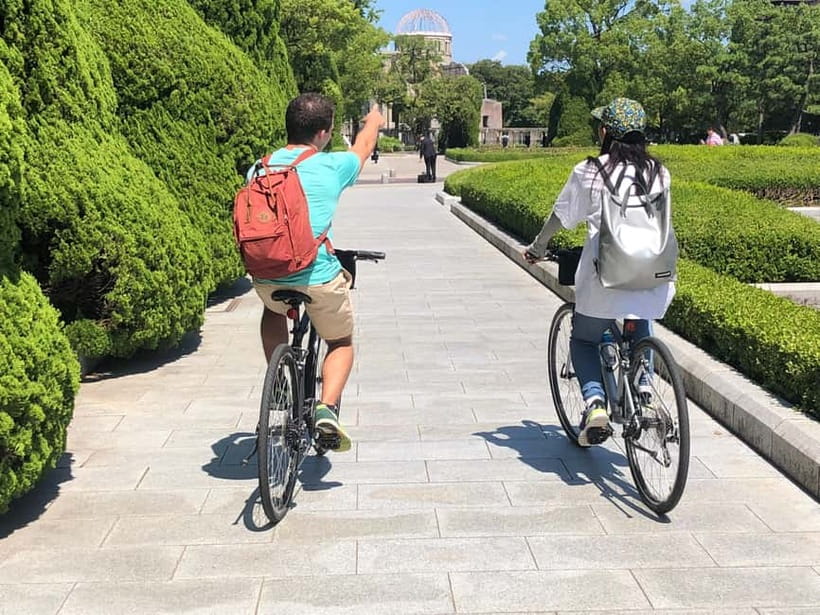
Peace Park and A-bomb Dome by bike: You see the sights efficiently while your guide adds context.
Miyajima ferry plus Itsukushima Shrine: The day includes a real water transfer, not just a land tour.
Flat cycling for all skill levels: The route is completely flat, and the company has multiple bike types.
Small group (8 max) with English guides: You get room to ask questions and keep a steady pace.
Rain plan that keeps options open: You either switch to more walking or get a full refund, depending on conditions.
Why Hiroshima and Miyajima Fit Together on One Long Day
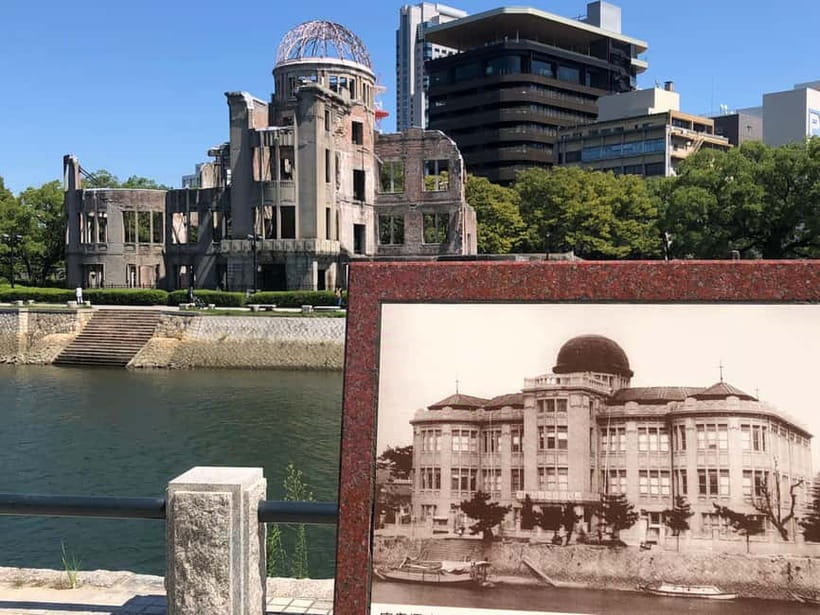
This is one of those smart pairings that makes sense geographically and emotionally. Hiroshima city gives you the weight of modern history at Peace Park and the A-bomb Dome area. Then Miyajima changes the mood fast, with greenery, stone lanes, and orange shrine architecture that feels like another era of Japan.
What I like about this setup is the contrast is not random. You go from a commemorative landscape into a living, religious island tradition. By the time you are on Miyajima, you are already tuned in to how places carry meaning, whether it’s memory and reflection in Hiroshima or worship and island heritage on the water.
The other reason this works on one schedule is logistics. You do city cycling first, then you use the included train and ferry transfers to reach Miyajima without you having to juggle tickets or routes. It is a long day, but it is a well-connected one.
More Bike Tours in Hiroshima
- Hiroshima in a Nutshell: Morning Bike Adventure
★ 5.0 · 524 reviews - Hiroshima 2hr Peace Cycling Tour with Local Guide
★ 5.0 · 321 reviews - Hiroshima: Peace Cycling Tour with Local Guide
★ 4.8 · 286 reviews
The Flat Bike Route and Trek Bikes Make It Feel Manageable
The cycling section is completely flat, so this tour is realistic even if you are not a confident cyclist. You are not dealing with hills, sudden climbs, or technical terrain. The goal is smooth movement and sight coverage, not training.
The bike fleet is a big part of that comfort. The tour uses Trek bikes in a range of sizes, plus step-through options for easier mounting. There are also child-sized bikes, which makes the day more doable for families who have kids that can ride.
You’ll still want to wear comfortable clothes and bring comfortable shoes, because even with a light cycling route, you will walk at the castle and on Miyajima. Think of the bike time as your transportation and orientation tool, then save your energy for the walking stops where the day really turns into exploring.
Peace Park and the A-bomb Dome: Seeing With Context, Not Just Photos
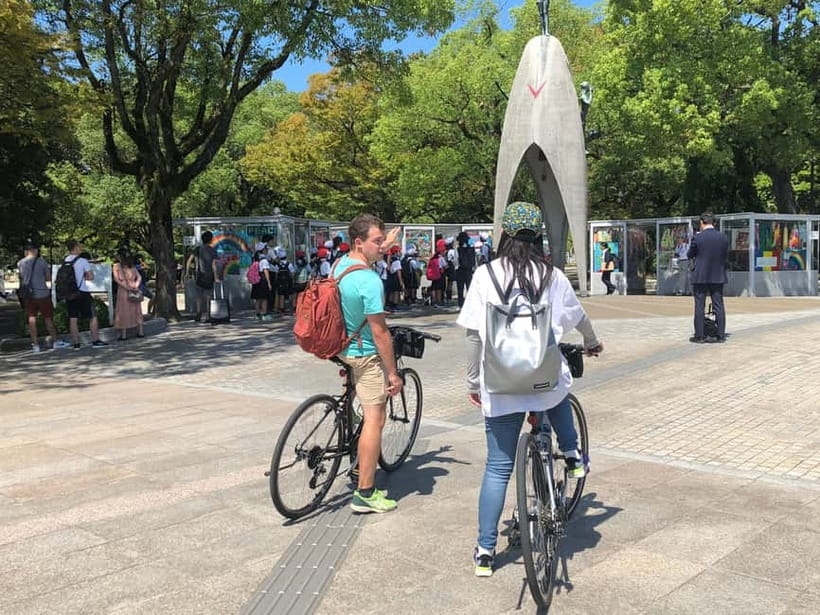
Cycling around Peace Park and the A-bomb Dome is the core of the morning. The guide’s commentary is not treated like background noise. It is part of how you understand what you are riding past, why certain landmarks matter, and how Hiroshima remembers this event.
Small-group sizing helps here. With a limit of 8 participants, the guide can keep an eye on pace and spacing, and you can actually ask questions instead of guessing. The English live guide format also matters, because the most emotional parts of the day deserve clear explanations.
From guide feedback across groups, the strongest theme is confidence in answering questions. Guides like Ishan have been praised for enthusiasm and for checking whether people have questions. Guides such as Aimée-Linh have balanced humor with history, which is helpful in a place where you do not want the whole day to feel heavy and tense. Sage and Melissa have also been noted for presenting both the difficult side of the explosion and the positive side of remembrance.
Practical tip: have your camera ready, but do not treat it as a constant task. You’ll get more out of the stops if you pause your attention for a few minutes when the guide calls something out.
Hiroshima Castle and the City’s Feudal Thread
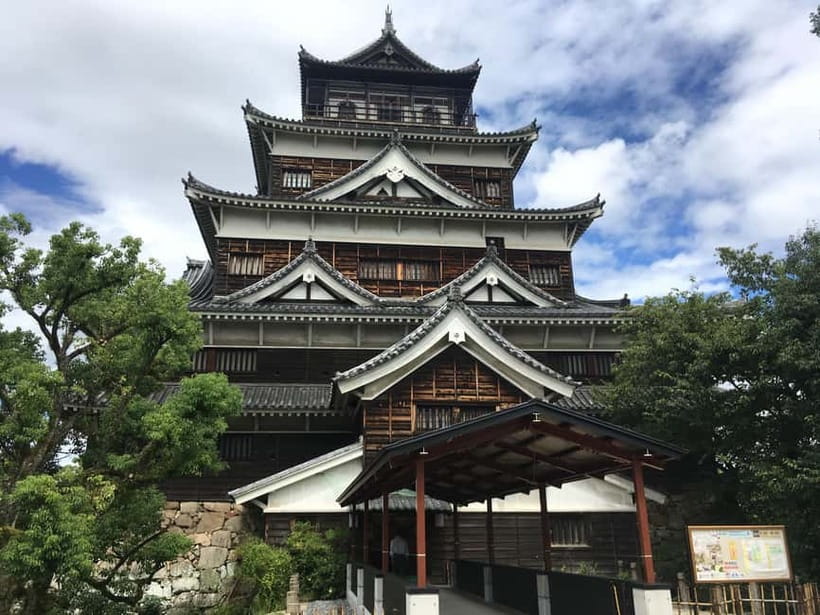
After the Peace Park cycling, the day pivots to Hiroshima Castle. This is where the tour gives you a broader sense of place, not only modern tragedy. The castle stop focuses on Hiroshima’s feudal past, so you start seeing the city as more than a single historical event.
Why this matters: Hiroshima Castle connects the present city to the long arc of regional power and identity in Japan. Even if you only catch a portion of the castle area, the guided commentary helps you frame what you are looking at, rather than walking through it like an isolated sight.
There is also a rhythm shift. You move from the slow, steady bike coverage to more walking time and observation. It is a different kind of attention, and it helps break up the emotional intensity of the earlier Peace Park portion.
A note to plan around: you should expect some time moving between the cycling area, the castle, and then onto transport toward Miyajima. The day is full, so build in mental patience for transfers and short wait times.
More Miyajima tours:
- Peaceful Hiroshima & Miyajima UNESCO 1 Day Bus Tour
★ 5.0 · 5,309 reviews - Hiroshima: Hiroshima and Miyajima UNESCO Sites 1-Day Tour
★ 4.9 · 2,330 reviews - Hiroshima / Miyajima Full-day Private Tour with Government Licensed Guide
★ 5.0 · 1,298 reviews - From Hiroshima: Hiroshima & Miyajima 1 Day Tour with Lunch
★ 4.7 · 395 reviews
Train to the Ferry, Then Miyajima: The Day Changes Speed
Once the city sights are done, you head by train to board the ferry transfer to Miyajima. The ferry ticket is included, which is a real value point because it removes one of the biggest friction points of DIY planning.
This is also where you start to feel the itinerary’s contrast strategy. The ferry ride is not the dramatic main act like the shrine photo spots, but it signals that the island portion is coming. You get that physical separation from the mainland, which makes the Miyajima experience land better when you finally dock.
On the island, the tour transitions into a walking tour. You’ll learn how Miyajima developed as a religious center. Then you will have time to explore the island’s lanes and photo opportunities while you stay guided through the most important storyline.
If you get motion-sick easily, plan to bring what you need. The itinerary includes rail and ferry, and while the pacing is organized, you are still spending a good chunk of the day in transit.
Itsukushima Shrine and the Religious Center Story on Miyajima
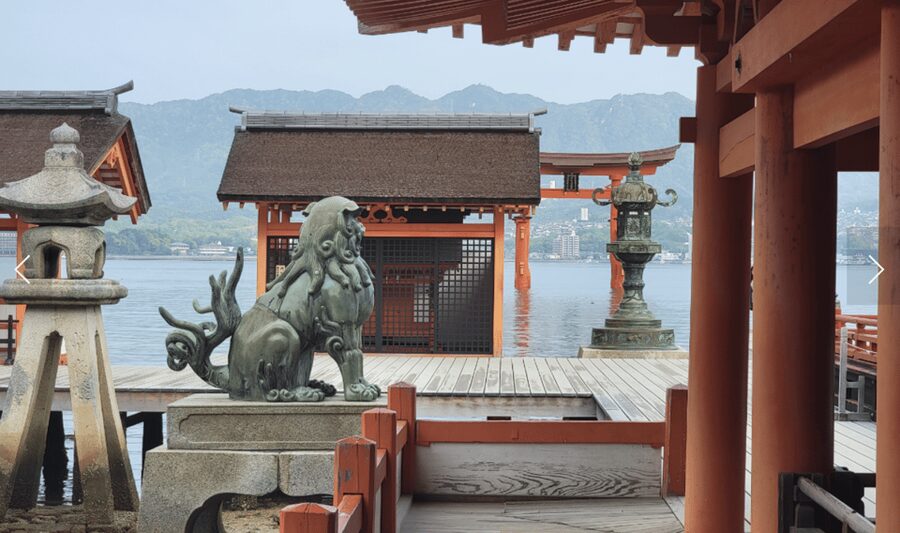
The highlight many people picture is Itsukushima Shrine, and this tour includes a visit there as part of the Miyajima walking experience. Even if you have seen shrine photos before, being on Miyajima changes how you feel about them because the island setting is part of the design and the experience.
The walking tour gives you more than directions. You learn why Miyajima became a religious center and how that role shaped the island’s development. When you understand that context, the orange shrine buildings and the surrounding paths stop feeling like just scenic backdrops.
This is where I think small-group guiding really pays off. On your own, it is easy to chase photos and miss the meaning behind what you are seeing. With a live English guide, the story stays connected to the route. You can still stop for pictures, but you are not guessing why one lane or feature matters.
You should also expect a fair amount of walking after the ferry. Plan comfortable shoes and go slow when you need to. The day is designed for steady pacing, but Miyajima’s lanes can add up.
Lunch, Water, and the 450-Minute Reality Check
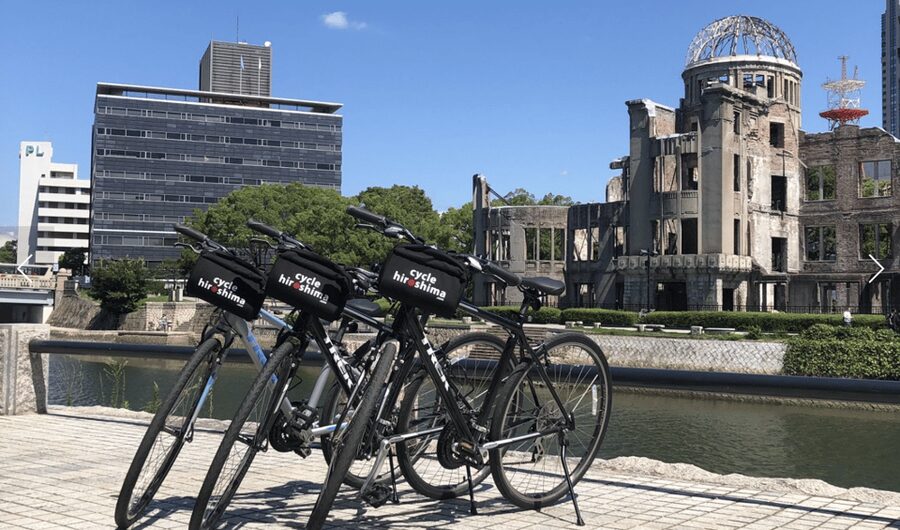
The full tour runs about 450 minutes, which is roughly 7.5 hours. That time is busy by design: cycling, castle exploration, train and ferry transfers, then a walking tour on the island and a shrine visit.
Lunch is included, along with water. That is a practical relief because you do not have to hunt for food right when the schedule gets tight. Still, do not treat lunch as a long reset. The day continues soon after, so having something in your stomach helps you stay steady.
Bring a camera, comfortable clothes, and comfortable shoes. Those are not throwaway packing notes. They are the difference between enjoying Miyajima’s photo lanes and just moving through them fast to get it over with.
Also, the tour operator asks for dietary restrictions and everyone’s heights in advance. That is about fitting bikes properly and planning food. If you share that ahead of time, your group is less likely to face last-minute adjustments.
Rain Plan and Simple Weather Thinking for Hiroshima
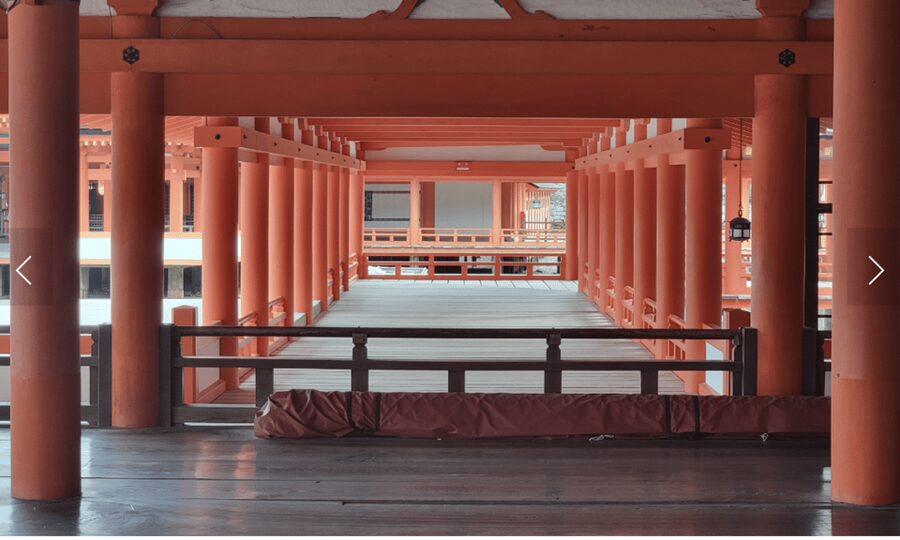
Weather can make or break outdoor days in Japan, and this tour is upfront about how it handles rain. If rain shows up, the team contacts you to offer two choices: switch to a walking tour around the Peace Park, or take a full refund.
Two things to keep in mind. First, you need to be reachable so the team can make the call. Second, a rain-day switch to walking changes the feel of the day, even if you still see the core Peace Park area.
One guide highlight from rainy-day comments: groups have been supported while staying mostly dry, with guides adjusting pace and explanations so the day stayed worthwhile. That is the difference between a rain plan that looks good on paper and one that works in real conditions.
If you tend to stress about timing in bad weather, this tour’s approach is reassuring. You are not stuck with a vague maybe. You get a clear decision pathway.
Price of $138: What You Get That DIY Often Costs More
At $138 per person, this is not the cheapest way to see Hiroshima and Miyajima. But it is also not just a sightseeing bundle. You are paying for a guided experience that includes transportation, equipment, and structured storytelling across multiple major areas.
Here is what you get for the money:
- A guided cycling tour around Peace Park and the A-bomb Dome, with live English commentary
- Hiroshima Castle visit with history context
- Train and ferry transfers to Miyajima (ferry ticket included)
- Guided walking tour on Miyajima, including Itsukushima Shrine
- Bike and helmet, plus lunch and water
For many travelers, the value comes from not having to coordinate multiple segments yourself. You also avoid the learning curve of figuring out what to prioritize in Peace Park and how to connect it to Hiroshima’s wider story, then still keeping Miyajima logical and unhurried.
If you love history and you prefer a plan that handles routing for you, the price starts to make sense fast. If you already know the sites well and you only need transportation, DIY could be cheaper. But you would be giving up the organized interpretation that guides seem to do exceptionally well.
Who This Tour Fits, and Who Should Skip It
This tour is built around cycling and walking, so it naturally fits people who can ride a bike comfortably and who are okay with time on their feet.
It is not suitable for:
- Pregnant women
- People who cannot ride a bike
- Wheelchair users
And you should also take the small details seriously. Smoking is not allowed. The tour expects you to dress comfortably for walking and to bring a camera.
Who will likely love it:
- First-timers who want a full day that covers the big Hiroshima moments and the Miyajima island experience
- People who want history explained in clear English, with time to ask questions
- Travelers who like the pacing of a small group, not a crowded bus shuffle
If you want a slow, fully contemplative day with no movement, this may feel a bit packed. But if you prefer an organized day with room to stop and understand, it hits a good balance.
Should You Book the Hiroshima and Miyajima Bike and Boat Tour?
I would book this if you want a guided, efficient way to see Hiroshima’s most important sites and still enjoy Miyajima’s shrine-and-lanes atmosphere in one day. The biggest selling point is the combination of flat bike coverage plus guided walking, all linked by train and ferry transfers that remove a lot of DIY friction.
I would hesitate if you cannot ride a bike, if you are traveling with mobility needs that limit walking, or if you prefer fully flexible timing with no structured schedule. Also, because it is a long day, make sure you pack for stamina, not just sightseeing.
If you are the type who likes your travel with explanations and a thoughtful pace, this is a strong choice.
FAQ
Is the bike route hilly?
No. The cycling route is completely flat and suitable for all skill levels.
What is included in the tour price?
The tour includes a guided cycle tour around Peace Park and the A-bomb Dome, a Hiroshima Castle visit, train and ferry transfers to Miyajima, a walking tour on Miyajima, a visit to Itsukushima Shrine, bike and helmet, lunch, and water.
Does it include ferry tickets?
Yes. Train and ferry transfers to Miyajima are included, and the ferry ticket is included.
Is lunch provided?
Yes. Lunch and water are included.
Do I need to arrange hotel pickup?
No. Hotel pickup and drop-off are not included.
What happens if it rains?
In case of rain, the team contacts you to offer either a switch to a walking tour around Peace Park or a full refund.
How big is the group?
The tour is limited to a small group of up to 8 participants.
More Cycling Tours in Hiroshima
- Hiroshima 3hr Peace Cycling Tour with Local Guide
★ 5.0 · 131 reviews - Hiroshima: Best of Hiroshima Guided Bike Tour
★ 4.9 · 89 reviews - Hiroshima Country Cycling: Explore Rural Life 1 HR from City
★ 5.0 · 22 reviews - Hidden Kyoto E-Biking tour
★ 5.0 · 1,843 reviews
More Boat Tours from Hiroshima
- Hiroshima and Miyajima by Bike and Boat
★ 5.0 · 172 reviews - Hiroshima and Miyajima 1 Day Cruise Tour
★ 5.0 · 24 reviews - Dinner Cruise on HANAIKADA (Raft-Type Boat) with Scenic View of Miyajima
★ 5.0 · 21 reviews - Mt Fuji & Hakone Cruise, Drum Show Bullet Train 1 Day from Tokyo
★ 4.0 · 7,413 reviews
Fresh options around Hiroshima
- Miyajima Highlights: Itsukushima Shrine & Island Nature★ 5.0 · 21 reviews
- Dinner Cruise on HANAIKADA (Raft-Type Boat) with Scenic View of Miyajima★ 5.0 · 21 reviews
- Miyajima Highlights: Itsukushima Shrine & Island Nature★ 4.9 · 21 reviews
- Hiroshima Country Cycling: Explore Rural Life 1 HR from City★ 5.0 · 22 reviews
- History of Hiroshima Group Walking Tour★ 5.0 · 23 reviews
- Hiroshima Private Tour with a Local – Highlights & Hidden Gems★ 4.5 · 24 reviews
- Hiroshima Peace Park & Atomic Bomb Dome Guided Walk★ 4.9 · 24 reviews
- Hiroshima and Miyajima 1 Day Cruise Tour★ 5.0 · 24 reviews
Cruises & Boat Tours, compared.
Mt Fuji & Hakone Cruise, Drum Show Bullet Train 1 Day from Tokyo
Read our review →
Tokyo Mt Fuji 5th St & Hakone Cruise Bus Tour w/Bullet Train
Read our review →
Mt. Fuji 5th Station & Hakone Cruise 1-Day Bus Tour
Read our review →
Meiji Shrine, Asakusa, Skytree Bus Tour and Cruise
Read our review →
Mt Fuji & Hakone Cruise, Drum Show Bus 1 Day from Tokyo
Read our review →
Dotonbori District River Cruise with Drink Discount
Read our review →
Sumida River: Japanese Traditional Yakatabune Dinner Cruise
Read our review →
Hakone Fuji Day Tour w/ Cruise, Cable Car, Volcano
Read our review →Browse the lists this tour appears in