
Reviewed · SHOW
Kyoto Geisha Show Cultural Hour with an apprentice geisha, Maiko
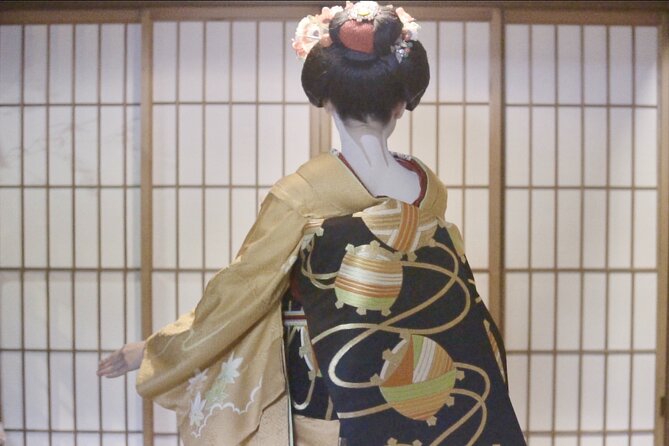
A maiko on stage in Kyoto is rare. This small-group cultural hour gives you a guaranteed chance to see a traditional performance by a maiko, plus a Q&A that goes beyond scripted talk. I especially like the English translation, so you can ask real questions without guessing. One possible drawback: it is a short, formal show, so if you are hoping for hours of roaming or a long performance marathon, plan for 90 minutes and nothing more.
What makes this outing worth it is the setup. You get a small group (max 14), an English-speaking guide, and a setting tied to the geisha world, not a generic auditorium. You will also appreciate the practical reality of Kyoto, where street sightings are harder to come by these days.
Key Highlights You Should Care About
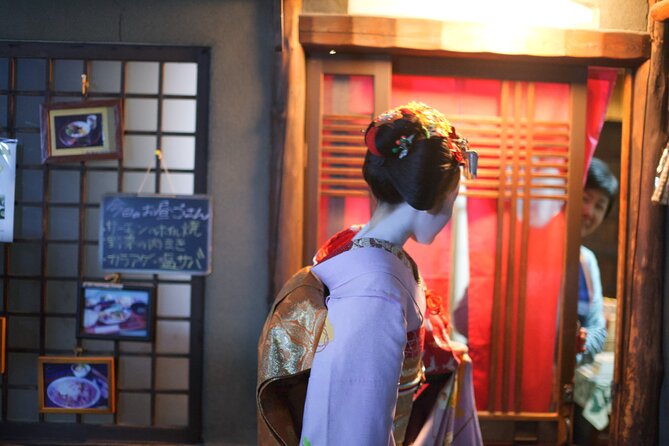
- A real maiko performance in a controlled setting, not a hunt for street sightings
- A Q&A with an apprentice geisha, focused on training and daily life
- English support from your guide, so conversations stay clear
- Small-group size (up to 14), which keeps questions from getting pushed aside
- A compact format (about 1.5 hours total), easy to fit into a Kyoto day
Kyoto Maiko Culture Hour, with Q&A: What Makes It Different
Kyoto’s geisha culture is one of those things that can feel both famous and hard to actually experience. The street sightings are less dependable than they used to be, and most visitors end up with either staged entertainment or a quick photo opportunity that tells you little.
This cultural hour is structured to solve that problem. You meet for a geisha show and then you spend real time in conversation. The centerpiece is a performance by an apprentice geisha (a maiko), typically with one or two songs, along with Q&A.
I like the balance here. It is not only about watching. It is also about understanding what you are watching, how training works, and what daily customs look like from inside the world. And because an English-speaking guide translates, the Q&A stays meaningful.
More geisha experiences in Kyoto:
- Kyoto Geisha Walking Tour: Gion District & Hidden Gems
★ 4.7 · 3,273 reviews - Kyoto: Gion Magical Night Walking Tour with Geisha Trivia
★ 4.9 · 2,393 reviews - Kyoto: Gion Geisha District Walking Tour – Stories of Geisha
★ 4.7 · 2,187 reviews
Where You Meet in Honmachi and What the Small-Group Size Changes
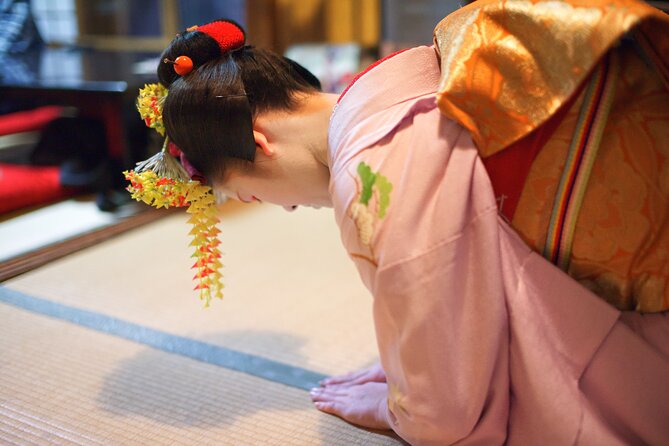
The meeting point is listed at 5-chōme-182 Honmachi, Kyoto. From there, the experience is designed for a smooth flow, and it is near public transportation, which matters in Kyoto where getting across town can eat up your energy.
The group size cap is 14 travelers, and that number shows up in the experience. With a smaller group, your guide has room to translate questions properly and keep the conversation flowing. You also get more chances to interact when the maiko is speaking and when you are asking follow-ups.
In the feedback you can feel the impact of that intimacy. People repeatedly mention how well the host managed the pace, keeping the moment respectful for the maiko while still making everyone comfortable. If you are used to tours that feel rushed, this format is calmer and easier to enjoy.
The 90-Minute Flow: Show Format, Songs, and the Q&A Session
You are looking at about 1 hour 30 minutes total. Most of that centers on a 1-hour geisha show and meeting, which includes a Q&A and a performance.
Here is what that usually feels like, in plain terms:
- You start with a structured welcome where your guide frames what you are about to see.
- Then the maiko performs, with one or two traditional songs worth of dance.
- After or during the experience, you shift into conversation and Q&A, with the guide translating so you can ask about training and customs.
Some groups also mention that the host leads you through background context first, like where geiko or geisha work and how performances and clientele are handled. While the exact route can vary by group, the overall point stays the same: you do not just show up for dancing, you learn the basics so the dancing has context.
One practical note: this is a formal cultural hour. So even when you chat, you should expect a respectful tone rather than a casual hangout.
What You Actually Learn From a Maiko: Training, Daily Customs, and Life Inside the World

This is the part people rave about most: the chance to talk with a real apprentice geisha, not just watch from the audience.
In the Q&A, the focus is typically on:
- training and how a maiko learns skills
- day-to-day customs tied to that training
- how the work is structured and what it feels like from inside
You can also expect your guide to help translate questions and make sure answers make sense in English. That translation is a big deal. Without it, visitors tend to either ask safe questions that are easy to answer, or they stop asking once the language barrier hits.
A couple of guide names come up often in people’s write-ups. The host is often described as Ken, and in other cases, Saya is mentioned for translation support. Even if your guide is different, the pattern is clear: the guide role is active, not passive.
And yes, you still get the performance. The dances themselves are a visual lesson. They are not only pretty, they are a way of communicating technique, discipline, and style that has taken years to shape.
A few more Kyoto days worth comparing
- PERFECT KYOTO 1-Day Bus Tour
★ 5.0 · 13,518 reviews - Kyoto: Fushimi Inari, Kinkakuji, Bamboo Grove 1 Day Bus Tour
★ 4.8 · 4,316 reviews - Kyoto: Tea Ceremony in a Traditional Tea House in Kiyomizu
★ 4.9 · 3,519 reviews - Kyoto: Tea Ceremony Ju-An at Jotokuji Temple
★ 4.9 · 3,207 reviews
Performance Etiquette: How to Ask Better Questions During Q&A
Because this experience is conversation-based, how you ask matters. You do not need a speech. But you do want questions that are specific enough to get a real answer, not questions that sound like you googled them five minutes ago.
A few question types that fit what the experience is built around:
- What does a typical training day look like?
- What is the hardest part of learning the skills you do?
- How do customs around performance and behavior shape your routine?
- What does a maiko focus on first, before more advanced skills?
Also remember the format is designed to be respectful. Keep questions clean, avoid anything intrusive, and stay patient when translation takes a moment.
If you are bringing a partner, it helps to decide who asks which question in advance. It keeps things from turning into both of you trying to speak at once when the translation window opens.
English Translation and Your Comfort Level: Why This Matters More Than You Think
The tour’s promise is straightforward: no language barriers, thanks to an English-speaking guide. In practice, that means you do not just get a summary of what the maiko is doing. You get a chance to understand why she is doing it and what it represents.
It also affects your comfort. When you know your questions will land correctly, you stop worrying about whether you will sound awkward. That helps you enjoy the dance instead of mentally translating everything.
People also mention how the host balances formality with friendliness. That is a tough skill. Too formal and it feels cold. Too relaxed and it can feel disrespectful. Here, the hosting tends to keep the tone appropriate for the maiko while still making you feel welcome enough to ask questions.
Price and Value: Is $105.42 Fair for 90 Minutes?
At $105.42 per person for about 1 hour 30 minutes, you are paying for several things at once:
- a staged cultural setting (with the maiko performance)
- an English-speaking guide to translate
- a Q&A that gives you interaction, not just viewing
This is not a budget item, so it helps to judge it by value, not by length alone. A short performance can still be worth it when it includes:
- direct conversation
- guaranteed access to a maiko on stage
- small-group pacing with time for questions
And the experience has demand. The average booking window is about 44 days in advance, which usually means you should plan ahead rather than hope for a last-minute slot.
If you are trying to build a Kyoto itinerary with one or two high-impact cultural moments, this is the kind of event that can anchor your day.
What to Expect at the Venue: Photos, Tea Time, and the Mood

The show takes place in a venue associated with geisha culture in Kyoto, and the tone is intimate. People describe the space as cozy and pretty, with time built into the visit to enjoy the moment.
Some write-ups mention tea time and photos with the maiko after the conversation and dance. You should treat that as part of the experience flow, but note that coffee and/or tea are not listed as included. In other words, if tea is available, you might pay extra or it might be handled through the venue. Either way, do not plan on it being a guaranteed included refreshment.
Photos can be a make-or-break detail for many visitors, and the experience is structured so you get a proper farewell moment. That is a good sign if you want memories without turning the whole event into a photo session.
Who This Kyoto Geisha Show Is Best For (and Who Might Skip It)
This experience is a strong match if you want:
- an authentic-feeling cultural performance with real interaction
- a guaranteed chance to see a maiko dance without relying on luck
- English support so you can ask questions about training and customs
- a small group size that keeps the Q&A from feeling rushed
It is also ideal if you do not want to spend your entire day chasing elusive street sightings.
You might consider something else if you:
- only want a long, entertainment-style show with lots of songs or extended runtime
- dislike formal cultural settings
- need a very flexible schedule with constant movement and sightseeing stops
The experience is built as one focused hour, not a half-day tour.
Should You Book This Kyoto Maiko Cultural Hour?
If you care about geisha culture beyond the surface, I think it is an easy yes. The core value is simple: you get a maiko performance plus translation-supported Q&A in a small group, in a setting where you do not have to guess or wander for hours hoping something happens.
Book it especially if you:
- like direct conversation with artists and cultural insiders
- want a Kyoto moment you can explain clearly, because you will learn the basics while you are there
- are traveling with someone who loves culture but struggles with language barriers
My only caution is timing and expectations. It is about 90 minutes. Treat it as a focused cultural stop, then build the rest of your day around Kyoto food, temples, and walking.
If you want one structured, high-value cultural interaction with a maiko in Kyoto, this is the kind of experience that earns its place on the itinerary.
FAQ
How long is the Kyoto Geisha Show Cultural Hour?
The experience is approximately 1 hour 30 minutes total, including a 1-hour geisha show and meeting with Q&A and a performance (typically one or two songs).
Who performs at the show?
A maiko, which is an apprentice geisha, performs as part of the cultural hour.
Is there an English guide or translation?
Yes. An English-speaking guide is included, and the guide translates so you can participate in the Q&A without language barriers.
Is this a small group tour?
Yes. The experience has a maximum group size of 14 travelers.
Where does the tour take place?
The meeting location is listed as 5-chōme-182 Honmachi, Kyoto, and it is near public transportation.
What is included in the ticket price?
Included is the 1-hour geisha show and meeting, plus the Q&A and English-speaking guide support.
Is coffee or tea included?
No. Coffee and/or tea are not included.
What if it is canceled due to weather?
The experience requires good weather. If it is canceled due to poor weather, you will be offered a different date or a full refund.
What is the cancellation policy?
This experience is non-refundable and cannot be changed for any reason.
What if the minimum number of travelers is not met?
If it is canceled because the minimum number of travelers is not met, you will be offered a different date or experience, or a full refund.
Fresh options around Kyoto
- Shamisen Discovery in Kyoto 【Group】★ 5.0 · 24 reviews
- Kyoto: Personalize, private tour (3h, 5h, 8h) [W/Car Option]★ 4.9 · 24 reviews
- Kyoto: Kiyomizu-dera, Fushimi Inari & Gion Geisha District★ 5.0 · 24 reviews
- Kyoto Full Course Tour: Explore 10 Must-See Sights & Hidden Gems★ 4.5 · 25 reviews
- Kyoto kiyomizu Temple : Maiko and Samurai Couple Photoshoot★ 4.8 · 25 reviews
- Kyoto: Private Tea Ceremony at local home with tea master★ 5.0 · 25 reviews
- Slow Cycling Tour at Uji’s Matcha Green Tea Fields and Heritage★ 5.0 · 25 reviews
- Kyoto: Zen Meditation at a Private Temple with a Monk★ 5.0 · 25 reviews
Show, compared.

Mt Fuji & Hakone Cruise, Drum Show Bullet Train 1 Day from Tokyo
Read our review →
Sumo Show Experience with Chicken Hot Pot and a Photo
Read our review →


Tokyo Shinjuku Sumo Show & Experience with Photo
Read our review →

Mt Fuji & Hakone Cruise, Drum Show Bus 1 Day from Tokyo
Read our review →
Browse the lists this tour appears in