Reviewed · KYOTO TOURS
Private Highlights of Kyoto Tour
Kyoto clicks faster with a plan and a pro guide. This private highlights day in Kyoto is built around two route choices, so you can aim for either the Arashiyama plus Golden Pavilion side or the Fushimi Inari plus Kiyomizu-dera side, all with private-guide attention. I especially like the mix of famous stops and real context, and I also love that the schedule includes a one-day city bus pass you can keep using afterward. The one possible drawback: it is a full 7-hour day with plenty of walking, so you will want comfy shoes and some patience for temple crowds.
One big reason this tour feels worth it is the way it uses your time. You meet at Hotel Granvia Kyoto near Kyoto Station at 9:00 am, then ride public transport like a local, with a guide who can explain what you are seeing in plain English. Names like Mie, Mia, Chako-san, Mai, and Hiseko show up in the guide stories, and a common theme is pacing plus clear explanations, even on rainy days.
Key things that make this Kyoto highlights tour work
- Two itinerary choices let you match your Kyoto mood, north route for Arashiyama and Kinkakuji, south route for Fushimi Inari and Kiyomizudera.
- Guided timing at the big hitters keeps you from losing time figuring out where to go next.
- Included temple admissions at several stops removes cost and helps you move efficiently.
- Small group size (max 8) plus a “private” style tour means you can ask questions and adjust your pace.
- A bus pass you keep using after the tour is a practical perk if you still have hours in Kyoto.
Starting at Kyoto Station: easy meeting, smart routing
You begin at Hotel Granvia Kyoto, by Kyoto Station. The meeting point is the JR Kyoto Station Central Entrance area, and you start at 9:00 am. That is a nice setup if you are staying around the station, or if you are arriving on the Shinkansen and want to jump straight into Kyoto without extra hotel transfers.
This tour uses public transport, which is exactly what you should want in Kyoto. It is also an efficiency move: buses and local transit help you stitch together distant areas without turning the day into a series of taxis and long waits.
The tour also includes a one-day city bus pass that you can keep using after the tour ends. This matters because Kyoto is spread out. If you finish the day in Gion and still want one more sunset stroll, a bus pass can save you time and money compared to buying separate rides.
A few more Kyoto days worth comparing
- PERFECT KYOTO 1-Day Bus Tour
★ 5.0 · 13,518 reviews - Kyoto: Fushimi Inari, Kinkakuji, Bamboo Grove 1 Day Bus Tour
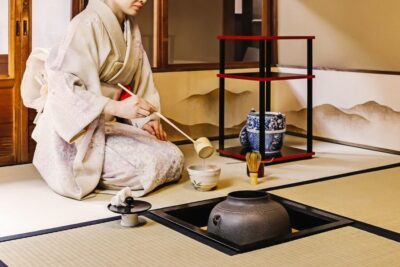
★ 4.8 · 4,316 reviews - Kyoto: Tea Ceremony in a Traditional Tea House in Kiyomizu
★ 4.9 · 3,519 reviews
Choosing your route: Northbound Arashiyama to Golden Pavilion, or Southeast Fushimi Inari to Gion
You get two different ways to experience Kyoto, and you should pick based on what you most want to photograph and feel.
Northbound vibe
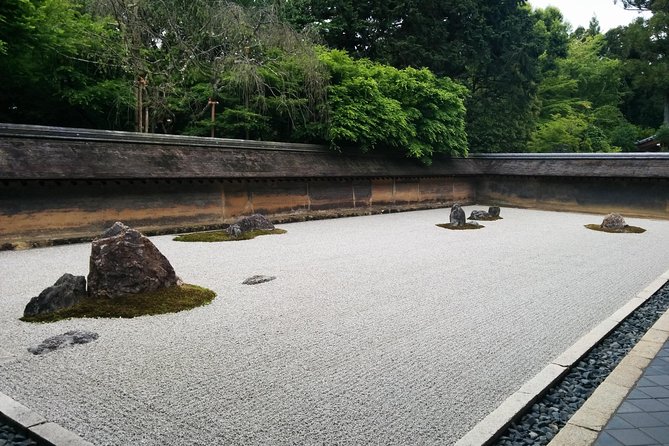
The north route starts with Arashiyama Park and then heads toward the famous rock garden at Ryoan-ji. Later, you move on to Kinkakuji (Golden Pavilion), and then choose between Nishiki Food Market or Nijo Castle. The day ends in Gion.
This route is for people who want scenic Kyoto right away, then big-name temples with good story context.
Southeast vibe
The southeast route is all about Kyoto’s iconic shrines and temple views. You can start with Gekkeikan Sake Brewery to learn how Japan’s rice wine is made, then visit Fushimi Inari-taisha, see Sanjusangendo, go up to Kiyomizudera, and then walk the steep hill paths around Ninenzaka and Sannenzaka for views before ending in Gion.
This route is for people who want religious landmarks plus old-street atmosphere, and who do not mind uphill sections.
Either way, the tour ends in Gion, which is a strong closer because you finish near one of Kyoto’s most atmospheric areas at street level, not on a far edge of the map.
Same corner of Japan, a different kind of day:
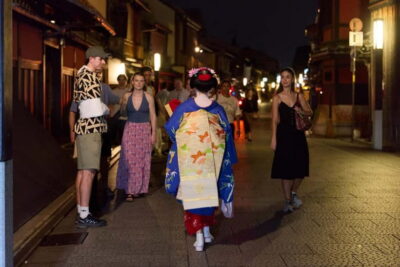
- Kyoto Geisha Walking Tour: Gion District & Hidden Gems
★ 4.7 · 3,273 reviews - Kyoto: Tea Ceremony Ju-An at Jotokuji Temple
★ 4.9 · 3,207 reviews - Kyoto: Gion Magical Night Walking Tour with Geisha Trivia
★ 4.9 · 2,393 reviews - Kyoto: 45-Minute Tea Ceremony Lesson Experience
★ 4.3 · 2,378 reviews
Arashiyama and Ryoan-ji: bamboo, Togetsukyo, and the 15-stone zen garden
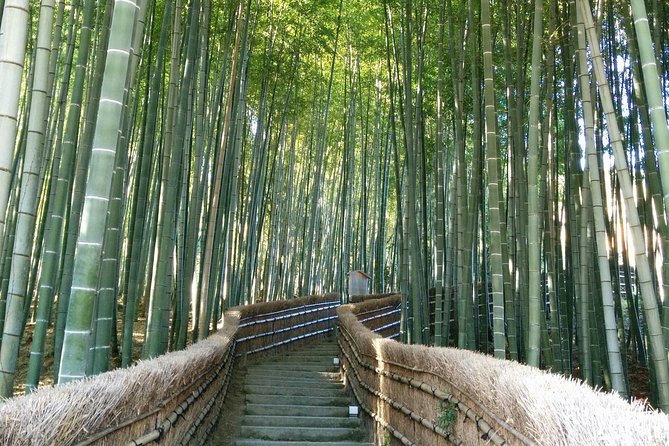
If you choose the northbound itinerary, Arashiyama is a smart first stop. The tour experience includes time for bamboo forest walking and the area around Togetsukyo Bridge, the big wooden bridge near the bamboo. Even if you have seen bamboo photos before, walking through it feels different because you get the sound and the crush of green shade around you.
From there, you move to Ryoan-ji, home to the world-famous rock garden. The key detail here is that the garden is arranged around 15 stones, and the way your guide frames what you are looking at helps you stop treating it like a picture and start seeing it like design.
Timing matters at these sites. You are not expected to speed through. The tour builds in short, focused blocks (the garden stop is listed as about 30 minutes), which is the right length for taking in the layout, then stepping back to reset.
Practical note
Bamboo walks can get slippery or crowded, depending on weather and time of day. Wear shoes with grip, and keep water handy even though drinks are not included.
Kinkakuji Golden Pavilion: why the gold works in person
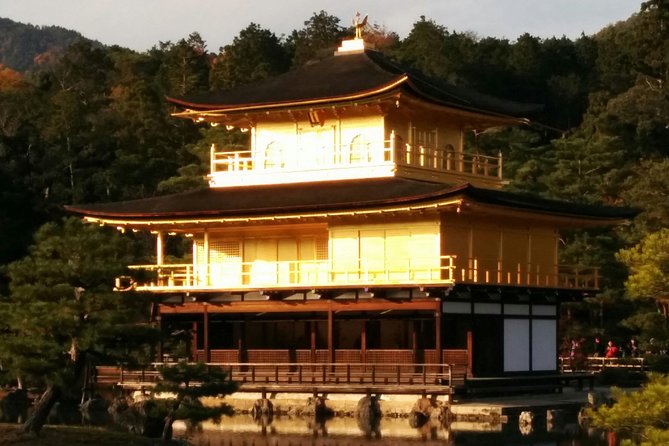
Kinkakuji (Golden Pavilion) is covered with gold leaf, and it is still stunning in person because the temple sits visually framed by greenery and reflections. The tour schedule gives you around 50 minutes, including the included admission ticket.
This is one of those places where a guide changes the experience. Even when you know the basics, you often miss how the architecture and setting are meant to work together. The guide helps connect the temple look to its cultural role, not just its Instagram image.
Also, with Kinkakuji in particular, crowd flow can be fast. Having a guide to manage entry timing and show you the right viewpoints reduces your chances of spending prime minutes in the wrong line.
Nijo Castle: the shogunate-era interiors you might miss
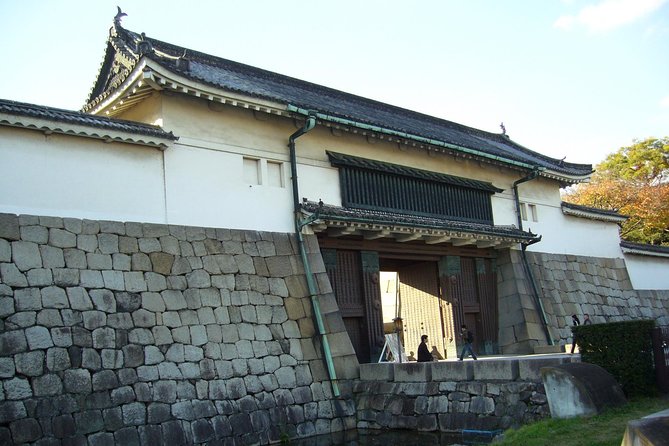
Nijo Castle is included on the itinerary option that pairs with the Golden Pavilion day. It is a Tokugawa Shogunate-era castle from the early 1600s, and the highlight is touring the original living quarters connected to the shogun.
You get about 50 minutes at this stop, and the admission ticket is included. If you are the kind of person who likes how buildings reflect power, Nijo Castle is a strong add-on. Even if you think you will only do the exterior, the interior spaces tend to be the part that changes your understanding.
One practical value of having the guide here: you avoid the common mistake of treating castle interiors as generic rooms. With someone explaining what you are seeing, you can read the details instead of just passing by them.
Nishiki Food Market: your lunch plan, or a taste stop that feels local
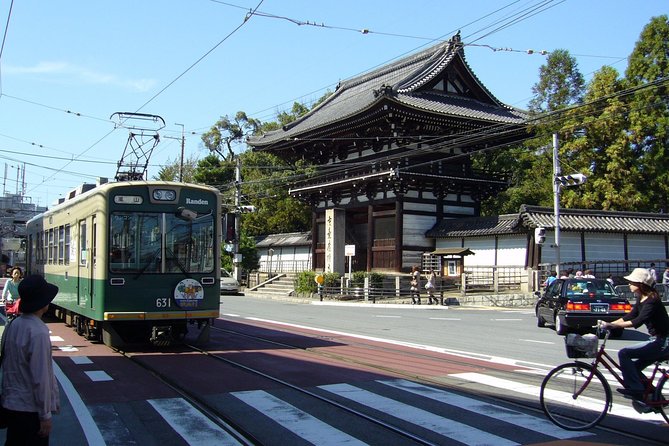
On the northbound route, you may visit Nishiki Food Market. The tour describes it as a culinary wonderland, and that is the right expectation. This is a good place for snack-style browsing and quick bites, but the tour itself does not include lunch or food.
A smart way to handle this stop is to treat it like a choose-your-own-adventure. If you have been skipping street food because it is hard to order in Japan, a guide can help you navigate what is worth trying and how to handle menus.
If you do not want market time, the itinerary allows for swapping to Nijo Castle instead. That flexibility is genuinely useful when you are deciding what kind of Kyoto you want that day.
Fushimi Inari-taisha: thousands of red torii and a workable visit length
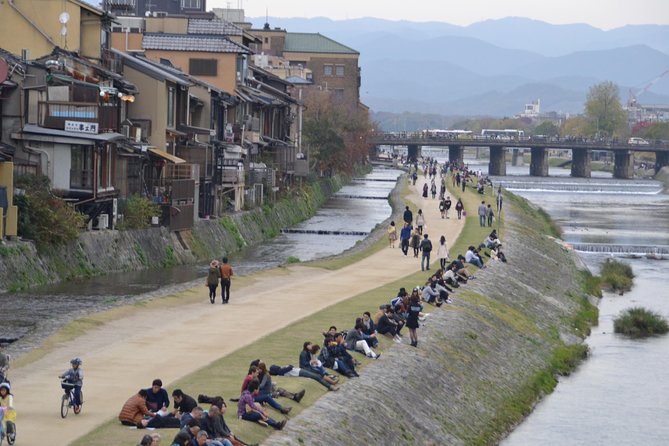
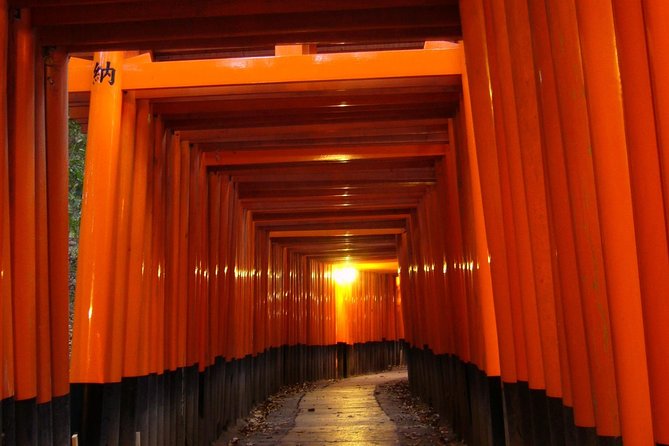
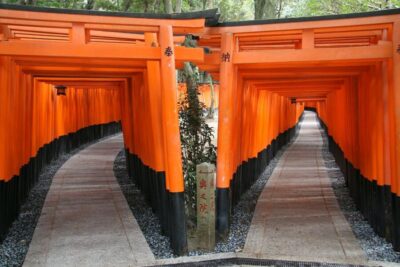
On the southeast route, Fushimi Inari-taisha Shrine is the big anchor. You will see thousands of red torii gates stretching up the mountain, plus fox-related symbols and smaller shrines along the way.
Your time here is listed as about 50 minutes, and admission is free. That can sound short until you realize what you need most. You want enough time to walk the gate paths, find a viewpoint moment, and still have energy left for Kiyomizudera afterward.
Inari is famous, which means crowds are normal. The guide helps you move through the site with less guesswork, and that makes a huge difference when you are deciding how far up the mountain paths you want to go.
Gekkeikan Sake Brewery and Okura Sake Museum: learning the basics before you taste elsewhere
Another smart element on the southeast route is the stop at Gekkeikan Sake Brewery and the Gekkeikan Okura Sake Museum. The tour frames this as learning secrets behind Japan’s iconic rice wine.
You get about 50 minutes, and the admission ticket is included. Even if you do not plan to buy sake, this kind of stop gives your later drinking culture context. It also breaks up the shrine-temple loop so you get something hands-on and less purely architectural.
If you are a casual sake fan, this can still be worthwhile because the learning is not only about labels. It is about the process and how the product connects to Japanese food and ritual.
Sanjusangendo: 1001 Kannon statues and controlled viewing time
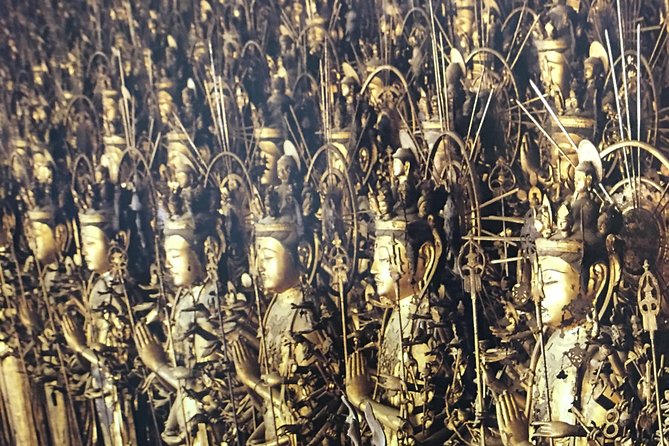
Sanjusangendo Temple is on the itinerary, with a focus on the astonishment of 1001 kannon statues. The tour gives you about 50 minutes, and admission is included.
This is one of those places that can overwhelm you if you stand there trying to analyze everything at once. A guide helps you focus on the overall effect first, then notice patterns, symbolism, and why the hall is designed to feel overwhelming by intent.
It is also a good mid-day stop because it is a contained interior space. When weather turns, that kind of stop becomes even more valuable.
Kiyomizudera and the Ninenzaka and Sannenzaka slopes: postcard views with real walking
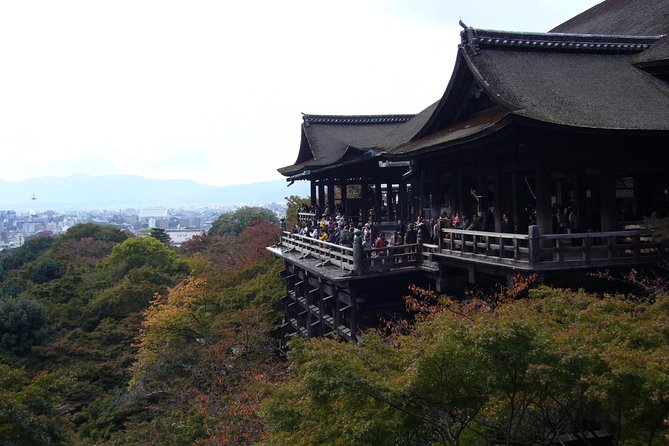
After Sanjusangendo, the southeast route continues to Kiyomizudera, a hilltop landmark dating back to the 8th century. The tour includes about 50 minutes with admission included.
The big draw is the view from the balcony and the overall scenic position. Kiyomizudera is often depicted on postcards for a reason, but seeing it in person feels different once you stand in the space and look out over Kyoto.
Then you walk the steep slopes up toward the Ninenzaka and Sannenzaka neighborhoods. The tour highlights this as steep, and that means you should plan for stairs and uphill walking. This is one of the moments where good shoes are not optional.
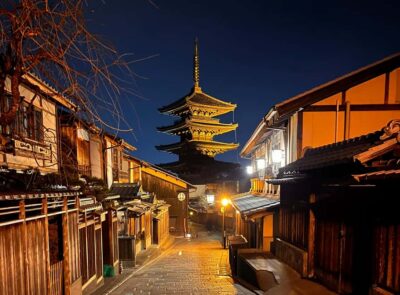
If you like atmospheric streets and old Kyoto textures, this area is where the day starts to feel less like sightseeing and more like being in the city.
Gion as your ending point: atmospheric streets after temple overload
Both route options conclude in Gion. The itinerary includes a short visit time, and the tour specifically mentions Gion’s geisha tradition. Admission is free at this stop.
Ending in Gion is a practical choice because you finish in a central, photogenic zone where you can keep exploring on your own. The tour even points to another Gion-focused experience that starts later in the evening, around 6:00 pm, which can be useful if you want a slower, street-level add-on after the main temple day.
If your day ends and you feel temple fatigue, you can still do a low-effort wander. Gion is ideal for that.
Ryoan-ji and Kinkakuji pacing: how the tour keeps walking manageable
A common question is whether a highlights day like this will feel too rushed. In practice, you get set time blocks at each major stop, often around 50 minutes for the big sights and 30 minutes for shorter ones like bamboo or the rock garden.
Also, the tour is capped at a maximum of 8 travelers and is designed to give you undivided attention from your guide. That combination matters. With a small group, your guide can adjust pace if someone needs a breather, wants an extra photo stop, or asks follow-up questions.
Rain happens in Kyoto. Some people even note good experiences on rainy days, which tells me the route is flexible enough to keep the day moving without turning it into a frantic scramble.
Tickets, what is included, and what you should budget for
This tour includes a mix of guided stops and included admissions. Admission ticket included is listed for major sites such as:
- Kinkakuji (Golden Pavilion)
- Kiyomizudera
- Nijo Castle
- Sanjusangendo
- Ryoan-ji
Some parts are free or not charged as admissions in the schedule, like:
- Gion
- Bamboo Forest Street
- Fushimi Inari-taisha
You should budget for the big obvious costs that are not included: food and drinks, plus lunch. The itinerary mentions a lunch break where lunch is at your expense.
One practical tip: keep your lunch flexible. If your group gets hungry earlier or later, you will lose less time if you treat lunch as a plan rather than a fixed reservation.
Price and value: what you really pay $151.20 for
At $151.20 per person for about 7 hours, you are not just paying for access to famous sites. You are paying for three things that add up quickly in Kyoto:
- A guide who explains what you are seeing, so you get more meaning than just photos.
- Efficient movement using public transport, including the built-in one-day bus pass you keep after the tour.
- Included admissions at several of the biggest stops.
Some people have commented that the tour is worth the money, and I think the value comes from reducing wasted time. Kyoto can be stressful if you are trying to plan a route while also decoding transit. Here, you get a ready-made path plus a guide to help with the human side: where to look, what matters, and how to spend your short time window at each site.
The price is not the cheapest way to see Kyoto, but it is often the smoothest way to see the top highlights without turning your day into logistics.
What to wear and how to handle the day physically
This is a full highlights day. You will be walking at temples, through streets, and up slopes on the southeast route.
My simple checklist:
- Wear walking shoes you already trust.
- Bring a light layer, since Kyoto weather can shift.
- If you choose the southeast route, plan for uphill effort near Ninenzaka and Sannenzaka.
- Expect crowds at the big names, especially Fushimi Inari and Kiyomizudera.
If you want comfort, you can also lean on your guide. The tour format gives you enough structure to slow down when you need to without feeling like you are falling behind.
Who should book this private Kyoto highlights tour
This tour is a strong fit if:
- You are in Kyoto for the first time and want the greatest hits with context.
- You prefer public transit but do not want to plan the whole route.
- You want a smaller group feel, with time to ask questions.
- You like a guide who can keep things organized, even when weather changes.
It might be less ideal if:
- You hate walking and want only minimal stairs and slopes.
- You want a super slow, no-schedule day built around one neighborhood.
- You are okay with figuring everything out yourself and do not care about guided interpretation.
If you are doing Kyoto as a multi-day trip, this is a great first-day anchor because it gives you landmarks and mental map cues for what you can revisit later.
Should you book this private Kyoto highlights tour?
I think this is a good booking for most first-timers, especially if you want Kyoto’s famous places without the hassle of transit planning and ticket logic. The two route choices make it easier to match your interests, and the combination of a professional guide plus included admissions at major stops feels like real value, not just a sightseeing checklist.
If you are deciding between the north and south route, pick based on your tolerance for uphill walking. Want bamboo plus zen garden calm? Choose north. Want torii gates, big temple views, and old-street slopes? Choose south.
FAQ
Where is the tour meeting point, and when does it start?
The tour starts at Hotel Granvia Kyoto near JR Kyoto Station, at JR Kyoto Station Central Entrance. The start time is 9:00 am.
How long is the Kyoto highlights tour?
The duration is listed as about 7 hours.
Is hotel pickup included?
No, hotel pickup and drop-off are not included. You should plan to meet at Hotel Granvia Kyoto near Kyoto Station.
What transportation is included during the tour?
The tour includes use of public transportation. You also receive a one-day city bus pass.
Does the tour include admission tickets?
Admission tickets are included for several major sites, while some stops are listed as free. The schedule notes ticket details at each stop.
Is lunch included?
Lunch is not included. The tour schedule includes a lunch break where you pay for your own meal.
Can I choose between two different itineraries?
Yes. You can choose between a northbound route and a southeast-bound route, each covering major Kyoto attractions and ending in the Gion area.
Is the bus pass usable after the tour ends?
Yes. The one-day city bus pass can be used continuously after the tour.
What is the cancellation policy?
You can cancel for a full refund if you cancel at least 24 hours before the experience’s start time. If you cancel less than 24 hours before, the amount paid is not refunded.
Are children allowed, and how does the child rate work?
Child rate applies only when sharing with 2 paying adults. Children must be accompanied by an adult.
Fresh options around Kyoto
- Kyoto Aquarium Admission Ticket★ 4.7 · 12 reviews
- Kyoto Gion Photoshoot – Private Session | Pro Photographer★ 5.0 · 12 reviews
- Gyoza Cooking Class in Kyoto: Traditional Japanese Dumplings★ 5.0 · 12 reviews
- Kyoto: Guided Food Tour with 12 Dishes & 3 Drinks★ 5.0 · 12 reviews
- Kyoto: Avoid the Crowds at the Hidden Gems of Arashiyama★ 4.9 · 13 reviews
- Kyoto Early Bird English Tour: Gion & Higashiyama(Private opt)★ 5.0 · 13 reviews
- Otsu-e Folk Art Workshop & Local Culture Walk Near Kyoto★ 5.0 · 13 reviews
- Kyoto, Osaka, Nara Full Day tour by Car English speaking Driver★ 3.5 · 13 reviews
Kyoto Tours, compared.
Fushimi Inari, Kinkakuji, Bamboo Grove 1 Day Bus Tour
Read our review →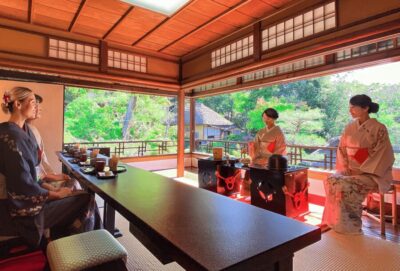
Tea Ceremony in a Traditional Tea House in Kiyomizu
Read our review →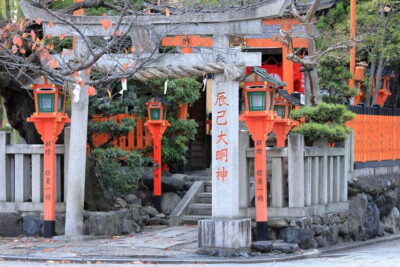
Kyoto Geisha Walking Tour: Gion District & Hidden Gems
Read our review →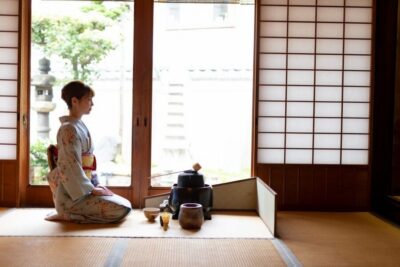
Gion Magical Night Walking Tour with Geisha Trivia
Read our review →