Reviewed · GUIDED
Nara 8hr Private Tour – Kyoto DEP. with Licensed Guide
Nara in eight hours, guided well. This private day trip with a licensed multilingual guide lets you choose 3 to 4 stops so you get the iconic hits without wasting time. The one thing to plan for is costs beyond the tour, since transportation and many temple admissions are not included.
What I like most is the mix: the big-bronze Buddha moment at Todai-ji, the deer-and-shrine rhythm of Nara Park and Kasuga Taisha, plus the option to shift into old-town streets or gardens depending on your mood and weather. Since it is a walking tour, wear comfortable shoes and be ready for a full day pace.
Key highlights
- Pick 3 to 4 Nara sites so your day fits your interests, not a fixed script
- Todai-ji first or near-first for that unforgettable scale and temple setting
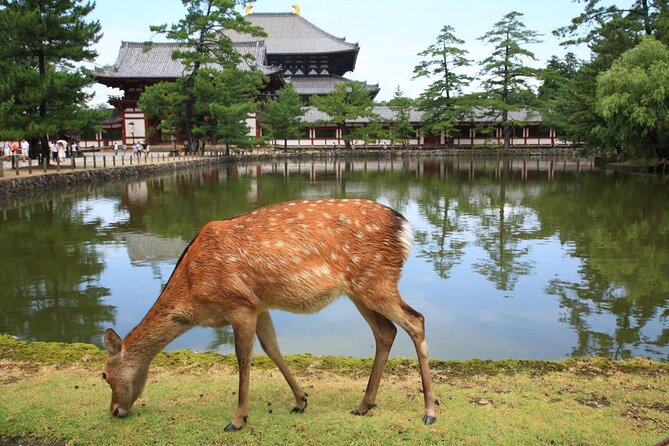
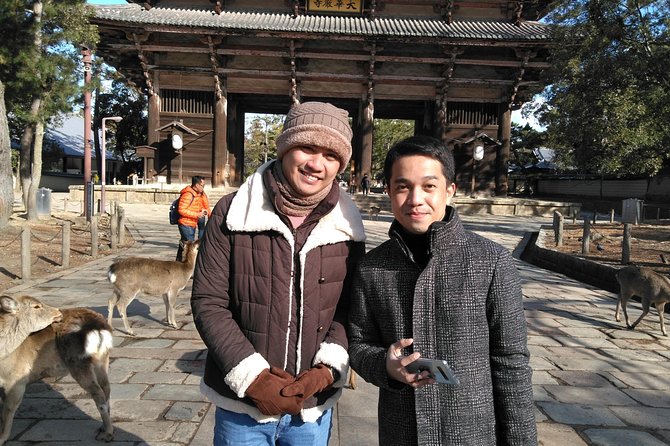
- Nara Park deer time built into the core experience, not treated as a side stop
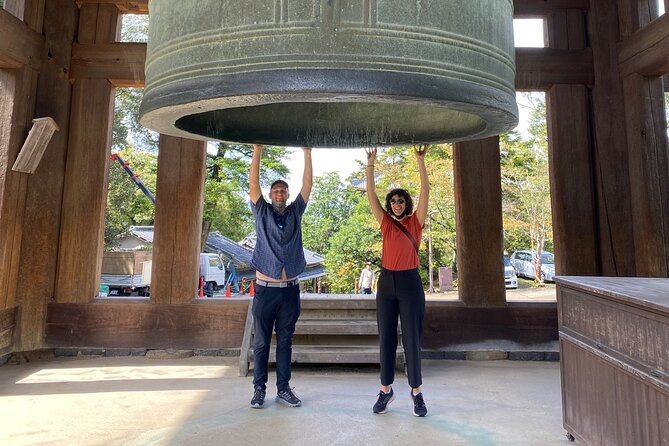
- Kasuga Taisha and shrine paths that feel like a forest walk with lanterns and bells
- Naramachi Edo-era streets for a slower, street-level look at old Nara life
A smart way to do Nara from Kyoto, without the stress
Nara is close enough to Kyoto to feel easy, but it is still a real day out. The best version of a Nara trip is one where you get your bearings fast and spend your energy on the sights that actually match your curiosity. This tour is designed for that.
You start in Kyoto with a guide who meets you on foot within a designated area. From there, you spend the day walking through Nara’s major sights with a government-licensed English-speaking guide. The private setup matters. You can ask questions, adjust the pace, and focus on the temples, districts, or gardens that matter most to you.
The pricing is straightforward: $201.51 per person for an 8-hour private tour with a licensed guide. What is not included is also clear. You will pay for transportation and entrances, plus lunch. That means the real value is not just the guide, it is the time you save by having someone who already knows how to connect the stops efficiently.
A few more Kyoto days worth comparing
- PERFECT KYOTO 1-Day Bus Tour
★ 5.0 · 13,518 reviews - Kyoto: Fushimi Inari, Kinkakuji, Bamboo Grove 1 Day Bus Tour
★ 4.8 · 4,316 reviews - Kyoto: Tea Ceremony in a Traditional Tea House in Kiyomizu
★ 4.9 · 3,519 reviews
Your guide is the difference-maker in Nara
A big reason this tour scores near-perfect is the people behind it. Names that show up again and again include Junichi, Ken, Taku, Yuka, Haru, Maya, Rie, Hiro, Ichiro, Naomi, Momoyo, Toshi, Kazuo, Masaaki, Lily, and others. Across those experiences, the common theme is planning and explanations that make the sites easier to understand.
Here is what that looks like in practical terms:
- You discuss what you want to see, then the guide shapes the day around it.
- You get historical and cultural context as you move, not dumped all at once in the first temple.
- You get help with navigation and expectations, including tips for using public transportation.
A useful detail from the tour experiences: some guides even covered how to get around the train system in a way that made the day simpler. That matters when your day depends on timing, especially if you are choosing only a few stops.
One small caution: not every guide experience is the same for everyone. There is one complaint about English clarity and communication. If English precision matters to you, message the operator before booking with your expectations and confirm you will get a strong English-speaking guide for your group.
Todai-ji and the Great Buddha moment, planned to reduce wasted time
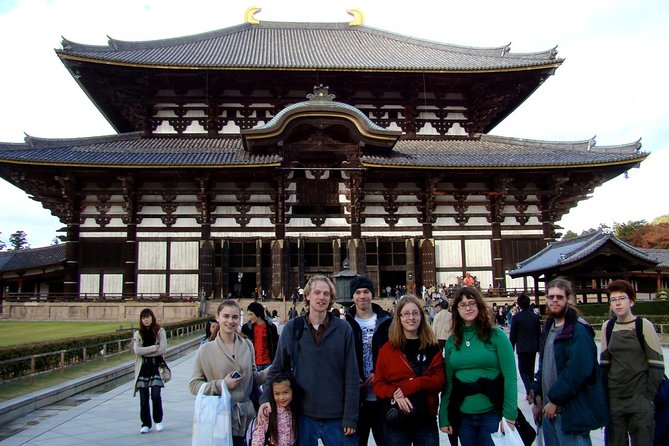
Todai-ji is the main magnet. If you pick only a couple of sites, you want this one near the top of your list. The tour route includes it as Stop 1 in the standard plan, and it is treated as the anchor.
Why it is worth prioritizing:
- Todai-ji was constructed in 752 and is one of Japan’s most historically significant temples.
- Inside the Great Colossal Buddha Hall, you get the scale that makes Nara feel different from Kyoto. It is a single site that can carry the whole day.
In real scheduling terms, Todai-ji can be crowded. One experience noted the temple was busy with Japanese school excursions, which can limit how long you get to stare at the details. If you care about lingering, your best move is to lean on your guide’s timing. A licensed guide who knows the flows can often help you spend your limited time where it counts, even on a busy day.
Admission is not included for this stop, so plan for a paid entry here. If you want to keep costs down elsewhere, Todai-ji is still usually the one you do not skip.
Nara Park deer time, plus Kasuga Taisha’s shrine atmosphere
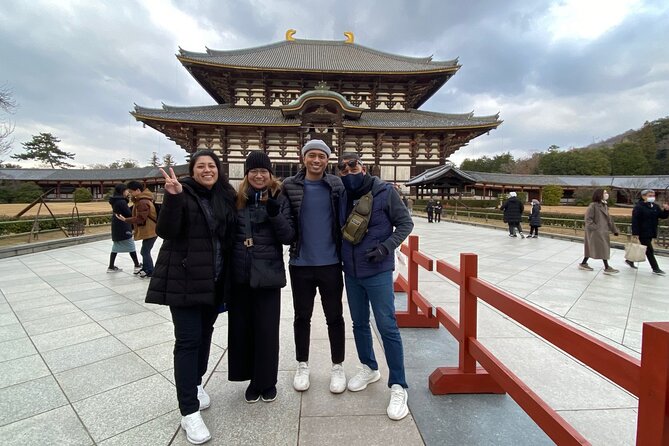
After Todai-ji, the day often shifts into Nara Park. This stop is built around the free-roaming deer, and it also connects you to the cluster of major Nara attractions.
What makes this section fun is that it is not just sightseeing. The deer create a living scene. The guides also add meaning to what you see, including practical guidance about how to experience the area without feeling lost.
Kasuga Taisha is the next spiritual beat. It is described as Nara’s most celebrated shrine, dedicated to a deity tied to city protection. The shrine and its approach have a specific feel, with paths lined by lanterns and a sense of stepping into a quieter pocket even inside a busy city area.
In one experience, the route included multiple shrine viewpoints connected to Kasuga, with sub-shrine stops that made the architecture and spiritual layers easier to grasp. That is a nice perk of having a guide who can explain why these places relate.
Nara Park and Kasuga Taisha are listed as free admission stops. That helps your budget. You still need to account for the paid temple entries you choose around them.
Same corner of Japan, a different kind of day:
- Kyoto Geisha Walking Tour: Gion District & Hidden Gems
★ 4.7 · 3,273 reviews - Kyoto: Tea Ceremony Ju-An at Jotokuji Temple
★ 4.9 · 3,207 reviews - Kyoto: Gion Magical Night Walking Tour with Geisha Trivia
★ 4.9 · 2,393 reviews - Kyoto: 45-Minute Tea Ceremony Lesson Experience
★ 4.3 · 2,378 reviews
Naramachi, the Edo-era streets that slow the pace
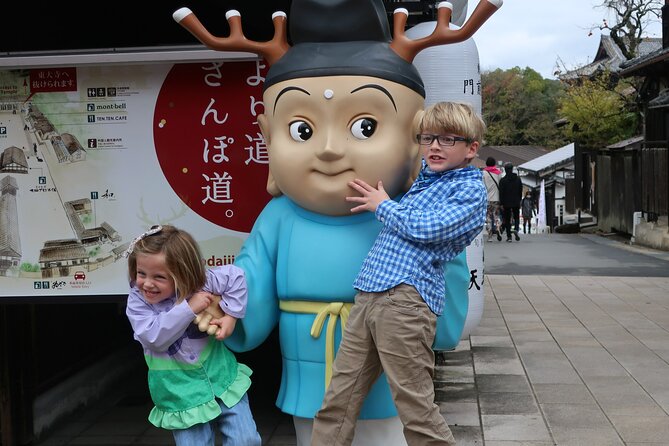
Naramachi is a different kind of Nara experience. Instead of focusing on the grand temple complex, you walk through preserved merchant district streets with traditional buildings and spaces open to the public.
It is a good contrast after the heavy-hitting religious sites. You get cafes and boutiques, but most of all you get scale and texture. The streets help you understand what Nara looked like when daily life, trade, and culture ran through the same corridors as the temples.
This tour includes Naramachi as one of the possible stops, and it is listed as a free admission option. If you want one stop that feels lighter and more local, choose Naramachi.
How the rest of Nara fits: temples, gardens, museum time
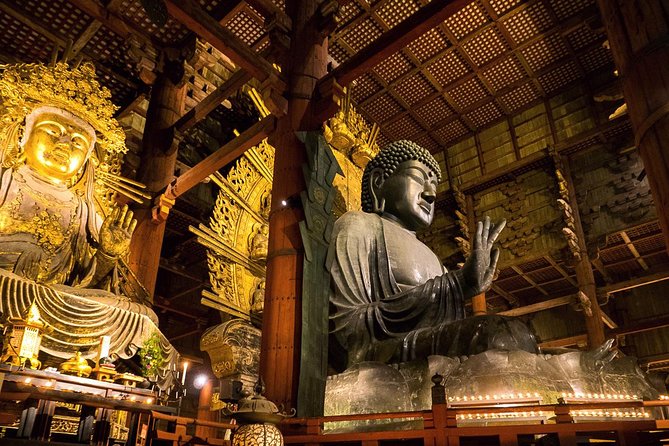
The tour is flexible. The big menu of selectable sites includes several temples, plus gardens and museum options. In an 8-hour day, your guide typically selects 3 to 4 from that list so the day stays satisfying rather than frantic.
Here is how to think about the remaining choices.
Horyu-ji for early Buddhism, including a historic wooden temple
Horyu-ji is included as an option and is described as one of the country’s oldest temples, founded in 607 by Prince Shotoku. One long guide account highlighted it as the world’s oldest wooden building, and it is easy to see why this is a frequent favorite.
If you care about early Buddhist architecture and want something that feels older than the big Todai-ji complex, this is a strong add-on. It is also one of the times when the guide’s storytelling helps you notice what you would otherwise miss.
Admission is not included for this stop.
Kofuku-ji for the Fujiwara connection and major pagoda views
Kofuku-ji is another classic choice. It was historically tied to the Fujiwara clan, a powerful aristocratic family in the Nara and Heian periods. One detailed guide story also mentioned the five-story pagoda and a hall dating to around 1420.
If you like when temples connect to people, politics, and power, this is the stop where your guide can turn bricks into a timeline. It also pairs well after shrine walking, because it shifts the focus to monumental Buddhist architecture.
Admission is not included for this stop.
Yakushiji and Shin-Yakushiji for symmetric temple planning and medical Buddha symbolism
Yakushiji appears as an option with a construction story tied to Emperor Tenmu. It is described as having a strictly symmetric layout, which is the kind of thing you appreciate most with on-the-ground interpretation.
Shin-Yakushiji is another option tied to an empress during the Nara period and is devoted to Yakushi Buddha, the patron of medicine in Japanese Buddhism. If your group loves explanations of religious meaning and how beliefs shaped temple dedication, these are great picks.
Admission is not included for both.
Wakakusayama Hill for views after the shrine and temple cluster
Wakakusayama is a grass-covered hill behind Nara Park, located between Todaiji and Kasuga Taisha. It is listed as providing unobstructed views over Nara, and it is a simple way to add an outdoor reset without leaving the core area.
Admission is not included for this stop. If weather is poor, you might swap this hill stop for an indoor museum or garden option.
Nara National Museum for Buddhist art when the day needs shelter
The Nara National Museum is included in the option list. It focuses on Japanese Buddhist art, established in 1889, and it is located in Nara Park.
If you are trying to escape crowds or sudden rain, this museum slot is an easy stabilizer. It also helps you see what the temples are showing, so your next shrine stop feels less like random scenery and more like a system.
Admission is not included for this stop.
Heijō Palace Site for the capital-era city plan
The Heijō Palace Site Historical Park is about Nara as the former capital. The palace area is described as extending about one kilometer wide and one kilometer long, and it gives context for the capital city layout during the 710 to 794 Nara period.
This is a good option if you like seeing Nara not only as temples, but as an actual planned capital.
Admission is not included for this stop.
Isuien and Yoshikien for garden planning that frames buildings and scenery
If your day includes rain, or if you just want a slower pace, the garden options are strong choices.
Isuien is described as using borrowed scenery, including the Todai-ji Nandaimon gate and Mount Wakakusayama. That means the garden is designed around what surrounds it, not just what is inside the fence.
Yoshikien is described as a pleasant garden named after the Yoshikigawa River, with a background tied to Kofuku-ji’s former priest residences.
Admission is not included for these garden stops, but you are often paying for something the whole day benefits from, because gardens are easier to appreciate without rushing.
What 8 hours really means, and how to choose your 3 to 4 stops
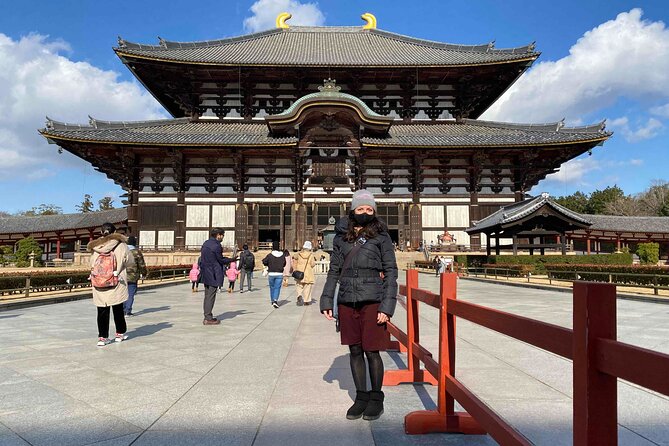
The “3 to 4 sites” setup is the secret sauce. In a place like Nara, the risk is trying to do everything and remembering nothing clearly. With only three or four main stops, you can actually pay attention.
A practical way to choose:
- If it is your first time, pick Todai-ji plus Nara Park and Kasuga Taisha. Then add one wildcard: Naramachi for streets, or a temple like Horyu-ji or Yakushiji for deeper history.
- If you love temple architecture, choose fewer outdoors stops and add one of the garden or museum options.
- If your group has kids or mixed interests, ask your guide to include an easier stop like Naramachi and keep the walking focused.
Timing is built as a walking tour with lots of short segments. The plan shows around 30 minutes at each chosen stop. That is enough time to understand what you are looking at, but it also means you should not plan on long, slow photography marathons everywhere.
Price and value, what you still need to pay
The tour price covers the main experience: a licensed local guide, customization, and the private structure. It does not cover the extras that can add up later.
Plan on paying for:
- Transportation fees (there is no private vehicle included)
- Entrance fees and tickets for stops marked as not included
- Lunch and personal expenses
So is $201.51 per person worth it? In most cases, yes, because Nara rewards context. Todai-ji and Kasuga Taisha are not the kind of places where you simply wander and automatically understand. A guide helps you connect buildings, timelines, and religious meaning.
It can also be a time-saver. One experience said the guide helped save about two hours by knowing exactly where to go and how to get there. If you are working with limited time in Japan, that kind of efficiency can turn a stressful day into a satisfying one.
Rain, crowds, and comfort tips that keep the day fun
Weather and crowd levels can shape the day. One experience noted rain in the afternoon, but the guide kept the tour going. That is exactly where having options among temples, gardens, and museum time helps.
Another practical crowd reality: Todai-ji can get busy, including school group traffic. If quiet viewing matters to you, your guide can help you shift focus and manage your time so you still get meaningful moments.
Comfort matters because it is a walking tour. Bring water, wear shoes you can walk in all day, and set expectations that this is not a sit-down marathon. You are meant to move between sites.
Should you book this Nara day trip from Kyoto?
Book it if you want a private, licensed guide to connect the dots in Nara, and you are happy to choose only a few sites so the day feels full instead of rushed. This is especially smart if:
- You have limited time in Japan and want Nara without guessing your way through.
- You care about history and religion enough to appreciate explanations on the spot.
- Your group includes different interests, since guides have shown they can adjust plans, including family-friendly pacing.
Skip it or rethink it if:
- You want a tour where everything is pre-paid, including transport and entrances. This one leaves those costs for you.
- English clarity is a must-have for your group, since one complaint did mention communication issues.
If you book, do one simple thing that improves everything: send your guide clear preferences in advance, even if it is just Todai-ji plus one or two themes like architecture, gardens, or old streets. When the day is customized, Nara stops feeling like a checklist and starts feeling like a story.
FAQ
How long is the Nara private tour?
It is listed at about 8 hours.
What does the tour price include?
The tour includes a licensed local English-speaking guide, a customizable plan where you choose 3 to 4 sites, and a meet-up with the guide on foot within a designated area of Kyoto.
Can I choose only part of the itinerary?
Yes. You can choose between 3 to 4 sites from the available list.
Are entrance fees included?
No. Entrance fees are not included, and admission ticket coverage applies only to the sights listed in the What to expect options. Lunch and other personal expenses are also not included.
Is transportation included?
No. Transportation fees are not included, and a private vehicle is not included.
Where do you meet the guide in Kyoto?
Pickup is offered, and the guide meets you on foot within a designated area in Kyoto.
Is this a private tour or a group tour?
It is private. Only your group participates.
Is the tour mostly walking?
Yes. It is described as a walking tour, and the pickup is on foot.
How will I get my booking confirmation?
You receive confirmation within 48 hours of booking, subject to availability. A mobile ticket is also mentioned.
Is cancellation allowed?
Free cancellation is available. You can cancel up to 24 hours in advance for a full refund. Service animals are allowed, and most travelers can participate.
Fresh options around Kyoto
- A Privately Guided Photoshoot in Beautiful Kyoto by a Pro★ 5.0 · 18 reviews
- Kyoto: Fushimi Inari Taisha Shrine Walking Tour with Guide★ 4.8 · 18 reviews
- Sekka Cotton Furoshiki Class★ 5.0 · 19 reviews
- Natural Indigo Dyeing with Local Masters (Private Atelier)★ 5.0 · 19 reviews
- Kyoto: Personalized Guided Private Tour★ 4.8 · 19 reviews
- Kyoto: Quiet and Graceful Tea Ceremony★ 4.5 · 19 reviews
- Oboro | Mindful Tea Ceremony in a 100-Year-Old Kyoto Teahouse★ 5.0 · 19 reviews
- Ikebana Traditional Japanese Art of Flower Arranging★ 4.5 · 19 reviews
Guided, compared.
Tokyo 6hr Private Tour with Government-Licensed Guide
Read our review →
Shinjuku Local Bar and Izakaya Guided Walking Tour
Read our review →
Private City Highlights Tour with Local Guide
Read our review →
Kyoto Early Morning Tour with English-Speaking Guide
Read our review →
Tokyo 4hr Private Tour with Government-Licensed Guide
Read our review →
Kyoto 6hr Private Tour with Government-Licensed Guide
Read our review →