
Reviewed · TEMPLE & SHRINE TOURS IN KYOTO
Kyoto Magical Night English Tour: Gion & Fushimi Inari Shrine
Lantern light turns Kyoto into a movie. This 2.5-hour evening walk lines up Fushimi Inari after dark with Gion’s old-street atmosphere, then stitches it all together with clear stories you can actually use.
What I like most is how the tour makes the big sights feel personal, not just scenic, and how your guide turns shrine rules into something you can follow right there. I also love that you get professional photos during the walk, so you are not stuck with blurry night selfies and regret.
One thing to consider: it is a real walking tour. You will cover a lot in about 2 hours 30 minutes, so you need decent shoes and moderate stamina, plus your own budget for the ¥480 public transport fare.
Key highlights worth planning around
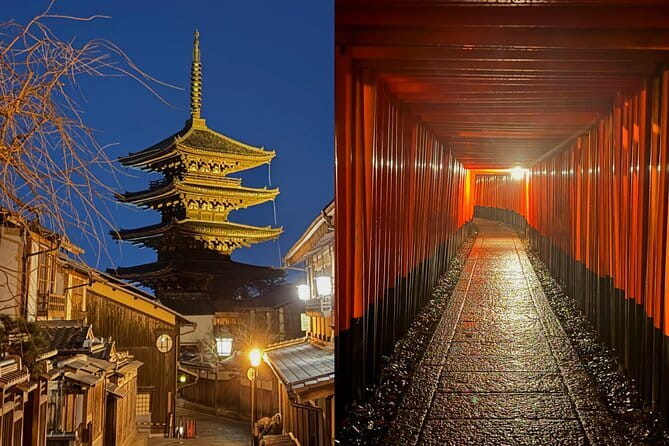
- Fushimi Inari at night under glowing torii gates, with easy photo guidance
- Gion and Hanamikoji in evening calm, where traditional wooden streets feel close and real
- Practical shrine etiquette explained in plain language, not museum talk
- Yasaka area classics including the pagoda at Hokanji and the stone streets of Sannenzaka and Ninenzaka
- Private-group feel that often means a flexible, attentive pace, with strong photo results
The real payoff: Kyoto’s “first evening” lighting and flow
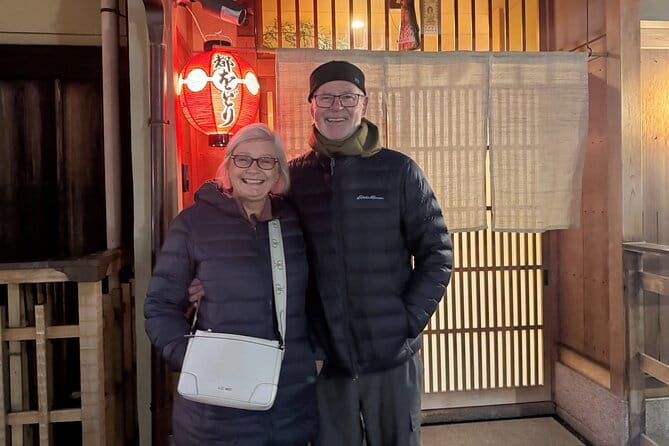
Kyoto after dark has a different tempo. Daytime crowds are still out, but the streets often feel less pushy, more like you can hear your own footsteps. This matters because the route hits multiple neighborhoods in one go, and the best way to enjoy that kind of plan is when the city feels walkable.
I like that this tour is built as a guided walking route using public transport, not a bus loop. You spend your time where it counts: Fushimi Inari, Gion lanes, and the Yasaka area, all strung together so you are not wasting half the night in transit.
Another smart choice is the focus on meaning, not just landmarks. Your guide typically explains why these shrines and streets matter in Japanese culture, including the difference between how you approach shrines versus temples. That turns the walk into something you remember, not something you simply photographed.
Yes, you will move. But the upside is you will get a clear “lay of the land” vibe fast, especially if this is your first night in Kyoto or your only night with daylight already spent.
More Temple & Shrine Tours in Kyoto
- Kyoto: Fushimi Inari, Kinkakuji, Bamboo Grove 1 Day Bus Tour
★ 4.8 · 4,316 reviews - Kyoto: Tea Ceremony Ju-An at Jotokuji Temple
★ 4.9 · 3,207 reviews - Fushimi Inari Hidden Hiking Tour (Private Option Available)
★ 5.0 · 1,750 reviews
Getting to the meeting point without stress
You meet at the Statue of Izumo-no-Okuni (Kawabatacho) in Higashiyama Ward. The start location is noted as near public transportation, and that is a big deal in Kyoto, where routing can be easy to overthink.
Plan to arrive early enough to regroup and not feel rushed. If you are late, you will not be able to join the tour, and you will not get a refund. That policy is pretty strict, so treat the meeting time like it matters, because it does.
From what I see in how guides run this kind of night walk, being on time also helps you get a smoother photo sequence at the best moments, especially around the torii gates where timing and footing matter.
You are also responsible for your own public transportation fare, listed as ¥480 per person. Keep a little cash or payment method handy, and you will feel in control right away.
Fushimi Inari-taisha at night: torii gates, lantern glow, and correct etiquette
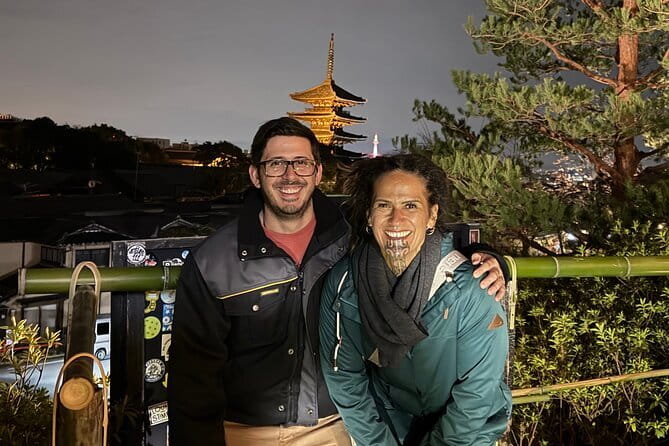
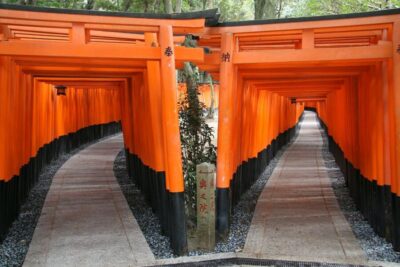
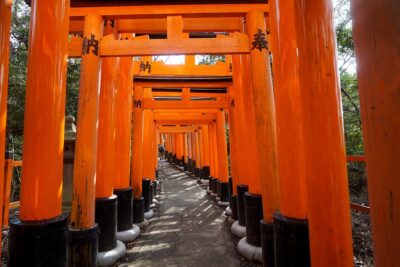
This is the anchor stop, about 1 hour. Fushimi Inari-taisha is famous for thousands of red torii gates stepping up Mount Inari. At night, those gates look less like a tourist checklist and more like a glowing corridor.
The guide role here is huge. They help you read what you are seeing, not just walk through it. Expect explanations tied to Inari and what the shrine represents, plus practical notes on how to pay respects properly. That is one of the most helpful parts of this style of tour, because you do not have to guess the routine while you are standing there under the gates.
You also get photo support during the tour. In at least one experience, the guide encouraged people to bring coins to make a wish at the shrine. Even if you are not super into wishing, coins are small and useful, and they can make the experience feel more interactive.
Drawback to know in advance: the torii area can be uneven and you will be stepping around crowds of other visitors too. Even if the night feels calmer than daytime, you are still moving in a shrine environment. Wear shoes with grip, keep your phone secure, and do not try to sprint for the next photo angle.
The best way to enjoy this stop is to slow down in the first section, let your eyes adjust to the glow, then let your guide show you where to stand for photos that look dramatic without blocking other people.
Gion after dark: Hanamikoji Street and the feeling of old Kyoto
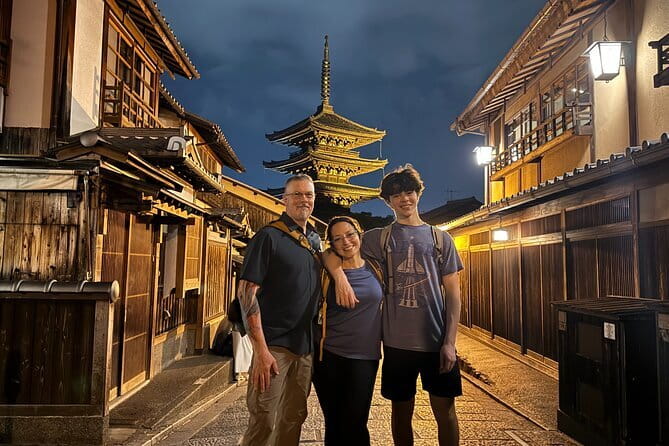
After Fushimi Inari, you shift into Gion for a sequence that is short but well-chosen: Hanamikoji Street (about 10 minutes), then Gion (about 10 minutes).
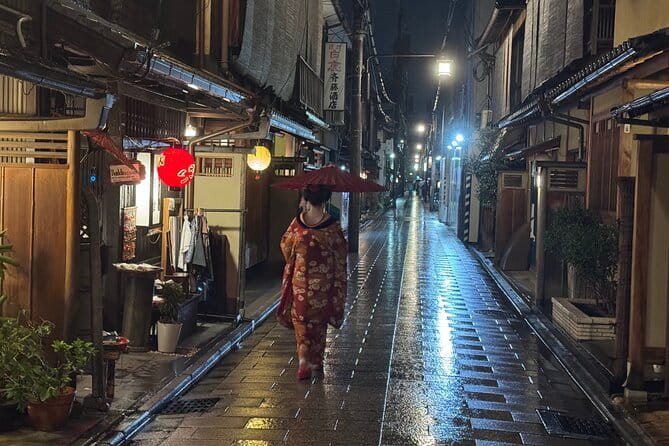
Hanamikoji is known for its historic ambiance, traditional machiya houses, and the chance you may see geisha or maiko. At night, those wood-lined streets and teahouse facades feel quieter and more human-scale. You are not just staring at buildings, you are walking the kind of corridor where tradition lives.
Then you get Gion’s broader vibe. Even in brief time, this stop helps you connect the dots between what you saw at the shrine and what Kyoto looks like as a living cultural district. It is the “how people actually live next to the legends” moment.
What makes the guide matter here is pacing and context. A good guide will keep you moving so you do not get stuck in the loudest spots, while also explaining what you are likely to notice, like street layout, architectural styles, and why these areas are preserved.
One practical consideration: the time at each lane is limited. Ten minutes goes fast if you stop to read every sign or hunt for the perfect shot. If you want long, detailed wandering, pair this tour with extra time on your own later. Think of this as the evening orientation and atmosphere builder.
More geisha experiences in Kyoto:
- Kyoto Geisha Walking Tour: Gion District & Hidden Gems
★ 4.7 · 3,273 reviews - Kyoto: Gion Magical Night Walking Tour with Geisha Trivia
★ 4.9 · 2,393 reviews - Kyoto: Gion Geisha District Walking Tour – Stories of Geisha
★ 4.7 · 2,187 reviews - Best of Kyoto: Gion, Geisha, Pagodas & Cobblestones
★ 4.9 · 2,058 reviews
Yasui-Konpiragu: ending bad ties, hoping for better connections
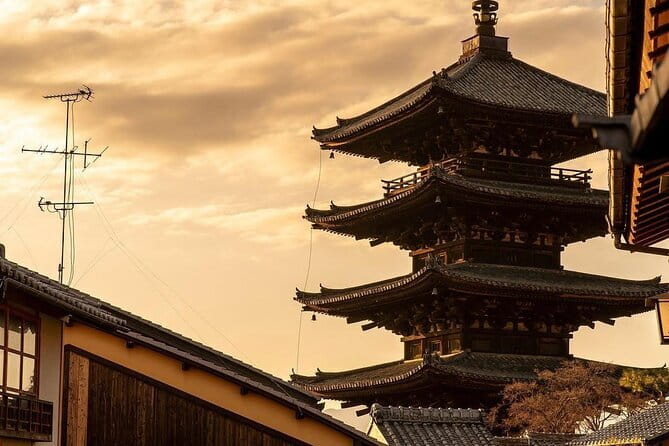
This stop is around 10 minutes. Yasui-Konpiragu is known for prayers tied to breaking negative relationships and finding new, positive connections.
This is a good stop if you like your travel with a little emotional meaning. Kyoto is not only about aesthetics. Shrines like this show how spiritual practice can be practical, like community guidance for how to handle relationships, not just how to admire old architecture.
Because the time is short, you will not get a long lecture. Instead, expect a quick explanation that helps you know what you should be doing during prayer and what the shrine is known for. Guides often emphasize how to be respectful without turning it into a rigid checklist.
Tip for your moment here: keep your voice down, watch what others are doing at prayer areas, and follow your guide’s cues. Night lighting can make it harder to see subtle steps or boundaries, so your guide’s direction helps you avoid accidental rule-breaking.
Yasaka Pagoda (Hokanji): scale that hits you in motion
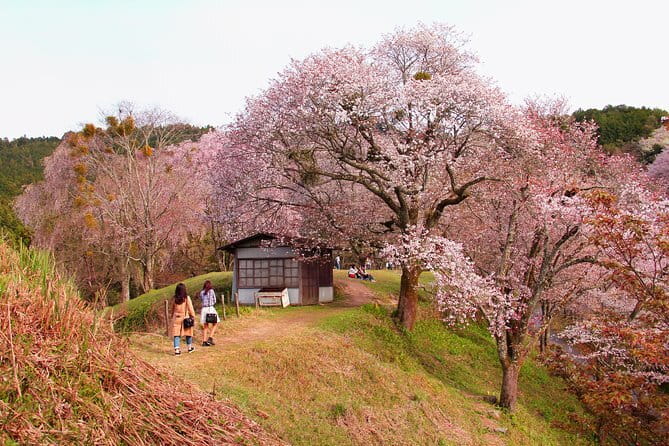
Next is Yasaka Pagoda (Hokanji temple) for about 15 minutes. This one is big. It is one of the oldest wooden structures in Japan, and it is also known for the fact it was built without using nails, a detail that sounds almost unreal until you are looking at it.
At night, that scale feels even more dramatic. You are walking through the area, then you look up, and suddenly you understand why this spot is such a Kyoto icon. It is one of those moments where you feel the city’s long timeline in your body, not just in a photo frame.
Because the tour includes multiple short visits, this stop works as the “pause and look up” break. If your feet are getting tired, you can recover for a moment while still feeling like you are part of the Kyoto story.
Potential drawback: fifteen minutes can pass quickly if you are trying to shoot from every angle. If you want clear photos, listen for your guide’s suggested standing spots and then commit. Night photography rewards decisions, not endless re-posing.
Sannenzaka and Ninenzaka stone streets: walking in time, not just on stone

You then move to Sannenzaka and Ninenzaka, about 15 minutes. These are traditional stone-paved paths lined with souvenir shops and restaurants housed in historic wooden buildings.
At night, this area can feel like stepping into a film set, but the key difference is you are not looking from behind a barrier. You are walking through it, sensing the tight turns, the way the street narrows, and the way lantern and light sources bounce off surfaces.
The guide input can also help here with safe movement. In one experience, the guide emphasized walking carefully down Sannenzaka and Ninenzaka. That makes total sense because the stones can be slick depending on weather, and the sidewalks can be narrow.
This stop is a nice reset. You are out of the densest shrine blocks and into a more strolling rhythm. Still, keep your pace steady. You do not want to become the slowest moving person in the group, especially at night.
Nene-no-Michi: a calmer path with historical naming
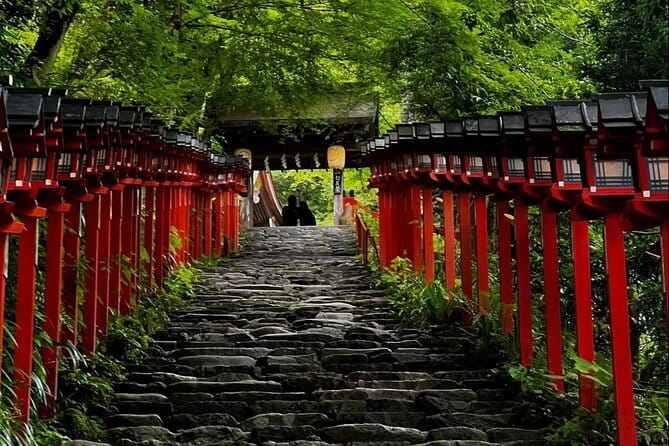
This section is about 15 minutes. Nene-no-Michi is a serene path named after Nene, wife of a powerful Japanese shogun. You pass historic temples and get a quieter walk through Kyoto’s cultural lanes.
I like Nene-no-Michi for its tone. After the higher-intensity shrine and photo moments, this is where the tour feels more like a gentle wander. Your guide can explain why the path is named and what you are seeing around you, which helps you treat it as more than a route between major stops.
Since this is a named path connected to a historical figure, it also gives your evening a “story thread.” Instead of jumping from one landmark to the next, you can follow the theme of how Kyoto connects architecture, people, and memory.
This is the part where you might notice you are breathing easier. Use it. Slow down, take in the quiet, and let your camera rest for a minute if your hands get tired.
Yasaka Shrine finale: the last walk that ties the themes together
You end at Yasaka Shrine, about 15 minutes. It is described as the headquarters of 2,300 related shrines across Japan, and it is dedicated to gods of prosperity and protection. This last stop is not only about a final photo. It is about completing the spiritual arc of the evening.
Because the tour includes earlier shrine etiquette guidance and earlier shrine themes, Yasaka Shrine tends to feel more understandable at the end. You are less confused about what to do, and you can focus on the meaning.
This stop also gives you a classic Kyoto wrap-up in the best sense: shrine structures, prayer activity, and evening atmosphere all at once. If you are taking professional photos during the tour, this is the sort of place where they often look especially good because of the lighting and strong architectural lines.
One more practical note: you are finishing back at the meeting point location. That means the tour is designed so you do not have to puzzle out a complicated end route. Still, keep your energy up, because the last part of a walking tour always counts, even when you feel like you are nearly done.
Price and value: what $26.43 buys you in Kyoto at night
At $26.43 per person, the pricing is one of the easiest parts of the decision. What makes it feel like value is the combination of things that are usually annoying to manage separately.
First, admission fees for temples and shrines are included. Many of these stops are listed as free admission anyway, but the important part is that the tour handles the entry expectations so you are not wandering around trying to figure out what costs what.
Second, you get a passionate local English-speaking guide. This is not just “pointing and walking.” The guide helps you understand what you are seeing and how to behave respectfully, which is a big part of experiencing shrines well.
Third, you get professional photos taken during the tour. Night photos are hard, even for people with decent cameras, because you are dealing with low light, movement, and crowding. If you care about having a real souvenir set, this benefit can be worth more than you expect.
What you still need to budget for is transportation, listed at ¥480 per person, plus food and drinks. Kyoto evenings can make you hungry fast, so plan a meal either before you start or right after you wrap up.
Group discounts are mentioned too, and because this is a private tour/activity where only your group participates, you also benefit from a more personal pacing even when other travelers are around nearby.
The guides: why name recognition matters on a night tour
One of the strongest signals from the experiences is consistency in guide quality. You may be led by guides like Ikki, Yuri, Yui, Yuki, Joi, or Mariko, and the common thread is how easy they make the walk.
In several experiences, guides were described as friendly, organized, and clear about where to meet. Some guides used visual aids, like laminated charts with explanations and graphics. That matters because it helps you absorb the information without having to stare at your phone or translate in your head.
I also like that guides helped with more than just the route. Some people got helpful recommendations for where to eat afterward, and in at least one case the guide supported the group with seating at a yakiniku restaurant. That kind of spillover value turns an activity into a better night in Kyoto, not just a checked box.
Another big plus: photos. One experience notes photos delivered quickly, within an hour, including 40-plus images and a couple of short videos. Even if delivery times vary, the point is that photo service is treated as a core part of the tour, not an afterthought.
What to wear and bring so you enjoy every stop
This tour is moderate walking and focuses on plenty of time on foot. So:
- Wear good shoes with grip. You will move on stones and uneven surfaces at night.
- Bring a light layer. Night air around evening shrine areas can feel cooler than you expect.
- If you want to participate in wish rituals, consider bringing a few coins, since at least one guide encouraged this.
- Keep your phone ready, but also be willing to put it away for the first few minutes. Let your eyes adjust to the lantern light, then shoot.
If it rains, you still go. One experience specifically said rain was not a problem and added a bit of magic. Bring a compact rain option if you are packing for Kyoto’s weather swings.
Who this Kyoto Magical Night tour fits best
This is a great match if:
- You want a high-meaning first-night plan covering Fushimi Inari, Gion, and the Yasaka area.
- You like being able to follow shrine etiquette without guessing.
- You want photos taken for you during a night walk.
- You prefer a private, easier pace rather than a big group shuffle.
It is also a solid choice for families, including kids, as long as everyone can handle walking through multiple stops. In one experience, the guide was praised for engaging with children and answering their questions patiently.
If you want hours of free time at each site or you plan to do deep reading at every temple, you might feel the time limits. This tour is designed to help you see a lot and understand the basics fast.
Should you book this tour of Gion and Fushimi Inari at night?
If you are deciding between doing Kyoto “your way” versus getting structured help, I think this one is an easy yes for most first-time visitors. The price is reasonable, the route is efficient, and the guide support makes shrine visits feel correct and comfortable.
Book it if you want:
- A night version of Kyoto that feels smoother than daytime crowds
- Clear explanations so you get more meaning than just photos
- Professional photos with night lighting advantages
Hold off if:
- You hate walking tours or have limited mobility
- You want long, unscheduled time at just one site
- You want zero structure and prefer silent, solo exploration
If this sounds like your style, you will likely love how the glowing torii and lantern-lit Gion set the tone for your whole trip.
FAQ
How long is the Kyoto Magical Night: Gion & Fushimi Inari Shrine tour?
It runs about 2 hours 30 minutes.
What is included in the tour price?
The tour includes a local English-speaking guide, admission fees for temples and shrines, and professional photos taken during the tour.
Do I need to pay for admission fees at each stop?
Admission tickets for the listed shrines and areas are free, and admission fees are covered as part of the included items.
What is the public transportation cost?
Public transportation fare is not included and is listed as ¥480 per person.
Where do I meet the guide, and where does the tour end?
You meet at the Statue of Izumo-no-Okuni in Kawabatacho, Higashiyama Ward, Kyoto. The tour ends back at the same meeting point.
Is this a group tour or private?
It is private, meaning only your group participates.
More Evening Experiences in Kyoto
- Night Walk in Gion: Kyoto’s Geisha District
★ 4.5 · 2,003 reviews - Kyoto Night Foodie Tour in Gion (9+ dishes + 6 Sake tastings)
★ 5.0 · 1,762 reviews - Kyoto Gion Night Walk & Geisha District Guided Tour
★ 5.0 · 786 reviews - Kyoto Ghost Tour: Dark Tales, Urban Legends, Bamboo Forest Night
★ 5.0 · 625 reviews
Fresh options around Kyoto
- Kyoto: Quiet and Graceful Tea Ceremony★ 4.5 · 19 reviews
- Oboro | Mindful Tea Ceremony in a 100-Year-Old Kyoto Teahouse★ 5.0 · 19 reviews
- Ikebana Traditional Japanese Art of Flower Arranging★ 4.5 · 19 reviews
- Kyoto Satoyama Cycling with Lunch and English Guide★ 5.0 · 19 reviews
- Kyoto International Party Solo Friendly Expats and Locals★ 5.0 · 19 reviews
- Tea Ceremony Experience in Traditional Kyoto Townhouse★ 5.0 · 19 reviews
- Kyoto: Amanohashidate Ine Funaya Tour★ 4.4 · 19 reviews
- Kyoto Private Food Tours with a Local Foodie: 100% Personalized★ 4.5 · 19 reviews
Temple & Shrine Tours in Kyoto, compared.
Fushimi Inari, Kinkakuji, Bamboo Grove 1 Day Bus Tour
Read our review →
Fushimi Inari Hidden Hiking Tour (Private Option Available)
Read our review →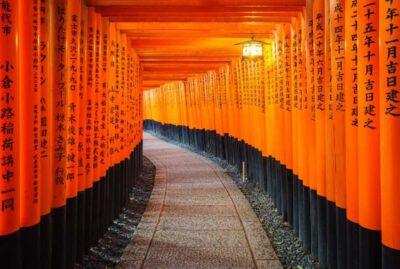
Osaka/Kyoto:Kinkakuji,Arashiyama,FushimiInariShrine,NaraPark
Read our review →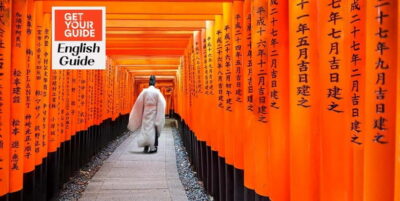
Kyoto/Osaka: Nara, Fushimi Inari Taisha, Arashiyama Bus Tour
Read our review →
Arashiyama Bamboo, Temple, Monkeys, or Secret Sake Brewery
Read our review →
Arashiyama Bamboo Forest, Monkeys, Matcha & Temple Tour
Read our review →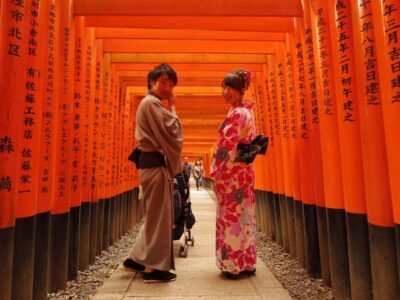
Osaka/Kyoto: Arashiyama, Nara & Fushimi Inari Shrine w/Lunch
Read our review →Browse the lists this tour appears in