
Reviewed · COOKING CLASSES
Gyoza Cooking Class in Kyoto: Traditional Japanese Dumplings
Dumplings, Kyoto-style, teach you more than food. This is a hands-on gyoza cooking class in a traditional Kyoto townhouse, with a live English-speaking instructor, step-by-step guidance, and a little samurai-flavored context along the way. After you cook, you can also dress up in samurai armor (optional) for memorable photos.
I especially like that you are not just eating gyoza, you are making it from scratch: choosing your filling, making the wrappers, and learning the folding technique. I also like the practical payoff, you leave with a skill you can repeat at home, plus take-home goodies like an apron and headband mentioned in past classes. One consideration: at $118.19 per person, this is a premium experience for a relatively short session of about 1.5 to 2 hours, and you will need to handle your own transportation to the meeting point.
Key Highlights You Should Care About
- Small-group setup (max 20), so you get real attention while you wrap and cook.
- Make wrappers from scratch, not just assemble dumplings.
- Choose your own filling, which keeps the class personal and fun.
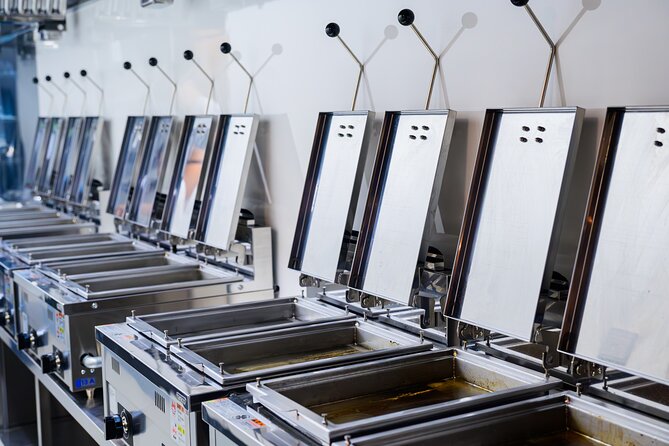
- Professional baking machine cooking, so you can get consistent results without guesswork.
- English-speaking instruction, with clear steps that work even if you are new to cooking.
- Optional samurai armor photos, a surprisingly fun add-on after dinner-level handiwork.
A Kyoto Townhouse Where Gyoza Starts from Scratch
Kyoto has a way of turning everyday things into rituals. This class does that with gyoza, a dumpling that began in China but became distinctly Japanese over time. You will learn why there are different styles and sizes, and you will see how the Japanese approach is often about technique and texture, not just flavor.
The setting matters. You are in a traditional Kyoto townhouse, the kind of place that makes the experience feel more like learning a craft than following a random cooking video. Even if you think you are only signing up for dinner, you quickly realize you are practicing a skill.
And yes, the dumplings are the point. But the real win is that you get a repeatable process: filling, wrapper, fold, cook. That sequence turns gyoza from something you order into something you can actually make.
More Cooking Classes in Kyoto
- Ramen Cooking Class at Ramen Factory in Kyoto
★ 5.0 · 1,937 reviews - Kyoto: Ramen Cooking Class at a Ramen Factory with Souvenir
★ 4.9 · 532 reviews - Kyoto: Ramen, Gyoza, and Onigiri Cooking Class
★ 5.0 · 445 reviews
Your Small-Group Class, Tools, and Instructors
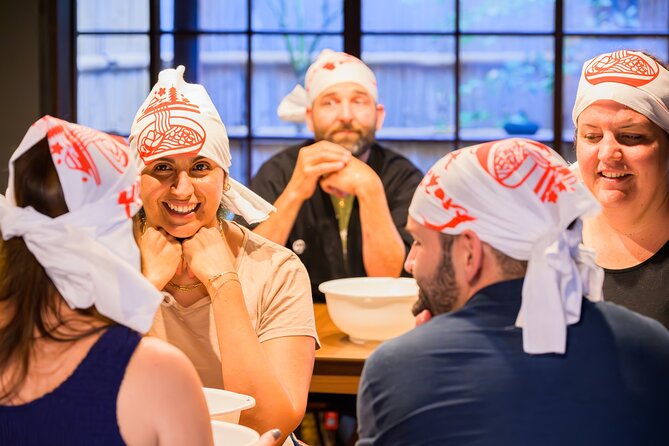
This is not a giant factory-style session. The group size is capped at 20, which helps because wrapping dumplings is the kind of task where you want a quick correction. You also move with purpose, since the class is designed to keep you from getting stuck on one step.
You will have an English-speaking instructor and cooking tools provided. That combination is important in Japan, where cooking lessons can range from “watch and hope” to “stand back.” Here, you are active, with the tools you need and guidance you can understand.
Instructors you may encounter include Hama, Maya, and Ryo. Past sessions highlight instructors who keep things friendly and clear, so even if your Japanese is limited, you still get the meaning behind the steps. You are doing more than copying shapes. You learn what the wrapper needs to do, how the fold affects closure, and how cooking method affects the final bite.
From Filling Choice to Wrapper-Making: The Real Work
Most cooking classes let you assemble something. This one asks you to build the dumpling structure from the start.
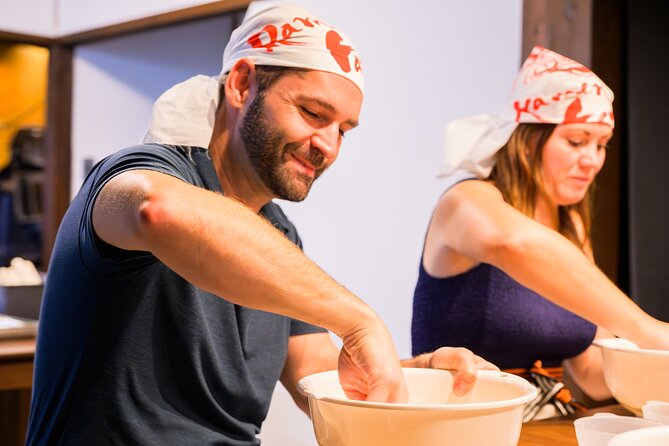
First, you pick your favorite filling. That does two good things for you. It makes the lesson feel tailored, and it helps you notice how different fillings behave when you wrap and cook. Even if you do not get super adventurous, choosing your own filling keeps the class from feeling generic.
Next comes wrapper-making. You create the gyoza wrappers from scratch. That matters because the wrapper is not just dough in a bowl, it is part of the final texture. When you make it, you start to understand why Japanese gyoza can have that delicate balance of chew and crisp edge.
Finally, you practice the wrapping. The class frames wrapping as an art, but the instructor’s job is to make it doable. You learn how to shape and close so your dumplings cook properly and do not fall apart when they hit heat.
If you have ever struggled with dumplings at home, this part is your chance to fix the root issue. It is not about luck. It is about technique and consistency.
Folding Skills That Actually Transfer to Home Cooking
Here is where the experience pays off beyond Kyoto. You are learning a method you can repeat, not just eating a finished dish.
The fold is the key. A good closure helps the dumpling hold together, and it helps create that classic gyoza look. You also get practice, and that practice is what builds confidence. The best skill you take home is often the calm feeling of knowing what to do next.
There is also an important practical mindset in how the lesson is taught. The steps are presented in a way that makes sense in real time, so you are not left translating instructions while everyone else is already wrapping.
Past participants highlight simple steps and clear explanations, and you will feel that same pace during your session. You are busy, but not overwhelmed.
And if you want to share this with friends later, this is exactly the kind of experience that turns into a story. The next time someone says, I could never fold dumplings, you can say, actually, I learned the fold in Kyoto.
Same corner of Japan, a different kind of day:
- PERFECT KYOTO 1-Day Bus Tour
★ 5.0 · 13,518 reviews - Kyoto: Fushimi Inari, Kinkakuji, Bamboo Grove 1 Day Bus Tour
★ 4.8 · 4,316 reviews - Kyoto: Tea Ceremony in a Traditional Tea House in Kiyomizu
★ 4.9 · 3,519 reviews - Kyoto Geisha Walking Tour: Gion District & Hidden Gems
★ 4.7 · 3,273 reviews
The Professional Baking Machine Moment
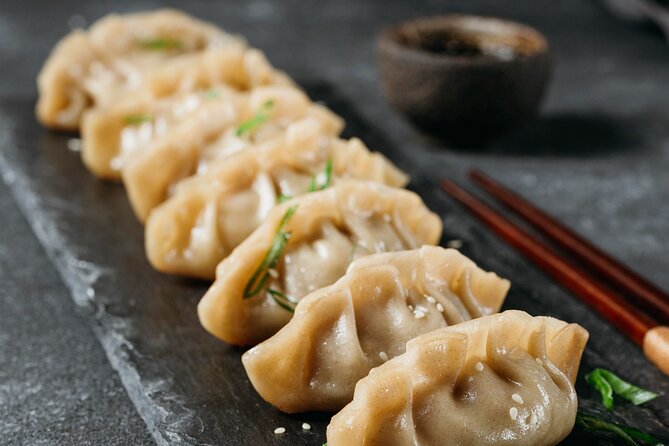
Cooking gyoza is where many people get nervous. Stovetop dumplings can go wrong fast, too soggy, too browned, or uneven.
This class uses a professional baking machine for cooking. That is a big deal for value. It reduces the guesswork and helps you focus on timing and technique rather than wrestling with equipment. You learn how the dumplings behave as they cook, and you can see the difference that method makes.
Even without being a cooking fanatic, you should notice how this changes the outcome. The machine helps create the kind of crisp base and cooked top you associate with restaurant gyoza.
Another practical benefit: you finish with dumplings you can eat, not just raw experiments. Past classes mention making around 10 to 12 gyoza per person, which is plenty for a satisfying lesson meal.
Samurai Armor Photos: The Optional Part That Feels Like a Bonus
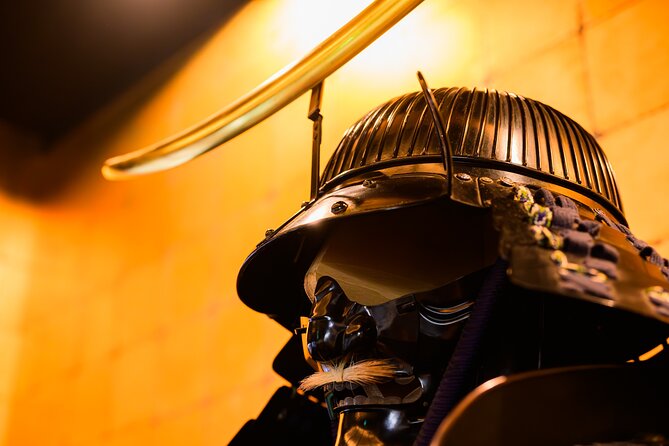
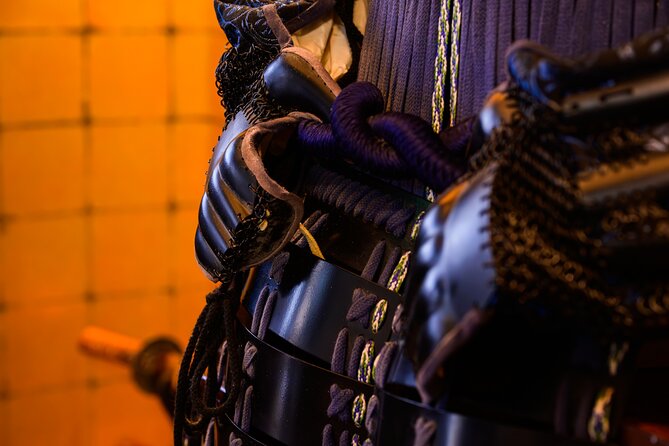
After you cook, there is an optional samurai armor dressing and photo moment. If you normally skip costume stuff, give this one a fair chance. It is playful, and it connects with the samurai culture and Japanese history context mentioned during the lesson.
This is also a good “memory anchor.” Cooking is satisfying, but photos are what make the experience stick in your mind when the trip gets busy. The armor experience turns the evening into something you can keep and share.
Past participants also mention keeping items like an apron and headband from the experience. Even if you are not focused on souvenirs, those small keepsakes help turn the class into a tangible story.
Price and Value in Kyoto: Is $118.19 Worth It?
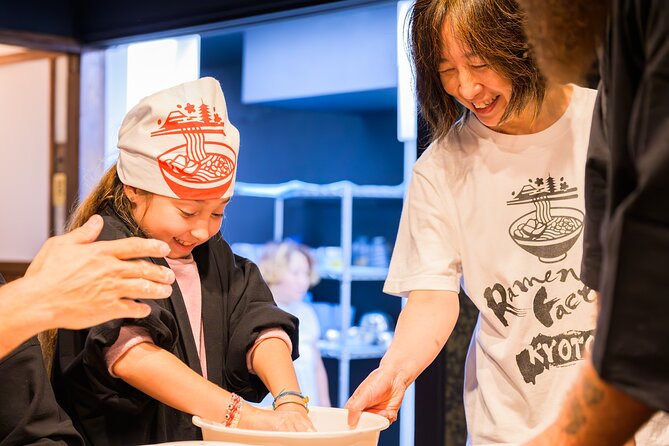
At $118.19 per person, this is not a budget food experience. You should treat it like a crafted activity, not like a casual snack tour.
So what are you actually paying for?
- Instruction time, led in English, with tools provided
- Hands-on training, including making wrappers from scratch
- Equipment support, including cooking on a professional baking machine
- A small-group limit (max 20), which increases your odds of getting help when you need it
- Optional samurai armor photos plus take-home items mentioned in past sessions
If you compare it to buying prepared gyoza, the math will never look “cheap.” But that is not the point. You are paying for a skill, and skills are what make cooking classes memorable long after the meal is gone.
Also, gyoza is one of those dishes that travels poorly as a “do it yourself later” idea. You can buy dumplings, sure. But you will not get wrapper-making technique from a package. This class does.
If you enjoy cooking, or you want a Kyoto experience that is not just walking and photo stops, the price starts to make sense fast.
Logistics That Matter: Getting There and Getting the Most Out of It
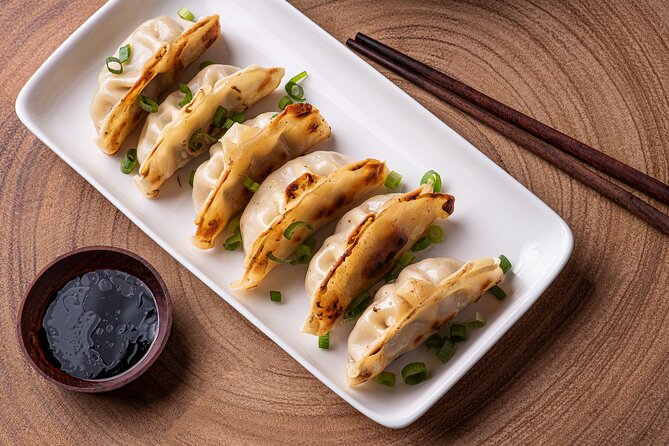
The meeting point is at 230-1 Kamimyōkakujichō, Nakagyo Ward, Kyoto, 604-0025, Japan. The activity ends back at the meeting point, so you do not have to worry about a long after-class trek.
Transportation is on you. Private transportation is not included, but the meeting area is near public transit. That is good news if you are already using subways and buses in Kyoto.
You will use a mobile ticket, and confirmation is received at booking time. Plan to arrive a bit early so you can settle in without rushing. Dumpling timing is fun, but being late stresses the whole process.
One last practical tip: wear comfortable clothes. You are making dough and handling fillings. You will feel better if you are dressed for hands-on work, not for pretending you came to observe.
Who Should Book This Gyoza Class
This class is a great fit if you want a Kyoto activity with a clear outcome. You leave with food you helped make, and you also take away technique you can repeat.
It is also a strong pick for:
- Couples looking for an activity that feels “date-night,” not touristy
- Families with kids who can handle hands-on cooking steps, since past sessions mention younger participants having fun
- Food lovers who want more than a tasting, and like learning the “how” behind the dish
- Anyone who wants a compact, focused evening activity, about 1.5 to 2 hours
You might consider skipping it if:
- You are strictly trying to keep costs low, or you dislike hands-on cooking
- You prefer purely sightseeing experiences with no food prep
Should You Book This Gyoza Cooking Class?
If you like cooking, this is an easy yes. You get wrapper-making, wrapping practice, and cooking on a professional baking machine, all in a small-group format with English instruction. The optional samurai armor photos and take-home items like an apron and headband mentioned in past classes add real charm.
If you are on the fence because of the price, ask yourself one question: do you want to come home with a skill, or just a memory? If you want the skill, this is good value for what you actually do in the class. Book it for a Kyoto evening when you are hungry, curious, and ready to fold.
FAQ
How long is the gyoza cooking class in Kyoto?
The class lasts about 1 hour 30 minutes.
What is the price per person?
The price is $118.19 per person.
What does the class include?
You get an English-speaking instructor and cooking tools provided for the class. The activity also includes making gyoza from scratch and an optional samurai armor photo time.
Do I learn to make gyoza wrappers and choose fillings?
Yes. You choose your favorite filling, and you learn how to make gyoza wrappers from scratch. You also learn the art of wrapping.
How are the gyoza cooked?
You cook the gyoza perfectly using a professional baking machine.
Is samurai armor dressing included?
Samurai armor dressing is optional. After the cooking class, you can dress up and take photos if you want.
Where is the meeting point?
The start location is 230-1 Kamimyōkakujichō, Nakagyo Ward, Kyoto, 604-0025, Japan. The activity ends back at the meeting point.
Is transportation included?
Private transportation is not included.
What is the cancellation policy?
Free cancellation is available. You can cancel up to 24 hours in advance for a full refund. If you cancel less than 24 hours before the start time, the amount paid is not refunded.
Fresh options around Kyoto
- Kyoto: Quiet and Graceful Tea Ceremony★ 4.5 · 19 reviews
- Oboro | Mindful Tea Ceremony in a 100-Year-Old Kyoto Teahouse★ 5.0 · 19 reviews
- Ikebana Traditional Japanese Art of Flower Arranging★ 4.5 · 19 reviews
- Kyoto Satoyama Cycling with Lunch and English Guide★ 5.0 · 19 reviews
- Kyoto International Party Solo Friendly Expats and Locals★ 5.0 · 19 reviews
- Tea Ceremony Experience in Traditional Kyoto Townhouse★ 5.0 · 19 reviews
- Kyoto: Amanohashidate Ine Funaya Tour★ 4.4 · 19 reviews
- Kyoto Private Food Tours with a Local Foodie: 100% Personalized★ 4.5 · 19 reviews
Cooking Classes, compared.
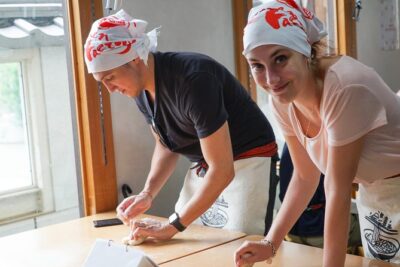
Ramen Cooking Class at Ramen Factory in Kyoto
Read our review →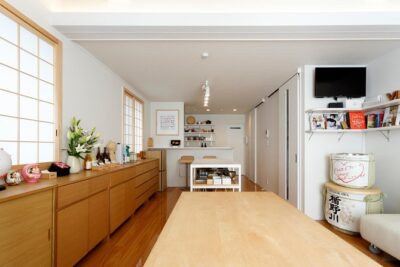
Ramen & Gyoza Cooking Class in Tokyo with Local Supermarket Visit
Read our review →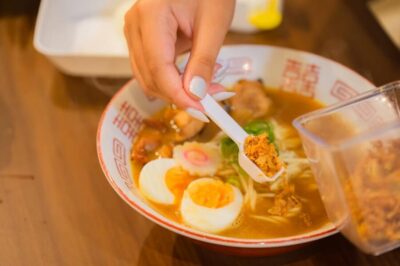
Ramen Cooking Class at a Ramen Factory with Souvenir
Read our review →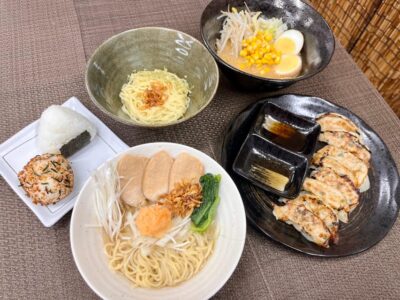
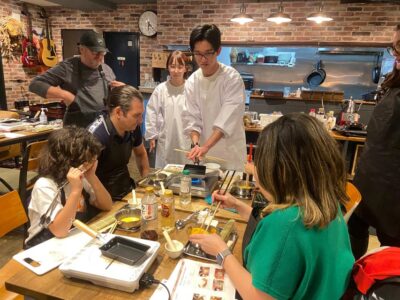
Japanese Washoku Bento Small Group Cooking Class
Read our review →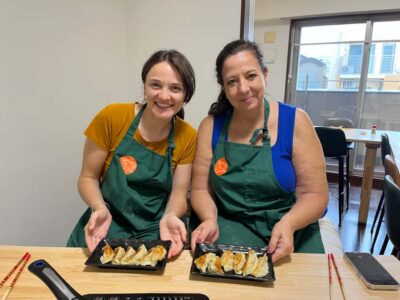
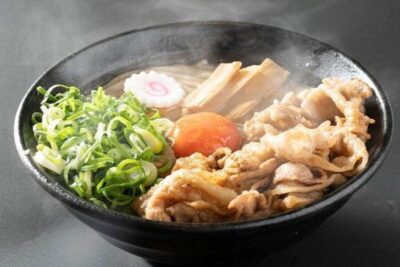
Easy Ramen Cooking Experience in Kabukicho, Shinjuku
Read our review →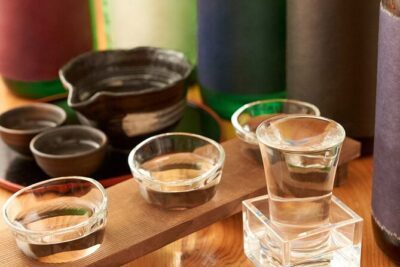
Ramen and Sushi Cooking Class with Sake Pairing Set in Tokyo
Read our review →Browse the lists this tour appears in