Reviewed · KYOTO TOURS
Let’s make only one original onigawara in the world
Roof tiles with an attitude.
This Kyoto hands-on workshop lets you shape an onigawara guardian tile by hand, learn why these “demon-faced” roof ornaments matter in Japanese architecture, then have your piece fired and delivered to your home. I especially love how small the class is, so you get real attention while you’re working. I also like that the instructor, Yuya-san, explains the process in clear, step-by-step terms, even if you are new to clay. One thing to consider is timing and money after class: shipping isn’t included, and you’ll need to wait for drying and firing before your tile arrives.
You’ll start with a lump of clay and end with a one-of-a-kind souvenir.
This isn’t just copying a pattern. The workshop guides you through building a small, simple oni (demon) face tile, with your own choices shaping the final look. The upside is that everyone’s tile ends up different, even when you follow the same recipe. The main drawback is that your creation does not come home the same day, and shipping costs are handled separately.
Key things to know before you make an onigawara in Kyoto
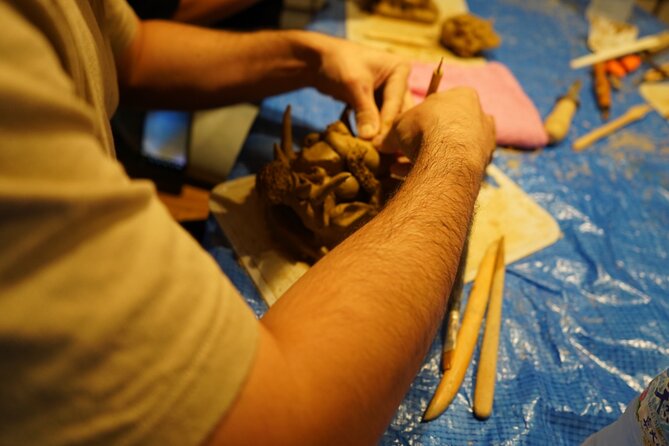
- Maximum 5 people means you’re not stuck watching from the sidelines
- True hands-on clay work, with an instructor who keeps the steps doable
- Ogre-and-rain protection lore helps the craft feel meaningful, not just artsy
- Your tile gets fired in a kiln, then shipped to your home later
- Wear clothes that can get dirty, since you’re working with soil and clay
Onigawara in Kyoto, what those demon faces are really for
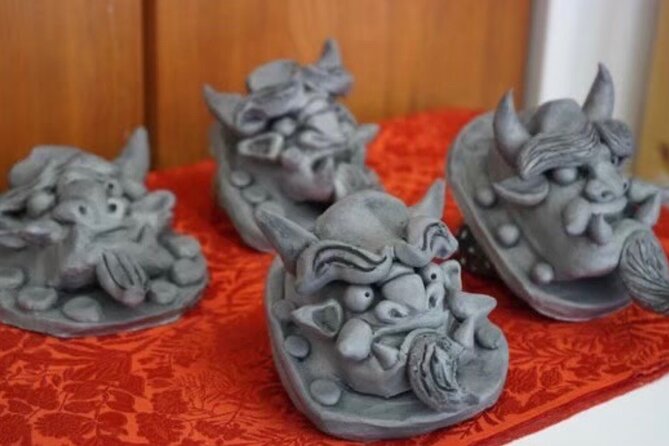
Kyoto is full of temples and traditional roofs, and if you look up you’ll start noticing little guardian details along ridgelines. Onigawara are those iconic roof ornaments, often carved or shaped with fearless faces of ogres and gargoyles. They’re most closely associated with tiles placed at the ends of the main roof ridge, where they could help protect the roof from evil and also from rainwater.
What I like about doing an onigawara workshop in Kyoto is that it connects the craft to the city you are already seeing. You’re not learning on a random craft table far from real context. Even before you start shaping clay, you’re given the cultural purpose behind the design, so your finished tile feels like a talisman, not just a souvenir magnet.
And the mood in the studio matches the subject. These are not cute cartoon demons. They’re meant to look strong and guarding. That tone makes it fun to build your own version, even if your first pinch of clay looks more like a blob than a beast.
A few more Kyoto days worth comparing
- PERFECT KYOTO 1-Day Bus Tour
★ 5.0 · 13,518 reviews - Kyoto: Fushimi Inari, Kinkakuji, Bamboo Grove 1 Day Bus Tour
★ 4.8 · 4,316 reviews - Kyoto: Tea Ceremony in a Traditional Tea House in Kiyomizu
★ 4.9 · 3,519 reviews
The 2-hour workshop flow, from clay to your kiln-fired souvenir
This experience runs about 2 hours (plan for about 2 to 3 if you’re slower, learning, or making careful choices). You meet back at the workshop location after the session, and you’ll spend your time crafting the tile that will later become your finished onigawara.
Here’s the typical rhythm you should expect:
First, you’ll get an introduction to kawara (roof tiles) and the onigawara tradition, including where these pieces appear on roofs and why they were used. Then the instructor moves you into the making phase with a small, simple oni tile design.
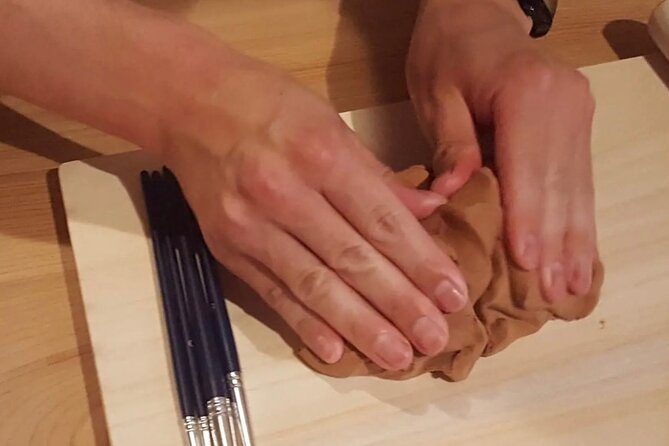
You build your onigawara in steps. The goal is not to freestyle from scratch in a way that overwhelms you. Instead, you follow a procedure that turns a lump of clay into a recognizable guardian face. The class is designed to be achievable even for people who feel clumsy with their hands. The instructor’s approach is especially helpful because your “progress” can look rough in the middle. That is normal. You shape parts, attach parts, refine faces, and keep going until the tile becomes a cohesive figure.
Once you finish shaping, your work goes for kiln firing at the factory. You won’t do the high-heat firing yourself in the workshop, but you’ll understand what happens next and why the process takes time.
Making a demon-faced tile is easier than it sounds, if you follow the steps
A lot of craft classes promise beginner-friendly. This one actually sounds beginner-friendly in practice. The instructor, Yuya-san (also heard as Yuuya-san), breaks the project down into manageable pieces and teaches it as a sequence you can follow.
That matters because onigawara have lots of expressive features. You’re creating a face that should look fierce. That means you’re shaping small protrusions, contouring the overall head form, and adding details that make the demon read as a demon. In the middle of the session, your tile can look wrong in a way that stresses you out. The good news is the structure of the class helps you get past that. You shape through the fear stage, then the form clicks into place.
One of the standout details from the experience is how your result can still be uniquely yours. Even when everyone starts from the same basic design, the finished tiles end up different. Some turn out more playful, some look more snarling, and some look like their own little creature with a personality. That variety is part of the charm.
Practical tip: wear clothes that you don’t mind getting dirty. This workshop uses soil as part of the process, and clay is clay. You will handle material with your hands, and you’ll want sleeves and pants that can take it.
Shipping your onigawara to your home, plan for the wait
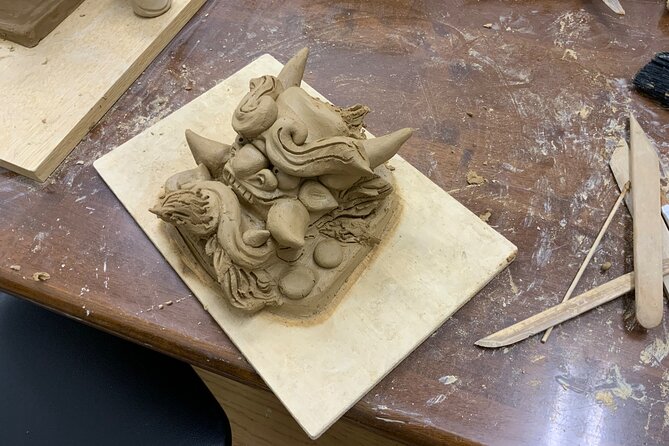
Here’s the schedule reality that you should plan around: you are not taking the finished onigawara home that day. After you make it, it needs time to dry, then it gets fired, and then it gets shipped to your home.
Shipping costs are not included in the workshop fee. The workshop will deliver your onigawara after firing, and you should plan for a separate shipping payment when the tile is ready to go. Since the class itself is only about two hours, the big time gap is easy to miss unless you plan for it.
Based on what you should expect from the process, you will need patience:
- The clay must dry before it can be fired properly
- There’s a production window after drying
- Then shipping happens, and delivery takes additional time
Some people reported receiving their onigawara after a few weeks to around a couple of months, so treat this as a “mail souvenir,” not an “instant souvenir.”
Also plan for logistics at the workshop. You may want to bring a small bag you can keep with you, and it helps to have a plan for storing items while you work with clay. You may be able to store luggage at the studio, but keep your expectations simple: bring minimal carry-ons so you’re not juggling too much.
Same corner of Japan, a different kind of day:
- Kyoto Geisha Walking Tour: Gion District & Hidden Gems
★ 4.7 · 3,273 reviews - Kyoto: Tea Ceremony Ju-An at Jotokuji Temple
★ 4.9 · 3,207 reviews - Kyoto: Gion Magical Night Walking Tour with Geisha Trivia
★ 4.9 · 2,393 reviews - Kyoto: 45-Minute Tea Ceremony Lesson Experience
★ 4.3 · 2,378 reviews
Price and value: $89.17 gets you the skill, the firing, and the culture
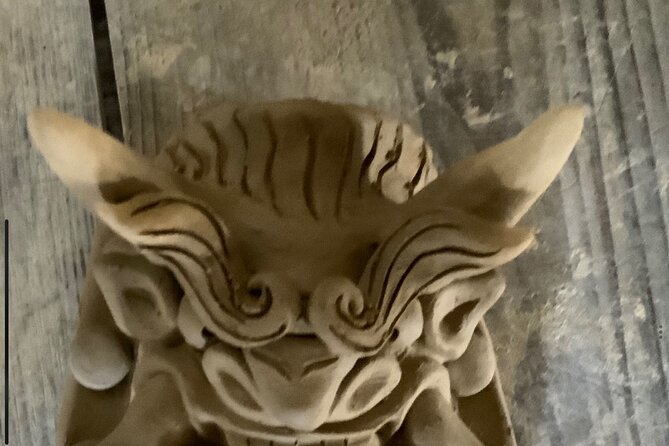
The price is $89.17 per person, with an opening discount currently offered. On the surface, that can look like a lot for a two-hour class. But here’s what you are paying for, based on how the process works:
You are paying for the whole chain, not just “time at a table.” You get:
- Instruction on onigawara and their purpose in roof architecture
- Hands-on guidance to shape your own oni tile
- Kiln firing by the workshop’s factory process
- The promise that your piece will be sent to you after it’s finished
What you do not pay for in the base price is shipping. That’s the main cost that can surprise people, especially if they expect the souvenir to arrive within a week or if they want total costs up front. So here’s my value advice: treat the $89.17 as the making-and-firing portion, then budget additional money for shipping when you’re told the amount.
If you’re comparing this to other Kyoto experiences, the big value point is uniqueness. You end up with something you made, based on a craft tied to Japanese architecture. A mass-produced souvenir can be nice, but it won’t have the personal story of a tile you shaped yourself.
Who should book this onigawara workshop, and who might not love it
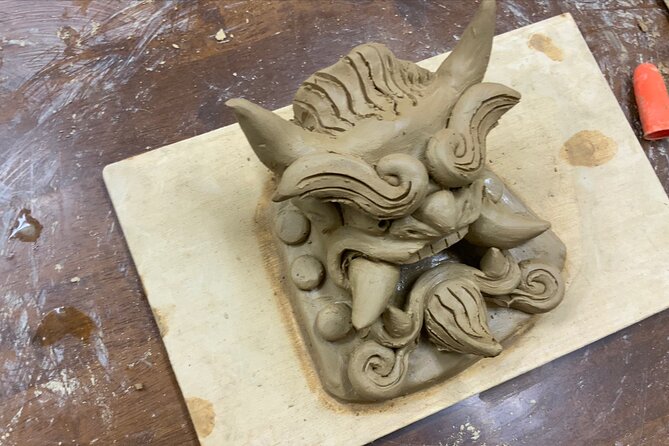
This is a strong match for people who want a break from walking and want a creative, cultural activity they can actually participate in. It also fits well if you travel with teens or families, because the instructor’s step-by-step method helps people who are new to clay.
It’s also a great fit if you enjoy meaningful souvenirs. An onigawara tile is not just decoration. It’s tied to protection symbolism and rooftop tradition.
You might decide it’s not for you if:
- You hate waiting for something to arrive later
- You want a take-home item the same day
- You have a tight schedule and dislike production timelines
If you’re flexible and you like craft, you’ll probably find the process relaxing and surprisingly rewarding, even when your first shapes look uncertain.
A quick practical checklist before you go
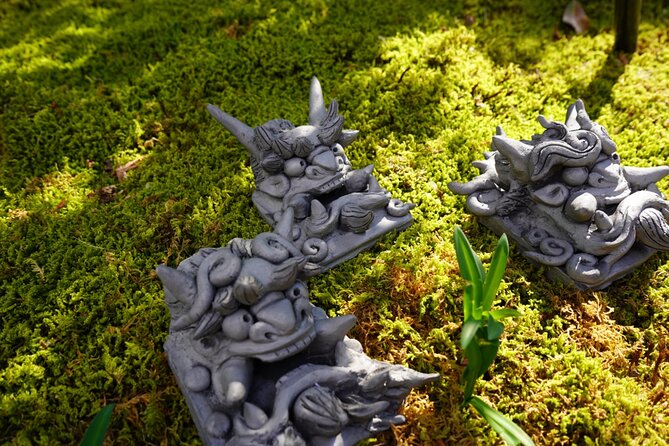
This workshop is simple, but a few things make it smoother.
Bring:
- Clothes you can get dirty (you’ll be working with soil and clay)
- A way to travel light
- A plan for a separate shipping payment later (shipping costs are not included)
Don’t stress if you are a beginner. The whole class is structured so you can finish something that looks like an onigawara, not just a lump of clay.
Also, check your class size and time. This is normally a small-group workshop with a maximum of 5 travelers. If you’re traveling with a bigger group, the provider accepts groups of 5 or more and can handle up to 40 people, with a location change for groups.
Should you book the onigawara workshop in Kyoto?
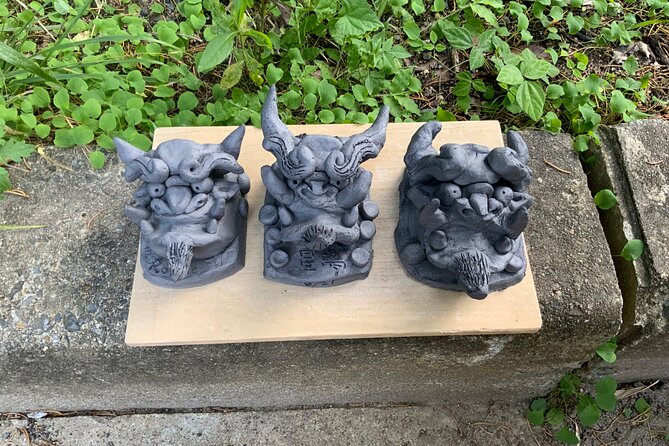
Yes, if you want a Kyoto souvenir that feels personal and cultural. For the money, you’re not just buying an item. You’re learning why onigawara exist, shaping one yourself with guidance, and getting it kiln-fired and shipped to you.
Skip it only if you need the finished tile immediately. If you’re okay with the wait, this is one of the best kinds of “slow travel” activities you can do in Kyoto: hands busy, mind quiet, and a story you’ll still tell when your demon-faced tile arrives in the mail.
FAQ
How long is the onigawara workshop in Kyoto?
The experience is listed at about 2 hours.
How many people are in the workshop?
The workshop is a small-group format with a maximum of 5 travelers. Groups of 5 or more can be accommodated up to 40 people, with a location change for groups.
Where does the workshop start?
The meeting point is 瓦工房 You家 kawarakoubouyouya at 373-2 Yamazakichō, Higashiyama Ward, Kyoto, 605-0841, Japan. The activity ends back at the meeting point.
Is bottled water included?
Yes, bottled water is included.
Do I need to bring an apron?
An apron (epron) is not included. You should wear clothes that may get dirty because the workshop uses soil and involves clay work.
Will I get my onigawara tile immediately?
No. Your tile is fired after you make it, and then it is delivered to your home later.
Are shipping costs included in the price?
No. Shipping costs are not included in the experience fee.
Is the class suitable for beginners?
Most travelers can participate, and the instructor teaches the steps in a way that helps beginners finish the tile.
Can I get a full refund if I cancel?
You can cancel for a full refund if you cancel at least 24 hours before the experience’s start time. Free cancellation is available up to 24 hours in advance.
Fresh options around Kyoto
- Kyoto Aquarium Admission Ticket★ 4.7 · 12 reviews
- Kyoto Gion Photoshoot – Private Session | Pro Photographer★ 5.0 · 12 reviews
- Gyoza Cooking Class in Kyoto: Traditional Japanese Dumplings★ 5.0 · 12 reviews
- Kyoto: Guided Food Tour with 12 Dishes & 3 Drinks★ 5.0 · 12 reviews
- Kyoto: Avoid the Crowds at the Hidden Gems of Arashiyama★ 4.9 · 13 reviews
- Kyoto Early Bird English Tour: Gion & Higashiyama(Private opt)★ 5.0 · 13 reviews
- Otsu-e Folk Art Workshop & Local Culture Walk Near Kyoto★ 5.0 · 13 reviews
- Kyoto, Osaka, Nara Full Day tour by Car English speaking Driver★ 3.5 · 13 reviews
Kyoto Tours, compared.

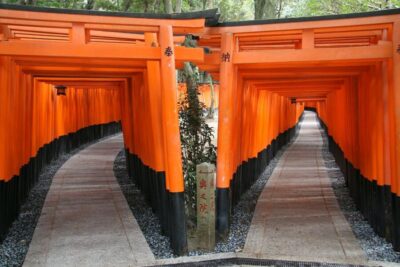
Fushimi Inari, Kinkakuji, Bamboo Grove 1 Day Bus Tour
Read our review →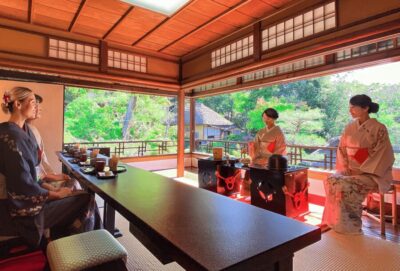
Tea Ceremony in a Traditional Tea House in Kiyomizu
Read our review →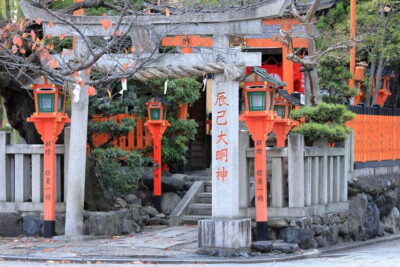
Kyoto Geisha Walking Tour: Gion District & Hidden Gems
Read our review →

Gion Magical Night Walking Tour with Geisha Trivia
Read our review →