
Reviewed · CYCLING TOURS
KIYOTO’s Kyoto Private E-Cycling Tour: Highlights & Hidden Gems
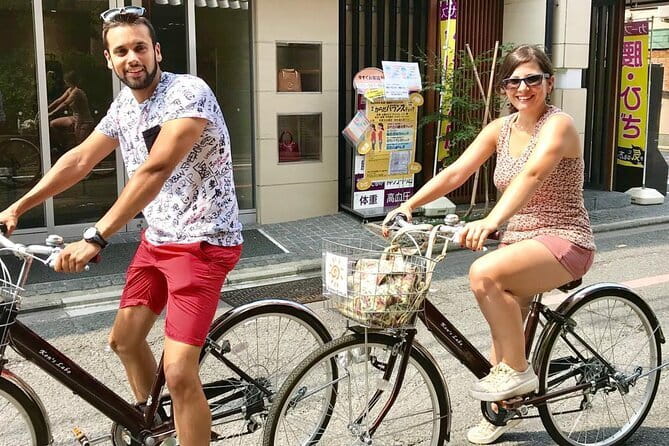
Kyoto on two wheels beats long walking days. The electric bike setup saves time, and the route hits big-name sights like Fushimi Inari while still leaving room for calmer river moments. I like the private pacing that keeps you from feeling rushed, plus the included rental means you do not waste time sourcing gear. The one drawback is simple: you must be comfortable riding a bicycle, and the itinerary packs in a lot of stops.
A big reason I’d book this is the guide energy. In the best guides on this route, I saw names like Yonnie and Yuhey praised for shaping the day to your group and sharing clear history and customs, not just reading signs. You also get help with photos, so you come away with Kyoto shots that actually look like Kyoto.
One more thing to plan for: not every temple or garden stop is free, and food and drink are on you. If you want a day that is mostly wandering, you might prefer fewer stops, but if you want efficiency without feeling like a robot, this fits.
Key reasons this e-bike tour works well in Kyoto
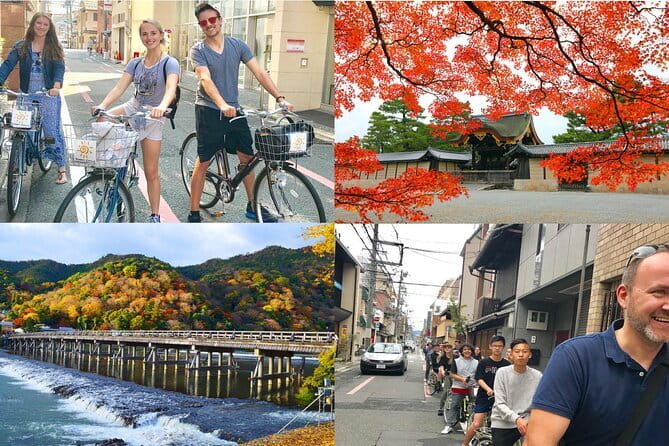
- Included e-bike rental means you can show up and go, no last-minute gear hunt
- Private tour flexibility lets your guide shift the route and pacing to what you want to see
- Iconic Kyoto + quieter spots in the same day, including shrine gates, canals, and temple grounds
- Safety and crowd sense help you move through busy streets without white-knuckle stress
- Most major stops are free, with only certain garden or paid entrances to watch for
- Comfortable “pedal with help” riding keeps the day doable for many fitness levels
Why an e-bike is such a smart way to see Kyoto
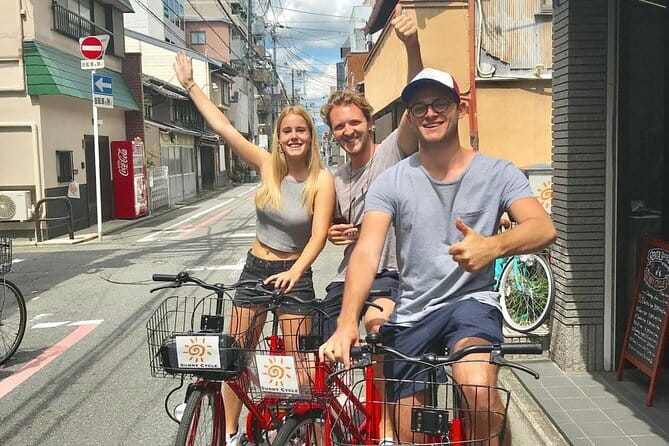
Kyoto is famous for how close many sights are on a map, and also how slow it can feel when you’re walking uphill, crossing busy streets, and weaving through crowds. An e-bike changes the math. You still get outdoors time, fresh air, and the fun of moving under your own power, but you lose a lot less energy to transfers and walking bottlenecks.
This tour’s format also helps you see more than the usual highlight-only loop. You’re not just checking boxes. Your guide strings together major temples and shrines with calmer stretches, like riverside walkways and scenic paths along canals, where you can actually slow down for photos and atmosphere.
The biggest payoff is time. On a walking day, you often end up skipping something because your feet get tired or the queue takes over your schedule. With an e-bike, you can check off more key points and still keep the day from turning into a sprint.
More Bike Tours in Kyoto
- Hidden Kyoto E-Biking tour
★ 5.0 · 1,843 reviews - Bike Tour Exploring North Kyoto plus Lunch
★ 5.0 · 1,087 reviews - Arashiyama Bamboo Forest & Hidden Gems Bike Tour (Early Bird)
★ 5.0 · 613 reviews
Price and value: what $198.15 buys you (and why it’s not just a bike ride)
$198.15 per person is not cheap, but it is not just a rental cost either. You’re paying for a private guide, an included electric bike (with a normal cycle option), and a route that is designed to connect Kyoto’s most important sights without you spending hours planning.
Here’s where the value shows up:
- You avoid the overhead of setting up biking logistics yourself.
- You get local context as you move, which helps the places make more sense, even when you stop briefly.
- You’re not limited to a fixed group pace. The tour is private, and guides are specifically praised for tailoring the ride.
There is also a subtle value angle: the day is long enough to be meaningful (roughly 4 to 8 hours), and short enough that you do not need to sacrifice your entire day to sightseeing. That’s the sweet spot for a lot of first-time Kyoto visitors.
Getting started at Sunny CycleJapan and what to expect during the ride
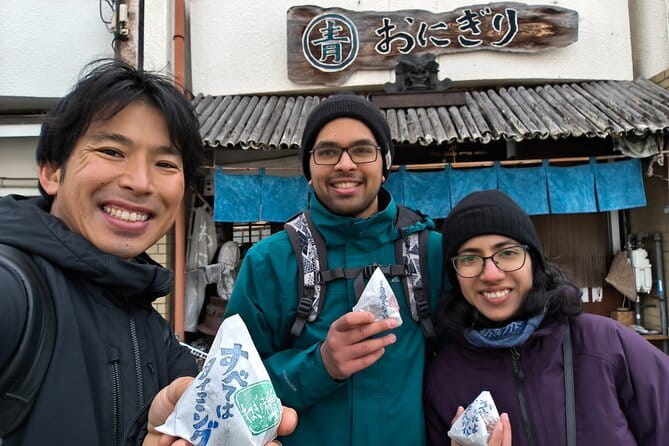
The tour begins at Sunny CycleJapan in Shimogyo Ward, at Ōhorichō 477, Kyoto 600-8419. It ends back at the same meeting point, so you do not have to think about getting across town at the end.
From a rider standpoint, the requirements are straightforward:
- You need to be able to ride a bicycle.
- The tour is best for people with moderate physical fitness.
- The route includes navigating through Kyoto streets, including busier areas near top attractions.
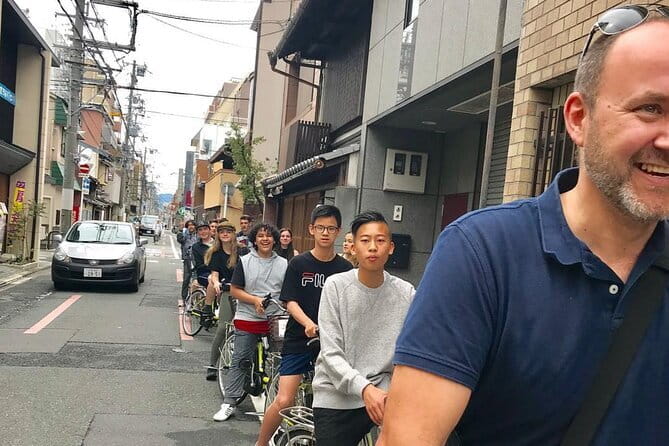
This is where guide skill really matters. The reviews highlight guides who were careful and safe while moving through crowded streets. You’ll feel better if you show up ready and comfortable on two wheels, because the guide’s job is route planning and storytelling, not teaching you how to ride.
If you’re traveling with kids, there are options: kids’ bikes that are non-electric are available in limited quantity, and kids seats are available when children cannot ride on their own, also limited. If that matters for you, make sure you request it when booking so you are not stuck improvising.
Central classics on two wheels: Higashi Hongan-ji, Fushimi Inari, and Tofuku-ji
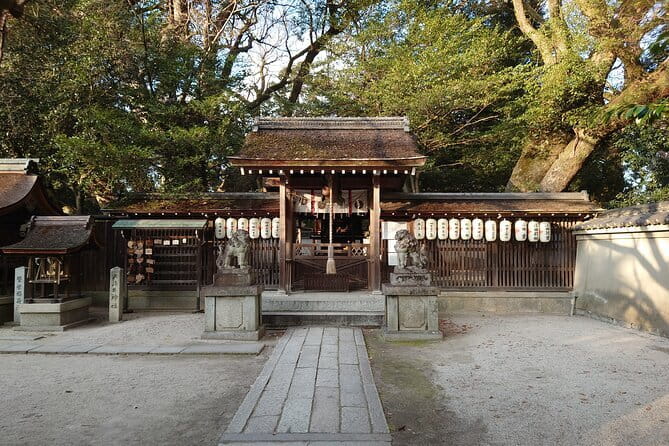
Your ride starts by working through central Kyoto temples before shifting to the famous shrine-and-temple cluster around the south and east.
Same corner of Japan, a different kind of day:
- PERFECT KYOTO 1-Day Bus Tour
★ 5.0 · 13,518 reviews - Kyoto: Fushimi Inari, Kinkakuji, Bamboo Grove 1 Day Bus Tour
★ 4.8 · 4,316 reviews - Kyoto: Tea Ceremony in a Traditional Tea House in Kiyomizu
★ 4.9 · 3,519 reviews - Kyoto Geisha Walking Tour: Gion District & Hidden Gems
★ 4.7 · 3,273 reviews
Higashi Hongan-ji
You’ll stop at Higashi Hongan-ji, a major Jodo Shinshu Buddhist temple established in 1602. The main hall, called the Goeido, is a key draw on the grounds. If you like understanding Kyoto beyond the postcard shrines, this is a great early anchor stop.
Fushimi Inari-taisha Shrine
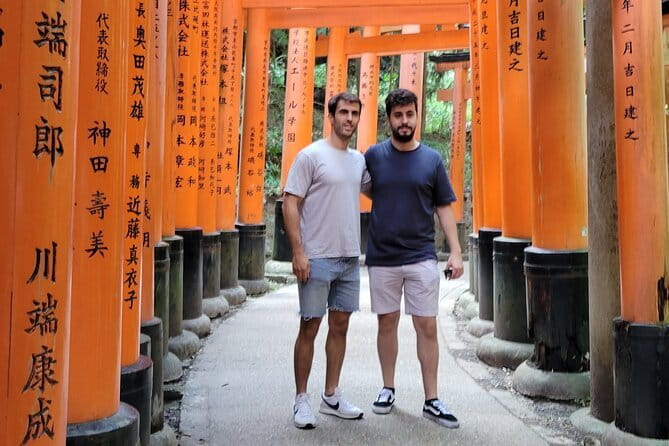
Next up is Fushimi Inari-taisha, head shrine of thousands of Inari shrines across Japan. The iconic scene is the tunnel of bright red torii gates along the mountain trails. Even with limited time on a guided route, you get the payoff of being in the right place, looking at the gates from the angles people chase on foot.
The stop time listed is about 40 minutes, and admission here is free. That makes it a high-efficiency stop, perfect for getting the big Kyoto moment without turning your day into a hike.
Komyo-in Temple (inside the Tofuku-ji area)
You also visit Komyo-in, a sub-temple of Tofuku-ji known for its tranquil garden. The description focuses on autumn leaves and the way they blend with mossy grounds. One caution: Komyo-in is marked as admission not included, so if you want gardens like this, budget for an extra entrance fee.
Tofuku-ji and the Tsutenkyo Bridge viewpoint
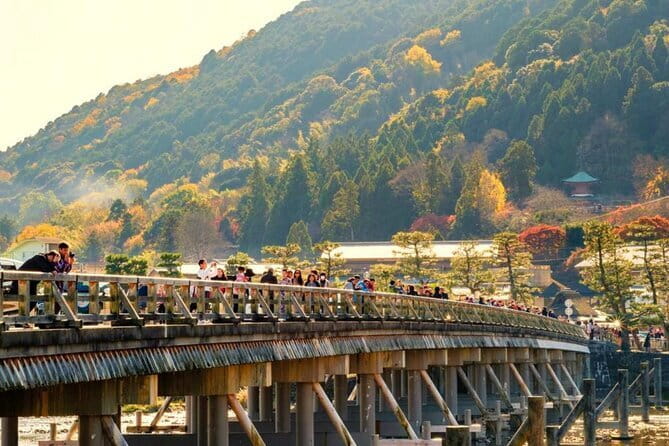
Tofuku-ji is where you get one of the best autumn-color photo angles in the area, especially from the Tsutenkyo Bridge. The bridge spans a valley and gives panoramic views of maple colors. Admission is listed as free for this stop, and the time is about 10 minutes, which tells you the tour is built for quick, satisfying viewpoints.
Higashiyama without the foot fatigue: Yasaka Pagoda, Hanamikoji, and Shirakawa
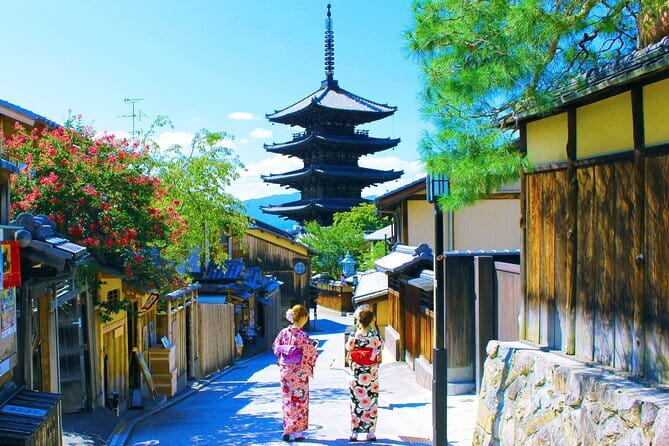
This is the part of the day that feels like Kyoto tourism done right. You get signature silhouettes, then you drift into streets and river areas where the city slows down.
Hōkan-ji Temple (Yasaka Pagoda)
Hōkan-ji is famous for the Yasaka Pagoda. The stop description leans hard into the photo value: the elegant tower silhouette with the historic Higashiyama district behind it. This is one of those places where a short stop still lands well because the scene is so recognizable.
Admission is listed as free, and the time is about 20 minutes.
Yasui-Konpiragu Shrine
Then you shift to Yasui-Konpiragu, known for prayers related to breaking bad relationship ties or making good ones. Kyoto shrines often have clear, practical themes like this, and it makes your visit feel more personal than just sightseeing. The stone monument with a hole is highlighted too, giving you something specific to look for during your stop.
Admission is free, with about 10 minutes on the schedule.
Hanamikoji Street
You ride into the Gion area via Hanamikoji Street, a classic alley lined with traditional tea houses and restaurants. It’s a short stop, around 10 minutes, but that’s enough time to get the historical vibe and do a couple of slow photo passes.
Tatsumi Bridge, Shirakawa Canal, and the river terrace walk
After the alley, you get to the water. Tatsumi Bridge sits along the Shirakawa River and is described as a small wooden bridge with major visual charm. Then you’re on to Shirakawa Canal, with traditional machiya houses and willow-lined water.
The itinerary adds a River Terrace walkway along the Shirakawa River, and that part is ideal if you want the day to feel less like “run from stop to stop.” These segments give you a break, and you’ll likely appreciate the e-bike even more here, because it lets you reach these quiet corners without wasting your legs on extra walking.
All of these stops are listed as free admissions, with time windows ranging from about 10 to 15 minutes per point.
Big gates and quiet Zen: Heian Jingu, Nanzen-ji, and Honen-in
This section gives you contrast. After the river and alley feel of Gion, you move into larger temple precincts and scenic structures.
Heian Jingu Shrine Otorii
You stop at the Great Torii of Heian Shrine, a massive vermilion gate about 24.2 meters tall, built in 1929 to commemorate Emperor Showa’s enthronement. It’s a strong visual statement, and it helps reset your perspective after the narrow streets earlier in the day. Time is about 15 minutes and admission is free.
Nanzen-ji Temple and the brick aqueduct
Nanzen-ji is a prominent Rinzai sect temple established in 1291. You’ll get a stop at Nanzen-ji itself, then another at Nanzenji Suirokaku, the brick aqueduct completed in 1888, originally built to transport water from Lake Biwa. This aqueduct stop is a great reminder that Kyoto is not only religious architecture, it’s also infrastructure, design, and engineering that shaped everyday life.
Both are listed as free. The temple stop is about 15 minutes, and the aqueduct stop is about 10.
Philosopher’s Walk
Then you walk a scenic stretch known as Philosopher’s Path, about 2 kilometers along the Biwa Canal. The tour gives you about 30 minutes. The best part of this stop is that you’re on foot for a bit, which helps your body reset after riding. It’s also one of the classic Kyoto walking experiences, but in a paced way that doesn’t eat your entire day.
Honen-in
Honen-in is a peaceful Zen temple in a forest setting. The stop description points to calm grounds and a long history linked to Honen Shonin in the 13th century. It’s a quieter break, about 15 minutes, and admission is free here.
North Kyoto views and local energy: Shimogamo Jinja and the Kamogawa Delta
This part leans toward Kyoto you see less often on quick first-timer schedules.
Shimogamo Jinja
Shimogamo Jinja, also known as Kamomioya Shrine, is among the oldest Shinto shrines in the region, with roots traced back around 90 BC. The stop time is about 30 minutes, and admission is free. If you want the day to feel less like a checklist of the most famous buildings and more like a story of belief over time, this fits well.
Kamogawa Delta (Kyoto Prefectural Kamogawa Park)
Then you reach the Kamogawa Delta where the Kamo and Takano rivers meet. The highlight here is the stepping stones shaped like turtles and birds, plus seasonal scenic beauty. It’s listed as free and takes about 15 minutes.
This is the kind of stop that feels playful. It’s also a good place to slow down and remember you’re in Kyoto, not just in transit between major signs.
Parks and city streets: Kyoto Gyoen, stepping stones, and Teramachi-dori
By now, you’ve already covered temples and shrine classics, plus the river and canal atmosphere. The last stretch mixes park breathing room with daily-life streets.
Kyoto Gyoen
Kyoto Gyoen is the large park area around the old Imperial Palace. It’s a popular local relax spot with historic buildings in the mix, and it’s especially known for cherry blossoms. This stop is listed with no specific time in the summary, but expect it to be a chance to recharge outdoors.
Stepping stones at Kojin (Ebisugawa Tobiishi)
You also stop at stepping stones at Kojin, listed as Ebisugawa Tobiishi. This is another small, fun, photo-friendly moment, centered on crossing stepping stones across the Ebisugawa tributary of the Kamo River. It’s about 10 minutes and admission is free.
Teramachi-dori Street and Sanjo Street
Then you ride into city street energy via Teramachi-dori Street, a north-south shopping street with traditional Japanese goods, cafes, and fashion shops. After that, the tour passes through the Sanjo Street area, one of the main east-west streets with restaurants and cafes near Kawaramachi and the Kamo River.
Both are free and each is about 10 minutes for the Teramachi stop, while Sanjo is listed as a location hub without a specific time.
This is where the day becomes more practical. It helps you connect Kyoto’s famous monuments to where people actually eat, shop, and wander.
The guides make it: stories, local customs, and photo help
This is a tour where the guide really matters. The included guide support is not just directing movement. You get history and culture context, plus commentary tied to local customs. Multiple named guides, including Yonnie, Yuhey, Yuichi, Mana, and Polina, show up in the praise for being engaging, flexible, and helpful.
I also like how safety gets attention. One detail that stands out from the experience feedback is the focus on being safe while navigating crowded streets. That’s the kind of care that turns an e-bike day from exciting to stressful, or exciting to enjoyable.
Photo support is another big plus. The tour includes a guide with a knack for snapping amazing photos, and several guide names were credited for making the experience fun and memorable, including for families and for kids who need a guide who can keep energy up.
What’s not included, and how to plan your day
Two things to plan around are clearly stated:
- Food and drink are not included.
- Paid temple and shrine entrances are not included.
In practice, your day will include a mix of free stops and paid ones. Komyo-in Temple is flagged as admission not included, so if you care about gardens and seasonal color, plan some spending for a couple of entrances.
If you want the day to run smoothly, think about your food strategy before you go. The tour covers many stops, so you do not have time for a sit-down feast between locations. Pack snacks if you like, or plan a meal after the tour and keep your in-between purchases simple.
When this route shines most: fall color and cherry-blossom season cues
Several stops are tied to seasonal visual seasons. Komyo-in is highlighted for autumn leaves, and Tofuku-ji’s Tsutenkyo Bridge is a noted autumn-color viewpoint. If you visit Kyoto in fall, you’ll likely feel like the route is built for the colors.
Kyoto Gyoen is famous for cherry blossoms, so springtime could make the park stop more meaningful. Even if you go outside those peak moments, you still get plenty of temple and shrine atmosphere, plus canal and river visuals that work year-round.
Who should book this tour, and who might skip it
This tour is a great match if:
- you want to see a lot of Kyoto in one day without turning it into a nonstop walking grind
- you like temple and shrine visits but also enjoy river and street scenery
- you want a private guide and a pace that can bend a little for your group
- you have at least basic comfort riding a bicycle
You might skip it if:
- you do not feel comfortable riding on city streets, even with an e-bike
- you prefer a slower, totally unstructured day with fewer stops
- you want all entrances and meals included in the price, since both are not fully included
Should you book KIYOTO’s Kyoto Private E-Cycling Tour?
If your goal is efficiency with personality, I’d book it. The included e-bike rental removes friction, and the private guide format means you are not trapped in a rigid group schedule. The route also balances major Kyoto sights with calmer river and canal walking moments, so it feels like a full day, not a highlight sprint.
If you are comfortable riding and you can handle the idea that some entrances cost extra and food is on you, this is strong value for a first Kyoto trip or a second visit when you want to cover more ground without exhausting your legs.
Fresh options around Kyoto
- Kyoto Aquarium Admission Ticket★ 4.7 · 12 reviews
- Kyoto Gion Photoshoot – Private Session | Pro Photographer★ 5.0 · 12 reviews
- Gyoza Cooking Class in Kyoto: Traditional Japanese Dumplings★ 5.0 · 12 reviews
- Kyoto: Guided Food Tour with 12 Dishes & 3 Drinks★ 5.0 · 12 reviews
- Kyoto: Avoid the Crowds at the Hidden Gems of Arashiyama★ 4.9 · 13 reviews
- Kyoto Early Bird English Tour: Gion & Higashiyama(Private opt)★ 5.0 · 13 reviews
- Otsu-e Folk Art Workshop & Local Culture Walk Near Kyoto★ 5.0 · 13 reviews
- Kyoto, Osaka, Nara Full Day tour by Car English speaking Driver★ 3.5 · 13 reviews
Cycling Tours, compared.
3h Tokyo E-Bike Tour: Hidden Gems, and Local Life with guide
Read our review →
Arashiyama Bamboo Forest & Hidden Gems Bike Tour (Early Bird)
Read our review →
Hiroshima in a Nutshell: Morning Bike Adventure
Read our review →Browse the lists this tour appears in