
Reviewed · HISTORICAL TOURS
Fukuoka Essentials: History, Culture, & Charms
Zen, snacks, and a city view in one walk. What makes this Fukuoka Essentials tour so appealing is how it moves from calm temple grounds to Hakata’s street-life in a logical loop, ending with a top-floor look over the city. I especially like starting at Shofukuji, then finishing at Hakata Station’s rooftop for big-picture views. One thing to keep in mind: it’s mostly on foot, and food, drinks, and attraction tickets are on you.
What really levels it up is the private, personalized feel. You’ll have a live guide in English or Czech who can slow down, answer questions, and adjust to what you care about, not just recite dates. People also mention guides such as Radim or Louise, and that hands-on, conversational style shows in how smoothly the day flows.
Key things you’ll notice on this Fukuoka Essentials walk
- Shofukuji first, so you start with Zen calm instead of rushing straight into shopping
- Kushida Jinja’s festival connection, especially Hakata Gion Yamakasa, which gives context to what you see
- Kawabata Shopping Street as a real senses stop, with shops and food smells guiding your choices
- Sumiyoshi Jinja’s sea link, adding a different shrine vibe than you might expect in a city center
- Hakata Station rooftop views, perfect for wrapping the day with a feel for the city’s layout
Shofukuji temple: the calm beginning that changes your whole day
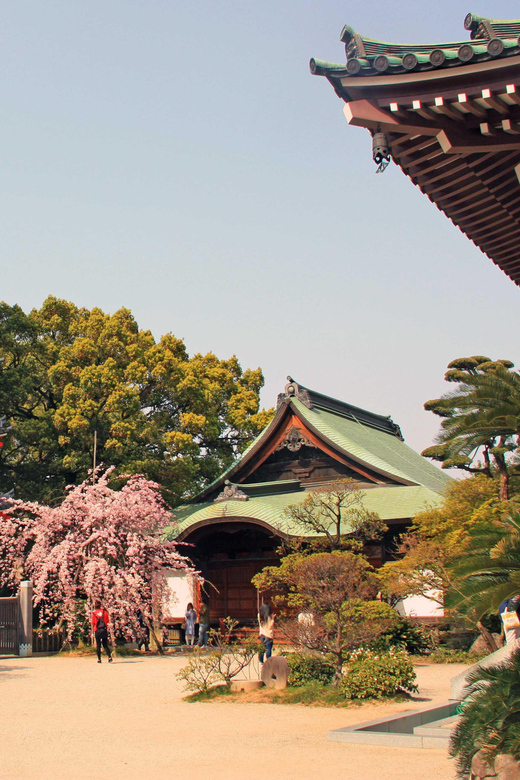
If you’ve ever been to Japan and felt like you needed a “quiet reset” after train stations and shopping streets, this is that reset. The tour begins with a guided walk around Shofukuji, widely known as the oldest Zen Buddhist temple in Kyushu. Even if you don’t read a single sign, you’ll feel the shift when you enter the temple grounds. The pace slows. The sound level drops. You notice how the buildings are arranged for stillness.
What I like about this start is that it frames Fukuoka as more than a food-and-festivals city. Zen Buddhism here isn’t just a backdrop. Your guide can explain what you’re seeing in practical terms, like why certain layouts and objects matter in Zen spaces. That makes the architecture and garden areas easier to appreciate, even if you’re not a religion deep-dive type.
A small practical point: temples can be the “sit for a minute” kind of places. If your legs feel better with short breaks, this section is a good place to catch your breath before you head back into the street crowd.
A few more Fukuoka days worth comparing
- Fukuoka’s Sacred Path: Temples, History & Culture
★ 5.0 · 17 reviews - Hakata Old Town Walking Tour Tracing the True History of Fukuoka
★ 5.0 · 17 reviews - World Heritage Shirakawa-go and Experience Tours from Kanazawa
★ 5.0 · 4,049 reviews
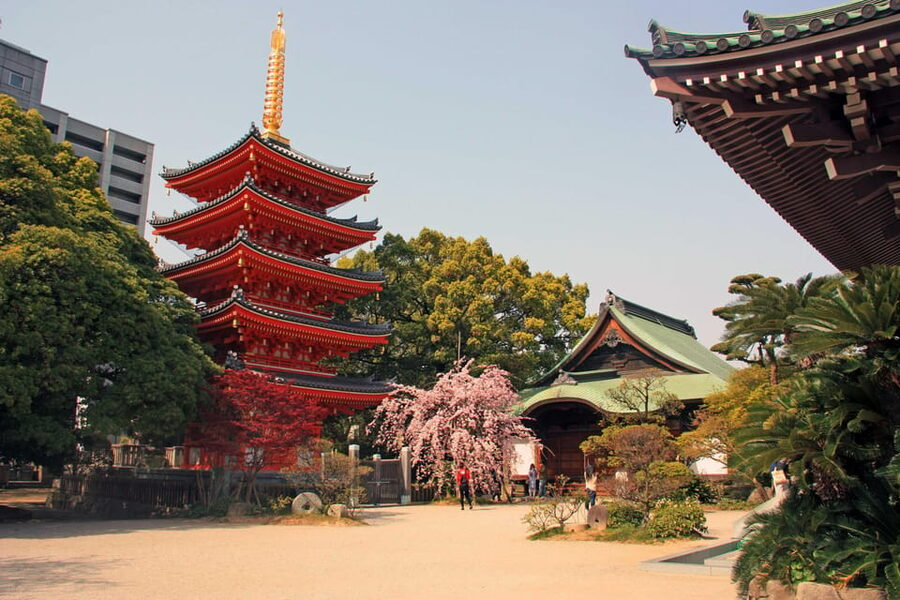
Tochoji Temple: the Buddha statue contrast you shouldn’t skip
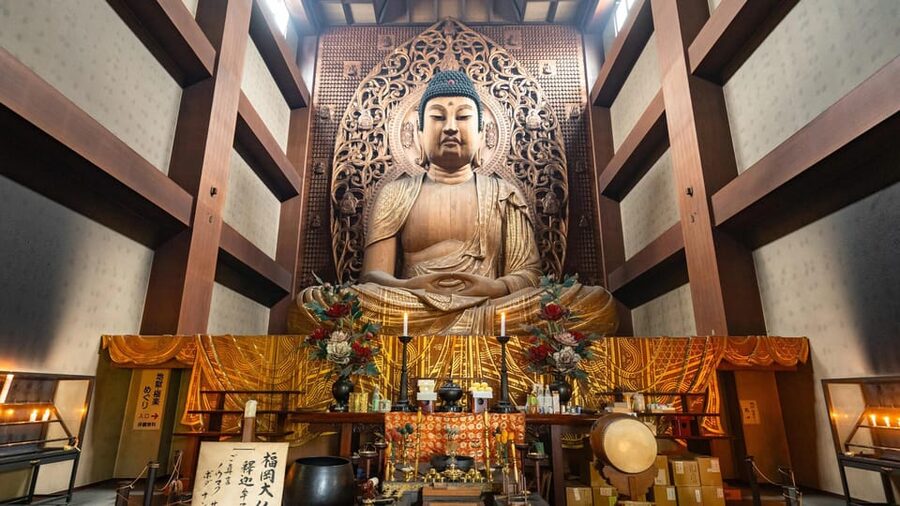
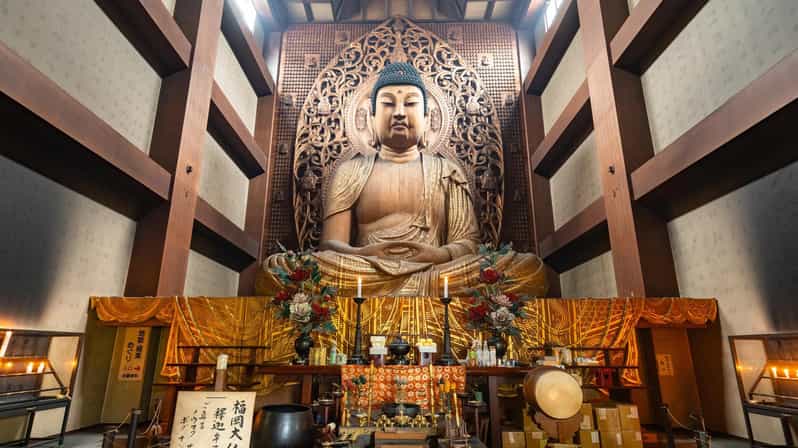
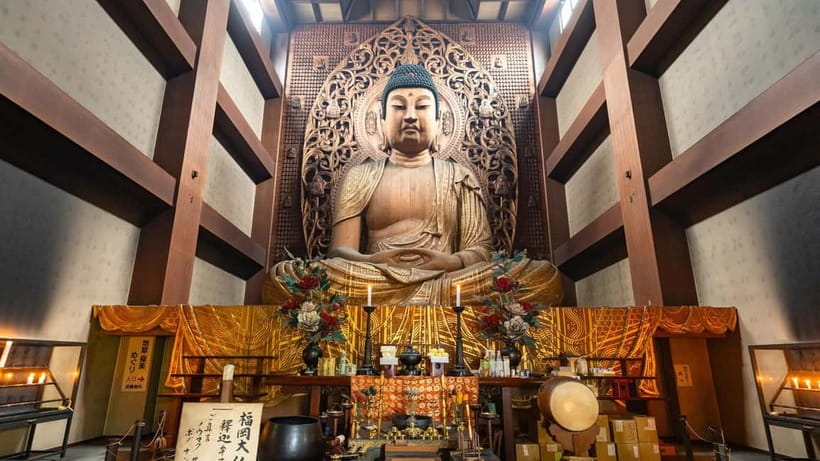
After Shofukuji’s quiet, you’ll move to Tochoji Temple. This stop matters because it adds contrast. Shofukuji gives you the Zen foundation, while Tochoji includes a magnificent Buddha statue that draws your eye fast, the moment you arrive.
Even if you’re thinking, Okay, another temple, you’ll get more from the comparison. A guide can help you notice how different temple features communicate different moods and priorities. One moment you’re reading the space with your senses, the next moment you’re looking at something monumental and direct.
This is also a good chance to ask your guide what to look for next. Temples can feel repetitive if you rush, but if you learn a couple of “how to see” cues, each stop becomes more meaningful.
Kushida Jinja at the center of Hakata’s rhythms
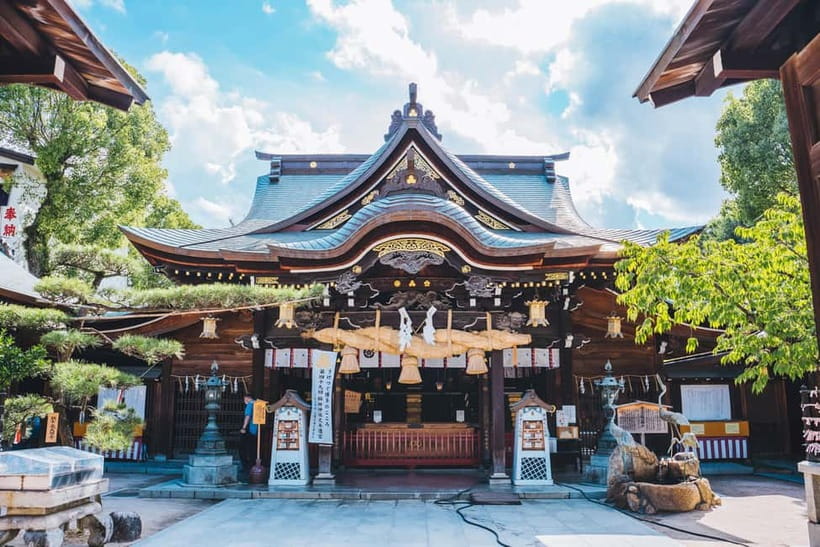
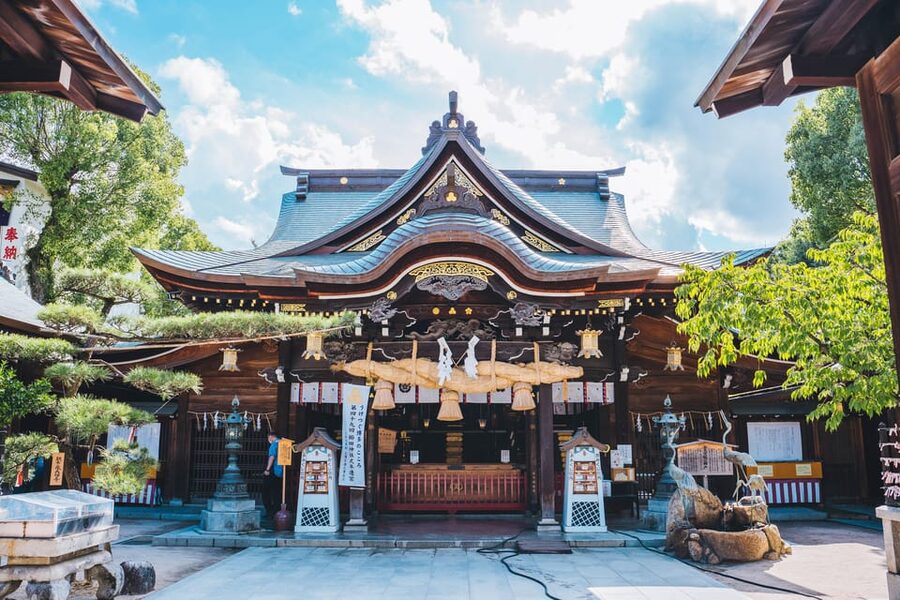
Then you reach Kushida Jinja, Fukuoka’s main shrine, and it’s where the tour starts to feel very “Hakata.” A shrine like this isn’t only about architecture. It’s a social and cultural anchor. Your guide will connect what you’re seeing with the Hakata Gion Yamakasa festival, which is a big deal throughout the year.
Here’s why that festival connection is valuable: it turns a shrine visit into something you can mentally place in the real calendar of the city. You’re not just looking at buildings. You’re seeing an engine for community energy. Even if you’re visiting on a normal day, that link helps you understand why the shrine stays important.
Kushida Jinja is also a place where details reward patience. The intricate elements of the buildings are easier to catch when you’re not on a tight schedule. And because you’re walking with a guide, you’ll know where to direct your attention instead of wandering in circles.
One consideration: shrine areas can get busy around certain events. If you’re the type who hates crowds, you might want to keep your expectations realistic and move with the flow, not against it.
Kawabata Shopping Street: where local life shows up in small choices
After the shrine, the tour moves into the Kawabata Shopping Street, a classic arcade where you can see, hear, and taste local life. This is the “real Fukuoka energy” portion, and it’s one reason I think the tour works as a half-day plan.
You’ll notice the sensory overload in a good way. Shops pack the arcade with goods, food stalls fill the air with smells, and the whole place moves like a living marketplace. The guide’s job here is useful, not just decorative. You can ask what to try, what’s worth buying, and what’s better as a pass, so you don’t end up with the tourist version of food shopping.
Your free time here is short, so treat it like a sprint, not a roam. If you want a snack plus a quick souvenir, decide early. If you want to linger, you’ll have to keep an eye on time so you don’t slow the whole group.
Good strategy:
- Pick one snack you can finish fast
- Buy one souvenir category, like snacks or small local items
- Take photos, but keep walking, because the best visual stuff changes every few steps
Also remember: food and drinks aren’t included, so have a rough idea of what you want to spend before you get pulled in by every smell.
Same corner of Japan, a different kind of day:
- Mt. Aso & Takachiho Gorge Tour with Optional Boat Ride
★ 4.7 · 222 reviews - Fukuoka: Takachiho Gorge & Scenic Railway One Day Tour
★ 4.8 · 178 reviews - Private Fukuoka Tour with a Local, Highlights & Hidden Gems 100% Personalised
★ 5.0 · 143 reviews - Fukuoka Your Way: 100% Customisable Private Tour with Local Guide
★ 5.0 · 83 reviews
Sumiyoshi Jinja by the sea: a quieter shrine mood inside the city
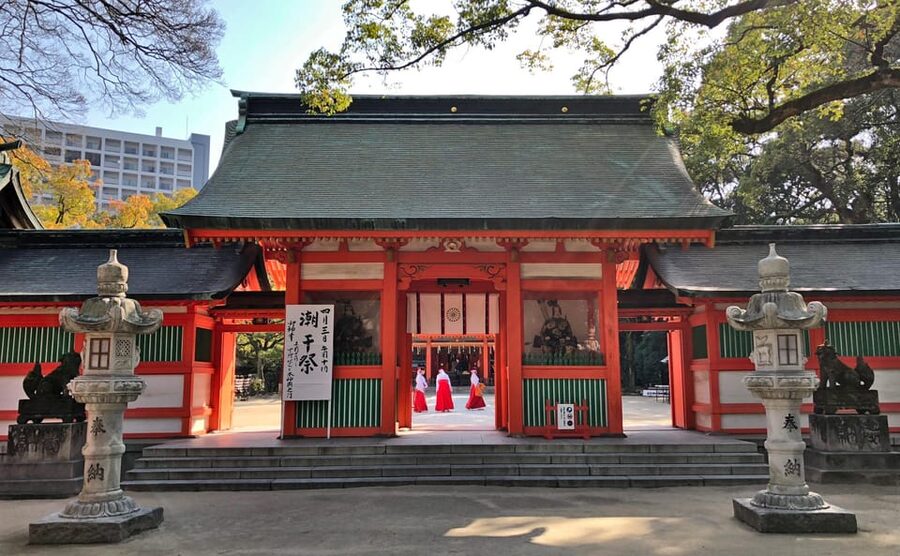
Next comes Sumiyoshi Jinja, and it changes the tone again. This stop is known for a distinctive architectural style that’s different from many other shrines. It also has a connection to the sea, and that matters because it gives you a calmer, more grounded feel in the middle of an urban route.
Why this is more than a “nice to see” detour: it rounds out your understanding of shrine life in Fukuoka. Some shrine visits feel all about ceremonies and crowds. This one feels more like a pause, a place to step back and look at the city from a slower mental angle.
Even if you don’t know the symbolism, you’ll likely notice how the space feels. Your guide can help you interpret what’s unusual about the architecture and how the sea link shaped the shrine’s identity.
If you’re the type who loves atmospheric stops, this section is worth paying attention to with your whole attention, not just your camera.
Hakata Station rooftop: the best way to make sense of what you saw
To cap it off, you’ll head back with scenic views en route and then finish with a look from the rooftop of Hakata Station. This is the part that turns your day into a story you can remember.
From up high, you see how the neighborhoods connect and how Hakata feels organized around transport and street life. And because you’re not rushing to the last stop inside a maze of alleys, you can actually look around and take in the city layout.
If the timing works out with daylight, you’ll likely catch that moment when everything looks crisp and then starts to soften as light changes. If you’re lucky enough to see the city glow, that view is an easy win for photos without needing any complicated planning.
Practical tip: Hakata Station is a busy place. When you finish the tour, take a breath before you head into the station crowds. It’s a good moment to organize your next train or decide your dinner plan.
The value equation: what you get for about $58
At $58 per person, this isn’t a “cheap bus tour,” and it isn’t trying to be. The value is in the private, on-foot format and the fact that you get a guide who can tailor the pacing.
Duration is listed as 3 to 8 hours, and the tour includes a guided, walking experience, with the option to arrange other transport at an additional cost. In practice, that flexibility helps if you have specific interests, like temples and shrine details versus more street-life time. Some groups also describe the guide as adjusting for walking comfort, including one booking that mentioned help for a temporary physical impairment.
For your money, you’re paying for:
- Guided context at each stop, so you’re not guessing what to notice
- A logical route that keeps you near central sights
- Time for a short arcade break, so you can eat and shop without feeling trapped
What you’re not paying for is everything else. Food, drinks, and attraction tickets are not included, so the $58 is the guide cost, not a full day of entrances and meals. If you budget smart for those extras, the overall day still feels like a good deal.
Pace and who this walk suits best
This tour is built around walking, with short on-foot stretches between key stops. That makes it a great choice if you want to experience neighborhood rhythm rather than riding around with minimal time outside.
I think it suits best if you:
- Want a strong overview of Fukuoka’s main cultural anchors in one morning or afternoon
- Like temples and shrines but also want street-life time
- Appreciate a guide who can answer questions and adjust pace
It might be less ideal if you have very limited mobility or you strongly dislike walking in crowds. The good news is that guide flexibility shows up in real bookings. But because it’s still primarily on foot, comfortable shoes are not optional. If you’re planning for hot or humid weather, wear breathable layers and bring water.
Also, note the tour is private and personalized, which usually means a better fit for families and mixed-age groups than rigid large-group tours.
Where it starts, and how to make your first hour easy
The meeting point is CASETiFY STUDiO アミュプラザ博多店, right by the main entrance, under the big clock. That’s helpful because it’s a clear landmark near transit.
My practical advice for the start:
- Arrive a few minutes early so you can meet your guide without stress
- Plan for a short orientation moment, then let the walking rhythm take over
- Keep your phone charged if you like rooftop photos at the end
If hotel pickup is needed, it’s available on request for central locations. If you’re staying outside central areas, you’ll likely want to plan to start at the meeting point or Hakata Station access.
What to do with the free time, so you leave happy
That Kawabata Shopping Street break is only about 15 minutes free time. In other words, you don’t have time for endless comparisons. You do have time for one good snack and one quick souvenir decision.
Here’s a simple rule I follow on arcade breaks: choose based on what smells best, not what sounds fancy. You’ll still get a local-feeling experience because the street market is the point, not the menu.
If you’re buying gifts, keep them compact. This tour’s shape is designed for walking, not carrying shopping bags for hours.
Should you book this Fukuoka Essentials tour?
Book it if you want an efficient, high-quality introduction to Hakata’s layers: Zen temple calm, shrine festival context, arcade street energy, and a final city view that makes the whole route click.
Skip it or adjust your expectations if you’re only interested in one type of attraction. This tour mixes temples and street life, and the pacing is designed for movement. You’ll also need to budget for food, drinks, and any attraction tickets you choose to add.
My bottom line: at around $58 per person for a private, guided walk that hits Shofukuji, Kushida Jinja, Kawabata, Sumiyoshi Jinja, and a Hakata Station rooftop view, it’s a strong value for first-timers who want real Fukuoka without the planning headache.
FAQ
What is the meeting point for the Fukuoka Essentials tour?
You meet at CASETiFY STUDiO アミュプラザ博多店, right next to the main entrance under the big clock.
How long is the tour?
The duration is listed as 3 to 8 hours, depending on starting times and availability.
Is this tour private?
Yes. The experience is available as a private and personalized tour.
What languages does the live guide speak?
The live tour guide speaks English and Czech.
Is hotel pickup available?
Hotel meetup is available on request for central locations.
What is included in the price?
The experience includes a private, personalized tour with a local host, a walking experience, and hotel meetup (on request for central locations).
Are food, drinks, and tickets included?
Food and drinks are not included, and tickets to any attractions are also not included.
Fresh options around Fukuoka
- Fukuoka: Takachiho Gorge, Amano Iwato & Scenic Train Tour★ 3.8 · 12 reviews
- Dazaifu and Yanagawa Canal Cruise Private Guide Day Tour by Train★ 5.0 · 13 reviews
- One-Day Customized Minami-Aso & Takachiho Tour★ 5.0 · 14 reviews
- Fukuoka Group/Private Tour by Local Professionals!★ 5.0 · 15 reviews
- Colors of Japan, Fukuoka Nokonoshima Island Park & Wagyu BBQ★ 5.0 · 15 reviews
- Fukuoka’s Sacred Path: Temples, History & Culture★ 5.0 · 17 reviews
- Hakata Old Town Walking Tour Tracing the True History of Fukuoka★ 5.0 · 17 reviews
- Fukuoka Takachiho Gorge, Amano Iwato and Scenic Train Tour★ 4.5 · 17 reviews
Historical Tours, compared.
World Heritage Shirakawa-go and Experience Tours from Kanazawa
Read our review →
Imperial Palace and Shogun Historical Walking Tour
Read our review →
World Heritage Kyoto & Nara Uji Authentic Matcha Experience
Read our review →
Kyoto Gion: 2-Hour Geisha Culture & History Walking Tour
Read our review →
World Heritage Shirakawa-go Morning Guided Tour
Read our review →
Hiroshima Historical Walking Tour – Why A-Bomb was Dropped
Read our review →
Hiroshima Peace (Heiwa) Walking Tour at World Heritage Sites
Read our review →Browse the lists this tour appears in