
Reviewed · WALKING TOURS
Kyoto Early Bird Walking Tour
Kyoto is better when you start early. This early-bird walking tour strings together three Kyoto icons before the crowds thicken, so you get quieter torii gates, a calmer Golden Pavilion, and a cooler bamboo walk. It also finishes around midday, which is a big deal in a city where afternoons can vanish fast.
I love how the route hits Fushimi Inari-taisha first, then pivots to Kinkaku-ji soon after opening, and finally lands in Arashiyama bamboo before it gets packed. You’ll also get real help from your guide, including route sense between distant ends of town, plus small pro tips for getting the best angles while you’re walking.
One consideration: it is a walking-heavy half day, and you should plan on comfortable shoes and some stamina. If you have a heart condition, this is not recommended, and the tour is weather dependent.
Key highlights worth your early wake-up
- 3 major stops in one morning without wasting time playing Kyoto transit roulette
- Torii gates before the throngs so the famous red tunnel feels almost peaceful
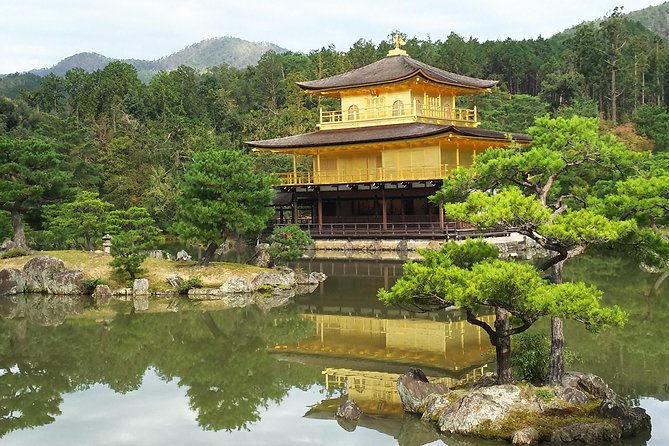
- Golden Pavilion right after opening for a calmer look at the gilded building and pond
- Arashiyama bamboo in cooler morning air when the grove is easier to enjoy
- Guide-led timing that gets you out by noon, leaving your afternoon wide open
Early Bird Kyoto: how the morning timing actually helps
Kyoto’s top sights have a predictable rhythm. By late morning, tour groups stack up, sidewalks tighten, and your photo moments turn into traffic jams. This tour is built around beating that rhythm, starting early at Kyoto Station and then moving out to three big, far-apart highlights while the city is still exhaling from the night.
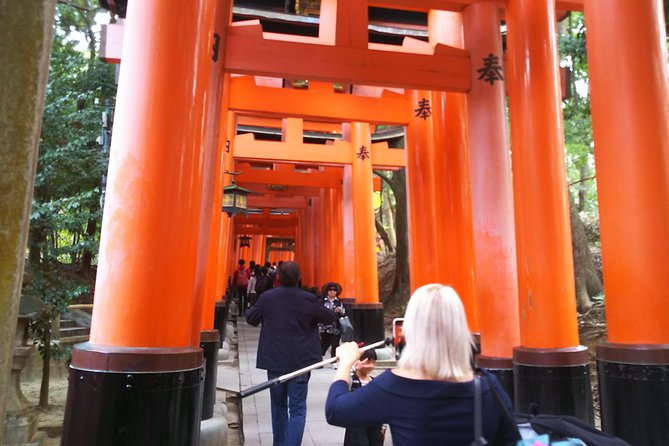
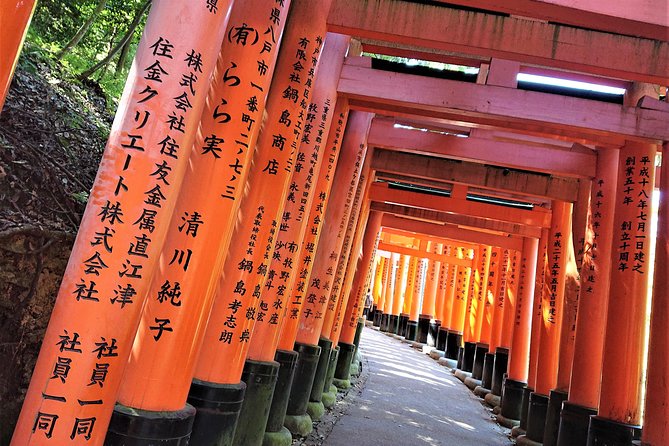
The payoff is not just fewer people in your pictures. When there’s breathing room, you can slow down enough to notice details. At Fushimi Inari-taisha, that means walking through the vermilion torii tunnel with space to look up and down the stairs without constantly sidestepping shoulder-to-shoulder. At Kinkaku-ji, it means seeing the Golden Pavilion when it still feels like a quiet temple moment, not a crowd event. In Arashiyama, the bamboo grove is more than a photo stop when you can actually stand there and hear the breeze.
There’s also a practical value to finishing before midday. Kyoto afternoons often involve queues, heat, and decision fatigue. Getting back by noon lets you choose what you want next, not what the crowds allow next. If you’re the type who likes to wander, snack, and drop into smaller side streets, this schedule gives you that freedom.
More Walking Tours in Kyoto
- Kyoto Geisha Walking Tour: Gion District & Hidden Gems
★ 4.7 · 3,273 reviews - Kyoto: Gion Magical Night Walking Tour with Geisha Trivia
★ 4.9 · 2,393 reviews - Kyoto: Gion Geisha District Walking Tour – Stories of Geisha
★ 4.7 · 2,187 reviews
Price and what’s included: where the value comes from
The tour price is $105.45 per person for a private group experience with a guide. The big cost inside the price is the guide fee, which matters because you’re not just buying access to sights. You’re buying time. You’re also buying local context, route efficiency, and the ability to move through Kyoto without worrying about every connection.
Two costs are not included: local public transportation fare and the Kinkaku-ji admission. Public transportation is listed at ¥1,220 per person, and Kinkaku-ji is ¥500 per person. Fushimi Inari-taisha and the bamboo forest are free stops in this itinerary.
So, is it good value? In my view, yes, if you care about three things:
- You want to see the big highlights without spending your morning figuring out trains, buses, and walking routes.
- You want the early timing that helps you avoid the heaviest crowd waves.
- You’d rather pay for a guide’s planning and explanations than spend your day rushing.
If you’re traveling with limited time in Kyoto and you want a strong start day one, this is a smart way to compress the must-sees into one morning.
Meeting at Kyoto Station: the smooth start you’re paying for
Your morning begins at Kyoto Station Building 901 (address listed at 901 Higashishiokōjichō, Shimogyo Ward, Kyoto). Meeting at the station is convenient because it’s a central hub, and it reduces the “where do we meet” stress that can happen in cities like Kyoto.
From there, the tour flows outward to Fushimi Inari-taisha, then onward to Kinkaku-ji, and finally to Arashiyama bamboo. The itinerary is paced in about 5 hours 15 minutes total (approx.), and it’s designed to end back around your starting point before midday.
What I like about this setup is that you’re not stuck between attractions waiting for the perfect time to move. The guide’s job is to keep you moving at the right pace, while also giving you enough context to understand what you’re looking at. People often underestimate how tiring navigation is. Even when you know the city map, distance and hills can drain your energy. A guide cuts that friction.
If you’re planning your day after the tour, you’ll likely be free to explore on your own once it ends around noon. That’s ideal for grabbing lunch, visiting smaller neighborhoods, or taking your time at one place you liked best.
Stop 1: Fushimi Inari-taisha torii gates before the crowds
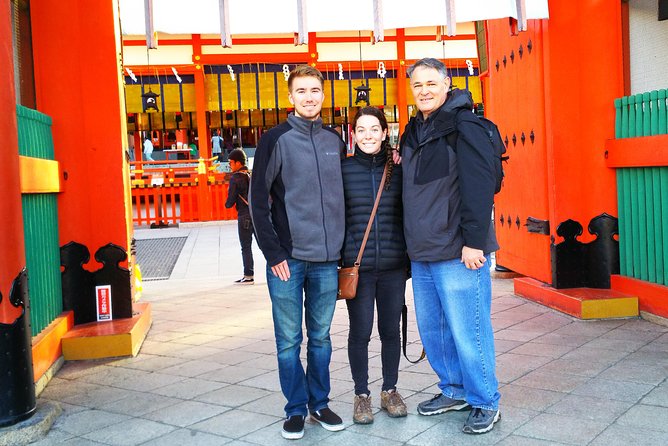
Fushimi Inari-taisha is famous for a reason: the shrine path is lined with thousands of vermilion torii gates. This tour goes first, and that early start changes the whole experience.
Walking through torii gates with fewer people around is a big deal. The shrine’s tunnel effect works best when you’re not constantly turning sideways to pass others. In the morning light, the red gates also look more vivid, and your photos come out less like a game of parkour.
The tour includes this stop for about one hour, and admission is free. You’ll also have time to absorb what the gates represent. This is a shrine connected to a deity enshrined at the site, and visitors sometimes offer torii gates in appreciation for good fortune they received. Even if you skip the deeper details, the guide’s explanations make the path feel more meaningful than just a famous walking corridor.
One practical tip: bring water and a small towel if you run warm. You may not feel sweaty at first, but morning in Kyoto can change quickly once you start moving between sites.
Same corner of Japan, a different kind of day:
- PERFECT KYOTO 1-Day Bus Tour
★ 5.0 · 13,518 reviews - Kyoto: Fushimi Inari, Kinkakuji, Bamboo Grove 1 Day Bus Tour
★ 4.8 · 4,316 reviews - Kyoto: Tea Ceremony in a Traditional Tea House in Kiyomizu
★ 4.9 · 3,519 reviews - Kyoto: Tea Ceremony Ju-An at Jotokuji Temple
★ 4.9 · 3,207 reviews
Stop 2: Kinkaku-ji Golden Pavilion right as it opens
Kinkaku-ji, the Golden Pavilion, is the most iconic “seen-from-everywhere” Kyoto temple, and this tour tackles it at the right time. The plan is to visit shortly after it opens, when fewer people arrive.
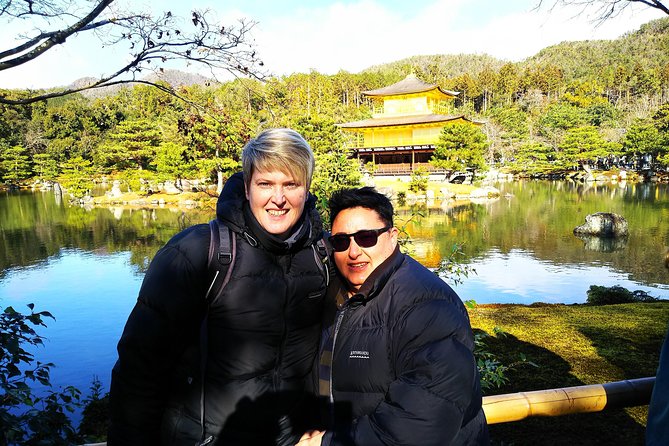
This is where your early start really pays off. You get a calmer look at the gilded building and the pond before the place turns into a moving crowd. For many people, that quiet moment is the difference between looking at a postcard and actually enjoying a temple experience.
The stop is about one hour. Admission is not included, and the listing states ¥500 per person for entry. The temple is described as a Zen site and an icon connected to Samurai culture, and that framing helps you understand why the aesthetic is so purposeful.
A small caution: because this is a high-demand spot, it can still get busy later in the morning even with an early start. Your best strategy is to treat the guided time as your window. Follow the guide for the timing and viewpoints they recommend, then use the morning momentum to get your own photos once you’re in the flow.
If you’re sensitive to standing for long periods, plan to keep moving during your hour. It’s easy to get stuck waiting for the perfect shot, and then you end up standing longer than you meant to.
Stop 3: Arashiyama bamboo forest while it’s still cool
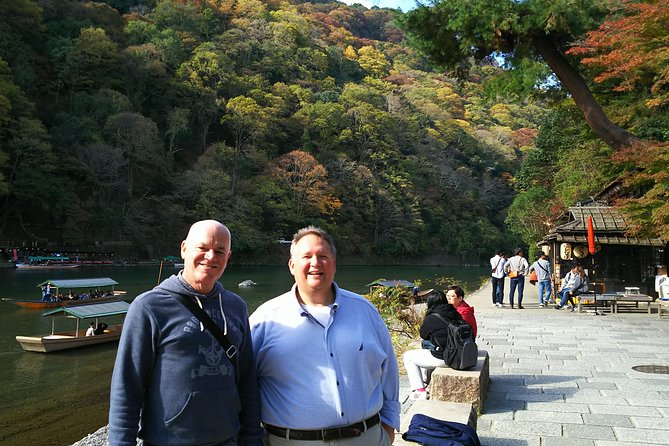
Arashiyama’s bamboo forest is one of Kyoto’s most atmospheric places, and timing is everything. This tour schedules it in the early morning window, before the midday masses arrive.
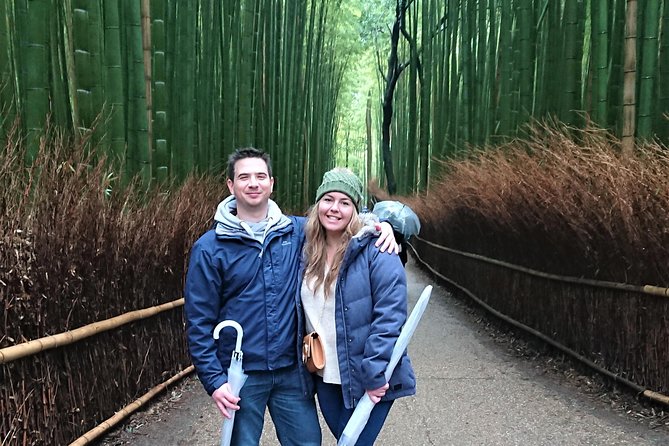
That cooler morning air matters. The listing describes strolling through the grove’s cool confines and listening to the breeze as it moves through the bamboo. When the forest is not packed, you can actually slow down and let the soundscape do its work. When it’s crowded, it becomes a “walk through and move on” situation.
This stop is about one hour and admission is free. You’ll have time to walk the paths, look for photo angles, and enjoy the sensation of shade and stillness that bamboo brings.
A drawback to know: Arashiyama can involve a bit of uneven walking on temple-adjacent paths and bridges. You already have comfortable shoes recommended for the tour, and I agree. If you’re wearing flimsy sneakers, you’ll notice it after a couple of hours.
Also, if you’re traveling in warmer months, plan for sun and heat later in the day. Even though you’ll likely be finishing soon, the morning can still turn into a warm afternoon faster than you expect once the tour is over.
What the guide adds: more than just directions
The strongest part of this tour is the human element. The format is simple, but the guide makes it feel easy and informative, from the moment you meet at Kyoto Station through the last steps back.
I’m a big believer in “mental map help,” and this tour is built around that. You’re dealing with three major sights across Kyoto, and the guide coordinates the flow so you are not stuck figuring out which train to take or where to walk once you arrive. People also highlight that guides check in for needs like restrooms and water, which is especially helpful on a half-day schedule where you might otherwise push too hard.
Guide personalities also come through. In the feedback, names like Akiko, Megumi, Kaz, Tomoko, Hiro, Sumiko, Emiko, Makoto, and Makiko are repeatedly connected with two things: clear explanations and smooth, calm assistance. You can expect guides to explain the significance of what you’re seeing, not just recite facts. That’s how the torii gates feel like more than a photo line, and how Kinkaku-ji connects to broader cultural context instead of being just a shiny building.
You’ll also find that guides help with practical photo spots. That sounds small, but when you’re walking, it saves time and frustration. Instead of searching for “the one angle,” you’ll know where to stand for good compositions.
One more benefit: because it’s a private tour, your guide can adapt to your group’s pace. If your group includes kids or if you have specific interests, the tour format supports flexible attention. That’s a major reason people love the early start, because the day stays smooth instead of turning into a scramble.
A realistic pacing plan for your half-day Kyoto
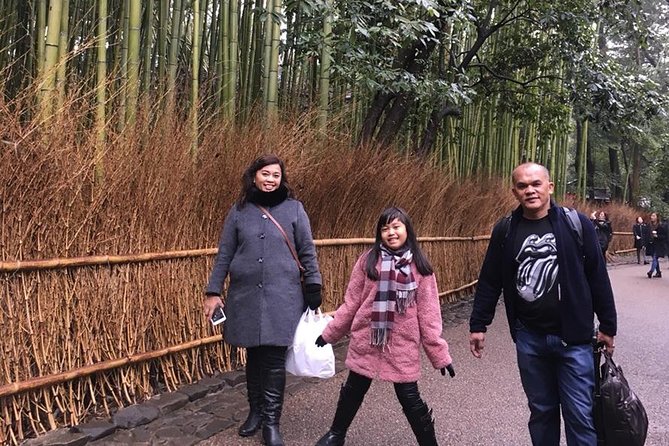
This is a 5 hours 15 minutes walking tour, ending around noon. That means you should treat it like a compact morning workout with cultural rewards.
Here’s what that pacing feels like in practice:
- You’ll start early and keep moving between three major destinations.
- Each stop is about an hour, so you get time for photos and explanations but not unlimited wandering.
- The last stop does not end “at sunset,” it ends early, which is exactly why the afternoon is yours.
If you like slower travel, you might worry you’ll feel rushed. The best workaround is simple: pick one or two sights you love most, then plan your afternoon return or follow-up visit. With this tour, you’ll have energy to do that because it ends by noon.
If you’re the type who enjoys “orientation mode,” this tour works well too. It gives you a sense of Kyoto’s layout and what areas feel like what. Then when you go on your own, you can make more confident choices.
Who should book this Kyoto Early Bird walk
This tour is a great match if you:
- Have limited time in Kyoto and want three big highlights without spending your morning figuring everything out.
- Like early starts and want fewer people at the sites.
- Prefer guided explanations so you understand what you’re looking at while you walk.
It may be less ideal if you:
- Need a very low-walking pace.
- Have a heart condition, since the tour is not recommended for that.
- Want a long, slow, unstructured day. This is efficient by design.
The tour also notes moderate physical fitness is expected and recommends comfortable shoes. It’s also described as accessible for those with limited eye sight and limited mobility, but since there’s “quite a bit of walking required,” it’s smart to judge your own comfort level before committing.
Should you book the Kyoto Early Bird Walking Tour?
I’d book it if you want a strong Kyoto morning with minimal crowd stress and maximum “I actually understand what I saw” payoff. The early timing at Fushimi Inari-taisha and Kinkaku-ji is the core value, and the guide support is what turns three iconic spots into a coherent experience instead of disconnected sightseeing.
Just do your homework on your budget and your stamina. You’ll add ¥500 for Kinkaku-ji and plan for about ¥1,220 per person for local transport. And you should be ready for a walk-focused half-day with real time on your feet.
If you can handle that, this tour is one of the easiest ways to begin Kyoto well, then enjoy the rest of the day on your own terms.
FAQ
How long is the Kyoto Early Bird Walking Tour?
The tour lasts about 5 hours 15 minutes.
Where do we meet for the tour?
You meet at Kyoto Station Building 901 (901 Higashishiokōjichō, Shimogyo Ward, Kyoto).
Is Kinkaku-ji Temple admission included in the price?
No. Kinkaku-ji admission is not included and costs ¥500 per person.
Is public transportation included?
No. Public transportation fare is listed as ¥1,220 per person.
What does the tour include and what is not included?
Included: guide fee. Not included: food and drink, public transportation fare, and Kinkaku-ji admission.
What happens if the weather is poor?
The experience requires good weather. If it’s canceled due to poor weather, you’ll be offered a different date or a full refund.
Fresh options around Kyoto
- Kyoto: Quiet and Graceful Tea Ceremony★ 4.5 · 19 reviews
- Oboro | Mindful Tea Ceremony in a 100-Year-Old Kyoto Teahouse★ 5.0 · 19 reviews
- Ikebana Traditional Japanese Art of Flower Arranging★ 4.5 · 19 reviews
- Kyoto Satoyama Cycling with Lunch and English Guide★ 5.0 · 19 reviews
- Kyoto International Party Solo Friendly Expats and Locals★ 5.0 · 19 reviews
- Tea Ceremony Experience in Traditional Kyoto Townhouse★ 5.0 · 19 reviews
- Kyoto: Amanohashidate Ine Funaya Tour★ 4.4 · 19 reviews
- Kyoto Private Food Tours with a Local Foodie: 100% Personalized★ 4.5 · 19 reviews
Walking Tours, compared.
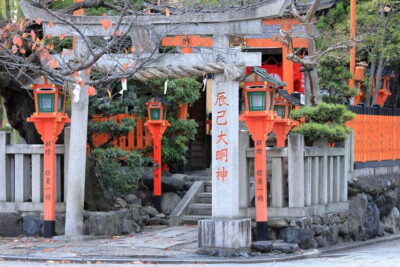
Kyoto Geisha Walking Tour: Gion District & Hidden Gems
Read our review →
Tokyo Tsukiji Fish Market Food and Culture Walking Tour
Read our review →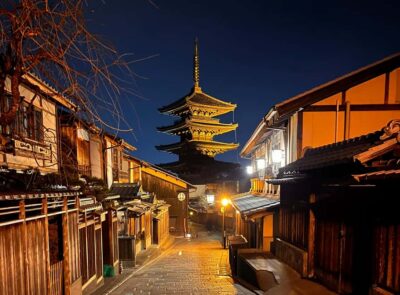
Gion Magical Night Walking Tour with Geisha Trivia
Read our review →
Imperial Palace and Shogun Historical Walking Tour
Read our review →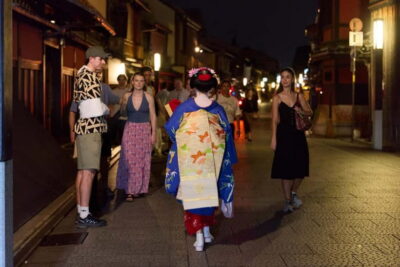
Gion Geisha District Walking Tour – Stories of Geisha
Read our review →
Shinjuku Local Bar and Izakaya Guided Walking Tour
Read our review →
Browse the lists this tour appears in