
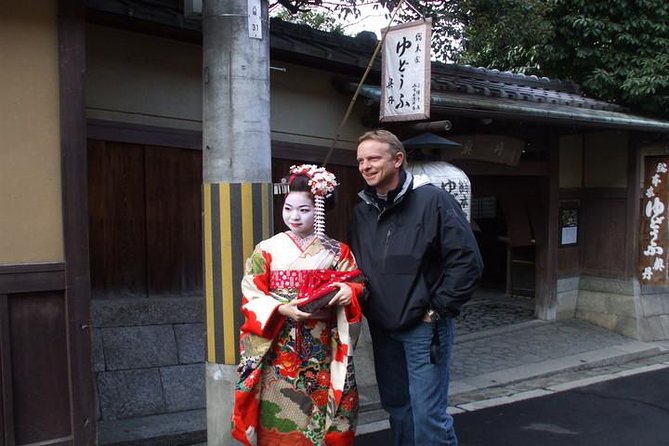
Reviewed · TEMPLE & SHRINE TOURS IN KYOTO
Gion and Fushimi Inari Shrine Kyoto Highlights with Government-Licensed Guide
Kyoto in one evening can feel like a puzzle. This guided route stitches together Gion and Fushimi Inari so you waste less time wondering where to go. You also get a human guide to explain what you are looking at, not just where to stand for photos.
Two things I really liked: the tight small group setup (max 10) makes it easy to hear the story and keep up on narrow lanes, and the geisha history is practical, especially the difference between Maiko and Geiko. One thing to consider: it is a walking day, with a schedule that moves between several major sights, so comfy shoes and punctual meeting habits matter.
Key points before you go
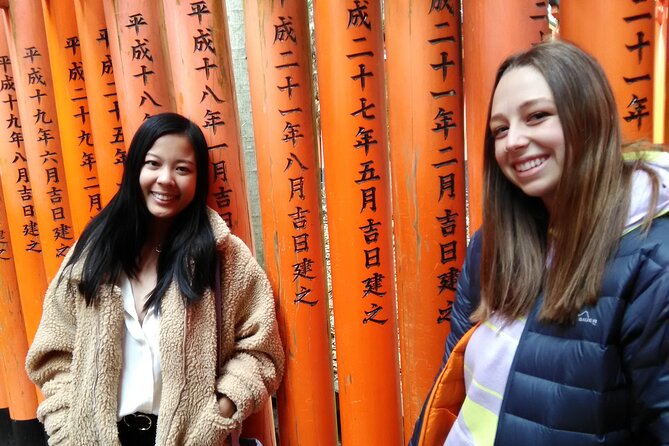
- Licensed local English guide means you get context as you walk, not after you get home.
- Small group (up to 10) keeps the pace manageable and the explanations clear.
- Big-name sights in one loop: Fushimi Inari, Gion, Yasaka Shrine, Kiyomizu-dera, and Kennin-ji.
- Foot-only navigation through areas cars cannot reach makes the route feel more like real Kyoto.
- Geisha-focused storytelling helps you read the district instead of just passing through.
- Some temple admission fees not included (like Kiyomizu-dera and Kennin-ji), so budget a little extra.
How this Kyoto evening works, with a guide and a tight walking route
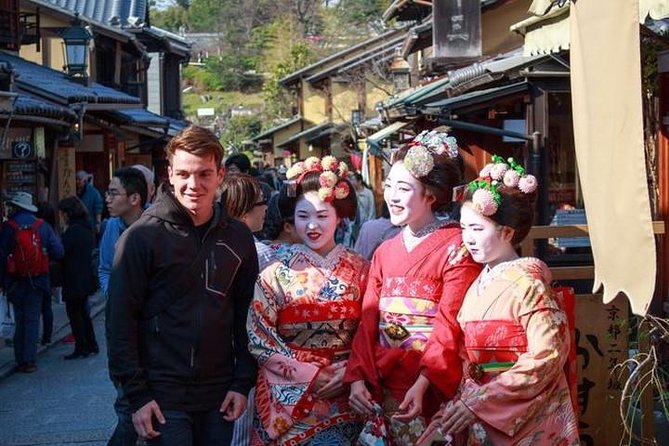
This is built for travelers who want to see a lot without losing an hour to wrong turns. The day runs about 6 hours, and it is paced for on-foot touring, with pick up and drop off happening on foot. That means you are not relying on vehicles to stitch together the big sights. You are walking between them, including parts of Gion where the streets simply do not cooperate with car traffic.
The group size cap is 10 people, and that changes the whole experience. You can actually ask questions. You can hear the guide. And you do not feel like you are being shouted over by a megaphone or left behind on tiny stair steps.
You also get a mobile ticket for the tour. That reduces paper hassle. And the route is structured around the sights you care about most in this part of Kyoto, so the evening feels efficient rather than chaotic.
More Temple & Shrine Tours in Kyoto
- Kyoto: Fushimi Inari, Kinkakuji, Bamboo Grove 1 Day Bus Tour
★ 4.8 · 4,316 reviews - Kyoto: Tea Ceremony Ju-An at Jotokuji Temple
★ 4.9 · 3,207 reviews - Fushimi Inari Hidden Hiking Tour (Private Option Available)
★ 5.0 · 1,750 reviews
Start at Tatsumi-jinja Shrine: the meeting point that anchors the day
You meet at Tatsumi-jinja Shrine (Tatsumi Dai-myojin) in Kyoto’s Higashiyama Ward (Motoyoshichō). The address listed is 605-0087, Kyoto, Higashiyama Ward, Motoyoshichō, 元吉町5959. The tour ends back at the same meeting point, so you are not stuck with a long trek back after you are done.
Two practical notes matter here. First, since the pickup and drop off are on foot, plan to arrive a little early. Second, because the group is small and the stops are timed, being late can throw off the whole flow.
If you are the kind of person who likes to know where you are starting, this helps. You begin with a shrine setting, then you transition into the geisha district, then you climb toward Kiyomizu-dera and finish with Kennin-ji.
Fushimi Inari-taisha in about an hour: torii gates and route sense
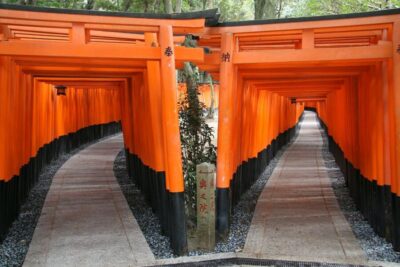
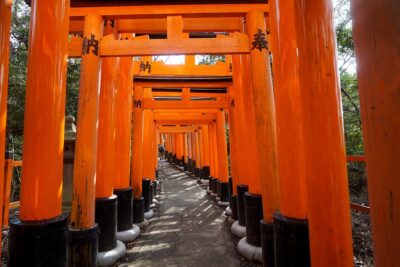
Your first major stop is Fushimi Inari-taisha Shrine, famous for its thousands of vermilion torii gates spanning trails behind the main area. You get about 1 hour, and admission is free.
The big win here is not just seeing the gates. It is getting route sense quickly. If you walk in without a plan, you can end up doing the same loops, or you might aim for the most crowded segments while missing the calmer lines of the trails. With a guide, you keep moving with purpose, so the time feels like a highlight rather than a blur.
Because the clock is limited, treat this as your introduction to Fushimi Inari’s scale. You will see enough to understand why it is so iconic, and you will have context for what you are looking at, so the place lands harder when you later compare it to other shrines in Japan.
Entering Gion and Shirakawa: where the guide makes the district readable
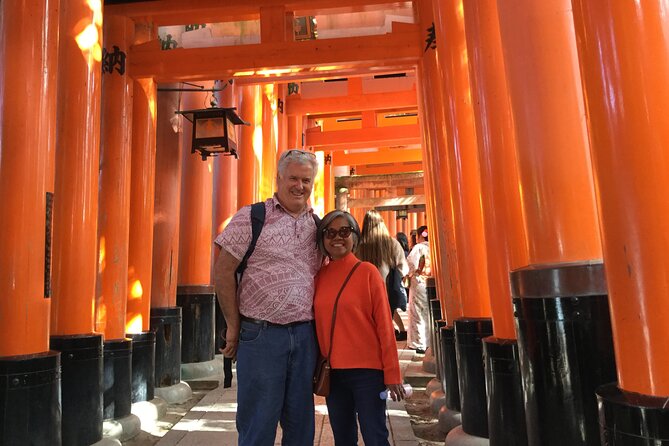
After Fushimi Inari, the evening turns toward Gion, Kyoto’s best-known geisha district. Gion sits around Shijo Avenue between Yasaka Shrine to the east and the Kamo River to the west. The district is full of shops, restaurants, and ochaya (teahouses), and the lanes are narrow enough that cars cannot really follow you.
This is exactly where a guide earns their keep. You learn how the district is laid out, where the sightlines change, and how the architecture and street patterns connect to what the area is known for.
From there, you move into the Shirakawa area along the Shirakawa Canal. It is lined with willow trees and flanked by higher-end restaurants and ochaya, many with rooms over or near the canal. Even if you do not catch a performance, the setting itself explains the atmosphere: it feels like a place that evolved to protect privacy and rhythm, not speed.
One more subtle benefit: the route includes areas that are easier to photograph once you know where to stand. You do not just pass by, you learn what makes a lane look like a Kyoto postcard.
More geisha experiences in Kyoto:
- Kyoto Geisha Walking Tour: Gion District & Hidden Gems
★ 4.7 · 3,273 reviews - Kyoto: Gion Magical Night Walking Tour with Geisha Trivia
★ 4.9 · 2,393 reviews - Kyoto: Gion Geisha District Walking Tour – Stories of Geisha
★ 4.7 · 2,187 reviews - Best of Kyoto: Gion, Geisha, Pagodas & Cobblestones
★ 4.9 · 2,058 reviews
Yasaka Shrine and Tatsumi Daimyojin: two short stops with long meaning
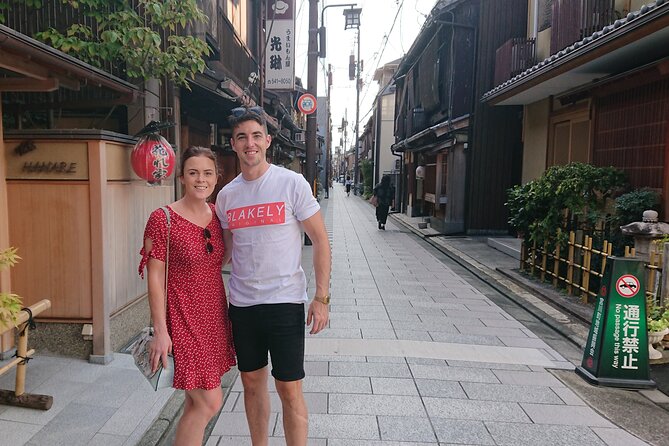
This tour builds in two shrine moments inside the geisha-zone orbit.
First is Yasaka Shrine (Gion Shrine), a major site founded over 1350 years ago. You spend about 10 minutes, and admission is free. This is a quick hit, but it matters because it sets a deeper frame for what you are walking through. It is not just a themed neighborhood for photos. It is connected to long-running Kyoto religious life.
Next is Tatsumi Daimyojin Shrine, another about 10 minutes stop. It is described as being near Shirakawa, where ochaya and geisha activity are known to be concentrated. Even though the time here is short, the inner torii at this stop is specifically called out, and the guide can help you notice how shrines and city life interlock in this part of town.
These shrine pauses also act like breathing stations. When you are walking and turning corners in Gion, a short shrine stop helps you reset your eyes before the next dense pocket of streets.
Kiyomizu-dera Temple: what to expect from a one-hour visit
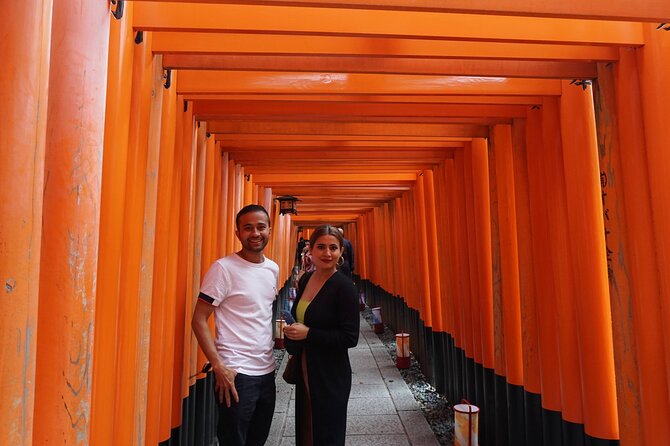
Next comes Kiyomizu-dera Temple, founded over 1250 years ago. You get about 1 hour here, and admission is not included.
Kiyomizu-dera is built halfway up Mt. Otowa in the Higashiyama mountain range, which is part of why it feels dramatic. The temple’s location affects your whole experience because you notice views and angles as you move. If you only have an hour, you want to focus on getting the layout right and seeing the key vantage points without getting stuck in one spot.
Since admission is not included, budget for tickets separately. If you plan to do more than the time allows (like lingering in quiet corners), you might need a little extra patience. This is a highlight stop, but it is also part of a full day plan.
Tip for your sanity: if it is crowded, prioritize the parts your guide points out first. That way you still get the value even if conditions change.
Kennin-ji Temple: a brief stop with dry garden attention
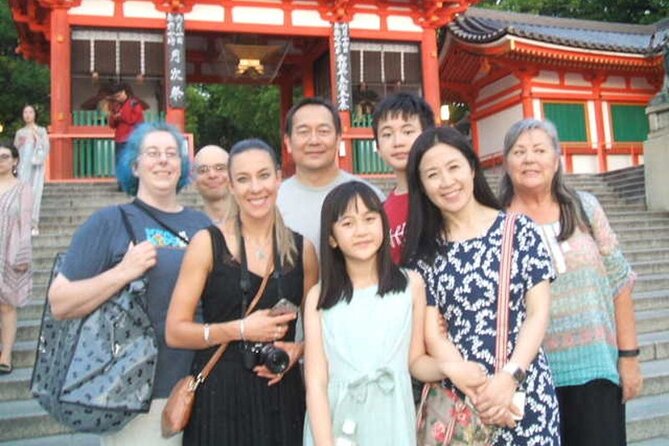
Your final temple stop is Kennin-ji Temple, close to the bustle around Hanamikoji and Shijo streets. You are there for a very short window in the schedule (the stop time is listed as very brief), and admission is also not included.
Kennin-ji is known for its karesansui (dry landscape gardens). Even with a brief visit, those gardens are the kind of thing that rewards attention. The trick is not trying to do everything. It is using the guide’s pointer points so you can look in the right direction and notice the garden details within the time you have.
Because the entry is not included, plan for a ticket on your end. If you are trying to keep expenses tight, it is worth checking your budget before you commit, since Kiyomizu-dera and Kennin-ji are both on the not-included list.
The guide part that actually changes your understanding of geisha culture
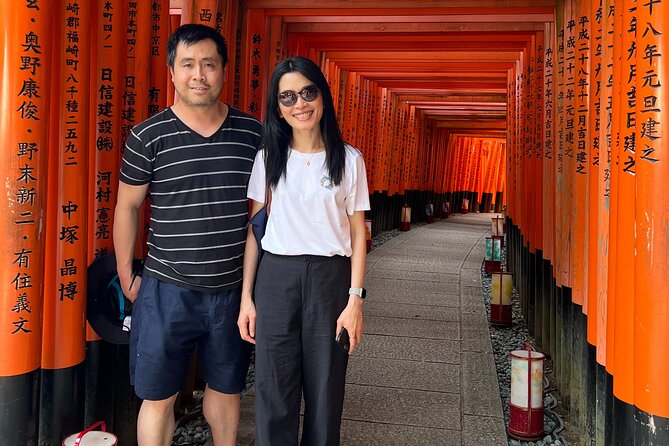
The best praise across this kind of tour format is almost always about the story, and this one is built around it. The big theme is geisha history and what the district is doing culturally, not just aesthetically.
A key detail you get help with is the difference between Maiko and Geiko. That matters because Kyoto can be confusing if you only know one word. With a guide explaining distinctions and context, you start to interpret small cues: how people move, how the district signals tradition, and why the area is designed the way it is.
You might even be lucky enough to spot Maiko or Geiko unexpectedly while walking, since the tour passes through places known for geisha activity. When that happens, the guide’s framework helps you see it as part of a living system, not as a random street sighting.
One expectation check: this is a walking tour focused on sights. If your plan is to catch a specific geisha performance, keep your expectations tied to the areas you are visiting during the walk.
If you are hoping for a particular kind of storytelling, note that guides can vary. In the feedback for this experience, a guide named Mari san was singled out for making the history easy to follow and for adding extra value with photo-friendly moments.
Getting your photos without losing the vibe
Gion is one of those places where it is easy to take pictures while forgetting to look. This tour helps you balance both. The route includes scenic lanes and canal-side views in Shirakawa, plus major shrine visuals at Fushimi Inari. That gives you a natural mix of Kyoto icons and human-scale street scenes.
The practical advantage of a guide is timing. You learn where to pause so you are not standing in the wrong flow of foot traffic. And because the group is small, you can stop and restart without blocking everyone.
If you like street photography, do not just point and shoot. Use the guide’s explanations to choose what to frame. When you understand why a lane matters, your photos tend to look less like snapshots and more like Kyoto stories.
Price and value: is $154.37 fair for this 6-hour route?
At $154.37 per person, this is not a budget stroll. But it is also not just paying for entry gates. You are paying for a licensed local English speaking guide, a route design that links multiple top sights in one evening, and a small-group size that makes the guide’s explanations usable.
Here is where the value becomes clear. You get:
- Fushimi Inari with free admission
- major geisha district touring in Gion and Shirakawa
- quick shrine stops like Yasaka Shrine and Tatsumi Daimyojin
- Kiyomizu-dera and Kennin-ji as the final big cultural hits, with admission not included for those temples
If you were to do this alone, you would spend time figuring out transit, routing, and what to look for. You would also likely miss some of the structure that makes the evening feel smooth. For first-timers to Kyoto, a guided loop like this often saves more than money. It saves mental energy.
If you already know Kyoto well, and you love wandering without structure, you might feel the price is only worth it if you will actually use the guide’s geisha history and orientation.
Who this tour suits best, and who should consider another option
This tour is a great fit if you:
- want a first-time friendly way to connect Gion, Fushimi Inari, and major temple stops
- prefer a small group where you can hear the guide and ask questions
- care about understanding geisha culture, especially Maiko vs Geiko context
It might be less ideal if you:
- dislike walking for long stretches, since this is a full evening of on-foot touring
- mainly want a free-roam photo walk with no structured story
- are counting on a performance-style experience rather than sightseeing
If you like your days planned but not rigid, this is a good compromise.
Should you book this Gion and Fushimi Inari guided tour?
I would book it if you want your Kyoto evening to make sense fast. The route is built for people who feel overwhelmed by Gion’s maze-like lanes, and the licensed guide helps you read the district while you see the big hits.
I would think twice if you hate walking schedules, or if you need all admissions included in one simple price. Since Kiyomizu-dera and Kennin-ji admission are not included, you should plan for extra costs so the day stays pleasant, not annoying.
One last tip: reserve early. This kind of tour is commonly booked about 89 days in advance on average, so if the dates matter, do not wait for the last minute.
FAQ
How long is the tour?
It runs for about 6 hours.
What is included in the price?
You get a licensed local English-speaking guide, and the pick up and drop off are on foot.
Which attractions have free admission, and which cost extra?
Admission is free for Fushimi Inari-taisha Shrine, Yasaka Shrine, and Tatsumi Daimyojin Shrine. Admission is not included for Kiyomizu-dera Temple and Kennin-ji Temple.
How big is the group?
The tour has a maximum of 10 travelers.
Where do I meet the guide, and where does the tour end?
You meet at Tatsumi-jinja Shrine (Tatsumi Dai-myojin) and the tour ends back at the same meeting point.
What is the cancellation policy?
You can cancel for a full refund up to 24 hours before the experience’s start time, with free cancellation available.
Fresh options around Kyoto
- Let’s make only one original onigawara in the world!!★ 4.9 · 21 reviews
- Kyoto: Discover Every Bit of Kyoto Imperial Palace★ 4.4 · 21 reviews
- Uji and Wazuka Matcha Farm Half Day Private Guided Tour★ 5.0 · 21 reviews
- Kyoto Bus Tour: Sagano Railway & Hozugawa River Boat Ride★ 4.0 · 21 reviews
- Kyoto: Nishiki Market Food Tour★ 4.9 · 21 reviews
- Kyoto: Half-day Guided Bike Tour with Fushimi Inari★ 4.9 · 21 reviews
- Private Day Tour – Kyoto Arashiyama & Bamboo Forest Perfect Tour!★ 5.0 · 21 reviews
- Elegant Tea Ceremony While Wearing Kimono Experience in Kyoto★ 5.0 · 22 reviews
Temple & Shrine Tours in Kyoto, compared.
Fushimi Inari, Kinkakuji, Bamboo Grove 1 Day Bus Tour
Read our review →
Fushimi Inari Hidden Hiking Tour (Private Option Available)
Read our review →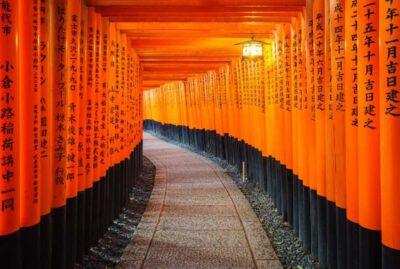
Osaka/Kyoto:Kinkakuji,Arashiyama,FushimiInariShrine,NaraPark
Read our review →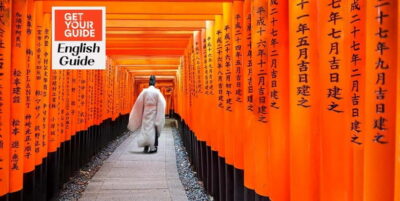
Kyoto/Osaka: Nara, Fushimi Inari Taisha, Arashiyama Bus Tour
Read our review →
Arashiyama Bamboo, Temple, Monkeys, or Secret Sake Brewery
Read our review →
Arashiyama Bamboo Forest, Monkeys, Matcha & Temple Tour
Read our review →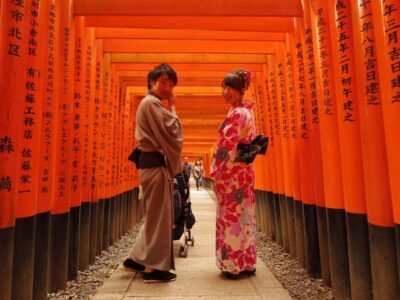
Osaka/Kyoto: Arashiyama, Nara & Fushimi Inari Shrine w/Lunch
Read our review →Browse the lists this tour appears in