Reviewed · KYOTO TOURS
Treasures of Kyoto: Geishas & Traditions Private Tour
Gion makes sense fast with a local. This private tour is built for time-tight days, pairing Kyoto backstreets with clear cultural explanations so you can move with confidence instead of guessing at what you are seeing. You start in Higashiyama at Kawabatacho and end near Yasaka Kamimachi, with a guide who keeps the pace friendly and the questions welcome.
I especially love the way the guide turns everyday details into stories, with examples like Ted-san, Maha, Shohei, Ahmed, and Kako guiding with warmth, respect, and lots of room to talk. I also like that the listed stops are free admission each time, so your money goes to the guidance and flow, not ticket math. One possible drawback: there is no hotel pickup or drop-off, and the tour assumes moderate walking, so plan on shoes and using nearby public transit to get there.
If you want the geisha district explained in human terms, not just a photo walk, this is a smart way to spend a half-afternoon in Kyoto.
Key takeaways before you go
- Private party pace means you can ask questions and take photos without feeling rushed.
- Free admission at every listed stop keeps the experience easy to budget.
- Geisha culture with context focuses on etiquette and the world around Gion, not only legends.
- Shinto and Buddhism both show up through shrines and temples along the route.
- Short distances between sights make a 2.5-hour plan feel practical, not frantic.
Why a 2.5-hour Gion and shrine loop feels so practical
Kyoto can overwhelm you fast. Temples look similar from a distance, streets twist, and signage varies by neighborhood. What I like about this format is that it is designed like a focused walk: about 2 hours 30 minutes with multiple stops that are close enough to stay relaxed.
That timing also helps you travel well. You can pair this with a longer temple day, a food stroll, or shopping afterward. And because it is private, the guide can tailor the rhythm to your group, whether that means lingering on details or keeping things moving when you have other plans.
A few more Kyoto days worth comparing
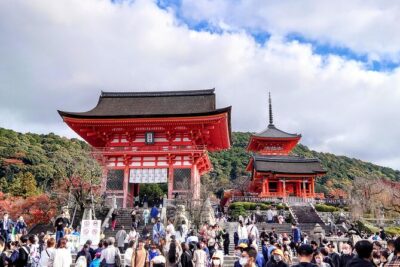
- PERFECT KYOTO 1-Day Bus Tour
★ 5.0 · 13,518 reviews - Kyoto: Fushimi Inari, Kinkakuji, Bamboo Grove 1 Day Bus Tour
★ 4.8 · 4,316 reviews - Kyoto: Tea Ceremony in a Traditional Tea House in Kiyomizu
★ 4.9 · 3,519 reviews
Meeting at Kawabatacho, ending near Yasaka Kamimachi
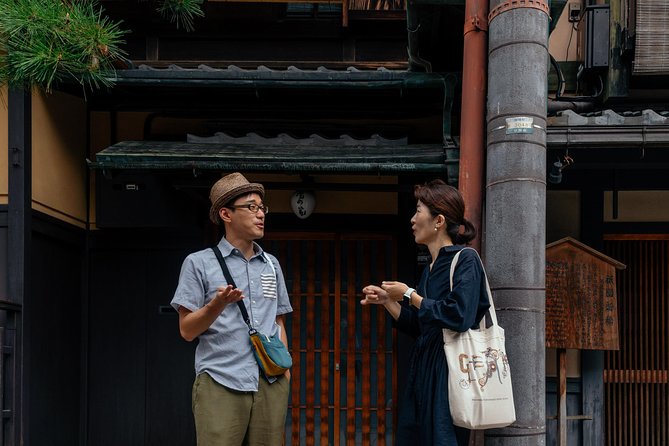
You begin at Kawabatacho in Higashiyama Ward, then finish around Yasaka Kamimachi. Practically, this is convenient for sightseeing on the east side of Kyoto, where Gion and the big shrine areas cluster.
Because there is no hotel pickup or drop-off, you will want to do a quick transit check before you go. The start and end points are still walkable to other sights in the area, so once you orient yourself, you can keep exploring without relying on a car.
The route starts with performance roots: Izumo no Okuni
Your first stop is the Statue of Izumo no Okuni, described as the originator of kabuki theater. This matters because it gives you a performance lens before you even hit the geisha district.
Instead of arriving at Gion and only thinking about entertainment as a modern concept, you start with the historical roots of theatrical culture. Even if you know nothing about kabuki, the guide framing helps you connect performance traditions across centuries.
Time here is short, about 20 minutes, and the admission is free. That makes it a clean opener, especially if you want a strong first impression without dragging through a single site for too long.
Minamiza Theatre: Edo-era stage heritage, not just a building
Next is Minamiza Theatre, with roots traced to the early Edo period (1596 to 1615). For me, that date range is the kind of detail that makes Kyoto feel less like a collection of postcard stops and more like a living timeline.
At around 20 minutes and free entry, this stop works best as a reset. You get a sense of how stage culture developed in the same broader historical era that shaped the neighborhoods you will walk through afterward.
Same corner of Japan, a different kind of day:
- Kyoto Geisha Walking Tour: Gion District & Hidden Gems
★ 4.7 · 3,273 reviews - Kyoto: Tea Ceremony Ju-An at Jotokuji Temple
★ 4.9 · 3,207 reviews - Kyoto: Gion Magical Night Walking Tour with Geisha Trivia
★ 4.9 · 2,393 reviews - Kyoto: 45-Minute Tea Ceremony Lesson Experience
★ 4.3 · 2,378 reviews
Gion and Shinbashi: preservation rules you can actually see
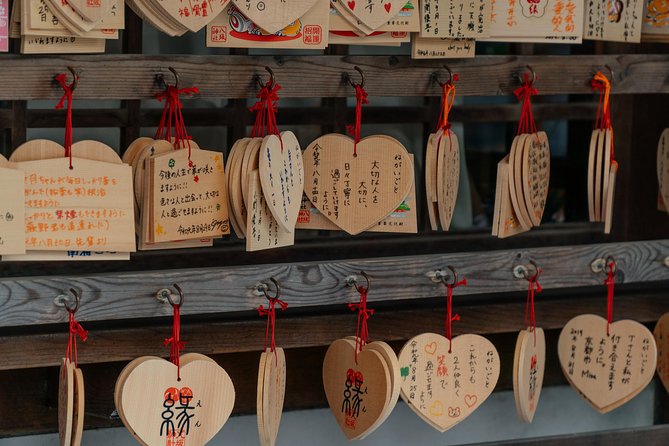
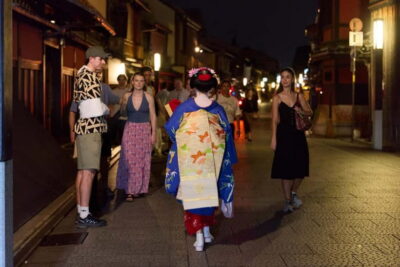
Gion is where the tour name makes sense. You spend time around the Gion Shinbashi area and learn how parts of the district are designated for preservation. Specifically, Gion Shinbashi is listed as a traditional business preservation area, while the area south of Shijo Street is a historical scenery preservation area.
What this means for you on the ground is simple: the streets and structures are not just decorative. They are part of a protective framework that helps maintain the look and feel of traditional Kyoto. When a guide points out this kind of planning, you stop seeing everything as random old architecture.
You also get a focused look at the street level where geisha would have entertained customers. Shinbashi Dori is your moment for that context. It is short, about 10 minutes, but it sets up what you might notice later, from traditional banquet building styles to the overall atmosphere of the area.
Tatsumi Daimyojin Shrine: where Shinto and Buddhism meet
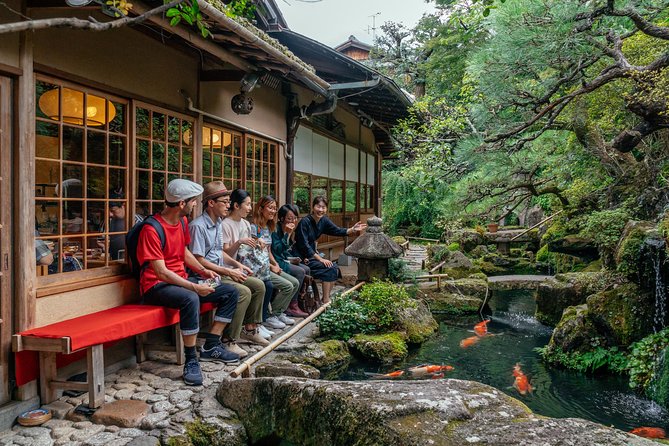
Then you hit Tatsumi Daimyojin Shrine, described as a mixture of Shinto and Buddhism. Kyoto is not one religion with one set of rules, it is a practical overlap you can spot in sites like this.
The tour gives you time for 20 minutes at the shrine, and admission is free. A shrine stop like this is a good change of pace from the more entertainment-focused Gion streets. It also deepens your understanding so the temple and shrine hopping later feels intentional, not like random walking.
Chion-in steps and gardens: a calmer, visual pause
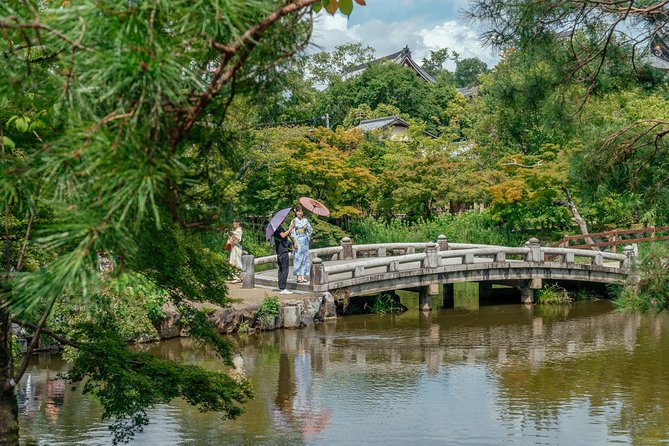
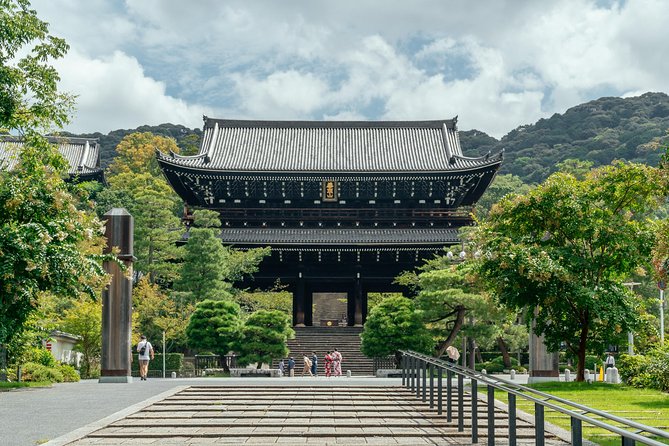
Chion-in Temple is next, with a practical detail that helps you enjoy it: walk up the steps for a better view, plus time to see the garden area.
This is one of those stops where the value is partly movement. If you stay at the bottom, you might miss what the site is trying to show. With a guide pointing you toward the right vantage and keeping the timing realistic, you get more “I get it” moments.
It is only about 10 minutes here and free admission, so treat it like a short visual break rather than a full temple day.
Maruyama Park: stretching your legs between major icons
After Chion-in, you walk toward Maruyama Park, with about 20 minutes allotted. This stop is about flow and breathing room.
Parks are not just downtime in Kyoto. Maruyama Park connects your temple and shrine experiences with the everyday city. If you want to step back from carved stone and focused rituals for a bit, this is the place to do it.
Yasaka Shrine: legendary depth plus sweeping views
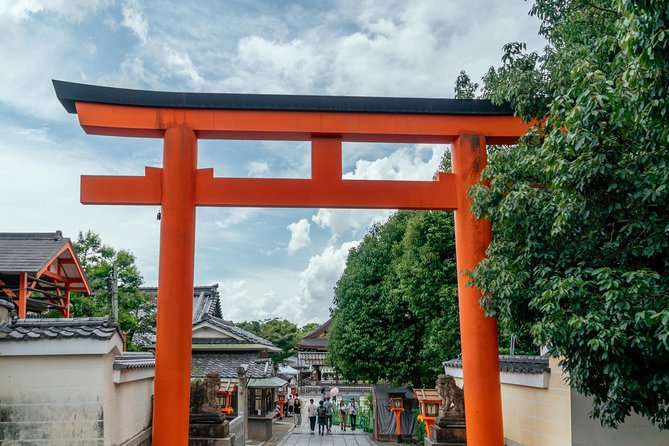
You visit Yasaka Shrine as a highlight, then pass through the shrine area again at the end. The tour shares a legend with history possibly going back to the era before the Heian period, dated around AC656 in the reign of Emperor Seimei. Even if you treat legends as stories rather than a documented timeline, they still matter. They explain why a place feels important to locals.
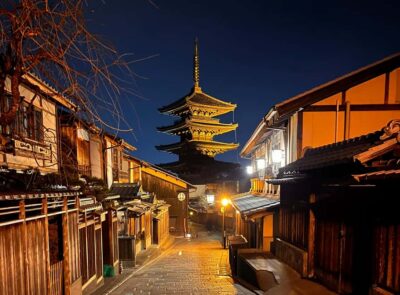
You also get a second Yasaka Shrine-related stop framed around a picturesque five-story Buddhist pagoda temple, with sweeping views from the top. That detail is the kind of payoff you want when you are only in Kyoto for a short window.
Shijo Dori: walking a street that points back to Heian-kyō
Next is Shijo Dori, described as the Fourth Avenue of Heian-kyō, the ancient capital. This kind of explanation changes how you read the city.
Instead of seeing a street as just a route from A to B, you see it as a line that connects to how Kyoto was planned centuries ago. When you combine this with Gion’s preservation context earlier, you start to understand that Kyoto is built on layers of intentional design.
This part is quick, about 10 minutes, and free admission. The short timing keeps it from turning into a long lecture while still giving you something real to take away.
Nene-no-Michi: a street named after Nene and a 1605 connection
You then walk to Nene-no-Michi, connected to Kodaiji Temple being built in 1605 at the behest of Nene, and the street later taking its name. This stop gives you a specific human anchor, not just an era label.
It is about 10 minutes and free entry, so it fits well as a bridge between bigger shrine moments. I like these named-street stops because they make your memory of the route more vivid. You will remember “Nene-no-Michi” more easily than a generic lane.
The pacing style: relaxed walking, lots of room for questions
The experience works because it does not try to cram everything into a sprint. It is a walking tour with moderate physical demands, and the listed stops are short. That combination usually means you are not stuck watching other people struggle through photo lines.
In practice, the guide can also help you avoid the tightest crowd spots. One of the strongest themes from the tour style is respect, not spectacle. The geisha district is not a theme park. Your guide keeps the focus on cultural understanding and etiquette.
Also, the tour format is private, so the guide can adapt the conversation. In at least one group example, the guide handled lots of questions and adjusted the tone for kids, which is a good sign for families who want answers rather than a quiet, adult-only lecture.
Price and value: $135.45 for a guided half-afternoon
At $135.45 per person for roughly 2.5 hours, you are paying for two things: a local host and the time-saving intelligence to connect the dots. You are not buying a long museum ticket marathon.
Here is the value angle that matters:
- You get private time rather than shared group pacing.
- The route uses multiple stops, each listed with free admission, so you mainly pay for guidance and navigation.
- You get cultural context that would take you longer to assemble on your own, especially if you want to understand Shinto and Buddhism differences while still enjoying the geisha district streets.
One small budgeting note: food and beverages are not included. Plan a snack or treat before or after, and treat this tour like the “thinking and walking” portion of your day.
What is included, what is not
Included:
- Private tour for your group
- Local guide
- Carbon neutral experience
- Mobile ticket
- Group discounts (when applicable)
Not included:
- Hotel pickup and drop-off
- Food and beverages not listed as inclusions
That last line matters because it shapes your schedule. Since you start and end in the Higashiyama area, you can usually grab something nearby, but you should not count on a meal being part of the tour.
Practical tips so you enjoy every stop
Wear shoes you trust. This is a walk between multiple locations, with steps included at at least one temple stop. If you have moderate mobility limits, plan the day so you are not wiped out before the tour begins.
Bring a charged phone. The tour uses a mobile ticket, and your map use will help if you want extra time to confirm the next turn before the guide leads you onward.
Finally, keep your expectations straight. This is not a “meet a geisha” promise. It is a culture-focused walk that explains the world around Gion and the traditions connected to the shrines and temples you pass.
Who should book this Kyoto treasuries tour
This tour is a good fit if:
- You are short on time and want a compact Kyoto plan around Gion and nearby icons
- You care about understanding traditions, especially the Shinto and Buddhism overlap
- You prefer private, question-friendly pacing over group hustle
- Your group enjoys walking and short stops instead of long museum marathons
It may be less ideal if:
- You want a long, slow temple deep-dive with long ticketed entries
- You need hotel pickup to make your day work logistically
- You dislike stepping up to viewpoints, even briefly
Should you book this Kyoto Treasures of Geishas and Traditions private tour?
I think you should book it if you want the Gion area explained with care and context, and you like the idea of a focused 2.5-hour route made for efficient sightseeing. The combination of a private local host, free admission at the listed stops, and a route that connects performance roots, shrine beliefs, and Gion streets is a strong value mix.
If you are the type who hates wasting time figuring out what to look at, this is built for you. If you want a low-stress afternoon where you leave with real understanding rather than just photos, this tour is an easy yes.
FAQ
How long is the Treasures of Kyoto: Geishas & Traditions private tour?
It lasts about 2 hours 30 minutes.
Is this tour private or shared?
It is a private tour, exclusively for your party.
Where does the tour start and end?
It starts at Kawabatacho, Higashiyama Ward, Kyoto and ends at Yasaka Kamimachi, Higashiyama Ward, Kyoto (near Yasaka no To temple).
What is included in the price?
The private tour includes a local guide, and it is described as carbon neutral. A mobile ticket is also used.
Are any of the stops free to enter?
The itinerary lists free admission and free tickets for each stop.
What is the cancellation policy?
You can cancel for a full refund up to 24 hours before the experience’s start time.
Fresh options around Kyoto
- Kyoto Aquarium Admission Ticket★ 4.7 · 12 reviews
- Kyoto Gion Photoshoot – Private Session | Pro Photographer★ 5.0 · 12 reviews
- Gyoza Cooking Class in Kyoto: Traditional Japanese Dumplings★ 5.0 · 12 reviews
- Kyoto: Guided Food Tour with 12 Dishes & 3 Drinks★ 5.0 · 12 reviews
- Kyoto: Avoid the Crowds at the Hidden Gems of Arashiyama★ 4.9 · 13 reviews
- Kyoto Early Bird English Tour: Gion & Higashiyama(Private opt)★ 5.0 · 13 reviews
- Otsu-e Folk Art Workshop & Local Culture Walk Near Kyoto★ 5.0 · 13 reviews
- Kyoto, Osaka, Nara Full Day tour by Car English speaking Driver★ 3.5 · 13 reviews
Kyoto Tours, compared.
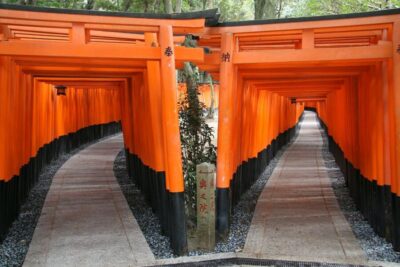
Fushimi Inari, Kinkakuji, Bamboo Grove 1 Day Bus Tour
Read our review →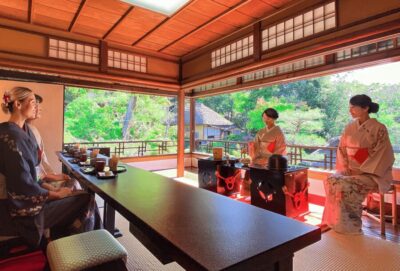
Tea Ceremony in a Traditional Tea House in Kiyomizu
Read our review →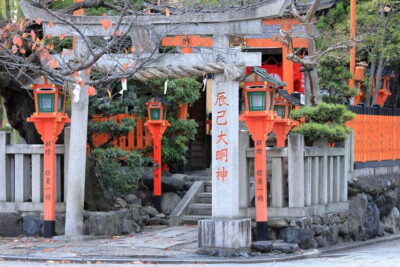
Kyoto Geisha Walking Tour: Gion District & Hidden Gems
Read our review →
Gion Magical Night Walking Tour with Geisha Trivia
Read our review →