
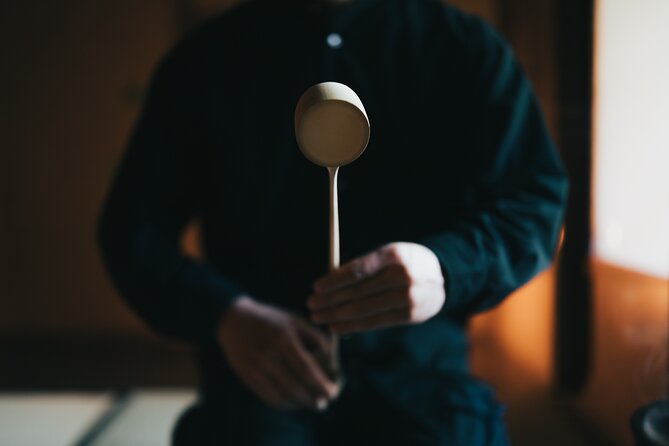
Reviewed · TEA CEREMONIES IN KYOTO
Oboro | Mindful Tea Ceremony in a 100-Year-Old Kyoto Teahouse
Kyoto slows you down best in silence. This tea ceremony pairs candlelit atmosphere with a hands-on look at how matcha gets made, step by careful step.
I really like two things about Oboro: the small group size (max 8) and the fact that an English-speaking guide translates so you can actually follow what is happening. One trade-off to plan for: it is only about 50 minutes, so if you want a long, classroom-style session, this may feel brief.
Key Points at a Glance
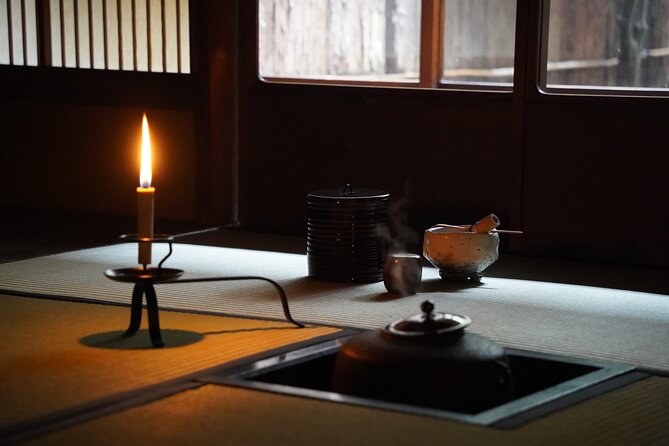
- 100-year-old Kyoto teahouse setting with a minimalist, quiet room that feels far from a restaurant
- Matcha prepared for you with utensil cleaning and careful, one-bowl-at-a-time service
- English translation included, so you can focus on the ritual instead of guessing
- Max 8 travelers for an unhurried, easy-to-watch experience
- Candlelit pacing plus welcome sweets, then a small handmade candle to take home
A Candlelit Kyoto Teahouse Where “Mindful” Actually Feels Real
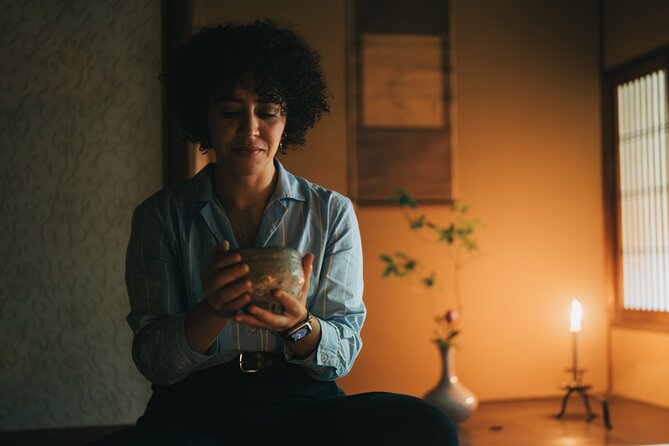
This is the kind of Kyoto experience that works because it asks you to slow down on purpose. You do not wander around looking at things. You sit, watch, taste, and pay attention. The setting helps a lot: the ceremony happens in a calm, minimally decorated space inside a 100-year-old teahouse, with the lighting coming from handmade candles.
What I find especially good for first-timers is the tone. It is not performed like a formal show where you feel awkward. The vibe is quiet respect and gentle guidance. That matters, because tea ceremonies can feel intimidating if you think you must already know every etiquette rule. Here, the focus is on shared quiet and getting your senses online.
The candles do their job too. With flickering light and a low-key soundscape, you naturally stop doing the normal travel thing, which is scanning for your next photo. Instead, you start noticing the details that the ceremony uses on purpose, like warmth from the bowl and the rhythm of preparation.
More Tea Ceremonies in Kyoto
- Kyoto: Tea Ceremony in a Traditional Tea House in Kiyomizu
★ 4.9 · 3,519 reviews - Kyoto: Tea Ceremony Ju-An at Jotokuji Temple
★ 4.9 · 3,207 reviews - Kyoto: 45-Minute Tea Ceremony Lesson Experience
★ 4.3 · 2,378 reviews
The 50-Minute Flow: Welcome Tea and Matcha, One Bowl at a Time
The whole experience runs about 50 minutes, and it moves in a simple sequence that makes it easy to stay present. When you arrive, you are guided into a softly lit space. Expect minimal décor and a calm atmosphere where you can hear the small sounds that belong to the process.
You start with a welcome tea and sweets. This is not just a snack break. It acts like a warm-up for your senses, so when the matcha begins, you are ready to notice subtle flavor changes instead of treating it like a quick drink.
After that, the ceremony transitions to the tearoom portion. This is when you see the practical side of the ritual, not just the final sip. The host cleans and prepares the utensils carefully before whisking matcha. Then comes the star: a rare organic green tea, served one bowl at a time.
That one-bowl-at-a-time pacing is a big part of why the ceremony feels thoughtful. You are not rushed to finish and move on. You taste, you hold the bowl, and you get guided attention on things like:
- the warmth you feel in your hands
- the way the whisking and pouring changes the experience
- the calm you notice as the lighting and breathing slow down
If you are the type who worries you will not understand what you are seeing, the English-speaking guide helps a lot. You are not just watching motions. You can follow why each step exists.
The session ends with a small handmade candle as a token. It is a small thing, but it gives the whole moment a gentle finish instead of leaving you abruptly back in street noise.
Your Host and the English Translation You Actually Need
An experience like this stands or falls on communication. Oboro includes an English-speaking guide, so you are not stuck playing charades through the ceremony.
In practice, this means you can understand what you are being shown and ask questions without fear of slowing anyone down. Many people do not realize how much meaning can hide in the small details of a tea ritual. When the guide translates, those details click into place.
You might encounter different staff names depending on the session. Taku Okamoto is the provider, and reviews also mention hosts such as Taku, and guidance from people named Naoki and Ryoko. Whoever leads your session, the key is the same: you get a human explanation, not just a silent demonstration.
Also, the guide translation makes this much easier if you are traveling with non-Japanese speakers in your group. You can all be present together, listening and tasting at the same time instead of splitting up into different experiences.
Why Max 8 Travelers Changes Everything
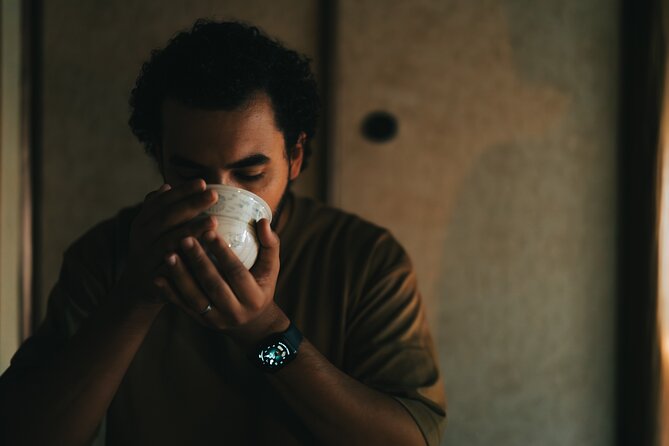
At many tourism stops, you get a great show and a crowded room. Here, the limit is 8 travelers maximum, and it shows immediately in how the ceremony feels.
Small group size helps you in three real ways:
- You see the utensil work clearly, not from over shoulders.
- The host can pause, answer questions, and guide your attention.
- The quiet room stays quiet because you are not fighting for space.
This is one of those experiences where privacy adds quality. When you are not jostling for position, you can actually notice what makes the tea preparation special, including the slower movements that would look repetitive in a big, fast group.
If you are the kind of traveler who likes structured cultural activities but hates feeling herded, this is a strong match. And if you are in Kyoto for only a short time, it is a compact way to get culture without adding a long travel shuffle between stops.
Same corner of Japan, a different kind of day:
- PERFECT KYOTO 1-Day Bus Tour
★ 5.0 · 13,518 reviews - Kyoto: Fushimi Inari, Kinkakuji, Bamboo Grove 1 Day Bus Tour
★ 4.8 · 4,316 reviews - Kyoto Geisha Walking Tour: Gion District & Hidden Gems
★ 4.7 · 3,273 reviews - Kyoto: Gion Magical Night Walking Tour with Geisha Trivia
★ 4.9 · 2,393 reviews
Matcha Preparation: The Sensory Details You Can Notice Right Away
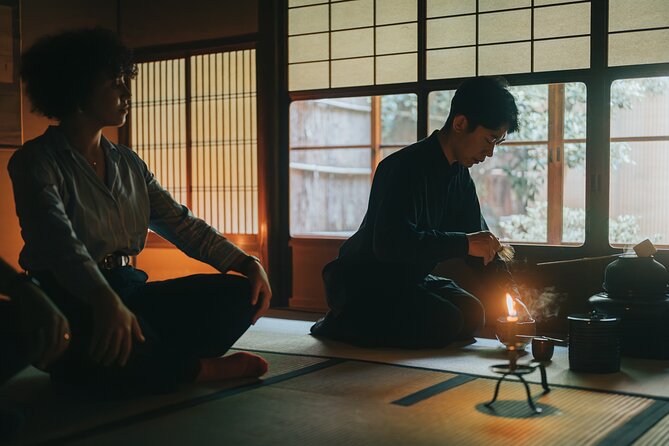
You do not need prior matcha knowledge to enjoy this. In fact, if you have never tried a proper ceremonial bowl, this is a great place to start because you get the process and the tasting together.
Here is what is special about the way matcha is presented in this kind of ceremony:
- Utensils get prepared on purpose
The host cleans and prepares everything before whisking. Watching that step teaches you not to treat matcha as a quick coffee substitute. It is closer to a ritual of readiness.
- The whisking matters
You see matcha whisked carefully, and you get a bowl that is made fresh for you. That helps the taste feel more intentional and less like a drink that has been sitting around.
- You taste slowly on cue
You get invited to notice subtle flavors, not just swallow it quickly. The candlelit setting nudges you into a slower rhythm, which makes the taste and aroma feel more distinct.
- One bowl at a time keeps your attention focused
Serving each person individually helps you avoid the common problem of a group ceremony where you are waiting your turn. You stay present in your own bowl, then move to the next step calmly.
One small note: this is definitely less about coffee-shop flavor variety and more about experiencing matcha as a process. If you dislike green tea or bitterness, you might want to consider whether matcha flavors fit your taste. But if you are curious, the guided tasting helps you approach it in a way that feels less risky.
Is $45.98 Good Value for a Tea Ceremony? Here’s How I’d Judge It
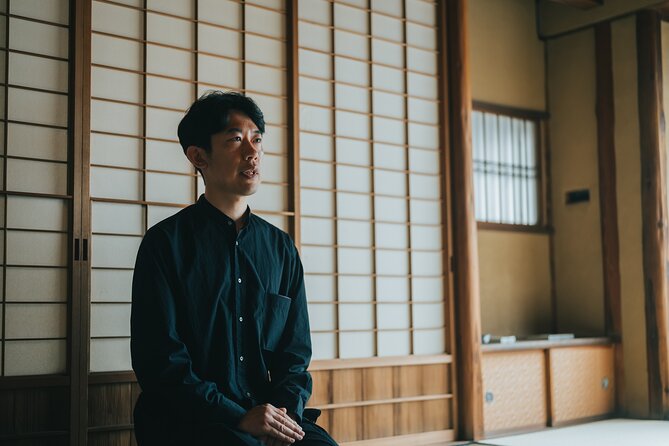
At $45.98 per person for about 50 minutes, you are paying for three things: a calm, historical setting, expert guidance in English, and a small group that protects the experience from crowd energy.
If you compare it to grab-and-go matcha in a café, the price is higher, no question. But this is not just a drink. You are getting:
- utensil preparation shown to you carefully
- a guided explanation with translation
- time to taste and slow down without the pressure of a public space
- a candlelit atmosphere inside a 100-year-old teahouse
That combination is what justifies the cost for many visitors. You end up with a cultural experience that feels personal, not transactional.
Also, the “max 8 travelers” piece is quietly part of the value. You are not paying extra just to sit in a fancy room. You are paying for attention, clarity, and time.
Included in the price is coffee and/or tea (plus the English guide). Tips are not included, so you should factor that into your planning if you like to tip in Japan.
Timing, Weather, and the One Rule That Can Catch You Off Guard
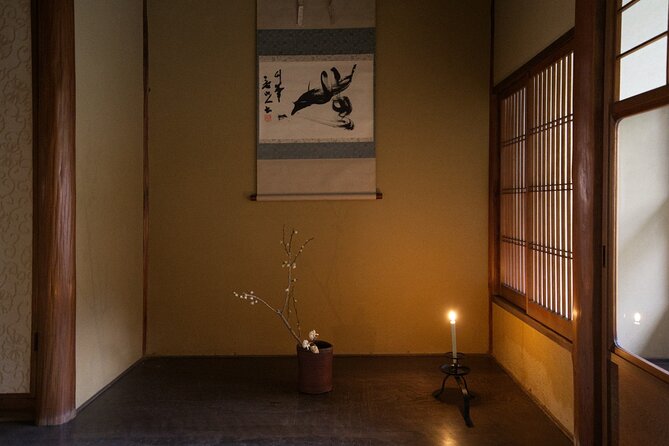
This experience is flexible for many schedules, but it has a couple of practical constraints.
First, you need to be punctual. You cannot join if it is more than 10 minutes past the start time. That sounds strict, but it makes sense for a tea ritual that runs on a set rhythm. If you want less stress, build buffer time into your Kyoto walking plan and avoid rushing at the last minute.
Second, the experience requires good weather. If it is canceled due to poor weather, you are offered a different date or a full refund. So if you are visiting Kyoto during a stormy stretch, keep an eye on forecasts and keep your day flexible.
Finally, the activity uses a mobile ticket, which is convenient. You just need to make sure you can access it easily when you arrive.
Where You Go in Kyoto and What That Means for Your Day Plan
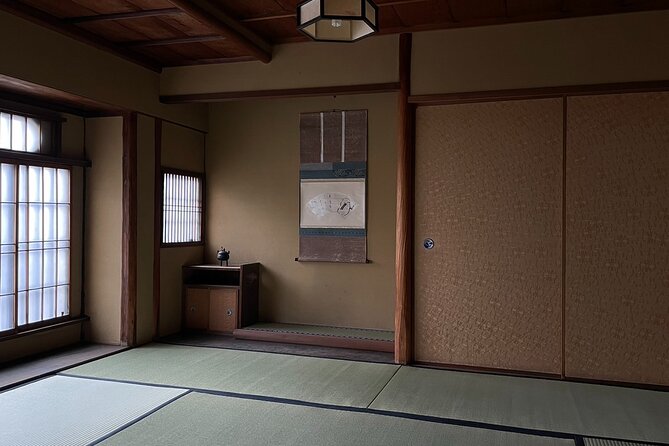
The meeting point is at 237 Nakaogawachō, Kamigyo Ward, Kyoto, 602-0053, Japan. It is listed as near public transportation, which is exactly what you want for something like this. Tea ceremonies work best when you are not also dealing with a long last-mile hike through unfamiliar streets while you are trying to stay calm and on time.
The session ends back at the meeting point.
In your itinerary, this fits well as a contrast to louder Kyoto activities. After temples with lots of foot traffic, this is a good reset. It also works well earlier in the day if you want a calm cultural anchor before you switch gears to busier sights.
If you are short on time, the 50-minute length is a plus. You can keep your day moving without feeling like you lost half of it to one activity.
Who Should Book Oboro, and Who Might Skip It
I think this is a great fit if:
- you want a true Kyoto cultural moment that feels quiet and intentional
- you are curious about matcha but want guidance on how to experience it
- you prefer smaller groups and hate crowded tours
- you are traveling with people who do not speak Japanese and still want a shared experience
- you like the idea of learning rituals through observation and tasting, not a worksheet or lecture
I would consider skipping if:
- you want a long, deep class session with extended time for practice
- you dislike matcha flavor profiles and do not want to taste it even once
- you are the type who often runs late, because the 10-minute cutoff is firm
Should You Book This Tea Ceremony in Kyoto?
If you want a calm break from Kyoto noise, this is an easy yes. The combination of a candlelit 100-year-old teahouse, a max 8 group, and English translation turns matcha into something you can actually understand and enjoy. It also has a practical rhythm, so you are not left wondering what happens next.
I would book it if matcha or mindfulness culture interests you at all, especially if it is your first time. And if you are already a matcha fan, watching the full preparation and tasting one bowl carefully can feel like a more meaningful step than ordering off a menu.
Just do one thing to make the most of it: plan to arrive early enough to avoid the late rule. When you walk in calm, the ceremony stays calm, and you get the point of it.
FAQ
How long is the Oboro tea ceremony?
It runs about 50 minutes (approx.).
Is there an English-speaking guide during the ceremony?
Yes. An English-speaking guide is included, and they translate for you during the experience.
What group size should I expect?
The experience has a maximum of 8 travelers.
What is included in the price?
Included is coffee and/or tea, plus an English speaking guide.
What if I arrive late?
You need to arrive on time, because you cannot participate if it is more than 10 minutes after the start time.
Does weather affect the experience?
Yes. It requires good weather. If it is canceled due to poor weather, you are offered a different date or a full refund.
Fresh options around Kyoto
- Kyoto: Quiet and Graceful Tea Ceremony★ 4.5 · 19 reviews
- Ikebana Traditional Japanese Art of Flower Arranging★ 4.5 · 19 reviews
- Kyoto Satoyama Cycling with Lunch and English Guide★ 5.0 · 19 reviews
- Kyoto International Party Solo Friendly Expats and Locals★ 5.0 · 19 reviews
- Tea Ceremony Experience in Traditional Kyoto Townhouse★ 5.0 · 19 reviews
- Kyoto: Amanohashidate Ine Funaya Tour★ 4.4 · 19 reviews
- Kyoto Private Food Tours with a Local Foodie: 100% Personalized★ 4.5 · 19 reviews
- Kyoto Private Car Tour with Japanese Navigator (+Nara) T5★ 4.7 · 19 reviews
Tea Ceremonies in Kyoto, compared.
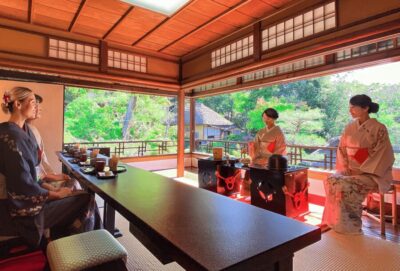
Tea Ceremony in a Traditional Tea House in Kiyomizu
Read our review →
Arashiyama Bamboo Forest, Monkeys, Matcha & Temple Tour
Read our review →
Tea Museum Tickets and Matcha Grinding Experience
Read our review →
Browse the lists this tour appears in