
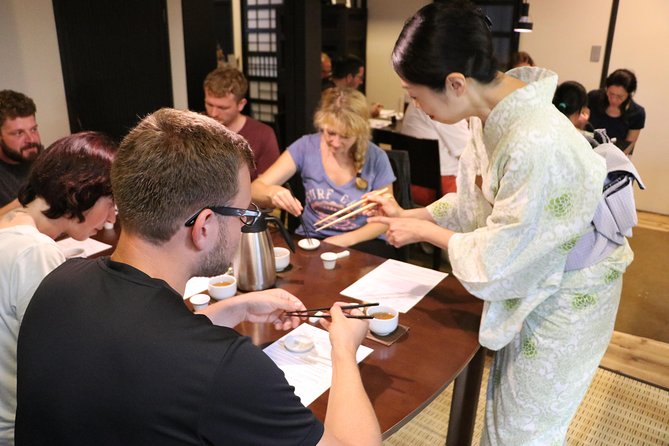
Reviewed · COOKING CLASSES
Sushi – Authentic Japanese Cooking Class – the best souvenir from Kyoto!
Sushi class in Kyoto that feels like home. At Roujiya, Kaori guides a small-group session where you learn sushi etiquette and make sushi, soup, and pickled ginger. I love how hands-on it is, and I love that you leave with recipes plus an aperitif and Japanese green tea. One possible drawback: you should show up ready to cook, because this is not a sit-and-watch experience.
In about two hours, you go from table manners to real sushi technique, with plenty of English instruction along the way. I also like that the food lessons connect to flavor basics like umami, not just steps you copy. If you are hoping for hotel pickup or a super-structured classroom lecture, you might find it a little more “host in her kitchen” than “tour bus cooking show.”
Key Points Before You Go
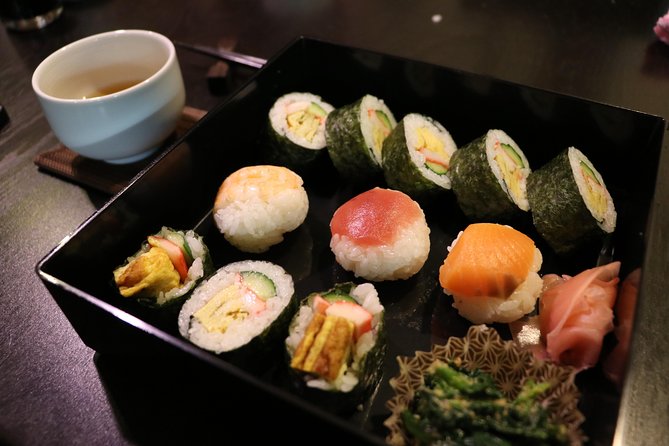
- Small-group pace with a maximum of 12 people, so you can actually keep up while rolling and seasoning.
- Sushi etiquette lessons alongside the cooking, so you know what to do with chopsticks, plates, and timing.
- Dashi soup and pickled ginger so you learn more than just rolling maki.
- English-speaking instruction and recipes to take home, which makes the class work as a real souvenir.
- Tea and an aperitif included, with optional add-ons like sake or beer sometimes offered after you finish.
Why Roujiya Sushi Cooking Feels Special in Kyoto
Kyoto has plenty of places to eat sushi. This experience adds the missing piece: learning the craft and the manners that go with it. Roujiya is run like a host welcomes you into her home kitchen, and that changes the vibe fast. You are not stuck behind a glass screen, and you are not competing for attention.
Kaori leads the class, and you can feel the “guide” part right away. You get a focused intro to Japanese table manners, then you start cooking. That order matters. If you roll sushi without understanding how it is meant to be eaten, you miss half the point. This class gives you that context while you still have your hands clean enough to work.
The included meal is part of the value too. You do not just make food and walk away. You make dishes, sit down, and eat what you made. That matters because sushi is all about balance, and it is easier to understand balance when your first bite comes right after the steps that created it.
More Cooking Classes in Kyoto
- Ramen Cooking Class at Ramen Factory in Kyoto
★ 5.0 · 1,937 reviews - Kyoto: Ramen Cooking Class at a Ramen Factory with Souvenir
★ 4.9 · 532 reviews - Kyoto: Ramen, Gyoza, and Onigiri Cooking Class
★ 5.0 · 445 reviews
Getting There, Timing, and What the 2 Hours Really Includes
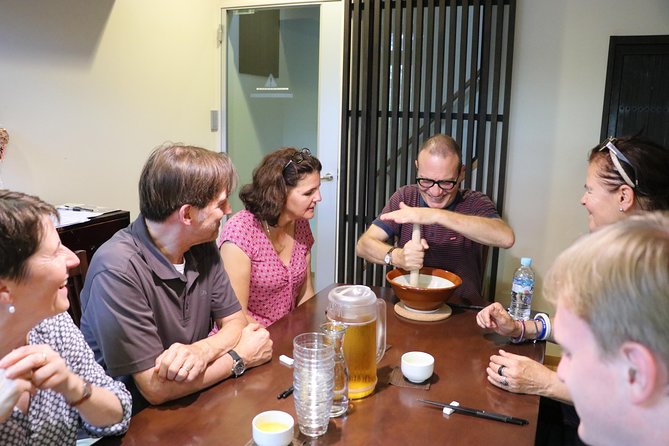
The class starts at 11:30 am and runs about two hours. You meet at Roujiya, located at 22-58 Nishinokyō Ikenouchichō, Nakagyo Ward, Kyoto. The activity is near public transportation, so you can keep this simple on your itinerary.
You use a mobile ticket, and the course is designed for a small group, with a maximum of 12 travelers. No hotel pickup or drop-off is included, so plan to arrive on your own. This is normal for Kyoto, but it does mean you should give yourself a little breathing room if your schedule is tight.
Kyoto address navigation can be tricky. If your confirmation message includes a map pin, I strongly suggest using that instead of relying only on the text address. The one “gotcha” that can slow people down is finding the exact location, not the class itself.
Once you arrive, the session typically flows like this:
- You settle in and start with Japanese green tea and an aperitif.
- You get guidance on table manners and the idea behind flavor.
- You move into hands-on cooking: sushi rice, soup, and pickled ginger.
- You assemble your sushi, then you eat your creations.
This “cook, eat, learn” rhythm is what turns sushi-making from trivia into a souvenir you will actually use.
The Hands-On Sushi Rice Lesson That Makes the Difference
Sushi rice is where most home attempts go wrong. Either the rice is too dry, too sticky, or the seasoning tastes off. In this class, you learn the steps that get you close to what sushi chefs aim for, and you learn it while you are doing it, not reading about it.
You start by making sushi rice with Kaori’s instructions, and you also get the reasoning behind the process. One practical detail I love here is the emphasis on handling and cooling the rice correctly. You might even hear why people fan sushi rice, because cooling and seasoning affect texture and how the grains cling together.
The cooking method is only half the skill. The other half is timing. Sushi rice needs to be ready when you are ready to assemble. The class naturally teaches that because everything is built into the two-hour schedule. You do not end up with a pot of rice that is either rushed or finished too early.
Also, you learn what to pay attention to while you shape. That includes how to handle sushi tools and portions, and how to keep your work neat. Even if you are not a confident cook, you get feedback as you go, which is the best way to learn sushi without guessing.
Dashi Soup and Umami: The Flavor Lesson Before You Roll
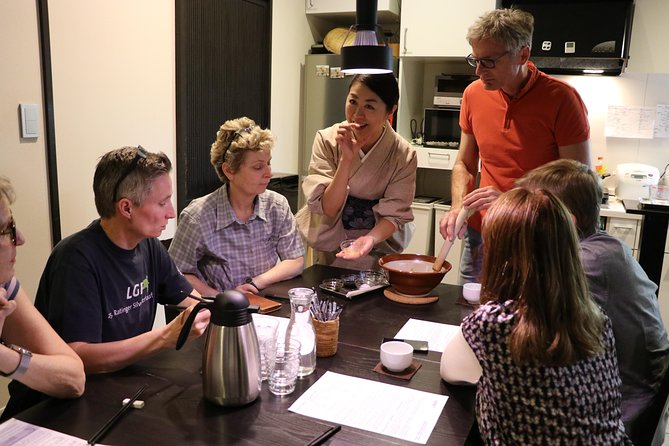
Sushi tastes simple until you pay attention. The magic is in underlying flavor, especially umami, and dashi is the backbone. In this class, you make Japanese soup, including dashi, and Kaori explains what makes it work.
You do not need to become a food scientist, but you do need the basics. Dashi is built from ingredients like seaweed and bonito-type flavors, and you learn how that becomes a savory broth rather than just a salty liquid. You also learn how umami shows up in Japanese cooking, which helps you understand why certain pairings feel natural.
This part of the class is not a side quest. It trains your palate. After you taste soup that is built for umami, you get an easier time understanding why sushi tastes balanced, not just fishy or just vinegary.
There is also something confidence-building about cooking soup early in the experience. It gives you a win before you tackle rolling. By the time you are shaping sushi, you already have proof you can follow steps and produce something delicious.
More Sushi Making Classes in Kyoto
- Sushi Making in Kyoto! Same-day bookings welcome!
★ 5.0 · 713 reviews - The Original Small-Group Sushi Making Class in Kyoto
★ 5.0 · 436 reviews - Kyoto: Small-Group Authentic Sushi Making Workshop
★ 5.0 · 137 reviews - Private Kyoto Sushi Cooking Class & Tea Ceremony with Emika
★ 5.0 · 66 reviews
Pickled Ginger and Manners You Can Use the Next Time You Eat Sushi
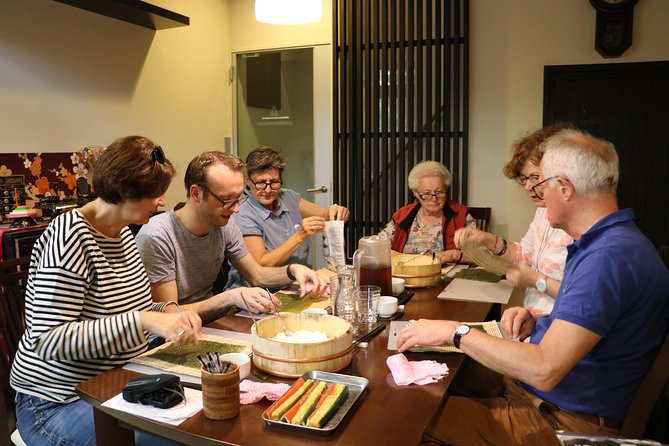
Pickled ginger (often served alongside sushi) is not just decoration. It is part of the dining flow, meant to reset your palate between bites. In this class, you learn how to prepare it, which is useful if you like the way it changes the flavor rhythm of a meal.
Then comes one of the most valuable parts of the whole experience: Japanese table manners. Many cooking classes stop at recipes. This one goes further and helps you navigate etiquette around sushi dining. That includes practical behavior, like how to approach eating and handling utensils in a way that fits Japanese style.
This matters for two reasons. First, it helps your next sushi meal feel more natural. Second, it gives you respect for the food culture instead of treating sushi like “just another dish.” Learning manners can feel abstract, but it becomes easy when it is taught right before you eat.
If you are traveling with family, you may also appreciate the supportive pacing. The group stays manageable, and instructions are in English, which helps everyone follow without getting lost.
Cultural Context While You Eat, Not Before You Burn the Rice
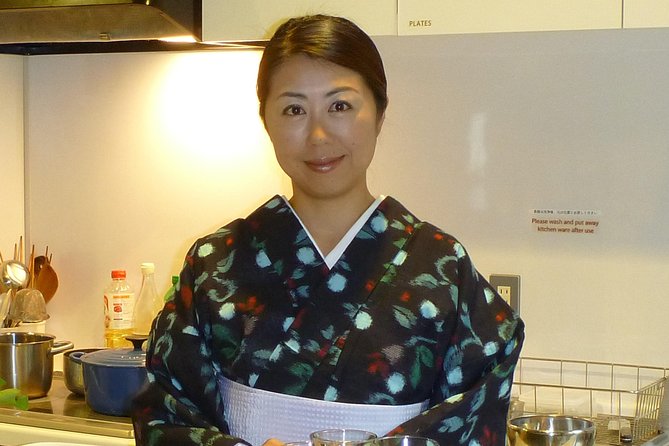
Kaori shares Japanese culinary history while you cook and eat. The key is that it is woven into the meal, not delivered like a long lecture. You will hear explanations that connect directly to what you are making, such as why certain ingredients matter and how umami fits into everyday Japanese cooking.
You also learn the culture behind ingredients and technique. For example, the class is clear about how the “why” behind steps helps you succeed. That is the difference between memorizing and actually learning.
After you assemble your sushi and finish the soup experience, you get to eat what you made. It is satisfying in a very real way, because you taste the result while the steps are still fresh in your head. If you love sushi, that part alone justifies the trip. If you are new to sushi, it becomes a fast pathway into understanding what makes a good bite.
One extra note: included drinks cover green tea and an aperitif. You might also find options like sake or beer offered for an extra cost after you finish, depending on the day. If you do not drink alcohol, you can still plan around the included tea and aperitif without stress.
Price and Value: What You Get for $72.67 in Kyoto
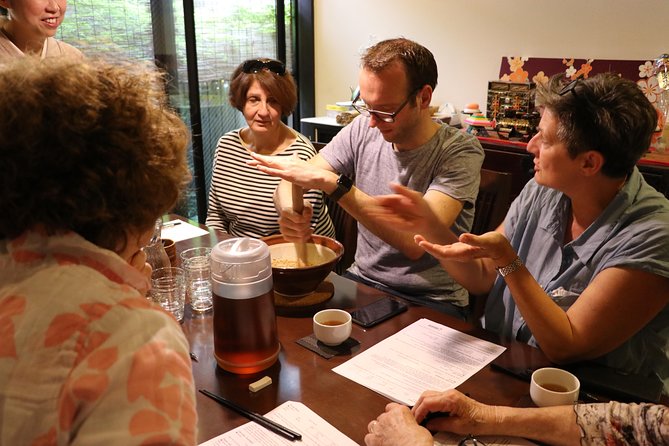
At $72.67 per person, this is not a cheap activity. But you should judge it like a class, not like an attraction ticket. You are paying for:
- hands-on cooking instruction in English
- all ingredients for what you make
- the meal you eat
- recipes you take home
- Japanese green tea and an aperitif
That combination is what makes it feel fair. Many food experiences give you one meal and a few tastings. Here, you get both the meal and the skill transfer. The recipe part is especially valuable because sushi is hard to recreate without guidance. If you only eat once, you remember the taste. If you learn the steps, you can recreate the taste.
The small group size is another value driver. With a maximum of 12, you get more practical attention than you would in a bigger class. You also get better chances to ask questions when something does not feel right.
Where value becomes a concern is if you hate cooking or you want a purely passive experience. This is cooking-focused, with etiquette and culture added on top, not substituted for the actual work.
Who Should Book This Kyoto Sushi Class (and Who Might Skip It)
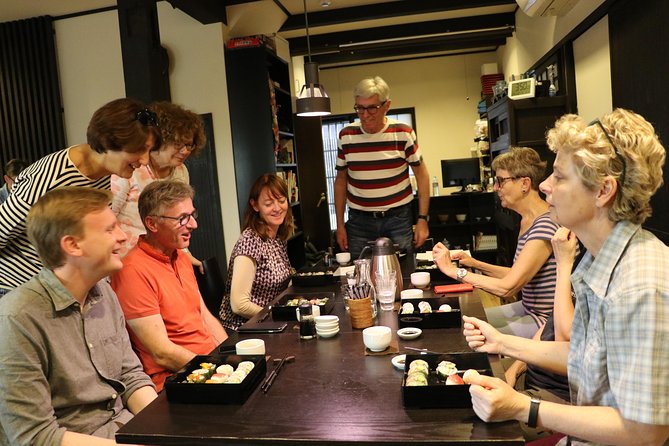
I think this class is ideal if:
- you love sushi and want more than just restaurant eating
- you want a Kyoto souvenir you can recreate at home
- you care about Japanese dining manners, not only the recipe
- you like small-group learning with English support
- you are traveling with others who enjoy hands-on activities
You might skip it if:
- you only want a food tour and do not want to cook
- you are short on time and cannot dedicate the full two hours
- you prefer hotel pickup and a fully guided bus-style route
Should You Book Roujiya Sushi Cooking Class?
Yes, if sushi is a highlight of your trip and you want a skill-based souvenir. This experience is hard to beat because it pairs hands-on sushi making with table etiquette and the flavor logic behind the meal. You will leave full, and you will leave with a practical roadmap for making sushi rice, soup, and pickled ginger again later.
Book it especially if you plan to eat sushi anyway during your Kyoto stay. You will recognize details, appreciate the balance more, and know how to sit down like you belong at the table.
FAQ
How long is the sushi cooking class?
It runs for about 2 hours.
What time does the class start?
The start time is 11:30 am.
Where is the meeting point?
You meet at Roujiya, 22-58 Nishinokyō Ikenouchichō, Nakagyo Ward, Kyoto 604-8375, Japan.
Is the instructor English-speaking?
Yes, the class includes an English-speaking cooking instructor.
What is included in the price?
Your meal, all ingredients, the instructor, recipes, an aperitif, and Japanese green tea are included.
Is hotel pickup and drop-off included?
No, hotel pickup and drop-off are not included.
How many people are in the class?
The class has a maximum of 12 travelers.
Can you handle dietary requirements?
You can advise specific dietary requirements at the time of booking.
What is the class cancellation window for a full refund?
Free cancellation is available up to 24 hours in advance for a full refund.
Fresh options around Kyoto
- Kyoto: Quiet and Graceful Tea Ceremony★ 4.5 · 19 reviews
- Oboro | Mindful Tea Ceremony in a 100-Year-Old Kyoto Teahouse★ 5.0 · 19 reviews
- Ikebana Traditional Japanese Art of Flower Arranging★ 4.5 · 19 reviews
- Kyoto Satoyama Cycling with Lunch and English Guide★ 5.0 · 19 reviews
- Kyoto International Party Solo Friendly Expats and Locals★ 5.0 · 19 reviews
- Tea Ceremony Experience in Traditional Kyoto Townhouse★ 5.0 · 19 reviews
- Kyoto: Amanohashidate Ine Funaya Tour★ 4.4 · 19 reviews
- Kyoto Private Food Tours with a Local Foodie: 100% Personalized★ 4.5 · 19 reviews
Cooking Classes, compared.
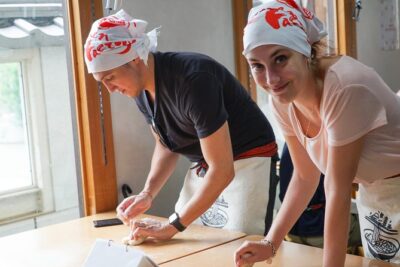
Ramen Cooking Class at Ramen Factory in Kyoto
Read our review →
Ramen & Gyoza Cooking Class in Tokyo with Local Supermarket Visit
Read our review →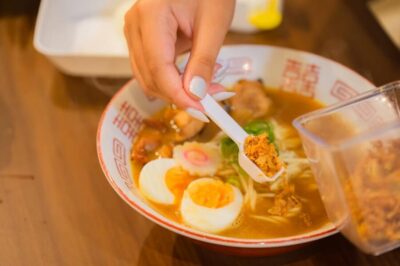
Ramen Cooking Class at a Ramen Factory with Souvenir
Read our review →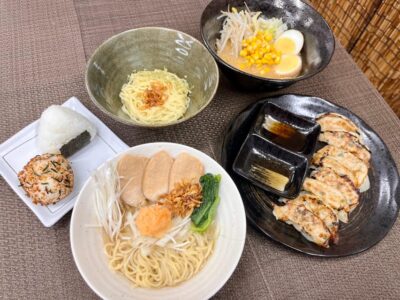
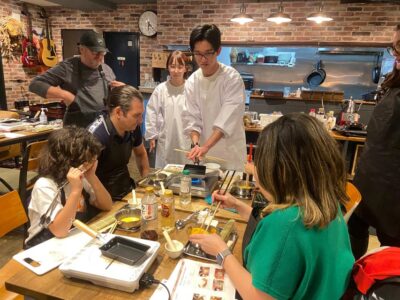
Japanese Washoku Bento Small Group Cooking Class
Read our review →
Easy Ramen Cooking Experience in Kabukicho, Shinjuku
Read our review →
Ramen and Sushi Cooking Class with Sake Pairing Set in Tokyo
Read our review →Browse the lists this tour appears in