
Reviewed · SAMURAI & NINJA EXPERIENCES
Gifu Samurai Sword Town;Japanese Damascus Knife Making Experience
Sharp tradition meets real kitchen results. In Seki, you spend 2.5 hours with hands-on forging and a Knife Museum stop, then test your blade by cutting fresh vegetables. I love how direct and practical the class is, you actually make the knife, not just watch. I love the way the workshop ties craft to daily use, because you finish by seeing how sharp your own knife really is. One consideration: it is a bit off the main tourist grid, so plan your route to Sekitomioka Station so you arrive on time.
You will also learn sharpening fundamentals as part of the process, which is the difference between owning a cool souvenir and owning a tool you can keep for years. The format is small, up to 5 travelers, and the hosts I heard mentioned by name like Hiro, Sumi, and Yoshi tend to keep the vibe relaxed and friendly. If you prefer a very long, slow-paced factory tour, this may feel too short overall for your taste.
Key things to know before you go
- Seki’s knife legacy in one workshop: Seki became a sword-and-cutlery center as far back as the 13th century.
- Knife Museum first, factory second: you start in a log-house museum next to the G.SAKAI factory, then see modern production.
- You build the knife yourself: assembling, polishing, sharpening, and signing your blade happens in the atelier.
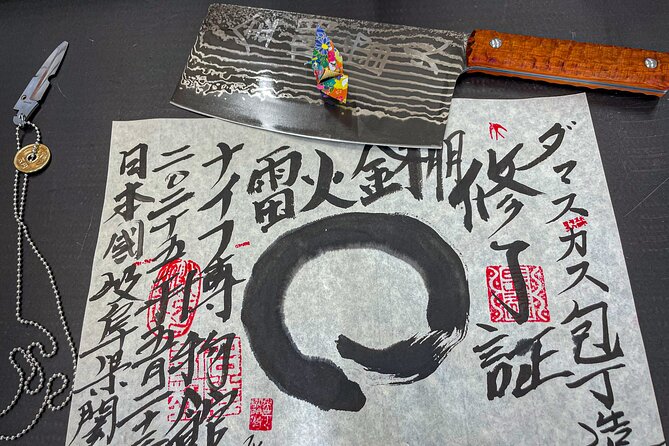
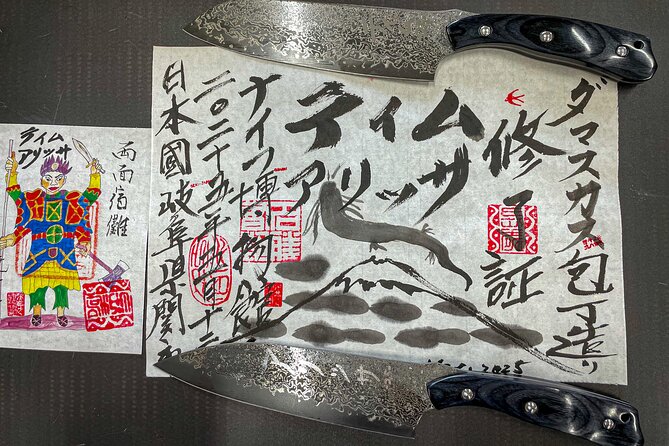
- Three Damascus knife types to choose from: kitchen (Japanese or Chinese) or a folding Damascus hunting knife.
- Hands-on sharpness test: you cut fresh vegetables with your finished knife.
- Small group format: maximum of 5 travelers, with pickup offered and a mobile ticket.
Seki’s sword-town setting: Knife Museum and the local iron story
Seki is one of Japan’s best-known places for swords and cutlery, and the workshop does a smart job of grounding you in that context right away. The area developed into a sword-making center because of local iron sand deposits from the Nagaragawa River, with serious sword and knife production building up by the Edo period.
Before you touch anything sharp, you go to the Knife Museum, located in a Canadian-style log house next to the G.SAKAI factory. This is a nice setup for your brain because it gives you variety in a small space: rare items and cutlery exhibits from around the world. Even if you do not know the difference between every style of steel or pattern, you can still pick up what makes Japanese knives feel different, the craftsmanship, the finishing, and the attention to edge quality.
What I like about this start: it keeps the experience from feeling like a generic “craft class.” You are seeing the craft ecosystem in one place, a museum next to a working factory, which makes the later atelier work feel more meaningful.
A practical note: plan to show up a few minutes early. The meeting point is Sekitomioka Station in Seki, and the workshop starts at 10:30 am, so there is not much slack if you are navigating from the station.
More samurai and ninja experiences in Takayama:
- Ninja Experience in Takayama – Basic Course
★ 5.0 · 62 reviews - Seki: Samurai Knife Making Experience at the Knife Museum
★ 5.0 · 61 reviews - Ninja Experience in Takayama – Basic Course
★ 4.6 · 59 reviews
G.SAKAI factory visit: where modern knife making meets old technique
After the museum, you enter the factory to see how Japanese knives are made today. You are not there for a long, slow wander. The whole experience runs about 2 hours 30 minutes, so this factory time is more like a focused look at production in action than a deep, hour-by-hour documentary.
Still, that short format can be a plus. In a workshop setting, it helps you connect what you see to what you will do yourself in the atelier. When you later handle polishing and sharpening steps, you can mentally map them to the factory process you just watched.
One more thing worth noticing: the tour is designed around quality and modern production, not just romance. Seki has a deep craft reputation, but the factory segment makes it clear that the business is still operating now, with current methods and standards. That matters if you are thinking about value, because you want your finished knife to be built with the same mindset as what professionals use.
Atelier time: assemble, polish, sharpen, and sign your Damascus-style knife
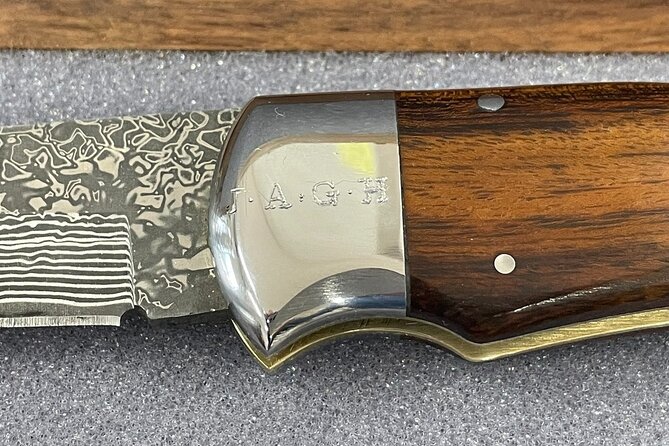
This is the core of the experience. In the atelier, you construct your knife through steps like assembling, polishing, and sharpening. Then you write your name on the knife, which turns the final product into something personal you will actually want to keep.
For most people, the most satisfying part is realizing how much of knife quality comes from the finishing and the edge work, not only the initial look of the blade. The polishing step changes how the knife feels in the hand, and the sharpening step is what you ultimately experience at the cutting board.
You are working under the guidance of skilled craftsmen, and the small group size (max 5 travelers) matters here. It is easier to get corrections and feedback when the workshop is not packed. If you are worried about doing something wrong, this setup usually helps you relax and focus on learning the steps.
Also, expect a “from rough to ready” feeling. You start with a kit and careful guidance, then end with an actual tool. It is one thing to buy a knife. It is another to understand the steps enough that you can maintain the edge later.
Picking your knife type: matching the Damascus style to real cooking
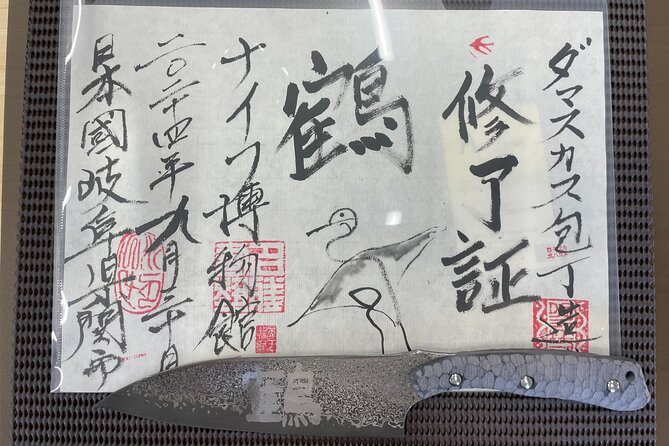
Before you start making, you choose from three distinct knife types. This matters more than it sounds, because the knife you pick affects your day-to-day use once you are back home.
Here are your options:
- Japanese Damascus Kitchen Knife: best for everyday kitchen work.
- Folding Damascus Hunting Knife: a portable option for outdoor enthusiasts.
- Chinese Damascus Kitchen Knife: suited to traditional Chinese cooking techniques.
Prices vary based on the type you choose, so the $250.38 per person figure is best seen as a baseline starting point. If you are price-sensitive, look closely at which knife you want before you decide. If you already know you want a kitchen workhorse, picking a kitchen knife type can give you better day-to-day value than choosing something mainly for novelty or occasional use.
My practical take: choose the knife you will actually pull out of the drawer. If you cook most days, go kitchen. If you do outdoor trips or want something compact, the folding hunting style makes more sense. The workshop gives you ownership plus skills, but the best value is the one that fits your lifestyle.
A few more Takayama days worth comparing
- Kanazawa: World Heritage Shirakawa-go Morning Guided Tour
★ 4.9 · 988 reviews - Kanazawa: World Heritage Shirakawa-go & Two Local Experience
★ 4.9 · 274 reviews - Kanazawa/Takayama: Shirakawago & Takayama Private Day Tour
★ 4.8 · 172 reviews - Departing from Takayama [Regular sightseeing bus] World Heritage Sites Shirakawago and Gokayama Ainokura
★ 4.5 · 137 reviews
Testing the edge: cutting fresh vegetables the fun, honest way
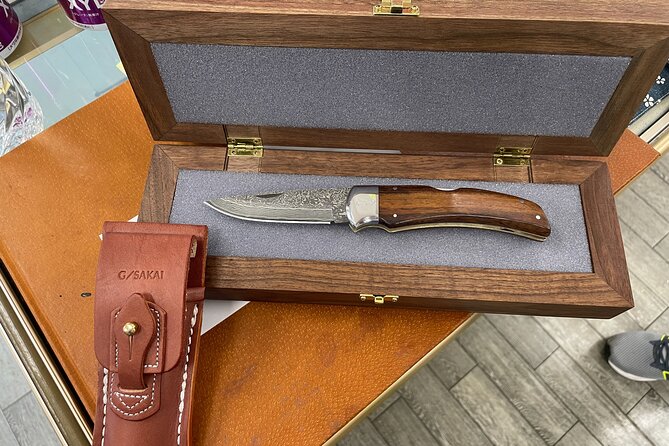
Once your knife is completed, you test sharpness by cutting fresh vegetables. This is one of the best parts because it turns an abstract “this is sharp” claim into something immediate and real.
You will see how your knife handles different textures. A truly sharp edge does not fight you, it cuts with less force and more control. And because the test is done right after the sharpening step, you can connect cause and effect. If your edge is straight and clean, the cuts feel smoother. If something is still off, the difference shows fast.
This is also where the workshop earns its reputation for being memorable. Cutting vegetables with your own created knife has a simple satisfaction to it, it is not just a photo moment. It is a quick quality check you can understand without being a knife expert.
Possible consideration: do not plan to leave immediately after the test feeling like you need a full meal plan. The format is short. Treat it like a hands-on craft plus quick performance check, then move on.
The sharpening lesson you can use for years
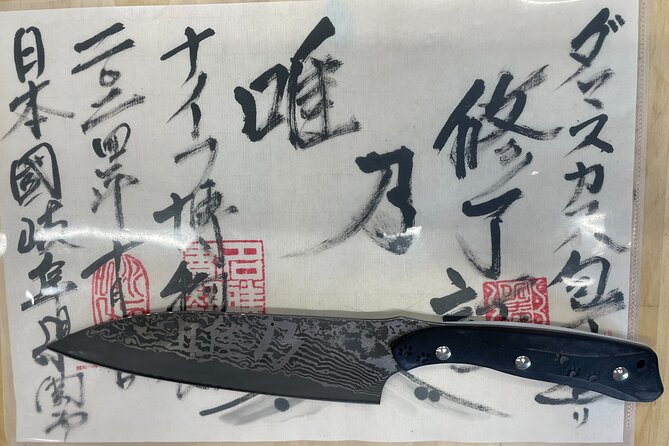
The workshop does more than make a blade. It teaches you the essential skill of sharpening, so you can maintain the knife’s sharpness long after the class ends.
This is the practical “future value” piece. A handmade or high-end knife loses its edge like any other. The difference is whether you know what to do next. Learning sharpening basics during the same workshop where you built the knife helps you remember what matters: consistent technique, patient reps, and keeping your edge in working condition.
You are also going to feel a lot more confident when you understand how the sharpening step connects to the performance you just saw on vegetables. That connection is what makes the instruction stick.
If you enjoy learning skills you can use at home, this portion is one of the reasons the experience justifies the cost. You are not only buying a knife, you are buying the ability to care for it.
Timing, meeting point, and getting there without stress
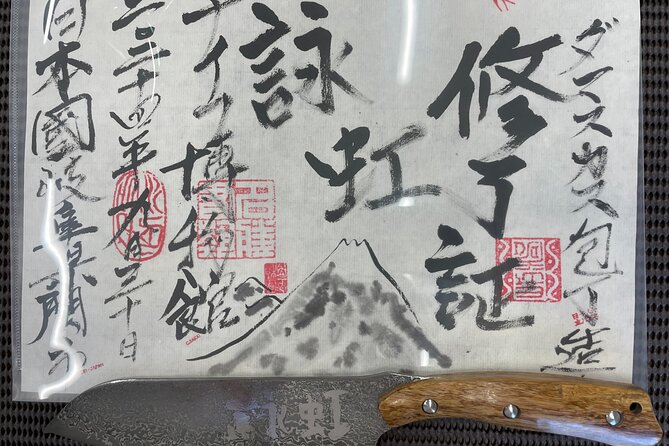
The experience starts at 10:30 am at Sekitomioka Station (Hidase, Seki, Gifu 501-3911, Japan). It ends back at the meeting point. Pickup is offered, which is a big help if you are not traveling with a car or if you just want to avoid station-hunting mid-trip.
The location is near public transportation, and it is doable as a day trip. If you are starting from Kyoto, it is roughly 1.5 to 2 hours by train to Seki, depending on your route and connections. That makes it an appealing add-on if you want one “hands-on, leave with something” activity during a Japan itinerary.
My suggestion for scheduling: treat it like a focused half-day block, not a flexible wander. With the start time locked in and the workshop taking about 2.5 hours, you will feel better if you book it early enough to still enjoy other sites later that day.
Also, keep in mind the maximum group size is 5 travelers. That small size is part of the quality. It can also mean the schedule is less forgiving if you arrive late.
Price and value: what $250 buys you in real terms
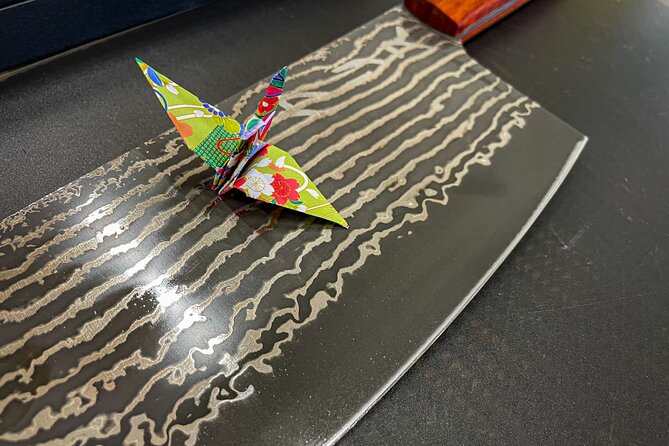
At $250.38 per person, this workshop is not cheap. But I think it can be fair value because you are getting three things in one package:
First, you get an actual handmade Damascus-style knife you construct yourself. Second, you get expert guidance during assembling, polishing, and sharpening. Third, you get sharpening instruction you can apply at home, plus an immediate sharpness test on fresh vegetables.
Where value can wobble is the knife type choice. Since prices vary depending on whether you make a Japanese kitchen knife, Chinese kitchen knife, or a folding hunting knife, your final cost could shift. If you care about budget, decide your priority up front: daily cooking practicality or a portable outdoor option.
Compared with buying a decorative knife, the workshop adds functional value because you learn how to maintain the edge. Compared with buying a store knife alone, you get the education and the personal touch of signing your blade. That is what makes the money feel more like tuition for a useful craft than just a purchase.
Who should book this Damascus knife making experience
This is a great fit if you:
- Want a hands-on class where you create a real kitchen tool, not a small souvenir.
- Like learning a skill you can maintain, specifically sharpening.
- Prefer smaller groups, which helps you get feedback during polishing and sharpening.
- Are a food person who appreciates a sharp edge and understands it is a tool, not just a status item.
It may be less ideal if you:
- Only want a broad, long factory tour and more time walking exhibits.
- Struggle with finding off-the-main-route meeting points without extra buffer time.
Language-wise, it is an experience where the guides work with international visitors, and the names Hiro, Sumi, and Yoshi came up in conversations about the hosts being gracious and helpful. Even so, always bring a patient attitude. Small workshops move at the pace of learning, not the pace of mass tourism.
Should you book this workshop in Gifu?
If you want one memorable, useful craft day in Japan, this is an easy yes. You get Seki’s cutlery context, a museum and factory look, and then the part that really matters: you make a Damascus-style knife yourself and learn how to keep it sharp.
Book it if you care about taking something home that you will use, and if you enjoy skills where your hands learn faster than your brain. The small group format and the quick sharpness test make it feel efficient without feeling rushed.
Skip it only if you are mainly looking for a sightseeing-focused day or if you prefer to avoid activities that require careful attention. Otherwise, this is exactly the kind of experience where you leave with a tool, a story, and a sharpening plan you can actually use.
FAQ
Where does the workshop start?
The experience starts at Sekitomioka Station in Seki, Gifu (Hidase, Seki, Gifu 501-3911, Japan). The activity ends back at the meeting point.
What time does it run and how long is it?
It starts at 10:30 am. The duration is approximately 2 hours 30 minutes.
Is pickup available?
Yes, pickup is offered.
How many people are in the group?
The workshop has a maximum of 5 travelers.
What knife types can I choose?
You can choose from three options: a Japanese Damascus kitchen knife, a folding Damascus hunting knife, or a Chinese Damascus kitchen knife. Knife prices vary depending on the type you select.
Can I get a full refund if my plans change?
Yes. Free cancellation is available up to 24 hours in advance for a full refund. If you cancel less than 24 hours before the start time, the amount paid is not refunded.
Fresh options around Takayama
- Takayama: Private Walking Tour with a Local Guide★ 4.6 · 29 reviews
- Knife Making Experience in Samurai Sword Town★ 5.0 · 29 reviews
- Sawanobori River Trekking Tour★ 5.0 · 30 reviews
- Takayama Private Custom Tour with Local Guide★ 5.0 · 31 reviews
- Takayama: Takayama Jinya & Old Town Private Walking Tour★ 4.5 · 32 reviews
- Explore Kiso Valley : Magome – Tsumago Mountain Trail Walk★ 5.0 · 33 reviews
- Magome & Tsumago Nakasendo Trail Day Hike with Government-Licensed Guide★ 5.0 · 38 reviews
- Japanese Cooking Class with Local Family in Takayama Old Town★ 5.0 · 40 reviews
Samurai & Ninja Experiences, compared.

Samurai Ninja Museum Guided tour and Experience
Read our review →
Kendo and Samurai Experience with Uniform and Gear
Read our review →
Samurai Sword Class by Experts in Traditional Arts
Read our review →
Skip the lines Basic Ticket at SAMURAI NINJA MUSEUM KYOTO
Read our review →
Samurai Sword & Archery Class from Samurai Descendant
Read our review →
Browse the lists this tour appears in