
Reviewed · HISTORICAL TOURS
Asakusa: Tokyo Skytree Exploration and History Tour
Asakusa tells Japan’s story in plain sight. This tour strings together the places you actually walk past in Asakusa, then links them to Tokyo Skytree, so you leave with a clearer sense of how the old city became the modern one. You start at a very easy meet-up point near Asakusa Station, then follow your guide along the Sumida River corridor with meaning behind every major stop.
I love the way the guide turns iconic sights into a big-picture lesson, from Kaminarimon to Sensō-ji, and even the symbolism around gates and faith. I also love the Skytree payoff: going up to both observation decks (350m first, then 450m), plus a glass-floor moment and landmark spotting across the city, guided by people like Machiko and Keiko who pay attention to details and comfort.
One thing to consider is that it is still a walking and stair-heavy day. A couple of reviews noted the need for better chances to rest or for hearing to be clearer, especially if your guide is soft-spoken, so plan to arrive ready to walk and wear supportive shoes.
Key Points You’ll Feel Right Away
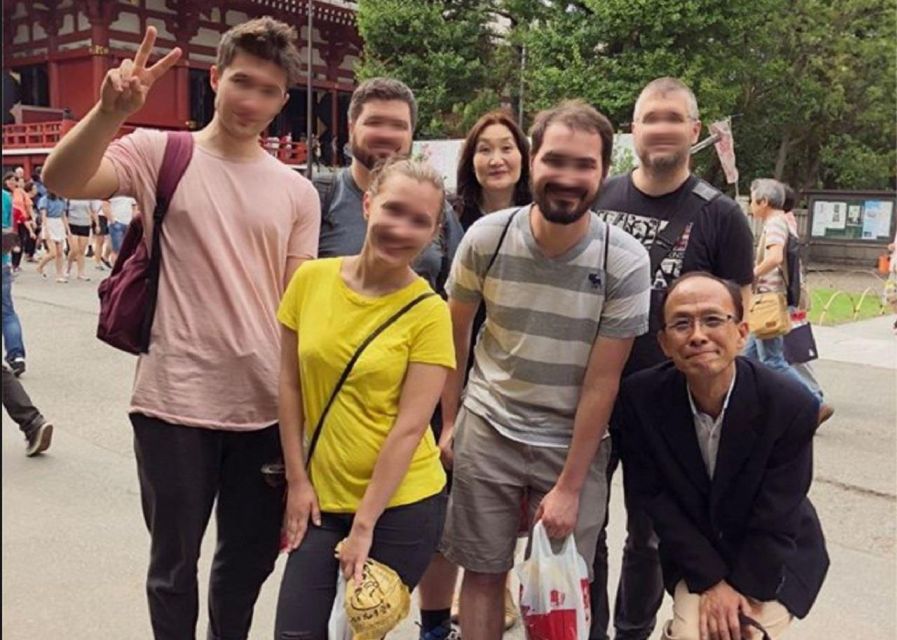
- Small group size (8 max) makes it easier to ask questions and get photo help
- Asakusa history on real streets connects religion, symbols, and global pressures to what you see
- Sumida River transition gives a clean old-to-new storyline before you even reach Skytree
- Two observation decks take you from wide city views to higher, sharper perspectives
- Glass floor and orientation help you understand where you are in Tokyo, not just what’s up there
- Skytree base free time gives room for souvenirs and snacks after the views
From Asakusa Station to Burger King: Finding the Start Easy
The meeting point is straightforward: in front of Burger King at Asakusa Azumabashi, right by Exit 4 of Asakusa subway station on the Ginza line (G19). If you step outside when you reach Exit 4, you should spot it quickly.
This matters more than you might think. Asakusa can feel like a maze when you first arrive, and getting the start right helps you relax into the day. The tour lasts about 210 minutes, so you do not have time to “figure it out” once you’re moving.
Also note: there’s no hotel pickup. You’re using local transit, and the tour has its own pacing once you meet.
A few more Tokyo days worth comparing
- Tokyo: Imperial Palace and Shogun Historical Walking Tour
★ 5.0 · 2,251 reviews - Tokyo: Imperial Palace Japanese History Walking Tour
★ 4.9 · 987 reviews - Yanaka Walking Tour: Historic and Traditional District of Tokyo
★ 5.0 · 530 reviews
The Sumida River Orientation: Japan’s Close-Off to Reopening Story
A big part of what you get here is not only sightseeing, it’s context. Your guide builds your understanding before you climb anything tall.
The day begins with a short segment that gets you moving along the river area, including a brief stop by the Tokyo Cruise Asakusa Pier area and time near the Asakusa Culture Tourist Information Center. Then you shift into the main walk through classic Asakusa landmarks.
What makes this section valuable is the theme your guide follows: Japan’s period of isolation and the later forced reopening. You’ll hear it explained using the places you walk past along the Sumida River corridor, so it feels like a story with geography, not a lecture you half-remember.
Even if you’ve read a bit about Japan already, I like that this approach gives you something practical to look for. When you reach each gate or temple, you’re not guessing what you’re seeing. You understand why it is there and what it has meant over time.
Cruise Pier and River Time: Why This Short Segment Works
You spend about 15 minutes on the Tokyo Cruise Asakusa Pier portion early in the experience, followed by another 15 minutes near the culture information stop. This might sound small, but it sets the rhythm.
River routes are a natural way to understand Asakusa historically. Trade, travel, and movement cluster around the water, and that becomes a simple mental map for the rest of the day. If you’ve ever visited Asakusa and felt like the sights blur together, this river framing helps you separate what’s important.
One practical note: it is still a walking itinerary afterward, so treat this early portion as your warm-up, not a long break.
Kaminarimon Gate: More Than the Photo Stop
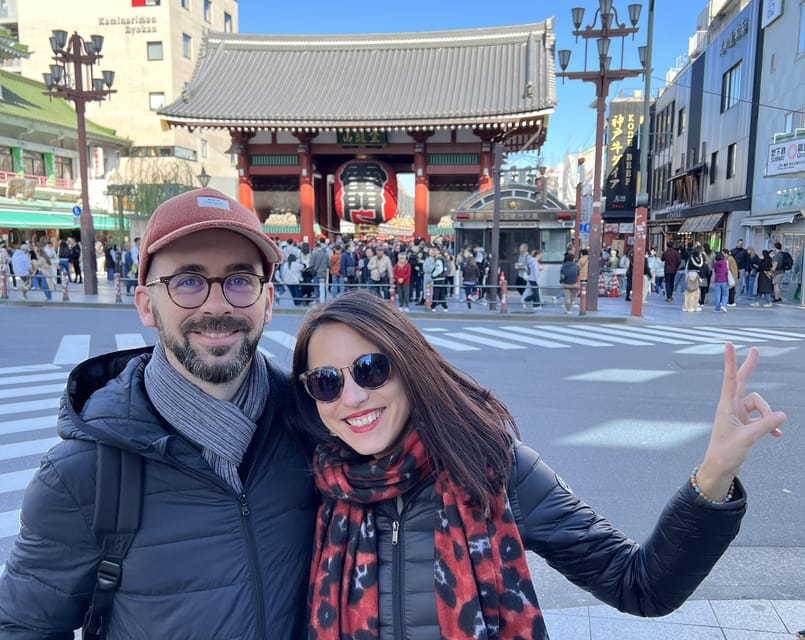
Next up is Kaminarimon, the big gate that people photograph because it’s instantly recognizable. The tour’s angle is different. Your guide explains the landmark’s meaning and connects the religious and symbolic layers you see to Japan’s broader story.
This is where I think a lot of value lives. Kaminarimon is easy to see, and easy to treat like a backdrop. The guide helps you read it, so it becomes a starting point for understanding how Asakusa’s spiritual identity shaped the area.
You also get time for the in-between moments, like where to stand for photos and how to navigate the flow of people. The tour is designed to stay efficient without feeling like a sprint.
Same corner of Japan, a different kind of day:
- Mt Fuji and Hakone 1-Day Bus Tour Return by Bullet Train
★ 5.0 · 26,383 reviews - 1-Day Tokyo Bus Tour
★ 5.0 · 14,250 reviews - Tokyo: TOKYO SKYTREE® Admission ticket
★ 4.5 · 11,192 reviews - Tokyo: teamLab Planets TOKYO Digital Art Museum Entry Ticket
★ 4.6 · 9,779 reviews
Nakamise Street: Shopping With a Purpose
Nakamise Shopping Street gets about 30 minutes. Yes, it’s famous, and yes, you’ll see the typical snacks and souvenirs. But the tour approach is what makes it work for me.
Your guide ties what you’re seeing to how places like this function. Nakamise isn’t random retail. It’s part of the pilgrimage rhythm and the experience around Sensō-ji. When you understand that, you can shop with more confidence instead of just grabbing the loudest-looking snacks.
This is also a good place for quick taste-style breaks if you want them. A past guest specifically enjoyed treat moments while walking through the market area, and the tour includes time for stops rather than only “walk through, next stop.”
Hōzōmon Gate and the Temple Approach: Reading the Space
After Nakamise, you reach Hōzōmon Gate, with another 15 minutes of guided walking and explanation. This gate matters because it is a threshold. Your guide helps you understand what it signals, visually and spiritually, as you move toward the temple area.
Then you hit Sensō-ji Temple, again with guided time to walk and look rather than just pass by. Expect cultural pointers about what you notice at a first visit, what different elements point to, and what you might see even while the crowd is moving.
This part is where I think the tour earns its title as a “history” experience. Sensō-ji is not presented as a museum object. It’s presented as an active cultural engine, tied to symbolism that goes beyond the walls.
Asakusa Shrine Stop: Completing the Spiritual Circuit
You continue with another 15 minutes around Asakusa Shrine, where your guide keeps the meaning-to-place connection going. The goal here is to help you understand the relationship between different sacred spaces you might otherwise treat as separate attractions.
If you like travel that helps you connect dots, you’ll appreciate this section. The tour is not only saying, “Here is the next famous stop.” It’s guiding you to notice how the spiritual landscape shapes daily life and how those meanings survived into modern Tokyo.
Tokyo Skytree Transition: Old Tokyo to New in a Short Ride
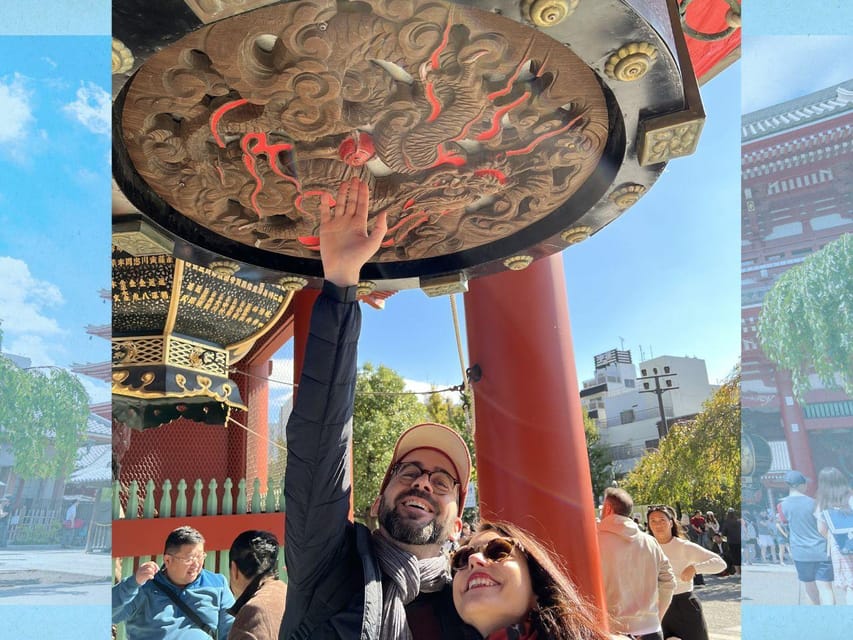
After you’ve built the Asakusa story on foot, the tour makes a clean move to the modern skyline. You take a short two-minute train ride across the Sumida River to Tokyo Skytree. That short hop is more than logistics. It’s the moment where the tour’s theme clicks: older Tokyo’s identity and boundaries give way to the city’s current symbol of height and reach.
From a practical perspective, it’s also a good break in pace. After lots of walking and stairs, you get a compact transit window that does not eat the day.
There is a note about train fare: a JPY 160 fare from Asakusa Station to Tokyo Skytree Station is not included.
Skytree Tembo Deck at 350m: First Views, Better Clarity
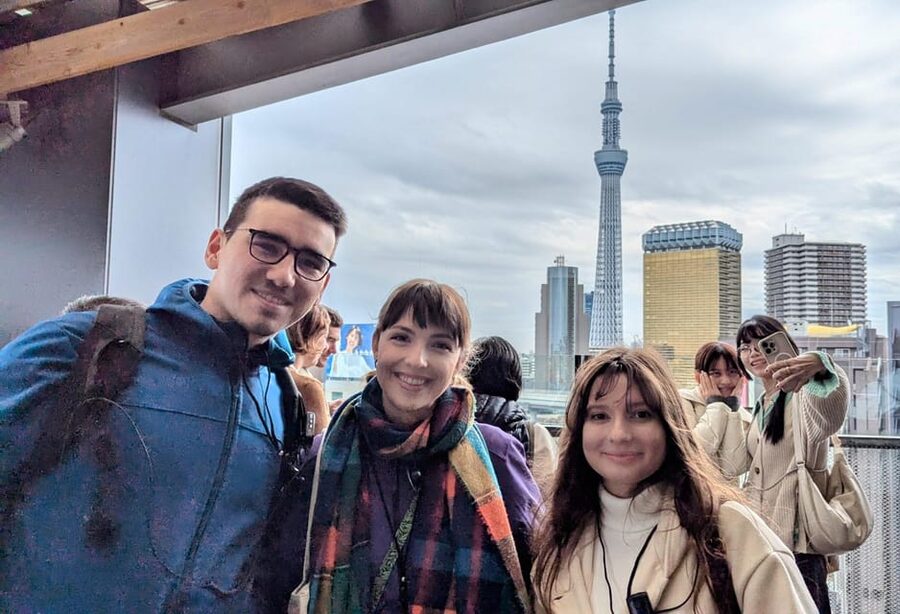
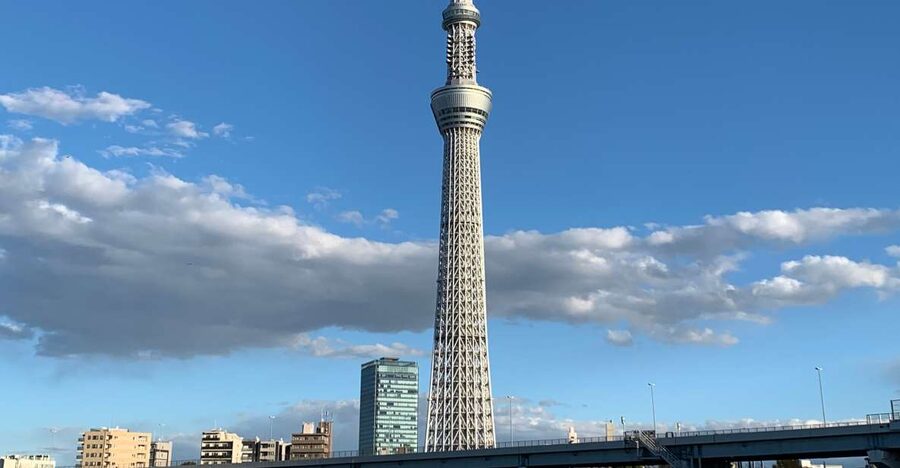
At Tokyo Skytree, you head to the Tembo Deck floor at 350m, with about 30 minutes there. You get the included entrance to the observation decks, and the tour also helps you skip the ticket line, which is a real time-saver in a place that gets busy.
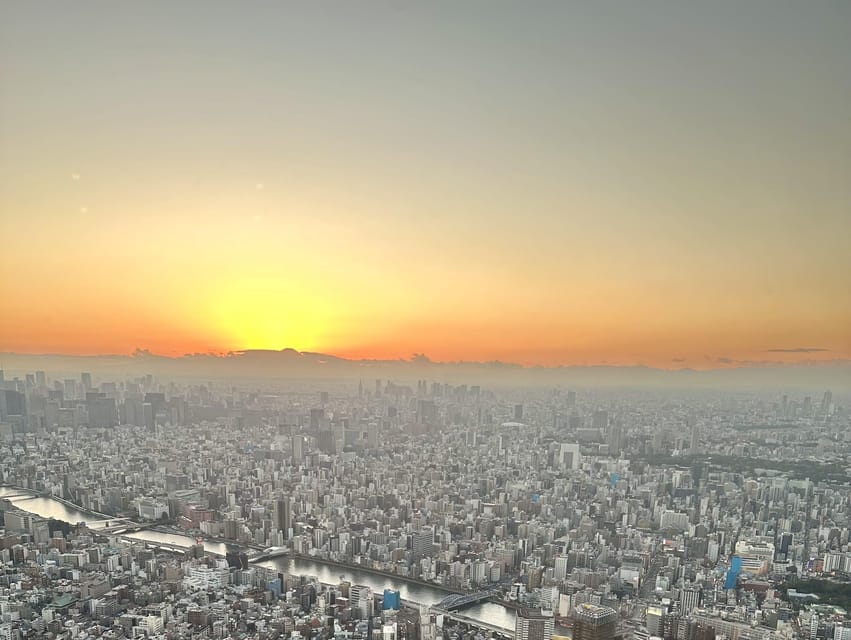
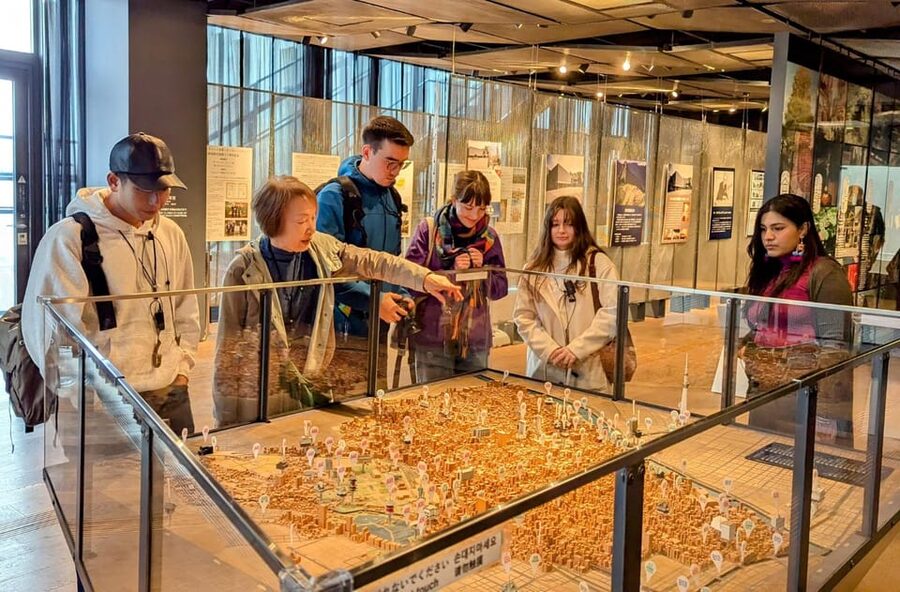
At this height, the views start to feel like a map. Your guide helps you identify major landmarks spread across the metropolis, so it does not become “just buildings.” This is one of the best ways to get value from an observation tower. Without orientation, you end up taking the same generic skyline shots everyone else takes.
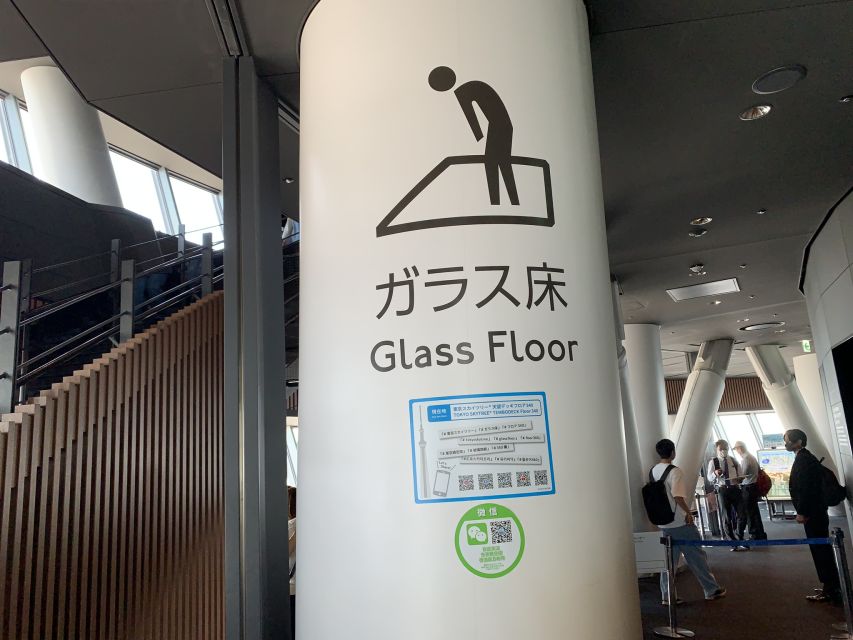
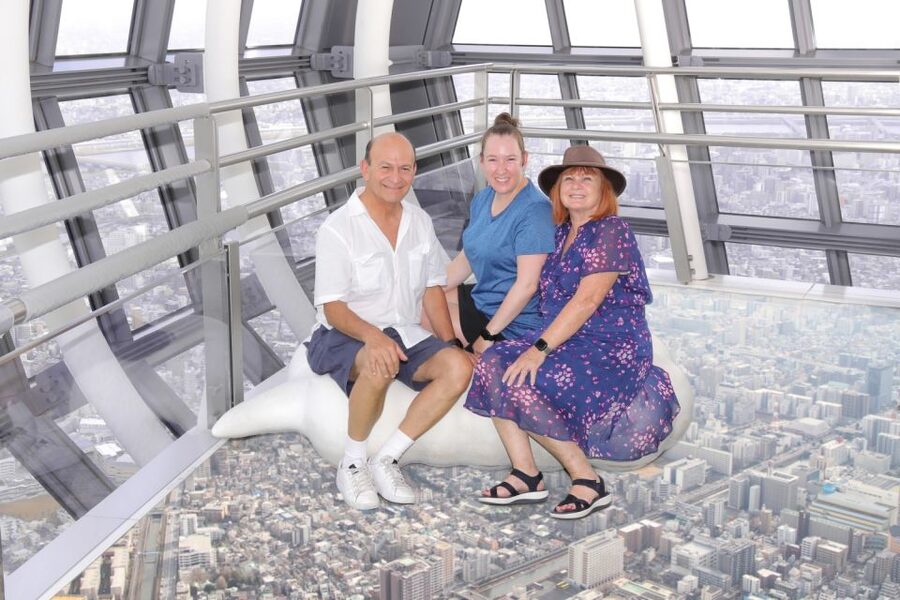
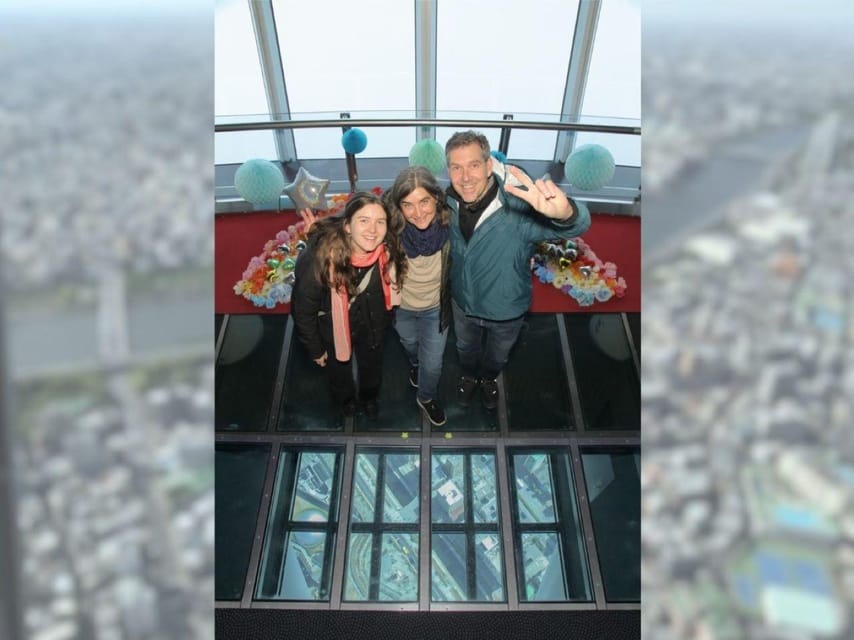
You also step onto the glass floor for a view straight down at streets below. If you’re even mildly afraid of heights, you can choose how you use that moment, but it’s a memorable experience. It also makes your brain lock onto depth and distance, which makes the higher deck even better.
Tembo Galleria at 450m: Higher, Sharper, More Specific
Then it’s up again to the Tembo Galleria, also with about 30 minutes. This second climb is not redundant. The difference between 350m and 450m is enough to change how the city reads.
By now, you’ll likely recognize landmarks your guide pointed out earlier. That makes your photos and your scanning much more meaningful. At this height, details can feel more “separable,” and it’s easier to understand how Tokyo sprawls.
There’s also a commemorative photo with an option to purchase a downloadable copy, plus a Skytree-exclusive postcard you can send anywhere in the world.
I like that these are optional extras. The tour doesn’t force them on you. If you want souvenirs, they’re there. If not, your primary value is still the views and the orientation.
Time at the Skytree Base: Souvenirs, Snacks, and a Slower Pace
After descending, you get free time to explore the large shopping complex at the base. This is smart planning. By the time you finish the decks, you’ll be ready for a slower rhythm: souvenirs, snacks, and an easy place to regroup.
This is also where you can connect what you saw above with what you’re seeing now around the tower. Even if you do not plan to shop heavily, the base area gives you practical options for water and a snack before you leave.
Price and Value: Why $116 Can Make Sense Here
At $116 per person for a 210-minute tour, you’re paying for three things at once:
First, you’re paying for guided interpretation. The Asakusa part is not only walking between famous points, it’s connecting symbolism and larger historical themes so the stops feel like they build on each other.
Second, you’re paying for entry to the observation decks of Tokyo Skytree, including both levels. Buying both decks yourself usually adds up fast, especially when you consider time savings.
Third, you’re paying for a small group experience, limited to 8 participants, which helps the guide manage crowd pressure and answer questions without leaving you behind.
If you’re the type who likes to understand what you’re seeing, this tour has strong value. If you mainly want to take photos and do minimal reading, you might feel the guided parts are more than you need. But even then, the tower orientation and the glass-floor moment are hard to replicate without spending time on your own figuring-out.
Who Should Book This Tour, and Who Might Prefer Another Style
This fits best if you want history with a practical payoff. It’s ideal for first-time Tokyo visitors who feel overwhelmed by how many temples and streets exist in one neighborhood, and for people who like a guide to explain what matters behind the postcard angles.
It also works well for families and mixed ages, since the tour includes short guided sections, headset-style English support, and frequent landmark anchors. Just remember it involves walking and stairs, so comfortable shoes are not optional.
If you already know Japanese history deeply and you mainly want quiet time and self-guided wandering, you might prefer a more flexible walking route. But if you want a guided storyline that ends with a strong modern skyline experience, this is the kind of structure that helps you feel satisfied, not just tired.
Should You Book the Asakusa and Tokyo Skytree History Tour?
I’d book it if you want a day that starts with real landmarks in Asakusa and ends with Tokyo from 350m and 450m above. The strongest reason is the pairing: history on foot, then a tower that helps you orient the entire city. Guides like Machiko, Keiko, Aki, and Yasu show up in reviews as careful with comfort and photo moments, and that matches what this itinerary is designed to do.
I would think twice only if your priority is minimal walking or if you struggle with soft-spoken guides in noisy areas, since one review flagged hearing difficulty. If that’s you, consider positioning yourself closer to your guide and plan to take short pauses when offered.
FAQ
How long is the Asakusa and Tokyo Skytree exploration tour?
The total duration is 210 minutes.
Where do I meet the guide?
The meeting place is in front of Burger King at Asakusa Azumabashi, right next to Exit 4 of Asakusa subway station on the Ginza line (G19). Step outside when you reach Exit 4.
What’s included in the price?
Entrance tickets to the lower and upper observation decks of Tokyo Skytree are included.
Do I need to pay for the train during the tour?
The tour notes that JPY 160 for the train fare from Asakusa Station to Tokyo Skytree Station is not included.
Is the tour guide English?
Yes, the tour includes a live English-speaking guide, and there is also an English audio guide included.
How high do you go at Tokyo Skytree?
You visit the observation decks at 350 meters and 450 meters above ground.
Is the tour good for a small group?
Yes. The group is limited to a maximum of 8 participants.
Fresh options around Tokyo
- Tokyo: Nikko Kegon Falls Lake Chuzenji Toshogu Temple & More★ 4.9 · 12 reviews
- Tokyo: Samurai History Walking Tour★ 5.0 · 12 reviews
- Harajuku: Kawaii Fashion and Pop-Culture Tour★ 4.7 · 12 reviews
- Tokyo: Mt. Fuji & Lake Kawaguchi Instagram Full Day Trip★ 4.1 · 12 reviews
- Shibuya Tokyo: Modern Kintsugi Workshop in Shibuya★ 5.0 · 12 reviews
- Tokyo: GTR Guided Daikoku Experience at Night★ 5.0 · 12 reviews
- Tokyo: Daikoku JDM Car Culture Tour★ 4.6 · 12 reviews
- Mt Fuji Private Day Trip from Tokyo with English speaking driver★ 5.0 · 13 reviews
Historical Tours, compared.
World Heritage Shirakawa-go and Experience Tours from Kanazawa
Read our review →
Imperial Palace and Shogun Historical Walking Tour
Read our review →
World Heritage Kyoto & Nara Uji Authentic Matcha Experience
Read our review →
Kyoto Gion: 2-Hour Geisha Culture & History Walking Tour
Read our review →
World Heritage Shirakawa-go Morning Guided Tour
Read our review →
Hiroshima Historical Walking Tour – Why A-Bomb was Dropped
Read our review →
Hiroshima Peace (Heiwa) Walking Tour at World Heritage Sites
Read our review →Browse the lists this tour appears in