
Reviewed · HIROSHIMA TOURS
The Journey of Hiroshima from Tragedy to Peace
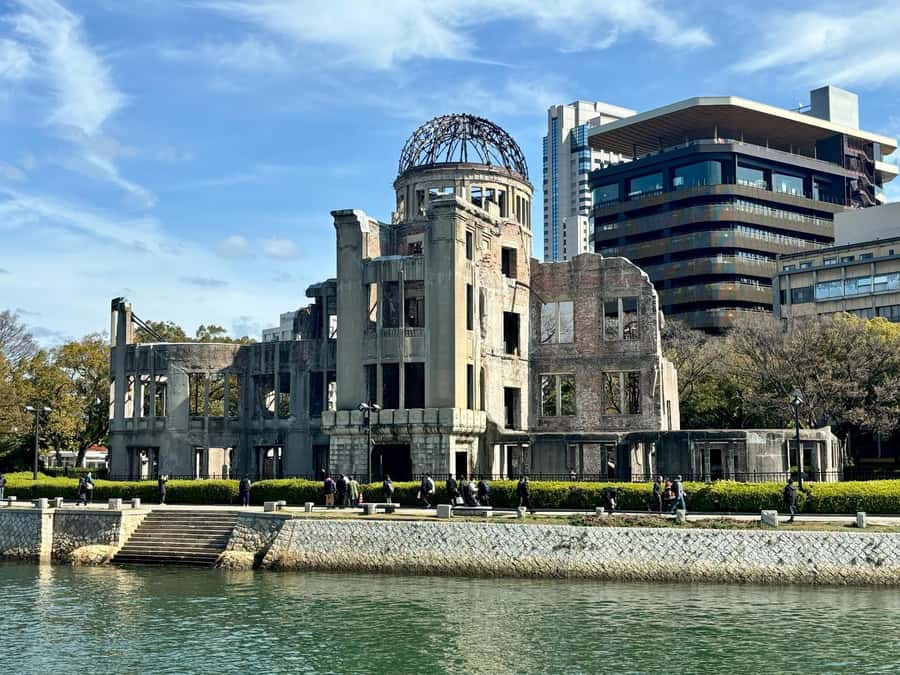
One park, two timestamps, and a plea for peace. This Hiroshima Peace Memorial Park walk ties together the moments before, during, and after the atomic bombing, with the Atomic Bomb Dome as the unforgettable anchor.
What I love most is how the tour is built like a story you can walk through, not a checklist. The guide is trained with a peace-studies background, and you get clear, organized explanations that make each stop easier to understand, even when the material is hard.
One consideration: this is a moving outdoor route and it is not suitable for mobility impairments. Also, be ready for an emotional day, since the memorials are designed for remembrance, not casual sightseeing.
Key things that make this Hiroshima walk worth your time
- Meet at the Gates of Peace, in front of Mario, so you get going quickly.
- A peace-studies trained guide keeps the group on track and answers real questions.
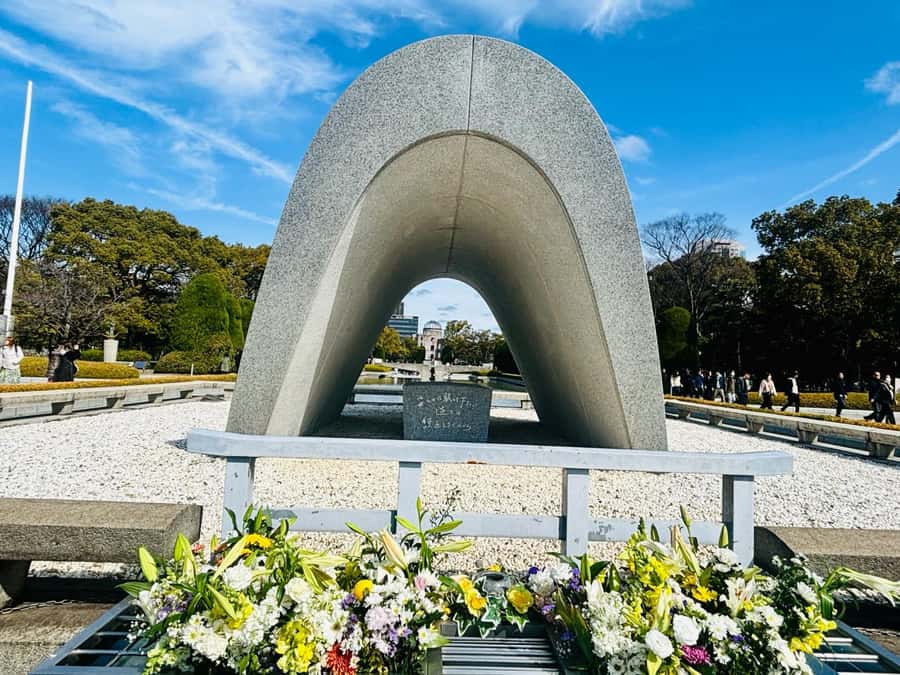
- Peace Cenotaph and Flame of Peace focus on names and an ongoing commitment to disarmament.
- Children’s Monument and Korean Monument broaden the story beyond one nationality.
- Atomic Bomb Dome, UNESCO World Heritage Site, connects survival and symbolism in one place.
- Hypocenter reflection gives you a final moment to process what you just learned.
Hiroshima Peace Memorial Park: how the route turns tragedy into context
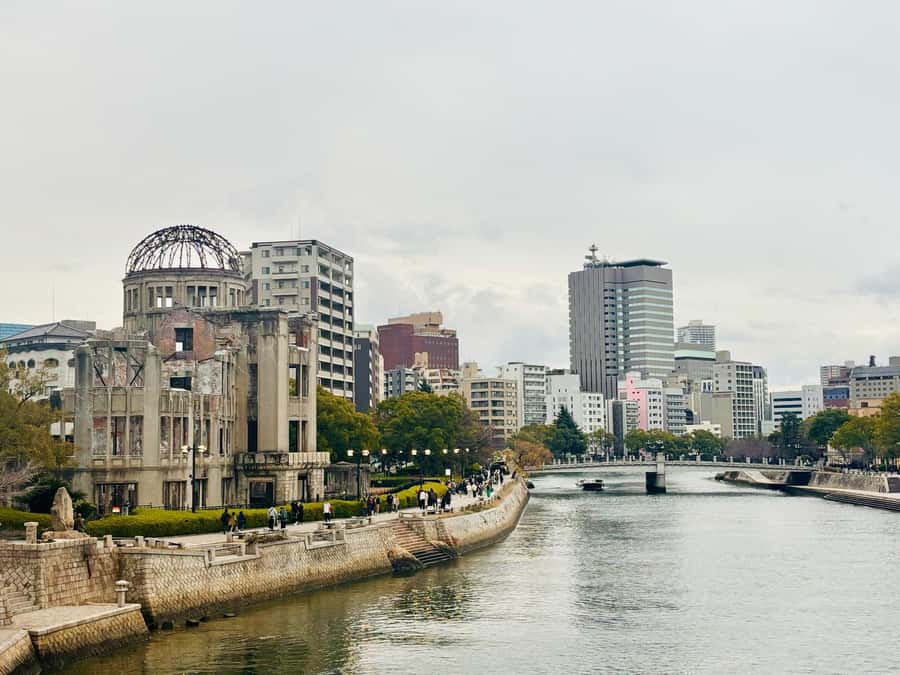
Hiroshima isn’t a place you speed through. The best way to understand it is to slow down, look, and listen, which is exactly how this tour is structured. You start at the Gates of Peace, where the day feels like it has a purpose, then you move monument to monument inside the Hiroshima Peace Memorial Park area.
I like that the tour doesn’t just point at sites. It gives you context for what you’re seeing and why it matters. You’ll cover the Atomic Bomb Dome, the Peace Cenotaph, the memorial hall for atomic bomb victims, and other key monuments that explain the human impact of the blast.
The tone is serious, but the pacing is practical. Even in a group, you have room for discussion and photos, which helps you remember what you learned when you step away. And because the tour runs as a walking route across the park, you get a feel for Hiroshima’s geography instead of only collecting photos.
A few more Hiroshima days worth comparing
- Peaceful Hiroshima & Miyajima UNESCO 1 Day Bus Tour
★ 5.0 · 5,309 reviews - Hiroshima: Hiroshima and Miyajima UNESCO Sites 1-Day Tour
★ 4.9 · 2,330 reviews - Hiroshima / Miyajima Full-day Private Tour with Government Licensed Guide
★ 5.0 · 1,298 reviews
The meeting point and the walking rhythm you should expect
The tour meets your guide at The Gates of Peace, directly in front of the Italian restaurant Mario. That detail matters because the park is easy to wander in on your own, but it’s harder to navigate without a plan.
Once you start, the rhythm is steady. You move between monuments without rushing, and you get explanations at each stop. A recent group experience highlighted that the pacing felt comfortable and that the walking portion was a good fit, with enough pauses to talk.
You should plan for a meaningful time commitment because you’re covering many memorial points, including the Atomic Bomb Dome and the hypocenter. If you’re sensitive to long periods on your feet, this is the part where you need to be honest with yourself. It’s a walking tour and it is not suitable for mobility impairments.
Gates of Peace to Mother and Baby in Storm: love shows up first
The tour begins with a meet-and-start moment at the Gates of Peace, then you head to the first major symbolic stop: the Mother and Baby in Storm statue. This is one of those images that hits immediately. It represents the compassion and love that people showed in the wreckage that followed the bombing.
What makes this stop useful is the way it frames the day. Before you get into buildings and dates, you’re reminded that this history is about ordinary human lives. The guide’s explanations help you connect the emotion to the timeline, so the later memorials do not feel like disconnected objects.
After seeing the statue, you’re set up to understand why the rest of the park is built the way it is, with remembrance and responsibility as the main themes.
Dr. Marcel Junod and Norman Cousins: international help and disarmament
Next comes the Dr. Marcel Junod Memorial, honoring the Swiss physician who became a humanitarian hero after the bombing. This stop widens your lens. The narrative isn’t only Hiroshima’s story inside the city. It also includes how outsiders responded with care and urgency.
Then you move to the Norman Cousins Peace Memorial, which brings in the American author and peace activist known for advocating nuclear disarmament. This is a key pivot point in the tour. You start to see how Hiroshima’s legacy became part of a global conversation about preventing future mass harm.
If you want one reason to book this tour instead of doing everything independently, it’s this section. Many memorial visitors focus on what was lost. This route also explains how people after the bombing pushed for change.
Same corner of Japan, a different kind of day:
- Hiroshima Historical Walking Tour – Why A-Bomb was Dropped
★ 4.8 · 893 reviews - Hiroshima Peace (Heiwa) Walking Tour at World Heritage Sites
★ 5.0 · 872 reviews - Hiroshima in a Nutshell: Morning Bike Adventure
★ 5.0 · 524 reviews - Hiroshima City 4hr Private Walking Tour with Licensed Guide
★ 5.0 · 437 reviews
Peace Cenotaph and the Flame of Peace: names you can’t ignore
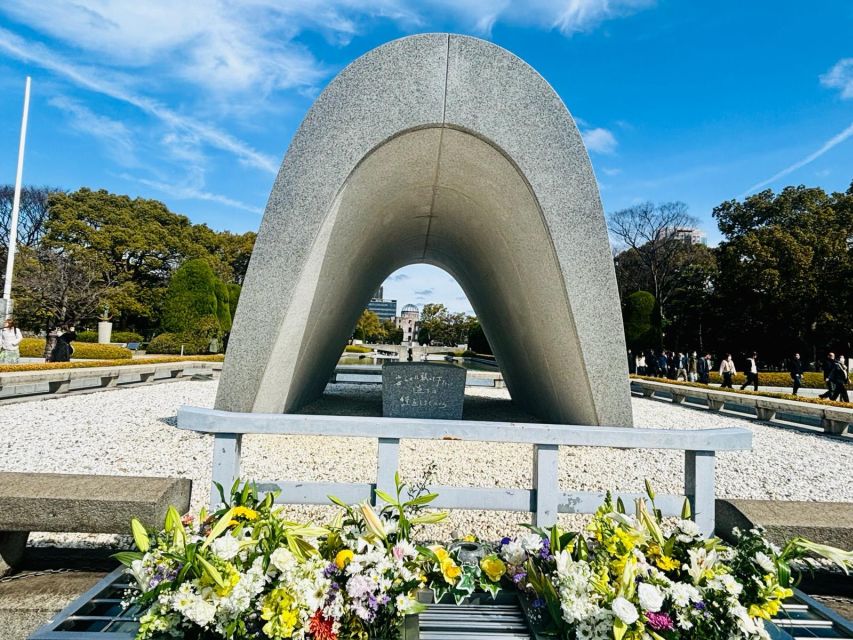
The Peace Cenotaph is next, a curved stone structure that marks a central idea of Hiroshima’s memorial work: the victims are not numbers. Inside, the names of atomic bomb victims are listed, and the structure includes the eternal flame that stays lit as a pledge.
This is one of the moments where the tour’s structure really helps you. You’re not just standing there reading or looking around. You’re hearing what the flame means and why it is tied to a promise about eliminating nuclear weapons.
The tour also treats silence as part of the experience, not an awkward gap. If you’ve ever visited a memorial alone and felt like you were missing the point, this is where a guide helps. You learn what to pay attention to, and you know why it matters.
Hiroshima National Peace Memorial Hall: records, stories, and what happened to people
After the Cenotaph, you visit the Hiroshima National Peace Memorial Hall for the Atomic Bomb Victims. This part matters because it shifts from outdoor symbolism into human detail and documentation.
The hall houses an extensive archive and serves as a memorial to those who lost their lives. That means you’re likely to see information that goes beyond what’s carved in stone. You can walk away with a more grounded understanding of what life looked like before the bombing, how the bombing affected people, and what came after.
One practical note: entrance to the museum is not included in the tour price. So if you want to go inside with your group, plan for that separate entry cost.
If you’re the type who gets overwhelmed by too many sites in one day, this is a good place to slow down. The memorial hall can feel heavy, but it gives substance to everything you saw outside.
Peace Park Rest House and the 170 meters survival story
One of the most striking stops on the walk is the Peace Park Rest House area, where you learn about the survival of a resident who was just 170 meters from the hypocenter during the explosion. That distance detail makes the story painfully specific.
This stop works well because it bridges the gap between abstract disaster and a real, nearby human experience. The guide’s explanation helps you understand why survival and resilience are not the same as returning to normal life. It’s survival in a world that has been irrevocably changed.
This is also a place where group discussion can be especially meaningful. You’re not just hearing a fact. You’re learning what that fact represents in terms of endurance and rebuilding.
Children’s Monument and the Korean Monument: expanding the human lens
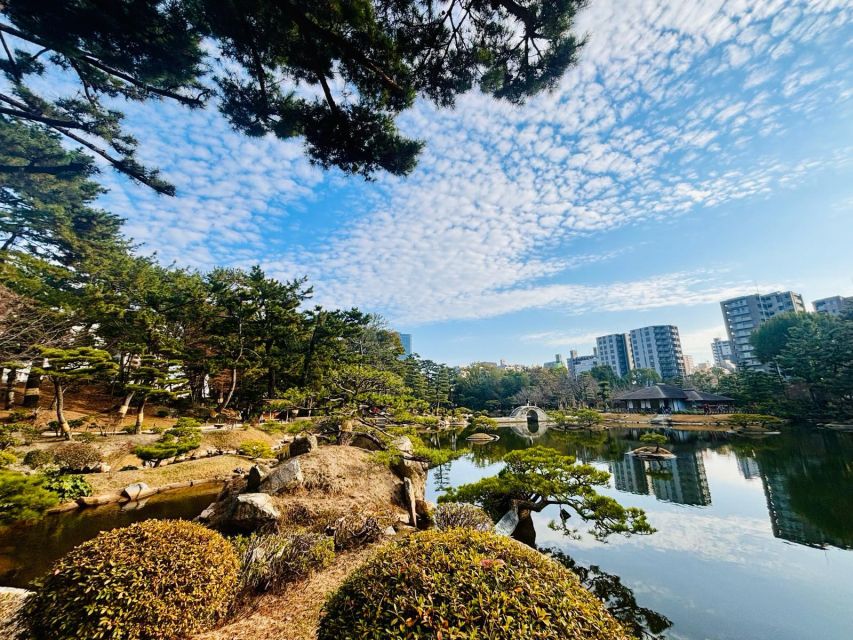
As you continue, you reach the Children’s Monument, dedicated to Sadako Sasaki and other children affected by the atomic bomb. You’ll see the paper cranes that became a symbol of peace, and you’ll learn why these children are part of the lasting message Hiroshima shares with the world.
After that, the route includes the Korean Monument. This is an important addition because it honors Korean victims of the bombing and recognizes their place in Hiroshima’s shared narrative. It helps you understand that the tragedy was not limited to a single community.
Together, these monuments keep the tour from feeling too narrow. They remind you that nuclear warfare does not discriminate. The guide’s framing connects these memorials to the bigger demand for peace and reconciliation.
Peace Bell, Atomic Bomb Dome, and the UNESCO moment
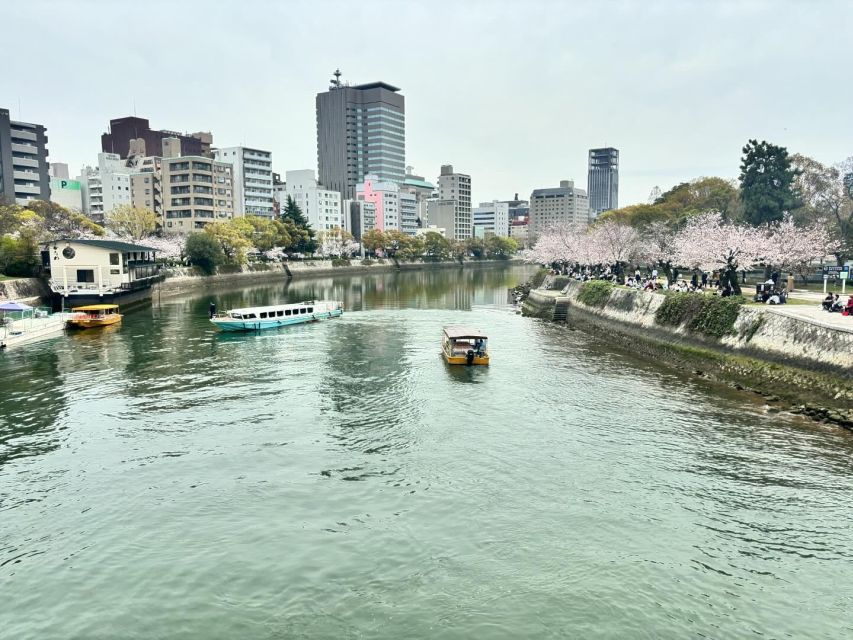
Before you reach the final iconic landmark, you’ll stop at the Peace Bell. The idea is simple but powerful: ring it in remembrance, then let that sound become part of a shared call for peace. It’s one of those small actions that gives visitors something physical to do while still honoring the solemn purpose.
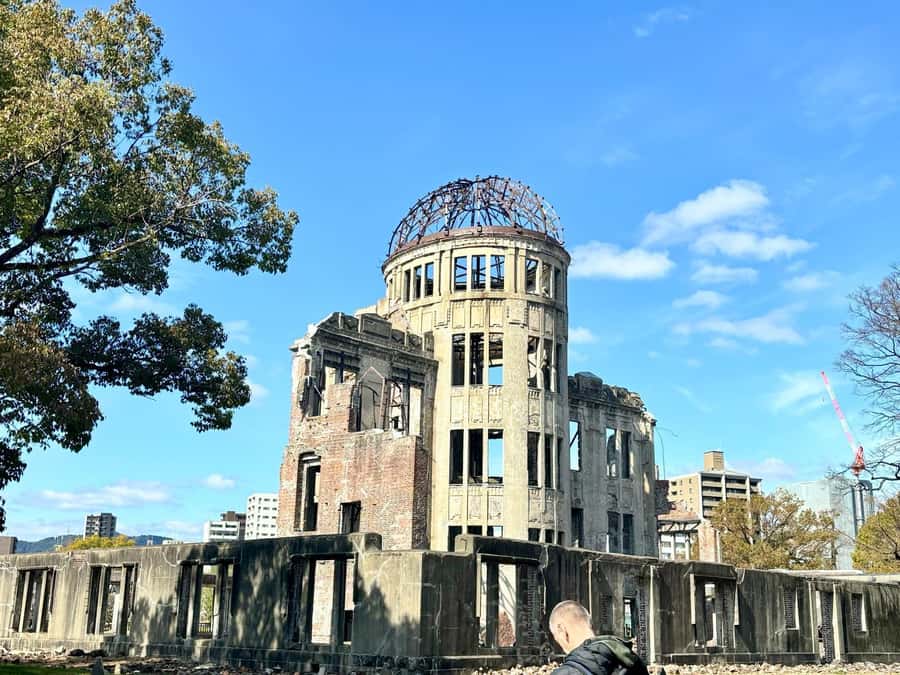
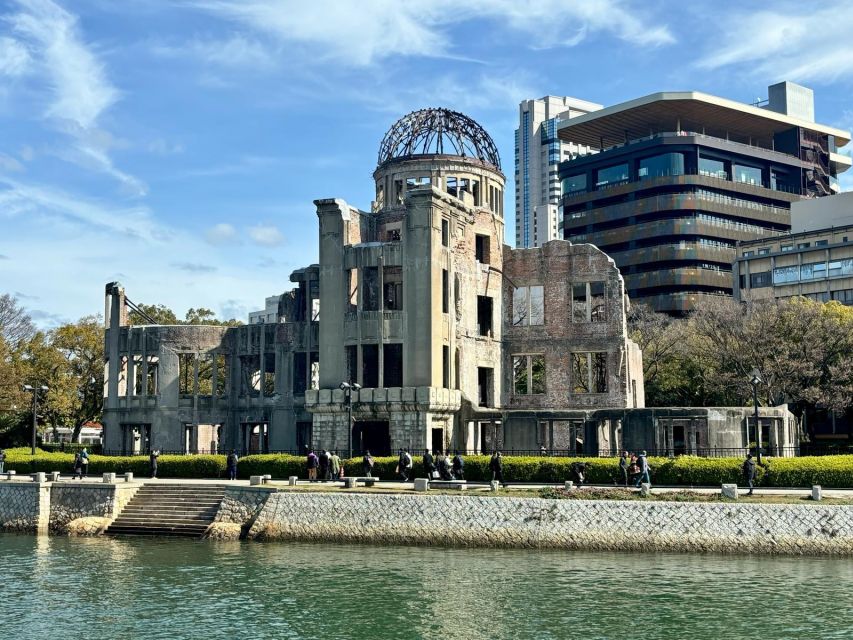
Then you approach the Atomic Bomb Dome, a UNESCO World Heritage Site. The Dome’s survival against incredible odds is part of why it’s so important. It functions as both a reminder of devastation and a symbol of what people hoped for afterward.
What I like about this final approach is that you’ve built context before you arrive. By the time you look at the Dome, you understand the significance of its location and what it represents emotionally and historically. You’re not only photographing a structure. You’re absorbing a message.
Reaching the hypocenter: your last quiet step in the park
The tour concludes at the hypocenter, the point directly under the explosion. This is the moment designed for reflection, and it feels different from the earlier stops because you’re standing at the exact center point of what happened.
Even if your emotions don’t land the same way as someone else’s, the structure of the tour supports you. You’ve moved from personal symbolism, to international help, to recorded victim stories, to child-centered peace messages, and then to the Dome and the center point. The route encourages you to connect the entire arc into something meaningful.
The guide’s closing remarks give you language for what you’re feeling, and the group moment helps you process without rushing out. You return to the meeting point at the end of the activity.
Price and value: what $30 buys in a very heavy context
This tour costs $30 per person, which is a fair deal for what you get. You’re paying for a guided route through multiple major monuments, with English explanations and a professional guide with a peace-studies background.
The value is not just convenience. It’s interpretation. Memorials can be hard to read without context, and this tour gives you that context across a sequence of stops. The guide also helps keep the group moving at a reasonable pace with discussion time and time for photos.
Just remember what is not included. Food is not part of the price, and entrance to the museum is not included. If you plan to spend time inside the Hiroshima National Peace Memorial Hall, you’ll need to budget for that separate entry.
For people who want an emotional, thoughtful experience with structure, $30 is the kind of price that feels like it supports good guidance rather than just paying for foot traffic.
Who this tour is best for
This experience is a strong fit if you want more than a self-guided walk. You’ll do well here if you like guided explanations, care about how the story connects across monuments, and want to understand Hiroshima’s peace message in a grounded way.
It also suits small-group minded visitors who appreciate discussion and a manageable walking pace. Multiple guide experiences, including Ali and Wajid, have highlighted clear communication, a calm pace, and answers to questions.
If you prefer a lighter, purely sightseeing style day, this one may feel too solemn. If you’re dealing with mobility limitations, the tour is not suitable, since it is a walking route across the park.
Should you book Hiroshima from Tragedy to Peace?
Book this tour if you want a guided walk through Hiroshima Peace Memorial Park that connects each stop to a clear meaning: remembrance, survival, and nuclear disarmament. The combination of major monuments, including the Atomic Bomb Dome and the hypocenter, plus stops that cover children and Korean victims, makes the experience feel complete without being chaotic.
Skip it if you cannot do a walking route through an outdoor memorial complex, or if you’re looking for a casual outing. Also be ready to add the separate museum entrance if you want to go inside.
FAQ
What is the price for the Hiroshima Peace Memorial Park walking tour?
The price is $30 per person.
Where do I meet the guide?
Meet your guide at The Gates of Peace, in front of the Italian restaurant Mario.
What does the tour include?
It includes Hiroshima Peace Memorial Park, the Atomic Bomb Dome, the Hiroshima Peace Memorial Hall for Atomic Bomb Victims, the Children’s Monuments, and the Flame of Peace.
Is food included?
No. Food is not included.
Is museum entrance included?
Entrance to the museum is not included.
How long is the tour, and where does it end?
The tour ends back at the meeting point.
Is this tour suitable for people with mobility impairments?
No. It is not suitable for people with mobility impairments.
Can I get a full refund if I cancel?
You can cancel up to 24 hours in advance for a full refund.
Fresh options around Hiroshima
- The Peace Memorial and Beyond: A Half-Day around Hiroshima★ 4.9 · 12 reviews
- Hiroshima Saijo Sake Tasting Tour with visit to 3 Breweries★ 5.0 · 12 reviews
- Private Hiroshima Calligraphy: Create Your Own Kanji Art Souvenir★ 5.0 · 12 reviews
- Hiroshima:Private lacquer workshop experience tour(gift included)★ 5.0 · 13 reviews
- Sunset Walking Tour at Peace Park, Hiroshima★ 5.0 · 13 reviews
- Kimono and Calligraphy Experience in Miyajima★ 5.0 · 16 reviews
- Hiroshima Peace Memorial Park: A Guided Tour★ 4.9 · 16 reviews
- History of Hiroshima: Small Group Night Walking Tour★ 4.8 · 17 reviews
Hiroshima Tours, compared.
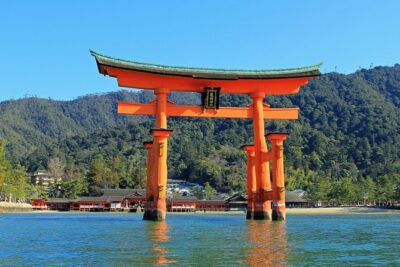
Peaceful Hiroshima & Miyajima UNESCO 1 Day Bus Tour
Read our review →
Hiroshima and Miyajima UNESCO Sites 1-Day Tour
Read our review →
Hiroshima / Miyajima Full-day Private Tour with Government Licensed Guide
Read our review →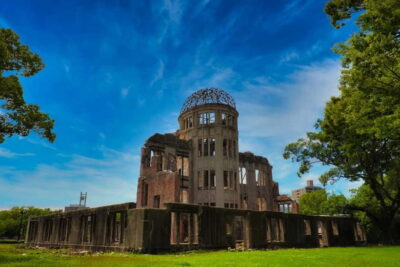
Hiroshima Historical Walking Tour – Why A-Bomb was Dropped
Read our review →
Hiroshima Peace (Heiwa) Walking Tour at World Heritage Sites
Read our review →
Hiroshima in a Nutshell: Morning Bike Adventure
Read our review →
Hiroshima City 4hr Private Walking Tour with Licensed Guide
Read our review →
Browse the lists this tour appears in