
Reviewed · MORNING
Tokyo Sumo Morning Training/ Sumo Practice with Wrestlers
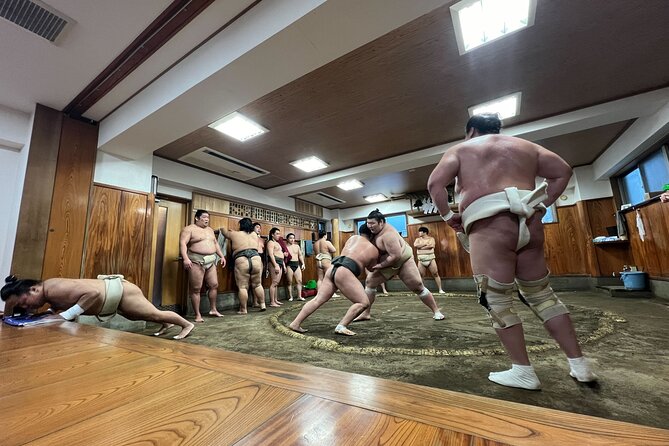
Sumo practice is up close and surprisingly orderly. This Tokyo tour gets you into a sumo stable for up-close practice, with a guide explaining the routines and letting you ask questions, plus a photo with a wrestler to remember it.
I also like that the experience is built around respectful viewing, not just sightseeing, so you actually understand the sport as you watch it. The main drawback is practical: mornings can be cold, and floor seating is common, so pack warm layers and plan to sit quietly for the whole session.
Key things to know before you go
- Authentic stable access in Tokyo, where you watch the morning training routine up close
- English explanations with headset support, so you are not stuck guessing what you are seeing
- Strict etiquette rules, including silent viewing, no flash photos, and no stepping out mid-session
- Gender-specific dohyō access, since women may watch from designated seating instead of entering the ring
- Shoes-off rule for men before stepping onto the dohyō (women will follow the facility’s rules on where they can go)
- Time can shift on the day, since the morning practice schedule may vary and can run shorter
Getting into a Tokyo sumo stable, not just watching from outside
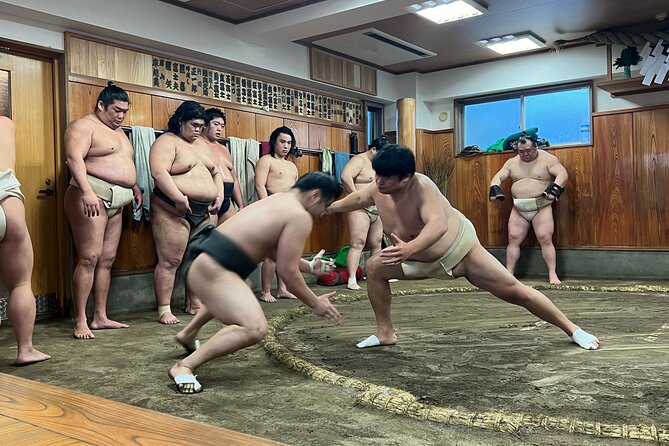
Tokyo sumo morning training has a certain feeling. It is not a loud show for tourists. It is a working environment, with routines you can almost hear in your bones: warmups, practice bouts, drills, and the steady focus of athletes who treat every movement like it matters.
That is what makes this experience different from the typical “tour of sumo.” You are given a guided window into how a stable runs, and you get a chance to ask questions while you are there. You are also close enough to notice details that vanish when you watch through a screen, like how methodical the footwork is and how disciplined the pacing stays from segment to segment.
One more reason I think this tour works for a lot of people: it welcomes both sumo die-hards and first-timers. If you only know sumo by the big tournament moments, this gives you the day-to-day structure that makes those moments make sense.
More sumo experiences in Tokyo:
- Tokyo: Sumo Show Experience with Chicken Hot Pot and a Photo
★ 4.8 · 6,678 reviews - Tokyo: Sumo Show and Dining Experience
★ 4.8 · 2,742 reviews - the SUMO show
★ 5.0 · 1,960 reviews
Stop 1 in Sumida City: a quick primer before you enter
You meet in Sumida City at 1-chōme-2-8 Chitose, Tokyo 130-0025. This is the kind of meeting spot that keeps things simple: it is near public transportation, and the tour ends back where it starts.
Right after you meet your guide, you get a briefing on sumo and what you are about to see. It is short, about 5 minutes, but it matters. Without a primer, you can end up watching a blur and missing why the wrestlers do certain things in sequence.
Then you head to the stable. The timing of the morning practice is not identical every day, so the exact meeting time can vary by tour date. After you reserve, you receive specific details for your session. Also, the facility requests that you use the restroom before arriving at the meeting point, so take care of that early and avoid any awkward pauses right before you start.
Stop 2 at the stable: the dohyō rules, the quiet watching, and what you will see
At the stable, you enter the training area and watch the wrestlers go through their daily routine. The key word here is quiet. The experience is structured around respectful observation, not participation in the ring.
Shoes, seating, and the dohyō access rules
You should know the rules before you get there, because they shape your view of the action:
- Men must remove their shoes before stepping onto the dohyō (the sumo ring).
- Women are welcome, but they are not permitted to enter the dohyō due to religious and cultural traditions at the facility. Women can fully participate from designated seating areas.
- Some stables may not have chairs, so you may sit on the floor. Wear clothes you can sit in for a while.
These rules are not tiny details. They change the rhythm of the visit. If you are expecting lounge-chair comfort, plan for a more grounded experience. If you are fit and you travel with patience, you will actually find it easier to focus when you are sitting low and watching carefully.
A few more Tokyo days worth comparing
- Mt Fuji and Hakone 1-Day Bus Tour Return by Bullet Train
★ 5.0 · 26,383 reviews - 1-Day Tokyo Bus Tour
★ 5.0 · 14,250 reviews - Tokyo: TOKYO SKYTREE® Admission ticket
★ 4.5 · 11,192 reviews - Tokyo: teamLab Planets TOKYO Digital Art Museum Entry Ticket
★ 4.6 · 9,779 reviews
Phones, flash, and behavior
The stable has strict boundaries for a reason: wrestlers need concentration and routine.
Plan on:
- Keeping your cellphone on silent
- Watching quietly and not interfering with training
- Photos being allowed, but only without flash or shutter sounds
- Videos not allowed
There are also etiquette points that sound small until you are standing near the ring. For example, do not stretch your legs toward the ring because showing the soles of your feet is considered impolite. Also, you cannot leave the stable in the middle of the practice, and once you leave, you cannot re-enter. So once you are in, commit to staying until the end of your session.
How long it feels versus how long it is
The tour lists about 1 hour approx., with 55 minutes at the stable. Still, real mornings can vary. The practice and tour length may be slightly shorter or longer depending on what the wrestlers do that morning. If a Grand Tournament is coming up, the schedule can shift and the practice may end earlier than usual, which can make your tour shorter.
Here is my practical take: treat it like “plan for the full session, then enjoy what extra time you get.” That mindset makes the timing variations less annoying.
A note on who you might see
You may hear that you are visiting a stable where a yokozuna trains. The catch is simple: it is not known until the morning of whether the yokozuna will actually be there. You should still expect a high-level atmosphere because the stable is the real deal, but do not buy your day with the assumption that a specific top wrestler will be present.
The guide and English headset commentary: what turns observation into understanding
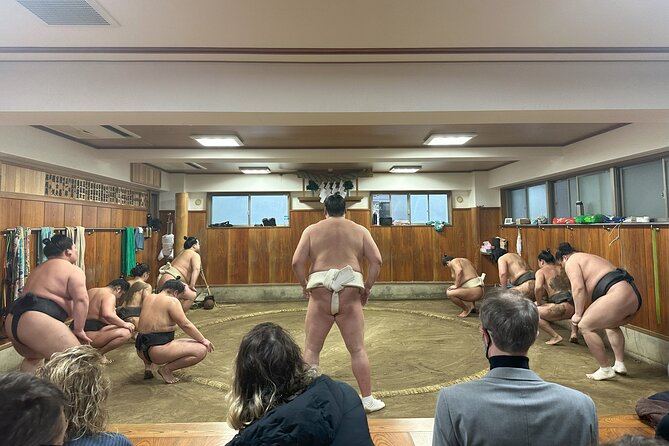
This is the part I think most people will feel, even if they cannot explain it. Watching sumo practice is fascinating, but explanation is what makes it addictive.
Your guide accompanies you and provides insights into how sumo works and what you are seeing during training. In the better moments of the experience, you get that rare combo: someone who can translate the sport into plain language, without turning it into a lecture.
Also, the narration can be delivered with English headset commentary. That is huge for first-timers. You can track the routine while it is happening, instead of pausing your attention to read a guidebook page.
And yes, you can ask questions along the way. If you are the type who wonders why they do certain warmups, how training cycles work, or what etiquette means, this tour gives you a place to ask without slowing down the wrestlers.
The photo with a sumo wrestler: a real souvenir moment, not just a pose
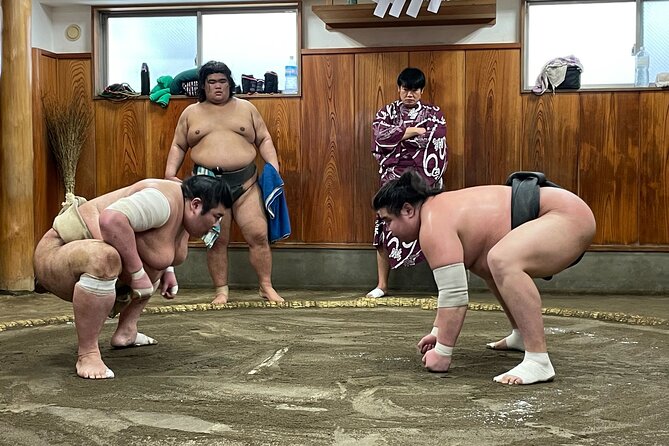
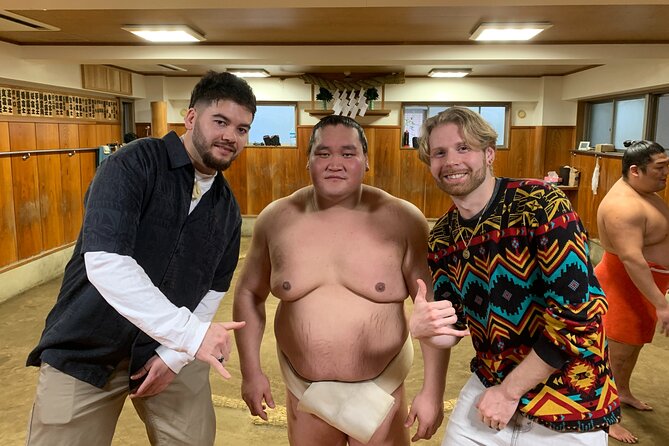
One of the strongest “remember this” features is that the experience includes a photo with a sumo wrestler. That turns the day from observation into a tangible memory.
How to make it go smoothly:
- Be ready to follow the staff instructions quickly. Stable schedules move fast.
- Keep your posture relaxed. The wrestlers are used to photos, but the environment stays calm, so do not treat it like a noisy concert moment.
- If you are bringing a camera, have it ready before the photo window begins, since you are not going to want delays inside the restricted space.
I also like that the wrestlers are described as friendly and supportive during the photo time. That does not mean the session becomes casual and silly, though. You still keep the respectful vibe.
Price and value: is $99.10 worth it for an hour?
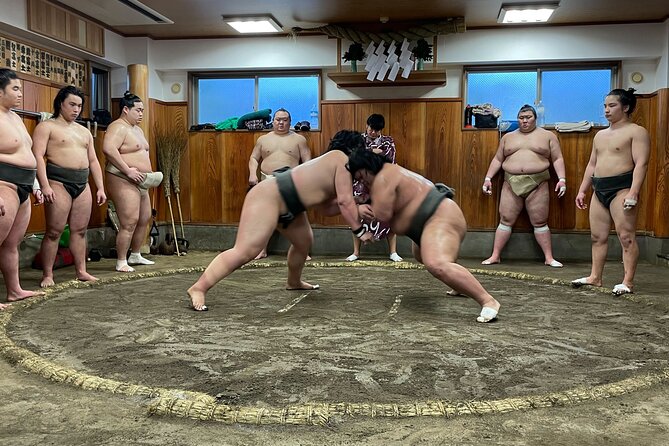
At $99.10 per person, this is not a cheap morning activity. So the real question is what you are paying for.
You are not paying for a generic viewing platform. You are paying for:
- Rare access to a Tokyo stable for morning training
- A guide who explains what you are seeing and answers questions
- English support through headset commentary
- A included photo with a wrestler
- A small-group feel, with a maximum of 25 travelers
- Admission ticket coverage included for the stable area
Also, the tour does not sell you lunch plans or big extras. Eating is not allowed inside the stable. You can drink water and sports drinks, but food is off-limits. That keeps the environment focused and respectful, but it also means you should do your breakfast planning before you arrive.
Where the price can feel tricky is if your expectations are built around nonstop action, like you would see in a tournament ring. This is training, so the intensity is real, but it may not look like a constant series of dramatic bout finishes.
My value check: if you want to understand sumo as a daily discipline, not just a match spectacle, the price makes sense. If you only want the biggest highlights, you may wish the session had more show-like action.
What to wear and pack: your comfort affects your enjoyment
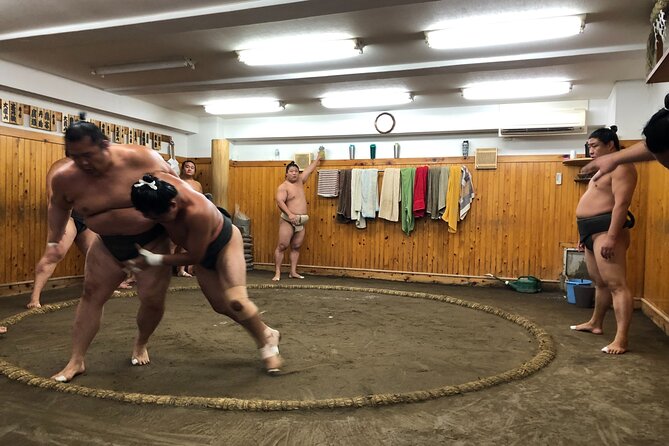
This is a morning training visit, and comfort is not a side issue. It affects how well you can watch.
Here is what I would plan for:
- Dress in comfortable clothes you can sit in for a while
- Bring warm layers. Multiple people describe chilly conditions, especially when you wait outdoors in winter weather.
- Expect you may need to sit on the floor, so avoid stiff materials that get uncomfortable fast
- Use the restroom before you arrive at the meeting point
- No eating inside the stable, but you can have water or sports drinks
One more practical detail: because phones must be on silent and flash is prohibited, get your camera settings sorted before you go in. It saves stress at the worst time.
Who this tour is best for, and the situations where it may disappoint
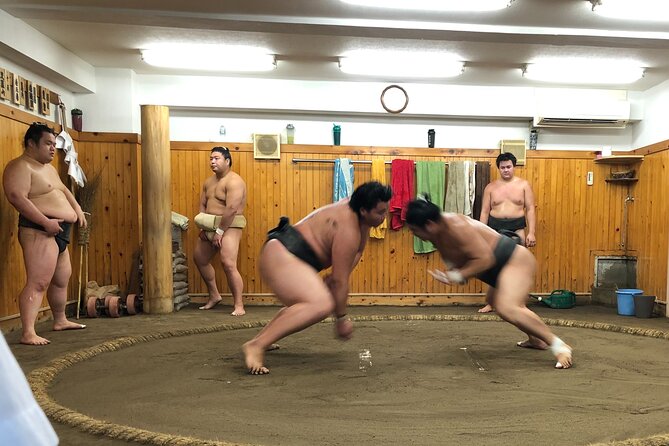
This is a great fit if:
- You are a sumo fan who wants to see how training actually happens
- You are new to sumo and you want the “how it works” context, with English help
- You like cultural experiences that follow rules and show respect
- You want a small-group morning activity in Tokyo that feels close to real life
It may feel less satisfying if:
- You expected constant match-like action with frequent ring bouts
- You are sensitive to sitting on the floor for a long stretch
- You dislike strict viewing rules around phones, flash, and not leaving early
- You get stressed by schedule changes, since the morning practice time can vary, and the session may run shorter depending on the day
There is also a communication angle. One concern that comes up in feedback is that the pre-practice explanation location can be noisy, making it harder to hear. The good part is that your guide is there to explain, and the headset narration can help, but it is still worth arriving with patience and a warm mindset.
Finally, note that the yokozuna might or might not be present. If you are chasing a specific wrestler, take a “chance, not guarantee” approach.
Should you book this Tokyo sumo morning training visit?
I would book it if your goal is to understand sumo from the inside. The best part is not just seeing wrestlers in motion. It is the combination of guided explanation, close viewing, and a structured, respectful stable visit that feels like more than a tourist performance.
I would hesitate if you want a show that feels like a full tournament session, because this is practice. Also, if you cannot handle sitting on the floor in cool conditions, or you dislike etiquette-heavy experiences, look for an alternative sumo event that fits your style better.
If you do book, show up ready: warm layers, silent phone, no flash, and your best “watch first, ask later” attitude. That is what makes the experience rewarding instead of rushed.
FAQ
How long is the sumo training experience?
The tour is listed at about 1 hour (approx.), with around 5 minutes for the first briefing and about 55 minutes inside the stable. The practice and tour length may vary slightly depending on the morning routine.
Where is the meeting point?
You meet at 1-chōme-2-8 Chitose, Sumida City, Tokyo 130-0025, Japan. The tour ends back at the meeting point.
Does the meeting time stay the same every day?
No. The location and time of the morning sumo practice may vary depending on your tour date. After booking, you should receive specific meeting point and time details.
Is the stable admission included?
Yes. The ticket for the stable area is listed as free in the activity details, and you watch from within the stable.
Can I eat or snack during the tour?
Eating is not allowed inside the stable. You may drink water and sports drinks.
Can I take photos or record video?
Photos are allowed as long as there is no flash or shutter sounds. Videos are not allowed.
Are women allowed to join?
Women can join the tour. However, due to religious and cultural traditions at the facility, women are not permitted to enter the dohyō ring. Women can fully participate from designated seating areas.
Do I need to remove my shoes?
Men must remove their shoes before stepping onto the dohyō. The facility also requires careful respect of the space and rules once you are inside.
What if my plans change?
You can cancel for free up to 24 hours in advance of the experience start time for a full refund. If you cancel less than 24 hours before, the amount you paid will not be refunded.
Fresh options around Tokyo
- Tokyo: Nikko Kegon Falls Lake Chuzenji Toshogu Temple & More★ 4.9 · 12 reviews
- Tokyo: Samurai History Walking Tour★ 5.0 · 12 reviews
- Harajuku: Kawaii Fashion and Pop-Culture Tour★ 4.7 · 12 reviews
- Tokyo: Mt. Fuji & Lake Kawaguchi Instagram Full Day Trip★ 4.1 · 12 reviews
- Shibuya Tokyo: Modern Kintsugi Workshop in Shibuya★ 5.0 · 12 reviews
- Tokyo: GTR Guided Daikoku Experience at Night★ 5.0 · 12 reviews
- Tokyo: Daikoku JDM Car Culture Tour★ 4.6 · 12 reviews
- Mt Fuji Private Day Trip from Tokyo with English speaking driver★ 5.0 · 13 reviews
Morning, compared.
Kyoto Early Morning Tour with English-Speaking Guide
Read our review →Early Morning Tour with English-Speaking Guide
Read our review →
World Heritage Shirakawa-go Morning Guided Tour
Read our review →
Nara Early Morning Tour (Kyoto or Osaka Departure Available)
Read our review →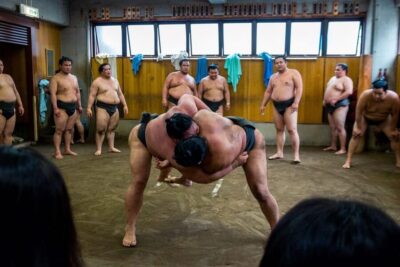

Hiroshima in a Nutshell: Morning Bike Adventure
Read our review →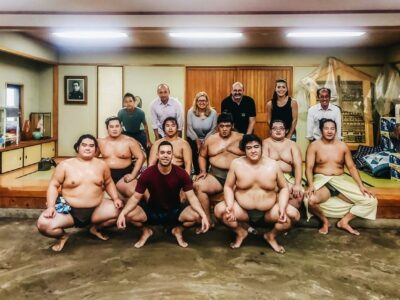
Browse the lists this tour appears in