
Reviewed · MORNING
Tokyo Sumo Morning Practice: Viewing & Exclusive Interaction
Sumo in Tokyo is one thing. Sumo practice up close, with wrestlers talking back, is another. This 3-hour morning visit in Sumida brings you into a working stable, where you learn the rules and rituals before you see the real work. Then you finish with an exclusive wrestler Q&A and photos, plus an official Banzuke ranking sheet gift.
What I like most is the balance of structure and access. You are not just watching from far away, you get real context from an English-speaking guide, with names like Haru, Momo, Sana, Sarah, and Ryoko showing up in past group experiences. And you get the kind of end-of-session access that makes sumo click as a lived sport, not just a tradition on a postcard.
The main thing to consider is that this is an early, rule-focused visit. Expect quiet behavior, no flash, and no video or audio recording, plus food is not allowed. If you are hoping for a relaxed breakfast-style outing, this will feel more like training class than sightseeing.
Key things that make this Tokyo sumo morning practice worth it
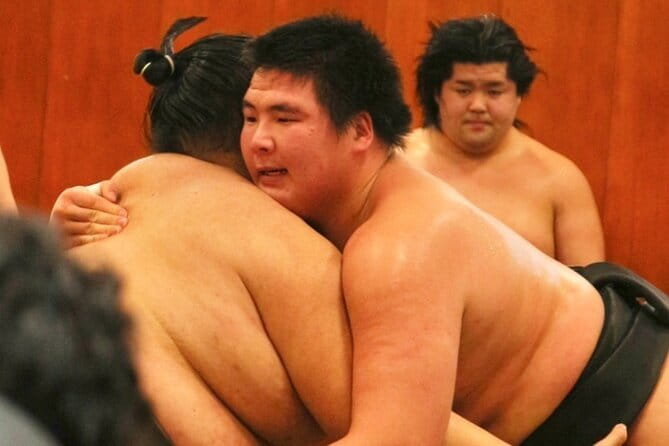
- Active stable access: you see professional training that is usually closed to outsiders
- Ritual first, then training: your guide sets etiquette and what to watch before you enter
- Flexible seating: zabuton floor cushions in front, stools in back
- Private-style interaction: Q&A and photos facilitated by your guide
- Official Banzuke souvenir: the ranking sheet arrives in a dedicated folder
- Extra park Q&A time: you get time to ask follow-ups at the end
Meeting at Narihira Park, then getting your sumo manners right
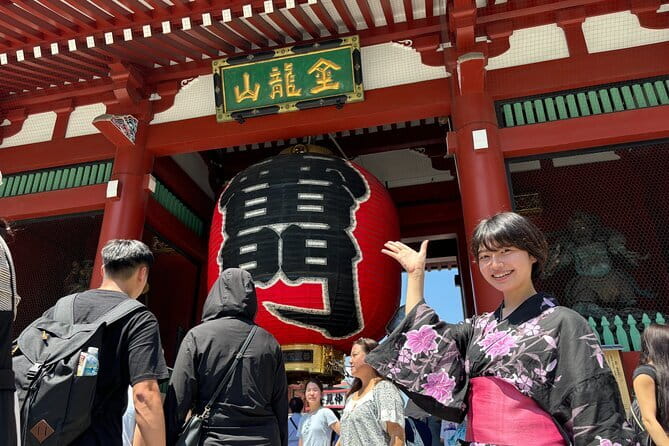
The tour starts at Narihira Park, meeting near the multipurpose restroom. Your guide checks your name, hands out materials related to sumo, and gives you a quick briefing on manners and what to expect during the visit. This matters more than you might think. Sumo training runs on routine and respect, and the guide’s job is to help you fit in without stepping on the moment.
Before you walk over to the stable, you are set up with the basics: how matches work, why rituals matter, and how etiquette shows up in everyday behavior around the ring. That heads-up makes what you see next feel readable instead of random spectacle.
Also, this tour includes a steady rhythm that keeps you from feeling lost in translation. English-speaking guidance is part of the package, and past guides such as Sarah and Sana are specifically called out for being professional and helpful. If you care about understanding what you are looking at, that early explanation is your best friend.
One practical note: transportation to the meeting point is not included, so plan your route into Sumida ahead of time.
More sumo experiences in Tokyo:
- Tokyo: Sumo Show Experience with Chicken Hot Pot and a Photo
★ 4.8 · 6,678 reviews - Tokyo: Sumo Show and Dining Experience
★ 4.8 · 2,742 reviews - the SUMO show
★ 5.0 · 1,960 reviews
The short walk to an active sumo stable, where training is the point
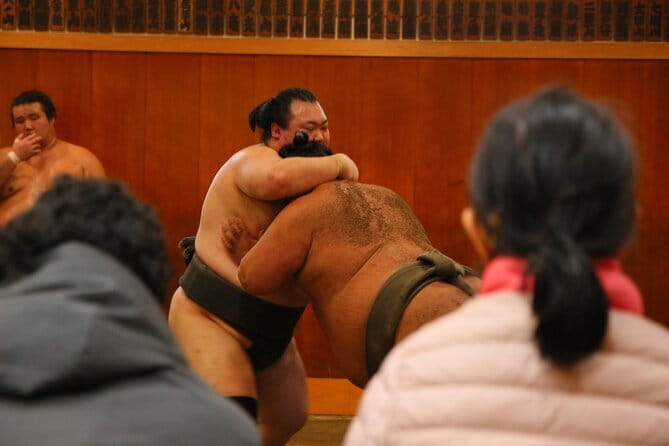
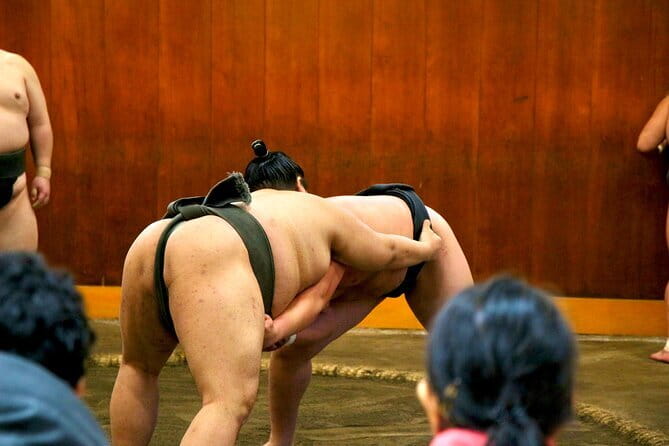
After the briefing, you take a short walk to an active sumo stable. This is the core reason to book. You are not treated like a casual observer. You are entering a working environment where bodies warm up, routines repeat, and discipline is visible in motion.
Once inside, you witness the raw physical side of sumo training. Even if you only know sumo from televised tournament days, practice is where the sport’s logic shows up: repetition, positioning, grappling intensity, and the mental focus wrestlers bring before the cameras ever arrive.
The tour is built to help you see the difference between performance and training. That distinction is what turns sumo from a curiosity into a sport you can follow. A good guide will point out what to watch, and then step back so you can watch for yourself.
And yes, it can feel intense up close. One review described it as a little overwhelming, but also eye-opening in terms of how hard the regimen is. If you are the type who likes your travel experiences authentic and slightly challenging, you will probably enjoy that energy.
Zabuton cushions in front or stools in back, and why it changes your experience
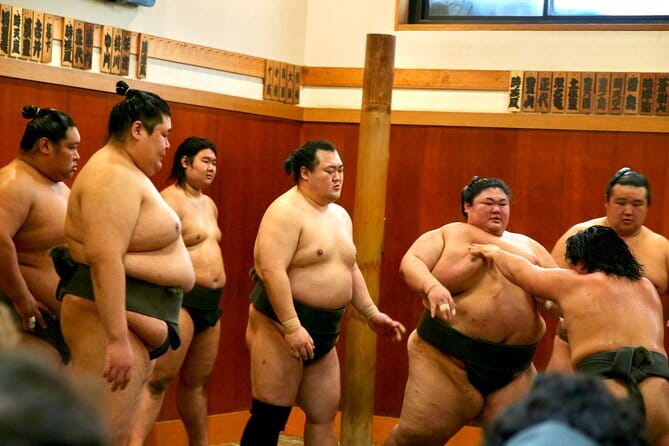
Inside the stable, seating is flexible. You can choose to sit on traditional floor cushions, zabuton, in the front row for a more immersive view. If you prefer not to sit on the floor, there are stools available at the back.
This choice affects more than comfort. It affects how close you feel to the action and how easy it is to stay still and quiet for the session. Front-row zabuton seating puts you closer to the warm-up movements and training rhythm, so you feel the intensity in a more immediate way. Back-row stools give you a better chance to last through a longer standing or shifting posture without fighting your legs.
In other words, treat seating like part of the strategy. If you come in with a plan for your comfort, you will be able to focus on what the guide is teaching and what the wrestlers are doing.
Remember the rules: you can take photos, but you must stay quiet during practice and follow guidance on seating position. Also, flash photography is not allowed.
Exclusive wrestler Q&A and photos, with guided questions that land
This tour’s standout feature is the time with active wrestlers right after practice. You do not just get a photo from a distance and move on. Through your guide, you get an opportunity to talk, ask questions, and take commemorative photos together.
That guided structure is key. Wrestlers are athletes, not entertainers trained to answer broad tourism questions. Your guide helps shape questions so they connect with daily life and training. Based on group experiences, common topics include daily routines, what practice looks like, and mindset as an athlete.
Past experiences also highlight that the wrestlers are generous with their time. Names like Haru, Momo, and Ryoko show up in accounts of guides who explain what is happening at the start and then keep the Q&A flowing at the end. When the Q&A is run well, it feels like a cultural exchange instead of a hurried checklist.
You should also know that some groups report getting additional participation, such as being invited to try grappling or a brief sparring moment in the dojo. Your tour guide will manage that moment and keep it respectful. If you want to do something active, this is the section where you might get that chance, but only if the stable allows it that day.
Photo time is also a big deal here. Having a wrestler in the same frame, after you have seen training up close, makes the picture mean more than a souvenir snapshot.
A few more Tokyo days worth comparing
- Mt Fuji and Hakone 1-Day Bus Tour Return by Bullet Train
★ 5.0 · 26,383 reviews - 1-Day Tokyo Bus Tour
★ 5.0 · 14,250 reviews - Tokyo: TOKYO SKYTREE® Admission ticket
★ 4.5 · 11,192 reviews - Tokyo: teamLab Planets TOKYO Digital Art Museum Entry Ticket
★ 4.6 · 9,779 reviews
The Banzuke souvenir folder and the park closing session
After practice, you head back to Narihira Park for a special closing. Here is where you get the official Banzuke, a sumo ranking sheet, inside a specially designed souvenir folder. It is a concrete reminder of what you just learned, not just a random keepsake.
The Banzuke gift also ties back to the explanation you get at the beginning. Instead of only absorbing tradition through observation, you end the tour with a physical object tied to the sport’s structure. That helps you remember what matters in sumo: rankings, progression, and why tournaments are such high-stakes moments.
Then comes the part that often turns a good tour into a memorable one: a final, park-based Q&A session with your guide. Rather than packing up and calling it done, you get more time to ask follow-up questions about sumo traditions and you can also ask for personalized Tokyo tips.
One of the nicest practical aspects is what this enables after the tour. You wrap up around 11:00 AM, which puts you in a good spot to head to nearby Tokyo Skytree or Asakusa. So you get both an early cultural morning and time to keep exploring afterward.
Timing in Tokyo: early mornings, tournament weeks, and how to plan your day
This is a morning practice tour, and the early hour is part of the deal. The session runs about 3 hours, and it is designed around active training schedules rather than sightseeing slots.
There is also an important timing note for tournament periods. During the Grand Sumo Tournament, which runs roughly two weeks in January, May, and September, practice starts about 30 minutes earlier and viewing time is about 1 hour. That means you get less viewing time during tournament weeks, but the tour still follows the same general flow of etiquette first, training viewing, interaction, and then the park closing.
What to do with that information? If you are traveling during a tournament month, expect the schedule to feel tighter around the stable portion. Keep your energy up and do not plan a complicated morning after. If you are outside tournament dates, you should get the more standard pacing for the visit.
Also, because practice is quiet and rules are strict, arrive on time. Late arrivals can compress your time with both seating and Q&A.
Price and value: what $93 buys you in real access
At about $93 per person for roughly 3 hours, this tour is not a bargain in the way a free museum stop is. But it is also not overpriced for what you get.
Here is the value equation:
- You are paying for stable access and an expert English-speaking guide.
- You receive an official Banzuke ranking sheet in a souvenir folder.
- The interaction component matters a lot: Q&A and photos with active wrestlers, not just observations from behind barriers.
Most importantly, you are getting a guided translation of a sport that has layers. If you show up without context, sumo can feel like costumes plus choreography. With the pre-briefing and the in-person explanations during and after practice, the sport becomes easier to understand quickly.
And the best part is you get that access without it turning into a staged show. Multiple accounts emphasize authenticity and the fact that this is tied to actual training.
If you are the kind of traveler who values learning by watching closely, asking questions, and leaving with something meaningful, this price starts to feel fair. If you only want photos and you do not care about rules, etiquette, or wrestling culture, you might feel less satisfied.
Who this Tokyo sumo morning practice is for, and who should skip it
This tour fits best if you:
- Want an authentic stable experience, not a performance
- Enjoy structured explanations that help you understand what you see
- Care about cultural etiquette as much as the sport itself
- Are comfortable with quiet rules and following instructions closely
- Can handle early morning timing
It may be a poor match if:
- You dislike sitting on the floor, even though stools are available at the back
- You want food included or you plan to snack during the session (food is not allowed)
- You need lots of casual sightseeing time during the visit
- You are traveling with children under 6, since it is not suitable
Should you book this Tokyo sumo morning practice?
Yes, if your goal is real access and a serious cultural moment in Tokyo. The combination of training observation plus exclusive wrestler Q&A, followed by the Banzuke souvenir, is the kind of package that actually changes how you see sumo.
Book if you are willing to follow rules, stay quiet, and show respect in a working training space. The guides, including names like Haru, Momo, Sana, Sarah, and Ryoko, come up for a reason: good guidance makes the whole experience feel coherent.
Skip or consider other options if early mornings are a dealbreaker for you, or if you are looking for a relaxed meal and lots of casual wandering. This is a training visit first, sightseeing second.
If you want, tell me your travel month and whether you are visiting during a Grand Sumo Tournament. I can help you think through timing and how to build the rest of your morning around that.
FAQ
Where is the meeting point for the Tokyo sumo morning practice tour?
You meet near the multipurpose restroom at Narihira Park. Your guide will check your name and provide materials related to sumo there.
How long is the tour, and when does it end?
The tour lasts about 3 hours and typically wraps up around 11:00 AM.
What kind of seating options are available at the stable?
You can choose to sit on traditional floor cushions (zabuton) in the front row, or use stools in the back if you prefer not to sit on the floor.
Is food included or allowed during the tour?
Food is not allowed during the experience, and it is not listed as included.
What are the photography and recording rules?
Photography is allowed, but flash photography is not allowed. Video recording and audio recording are not allowed.
Does the schedule change during the Grand Sumo Tournament?
Yes. During the Grand Sumo Tournament, practice starts about 30 minutes earlier and the viewing time is about 1 hour.
Fresh options around Tokyo
- Tokyo: Nikko Kegon Falls Lake Chuzenji Toshogu Temple & More★ 4.9 · 12 reviews
- Tokyo: Samurai History Walking Tour★ 5.0 · 12 reviews
- Harajuku: Kawaii Fashion and Pop-Culture Tour★ 4.7 · 12 reviews
- Tokyo: Mt. Fuji & Lake Kawaguchi Instagram Full Day Trip★ 4.1 · 12 reviews
- Shibuya Tokyo: Modern Kintsugi Workshop in Shibuya★ 5.0 · 12 reviews
- Tokyo: GTR Guided Daikoku Experience at Night★ 5.0 · 12 reviews
- Tokyo: Daikoku JDM Car Culture Tour★ 4.6 · 12 reviews
- Mt Fuji Private Day Trip from Tokyo with English speaking driver★ 5.0 · 13 reviews
Morning, compared.
Kyoto Early Morning Tour with English-Speaking Guide
Read our review →Early Morning Tour with English-Speaking Guide
Read our review →
World Heritage Shirakawa-go Morning Guided Tour
Read our review →
Nara Early Morning Tour (Kyoto or Osaka Departure Available)
Read our review →

Hiroshima in a Nutshell: Morning Bike Adventure
Read our review →
Browse the lists this tour appears in