
Reviewed · MORNING
Tokyo Sumo Morning Practice: Viewing & Exclusive Interaction
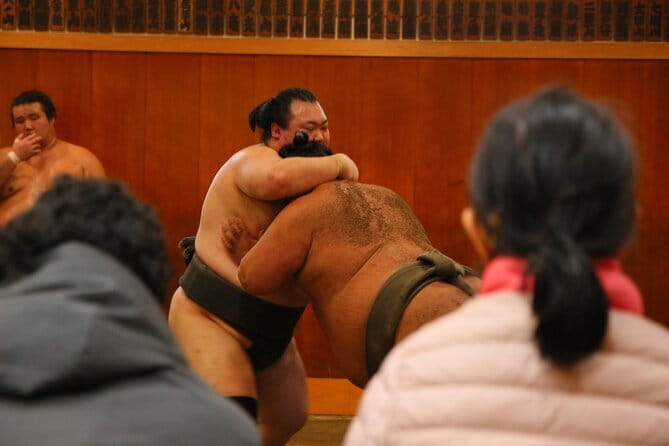
Sumo gets serious before sunrise. This Tokyo morning practice tour puts you close to real training, with an English-speaking guide to help you understand what you are seeing.
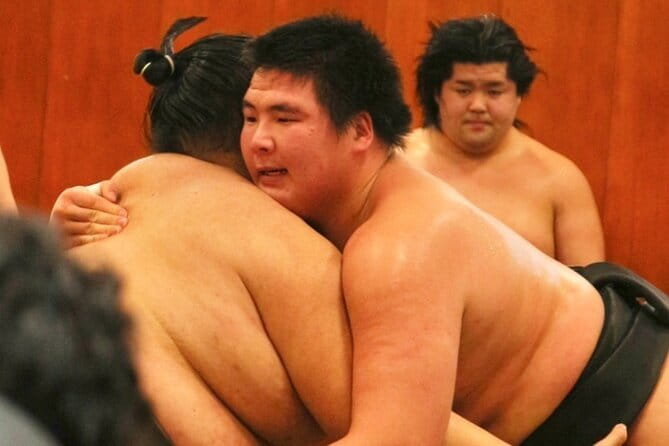
I love the up-close viewing at a working stable, where practice can include more than one kind of training. I also love the interaction time, since you get a Q&A and a photo session with the wrestlers.
One thing to consider: traditional rules around who can step into the ring can limit participation for some visitors, so keep your expectations flexible.
Key highlights you should care about
- Real stable atmosphere with a morning routine that feels like you are watching a daily job, not a performance.
- English-speaking guidance that helps you follow rituals, timing, and what different movements mean.
- Wrestler Q&A and photo time after the practice, so you are not just staring at athletes from far away.
- Official sumo souvenir: an official banzuke ranking sheet in a specially designed folder.
- Small-group feel is part of the appeal, with a tour cap of 45 travelers and reports of extra-intimate moments.
- Optional Japanese brunch after, which can turn your morning practice into a full local-culture outing.
Why a sumo morning practice beats tournament days
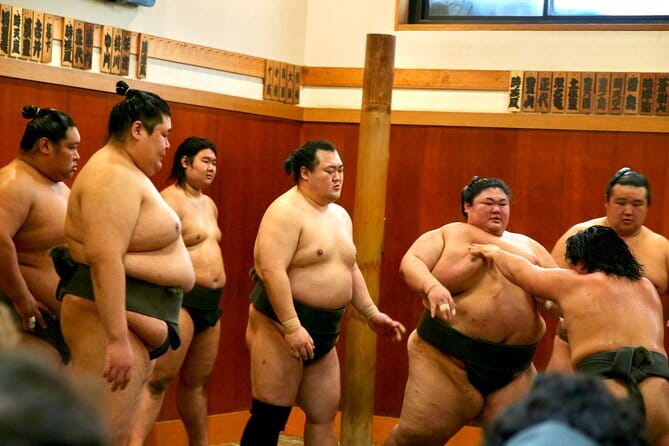
Tournament matches are the headline. Morning practice is the work behind the curtain. If you only catch sumo on TV or during a tournament, you miss the slow building of technique, conditioning, and discipline.
This tour is built around that daily rhythm. You are there while wrestlers are preparing, warming up, and working on skill in front of a small audience. The experience is especially valuable because sumo tournaments in Tokyo only happen a few times per year. If your trip does not line up with a tournament schedule, this gives you a meaningful way to see sumo in action.
And yes, it is close. You get viewing that is far more direct than you would get at many match settings. That closeness changes how you understand sumo. You start noticing posture, footwork, how they reset and adjust, and the effort it takes to do even the basic drills.
More sumo experiences in Tokyo:
- Tokyo: Sumo Show Experience with Chicken Hot Pot and a Photo
★ 4.8 · 6,678 reviews - Tokyo: Sumo Show and Dining Experience
★ 4.8 · 2,742 reviews - the SUMO show
★ 5.0 · 1,960 reviews
Meeting at Narihira Park, and why you should arrive early
The day starts back at Narihira Park, in Sumida City. The meeting point is 2-chōme-3-番 Narihira, Sumida City, Tokyo 130-0002, Japan, and the location is near a multipurpose restroom. That detail matters because morning plans are often tight, and having a clear landmark reduces stress.
You will also use a mobile ticket. That is simple, but I suggest you keep your phone charged and easy to access. Early-morning navigation plus a small paper backup is a smart way to avoid last-minute headaches.
If you are thinking about timing from Shinjuku, plan for an early start. Reviews included the kind of practical advice you would want to follow: taking an Uber to reach an early session can be worth it. And whatever you do, double-check you are going to the correct Narihira Park spot, since ticket descriptions have been known to be wrong. One wrong turn at 8 a.m. can waste the best part of the morning.
Stop 1: Orientation at the stable, where rituals start making sense
The first stop is an orientation session that begins at Narihira Park. This is where your guide gets you oriented before heading to the stable. The goal is not just trivia. It is so the practice feels legible.
You should expect a guided introduction that covers hidden history, rituals, and proper understanding of what sumo practice is about. The tone is practical: you learn what to look for, how to behave, and how to avoid treating a serious training setting like a noisy tourist stop.
If your guide sends any pre-reading or a quick message the day before, use it. One recurring pattern from guide feedback was that confirmation messages and short preparation materials helped people feel ready on arrival. That preparation can make the stable time much more enjoyable, because you are not trying to figure everything out in real time.
Stop 2: Morning practice viewing, what you will see up close
Stop 2 is the core event: morning practice viewing. Expect about 1 hour 30 minutes, and expect it to feel intense. This is not a staged show. It is genuine work, and that becomes obvious when you are close enough to hear impact and feel the physical intensity of training.
Depending on the day, you may see practice matches and repeated drills. Reviews described it as raw power you can feel, plus the excitement of seeing multiple practice styles and techniques. Even if you do not know sumo terms, the body language communicates everything: control, balance, timing, and effort.
A few more Tokyo days worth comparing
- Mt Fuji and Hakone 1-Day Bus Tour Return by Bullet Train
★ 5.0 · 26,383 reviews - 1-Day Tokyo Bus Tour
★ 5.0 · 14,250 reviews - Tokyo: TOKYO SKYTREE® Admission ticket
★ 4.5 · 11,192 reviews - Tokyo: teamLab Planets TOKYO Digital Art Museum Entry Ticket
★ 4.6 · 9,779 reviews
How to behave (so the experience stays respectful)
You will likely need to sit and stay quiet for a while. One review specifically warned that the viewing can require patience, up to around 2 hours depending on the training intensity and pacing. That means this is not a casual stroller-and-walkaround event.
So dress for sitting. Bring a layer if you run cold in the morning. And keep phones ready but discreet. You are there to watch athletes train, not to run a live stream.
Stop 3: Exclusive interaction, Q&A, and the photo session
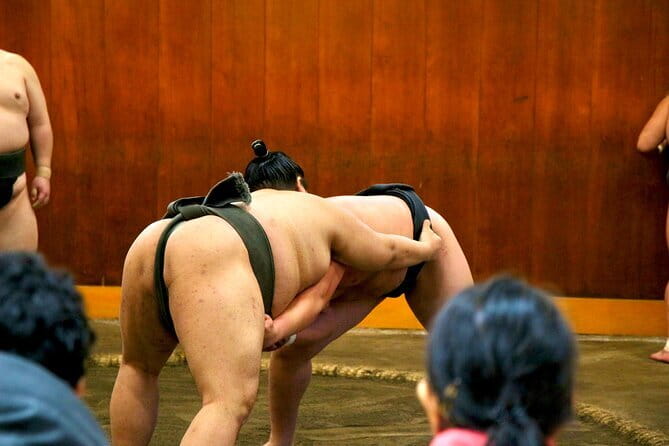
After the practice, the tour shifts from watching to connecting. Stop 3 is interaction with the wrestlers, including an exclusive Q&A and a photo session.
This is one of the most praised parts of the whole experience. People liked hearing direct answers, learning personal stories, and asking questions that go beyond surface-level sumo facts. The English-speaking guide helps translate between English and Japanese, so you are not stuck with a language barrier.
What you might ask, and how to keep it respectful
You will get the most out of Q&A if you ask about training routines, daily life, what a typical morning looks like, or how tradition shapes their approach. Keep questions short. You will get more time to connect if you aim for clarity over wordiness.
Photo time is usually structured, so listen carefully to your guide on when and where to stand. Bring a charged phone or camera. Nothing ruins a good souvenir moment like low battery.
A key consideration: traditional ring rules
There is a practical truth here: traditional sumo customs include ring access rules. One note from feedback said women are not allowed into the ring, and that impacted expectations for certain activities. Other feedback described men having a chance to go into the ring and even try pushing a wrestler in a controlled, fun way.
So here is the honest way to plan: treat ring interaction as a bonus if it is offered, not a guaranteed feature. Your sure things are the Q&A and the photo session. Everything else depends on the stable’s rules for that day and the flow of practice.
Stop 4: Closing session with the banzuke souvenir folder
Stop 4 is a closing session back at the park. This part is easy to underestimate, but it is one of the best “you did something real” takeaways.
Your guide presents an official banzuke (ranking sheet) in a specially designed souvenir folder. That means you leave with something you can reference later, instead of only photos in your camera roll.
This also functions as a final wrap-up: you get one more chance for extra Q&A, plus a clean transition back into your day. The idea is to give you a meaningful memory and context, not just an event stamp.
Optional Japanese brunch after sumo, a smart way to extend the morning
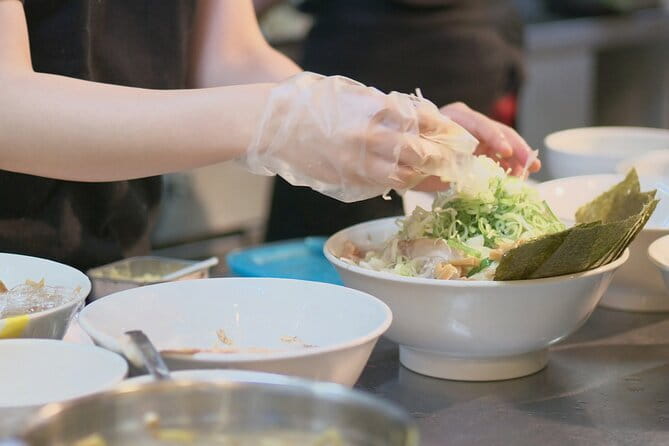
You get time after the experience for Tokyo sightseeing, and you can add an optional Japanese brunch. This is a nice value add if you want a local-style meal explained in a friendly way.
One detail from feedback: brunch is more like lunch in European terms, and the guides can help you choose dishes. If you want to budget, expect a rough range of 1,000 to 2,000 yen depending on what you eat.
I like the timing here. Sumo practice is structured and intense, and then brunch gives you a low-key payoff. It also reduces decision fatigue, since someone is helping interpret what you are ordering.
Price and value at about $95.77
At $95.77 per person, you are paying for a rare access window. The included items matter: an English-speaking guide, the sumo morning practice viewing fee, and the official souvenir set with the banzuke and folder.
So the value question is not only “am I entertained for 2.5 to 3 hours?” It is “am I getting access to a working stable routine, plus structured interaction time, plus a real cultural artifact at the end?”
There is also a timing reality to understand. The stated duration is about 2 hours 30 minutes to 3 hours, but at least one feedback note said their actual time felt closer to around an hour. That is why you should plan for the full schedule window rather than treating it like a tight, predictable clock. Morning training can run differently day to day.
If you go in expecting a close, respectful, and slightly quiet experience with interaction at the end, the price often feels fair. If you want a loud, nonstop “activity” style tour, you may feel underwhelmed because a lot of the value is in observation and context.
Who should book this sumo morning practice, and who should skip
This tour is a great fit if you want:
- A behind-the-scenes look at sumo training when tournaments are not happening.
- Close viewing and not just a far-away spectacle.
- Real conversation time via Q&A and a photo session.
It is also a strong family option in the sense that people brought kids and grandkids and found it memorable. Still, one caution from feedback is about quiet and sitting time, so bring the right expectations. If your group needs constant movement and distraction, consider whether the stable’s calm setting will work for you.
Finally, if you care about tradition and want to understand rituals and rules, the guide portion becomes a big part of the payoff. People loved the explanations, especially when they help you watch with better eyes.
Should you book this Tokyo sumo morning practice tour?
I would book it if you want a rare Tokyo morning experience with real access to sumo training, plus genuine interaction at the end. The combination of close viewing, a helpful English-speaking guide, and the banzuke souvenir makes it feel more substantial than “just watch for an hour.”
I would pause before booking if you are very concerned about ring access for your group members, or if you dislike quiet, seated time. Also, plan your morning so you are not rushing to catch other things right after. Even if the tour runs close to the expected duration, the whole point is to enjoy the moment, not sprint out the door.
If you want, tell me your travel dates and where you are staying (for example, Shinjuku, Asakusa, Ginza). I can suggest a realistic morning plan and what to build into the rest of your day around this experience.
FAQ
What is included in the Tokyo sumo morning practice tour?
The tour includes an English-speaking guide, the sumo morning practice viewing fee, and an official sumo souvenir set with the banzuke and an original folder.
How long is the experience?
It runs about 2 hours 30 minutes to 3 hours.
Where do I meet the guide?
You start at Narihira Park in Sumida City, near the multipurpose restroom. The address is 2-chōme-3-番 Narihira, Sumida City, Tokyo 130-0002, Japan. The tour ends back at the meeting point.
Is there time for sightseeing after?
Yes. The experience is designed so you have plenty of time for Tokyo sightseeing afterward.
Is brunch available?
An optional Japanese brunch is available after your experience.
What happens during the interaction time with the wrestlers?
You get exclusive Q&A and a photo session with the wrestlers.
How big is the group?
The tour has a maximum of 45 travelers.
Is the tour easy to reach and is it suitable for most people?
It is near public transportation, and most travelers can participate.
Can I cancel for free if my plans change?
Yes, you can cancel for free up to 24 hours in advance for a full refund.
What souvenir do I receive at the end?
You receive an official banzuke (ranking sheet) presented in a specially designed souvenir folder.
Fresh options around Tokyo
- Tokyo: Nikko Kegon Falls Lake Chuzenji Toshogu Temple & More★ 4.9 · 12 reviews
- Tokyo: Samurai History Walking Tour★ 5.0 · 12 reviews
- Harajuku: Kawaii Fashion and Pop-Culture Tour★ 4.7 · 12 reviews
- Tokyo: Mt. Fuji & Lake Kawaguchi Instagram Full Day Trip★ 4.1 · 12 reviews
- Shibuya Tokyo: Modern Kintsugi Workshop in Shibuya★ 5.0 · 12 reviews
- Tokyo: GTR Guided Daikoku Experience at Night★ 5.0 · 12 reviews
- Tokyo: Daikoku JDM Car Culture Tour★ 4.6 · 12 reviews
- Mt Fuji Private Day Trip from Tokyo with English speaking driver★ 5.0 · 13 reviews
Morning, compared.
Kyoto Early Morning Tour with English-Speaking Guide
Read our review →Early Morning Tour with English-Speaking Guide
Read our review →
World Heritage Shirakawa-go Morning Guided Tour
Read our review →
Nara Early Morning Tour (Kyoto or Osaka Departure Available)
Read our review →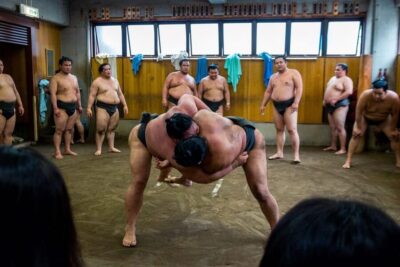
Hiroshima in a Nutshell: Morning Bike Adventure
Read our review →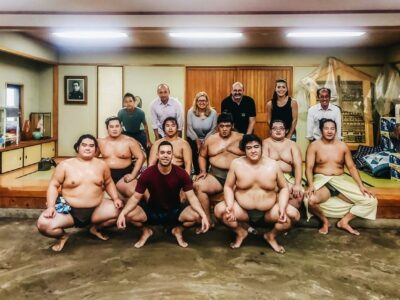
Browse the lists this tour appears in