
Reviewed · MORNING
Sumo Wrestlers Morning Practice Tour – Tokyo Sumida District
Sumo practice feels like quiet strength. This morning Sumo wrestlers training tour takes you to a Tokyo stable in the Sumida district, where you learn sumo history and rules and then get a close look at the real work. I really like that the guide helps you avoid the language barrier and cultural missteps, and I also like that the schedule leaves the rest of the day open for Tokyo. One note to plan for: this is training, not a full tournament-style show, so you should expect routines more than nonstop dramatic bouts.
What makes this work well is the early start and the small group size. You meet at 7:30 am near Oshiage (at 1-chōme-8-21 Oshiage, Sumida City), then you walk to the stable and spend roughly 2 hours total in the practice environment. The guide keeps the experience smooth, and you’ll get structured time at each stop so you know what you’re looking at and how to behave.
The biggest practical consideration is the stable seating rules. There are no chairs, and you’ll sit cross-legged on the floor for about 1.5 hours. If that’s tough for you, this could be a dealbreaker, because you also won’t be able to stand up or move around during practice.
Quick Hits You’ll Actually Care About
- Tokyo Sumida stable access, with a view that’s close enough to feel the intensity of training
- Guide-led context on sumo history, rules, and regulations, so you are not just guessing
- Real stable etiquette, including no shoes on the raised wooden floor and silent watching
- Photo opportunity after practice, with additional time that can depend on how the session runs
- A smooth morning schedule, then you’re back near the Skytree area for the rest of your day
- Max group size of 25, which helps keep the experience respectful and manageable
Why a Morning Sumo Practice Beats Watching From Afar
If your main goal is to see sumo up close, the morning stable session is the better story than a big arena highlight reel. Here, you get a front-row look at what the wrestlers do every day, not just what they do when cameras and crowds are tuned in.
I love that this experience is built around understanding. You’re not only watching bodies move. You’re learning why certain routines matter, and how the sport’s rules and regulations shape what you see. That context changes the whole feel of the practice. Instead of staring at muscle and size, you start noticing discipline, repetition, and the way the wrestlers treat the ring as sacred space.
Still, manage expectations. The training you see may not match the kind of full-contact images some people expect from social posts or tournament coverage. If you want nonstop, high-stakes action, you might leave wanting more. But if you want to understand how athletes prepare, this is the right kind of close.
More sumo experiences in Tokyo:
- Tokyo: Sumo Show Experience with Chicken Hot Pot and a Photo
★ 4.8 · 6,678 reviews - Tokyo: Sumo Show and Dining Experience
★ 4.8 · 2,742 reviews - the SUMO show
★ 5.0 · 1,960 reviews
Getting There: Oshiage Meeting Point, Then a 15-Minute Walk
The tour starts at 7:30 am, and the instructions are clear: be at the meeting point by 7:10 am. You’ll be met near public transportation in the Oshiage area, at 1-chōme-8-21 Oshiage, Sumida City, Tokyo. The plan then includes a walk to the stable.
It’s about a 15-minute walk from the meeting point to the stable. In rain, your feet can get wet, and you’re required to remove shoes once you’re inside. Bring a small towel just for that. It’s a tiny thing that makes a big difference to comfort.
The tour also ends back at the meeting point, so you’re not stuck across town in the middle of the morning. Since the start and end are near the Tokyo Skytree area, it’s easy to connect to whatever you want to do next, from sightseeing to a late breakfast.
In the Stable: Shoes Off, Silence On, No Chairs
This stable practice is as cultural as it is athletic. The rules aren’t vague, and they’re not optional details.
Here’s what matters most while you’re there:
- No shoes inside. You take them off right when you enter the stable’s raised wooden floor.
- No chairs. You sit on the floor cross-legged for about 1.5 hours.
- No standing up or moving around during practice.
- Watch quietly and respectfully. Phones must be on silent.
- No food, and no chewing gum or candies. Water is fine.
- Modest clothing only. Sunglasses and hats are not allowed in the stable.
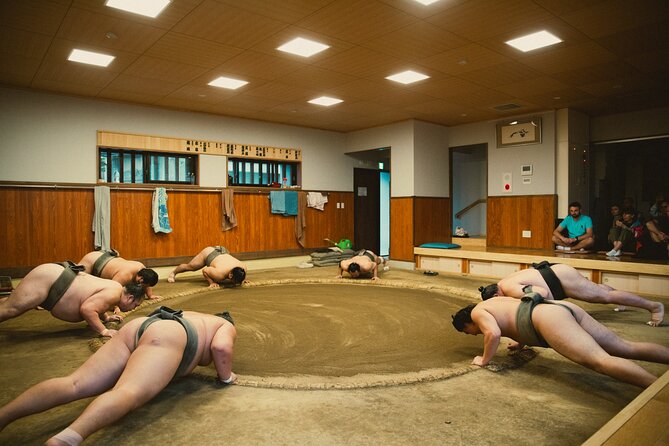
Two etiquette points can catch people off guard. First, you should not stretch your legs toward the ring. Second, you should not step down onto the ring or the sandy ground. The ring is treated as sacred space for the wrestlers, so your body language matters.
Photos and video are also specific. You can take photos, but only without flash and without shutter sounds. Videos are allowed, but you cannot upload photos and videos on any social media platforms. I treat that as a heads-up to plan what you’ll do with your phone before you arrive, because you do not want to be stuck troubleshooting camera settings mid-session.
Stop 1: Oshiage Orientation and the Shinto Roots You’ll Actually Remember
The first part of the tour happens around Oshiage, and it’s short. Think of it as your warm-up. You meet your guide and then you start moving toward the stable while the guide sets context for what you’re about to see.
What I like about this stop is that it prepares you to watch, instead of just observe. You’ll learn that sumo originated from Shinto, and you’ll get a sense of how history, rules, and regulations connect to the seriousness of the practice.
This is also where the language barrier gets handled for you. The guide’s job here is not only translation, it’s also helping you avoid awkward moments. Even if you know almost nothing about sumo, this start gives you enough grounding to understand the tone of the session.
Practical note: this stop is about 15 minutes and is admission-free. It’s not a long museum lecture. It’s meant to get you ready for the real thing.
A few more Tokyo days worth comparing
- Mt Fuji and Hakone 1-Day Bus Tour Return by Bullet Train
★ 5.0 · 26,383 reviews - 1-Day Tokyo Bus Tour
★ 5.0 · 14,250 reviews - Tokyo: TOKYO SKYTREE® Admission ticket
★ 4.5 · 11,192 reviews - Tokyo: teamLab Planets TOKYO Digital Art Museum Entry Ticket
★ 4.6 · 9,779 reviews
Stop 2: Sumida Morning Routine, Where You Learn by Watching
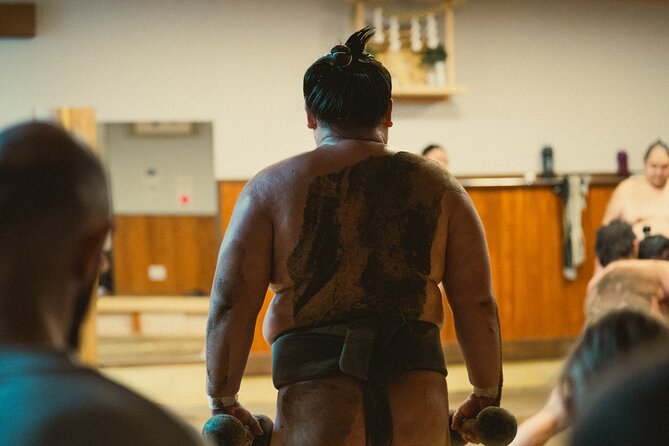
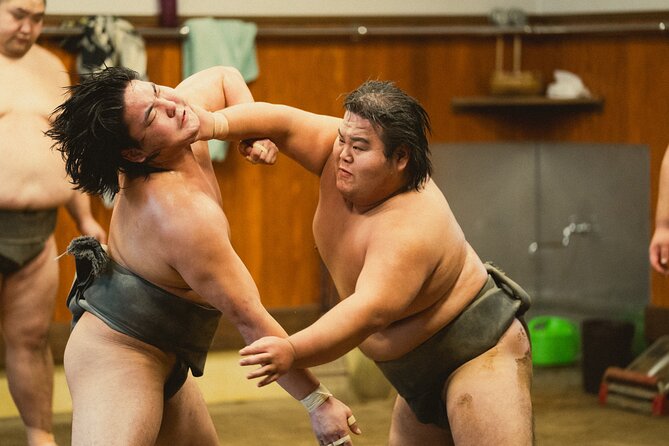
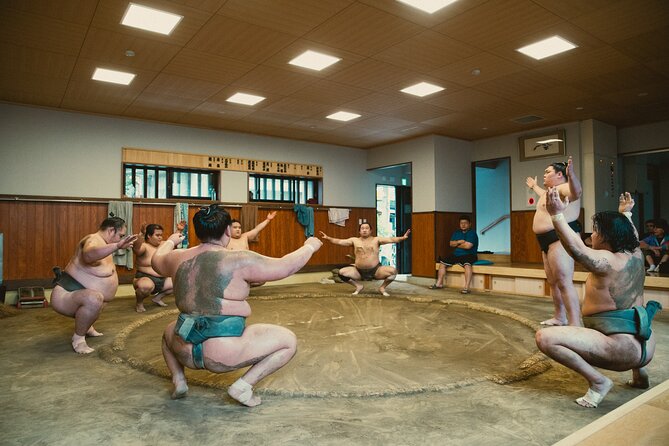
This is the heart of the tour. You’ll spend about 1 hour 30 minutes watching the wrestlers do their daily routine. You’ll be asked to keep quiet and sit properly, because the goal is respectful observation.
What makes this stop special is the contrast between size and control. Watching sumo training up close shows how much discipline and focus are built into the day. You’re not seeing a stage performance. You’re seeing athletes working on their craft, and the intensity is easy to feel when you’re close enough to hear the rhythm of the session.
You’ll also get more than just a silent show. The guide helps connect training actions to the sport itself, so you understand why things happen the way they do. Some people wish the explanation went even deeper into the training details, so if you’re the type who wants lots of technical background, lean into questions and listen closely during your guide’s talk.
One strong plus from experience reports is that the stable master or manager tends to be approachable after the practice. That Q&A time can add real value, especially if you want to hear about day-to-day life around training. People have mentioned getting insights such as how diet fits into the lifestyle, which is the kind of detail you would not figure out from watching alone.
Stop 3: Photo Time With the Wrestlers, and Why Timing Can Change
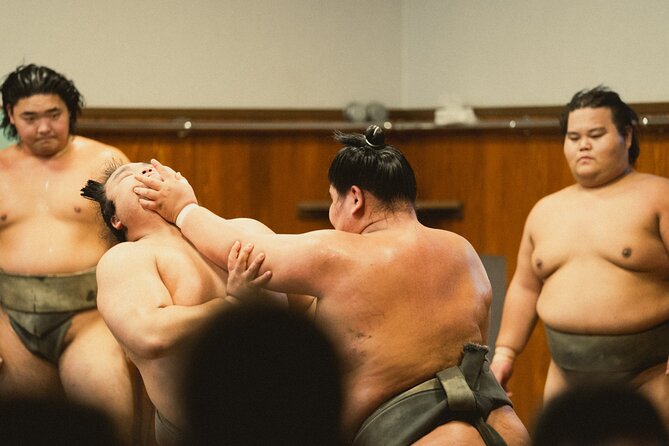
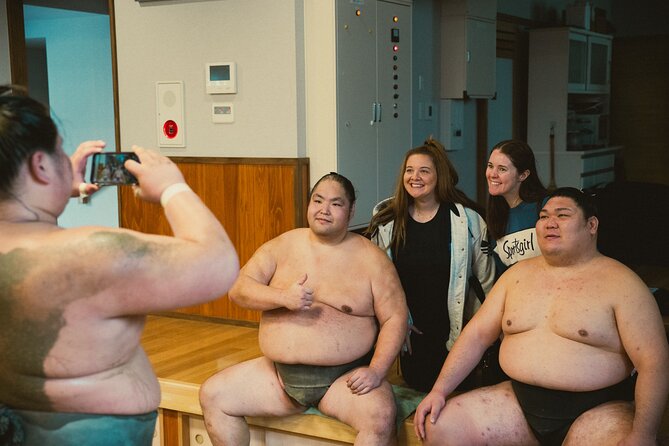
After the main practice, the tour includes a short photo stop. This is the moment many people remember, because you’re not only watching. You’re getting a chance to interact respectfully at the end.
There’s a catch: practice can end earlier than usual, which means the tour could be shorter than the posted timing. That can affect how much time is left for photos. Still, a photo opportunity is part of the plan, and the wrestlers are often described as friendly and willing to participate.
Also remember the stable photo rules. Photos are okay, flash is not. Keep your phone quiet, and follow whatever the guide instructs. The guide is there to keep things orderly and respectful, and you’ll want to stay aligned with their guidance.
If you care about getting a clean set of photos, arrive ready. Don’t burn your attention on camera settings before you enter. Once you’re in, your hands and focus need to stay where the guide tells you.
The Value Equation: What You Get for $83.23
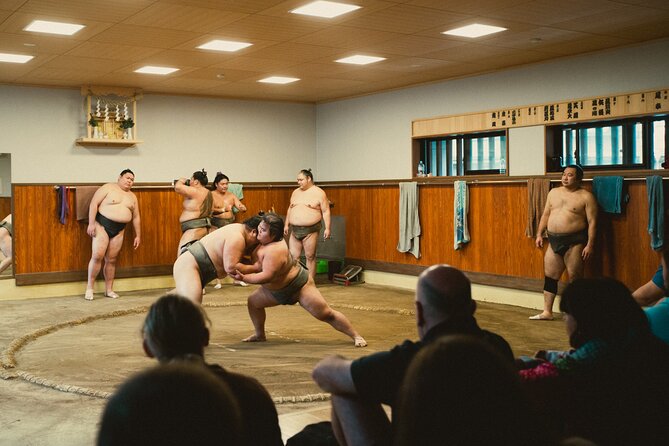
At $83.23 per person, this tour isn’t cheap in budget terms. But it can still feel like good value if you want three things in one morning: access, education, and structure.
You’re paying for:
- Stable access to a morning practice session, not a generic street-level view
- A guide who helps you understand rules and regulations and avoids cultural slip-ups
- A managed timeline that still gives you most of the day back for Tokyo sightseeing
- A small group setup (maximum 25 people), which keeps the experience workable inside a quiet stable
The biggest reason it feels worth it to many people is that it goes beyond match-day entertainment. A tournament is thrilling, but it’s also fast, loud, and crowded. This is different. You’re seeing the groundwork, and you’re learning enough to appreciate what you’re watching.
Still, I’d call it a “train like an athlete” experience, not a “watch a blockbuster match” experience. If your dream is full-contact excitement on repeat, you may be slightly disappointed. If your dream is genuine, respectful, ringside-level understanding, you’re in the right place.
Who This Tour Is Best For (and Who Should Skip)
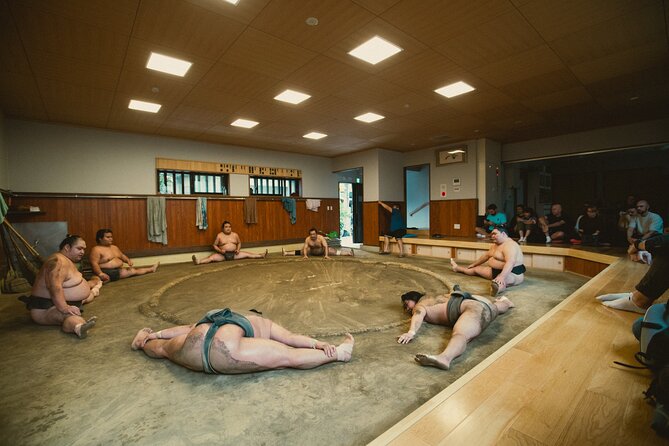
This tour fits best if you want an authentic culture experience and you’re comfortable with stable etiquette.
You’ll likely love it if:
- You’re curious about sumo rules and regulations, not just the fighting
- You want to see athletes close up in a quiet setting
- You can handle cross-legged seating for about 1.5 hours
- You enjoy guided education so you know what you’re watching
You might want to think twice if:
- You have trouble sitting on the floor for a long stretch
- You need lots of standing or walking breaks
- You’re only interested in dramatic match-style action
It’s also a family option with constraints. The minimum age is 6 years old, and kids who are noisy, move around, or cannot watch quietly may be asked to leave the stable during the tour. If you’re bringing children, plan for that discipline part, not just the photo part.
If you can accept a morning start, follow the rules, and treat the stable like a quiet workplace, this can be one of the most memorable mornings in Tokyo.
My Booking Advice: Should You Book This Sumo Morning Practice?
Book it if your priorities are understanding and access. The early start plus the close view plus the guided explanations creates a “you get it” experience, not just a “you saw it” moment. I also think the photo opportunity at the end adds a lot of personal payoff, as long as you’re okay with the photo timing depending on how the practice runs.
Skip it if your mental picture is a loud, full-contact wrestling show. This is morning training, with strict manners and a sacred ring setup. You won’t be able to treat it like a sightseeing stop.
If you decide to go, do yourself a favor: arrive early, wear modest clothing, leave hats and sunglasses out, bring a towel if rain is possible, and prepare for shoes off and quiet time. That’s how you get the smoothest experience and the best photos.
FAQ
What time do I need to arrive and when does the tour leave?
You should be at the meeting point at 7:10 am. The tour leaves at 7:30 am sharp.
How long is the tour?
The duration is about 2 hours (approx.). Practice may end earlier than usual, so the tour could be shorter on some days.
Are there chairs in the sumo stable?
No. There are no chairs. You’ll sit cross-legged on the floor for about 1.5 hours, and you should not stretch your legs toward the ring.
Can I wear shoes or keep my shoes on inside the stable?
No. You must remove your shoes as soon as you get into the stable. No shoes are allowed on the raised wooden floor.
Are photos and videos allowed?
Photos are allowed without flash or shutter sounds. Videos are allowed, but you cannot upload photos and videos on social media platforms.
What is the cancellation policy?
Free cancellation is available up to 24 hours before the experience starts for a full refund. If you cancel less than 24 hours before the start time, the amount paid is not refunded.
Fresh options around Tokyo
- Tokyo: Nikko Kegon Falls Lake Chuzenji Toshogu Temple & More★ 4.9 · 12 reviews
- Tokyo: Samurai History Walking Tour★ 5.0 · 12 reviews
- Harajuku: Kawaii Fashion and Pop-Culture Tour★ 4.7 · 12 reviews
- Tokyo: Mt. Fuji & Lake Kawaguchi Instagram Full Day Trip★ 4.1 · 12 reviews
- Shibuya Tokyo: Modern Kintsugi Workshop in Shibuya★ 5.0 · 12 reviews
- Tokyo: GTR Guided Daikoku Experience at Night★ 5.0 · 12 reviews
- Tokyo: Daikoku JDM Car Culture Tour★ 4.6 · 12 reviews
- Mt Fuji Private Day Trip from Tokyo with English speaking driver★ 5.0 · 13 reviews
Morning, compared.
Kyoto Early Morning Tour with English-Speaking Guide
Read our review →Early Morning Tour with English-Speaking Guide
Read our review →
World Heritage Shirakawa-go Morning Guided Tour
Read our review →
Nara Early Morning Tour (Kyoto or Osaka Departure Available)
Read our review →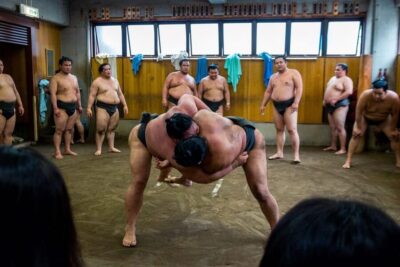

Hiroshima in a Nutshell: Morning Bike Adventure
Read our review →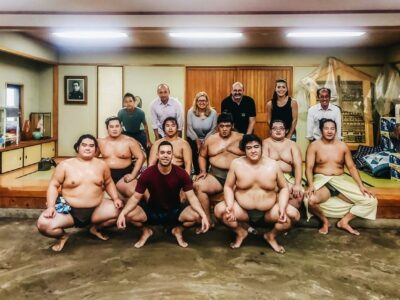
Browse the lists this tour appears in