
Reviewed · 1-HOUR EXPERIENCES
One Hour Geisha Show in Kyoto
A real Maiko is hard to catch in Kyoto. I love the up-close Maiko performance and the friendly Q&A that a guide like Genki helps you navigate, plus the chance to take photos and play a game. One thing to plan for though: the dancing is intentionally short, so the Maiko will not be performing nonstop for the full hour.
This experience is run by GuideMe Japan and delivered in two different settings, a Kyoto machiya style Tea House or a showhouse Gion Theater format, guided in English or Korean. If you want a rare cultural peek without a long day commitment, it can be a strong use of time, but you do need to follow the simple etiquette rules, like wearing socks and skipping bare feet.
Key highlights worth your attention
- Meet a rare Maiko in Kyoto (Kyoto is one of the only places where you can see this world in a traditional setting)
- A short dance sequence by design that protects the grace and exclusivity of the art
- Meaningful Q&A with translation help from guides such as Rin, Akari, and Chihiro
- Photos and videos are welcome, plus a dedicated photo moment after the performance
- A traditional game with the Maiko (Konpira Fune Fune shows up in the fun, and yes, I would lose too)
- Kitano Tenmangū Shrine add-on in the tea house option with a guided session and walk
Kyoto Maiko Rarity: Why This One Hour Feels Different
Kyoto has only a small number of active Maiko at any given time. That rarity matters, because you are not watching some hours-long staged show. Instead, you’re seeing a living art form in a controlled, respectful setting, with a real performer who is there for a short window.
I like that the show is built around presence, not volume. You get a close look at the performance style, and you also get explanations. The guides often translate and help you understand what you’re seeing, including what parts of the costume are communicating.
And yes, it’s picture-friendly. You get time to take photos and videos, which is great because Maiko hairstyles, makeup, and layered kimono details are hard to catch once you’re back outside trying to remember everything.
The flip side is expectation management. If you expect nonstop dancing for a full hour like a concert, you’ll be disappointed. The performance is brief on purpose.
More geisha experiences in Kyoto:
- Kyoto Geisha Walking Tour: Gion District & Hidden Gems
★ 4.7 · 3,273 reviews - Kyoto: Gion Magical Night Walking Tour with Geisha Trivia
★ 4.9 · 2,393 reviews - Kyoto: Gion Geisha District Walking Tour – Stories of Geisha
★ 4.7 · 2,187 reviews
Tea House vs Gion Theater: Where You Watch Changes the Feel
You have two booking options, and they affect the vibe, timing, and even wheelchair access.
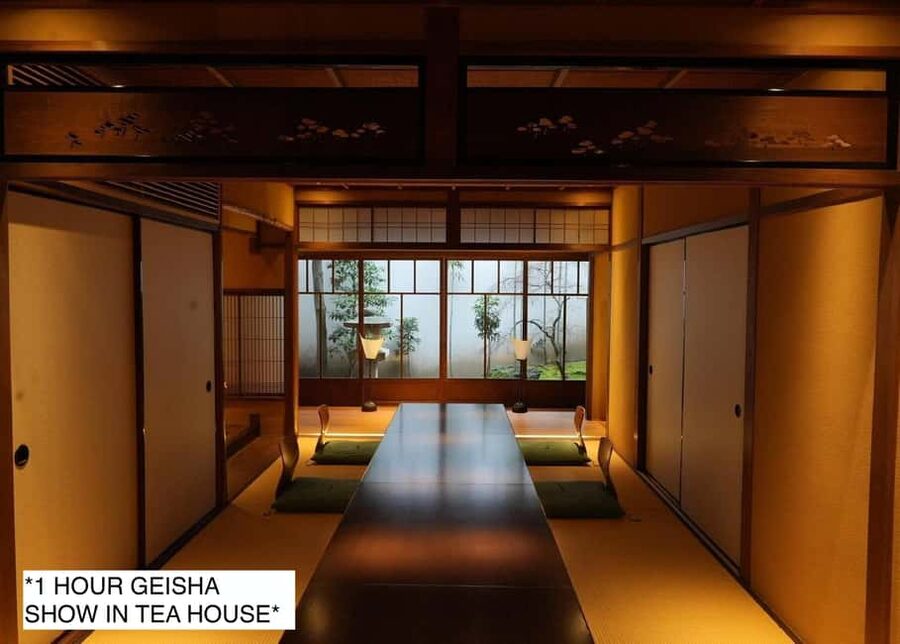
Tea House option (Kyo-machi-ya)
This is held in a Japanese Kyoto style townhouse (a Kyo-machi-ya). The room is smaller and more “inside Kyoto” feeling, and the flow typically includes tea and snacks as part of the visit. One extra perk: this is the option that includes the Kitano Tenmangū Shrine session, plus a guided walk that pairs the cultural setting with the performance.
From what I’ve learned from the experience style, guides do a lot of the bridging here. For example, Taira Yoshino has helped translate what the tea house owner shares about the Maiko world, so you’re not just watching, you’re also decoding.
Wheelchair access note: the Tea House option is not wheelchair accessible.
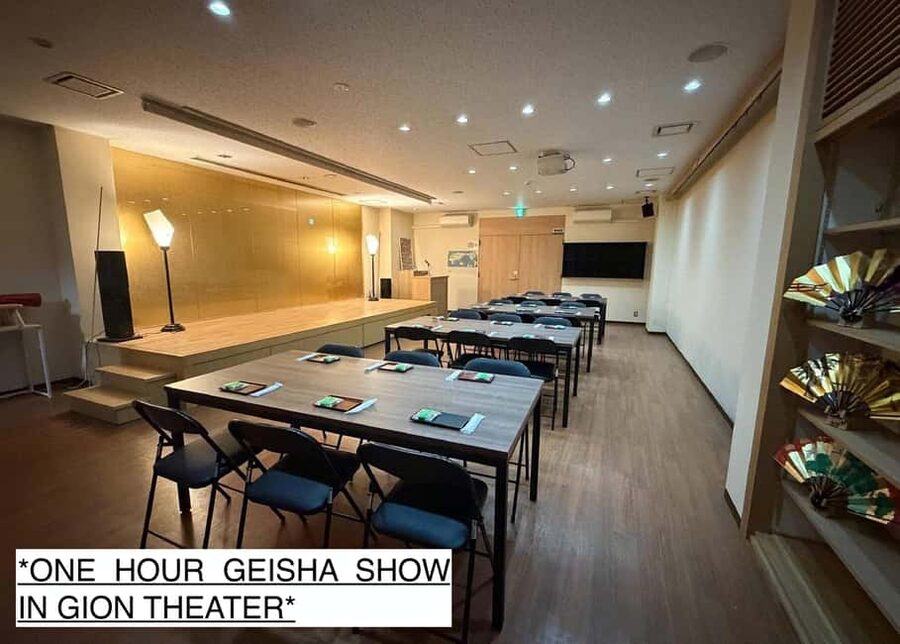
Gion Theater option
This one is in a showhouse. The setting can feel a bit more like a dedicated venue, and it also has a different capacity. Wheelchair access is listed as available for the Gion Theater option.
If you want to keep things simple, or you are traveling with mobility considerations, this option tends to be the safer bet.
A few more Kyoto days worth comparing
- PERFECT KYOTO 1-Day Bus Tour
★ 5.0 · 13,518 reviews - Kyoto: Fushimi Inari, Kinkakuji, Bamboo Grove 1 Day Bus Tour
★ 4.8 · 4,316 reviews - Kyoto: Tea Ceremony in a Traditional Tea House in Kiyomizu
★ 4.9 · 3,519 reviews - Kyoto: Tea Ceremony Ju-An at Jotokuji Temple
★ 4.9 · 3,207 reviews
Group size matters
Capacity is capped at up to 23 people for the Tea House option and up to 30 people for the Gion Theater option. Smaller numbers make it easier to see the performer clearly and to hear the guide’s translation during the Q&A.
Arriving at the Right Place: Umeno and Kitano Tenmangū
Your meeting point can vary depending on which option you book. One start location is 梅乃 (UMENO) at 302-2 Daikokuchō, Kohyo Kamishichikenten. For the tea house version, there is also a starting point connected with Kitano Tenmangū Shrine as part of the flow.
Drop-off locations match the structure, with UMENO, Kitano Tenmangū Shrine, and the 302-2 Daikokuchō address listed for the different options.
Why this matters: if you’re using your phone like a lifeline, get your meeting point sorted before you arrive. Kyoto can be confusing under time pressure, and you don’t want to be late when a short performance is scheduled.
First impressions: tea, snacks, and costume details you can actually use
Included in the experience is tea and traditional Japanese snacks. In similar setups, it’s often hot tea like matcha, plus a small snack to keep you comfortable during the program.
I like this part because it gives you a moment to settle. It also sets the tone: you’re not just “passing through” to watch dance. You’re being welcomed into a quieter cultural pocket.
Another high point is the quick introduction to the Maiko and her look. Guides such as Genki and Chihiro have helped explain how the dress, hair, makeup, and accessories connect to the Maiko role. Once you know what you’re looking for, those visual details stop being random and start telling a story.
The dance sequence: short by design, perfect for focus
The performance structure is built in layers.
- First, the Maiko performs a traditional dance lasting about 10 minutes.
- Then there are two additional dances, each about 5 minutes.
After that, the program shifts into Q&A and participation.
This is where you should adjust your mental schedule. The cultural reason is simple: performances are intentionally short to preserve the art’s exclusivity and the elegance of the moment. Practical reason: it keeps the experience respectful for the performer and gives you time to ask questions and interact afterward.
If you like close-up arts, this format works well. Watching two short dances after a longer opener helps keep your attention sharp. You’re also more likely to remember details when you aren’t half-distracted waiting for the next long segment.
Q&A, photos, and a traditional game with the Maiko
This is the part people tend to leave thinking about.
You get a Q&A session, and the guides handle the translation so you can ask real questions. Names you’ll see in the support team include Rin, Akari, Genki, and Chihiro. In many cases, the guide also steps in to help the Maiko and audience communicate smoothly.
If you’ve ever wondered what to ask when you see performers like this, use curiosity about craft. For example, you can ask about the role, the training feel, the costume meanings, or how the Maiko prepares for performance. The whole point is that you’re not stuck with silent admiration.
Then come the fun bits: photo-taking and videos are welcome, and there’s also a chance to play a traditional Japanese game with the Maiko. One game that shows up in the experience is Konpira Fune Fune, and the honest takeaway is that it’s hard, especially when you’re laughing and trying to keep up. I love that the experience includes this human, playful moment rather than only “watch and leave.”
Many people also appreciate the little personalized touches. For example, one experience included a name sticker gifted after the photo time.
Kitano Tenmangū Shrine: what you gain with the Tea House option
If you book the Tea House option, you also get a 30-minute guided session at Kitano Tenmangū Shrine with the Maiko, plus a walking component.
This is more than a bonus stop. It gives you context. Kyoto’s culture is tied to specific places, and a shrine visit helps the Maiko performance feel like part of a larger world, not an isolated event in a room.
The timing is also manageable. Thirty minutes is enough time to get the atmosphere without turning this into an all-day production. The Gion Theater option does not include this shrine add-on based on what’s offered.
Price and value: is $50 worth it?
At $50 per person, the biggest question is whether you’re paying for a show or for access.
You’re getting more than a basic performance:
- a real Maiko dance program with multiple short dances
- a Q&A segment
- photo-taking and video allowance
- tea and traditional snacks
- a professional guide in English or Korean
- and for the tea house option, an extra Kitano Tenmangū Shrine session
Group size caps also affect value. With up to 23 people for the tea house option and up to 30 for the theater, it’s not a huge crowd where you feel stuck behind shoulders.
The main cost risk is expectation. If you come wanting a nonstop hour of dancing, $50 won’t feel “high value,” because the performance is intentionally short. If you come wanting a real cultural encounter, $50 starts to look reasonable fast.
Duration also helps you compare. The experience runs from about 1 hour up to around 105 minutes, depending on option and whether the shrine time is included.
Practical tips that keep the experience smooth
Small rules here make a big difference, because cultural spaces can be sensitive.
Wear socks
Socks are required. Bare feet are not allowed. If you’re wearing sandals, bring a pair of socks that won’t be too slippery.
Skip strollers, alcohol, and drugs
Baby strollers are not allowed. Alcohol and drugs are also not allowed.
Plan for a phone number
You’ll be asked for a phone number reachable during your stay in Japan and on WhatsApp, so the team can confirm details clearly beforehand. This reduces the chance of confusion at the meeting point.
Mobility and age notes
- Tea House option: wheelchair access is listed as not available
- Gion Theater option: wheelchair access is listed as available
- Not suitable for people over 95 years
Who should book this Kyoto Maiko show?
I think this is a great fit if you:
- want a real, rare Kyoto Maiko experience rather than a generic dance show
- like interactive cultural experiences, not just watching from afar
- care about photos and videos, since there is time built in
- enjoy guided context, especially when a guide like Genki, Rin, or Akari helps you understand the costume and the role
It’s also a good “end of the day” option if you’re already in or near Gion. One common pattern people appreciate is pairing this with other Gion area activities, then ending with a close, human encounter rather than another museum stop.
FAQ
How long is the geisha show experience?
The duration is listed as about 1 hour, up to around 105 minutes depending on the option and what’s included.
What is included in the ticket price?
The experience includes the Geisha show (1 hour), tea and traditional Japanese snacks, a professional tour guide, and for the Tea House option only, a 30-minute Kitano Tenmangū Shrine session with the Maiko.
Are photos and videos allowed?
Yes. You are welcome to take pictures and videos, and there is also time for photo-taking during the program.
What are the two different show options?
You can choose the Tea House option or the Gion Theater option. The Tea House option is held in a Kyoto-style house, while the Gion Theater option is in a showhouse.
Does the tour visit Kitano Tenmangū Shrine?
Only the Tea House option includes a walking tour and a 30-minute guided session at Kitano Tenmangū Shrine with the Maiko.
What languages are offered by the guide?
The tour guide is listed as available in English and Korean.
Do I need to bring anything?
Bring socks. Socks are required, and bare feet are not allowed.
What is the group size limit?
The Tea House option has a maximum of 23 people. The Gion Theater option has a maximum of 30 people.
Is there wheelchair access?
Wheelchair access differs by option. The Tea House option is listed as wheelchair not accessible, while the Gion Theater option is listed as wheelchair accessible.
Is there free cancellation?
Yes, free cancellation is listed up to 24 hours in advance for a full refund.
Should you book this one hour geisha show in Kyoto?
If you want a rare Kyoto Maiko encounter with real interaction, I’d book it. The combo of multiple short dances, Q&A, and photo time hits the sweet spot for value, especially with a small group size and guides who help you understand what you’re seeing.
Skip it only if you’re expecting nonstop dancing for the full hour, or if you need the Tea House option’s wheelchair access (since wheelchair access is listed as not available there). Otherwise, this is exactly the kind of Kyoto cultural moment that is hard to recreate on your own.
Fresh options around Kyoto
- Kyoto Aquarium Admission Ticket★ 4.7 · 12 reviews
- Kyoto Gion Photoshoot – Private Session | Pro Photographer★ 5.0 · 12 reviews
- Gyoza Cooking Class in Kyoto: Traditional Japanese Dumplings★ 5.0 · 12 reviews
- Kyoto: Guided Food Tour with 12 Dishes & 3 Drinks★ 5.0 · 12 reviews
- Kyoto: Avoid the Crowds at the Hidden Gems of Arashiyama★ 4.9 · 13 reviews
- Kyoto Early Bird English Tour: Gion & Higashiyama(Private opt)★ 5.0 · 13 reviews
- Otsu-e Folk Art Workshop & Local Culture Walk Near Kyoto★ 5.0 · 13 reviews
- Kyoto, Osaka, Nara Full Day tour by Car English speaking Driver★ 3.5 · 13 reviews
1-Hour Experiences, compared.
Ninja 1-hour Hands-on Lesson by Japanese master in Kyoto -Entry
Read our review →
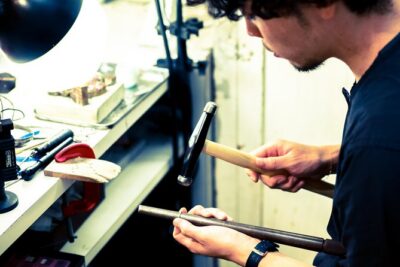
Ring making experience Completed in about 1 hour!
Read our review →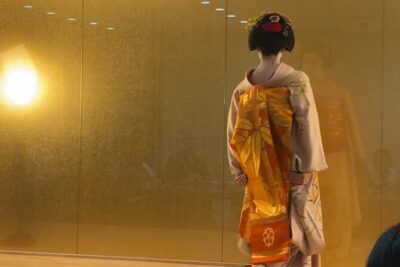
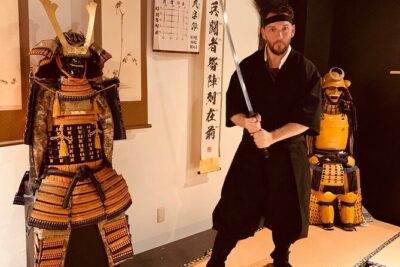
Ninja Lesson in Tokyo – 1 Hour Hands-On with Japanese Master
Read our review →
Hands-on Takoyaki and Okonomiyaki Cooking (1 Hour)
Read our review →
Browse the lists this tour appears in