
Reviewed · SAMURAI & NINJA EXPERIENCES
Ninja 2-hour Hands-on Lesson by Japanese master in Kyoto -Medium
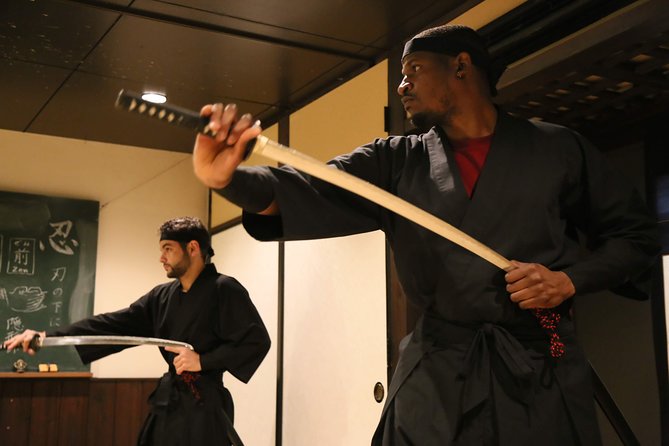
Kyoto has plenty of temples, but this class takes you into ninja training. In a small group of up to six, you get hands-on drills plus ninja clothing rental. My favorite part is how practical it feels, from meditation basics to using weapons, but one drawback is you should be ready to get focused and active for the full 2 hours, not just watch.
You’ll meet at the Ninja Dojo and Store Kyoto (Hakurakutenchō, 528 2F) for a 10:00 am start, then spend the time inside with your instructor. Expect an entry-level lesson that still packs in several technique stations, including breathing, meditation (Kuji-In), walking drills, and weapon practice. If you want a passive cultural stroll, this is probably not your best match.
Key points before you go
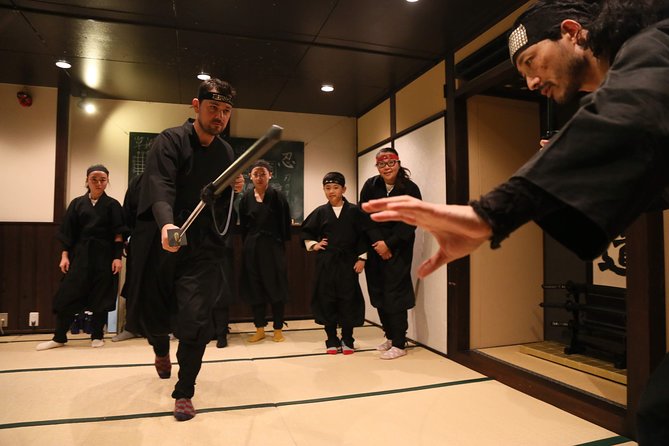
- Up to six people means you can actually try skills, not just pose for photos
- Kuji-In meditation and ninja breathing are taught early, so the rest feels easier
- Real weapon drills cover sword, kunai, kusarigama, rope setups, shuriken types, and blowgun darts
- Ninja trick house training adds a fun challenge element to the lesson
- Ninja outfits are provided so you feel part of the class, not just a spectator
- English instruction from a Japanese master helps beginners keep up
Start at the dojo: shoes off, ninja garb on
Your session starts at the Ninja Dojo and Store Kyoto, a straightforward meeting point in Shimogyo Ward. The schedule is tight, so arrive a bit early, get your bearings, and plan on being ready when class begins at 10:00 am.
Inside, expect a quick transformation. Multiple families and couples highlight that the class starts with getting into uniform, then moving right into training mode. You’ll likely take off your shoes at the door and switch to slippers during the lesson, so wear something you can manage without turning it into a full wardrobe operation.
What I like about this approach is that it removes friction. The moment your gear is sorted, you can focus on learning the basics instead of spending the first 20 minutes figuring out logistics. The ninja outfit also does something practical: it cues your body into the right posture and movement style, even if you’re a total beginner.
If you’re sensitive about physical intensity, note that this is hands-on. It’s not just demonstrations, and the stations keep moving.
More Samurai & Ninja Experiences in Kyoto
- Kyoto Samurai Experience
★ 5.0 · 1,294 reviews - Kyoto: Kendo and Samurai Experience with Uniform and Gear
★ 4.9 · 815 reviews - Kyoto: Samurai Sword Class by Experts in Traditional Arts
★ 4.9 · 657 reviews
Meet your sensei: learning ninja technique with English support
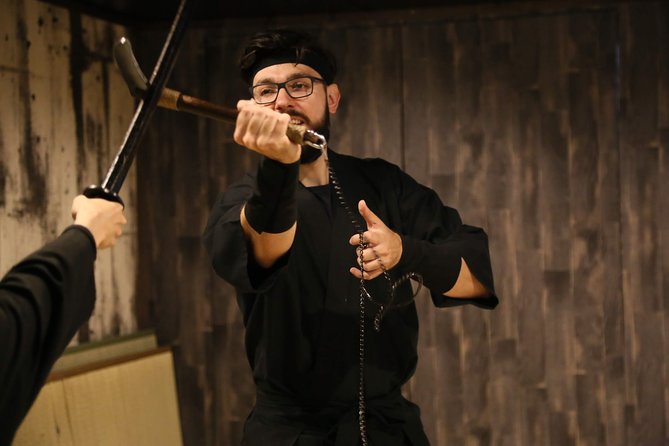
This class is taught by a Japanese master who has trained in ninja arts, and instruction is in English. That matters because beginners can otherwise get lost in translation when training involves breath control, footwork, and safe handling of tools.
The group size limit of six also shapes the experience. You get more direct attention, so if your form is off, you have a better chance of correcting it before you move on. That’s one reason so many people in the feedback call it fun and legitimate, not hokey.
You might also be greeted by staff who help you get ready, including people named in participant stories such as Sho. The helpful vibe seems consistent: staff assist with dressing, guide you into position, and keep the energy up so first-timers don’t feel awkward trying.
Kuji-In meditation and ninja breathing: the calm start that helps you move
The first technique sequence is not random. You’ll start with fundamentals that make the rest easier to learn and remember.
Here’s what you should expect early:
- Ninja meditation Kuji-In
- Ninja breathing drills
- Ninja walking basics
Why this is smart for visitors is simple: breath and posture are the foundation of movement control. Even if you’re excited about weapons, starting with breathing and meditation gives your body a rhythm. It also helps you understand what the instructor is aiming for, because the goal is controlled technique, not just motion.
In practice, this feels like learning to switch from tourist mode into training mode. Your brain gets a script: breathe, settle, move with intent. Many participants say the meditation component adds a nice layer to the class because it grounds everything else.
If you’re worried it will be too spiritual or vague, don’t. The emphasis in this lesson is on technique you can repeat. Think of it as learning the settings your body uses before you pick up anything.
Ninja walking drills: footwork that changes how you feel in motion
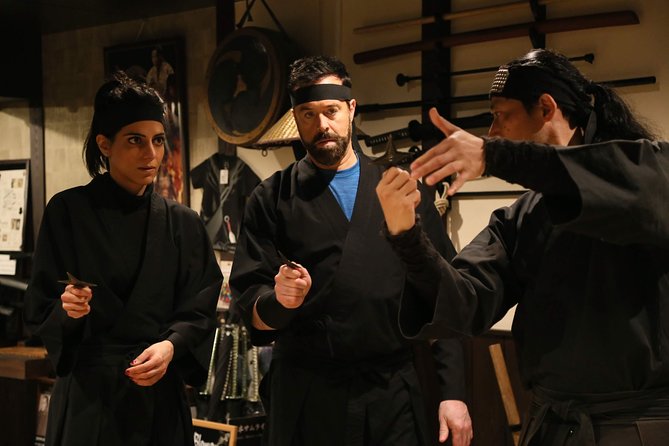
After breathing and meditation, you’ll move into ninja walking. This is one of those skills that sounds easy until someone corrects your balance and timing.
What typically makes walking drills valuable is that they connect the invisible stuff to something physical. You can feel where your weight transfers. You can notice if you’re moving too loudly or too stiffly. And you learn how to keep your steps controlled.
For beginners, this is a confidence builder. You don’t need athletic background. You just need attention and willingness to try again if it doesn’t feel right on the first attempt.
If you’re traveling with kids, this is also a sweet spot. It’s structured but playful enough that many young students can “get it” quickly, especially when the instructor keeps it fun and encouraging.
More samurai and ninja experiences in Kyoto:
- Skip the lines Basic Ticket at SAMURAI NINJA MUSEUM KYOTO
★ 4.5 · 632 reviews - Ninja 1-hour Hands-on Lesson by Japanese master in Kyoto -Entry
★ 5.0 · 489 reviews - Kyoto: Ninja Weapon Forging Experience
★ 4.8 · 478 reviews - Kyoto: Samurai Kenbu Traditional Sword Dancing Show
★ 4.5 · 426 reviews
Weapon training station: sword, kunai, kusarigama, and more
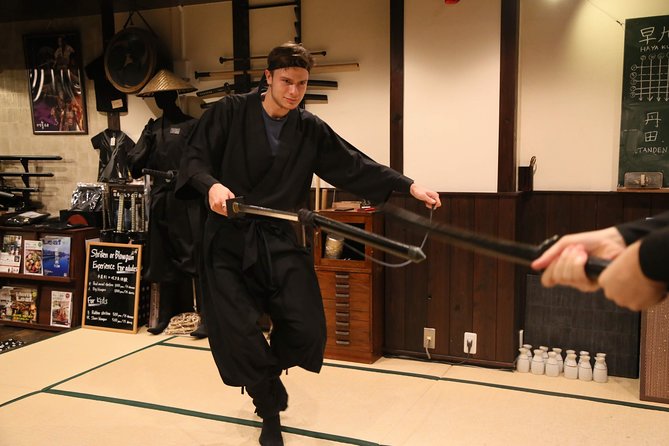
Now for the part most people come for: hands-on weapon practice. This lesson includes training with a wide range of ninja tools, designed for entry-level learning.
You should be prepared for a station-style flow that covers both explanation and trying techniques. The tools mentioned include:
- Ninja sword training, including sword with shuriken elements
- Kunai (dagger) practice
- Kusarigama, the sickle with chain
- Rope technique and kunai with rope handling concepts
- Shuriken (ninja star) and different types, including a stick-type shuriken approach
- Ninja blowgun with blow darts
A few things make this feel like value rather than a gimmick. First, you don’t just see props. You practice the motions on targets. Second, multiple weapons means you get variety, so the experience doesn’t feel like one trick repeated three times.
Safety and control matter here. Even when the session is energetic, you’re guided on how to handle and aim. The instructor’s job is to help you do the technique correctly and consistently, and that shows up in the way the class is described as accessible for a wide range of ages and ability levels.
If you have a strong preference for real weapons, this is the section you’ll remember. If you dislike anything weapon-related, you might find the topic distracting. In that case, consider whether you’ll enjoy a lesson built around tool practice.
The ninja trick house: a challenge element that makes you pay attention
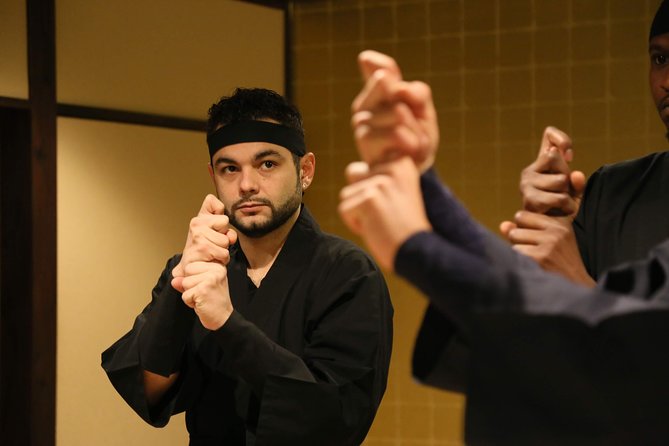
The lesson also includes an introduction gimmick and a training section at a ninja trick house, including a trap element in the sequence. This is the part that adds drama to the learning.
Why it works: when you’re dealing with a controlled challenge, your focus tightens. Instead of thinking, what do I do next, you’re guided through a scenario that makes the technique feel purposeful. It also breaks up the weapon stations, so the session stays energetic instead of flat.
You don’t need to be a performer to enjoy it. The trick house segment is described as part of the structured training, not a random maze. That means you still leave with skills you can talk about, not just a fun moment.
If you’re traveling with kids, this is often the segment that turns the class into a highlight. If you’re an adult who worries about group activities, the trick house helps because it feels like a real training scenario, not a theme park detour.
What you’ll actually do in the 2-hour format
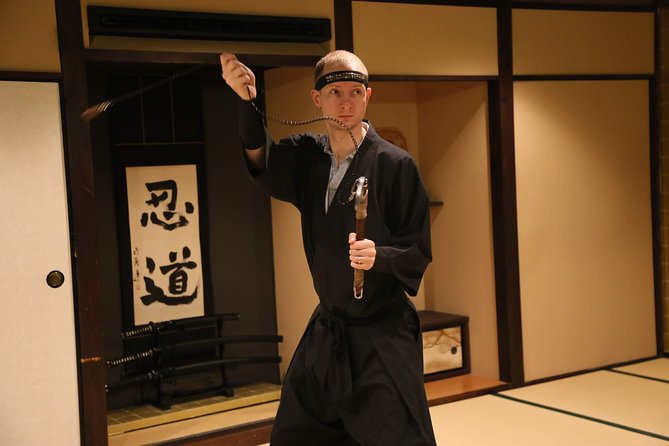
Even though the lesson is called Ninja 2-hour Hands-on Lesson, the experience is more like a sequence of skill stations. The structure helps because you get repetition without getting bored.
Based on what’s outlined, the lesson covers:
- Entry level ninja techniques
- Up to five additional techniques beyond the initial basics
- Meditation, breathing, walking, and then weapons
- Shuriken, blowgun darts, and rope-based tools
- A trick house scenario that ties the lesson together
The time also matters for value. Two hours is long enough to learn real basics and try multiple tools, but short enough that you’re not stuck in a long training slog. It’s also a good length for families because younger students can stay engaged through multiple stations without losing the thread.
Small group flow: why six people helps you learn
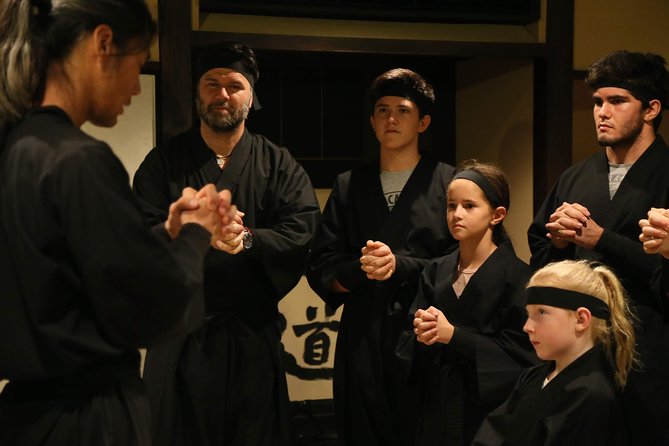
There’s a big difference between a class with 30 people and one with a maximum of six. In a small group, instructors can watch your stance, your arm angle, and your timing, and then correct what they see.
In the feedback, people repeatedly mention hands-on practice, laughter, and patient instruction. That combo is a big deal for first-timers. If you make a mistake, you’re not put on the spot, you’re guided back into a safe rhythm. If you get it right, you get feedback that helps you keep improving.
This class also tends to work for mixed ages. Several families describe bringing kids around 5 to 12, and others mention a wider adult range including couples. If you’re traveling solo, the small group can also feel friendly because you’re all doing the same training tasks, not sitting around waiting for your turn.
Price and value: is $95.51 worth it?
At $95.51 per person for about 2 hours, this isn’t a casual bargain. But the math can work if you value real practice over sightseeing alone.
Here’s where the value comes from:
- You’re paying for instruction by a Japanese master in English
- You get ninja clothing rental included, which makes the experience feel complete
- You try multiple weapons and techniques, not just one demonstration
- The group size is limited to six, so attention is part of the ticket price
Compare that to paying separately for a guided activity and then tickets and gear. Here, the “gear” is part of the experience, and the practice time is the product.
My take: it’s best if you want an active memory from Kyoto, not just another photo stop. If your idea of fun is learning a skill set and leaving with stories about what you actually tried, it’s a strong value.
If you only want a quick experience for the aesthetic, you might feel it’s a bit pricey for the time. In that case, choose one weapon-focused class or another shorter workshop.
Who should book this ninja lesson, and who might skip it
This is a great fit if you:
- Like interactive activities and don’t mind trying new skills
- Want beginner-friendly instruction with English guidance
- Are traveling with kids and want a hands-on moment that breaks up the temple schedule
- Want a Kyoto experience that feels different from standard sightseeing
It might be a less ideal fit if you:
- Prefer watching rather than doing
- Are uncomfortable with weapon-focused training topics
- Have limited stamina and don’t want a fully active 2 hours
A good rule of thumb: if you enjoy learning-by-doing in small groups, book it. If you’re hoping for a relaxed cultural stroll, you may end up wishing you had chosen something slower.
My booking call: book it if you want skills, not just photos
I’d book this lesson if you want a memorable, hands-on Kyoto activity that mixes mindset training and tool practice in a tight 2-hour window. The combination of Kuji-In meditation, ninja breathing, and then real weapon stations makes it feel like a complete experience, not a single gimmick.
Before you go, pack light and wear comfortable clothes you can move in. Arrive a bit early so you’re not rushing through the shoe-off and uniform process. And bring an open mind. Even if you start skeptical, the class is designed to make beginners succeed through clear guidance and repetition.
If you’re a ninja fan, a family planner, or a curious traveler who wants to try something authentic and physical, this is a very solid pick.
FAQ
Where is the meeting point for the Ninja lesson in Kyoto?
The meeting point is Ninja Dojo and Store KyotoJapan, 600-8422 Kyoto, Shimogyo Ward, Hakurakutenchō, 528 2F.
What time does the lesson start and how long is it?
The start time listed is 10:00 am, and the duration is about 2 hours.
How big is the group?
This activity has a maximum of 6 travelers.
What is included in the price?
The lesson includes a Japanese sensei master who teaches ninja arts in English, ninja clothes rental during training, and the admission fee.
What is not included?
Hotel pickup and drop off are not included. Food and drink are also not included.
Is there a cancellation deadline and what happens if weather is poor?
You can cancel for a full refund up to 24 hours before the experience’s start time. The experience requires good weather, and if it is canceled due to poor weather, you will be offered a different date or a full refund.
Fresh options around Kyoto
- Kyoto Aquarium Admission Ticket★ 4.7 · 12 reviews
- Kyoto Gion Photoshoot – Private Session | Pro Photographer★ 5.0 · 12 reviews
- Gyoza Cooking Class in Kyoto: Traditional Japanese Dumplings★ 5.0 · 12 reviews
- Kyoto: Guided Food Tour with 12 Dishes & 3 Drinks★ 5.0 · 12 reviews
- Kyoto: Avoid the Crowds at the Hidden Gems of Arashiyama★ 4.9 · 13 reviews
- Kyoto Early Bird English Tour: Gion & Higashiyama(Private opt)★ 5.0 · 13 reviews
- Otsu-e Folk Art Workshop & Local Culture Walk Near Kyoto★ 5.0 · 13 reviews
- Kyoto, Osaka, Nara Full Day tour by Car English speaking Driver★ 3.5 · 13 reviews
Samurai & Ninja Experiences, compared.

Samurai Ninja Museum Guided tour and Experience
Read our review →
Kendo and Samurai Experience with Uniform and Gear
Read our review →
Samurai Sword Class by Experts in Traditional Arts
Read our review →
Skip the lines Basic Ticket at SAMURAI NINJA MUSEUM KYOTO
Read our review →
Samurai Sword & Archery Class from Samurai Descendant
Read our review →
Browse the lists this tour appears in