
Reviewed · HISTORICAL TOURS
Nagasaki WW2 History and Culture Tour
Nagasaki can hit you in the best way. This small-group, private day strings together WWII memory sites and everyday culture, from a massive torii gate to the Atomic Bomb Museum. I love how the route keeps shifting your perspective, so you are not stuck staring at tragedy all day.
Two things I particularly like are the included admissions to the Atomic Bomb Museum and Inasayama Observation Deck, and the steady rhythm of drinks and lunch built into the tour. It is also great that you get a mix of Nagasaki flavors, including its Dutch-linked past, not just WWII.
One consideration: the day can feel emotionally heavy, especially at the Atomic Bomb Museum. If you prefer lighter sightseeing, you might want to mentally pace yourself before you get there.
Key things to know before you go
- Private tour feel with only your group and a dedicated guide, Shannon Lefebvre
- Museum and deck tickets included, so you skip the hassle and go straight into the experience
- Still and sparkling water all day, plus alcohol and nonalcoholic drinks at set times
- WWII sites beyond the headline stops, including an air-raid shelter and a torpedo base ruin
- Lunch handled for you, either on the go or as a picnic depending on weather and timing
- Inasayama viewpoints in daylight and how the guide frames them, so you know what to expect
Price and logistics: what $656.88 gets you
This is priced at $656.88 per group, up to 3 people. That structure can be a strong value if you fill the group, because you are effectively paying for a full day of private transport plus a guided route. If it is only one or two of you, the cost per person rises, but you still get the benefit of a planned itinerary with admissions covered.
The tour runs about 7 to 9 hours, which is long enough to feel like a real day in Nagasaki, not a quick hit. Pickup is offered, and you travel in a private, air-conditioned vehicle with WiFi on board. There is also a mobile ticket, which is handy when you are bouncing between short stops.
One detail I appreciate: the tour lists hydration and food as part of the schedule. You are not hunting for drinks every hour, and you are not stuck deciding where to eat while your day keeps moving.
A few more Nagasaki days worth comparing
- Taste Local Life: Nagasaki’s Historical Street Walking Tour
★ 5.0 · 27 reviews - Nagasaki Private Historical Tour with Licensed Guide
★ 5.0 · 13 reviews - World Heritage Shirakawa-go and Experience Tours from Kanazawa
★ 5.0 · 4,049 reviews
The structure of the day: short stops, big context
The pacing is built around several focused locations, most around 20 to 35 minutes each. That works well here because you are constantly switching gears: shrine to coast, radio history to ceramics, then peace reflection to a museum that is not gentle.
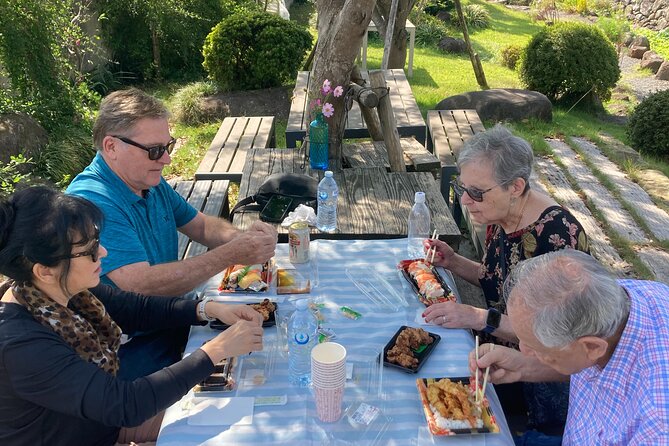
You will also be managing comfort the whole time. Bottled still and sparkling water are provided throughout the day. Lunch is handled, either as a sit-down picnic or as an on-the-go meal depending on weather and timing. Alcoholic and nonalcoholic beverages are provided at certain times of day, which can make the long day feel more like a Nagasaki outing and less like a museum marathon.
What this kind of schedule gives you is control through guidance. You arrive at places with context, then you have time to look around without feeling rushed.
Sohonzan Shrine: start with calm, then switch gears
The day kicks off at Sohonzan Shrine, and the first thing you notice is the huge torii gate. It is not a background detail, it is a statement: you are stepping into a place that feels spiritual and intentionally quiet.
This stop matters for the overall arc of the tour. WWII sites can make you forget that Nagasaki also has living culture. A major shrine at the start helps you reset your body and mind before the day turns weightier.
Practical tip: wear shoes that can handle walking around shrine grounds. Even when stops are “only” half an hour, you still want to be comfortable moving at your own pace.
Saikai Bridge and Hario Straits: currents, whirlpools, and the coast
Next comes Saikai Bridge, tied to the dramatic nature of Hario Straits. The current is described as one of Japan’s three fastest flowing, and the strait is known for whirlpools created by tide changes as seawater from Omura Bay moves through the narrow passage.
I like this stop because it is history without walls. It gives you geography, and geography matters in Nagasaki. Water routes, strategic locations, and wartime movement all make more sense once you see how intense these coastal currents are.
You also get a needed break between major WWII stops. Even if you only have minutes, looking at the sea here helps you understand why Nagasaki has always been a port city, not a place that sits quietly inland.
Same corner of Japan, a different kind of day:
- Nagasaki: Private Walking Tour with a Local
★ 4.7 · 79 reviews - Nagasaki Full-Day Private Tour with Government-Licensed Guide
★ 5.0 · 66 reviews - Nagasaki Half-Day Private Tour with Government-Licensed Guide
★ 5.0 · 53 reviews - Visit Gunkanjima Island (Battleship Island) in Nagasaki
★ 4.0 · 32 reviews
Hario Radio Tower: when Nagasaki connected the world
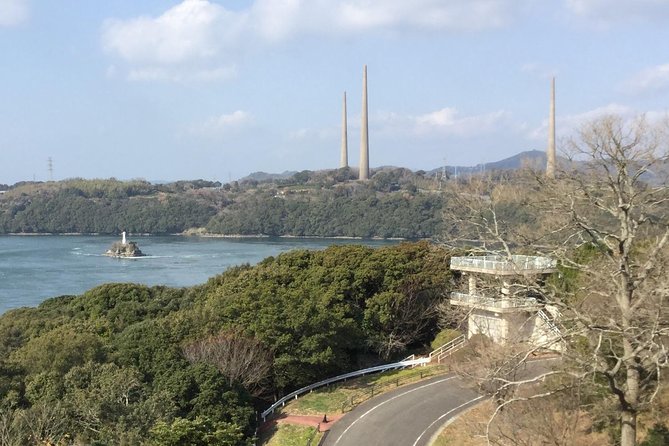
Then you head to the Hario Radio Tower, also known as the Hario Transmission Towers. This is one of the remaining WWII sites in Nagasaki, tied to the communications function used to coordinate actions related to the attack.
You might think a “radio tower stop” would be bland, like a quick photo and done. It is not, because the point is the chain of communication and how strategic technology becomes real life history. Seeing the site in place helps you understand that WWII was not only battles and bombs, it was messages, timing, and systems.
Practical note: bring a light layer. Coastal areas and tower viewpoints can feel cooler, even when the rest of the day feels warm.
Umegae Sake Brewery: local taste between heavy stops
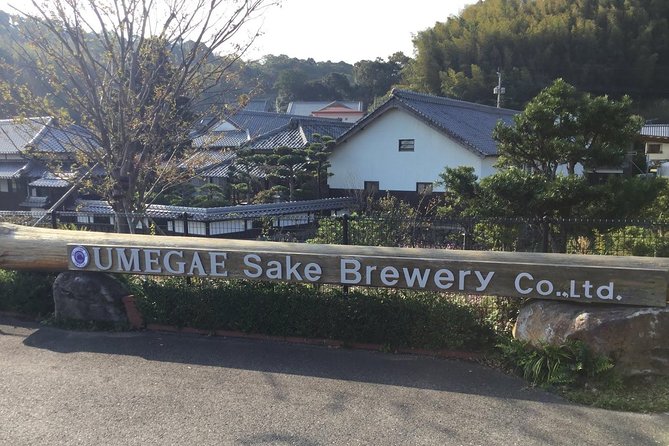
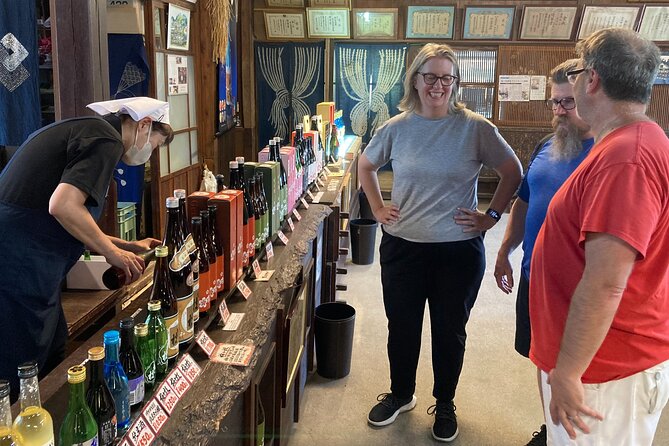
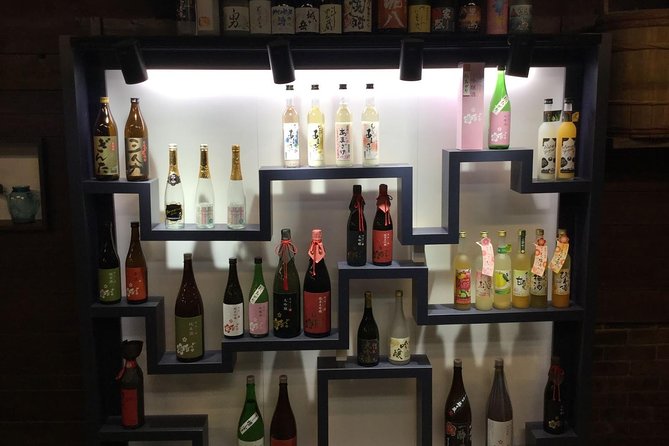
After the wartime sites, the route shifts to Umegae Sake Brewery. This is the kind of stop that adds contrast. You are learning a cultural craft rather than only scanning for monuments.
For me, the value here is simple: it reminds you that people kept living in Nagasaki, even while history was pressing down. Alcohol can also be a bonding moment during tours, and this one includes beverages at certain times, so you can pair the setting with a taste when it is offered.
If you are sensitive to alcohol, no problem. Nonalcoholic beverages are also provided during the day, and lunch time and breaks can help you pace yourself.
Mukyudo air-raid shelter: one of the more human WWII stops
At Mukyudo, you step into the air-raid shelter connected to the former Miyamura Elementary and Junior High School. What makes it unique compared with other shelters is that it served the school community in a specific way during World War II.
This stop is powerful because it is not about grand strategy. It is about children, classrooms, and what it meant to protect people where they studied and gathered.
Practical consideration: shelters can feel darker and more enclosed than open-air ruins. If you do not love tight indoor spaces, plan to take breaks when you can. The good news is that the stop is relatively short.
Katashima Torpedo Base Ruin: training history in an empty space
Next is Katashima Torpedo Base Ruin, where you explore a massive empty building that served as training facilities for a torpedo base.
The emotional hit here is different. The building is not reconstructed into a museum with glossy displays. You are looking at the shell of what existed, which can make the scale feel more real than a diagram.
You might spend a bit more time here if you enjoy ruins and structure, since the space invites wandering. Just remember that your day has other stops ahead, including the Peace Park and the Atomic Bomb Museum.
Hasami ceramics: craft, patience, and making something after disaster
After the ruins, the day turns to Hasami Ceramics Festival and the Hasami Ceramics Museum area. Hasami is known for its porcelain, and this stop gives you a cultural win after the heavy stuff.
I love ceramics for this exact reason. It is slow craft, physical repetition, and skilled production. When you are touring WWII sites, it helps to also see how people put energy into making, trading, and creating objects that last.
If you like souvenirs that are more than a magnet, this is where you can look for pieces. The best ceramic moments are often the quiet ones, when you take time to inspect patterns and glaze quality.
Nagasaki Peace Park: reflection without theatrics
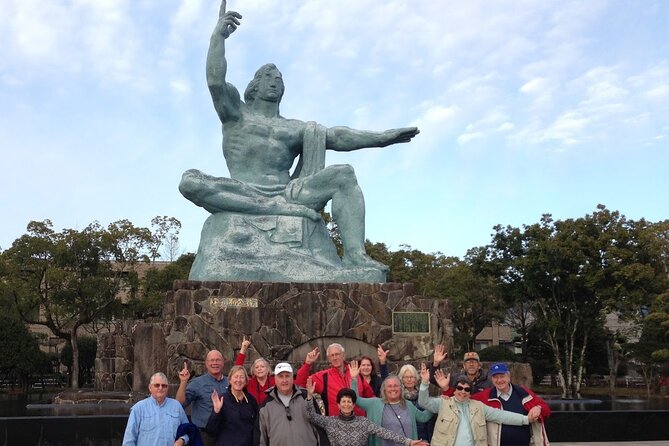
Then you reach Nagasaki Peace Park, a peaceful place to stroll and reflect on the event in mankind’s history. The tone is gentle, but the message is serious.
This part of the day is useful because it is a transition. The Peace Park gives you space to absorb what you just learned, without forcing you into the most graphic viewing next. It is also an ideal moment to take photos only if you genuinely want them. Otherwise, it is a good spot to simply walk slowly.
Practical tip: bring water with you in your bag, even though the tour provides it. You will appreciate being ready if you step a little farther than planned.
Atomic Bomb Museum: the sobering center of the tour
No sugarcoating here. The Nagasaki Atomic Bomb Museum is included in the tour, and it is described as very sobering, with exhibits and pictures that are extremely graphic.
I recommend treating this as the emotional core of the day. Plan a little mental space before you go in. If you find yourself getting overwhelmed, you can step back and look at information in smaller sections instead of trying to absorb everything in one rush.
The upside is that this museum is not only about shock. It is about understanding the impact and the human cost. Even if you only have about 35 minutes on the schedule, that is enough time to focus on the parts that matter to you.
After this, you will probably want the softer landing of a viewpoint and open air.
Inasayama Observation Deck: see Nagasaki from above
The last major highlight is the Inasayama Observation Deck on Mount Inasa. The tour includes admission, and it is tied to the idea of Nagasaki night views. What I find practical is that the tour frames expectations: daytime views are in a world of their own, and the nighttime view can feel different depending on what you expect.
In plain terms, this stop helps you close the emotional loop. You go from rooms of history to a skyline, and suddenly you can place the city in context again. It is where Nagasaki feels like a living place, not only a story you read.
Practical tip: bring a light layer for the viewpoint. Even in warm seasons, hills and open-air decks can feel cooler than the city streets.
Dutch heritage and Nagasaki beyond WWII
One of the best parts of this tour is that it does not lock you into WWII the entire time. The day is described as covering Nagasaki’s culture and history beyond the war years, including its Dutch heritage.
That matters because Nagasaki was always international, even before modern times. You get a better understanding of why the city developed the way it did: trade links, cultural mixing, and local identity formed in conversation with foreign partners.
You may notice that the itinerary supports this idea through the mix of shrine culture, coastal geography, sake craft, and ceramics, alongside the memorial sites. That balance helps you leave with a clearer sense of place.
Who this tour is best for
This tour fits best if you want:
- A private, guided day that moves efficiently between key Nagasaki sites
- WWII history that includes more than just the headline museum
- A realistic pace, with drinks and lunch handled for you
- A mix of serious reflection and cultural stops, like sake and ceramics
It may be less ideal if you:
- Want a purely light sightseeing day
- Do not want to spend time in graphic exhibitions
- Need long independent wandering time at each location, since most stops are relatively short
Should you book this Nagasaki WW2 and Culture Tour?
If you are deciding based on value and meaning, I would book it. The combination of included admissions, private transportation, and a schedule that balances peace reflection, WWII sites, and local culture makes it hard to replicate on your own in a single day.
Just go in with the right mindset. This is not only a history tour, it is a day of perspective. If you pace yourself before and after the Atomic Bomb Museum, you will likely leave with a stronger understanding of Nagasaki than you would get from a faster, more superficial route.
FAQ
FAQ
How long is the Nagasaki WW2 History and Culture Tour?
It runs about 7 to 9 hours.
What does the tour cost?
The price is $656.88 per group, up to 3 people.
Is pickup available?
Yes, pickup is offered.
Are admission tickets included for the Atomic Bomb Museum and Inasayama Observation Deck?
Yes. Admission to the Atomic Bomb Museum and Inasayama Observation Deck is included.
What meals and drinks are included?
You get still and sparkling bottled water throughout the day, plus a lunch that can be on the go or as a picnic depending on weather and time. Alcoholic and nonalcoholic beverages are provided at certain times.
Do I need a physical ticket?
No. The tour uses a mobile ticket.
What transportation is included?
You travel in a private, air-conditioned vehicle, with WiFi on board.
What happens if the tour is canceled due to poor weather?
This experience requires good weather. If it is canceled due to poor weather, you will be offered a different date or a full refund.
Fresh options around Nagasaki
- Nagasaki like a local: Private Guided Walking Tour★ 4.4 · 12 reviews
- Nagasaki Private Historical Tour with Licensed Guide★ 5.0 · 13 reviews
- Private Ring Craft Experience in Nagasaki★ 5.0 · 14 reviews
- Nagasaki Like a Local: Private & Custom Experience (2-3 hrs)★ 5.0 · 14 reviews
- Traditional Kimono Experience in Nagasaki★ 5.0 · 16 reviews
- Nagasaki City and Shimabara Peninsular Sightseeing Tour★ 5.0 · 16 reviews
- Nagasaki Private Customizable Half Day Tour★ 5.0 · 16 reviews
- Semi Private Guided Tour of Nagasaki.★ 5.0 · 17 reviews
Historical Tours, compared.
World Heritage Shirakawa-go and Experience Tours from Kanazawa
Read our review →
Imperial Palace and Shogun Historical Walking Tour
Read our review →
World Heritage Kyoto & Nara Uji Authentic Matcha Experience
Read our review →
Kyoto Gion: 2-Hour Geisha Culture & History Walking Tour
Read our review →
World Heritage Shirakawa-go Morning Guided Tour
Read our review →
Hiroshima Historical Walking Tour – Why A-Bomb was Dropped
Read our review →
Hiroshima Peace (Heiwa) Walking Tour at World Heritage Sites
Read our review →Browse the lists this tour appears in