
Reviewed · HISTORICAL TOURS
Taste Local Life: Nagasaki’s Historical Street Walking Tour
Three and a half hours of Nagasaki magic. This historical street walking tour takes you from Nagasaki Station by tram, through Sofukuji and Kofukuji, then ends with views from Megane-bashi (Spectacles Bridge). You get story and scenery, without the stress of planning every turn.
Two things I really like: the tight small-group limit of 8, which keeps the walk relaxed and makes it easier to catch your guide’s explanations as you go. And I love that the route is built around Teramachi-dori (Temple Street) and Marunouchi Naka-dori shopping lanes, so temple stops and snack-style street life feel connected. You’re not just ticking boxes, you’re learning how the neighborhood works.
One heads-up: this is active sightseeing. You’ll walk between temples and shopping streets, and food and drinks are not included, so bring cash or a card and plan a snack break on your own.
Key points to know before you go
- Small group of 8, private feel: it stays more conversational and less crowded than standard big-bus sightseeing.
- Sofukuji Temple’s China-in-Nagasaki style: a Rinzai temple built in 1629 with Nanchuan architectural influences.
- Kofukuji connects temples to everyday ideas: it’s described as the birthplace of Japanese kidney beans and also associated with Mincho kanji characters.
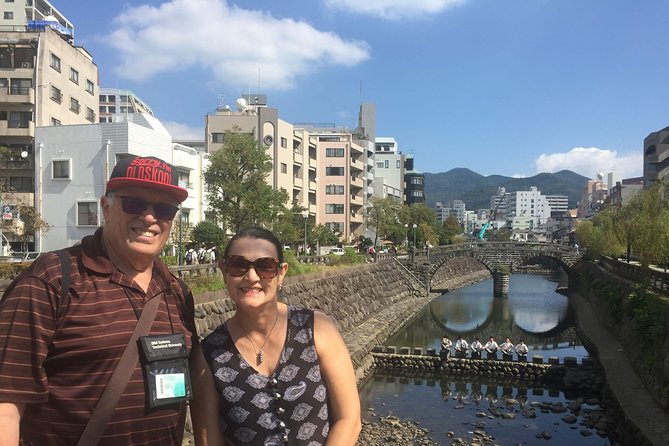
- Megane-bashi Spectacles Bridge is a real anchor point: an early arcuate stone bridge dating to 1634, linked to Kofukuji’s entrance history.
- Hamamachi arcade shows Nagasaki street culture up close: long covered shopping lanes with banners and local emblems.
- Half-day timing gives you options after the tour: you’ll finish early enough to explore on your own.
Teramachi-dori and Marunouchi Naka-dori: why this route feels real
If you’ve been to Japan and only hit the famous landmarks, you’ll know the feeling. You see the big sights, then the day ends and the city never quite sticks. This tour is designed to do the opposite. It focuses on Teramachi-dori (Temple Street) and the Marunouchi Naka-dori shopping atmosphere, where history and daily life overlap.
You’re walking through a part of Nagasaki where the streets themselves carry meaning. The guide ties the temple architecture to the shopping streets around it, so the area doesn’t feel like disconnected postcard stops. Instead, it feels like one neighborhood that evolved over time.
And because it’s a half-day (about 3 hours 30 minutes), you’re not trapped on a tight schedule. You get context from the guide, then you can keep exploring in your own direction after the last bridge viewpoint.
More walking tours in Nagasaki:
- Nagasaki: Private Walking Tour with a Local
★ 4.7 · 79 reviews - Nagasaki Street Food Adventure: Private Walking Tour with a Local
★ 5.0 · 26 reviews - Kyoto Geisha Walking Tour: Gion District & Hidden Gems
★ 4.7 · 3,273 reviews
Meeting at Hotel New Nagasaki, then getting going from Nagasaki Station
You start at 9:00 am, with the meeting point at Hotel New Nagasaki (14-5 Daikokumachi, Nagasaki). From there, the tour route quickly gets you set up for easy city movement by using the Nagasaki Electric Tramway as part of the experience.
There’s an actual stop at the Nagasaki Electric Tramway Head Office, and then you use the tram to reach Sofukuji Temple from the Nagasaki Station area. I like this approach because it reduces the “what bus do I take?” friction for your day. You’re also seeing how locals move around, not just walking from one named place to the next.
One small practical tip: if you care about hearing every detail, position yourself where you can see your guide well. Some group walking tours can be hard to hear in busy streets, and you’ll get better value if you’re not stuck at the far edges.
Sofukuji Temple: Nanchuan-style Rinzai architecture from 1629
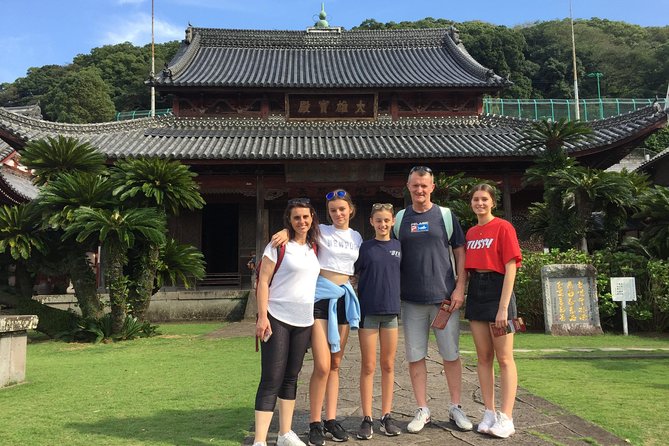
Sofukuji is the first deep dive. The tour includes about 35 minutes here, plus admission. It’s a Rinzai temple built in 1629, and what makes it especially interesting is the Nanchuan architectural style influence from China.
That matters because it changes how you read the buildings. Instead of only looking at Sofukuji as a standalone temple, you get a stronger sense that Nagasaki’s cultural connections were shaped by long-distance exchange. The guide also points out major temple elements, including the Daimon Gate and the Daeleon Hall, with the main hall noted as a National Important Cultural Property of National Treasures.
What to do during your visit:
- Take a moment to look at the gate and main hall layout, then listen for how the style is described.
- Don’t rush the details, even if you’re tempted to just photograph and move on. Temple architecture becomes easier to understand when you give it a little time.
Kofukuji Temple: the birthplace stories behind beans, calligraphy, and tables
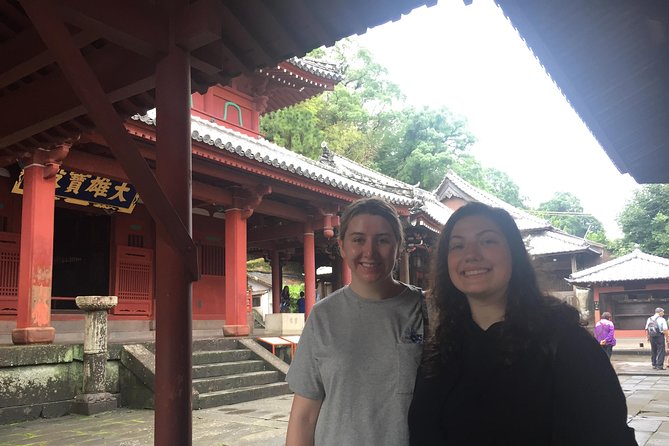
Kofukuji comes next, with about 50 minutes and admission included. It’s framed with a set of “origin” claims that connect temple identity to everyday Japanese life. The tour notes Kofukuji as the birthplace of Japanese kidney beans, along with Mincho kanji characters and Kofukuji dining tables.
Even if you’re not the type to memorize temple trivia, these origin-style stories do something useful. They help you bridge the gap between sacred spaces and normal routines. You start seeing temples less as isolated buildings and more as institutions tied to food, writing, and domestic life.
After the temple stop, you’ll head out into a shopping street described as the oldest in Nagasaki. This is a smart sequencing move. You just learned what matters at the temple, then you immediately step into the commercial lane that grew alongside that kind of community.
A few more Nagasaki days worth comparing
- Nagasaki WW2 History and Culture Tour
★ 5.0 · 19 reviews - World Heritage Shirakawa-go and Experience Tours from Kanazawa
★ 5.0 · 4,049 reviews - Tokyo: Imperial Palace and Shogun Historical Walking Tour
★ 5.0 · 2,251 reviews - World Heritage Kyoto & Nara Uji Authentic Matcha Experience
★ 5.0 · 1,573 reviews
Motenashiya near Megane Bridge: maps, souvenirs, and a useful break
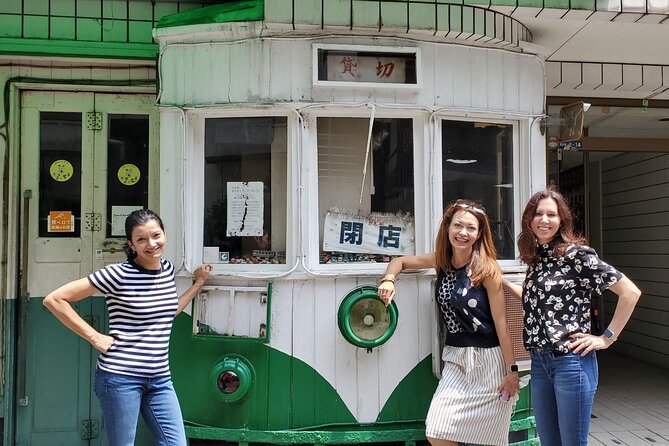
Between the heavier temple moments and the bridge viewpoint, you get a short stop at Motenashiya. It’s a tourist information center and souvenir shop run by the landlady, located near Megane-bashi.
This part is only around 15 minutes, and admission is free. But I appreciate it because it’s where you can get practical help. If you want a plan for what to do after the tour, this is a convenient place to grab maps and touring materials. It’s also a chance to stretch your legs and reset your energy before the last two big sightseeing moments.
Even if you don’t buy anything, it’s a nice pause that keeps the walking flow comfortable.
Spectacles Bridge (Megane-bashi): why the 1634 stone bridge matters
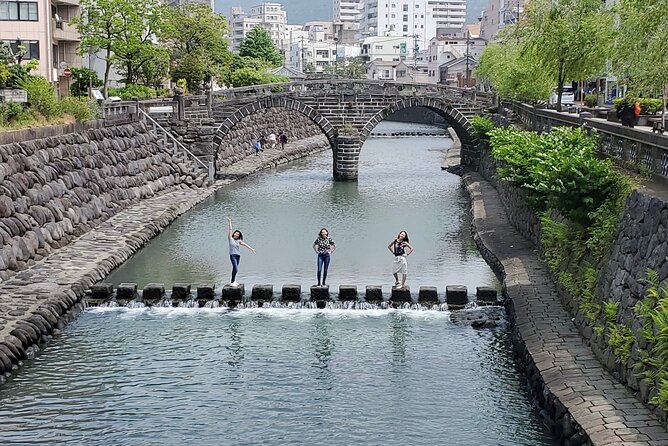
Next comes Megane-bashi, also known as the Spectacles Bridge. The tour gives you about 30 minutes here, and admission is free.
This bridge is described as the oldest arcuate stone bridge in existence, born in 1634. The tour also connects it to Kofukuji’s entrance history, noting that it was considered part of the Kofukuji entrance for native Chinese during the period.
One detail I’d take seriously if you love built heritage: the bridge includes a heart-shaped stone wall. It’s the kind of small feature that makes you slow down, look twice, and remember the bridge for more than just its name.
Plan your time on this stop:
- Take a few photos, then step back and watch the flow of people crossing.
- If there’s a good angle for the heart-shaped element, spend your time there rather than snapping from only one spot.
Hamamachi Arcade: covered street life, banners, and snack hunting
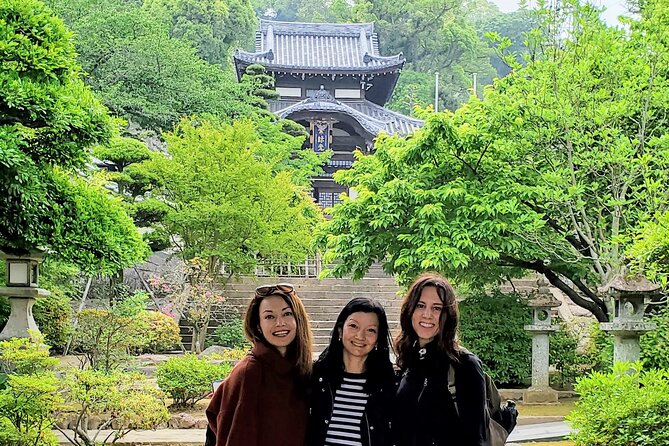
The last major activity is the Hamamachi Arcade (Hamanmachi Shopping Street), where you’ll spend about 25 minutes. It’s also free to visit.
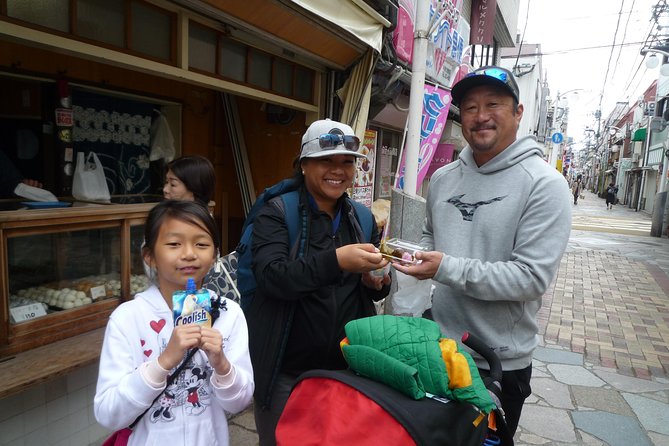
Covered arcades in Japan can feel like magic hallways, and this one is described as long, stretching for hundreds of meters in different directions. The tour highlights that the arcade is decorated with local emblems and colorful banners. That kind of visual detail matters because it makes your photos more interesting, and it helps you feel the identity of the area, not just the architecture.
Food and drinks are not included on the tour, so treat this stop as your cue to snack on your own. If you want to taste Nagasaki in a low-pressure way, this is a good moment to do it.
Practical note: since the arcade is covered, it’s a nice option if the weather changes. Still, wear shoes you’re comfortable in, because shopping arcades are rarely short walks.
How 3.5 hours works in real life (and why it’s the right length)
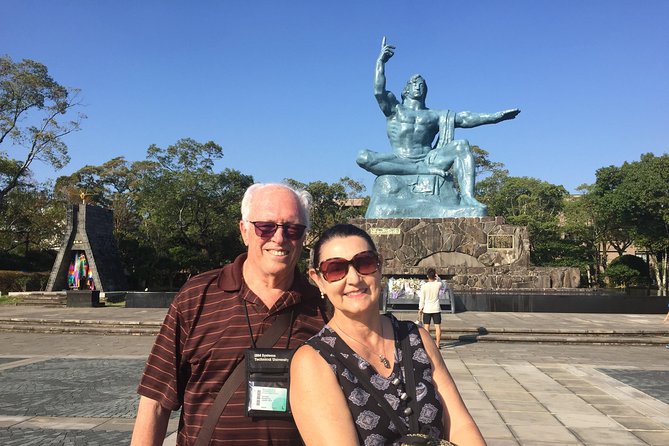
The itinerary is about 3 hours 30 minutes. That’s long enough for you to get full context, but short enough that you can still build the rest of your day.
Here’s how I’d use the timing if you’re planning your own schedule:
- If you’re staying central, you can treat the tour as your morning backbone.
- After the bridge and arcade, you can continue wandering in the same neighborhoods rather than switching areas immediately.
Also, the pacing works well because the stops alternate between heavier “look and learn” moments (Sofukuji and Kofukuji) and lighter “walk and explore” segments (Motenashiya, Megane-bashi, then Hamamachi).
Price and value: is $105.42 a fair deal?
At $105.42 per person, this isn’t the cheapest way to spend a morning in Nagasaki. But you do get several things that are usually extra-cost items on your own.
The tour includes:
- A professional guide
- Local taxes
- Admission tickets for key stops like Sofukuji Temple and Kofukuji Temple
- A tram-related experience tied to reaching Sofukuji from the station area
Food and drinks are not included, and you’ll also handle hotel pickup or drop-off on your own. Still, when a walking tour includes both guide time and temple admissions, the cost starts to make sense, especially in a small group capped at 8.
I also like the “value” angle that’s hard to price: you’re not just visiting places, you’re learning what to notice. That turns a temple stop from I saw a building into I understand what I’m looking at.
If you want the best cost-to-time ratio, book earlier rather than later. This tour is often booked around 101 days in advance, which usually means it’s popular for a reason.
What to pack and how to make the walk easier
This experience is listed for moderate physical fitness, and it’s a walking tour. That means you should plan like you’re doing a solid city morning, not a casual stroll.
My basic packing advice:
- Wear easy walking shoes you can stand and walk in for hours.
- Bring a small bag for water and your phone charger needs.
- Have a plan for your own snacks and drinks, since nothing is included in that category.
One more small note: temples and covered arcades can mean different lighting and ground surfaces. Pay attention to footing on stone and stairs, and you’ll enjoy the stops more because you’re not thinking about your ankles the whole time.
Who should book this tour, and who might skip it
This is a strong match for:
- First-time visitors who want more context than a self-guided walk.
- People who enjoy Japanese-Chinese cultural links in architecture and city layout.
- Anyone who prefers half-day sightseeing and wants time after the tour to explore independently.
You might skip it if:
- You dislike walking or have trouble with a moderate fitness day.
- You’re expecting the tour to include food tastings or a full meal.
- You want only the most famous sights, with no time spent on neighborhood streets and temple detail.
If you fall somewhere in the middle, that’s where this tour shines. It gives you structure without stealing your whole day.
Should you book Taste Local Life: Nagasaki’s Historical Street Walking Tour?
I think you should book this if you want a guided route that connects Nagasaki’s temple architecture with the street-level feel of the neighborhoods around it. Sofukuji and Kofukuji are meaningful stops, and ending at Megane-bashi gives you a natural “finish line” that’s easy to remember.
It’s also a good bet if you travel with someone who likes history but still wants street scenes, shopping lanes, and time to wander after. At 3.5 hours, you get the guide benefit without losing the whole day.
If you hate walking, or you want food included as a central feature, you may find better fit elsewhere. But for an efficient, small-group historical street walk with tram and temple admissions folded into the price, this one is a solid value.
FAQ
How long is the Nagasaki historical street walking tour?
The tour lasts about 3 hours 30 minutes.
How many people are in the group?
It’s a small-group tour limited to 8 people. It is also listed as a private activity where only your group participates.
What are the main stops on the route?
The tour includes Nagasaki Electric Tramway Head Office, Sofukuji Temple, Kofukuji Temple, Motenashiya near Megane Bridge, Spectacles Bridge (Megane-bashi), and Hamamachi Arcade.
Are food and drinks included?
No. Food and drinks are not included.
Does the price include admissions or tickets?
Yes. Admission tickets are included for stops such as Nagasaki Electric Tramway Head Office, Sofukuji Temple, and Kofukuji Temple. Other stops like Motenashiya, Spectacles Bridge, and Hamamachi Arcade are listed as free.
Where does the tour start and end?
It starts at Hotel New Nagasaki in Nagasaki (14-5 Daikokumachi) at 9:00 am and ends back at the meeting point.
Fresh options around Nagasaki
- Nagasaki Private Customizable Half Day Tour★ 5.0 · 16 reviews
- Semi Private Guided Tour of Nagasaki.★ 5.0 · 17 reviews
- Nagasaki: Private Tour with Local Guide★ 4.8 · 18 reviews
- Nagasaki WW2 History and Culture Tour★ 5.0 · 19 reviews
- Nagasaki Private Tour with a Local – Highlights & Hidden Gems★ 5.0 · 24 reviews
- Nagasaki Street Food Adventure: Private Walking Tour with a Local★ 5.0 · 26 reviews
- Nagasaki Full Day Tour with Licensed Guide and Vehicle★ 5.0 · 27 reviews
- Nagasaki: Private Walking Tour with a Local★ 4.7 · 79 reviews
Historical Tours, compared.
World Heritage Shirakawa-go and Experience Tours from Kanazawa
Read our review →
Imperial Palace and Shogun Historical Walking Tour
Read our review →
World Heritage Kyoto & Nara Uji Authentic Matcha Experience
Read our review →
Kyoto Gion: 2-Hour Geisha Culture & History Walking Tour
Read our review →
World Heritage Shirakawa-go Morning Guided Tour
Read our review →
Hiroshima Historical Walking Tour – Why A-Bomb was Dropped
Read our review →
Hiroshima Peace (Heiwa) Walking Tour at World Heritage Sites
Read our review →Browse the lists this tour appears in