
Reviewed · MUSEUMS
Hiroshima; Hiroshima Peace Memorial Museum and Castle Tour
Three hours in Hiroshima hits hard, then helps. This guided walk links the Peace Memorial Museum with the park, the hypocenter area, and Hiroshima Castle, so you leave with a clear sense of what happened and how the city rebuilt.
I love the way the story is guided, not just read off signs. You get live explanations at the museum and in Peace Memorial Park, and guides like Maria and Ihsan are praised for keeping the pace calm while answering real questions.
One consideration: some exhibits can be graphic and emotionally intense, so you should ask ahead if you’re worried about what you might see.
Key points to know
- Skip-the-line museum entry and a guided route that keeps you moving without feeling rushed.
- Peace Memorial Park has a specialist-style focus, turning monuments into meaning, not just photos.
- Atomic Dome and the hypocenter stop are short, but they carry the weight of the day.
- You also see everyday-life context through other atomic bombed buildings, not only the big headlines.
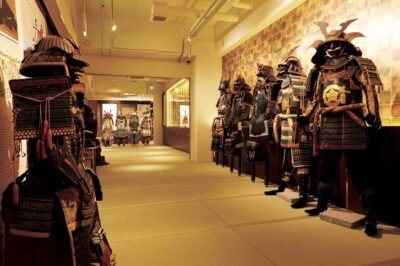
- Hiroshima Castle is the lighter add-on, with samurai-era objects like swords and helmets, while castle tickets are not included.
A Guided Route Through Hiroshima’s Most Meaningful Sites
This tour is built for people who want more than a checklist. You’re guided through Hiroshima’s core “what happened here” places, then you round it out with samurai-era culture at Hiroshima Castle. The mix sounds unusual on paper, but it works in real life because it shows both the tragedy and the continuity of daily culture.
The timing is compact too. In about 3 hours, you cover the museum (with a guide), the park (with a specialist focus), the Atomic Bomb Dome and hypocenter area, and then finish at Hiroshima Castle for a different lens on the city. If you’re short on time, it’s a strong way to get your bearings fast.
Also, you’re not doing this alone. The tour is run by a live guide in English, Hindi, Malay, or Urdu, and the guides you’ll meet are consistently described as patient and responsive to questions. That matters here, because silence is sometimes the point, but it still helps to understand what you’re looking at.
More castle tours near Hiroshima:
- Japanesel Archery Experience HIROSHIMA CASTLE SHARAKU
★ 5.0 · 387 reviews - Osaka Castle: Museum and Tower Entry Ticket
★ 4.5 · 2,380 reviews - Tokyo Castle & Imperial PalaceーShogun Walking Tour
★ 4.7 · 1,068 reviews
Start Point Near Nakajō and a Walk That Sets the Tone
You meet at the taxi stand near the Peace Memorial Museum, and the route begins around Nakajimachō. From the first moments, you’re in the right mindset, because you’re already close to the museum grounds instead of wasting time figuring out how to get there.
You’ll take photo stops as you go, then do short guided segments on foot. There are also small transition walks that keep the day from feeling like a single long indoor visit. That structure is useful if you plan to visit the museum exhibits thoughtfully, rather than speed-reading everything.
The other practical win is that the tour includes a walking tour plus the Peace Memorial Museum ticket. That means you’re not juggling separate purchases right when the day starts to feel heavy. It also helps you focus on the explanation, not on logistics.
Hiroshima Peace Memorial Museum With a Live Guide
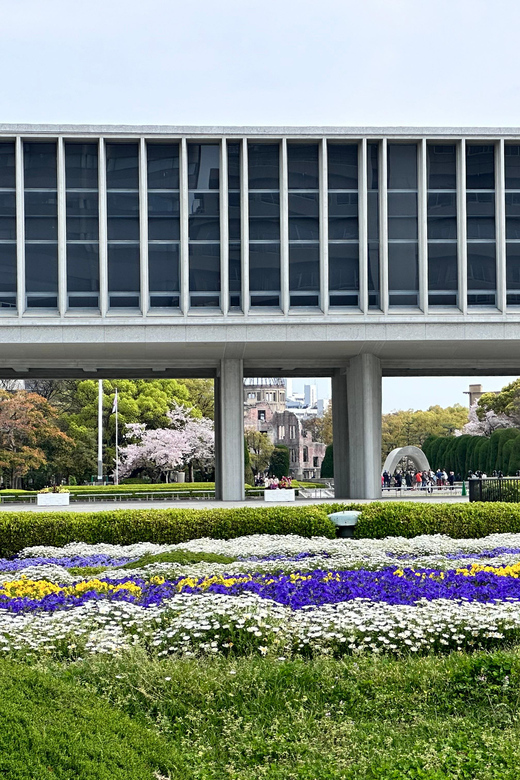
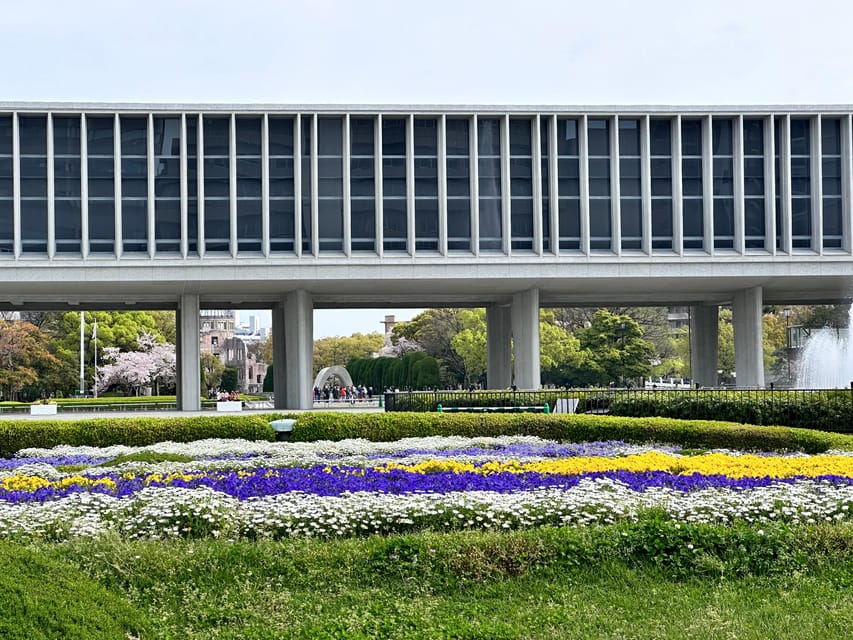
The museum portion is about 1 hour, and it starts with a photo stop and guided visit. Since the museum ticket is included, you can spend your mental energy on what matters: the tragedy of the atomic bomb and what it demands from us now.
What I like most here is the guided pacing. Guides such as Maria and Léo are repeatedly praised for keeping information respectful and at a speed that lets you absorb what you’re reading and seeing. If you’re the type who wants context before you look, a guide helps a lot.
One clear warning: some exhibits depict shocking horror of the atomic bomb. You’re explicitly encouraged to ask beforehand if you’re concerned. That’s good advice even if you’re normally fine with intense topics, because the museum can hit you in waves, not all at once.
There’s also an optional audio guide at the museum, but it’s not included. If you love audio layers, you can add it yourself, but don’t feel like you’re missing anything if you prefer to stay with the live guide.
Peace Memorial Park: Learning the Meaning Behind the Monuments
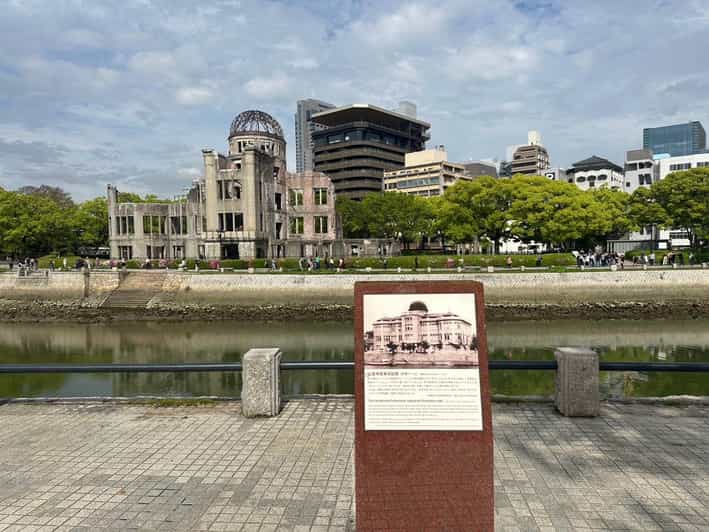
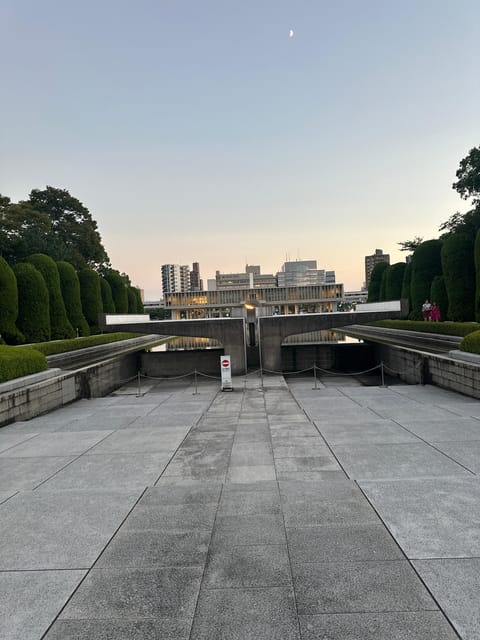
After the museum, you move to Peace Memorial Park for another 1 hour. This part includes photo stops and a guided tour with a specialist focus on peace and World War II context.
What makes the park segment valuable is the way it connects places you can see to the thoughts behind the memorial design. Instead of treating it like a photo background, you learn what the monument message is trying to do. That turns the park from a set of sights into something you can actually discuss afterward.
Guides also tend to handle questions well here. People described guides as answering everything, and that’s exactly what you want in a park where symbolism matters. If a certain element confuses you, you’ll usually get a clear explanation on the spot.
If you’re visiting Hiroshima for the first time, this park portion is often the moment when the day clicks. You start noticing the layout, the direction people move, and the way the memorial space guides attention.
A few more Hiroshima days worth comparing
- Hiroshima: Atomic Bomb Dome and Peace Memorial Museum 3 hours
★ 5.0 · 20 reviews - Hiroshima: Tour of Atomic Bomb Dome & Peace Memorial Museum
★ 5.0 · 20 reviews - Tokyo: teamLab Planets TOKYO Digital Art Museum Entry Ticket
★ 4.6 · 9,779 reviews - Tokyo: Samurai Ninja Museum Guided tour and Experience
★ 4.6 · 1,010 reviews
Atomic Bomb Dome and the Hypocenter Focus
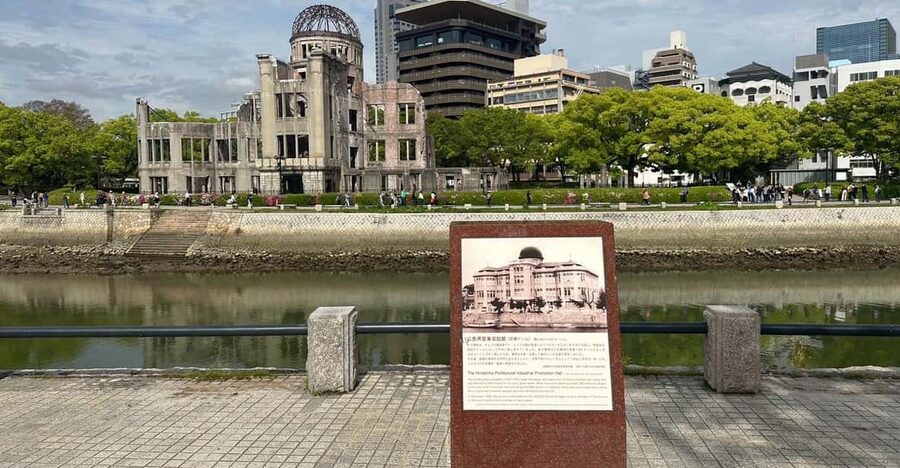
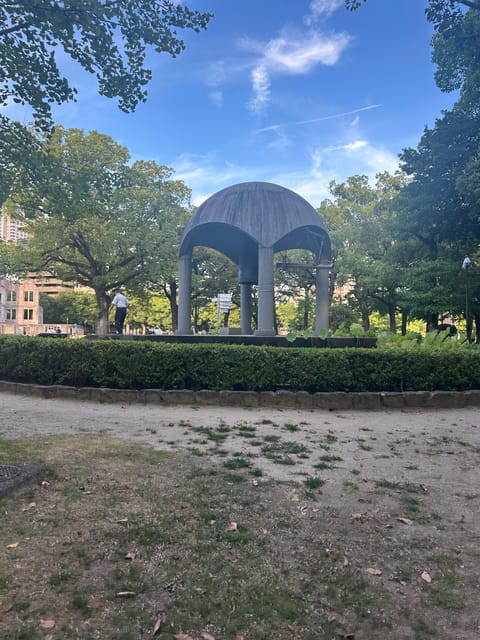
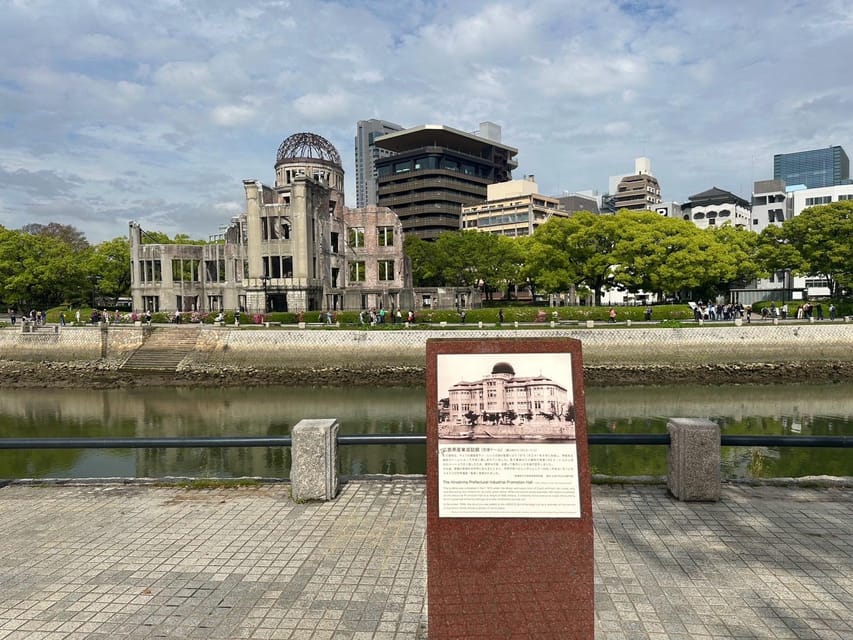
Next is the Atomic Bomb Dome, with a photo stop and a guided visit of about 10 minutes. It’s short on paper, but it carries a lot of emotional weight, so the guide’s role is important even in that brief window.
Then you visit the hypocenter area with a guide. The hypocenter focus matters because it shifts the story from a single landmark to the idea of impact at a specific point. You also get guidance that helps you understand why these locations are preserved and visited.
From there, the tour continues to other atomic bombed buildings, where you learn more about Hiroshima’s history and the town’s life around that time. This is one of the most compelling ways to break out of the “big moment” framing. You’re shown how the bombing affected ordinary spaces, not only headline-level scenes.
The overall effect is a tighter understanding of cause and consequence. You’re not just seeing famous sites, you’re building a mental map of how Hiroshima changed.
Hiroshima Gokoku Shrine and Hiroshima Castle for Samurai History
After the peace-focused stops, you round things out with Hiroshima Gokoku Shrine. The tour doesn’t spend a long time here, but it gives your day a different cultural tone, a reminder that Hiroshima is still a living city with places that matter to local life.
Then you head to Hiroshima Castle for about 40 minutes, with a photo stop, guided sightseeing, and viewpoints. The castle stop is where you can see samurai-era culture, like swords and helmets.
Now the balance note: the castle is described as an added cultural layer, not the main event. Since castle tickets are not included, you’ll want to decide in advance how much time you want inside exhibits versus outside sightseeing. If you prefer only the core memorial sites, you might treat the castle as a pleasant bonus, not a required deep dive.
The nice part is that this final segment helps you talk about Hiroshima in two ways. First, you connect the past to what you learned. Then you add a second chapter, how Japanese history and identity show up in everyday tourist culture.
How to Handle the Heavier Exhibits, Plus What to Pack
This is not a casual sightseeing stroll. The museum and related peace sites are designed to confront what happened, and you should prepare accordingly. If you’re sensitive to graphic images, the best move is to ask the guide beforehand so you can choose how you want to experience the exhibits.
Comfort matters because you’ll be walking through multiple stops. Wear comfortable clothes and shoes for a walking day, and keep water and a snack plan in mind.
Speaking of snacks, traditional snacks of Hiroshima are included. That’s a real value add here, because it helps you avoid the trap of spending money on small purchases that add up when you’re already paying for entry and guiding. It also helps you regain energy after the museum content lands.
Emotionally, it helps to remember the tour is built around meaning, not shock. Guides like Ihsan, Bilal, and Mehak are often described as respectful in how they handle heavy topics. That respect is what keeps the experience from turning into something you just endure.
Price and Value of the $67 Package
At $67 per person for about 3 hours, the value comes from what’s included, not just the duration. You’re paying for a guided walk through major Hiroshima sites, plus the Peace Memorial Museum ticket and traditional snacks. You also get skip the ticket line, which sounds small until you’re standing there trying to time your entry around the rest of your day.
You’re also getting a guide for multiple segments, not just one building. That matters because the park and memorial grounds are harder to interpret on your own. A live guide turns “what is this” into “why does this exist,” and that makes the experience more usable later when you want to explain it to friends.
What’s not included is also important. Food and drink are on you, the museum optional audio guide is extra, and castle tickets are not included. If you want full access to castle exhibits, budget for that separately.
Given everything included, this is a practical deal for first-time visitors who want structure. If you’re the kind of person who reads every sign for hours, you might prefer more independent time. But if you want context fast, and you like having someone manage the flow, this price tends to feel fair.
Should You Book This 3-Hour Hiroshima Tour?
I’d book it if you want a guided path through Hiroshima’s most significant memorial sites and you like having your questions answered as you go. The biggest strength is the combination: museum plus park meaning, then a direct connection to the Atomic Bomb Dome and hypocenter area, and finally a cultural add-on at Hiroshima Castle.
I’d pause before booking if you know you struggle with graphic exhibits. This tour explicitly includes stops connected to shocking content, so it’s worth planning your comfort level carefully. If you have mobility needs, also double-check suitability, because the information includes both wheelchair accessibility and notes that it is not suitable for wheelchair users. For adults near the upper end of the age guidance, it’s also not positioned for people over 95 years.
If you can handle intense history and you want to leave with a clear way to talk about Hiroshima, this tour is a strong choice. It turns a difficult day into something you understand, and that is a rare kind of value.
FAQ
Where do I meet for the Hiroshima Peace Memorial Museum and Castle Tour?
You meet at the taxi stand near the Peace Memorial Museum.
How long is the tour?
The tour duration is 3 hours.
What parts of Hiroshima are included?
The tour includes the Hiroshima Peace Memorial Museum, Peace Memorial Park, Atomic Bomb Dome, the hypocenter area, additional atomic bombed buildings, Hiroshima Gokoku Shrine, and a stop at Hiroshima Castle.
Is the Hiroshima Peace Memorial Museum ticket included?
Yes. The Peace Memorial Museum ticket is included.
Are Hiroshima Castle tickets included?
No. Hiroshima Castle tickets are not included.
Are there traditional snacks included?
Yes. Traditional snacks of Hiroshima are included.
What languages are available for the live guide?
The live tour guide is available in English, Hindi, Malay, and Urdu.
Is the tour suitable for wheelchair users or very elderly guests?
The information says wheelchair accessible, but it also notes it is not suitable for wheelchair users and people over 95 years. If you are affected by either point, you should confirm with the provider before booking.
Can I cancel and get a refund?
Yes. You can cancel up to 24 hours in advance for a full refund.
Is there a ticket line skip?
Yes. The tour includes skip the ticket line.
Fresh options around Hiroshima
- The Peace Memorial and Beyond: A Half-Day around Hiroshima★ 4.9 · 12 reviews
- Hiroshima Saijo Sake Tasting Tour with visit to 3 Breweries★ 5.0 · 12 reviews
- Private Hiroshima Calligraphy: Create Your Own Kanji Art Souvenir★ 5.0 · 12 reviews
- Hiroshima:Private lacquer workshop experience tour(gift included)★ 5.0 · 13 reviews
- Sunset Walking Tour at Peace Park, Hiroshima★ 5.0 · 13 reviews
- Kimono and Calligraphy Experience in Miyajima★ 5.0 · 16 reviews
- Hiroshima Peace Memorial Park: A Guided Tour★ 4.9 · 16 reviews
- History of Hiroshima: Small Group Night Walking Tour★ 4.8 · 17 reviews
Museums, compared.
teamLab Planets TOKYO Digital Art Museum Entry Ticket
Read our review →
Samurai Ninja Museum Guided tour and Experience
Read our review →
Tea Museum Tickets and Matcha Grinding Experience
Read our review →
Skip the lines Basic Ticket at SAMURAI NINJA MUSEUM KYOTO
Read our review →
Ninja Experience (Family Friendly) at Samurai Ninja Museum TOKYO
Read our review →
Tokyo Studio Ghibli Museum and Ghibli Film Appreciation Tour
Read our review →
Geiko Maiko Dance of Kyoto & Visits of Gion Museum
Read our review →Browse the lists this tour appears in