
Reviewed · MORNING
Exclusive Sumo Morning Practice in Tokyo with Photo Opportunity
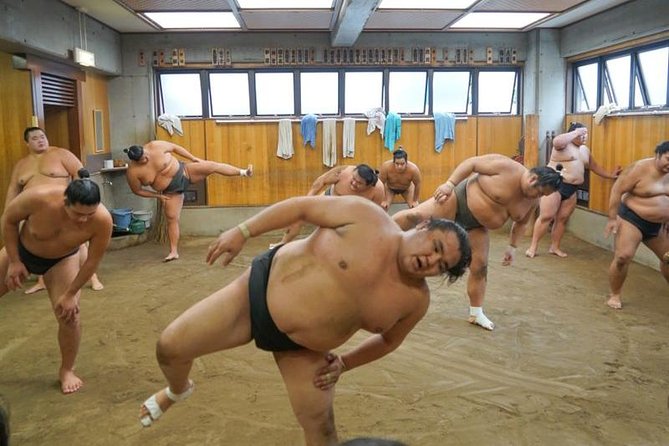
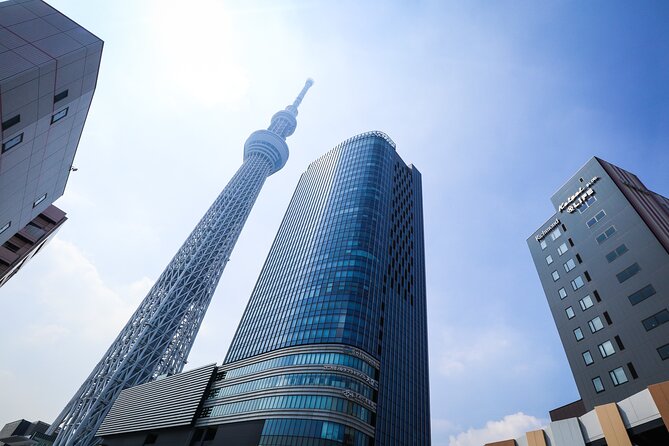
Sumo mornings are pure focus. This short Tokyo tour lets you watch real sumo training in a stable around Skytree, with warm-up sparring and the chance to photograph the wrestlers up close. I also like how you get a small-group setup with clear context, often guided by people like Hana, Kentake, or Yuki, so it is not just watching hands and bodies. One thing to plan for: seating inside the stable is first come, first served, so if you arrive late you may end up a few rows back.
You meet at the taxi stand inside Oshiage Station, start time 8:00 am, and the whole thing runs about 2 hours. The stable experience has rules too, with most areas off-limits except the tatami (straw flooring) areas, so follow your guide’s instructions closely. And if you are going in summer, bring water and a hat because the practice and walking around can be hot and humid.
Key things to know before you go
- Off-limits stable areas: you can only be in designated tatami areas
- Photo opportunity: you can photograph wrestlers and pose for pictures
- Small group size: maximum 10 travelers
- First come, first served seating: late arrivals may sit 2 to 3 rows back
- Central meeting point: Oshiage Station taxi stand, inside the station rotary
- Summer heat advice: water and a hat are strongly recommended
A rare Tokyo morning at a sumo stable near Skytree
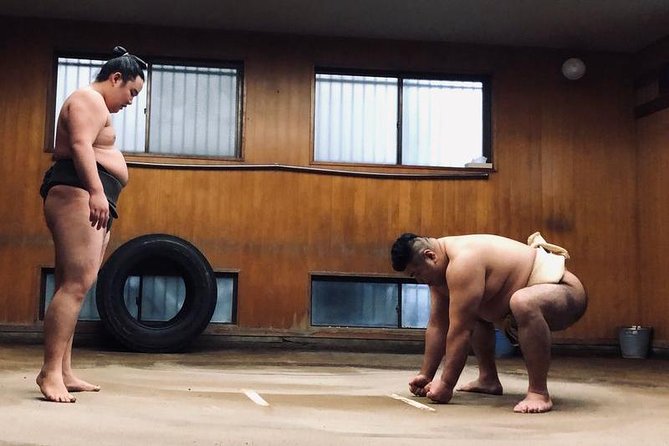
This is one of those Tokyo experiences that feels oddly old-school in the best way. Instead of watching sumo from a distance in a loud arena, you get to see what morning practice looks like in the place it actually happens, a sumo stable around the Skytree area. The atmosphere is simple and serious, and that matters, because sumo is not only entertainment. It is discipline, routine, and tradition, repeated until it becomes muscle memory.
You will see the wrestlers warm up and spar during their morning practice. Even if you already know the basics, watching training in the stable context helps you understand how much of sumo is about preparation, timing, and attitude, not just the final clash.
The tour is also built to fit real schedules. At about 2 hours, you can tack this onto the start of a day without burning your whole morning. And because the group is capped at 10, it feels more like a guided visit than a cattle-line stop.
More sumo experiences in Tokyo:
- Tokyo: Sumo Show Experience with Chicken Hot Pot and a Photo
★ 4.8 · 6,678 reviews - Tokyo: Sumo Show and Dining Experience
★ 4.8 · 2,742 reviews - the SUMO show
★ 5.0 · 1,960 reviews
Price of $99.10: what you’re really paying for
At $99.10 per person, this tour is not a budget add-on. So I treat it like a “pay for access” experience. What you are paying for is not the theory of sumo, it is the chance to witness morning training up close, including time to photograph and pose for pictures.
There are two value points that really justify the price if you care about sports and culture:
- Exclusive access you usually cannot get on your own: stable practice is not something most visitors can just drop into.
- A guided experience with context: the explanations help you see what you are looking at, rather than guessing.
Also, the photo opportunity is a big deal. You are not just taking photos from far away. The experience includes the chance to photograph the wrestlers and to pose for pictures, which is a rare interaction for a training setting that normally has tight boundaries.
If you are coming strictly for big tournament bouts, this might feel like a slightly different flavor. But for most people, stable practice is the next best thing because it shows the work behind the spectacle.
Meeting at Oshiage Station at 8:00, and why early arrival helps
The meeting point is very specific: the taxi stand inside Oshiage Station, Japan, at Sumida City, Oshiage, 1-chōme, in the station rotary. That kind of detail can save you time, but it can also cause a moment of confusion if you are used to meeting at a simple street corner.
My practical advice is to arrive early enough to calmly find the taxi stand, check you have the right entrance area, and get oriented before the group moves. Why? Because seating is first come, first served inside the stable. The tour notes that late visitors may be seated 2 to 3 rows from the front. That is not a dealbreaker, but it can change how much of the action you see clearly and how good your viewing angles are.
Once you confirm you are in the correct spot, you are set. The tour is near public transportation, and the location is central enough that it is easy to plan around.
Inside the stable: tatami-only rules and photo etiquette
You are visiting a working environment with clear boundaries. The tour provides a key safety rule: all areas in the sumo stable are off-limits except for the tatami (straw flooring) areas.
That means you should treat this like a place where the staff and wrestlers have their own rhythm. Stay where you are allowed, and do not wander into restricted spaces, even if something looks tempting to photograph. Your guide will help you understand where you can stand or sit, and the best photos usually come from being patient and positioned correctly on the tatami area.
When it comes to the photo opportunity, keep expectations grounded. You will get time to photograph and to pose for pictures, but this is still practice time, not a staged photo studio. So be ready to move quickly when prompted, and keep your camera settings simple to avoid fumbling.
One more detail that helps: the tour is small, which usually means your guide can give quicker reminders if you are unsure about what to do next. Still, you should listen closely at the start so you do not accidentally create issues by stepping outside allowed areas.
A few more Tokyo days worth comparing
- Mt Fuji and Hakone 1-Day Bus Tour Return by Bullet Train
★ 5.0 · 26,383 reviews - 1-Day Tokyo Bus Tour
★ 5.0 · 14,250 reviews - Tokyo: TOKYO SKYTREE® Admission ticket
★ 4.5 · 11,192 reviews - Tokyo: teamLab Planets TOKYO Digital Art Museum Entry Ticket
★ 4.6 · 9,779 reviews
What sumo practice looks like, and what to watch for
A morning stable practice has its own logic. It is not only about impact moments. It is about repetition and control, with warm-ups and sparring that show how focused the wrestlers are even when no tournament is running.
When you watch, pay attention to the intensity and concentration. This is one of the most consistently praised aspects of the experience. People tend to notice how serious the training looks, how focused the wrestlers are, and how structured the session feels. That is a big part of why this tour works even if you do not know every technique term.
Here is what you can look for in plain terms:
- Warm-ups and rhythm: how they prepare their bodies before hitting the main sparring.
- Sparring behavior: how engagement and timing matter, not just strength.
- Body control: sumo is dramatic when it ends fast, but the control you see during practice is often the real lesson.
Also, this practice format is intense, but it can feel repetitive at times, especially if you are hoping for constant variety. One of the practical notes people make is that an hour can be enough, because the flow is focused and not nonstop spectacle. For me, that is also part of the charm. You are seeing the actual working rhythm.
If your goal is a full tournament day with bouts after bouts, you might be a little disappointed. But if your goal is to understand the sport up close, practice hits the right note.
The guides make the difference: Hana, Kentake, and Yuki
This is where the tour earns its near-perfect ratings. The guiding is frequently described as clear and helpful, with explanations that connect what you see to the cultural meaning of sumo. That matters because sumo has a lot of symbolism, and the point of training is tied to values and routine.
In the guide names people mention, you may be guided by Hana, Kentake, or Yuki. I like that this kind of tour does not assume you will already understand what you are witnessing. Instead, it gives you enough context to watch with meaning.
If you want to get the most out of the experience, come in ready to ask simple questions. Even without deep technical knowledge, you can learn a lot from watching the form and then hearing what your guide connects it to.
And the English support is often highlighted as a strong point. When communication is smooth, you are freer to focus on what matters, the practice itself, not translating in your head.
How the 2-hour format works for your day
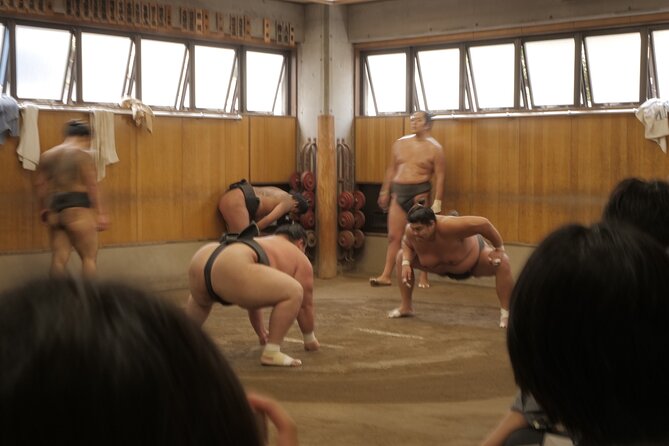
The tour runs about 2 hours, and the morning start time is 8:00 am. That is a smart slot because you can see the stable practice when it is happening, not after the rush. It also means you can keep your day open for other Tokyo plans, whether that is food neighborhoods, temples, or just wandering.
One timing note to respect: because practice has a set rhythm, some people find that the session can feel a bit repetitive. That is not a flaw with your guide, it is the nature of morning training. If you are the type who gets bored watching the same kind of drill, you may still find it enjoyable, but your best bet is to view it as a focused window into the sport’s workflow.
What to expect from the group size and interaction time
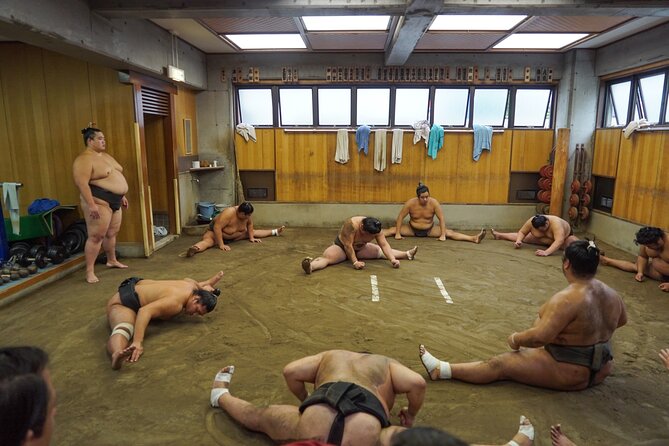
With a maximum of 10 people, you usually get better access to your guide and more breathing room for the viewing and photo moments. This small-group approach is one reason the experience tends to feel personal rather than hurried.
The interaction level also helps with comfort. You are not fighting for space with dozens of cameras. You can listen and watch without constantly sidestepping people.
The best part is the closeness, especially when the tour includes the photo chance and the ability to pose with the wrestlers. That is not just a souvenir. It is also a moment that makes you realize how young and athletic they are up close.
Heat and comfort: bring the right stuff for a summer visit
Summer in Japan can be brutal, and this experience happens in a stable setting where you still have outdoor time for meeting and walking. The tour specifically recommends water and a hat in hot and humid weather to help prevent heat stroke.
I also recommend lightweight breathable clothes and planning your camera battery. Morning is early, but it is still Japan summer levels of warm some days.
If you are sensitive to heat, keep your pace calm around the meeting point, then settle into your viewing spots once you arrive at the stable.
Who should book this sumo morning practice, and who might not
This tour is a great fit if you:
- want real training rather than only tournament highlights
- love sports and want to see how discipline looks in daily life
- care about cultural context and like clear explanations
- want a photo opportunity that is closer than most typical sightseeing
You might think twice if you:
- only want to see tournament-style bouts with continuous action
- get impatient with practice routines that can repeat drills
For most people, this is not an either-or. It is a meaningful companion to any other sumo plan you might make.
Should you book this sumo morning practice tour?
Book it if you want a short, high-impact morning experience. The price makes sense when you treat it as access, especially since the tour includes time to photograph and pose, plus a guided explanation that helps you understand what you are seeing.
Skip it only if you are chasing one specific thing: a full tournament day atmosphere. Stable practice is intense, but it follows training logic, not event logic.
If you do book, your best move is simple: arrive early at Oshiage Station so you do not lose front-row viewing. Then follow the tatami-only rule and let your guide set the pace. You will walk away with a much clearer picture of sumo as a daily practice, not just a TV moment.
FAQ
What time does the tour start, and where is the meeting point?
The tour starts at 8:00 am. You meet at the taxi stand inside Oshiage Station in Tokyo (Sumida City, Oshiage, 1-chōme, station rotary area).
How long is the sumo morning practice?
The duration is about 2 hours.
How many people are in the group?
The experience has a maximum of 10 travelers.
Can I take photos during the visit?
Yes. The experience includes a chance to photograph the wrestlers and to pose for pictures with them.
Are there restrictions on where I can go inside the sumo stable?
Yes. All areas in the sumo stable are off-limits except for the tatami (straw flooring) areas.
Is the seating guaranteed to be close to the front?
Seating is first come first served. Late visitors may be seated 2 to 3 rows from the front.
What should I bring for summer weather?
Bring water and wear a hat, since summer in Japan is very hot and humid.
What is the cancellation window?
You can cancel for a full refund up to 24 hours before the experience start time. Free cancellation is available, based on local time cut-offs.
Fresh options around Tokyo
- Tokyo: Nikko Kegon Falls Lake Chuzenji Toshogu Temple & More★ 4.9 · 12 reviews
- Tokyo: Samurai History Walking Tour★ 5.0 · 12 reviews
- Harajuku: Kawaii Fashion and Pop-Culture Tour★ 4.7 · 12 reviews
- Tokyo: Mt. Fuji & Lake Kawaguchi Instagram Full Day Trip★ 4.1 · 12 reviews
- Shibuya Tokyo: Modern Kintsugi Workshop in Shibuya★ 5.0 · 12 reviews
- Tokyo: GTR Guided Daikoku Experience at Night★ 5.0 · 12 reviews
- Tokyo: Daikoku JDM Car Culture Tour★ 4.6 · 12 reviews
- Mt Fuji Private Day Trip from Tokyo with English speaking driver★ 5.0 · 13 reviews
Morning, compared.

Kyoto Early Morning Tour with English-Speaking Guide
Read our review →Early Morning Tour with English-Speaking Guide
Read our review →
World Heritage Shirakawa-go Morning Guided Tour
Read our review →
Nara Early Morning Tour (Kyoto or Osaka Departure Available)
Read our review →

Hiroshima in a Nutshell: Morning Bike Adventure
Read our review →
Browse the lists this tour appears in