
Reviewed · MORNING
Watch Sumo Morning Practice at Stable in Tokyo
Sumo practice feels both ancient and intense. You’ll get rare access to a working Tokyo sumo stable during morning training, where ritual matters and the vibe is all business. I especially like how the experience is built around respectful watching, not performance for the crowd.
Two things I really love: first, you can see the full rhythm of practice, from warm-ups to harder sparring, up close. Second, the photos at the end are included, so you leave with more than just memories in your camera roll.
One consideration before you book: you’ll be sitting on the floor for a long stretch, and that can mean sore legs if you do not pace yourself. Some people also wish there was more on-the-spot explanation, so plan to read up on basic sumo structure before you go.
Key things to know before you go
Quiet rules are strict, and that is part of the point. You are expected to watch silently and avoid distracting actions.
The practice length shifts with the stable. Typical time is 60 to 90 minutes, and it can be shorter during Tokyo tournament season.
You are close to the action, but comfort is on you. Expect floor seating for most of the session, with limited seating options.
Ryogoku is the hub. Your start ties into the Ryogoku Kokugikan area, which is useful for getting oriented.
Photos happen at the end. Build your schedule with the idea that the session end time can vary.
Group size is small. Maximum 10 people helps keep the room calm and orderly.
A rare look inside a Tokyo sumo stable morning
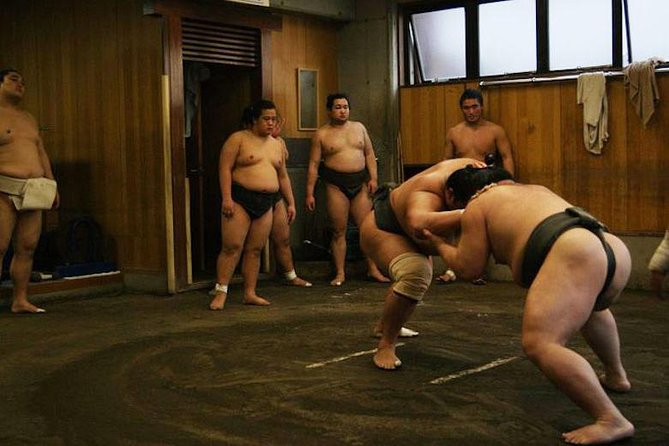
Tokyo has plenty of culture shows. This is different. The morning practice at a sumo stable is not staged for you. You’re watching professionals train, stretch, and spar inside a space where tradition still runs the day.
The value here is access. Many visitors only see sumo in big arenas during tournaments. At the stable, you see the slower parts too, the setup, the repetitions, the way wrestlers reset between drills. It makes sumo feel less like spectacle and more like a full-time discipline.
There is also a human side that comes through fast. Even with rules that keep everyone quiet, you can pick up the wrestlers’ energy as they work together and spar. One review highlighted how the banter and teamwork showed up naturally, which matches the reality that stable life is social as well as serious.
More sumo experiences in Tokyo:
- Tokyo: Sumo Show Experience with Chicken Hot Pot and a Photo
★ 4.8 · 6,678 reviews - Tokyo: Sumo Show and Dining Experience
★ 4.8 · 2,742 reviews - the SUMO show
★ 5.0 · 1,960 reviews
How the morning practice usually flows
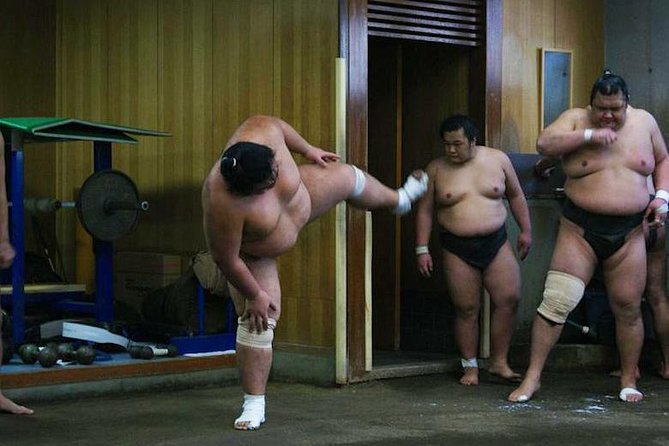
Expect a training session that moves in stages. You’ll see wrestlers warm up, stretch, and work in the ring area in a steady progression. The pace builds from controlled movement into higher intensity, so even if you are new to sumo, you can feel when things shift.
A key detail: the timing is not fixed like a theater show. The tour duration is usually listed around 1 hour, but the on-site practice can run 60 to 90 minutes, and ending times can vary day to day. During Tokyo tournament months in January, May, and September, practice duration is typically shorter, around 30 to 40 minutes, while the price stays the same.
That matters for your expectations. If you show up thinking you’ll get a long, uninterrupted walkthrough, you might feel whiplash on a short day. On the other hand, if you’re flexible and ready to watch what happens, you’ll still get the core experience: training you can’t fake.
Ryogoku Kokugikan and getting there without a headache
Your meeting point connects to Ryogoku Kokugikan, which puts you in the right part of town for stable morning practice. The good news is the format is simple: you meet, you enter, and the activity ends back at the meeting point.
The practical part is getting yourself there on time. This starts early, with operation windows set between 8:00 AM and 10:00 AM on Mondays through Saturdays during the listed date ranges. A taxi can cut the stress if your hotel is in the Asakusa area, and one traveler even shared that a taxi ride can be around 10 AUD. Their other good tip: have the destination address in Japanese, since not all taxi drivers read English.
If you prefer public transit, you can absolutely do it, but do not schedule anything tight right before the meeting. You want a buffer for a smooth arrival, especially because you’ll be sitting afterward.
What you actually learn from watching sumo training
Sumo has rules, rankings, and routines, but you do not need a textbook to understand what you’re seeing. You just need to watch closely.
Here is what becomes obvious in person:
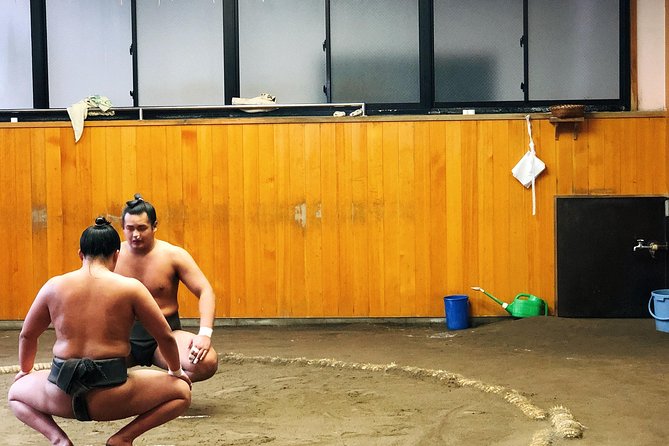
- The warm-ups are not filler. They set rhythm and focus.
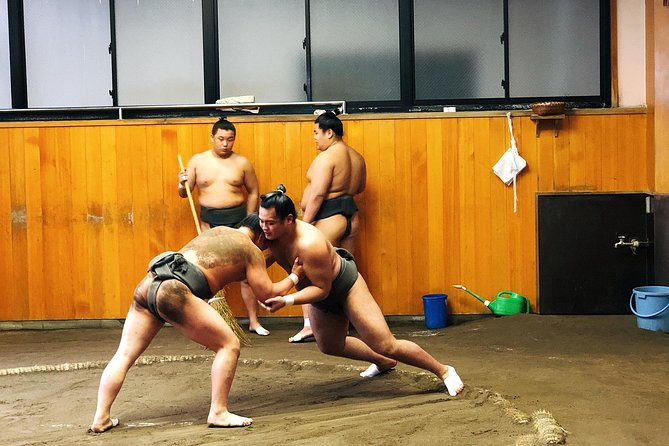
- Technique looks simple from far away, but up close you notice how controlled the footwork and grips are.
- Sparring has different energy than stretching drills. The moment contact ramps up, you’ll feel the intensity.
One review suggested reading up on how rekishi hierarchies work, and I think that is smart. Even basic context helps you understand why certain wrestlers move when they do, and why the room stays orderly. Without context, it can still be fascinating, but you may end up with more questions.
Also, the level of talk you get can vary. Some experiences include a real guide and explanation of sumo history. Other sessions can feel more hands-on, with the helper focusing on getting you into position. If you care a lot about the meaning behind every step, come prepared with a few questions in mind.
A few more Tokyo days worth comparing
- Mt Fuji and Hakone 1-Day Bus Tour Return by Bullet Train
★ 5.0 · 26,383 reviews - 1-Day Tokyo Bus Tour
★ 5.0 · 14,250 reviews - Tokyo: TOKYO SKYTREE® Admission ticket
★ 4.5 · 11,192 reviews - Tokyo: teamLab Planets TOKYO Digital Art Museum Entry Ticket
★ 4.6 · 9,779 reviews
Floor seating is the main deal, so plan for comfort
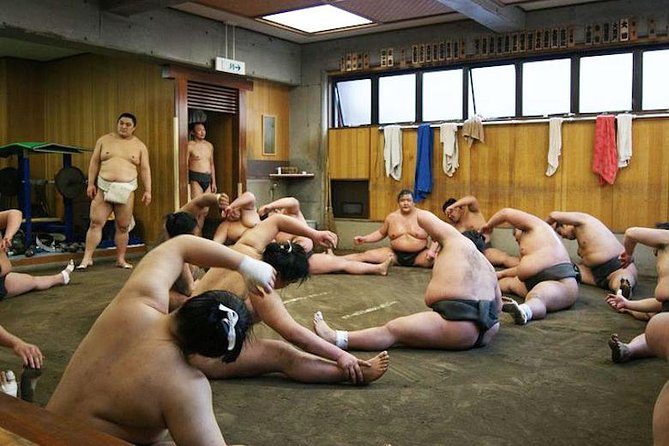
Let’s talk about the part that can make or break your day. This activity requires sitting for long periods on the floor. You may be on tatami in a stable environment, and it can be thinner than what you expect.
What you should do with that info:
- Wear layers you can tolerate for an early morning.
- If you need any help managing sitting time, ask about seating options in advance. One traveler noted chairs or a stool may be available on request, but the view can still be tricky depending on where you land.
- Plan on staying still. Reviews emphasize total quiet and minimal movement, because the practice is not an entertainment performance.
This is also why the age minimum is 13. It is not age-policing. It is because long silent sitting is the heart of the experience.
If your legs or back are sensitive, this is the main risk. Some people found the floor uncomfortable and had to leave early. If that is you, consider whether a morning that ends early is acceptable, or whether you should look for a more seated-and-straight-backed option elsewhere in Tokyo.
Photos at the end, and why timing matters
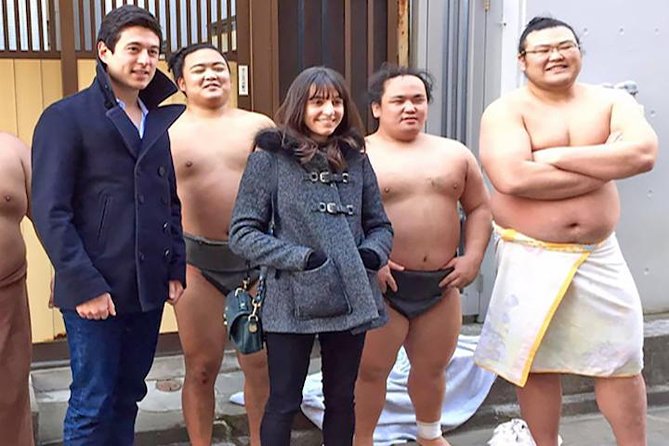
Photos with the sumo wrestlers are included at the end of the session. That is a big plus, since it gives you a clear closure and a tangible memory.
But remember: the schedule depends on the stable, and ending times can shift. During tournament season, the session can be shorter. On other mornings it can run longer than expected. The safe move is to keep your next commitment flexible, and treat the photo moment as last-in-line rather than guaranteed at a specific clock time.
If you are travel planning with tight windows, this is where you can get burned. If you have lots of free time afterward, it will feel relaxed.
Price and value: is $95.77 worth it?
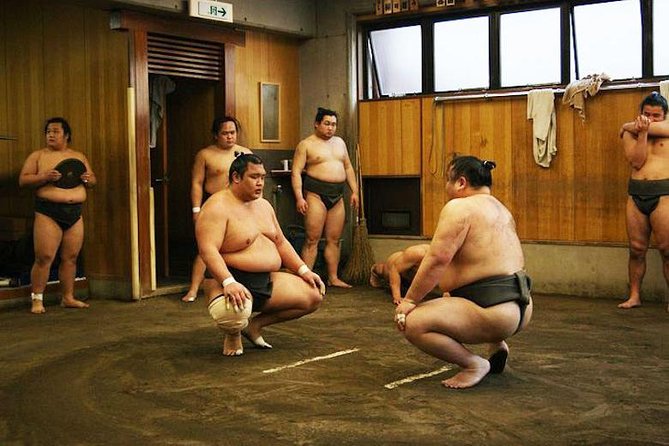
At about $95.77 per person, this isn’t a cheap morning activity. But it is also not trying to be a theme park show.
Here is the value logic:
- The entrance fee for the practice is included.
- Photos at the end are included.
- The group is small, up to 10 people, which helps you stay respectful and still see what is happening.
- You’re getting access to a stable routine that most visitors never see.
What you are paying for is access and proximity, plus a specific cultural setting where your behavior matters. If you want a narrated sightseeing product, this might feel thin. If you want to watch training up close and accept silence as part of the deal, it can feel like a bargain compared with typical Tokyo attractions.
Also note the schedule variability. If the practice ends early or runs short during tournament season, you may still pay the same price. On those days, value comes from intensity and closeness, not from duration.
Who this sumo morning practice tour fits best
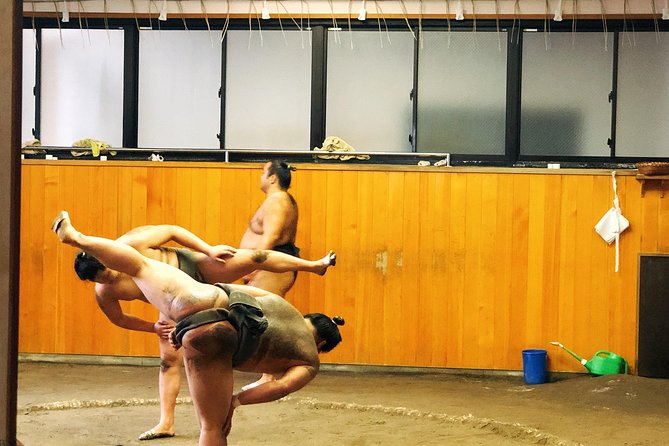
This tour makes sense if:
- You enjoy watching sports technique, not just big event highlights.
- You are comfortable with silence and steady sitting.
- You like authentic experiences where you are a respectful observer.
It might feel frustrating if:
- You want heavy narration or lots of Q and A.
- You can’t sit on the floor for an extended time.
- You planned your day around a strict end time.
It can still work for families if everyone can handle the quiet stretch. Some families described kids staying engaged, mainly because the intensity builds as practice goes on.
For first-timers, it’s also a great intro. For sumo fans, it can be even better because you see training mechanics and stable rhythm, not just match day drama.
Should you book this sumo morning practice watch?
I’d book it if your top goal is proximity to real training, in a setting that still follows tradition. The small group size, the included entrance fee, and the photos at the end make it a high-value cultural morning when you match your expectations to the format.
Skip or reconsider if floor comfort is a serious issue for you, or if you need lots of spoken explanation to feel satisfied. For those people, sitting through a quiet session may feel like time you could spend more comfortably elsewhere in Tokyo.
If you do book, go in ready to watch and stay calm. Bring patience for shifting practice length, and arrive with an idea of what you’re looking at. That is the simple trick that turns this into a real Tokyo standout rather than just another early morning ticket.
FAQ
How long is the sumo morning practice?
The duration is typically between 60 and 90 minutes. It can be shorter during Tokyo tournament season in January, May, and September, when practice is often around 30 to 40 minutes.
Where does the tour start and end?
It starts at a meeting point in Tokyo and ends back at the same meeting point.
What is included in the price?
You get the entrance fee for the sumo practice. Photos with sumo wrestlers at the end are also included.
Is food or drink included?
No. This experience does not include any food or beverages.
Do I need to sit on the floor?
Yes. The activity requires sitting for a long time on the floor, and you should plan for extended, still sitting.
Is there a minimum age?
The minimum age is 13 years.
What are the rules during the practice?
You should be mindful not to distract the wrestlers. That means avoiding eating, loud talking, and using cameras with bright flashes or intrusive sound.
Is there a guide during the practice?
The format is described as meeting your guide and then watching practice, but the amount of explanation can vary based on the stable’s schedule and how the session runs.
When does it operate?
It runs Monday through Saturday during the listed operating windows, with meeting times in the 8:00 AM to 10:00 AM range for the dates shown.
What happens if the event is canceled due to weather?
If the experience is canceled due to poor weather, you will be offered a different date or a full refund.
Fresh options around Tokyo
- Tokyo: Nagano Snow Monkeys and Zenkoji Tour with Temples★ 4.9 · 19 reviews
- Yokohama Port: Private Customizable Tour with Transfer★ 5.0 · 19 reviews
- Sushi Making with Interactive Samurai Experience at JIN-ASAKUSA★ 5.0 · 19 reviews
- Explore Unique Tokyo Streets / Learn with a Pro Photographer★ 5.0 · 19 reviews
- DAIKOKU excursion by car DRIFT automobile encounter★ 4.5 · 19 reviews
- Official Street Go Kart Tour Akihabara 2nd★ 5.0 · 19 reviews
- Cosplay Experience with Professional Makeup and Photo Shoot!★ 5.0 · 19 reviews
- Tokyo: Name Seal & Pouch or Tote Bag Making Experience★ 4.5 · 19 reviews
Morning, compared.
Kyoto Early Morning Tour with English-Speaking Guide
Read our review →Early Morning Tour with English-Speaking Guide
Read our review →
World Heritage Shirakawa-go Morning Guided Tour
Read our review →
Nara Early Morning Tour (Kyoto or Osaka Departure Available)
Read our review →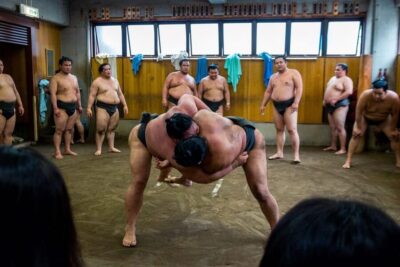

Hiroshima in a Nutshell: Morning Bike Adventure
Read our review →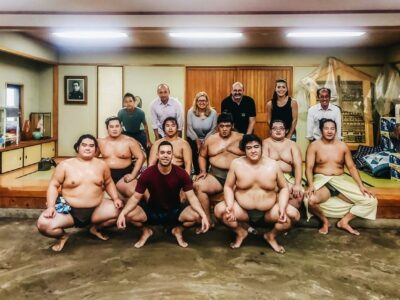
Browse the lists this tour appears in