
Reviewed · TEMPLE & SHRINE TOURS IN TOKYO
Shinto Shrine Tour: Explore Japanese Culture in Tokyo
Three shrines, one meaningful morning in Tokyo.
I love how this tour is private for your group and how the guide gives clear shrine etiquette you can actually use. You get a tight visit to three famous Shinto sites, with entrance fees handled and public transport built in. One drawback to plan for: there is a fair amount of walking between stops, so bring comfortable shoes.
The biggest win is time. In about 3 hours, you see Meiji Jingu, Kanda Shrine, and Tokyo Daijingu without getting stuck in a lot of guesswork. Your guide explains Japanese culture through Shinto beliefs, including how to purify yourself, how people pray for good fortune, and how prayers are tied to success.
This is also a great fit if you want culture with a human guide, not just photos and audio. You do not need to be a religion expert to get a lot out of it, and you will still leave with practical takeaways for visiting on your own later.
Key things to know before you go
- Private, group-only tour: you stay together as one group, with a professional English-speaking guide
- Three shrines in about 3 hours: Meiji Jingu, Kanda Shrine, and Tokyo Daijingu on one route
- Entrance fees included: you spend more time looking, less time figuring out tickets
- Public transportation between sites: the guide handles the in-between parts
- Smart casual dress code: comfortable but neat, and prepare for some walking
- Photo opportunities included: your guide will help you find good moments along the way
Why a Shinto shrine tour beats wandering alone
Tokyo is packed with shrines, but it is easy to miss what they are trying to communicate. This tour helps you read the places. You learn the stories behind the shrines, plus how Shinto ties into everyday Japanese life and traditions.
I like that the guide frames Shinto as both belief and cultural practice. You are not stuck with abstract theology. Instead, you get the on-the-ground stuff that makes a shrine visit feel respectful and understandable, like what people do before praying and why.
And the guide does more than facts. In the best moments, guides help you slow down just enough to notice details you would otherwise skim past, like the setting around Meiji Jingu or the age and rebuild history at Kanda Shrine.
More Temple & Shrine Tours in Tokyo
- Tokyo: Meiji Shrine, Asakusa, Skytree Bus Tour and Cruise
★ 4.7 · 1,986 reviews - Tokyo: Asakusa Walking Tour with Sensoji Temple Visit
★ 4.8 · 1,583 reviews - Nikko: Kegon Falls, Lake Chuzenji & Toshogu Temple
★ 4.6 · 1,577 reviews
Price and value: what $206.26 really covers
At $206.26 per person, you should think of this as a guided “shortcut” to three experiences. You are paying for a professional English-speaking guide, entrance fees at each shrine, photo opportunities, and transportation between sites using public transit.
What you are not paying for is also clear. Food and drinks are not included, and you will need to handle getting to the meeting point yourself. If you were going alone, you would spend time researching transit, ticketing, and etiquette on the fly. Here, the structure saves brainpower.
You also get a small layer of financial safety in the way the tour is set up. It offers group discounts, and it is exclusively for your group, so the experience is not diluted by strangers making timing chaotic.
Morning logistics: Harajuku Station, timing, and how the route works
You meet at Harajuku Station (1 Chome-18 Jingumae, Shibuya, Tokyo 150-0001, Japan) starting at 9:00 am. The tour ends at a different location than where you start, so plan your next thing nearby, not across town.
The tour runs about 3 hours. Between shrines, you use public transportation, so you are not stuck dragging your luggage or sprinting across Tokyo streets. Still, you should expect walking. One reviewer even flagged that it can be a long walk, so think in terms of comfortable shoes, not just good-looking outfits.
If you are late, the guide will wait up to 30 minutes after the scheduled start. After that window, the tour is considered cancelled, so set a buffer if you are coming from another neighborhood.
Dress code is smart casual. That is an easy target: you do not need a costume, but neat clothes help you feel at ease in sacred spaces.
Stop 1: Meiji Jingu Shrine and the feeling of stepping into another world
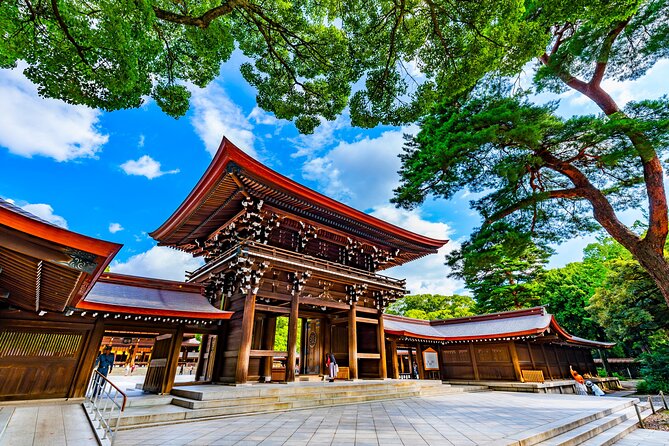
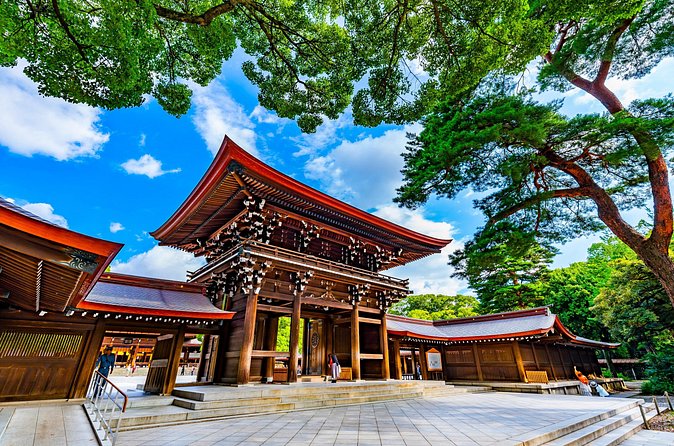
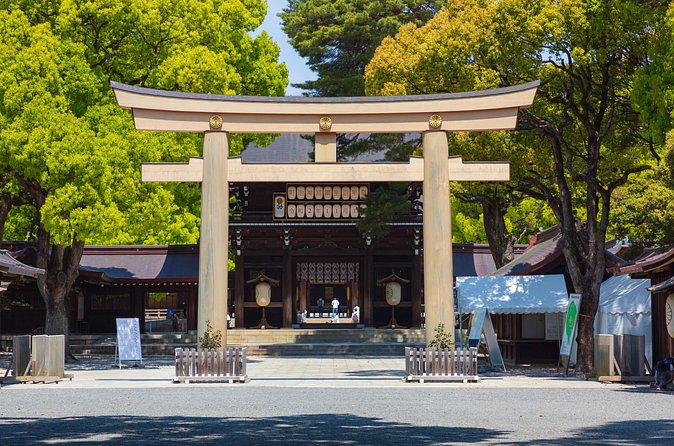
Meiji Jingu Shrine is the kind of place where Tokyo noise just fades. It is dedicated to the souls of the late Emperor Meiji and Empress Shōken, and the shrine sits in a lush forest area with trees donated from different regions of Japan.
This stop is where your guide’s explanation makes the visuals click. You are not just looking at a shrine building, you are understanding why the forest setting matters and what it signals about respect and reflection.
Here is where etiquette becomes practical. Your guide talks you through how people purify themselves and how prayer works in Shinto practice. Even if you have no background, you will know what to do, what not to rush, and how to keep your visit respectful.
Reviews repeatedly singled out Meiji Jingu as a favorite moment, with one person describing it as stepping into a different world. That tracks with the atmosphere: you arrive in a green pocket, and the whole place feels designed to slow you down.
If you get a guide like Hitomi (named in a review), you may also notice a pattern in how she teaches: history tied directly to what you are seeing around you, not history thrown at you from a distance.
More temple and shrine tours in Tokyo:
- Tokyo: Nikko Toshogu Shrine and Kegon Waterfall Tour
★ 4.5 · 1,266 reviews - Tokyo Panoramic 1 Day: Meiji Shrine, Asakusa, Odaiba and SKYTREE®
★ 4.5 · 1,222 reviews - Tokyo: Zen Meditation at a Private Temple with a Monk
★ 5.0 · 510 reviews - Mt. Fuji Heritage Tour: Traditional Villages, Lakes & Shrine
★ 4.5 · 509 reviews
Stop 2: Kanda Shrine, 1,270 years of tradition, and rebuild history
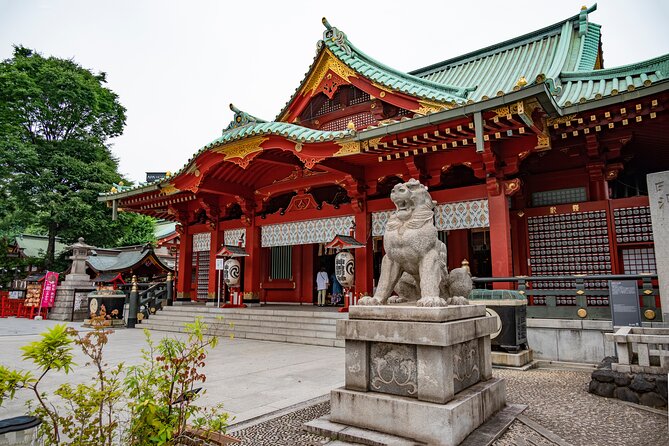
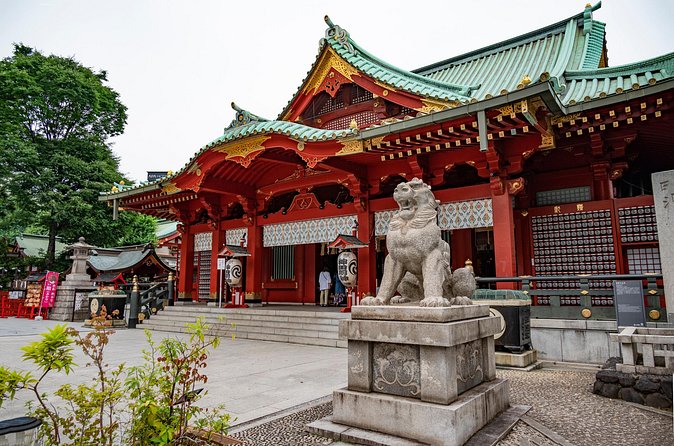
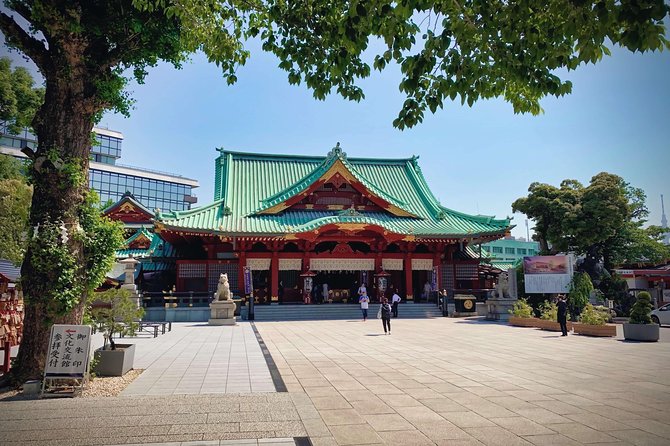
Kanda Shrine is in Chiyoda, Tokyo, and it dates back about 1,270 years. The current structure was rebuilt multiple times due to fire and earthquakes, which matters because it reminds you that sacred places are also living, repaired, and renewed.
This is a great counterpoint to Meiji Jingu. Meiji feels like forest calm and imperial reverence. Kanda feels like something the city has been carrying through time, including the reality of rebuilding after disasters.
Your guide will bring the shrine’s role into focus through stories and what people pay attention to while visiting. One review also praised the way a guide explained what statues represented, which is exactly the kind of detail that turns random-looking objects into meaningful symbols.
Another practical benefit of Kanda: it keeps the tour varied. You get a second setting, a different neighborhood feel, and a new set of cultural cues so your brain stays engaged instead of running on autopilot.
Stop 3: Tokyo Daijingu and prayers for good matches
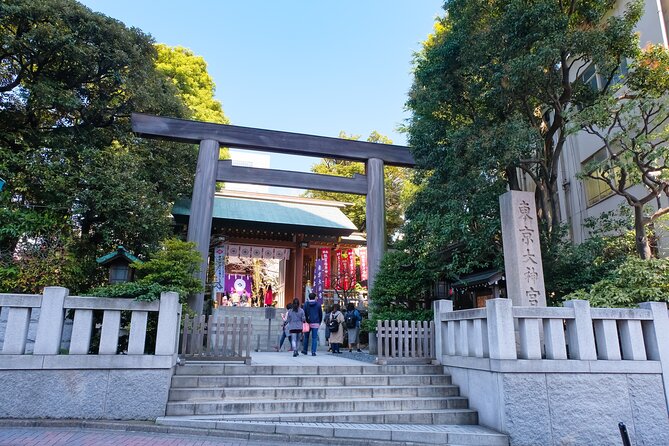
Tokyo Daijingu is affectionately called O-Ise-sama in Tokyo. That nickname comes from the deities it enshrines, which ties it to an idea of shrine tradition people recognize across Japan.
This stop is famous for a specific theme: it is known for the god of marriage among girls. If you are the kind of traveler who likes to understand what people come to ask for, this is the place where the purpose feels very clear.
Your guide also ties this stop back to what you learned earlier. How people approach prayer, how they connect gratitude and hope, and how these practices connect to ideas like good fortune and success. Even if you are not planning to pray for anything personally, you still learn how the ritual language works.
And yes, you will likely get photo moments. Reviews mention guides sharing helpful context and pointing out what to notice, which makes your photos more than just selfies in front of gates.
The guide’s real job: make Shinto feel normal, not mysterious
The tour promise is not that you become a Shinto scholar in three hours. It is that you understand the culture well enough to feel comfortable inside these spaces.
Across the group experiences, the most highly praised part has been the guide’s explanations paired with a friendly, patient tone. Names that came up included Ami, Atsuko Kobayashi, Ami again in a knee-injury story, Katsunori Fugiwara, Asami, Ken, Shunsu, and Hitomi. What you can take from that is simple: great guides make this tour feel personal and doable.
One reviewer highlighted how the guide allowed rest needs during a knee injury. That is not a guarantee, but it is a sign that a good guide will read the situation and keep you moving safely.
Another theme: etiquette. More than one person mentioned learning the proper way to visit and pray respectfully. That is huge value, because without that, you might accidentally do the opposite of what feels respectful in a sacred setting.
What to expect at the shrines, step by step
The tour is designed around learning-by-doing. You will not just hear about Shinto. You will practice what people do as part of a visit.
You can expect these themes to show up across all three sites:
- Purification practices: the guide explains how cleansing connects to respect
- Prayer gestures and intentions: you learn the basic idea of praying for good fortune
- Meaning behind what you see: the guide points out symbols and context
- How to behave: you get etiquette guidance so you do not feel awkward
Also, you will get photo opportunities. Not in a staged, intrusive way, but in the practical sense of knowing when you can stop, what angle is worth the effort, and what not to block.
Who this tour suits best
This tour is ideal if you have limited time and want a credible introduction to Shinto culture in Tokyo. Three hours is enough to see major shrines and still understand the logic behind the rituals.
It is also a strong pick if you like guides who focus on practical meaning, not just dates. Reviews consistently praise guides for making the experience genuine, friendly, and easy to follow.
It may be less ideal if you have mobility limitations, since there is walking and you are moving between three sites in one morning. If you are traveling with kids, note that children must be accompanied by an adult.
If you are the type of traveler who wants to finish your day with lots of free time for food and exploring, this tour helps because it ends at a different location than the start, letting you continue your day without returning to the meeting point.
Weather and comfort: plan for Tokyo’s mood
The tour depends on favorable weather conditions. If it gets cancelled due to typhoon or other extreme weather, you can choose an alternative date or request a full refund.
Comfort matters because you are outdoors at multiple sites. Smart casual is fine, but think about breathable layers, because morning Tokyo weather can change quickly.
And since you will walk between stops, pack like it is a light city hike: shoes you trust, a small umbrella if rain is possible, and water for after the tour since food and drinks are not included.
Should you book this Shinto Shrine Tour?
Book it if you want a structured, respectful introduction to Shinto culture without spending your vacation time decoding etiquette and transit. The value is strongest when you care about meaning, not just sightseeing checkboxes.
Skip it or choose a different format if you hate walking or want lots of downtime. This tour is a focused morning plan, and the pace is built around seeing all three shrines efficiently.
If you like learning from people who can explain history, mythology, and everyday practice in clear English, this is a very safe bet. Guides like the ones named in the reviews also seem to make the experience feel warmer and more human, which is exactly what you want at sacred places.
FAQ
Which shrines are visited on this tour?
You visit three Shinto shrines in Tokyo: Meiji Jingu Shrine, Kanda Shrine, and Tokyo Daijingu Shrine.
How long is the Shinto shrine tour?
The tour lasts about 3 hours.
Where do we meet, and when does the tour start?
You meet at Harajuku Station (1 Chome-18 Jingumae, Shibuya, Tokyo 150-0001, Japan) and the start time is 9:00 am.
Is this tour private for my group?
Yes. It is exclusively for your group, so only your group participates.
What is included in the tour price?
Included are a professional English speaking tour guide, photo opportunities, public transportation between the shrines, and entrance fees.
What should I wear, and can children join?
The dress code is smart casual. Children must be accompanied by an adult.
What happens if I’m late, or if I need to cancel?
If you are late, the guide will wait up to 30 minutes after the scheduled start time. If you cancel, the experience is non-refundable and cannot be changed for any reason.
Fresh options around Tokyo
- Private Harajuku Omotesando Architecture Tour★ 4.9 · 18 reviews
- Tokyo Shopping Street Hopping Private Tour with Government Licensed Guide★ 5.0 · 18 reviews
- Tokyo: Private Mount Fuji and Hakone Day Trip with Guide★ 4.5 · 18 reviews
- Small-Group Osaka-Style Okonomiyaki Cooking Class★ 5.0 · 18 reviews
- Hakone Private One Day Tour From Tokyo: Mt Fuji, Lake Ashi, Hakone National Park★ 5.0 · 18 reviews
- PERFECT 1 Day Tokyo Highlights Tour with a Private Car★ 5.0 · 19 reviews
- Tokyo: Shinjuku Bar Hopping & Karaoke Night Tour★ 4.9 · 19 reviews
- Night E-Scooter Ride to Tokyo Tower – No License Needed★ 4.9 · 19 reviews
Temple & Shrine Tours in Tokyo, compared.
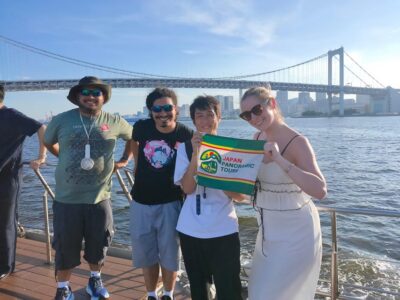
Meiji Shrine, Asakusa, Skytree Bus Tour and Cruise
Read our review →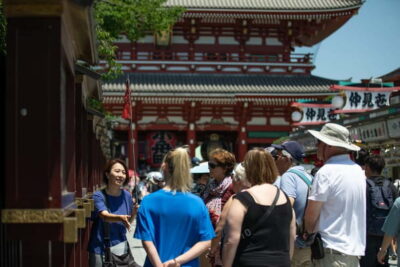
Asakusa Walking Tour with Sensoji Temple Visit
Read our review →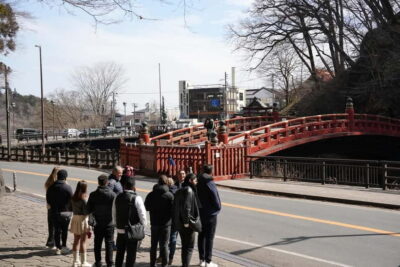
Nikko: Kegon Falls, Lake Chuzenji & Toshogu Temple
Read our review →
Nikko Toshogu Shrine and Kegon Waterfall Tour
Read our review →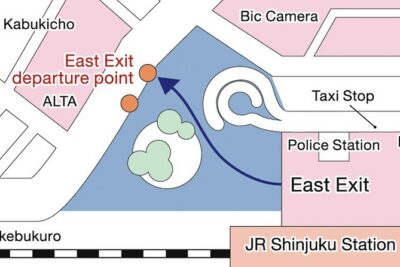
Tokyo Panoramic 1 Day: Meiji Shrine, Asakusa, Odaiba and SKYTREE®
Read our review →

Mt. Fuji Heritage Tour: Traditional Villages, Lakes & Shrine
Read our review →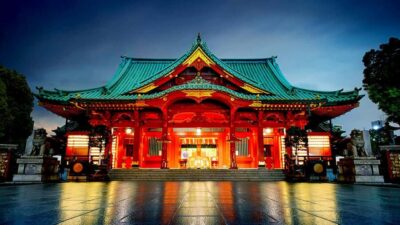
Samurai Entertainment Night Show in Kanda Shrine
Read our review →Browse the lists this tour appears in