
Reviewed · MORNING
Tokyo Sumo Morning Practice Tour at Stable
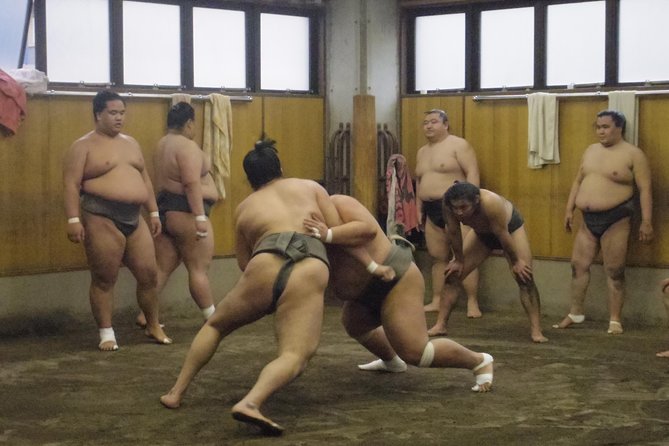
Sumo practice feels almost sacred. You get front-row access to a local stable’s morning grind, plus a guide who explains what you are seeing. I love the small group size and the close viewing, and I also love how the guide ties the training to the sport’s bigger world, like the six annual grand tournaments.
One thing to keep in mind: audio comes through headsets, and a small slice of feedback says it can be distracting or hard to hear if the setup is not working perfectly.
Key takeaways before you go
- Morning-only access: You watch training without the tournament pageantry.
- Small group, big proximity: Up to 20 people, with seating on the floor or stools.
- Quiet, respectful viewing: No flash, no videos, and you keep your body language polite near the ring.
- Guide narration matters: Many highlights were tied to clear English explanations by guides like Seiji, Yumi, Cameo, Noriko, and Nobu.
- Heat rules in summer: There is no air conditioning, so plan for Tokyo humidity.
- Photo moment is sometimes part of the day: Some tours include a post-practice photo setup, but it is not guaranteed.
Morning practice at a Tokyo sumo stable: what you actually see
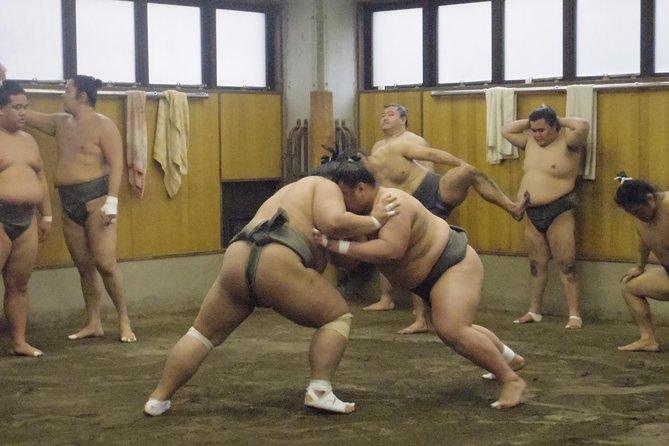
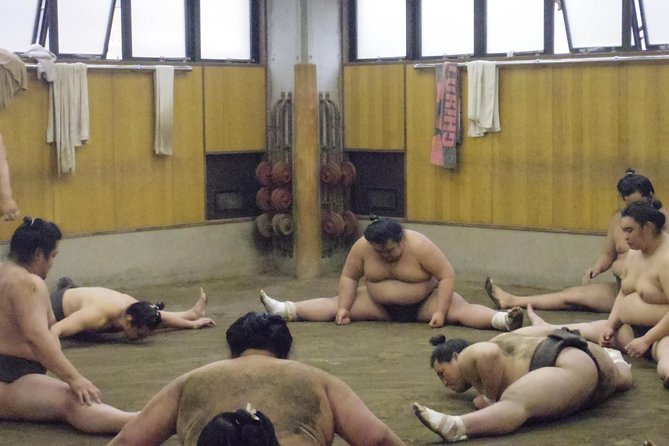
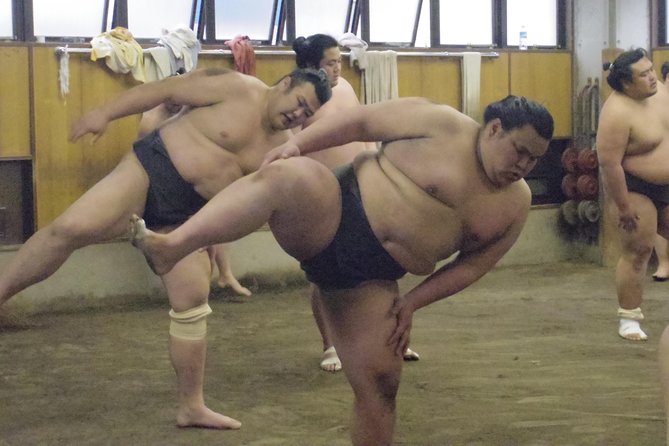
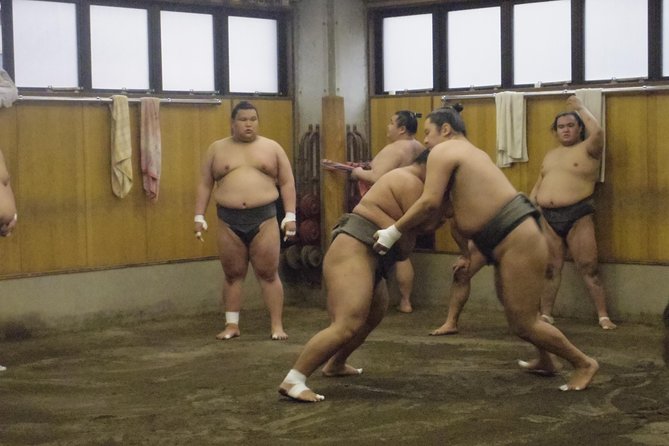
This is sumo at work, not sumo as a big TV event. In a stable, wrestlers train in a steady rhythm of warmups, drills, and repeated bouts. You will see a lot more action than you would expect from a single day at a tournament, because practice focuses on repetition, not ceremonies.
The best part is how close you get. You do not just watch from a distance. You sit on the floor, or you use stools depending on the stable setup, and you can follow the grappling the moment it begins. That closeness makes sumo feel physical, even if you do not know the rules yet.
You also get a lesson plan that stays practical. The guide explains what the wrestlers are doing and how it connects to rankings and tournament structure. You leave with a clearer sense of why matches matter and why the sport runs on ritual and discipline, not just strength.
More sumo experiences in Tokyo:
- Tokyo: Sumo Show Experience with Chicken Hot Pot and a Photo
★ 4.8 · 6,678 reviews - Tokyo: Sumo Show and Dining Experience
★ 4.8 · 2,742 reviews - the SUMO show
★ 5.0 · 1,960 reviews
Ryogoku station meet-up and the easy morning rhythm
The tour starts early. You meet at 7:45am at Ryogoku Station, specifically the Ryogoku Station Gallery area, then you head to the stable. After the practice, your guide walks you back to the station and you part ways.
This timing is not random. Morning practice is when the stable’s day is still fully in motion. It also means you are usually getting fewer crowds than the daytime tourist scramble.
A practical tip: plan to arrive before 7:45am. In the feedback, people recommended showing up early to line up for better seating, since the most front positions can be reserved (sponsors and special seating). If you care about view angles, that early arrival can help.
Inside the training session: the flow of drills, bouts, and respect
Once you enter the stable, your job is simple: watch quietly and respectfully. The tour rules are strict for a reason. The ring and the sandy area are treated as sacred space, and you do not step down onto the ring or the ground around it.
That rule shapes your viewing too. You are close, but you keep your body in check. Do not stretch your legs toward the ring, and try not to shift your feet so your soles face the wrestlers. It sounds minor until you are sitting there. In that tight space, small etiquette choices show you understand the culture.
What the practice feels like
Most tours run for about 2 hours total (approx.), and the practice itself can be a bit shorter or longer depending on the day’s schedule. You should expect a steady sequence of drills and multiple bouts, not a single dramatic sparring highlight.
One of the most praised aspects was getting to watch dozens of exchanges. People liked that the practice is constant, and the energy feels like training, not performance. That also means you might see wrestlers from different levels, including seasoned wrestlers depending on who is on the mat that morning.
A few more Tokyo days worth comparing
- Mt Fuji and Hakone 1-Day Bus Tour Return by Bullet Train
★ 5.0 · 26,383 reviews - 1-Day Tokyo Bus Tour
★ 5.0 · 14,250 reviews - Tokyo: TOKYO SKYTREE® Admission ticket
★ 4.5 · 11,192 reviews - Tokyo: teamLab Planets TOKYO Digital Art Museum Entry Ticket
★ 4.6 · 9,779 reviews
Headsets and narration: useful, but be prepared
You get English narration through headsets while you watch. In many responses, this was praised as clear and helpful, sometimes described as in-ear commentary that makes everything easier to follow.
Still, there were a few complaints about headset quality or distraction. If you are sensitive to background audio, it is worth knowing that this is a guided narration setup. Come with patience, and keep your focus on watching first, then listening.
The sumo background your guide brings: Shinto roots and tournament math
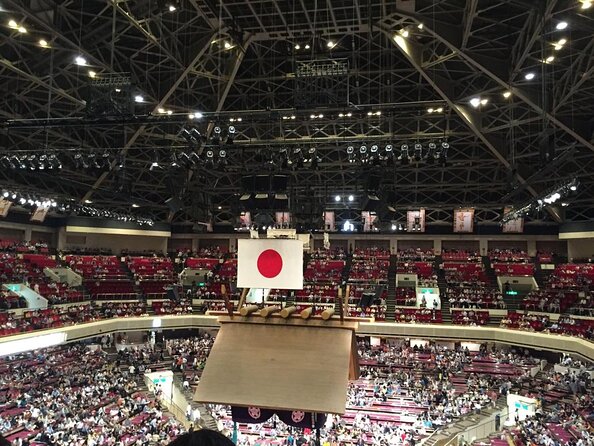
Sumo is not just sport. Your guide connects it to Japanese tradition, including links to Shinto rituals that go back centuries. You also get a walkthrough of the six annual grand tournaments, which are typically hosted in Tokyo, Osaka, Nagoya, and Fukuoka.
If sumo rankings feel confusing right now, this is one of the best places to start. Practice is where the ranking system turns into real behavior. The big names train hard, but the culture is also about seniority, routine, and the mental work of being ready.
You also learn the basics of how the tournament cycle works. In other words, you start to see why wrestlers spend so much time building form and staying disciplined between those 15-day events.
And because the guide is there, you can make sense of what looks like repetitive wrestling. Sumo practice is repetition with intent. The explanations help you notice patterns, like how wrestlers set grips, change balance, and reset quickly after each exchange.
Etiquette and photo tips: don’t ruin the sacred vibe
This part can make or break your experience, so read it once and then follow it in real time.
The must-follow rules inside the stable
- Cellphones must be on silent.
- Photos are allowed, but no flash and no extra shutter sounds.
- Videos are not allowed.
- No eating or drinking inside the stable, with an important seasonal exception.
- No sunglasses or hats in the stable.
- Try hard not to leave in the middle of the practice.
- Do not ask wrestlers for photos while practice is still going on.
- Once you leave the stable, you cannot re-enter.
Summer reality check
Tokyo summers can be brutal, and this tour does not have air conditioning in the stable. The good news is that water and sports drinks are allowed inside the stable during the month of summer. You will also be happier if you bring something like an ice pack or cold towel to manage the heat.
About photos with the wrestlers
Many people loved the post-practice photo moment. Some feedback also mentioned extra chances for photos if a stable sponsor or special circumstance shows up. Treat this as a nice possible bonus, not a guaranteed event.
Price and logistics: does $83.57 feel fair?
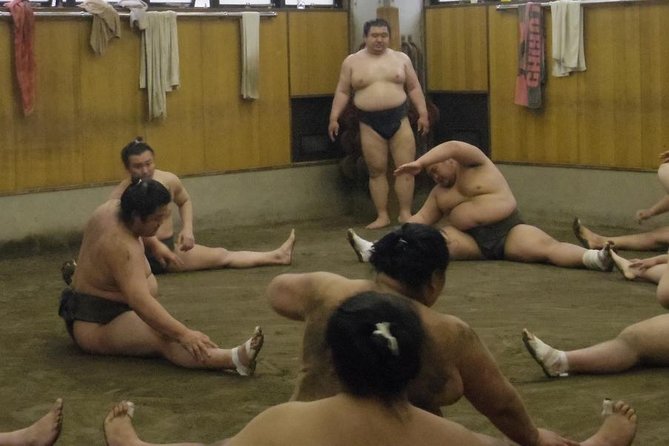
For $83.57 per person, you are paying for something hard to recreate on your own: guided access to a working stable session, at a time when most people cannot just wander in and watch training.
This tour is also structured around value:
- Max group size of 20, so it stays intimate rather than crowded.
- You get guided narration instead of just entry.
- You get a full morning window, roughly 2 hours, with your guide staying with you for the stable experience and returning you to the station.
- You have a mobile ticket, which makes day-of life easier.
Could it feel overpriced if you land in the wrong seat? Yes, that exact concern showed up in feedback. Depending on where you sit, visibility can vary. The front area may be reserved, so again, arrive early if you want the best view.
Also, if headset audio quality is poor for your group, that can change how “worth it” the experience feels. When narration works well, it helps you understand the action. When it does not, you mostly watch without the explanations. Either way, you are still watching real training, and many people rated it as one of their Tokyo highlights.
Who should book, and who might prefer a tournament day
This tour is best for people who like learning by watching, not people who only want spectacle.
You should book if:
- You want a real behind-the-scenes look at how sumo wrestlers train.
- You are visiting Tokyo and want to understand the sport’s structure, like the six tournaments and the way ranks connect to competition.
- You like small-group tours with clear rules and cultural etiquette.
You might choose something else if:
- You hate hearing constant commentary through headsets.
- You are only interested in tournament ceremonies and big match stakes.
- You feel strongly about maximizing interaction time, because some feedback said the post-practice photo window felt short and the overall pace could feel a bit rushed.
One more fit check: the tour is open to most travelers, with a minimum age of 12. Kids 11 and under cannot enter the stable, so plan accordingly if you are traveling with younger family members.
Should you book this Tokyo sumo morning practice tour?
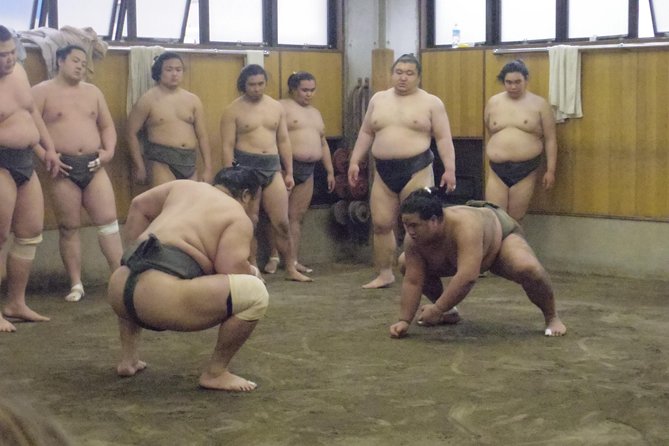
If your goal is to understand sumo as a disciplined craft, this is a strong yes. The biggest upsides are the small group, the close training access, and the way the guide explains what you are watching and how it connects to the sport’s rules and tournament cycle.
Just go in with the right expectations: it is not a casual hangout and it is not a tournament. It is quiet, early, and rule-heavy. In hot weather, be ready for the no-air-conditioning reality, and bring your cooling helper.
If you follow etiquette, arrive early for seating, and accept that the headsets are part of the experience, you will likely come away with a new respect for how much work goes into being ready for those 15-day grand tournament moments.
FAQ
What time do I need to meet my guide?
You meet at 7:45am at Ryogoku Station Gallery, unless your confirmation email says a different meeting location based on your option plan.
How long is the tour?
The tour is about 2 hours total.
Where is the tour in Tokyo?
It starts around Ryogoku Station in Tokyo and then you travel by train to a nearby sumo stable. After the session, you return to the station.
Can I take photos or record video?
You can take photos with no flash and without extra shutter sounds. Videos are not allowed.
Is there eating or drinking during the practice?
Eating and drinking are not allowed, but during summer the tour allows water and sports drinks inside the stable. The tour also recommends bringing something like an ice pack or cold towel.
What are the minimum age rules?
The minimum age is 12. Kids 11 and under cannot enter the stable.
Fresh options around Tokyo
- Tokyo: Nagano Snow Monkeys and Zenkoji Tour with Temples★ 4.9 · 19 reviews
- Yokohama Port: Private Customizable Tour with Transfer★ 5.0 · 19 reviews
- Explore Unique Tokyo Streets / Learn with a Pro Photographer★ 5.0 · 19 reviews
- Sushi Making with Interactive Samurai Experience at JIN-ASAKUSA★ 5.0 · 19 reviews
- DAIKOKU excursion by car DRIFT automobile encounter★ 4.5 · 19 reviews
- Official Street Go Kart Tour Akihabara 2nd★ 5.0 · 19 reviews
- Cosplay Experience with Professional Makeup and Photo Shoot!★ 5.0 · 19 reviews
- Japanese Traditional Sweets making★ 4.1 · 19 reviews
Morning, compared.
Kyoto Early Morning Tour with English-Speaking Guide
Read our review →Early Morning Tour with English-Speaking Guide
Read our review →
World Heritage Shirakawa-go Morning Guided Tour
Read our review →
Nara Early Morning Tour (Kyoto or Osaka Departure Available)
Read our review →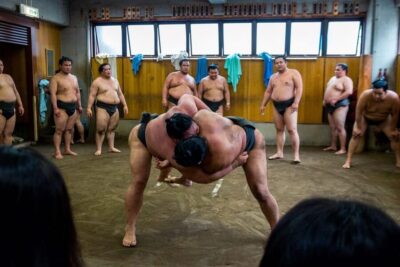

Hiroshima in a Nutshell: Morning Bike Adventure
Read our review →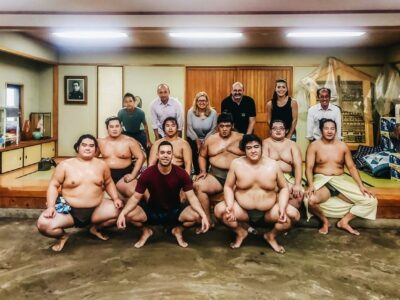
Browse the lists this tour appears in