
Reviewed · COOKING CLASSES
Tokyo Washoku 4-hour Cooking Class: From Market to Table
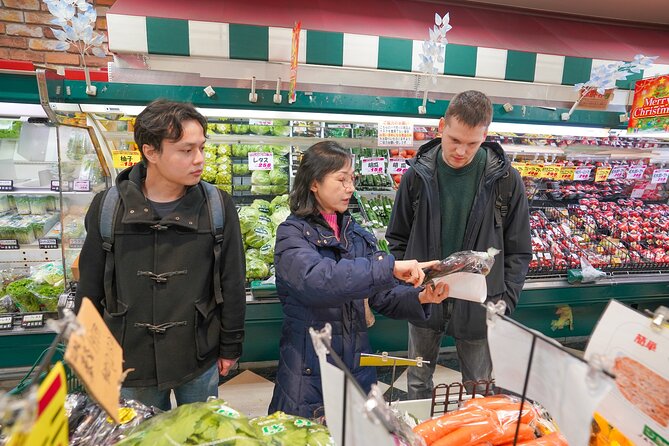
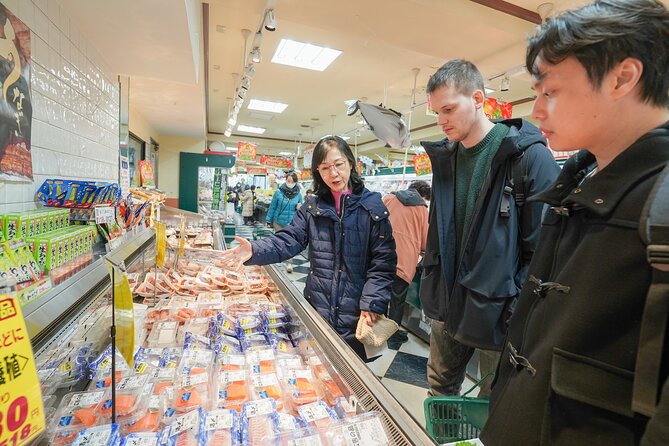
A supermarket stop makes this Tokyo class practical. You shop with a guide near Iriya Station, then cook dishes like maki sushi and miso soup with real cutting and cooking technique.
I especially liked the chance to learn how to pick ingredients instead of just following a recipe. Another highlight is the hands-on knife practice, from getting comfortable with cuts to cooking in a way that actually tastes Japanese at home. The one drawback to plan for is that dietary changes are limited if you share needs too late, so you should message ahead if you have allergies or food restrictions.
Key highlights in 5 minutes
- Start at a real supermarket, not a classroom, so ingredient shopping becomes part of the lesson
- Knife and cooking technique practice you can repeat later, not just watching
- A take-home recipe set, so you can rebuild the dishes after the class
- Small group size (max 7), which usually means more time to ask questions
- Vegan and vegetarian options are supported with advance notice
- Sake and beer pairing moments during the meal, when offered by your instructor
How this Tokyo class actually works
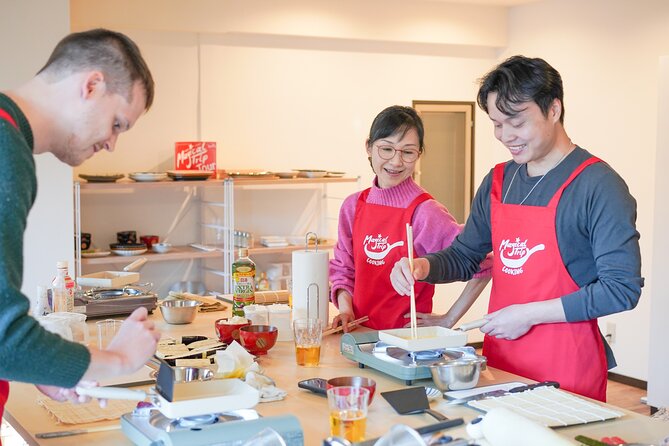
This is a 4-hour, small-group cooking class in Tokyo that runs on a simple, smart idea: start in the market, then cook what you bought. The meeting point is at FamilyMart, 2-chōme-1-10 Shitaya, Taito City, Tokyo. The start time is 10:00 am, and the activity ends back at the meeting point.
In between, you walk through a local supermarket with your guide and focus on ingredient choices the way a cook does. Then you move to a dedicated cooking studio to prepare a full set of Japanese dishes, cook them from scratch, and sit down together to eat.
The class is designed to feel like a mini translation of Japanese home cooking into something you can actually do after you return home. You also get recipes to take with you, which matters because the hard part is never making the first dish, it is remembering the steps later.
More Cooking Classes in Tokyo
- Ramen & Gyoza Cooking Class in Tokyo with Local Supermarket Visit
★ 5.0 · 823 reviews - Tokyo: Easy Ramen Cooking Experience in Kabukicho, Shinjuku
★ 4.6 · 321 reviews - Ramen and Sushi Cooking Class with Sake Pairing Set in Tokyo
★ 5.0 · 291 reviews
Supermarket shopping near Iriya Station, the part most classes skip
The supermarket stop is not filler. It is the lesson foundation. You learn what to look for when choosing Japanese ingredients, and your guide helps you connect what you see in the store with what it becomes on your plate.
That means you spend time on practical choices like selecting the right items for sauces, broth, and toppings, rather than just grabbing whatever looks similar. It also helps you understand why certain Japanese flavors work together. Once you have that context, the cooking feels less mysterious.
This is also where your questions can earn you real value. If you are curious about substitution, brands, or how a specific ingredient should behave in cooking, this is the moment to ask. You cannot do that as easily once you are already standing at a hot pan.
A small planning note: the route from the store to the studio is part of the flow, so wear comfortable shoes. And remember, Japan’s weather can swing hard, with summer highs reaching 40°C and winter lows dropping to -5°C, so dress for extremes.
Knife and technique coaching, what you are really paying for
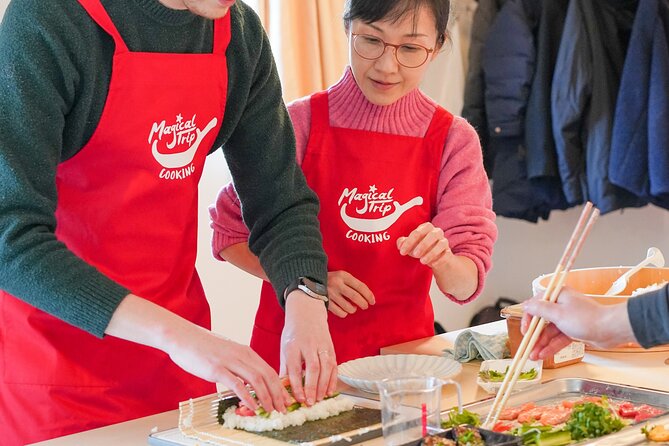
Cooking classes often teach recipes. This one teaches technique, and you feel it most during the cutting and prep stages. You practice traditional Japanese knife skills and cooking methods, guided step by step so you do not just copy motions, you understand what the cut is supposed to accomplish.
For example, the way ingredients are cut affects texture and how quickly they cook. When you learn that link, you can start improvising later. Even if you forget the exact shape of a slice, you will remember the why: more even cuts cook more evenly, and certain cuts help sauce cling better.
The best part is that the class is small, with a maximum of 7 travelers. That size supports hands-on participation and makes it easier to get answers fast when something does not click. Many instructors in this format are praised for being patient and encouraging, and you can usually expect that supportive pace, especially when you are learning something new like Japanese knife handling.
The dishes you’ll make, and what they teach
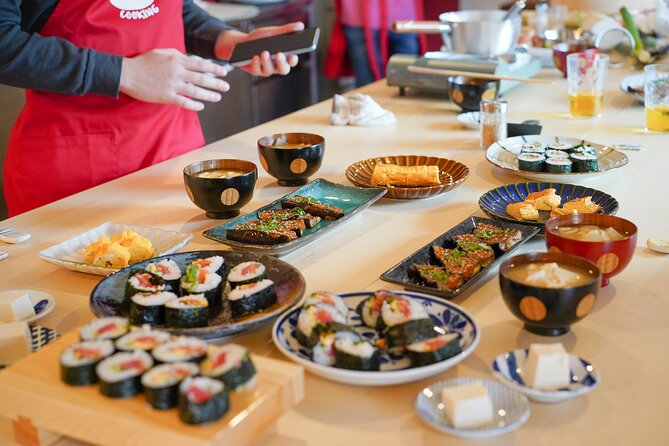
You will cook a set of traditional Japanese foods that build on each other: some are savory and broth-based, some focus on texture, and others highlight grilling and omelet-style technique. The exact list can vary slightly, but you can generally expect staples like:
- Maki sushi (rolled sushi)
This teaches portioning, rolling technique, and seasoning balance. Rolling is one of those skills that feels awkward the first time, then gets easier when your guide corrects your grip and spacing.
- Miso soup
Miso soup is simple in theory, but the lesson is in timing and how broth flavors develop. It is a great dish to learn because you can reuse the method for future home cooking.
- Dashimaki tamago (rolled omelet)
This is the type of Japanese dish that looks tidy but takes real practice. You learn the patience behind low, controlled cooking and how to roll without overcooking.
- Nasu dengaku (grilled eggplant skewers)
This teaches grilling and sauce application. Eggplant becomes tender, then you add a sweet-savory finish, so it tastes layered instead of flat.
The class also references other traditional items such as sushi variations and egg rolls, depending on the day and flow. If you cannot eat eggs, your selection can drop from four types to three.
If you like food that is comforting but not heavy, this menu works well. If you prefer ultra-spicy cooking, you might still enjoy it, but you should expect Japanese flavors to lean toward balanced, savory, and slightly sweet profiles instead of heat-first seasoning.
More Market Tours in Tokyo
- Tokyo Tsukiji Fish Market Food and Culture Walking Tour
★ 5.0 · 3,184 reviews - Tokyo: Tsukiji Fish Market Food and Walking tour
★ 5.0 · 1,724 reviews - Tokyo: Tsukiji Fish Market Guided Walking Tour
★ 4.9 · 1,397 reviews - Tokyo Sushi Making Class in Tsukiji with Professional Chef
★ 5.0 · 1,177 reviews
Eating together, with sake or other drink pairings
After cooking, you eat what you made. This matters more than you might think. Your brain learns faster when you taste right away, and you get instant feedback on whether the seasoning, texture, and technique landed the way it should.
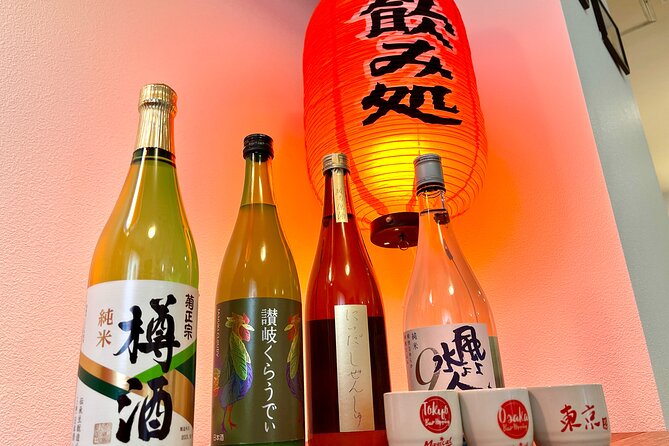
Some classes in this format include beer and sake tasting as part of the meal experience. Even when alcohol is offered, it typically functions as a pairing moment rather than a party. It helps you connect flavor profiles, like how savory dishes work with crisp or slightly malty drinks.
If you want to keep it non-alcohol, you can still benefit from the tasting context by focusing on the taste comparisons: saltiness, umami intensity, and how fat or sweetness shifts how you perceive miso, grilled eggplant, or tamago.
The cooking studio setup, group size, and your comfort
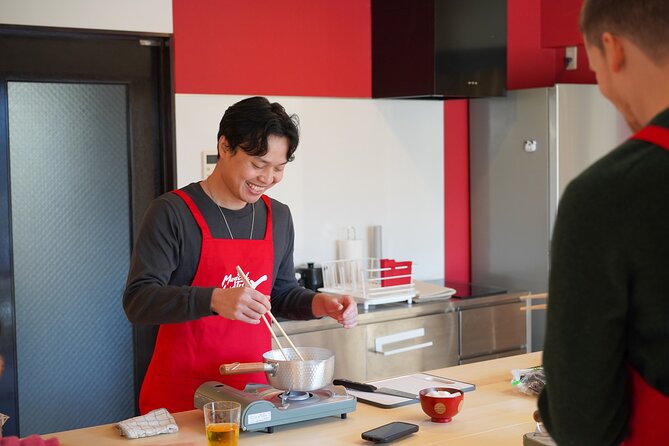
Your final cooking happens in a dedicated cooking studio, not a cramped home kitchen. Many past participants have praised the studio as spacious and well set up, which makes a difference for a hands-on class where you are moving, chopping, and cooking in real time.
With a max group size of 7, you are less likely to feel rushed. And because the class is designed for questions, you should feel comfortable asking about ingredient swaps or technique issues as they come up.
You will also spend time actively preparing and cooking rather than passively watching. That is the big reason these classes feel worth it. You leave with a meal, a skill set, and recipes you can follow.
Price and value: what $79.59 buys you in Tokyo
At $79.59 per person for about 4 hours, this class sits in the sweet spot for Tokyo cooking experiences that include more than just labor.
What you are paying for is the whole package:
- an instructor-led supermarket shopping session,
- hands-on knife and cooking technique practice,
- multiple dishes cooked from scratch,
- recipes to take home,
- and time to sit down and eat together.
You should think of it as a short, guided culinary workshop that also teaches you how to shop. In Tokyo, ingredient familiarity can be tough if you do not read labels easily. Shopping with a pro helps you turn future grocery trips into easier wins.
If you are deciding between a simple cooking class and one that includes shopping, pick this format if you care about repeating the results later. If you only want a fun meal and do not care about learning, you may find it slightly more structured than you expected.
Dietary needs: what’s supported, what needs advance notice
This class welcomes vegan and vegetarian participants. The key is timing. You need to inform the operator at least one day before the tour if you have dietary requests or allergies. Requests made on the day of the tour cannot be accommodated.
Also, while substitutions are made when possible, allergy-free cooking is not guaranteed because the preparation is done in kitchens that do not belong to the operator. That means you should treat allergies seriously and plan early.
If you cannot eat eggs, the dish selection can reduce from four types to three. The safer move is to confirm what that means for your specific preferences when you book.
Getting the most out of your 4-hour class
Here are a few practical habits that make this kind of class smoother, especially when you are learning knife skills in a new environment.
First, be ready to participate. This experience is built around hands-on cooking, so standing back and watching will reduce your payoff.
Second, have a short list of questions in mind before you start chopping. For example:
- Which ingredient is easiest to substitute later?
- What is the most common mistake when making miso soup?
- How do you prevent dashimaki tamago from getting too firm?
Third, come comfortable and prepared for walking and weather. You will move between the meeting area, the supermarket, and the studio. If it is hot, you will feel it. If it is cold, you will want warm layers.
Finally, plan what you will do after class. The class ends back at the meeting point, and you may also want to visit Kappabashi Dougu Street afterward on your own if you are into kitchen tools.
Who should book Tokyo Washoku cooking class
This is a great fit if you want:
- real Tokyo grocery learning, not just a recipe demo,
- hands-on knife technique practice,
- a small group setting where you can ask questions,
- and a take-home recipe set that helps you cook again later.
It is especially appealing for first-time visitors who want an authentic taste of Japanese flavors without needing to translate menus or figure out ingredients alone.
It may be less ideal if you have very specific allergies and need strict, allergy-free preparation, since the data provided does not guarantee allergy-free kitchens or substitutions at every stop. It also may feel too structured if you want an unplanned, casual food tour.
Should you book it?
I would book this if you like the idea of learning how Japanese cooking starts at the store, then follows through in technique and taste. The best value here is the pairing of ingredient shopping plus hands-on cooking, and the recipes help you keep the learning alive at home.
One final decision helper: if you have dietary needs, book with a plan and message ahead right away, at least one day before. If you are flexible, enjoy learning a new skill, and want to leave with a real meal plus repeatable instructions, this class is the kind of Tokyo experience that pays off beyond the 4 hours you spend in the kitchen.
FAQ
How long is the Tokyo Washoku cooking class?
It lasts about 4 hours.
Where does the class meet?
The meeting point is FamilyMart, 2-chōme-1-10 Shitaya, Taito City, Tokyo 110-0004, Japan.
What time does it start?
The start time is 10:00 am.
What dishes will I make?
You will prepare traditional dishes such as maki sushi (rolled sushi), miso soup, dashimaki tamago (rolled omelet), and nasu dengaku (grilled eggplant skewers), plus other items like egg rolls depending on the class flow. If you cannot eat eggs, your selection reduces from four types to three.
Is this class good for vegans or vegetarians?
Yes. Vegan and vegetarian are welcome, and the operator arranges ingredients and the cooking process. You should inform them at least one day before the tour about dietary requests.
Can I request changes or mention allergies on the day of the tour?
No. You need to inform the operator at least one day before. Requests made on the day of the tour cannot be accommodated.
How many people are in the group?
The class has a maximum of 7 travelers.
Is there a take-home component?
Yes. You receive recipes for the dishes so you can recreate them at home.
Will I taste drinks like sake?
The experience includes experimenting with sake or other drink pairings during the meal, and some formats include tasting such as beer and sake.
What if the weather is bad?
The tour requires good weather. If it is canceled due to poor weather, you will be offered another date or a full refund.
More Shopping Tours in Tokyo
- Tokyo: Tsukiji Fish Market Sushi Making Class with Pro Chef
★ 4.9 · 506 reviews - Tokyo Food Tour Taste Fresh Delights at Tsukiji Market
★ 5.0 · 429 reviews - Tokyo Tsukiji Fish Market Tour and Sushi Making Lesson
★ 5.0 · 390 reviews - Tsukiji Fish Market: Street Food & Culture Walking Tour
★ 4.8 · 259 reviews
More Markets in Tokyo
- Tsukiji Fish Market Guided Tour and Sushi Making with Pro Chef
★ 5.0 · 775 reviews - Tokyo: Tsukiji Fish Market Food and Culture Walking Tour
★ 4.7 · 757 reviews - Tsukiji Fish Market: Street Food & Culture Walking Tour
★ 5.0 · 669 reviews - Tsukiji Fish Market Small-Group Food Walking Tour
★ 5.0 · 621 reviews
Fresh options around Tokyo
- Tokyo: Nagano Snow Monkeys and Zenkoji Tour with Temples★ 4.9 · 19 reviews
- Yokohama Port: Private Customizable Tour with Transfer★ 5.0 · 19 reviews
- Sushi Making with Interactive Samurai Experience at JIN-ASAKUSA★ 5.0 · 19 reviews
- Explore Unique Tokyo Streets / Learn with a Pro Photographer★ 5.0 · 19 reviews
- DAIKOKU excursion by car DRIFT automobile encounter★ 4.5 · 19 reviews
- Official Street Go Kart Tour Akihabara 2nd★ 5.0 · 19 reviews
- Cosplay Experience with Professional Makeup and Photo Shoot!★ 5.0 · 19 reviews
- Tokyo: Name Seal & Pouch or Tote Bag Making Experience★ 4.5 · 19 reviews
Cooking Classes, compared.
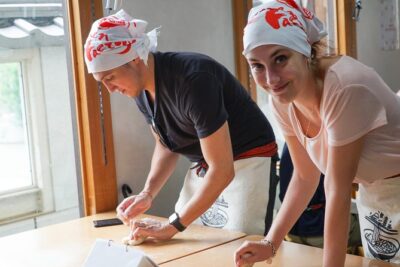
Ramen Cooking Class at Ramen Factory in Kyoto
Read our review →
Ramen & Gyoza Cooking Class in Tokyo with Local Supermarket Visit
Read our review →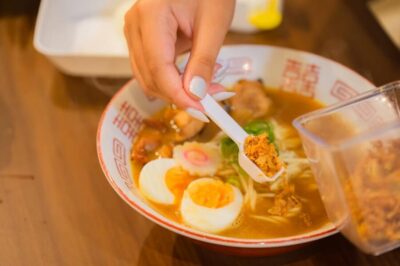
Ramen Cooking Class at a Ramen Factory with Souvenir
Read our review →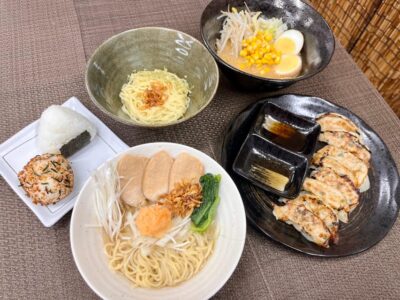
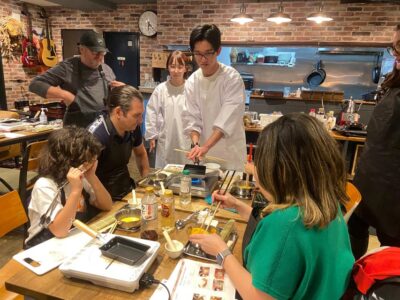
Japanese Washoku Bento Small Group Cooking Class
Read our review →
Easy Ramen Cooking Experience in Kabukicho, Shinjuku
Read our review →
Ramen and Sushi Cooking Class with Sake Pairing Set in Tokyo
Read our review →Browse the lists this tour appears in