
Reviewed · MORNING
Tokyo: Visit Sumo Morning Practice with English Guide
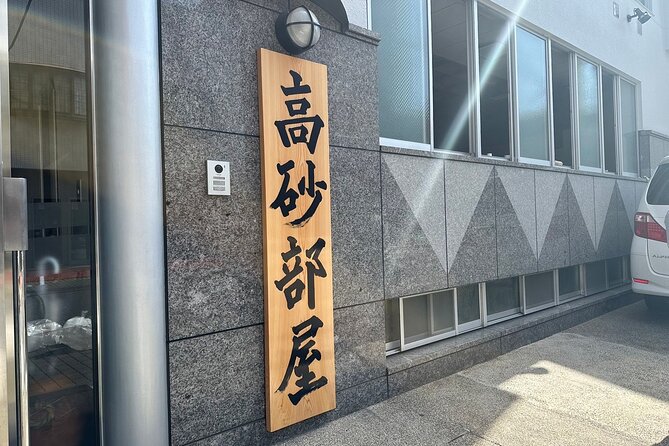
Sumo practice is not what you expect. This sumo morning practice gives you rare access to see wrestlers training for real, up close enough to notice the pace, noise, and discipline. You’ll start near Ryogoku Station, meet your guide, watch at Takasagobeya, and finish with a commemorative photo opportunity.
What I like most is the way the guide turns a hard-to-follow sport into something you can actually understand while you’re watching. I also love the small-room feel, where you get the sound and sweat of training, not a staged performance.
One consideration is comfort and crowding. You may sit on the floor or in a traditional setup for about 1.5 to 2 hours, and the viewing area can feel tight if multiple groups show up.
Key things to know before you go
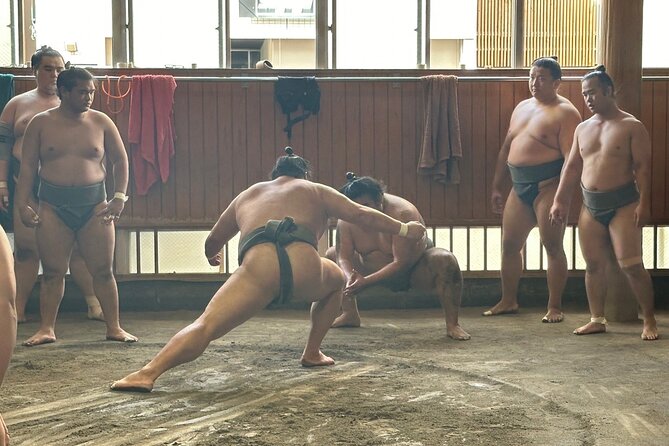
- Real training at Takasagobeya: You see serious practice, not a polished show.
- Up-close viewing for Tokyo sumo: The room is small enough that the action feels close.
- English support, plus extra languages: Guides are reported speaking strong English, and at least one guide also used French and Japanese.
- Ask questions as you go: You’re encouraged to get explanations during the session.
- Photo moment included: You get a commemorative photo with the wrestlers.
- Small group size: Maximum 20 people, but the space is still a stable-style setup.
Ryogoku morning logistics: find the right spot, then relax
This is a morning tour, and sumo schedules do not care about your sleep schedule. The tour starts at 8:00 am, and you should plan to arrive early at the Ryogoku Station area so you can actually find your guide. The meeting point is near Ryogoku Sta. (A3 exit area), at Ryogoku Sta. 1-chōme-4-29 Yokoami, Sumida City.
One very practical tip I’d follow: budget extra time to locate the A3 exit and match with the guide sign. In at least one case, the group left the A3 exit at exactly 7:45 am, even though the tour lists an 8:00 start. That gap usually means you lose time if you arrive late.
The tour ends at Takasago Stable (2-chōme-30-1 Ishiwara, Sumida City). After the session, you’re dismissed there, and the guide shows you how to reach your next stop. If you’re aiming for Asakusa afterward, you’ll have a clear path to keep your morning moving.
More sumo experiences in Tokyo:
- Tokyo: Sumo Show Experience with Chicken Hot Pot and a Photo
★ 4.8 · 6,678 reviews - Tokyo: Sumo Show and Dining Experience
★ 4.8 · 2,742 reviews - the SUMO show
★ 5.0 · 1,960 reviews
Inside Takasagobeya: what the training session actually looks like
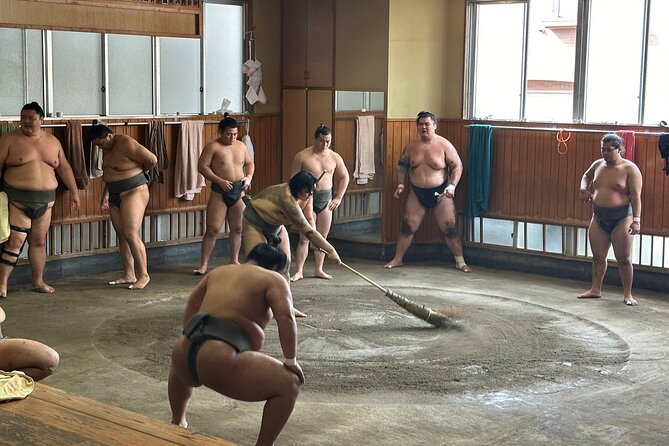
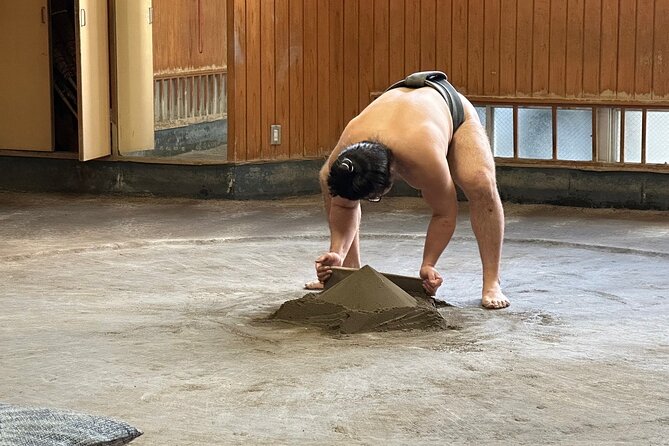
The main event is visiting Takasagobeya, a sumo stable that has produced many champions in Tokyo. The big value here is access. Training at a stable is normally closed off from spectators, and this tour gives you that rare front-row view.
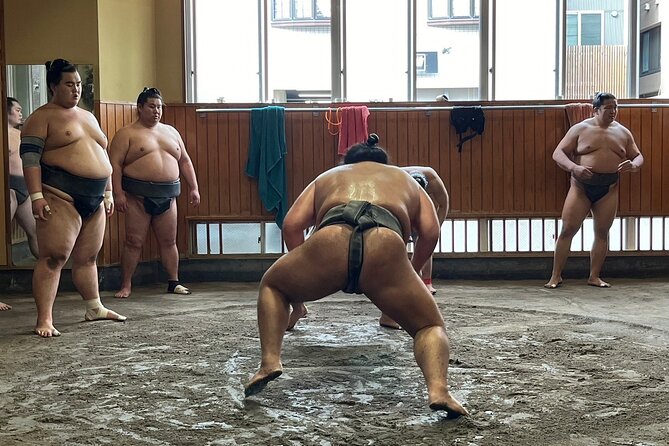
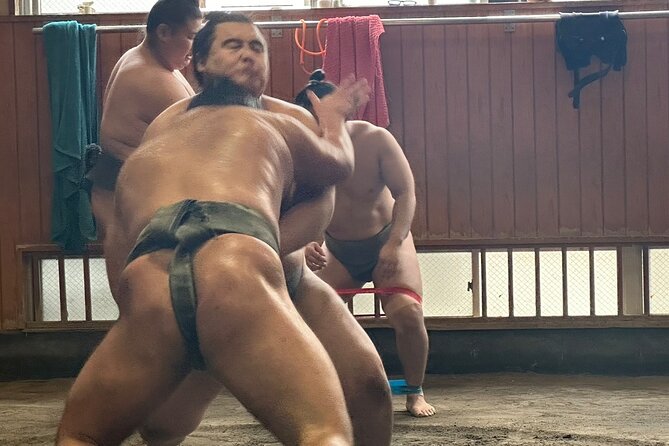
Think of this as watching athletes warm up, sharpen technique, and compete in practice. You’ll see stretching and preparation first, then younger wrestlers challenge each other. Later, the more powerful wrestlers step in and the bouts get intense. One of the nice surprises is that you do not need to be a sumo expert. If you respect athletics, you’ll be able to follow what you’re seeing once the guide puts names and routines to the action.
A stable room is a different world from a sports arena. It’s smaller, so you feel the effort. You also notice the sound, the rhythm of movement, and the physical reality of wrestlers colliding. That is why this can beat a formal match experience for some people. In a tournament you watch from farther away, here you’re close enough that training feels tangible.
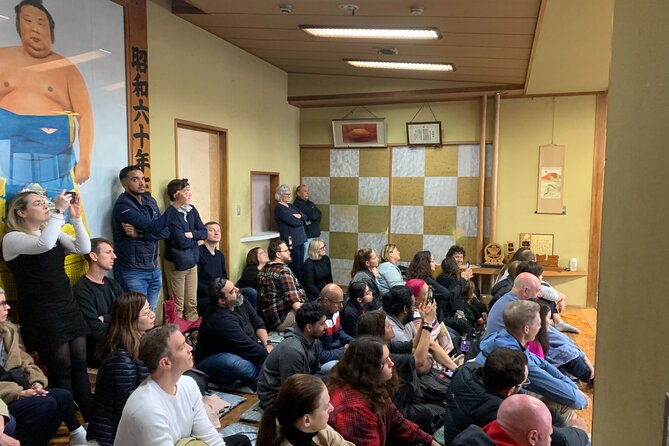
Where it can be challenging is the viewing comfort. The space is traditional, and you might sit on the floor or on small tools/seats. If you have sensitive knees or you just hate squatting-style seating for long periods, bring a simple layer you can sit on top of, like a thin cushion. Also, stable spaces can get crowded when multiple groups arrive, so your personal space may be limited.
The English guide: your secret weapon for understanding sumo
In Japan, sumo is easy to enjoy and harder to understand on your own. The guide is the bridge. They help with language barriers, and they also explain what you’re watching while it’s happening.
A standout theme from feedback is how much time the guide spends answering questions. One guide named Naomi was described as warm and friendly, happy to answer 20-plus questions before and after training. Even if your guide is not Naomi, the pattern is the same: you’re not just dropped at a door. You’re supported.
You may also get a fact sheet with useful terms and history context, so you can connect the routines to the broader traditions. That matters because sumo has its own vocabulary, its own forms, and its own logic. When you know what a practice segment is trying to improve, watching becomes way more satisfying.
One more small but helpful detail: guides are reported as speaking excellent English, and at least one guide used English, French, and Japanese. That multi-language ability is a quiet advantage if you’re traveling with friends who get distracted by translation.
The photo with wrestlers: what you should expect
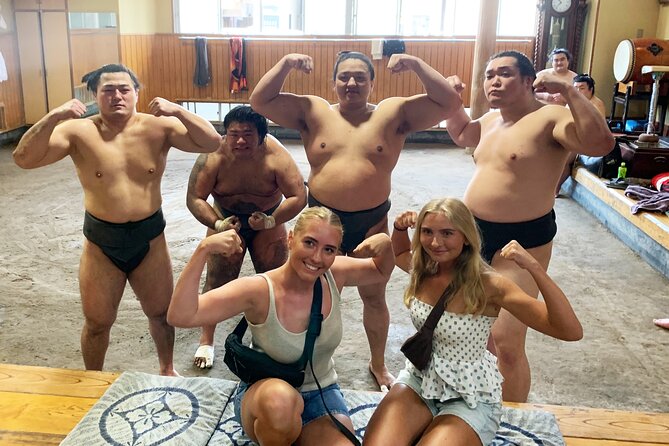
This tour includes a commemorative photo with the sumo wrestlers. That’s not just a souvenir, it’s a marker that you were allowed into the training world, not just a viewing gallery.
What makes it special is timing. It comes as part of the overall experience after you’ve seen practice. So the photo feels earned, not random. If you travel with teens or first-time Japan visitors, this photo moment often becomes a memory anchor, because you can point back to what you just watched.
Keep your expectations realistic. This is a stable, not a studio. You’ll likely move as the group does, and your time for photos is guided by what the stable allows. Plan to follow instructions closely so you don’t slow the session.
A few more Tokyo days worth comparing
- Mt Fuji and Hakone 1-Day Bus Tour Return by Bullet Train
★ 5.0 · 26,383 reviews - 1-Day Tokyo Bus Tour
★ 5.0 · 14,250 reviews - Tokyo: TOKYO SKYTREE® Admission ticket
★ 4.5 · 11,192 reviews - Tokyo: teamLab Planets TOKYO Digital Art Museum Entry Ticket
★ 4.6 · 9,779 reviews
After training: using Asakusa nearby to build a full morning
The tour doesn’t end in a vacuum. If you want sightseeing afterward, Asakusa is conveniently nearby. The tour dismisses you at the stable and the guide explains how to get to your next destination, so you’re not left guessing.
This is a good setup for building a “Tokyo classic” morning. You can pair sumo practice with an area known for old-school atmosphere, temples, and wandering streets. The key is to keep your expectations flexible. You’ve got a fixed training window, then you move on.
If you’re staying around Ryogoku, this tour is also a natural match. You’ll start where you already are, then head to Asakusa right after, without forcing extra transfers.
Price and value: is $98.53 worth it for 1.5 to 2 hours?
At $98.53 per person, this isn’t the cheapest Tokyo morning activity. But you are paying for three things that add up fast.
First, you’re paying for guided access to a stable training session. Real training access is the hard part, and stable visits are not like dropping into a museum.
Second, you’re paying for language support and context while you’re actively watching. Sumo practice is physical and intense, but without explanations it’s easy to miss what’s meaningful. A good guide changes the experience from entertainment into understanding.
Third, you get the admission ticket included plus a commemorative photo. That photo takes it from a one-time viewing to something tangible you can keep.
Now the honest part. This is still a short session, about 1 hour 30 minutes to 2 hours. If you only want a casual look, you might feel you’re paying premium prices for a limited window. If, however, you want an authentic Tokyo experience that helps you understand a sport you’ll probably watch again later, the value starts to make sense quickly.
I also like that the group size is capped at 20 travelers. That doesn’t guarantee personal space, but it helps you avoid the chaos you can get in high-capacity tours. The stable itself is small, so you should still expect traditional seating and some tightness.
Comfort, crowding, and what to pack for stable seating
The sumo stable is not designed around Western comfort preferences. You might sit on the floor for the full session, and a review noted the potential discomfort of traditional seating. This is one of the most practical reasons to choose your clothing wisely.
I’d pack or wear:
- Comfortable layers you can sit in for 90 minutes to 2 hours
- Supportive footwear for the walk and station exits
- A thin cushion if you know you get sore sitting on hard surfaces
Crowding is the other reality. The stable’s viewing area can become squeezed if other groups arrive at the same time. You can reduce stress by coming ready, not fidgety, and by trusting the guide to manage seating as best they can.
In one negative case, someone felt the advertisement didn’t match their expectations because they left early when the scheduled session didn’t expand. This is a reminder to calibrate your expectations: this isn’t a flexible show with extra time. It’s training, on a real schedule.
Who should book this sumo morning practice tour?
This tour is best for people who:
- Want a Tokyo cultural experience that’s sports-focused but genuinely authentic
- Like seeing athletes work rather than only watching performances
- Enjoy asking questions and want English support
- Travel with teenagers who need something active and memorable
It’s also a great choice if you already plan to be in the Ryogoku area. If you’re going to Asakusa afterward, you can build a strong morning without wasting time.
I’d think twice if:
- You strongly dislike floor seating or have mobility limits
- You need a long, comfortable sit-down viewing format
- You expect a tournament-like “event show” with extra spectacle and flexible timing
Should you book this sumo morning practice tour?
If your goal is the closest possible view of sumo training in Tokyo, this tour makes a lot of sense. You’re paying for access, for an English guide who helps you understand what you’re seeing, and for a photo souvenir that matches the seriousness of the experience.
For me, the decision comes down to one thing: are you ready for a traditional stable setup and an early start? If yes, book it. If no, you may want a different sumo option that fits your comfort needs better.
Fresh options around Tokyo
- Tokyo: Nagano Snow Monkeys and Zenkoji Tour with Temples★ 4.9 · 19 reviews
- Yokohama Port: Private Customizable Tour with Transfer★ 5.0 · 19 reviews
- Sushi Making with Interactive Samurai Experience at JIN-ASAKUSA★ 5.0 · 19 reviews
- Explore Unique Tokyo Streets / Learn with a Pro Photographer★ 5.0 · 19 reviews
- DAIKOKU excursion by car DRIFT automobile encounter★ 4.5 · 19 reviews
- Official Street Go Kart Tour Akihabara 2nd★ 5.0 · 19 reviews
- Cosplay Experience with Professional Makeup and Photo Shoot!★ 5.0 · 19 reviews
- Tokyo: Name Seal & Pouch or Tote Bag Making Experience★ 4.5 · 19 reviews
Morning, compared.
Kyoto Early Morning Tour with English-Speaking Guide
Read our review →Early Morning Tour with English-Speaking Guide
Read our review →
World Heritage Shirakawa-go Morning Guided Tour
Read our review →
Nara Early Morning Tour (Kyoto or Osaka Departure Available)
Read our review →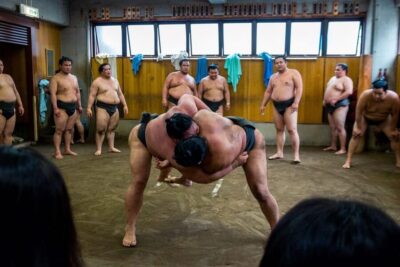

Hiroshima in a Nutshell: Morning Bike Adventure
Read our review →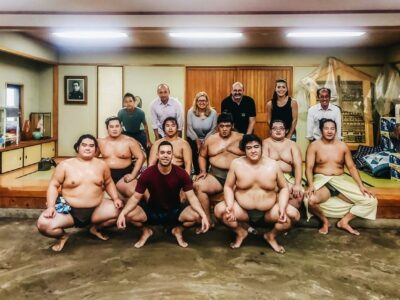
Browse the lists this tour appears in