
Reviewed · CYCLING TOURS
Tokyo Great Cycling Tour
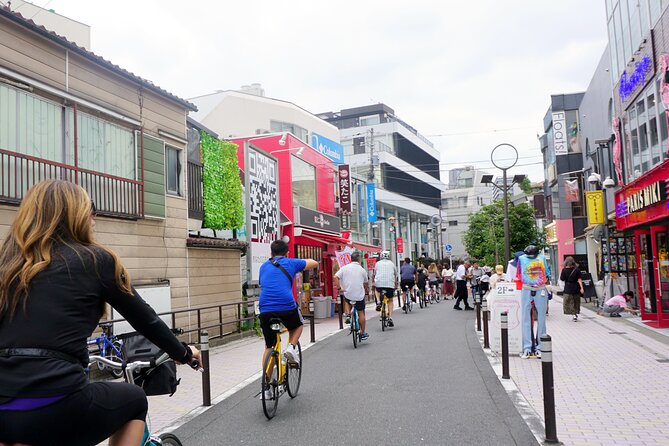
Tokyo looks different at bike speed. A guided ride can cover major sights while keeping you moving through real neighborhoods. You’ll pedal from Tsukiji Jogai Market to Zojo-ji Temple, then on to Meiji Jingu Shrine and the Imperial Palace, with stops timed so you actually get to look and learn without feeling rushed.
I really like two things about this tour. First, you get to see more than you could on foot because the route uses bike access where buses cannot reach. Second, the group stays small, with a maximum of 12, so the guide can manage pacing and keep things comfortable.
One consideration: this is for people with moderate physical fitness, so if you expect an easy stroll with constant stops, this may feel like more effort than you want.
Key highlights you will feel on the ride
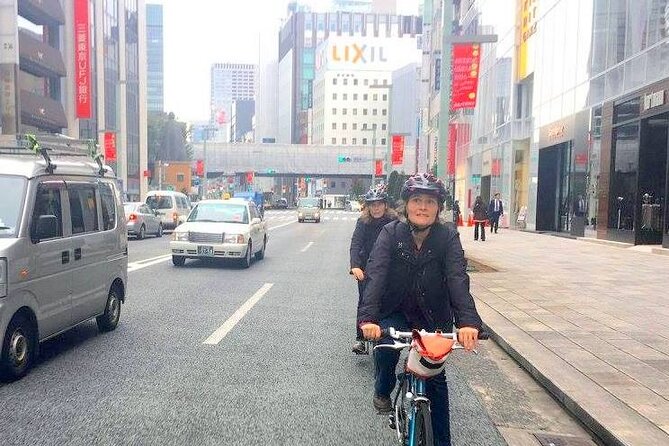
- Two-wheel access to places buses cannot reach, so the day feels efficient
- Small group cap of 12, which keeps the ride calm and personal
- Free admission stops at Tsukiji Jogai Market, Zojoji Temple, Meiji Jingu Shrine, and the Imperial Palace
- Big Tokyo contrasts, from market bustle to shrines and palace grounds
- Strong guide focus on safety and welfare, with hands-on attention during the ride
- Flexible break planning when weather turns hot, including a shift from picnic to izakaya lunch in at least one case
Why Tokyo on two wheels beats hopping in and out of taxis
Tokyo is one of those cities where you can spend a whole day just traveling between landmarks. On this ride, the rhythm is different. You roll through streets like a local, and the route strings together major sights with enough time at each stop to actually take them in.
The bike angle matters too. The tour is designed around the idea that bikes can access places buses cannot reach. That can mean faster, more direct movement between neighborhoods, and it also means you are not just looking at Tokyo from the inside of a vehicle. You’re outside, at street level, picking up the texture of the city as you go.
You also get the benefit of a guide to connect the dots. As you pedal, you learn Japanese history and culture along the way. That makes the day feel less like a checklist and more like a coherent story of what you’re passing through.
More Bike Tours in Tokyo
- Tokyo Guided Small-Group Biking Tour
★ 5.0 · 1,250 reviews - Tokyo Top Highlights 3h Guided E-bike Tour
★ 5.0 · 714 reviews - 3h Tokyo E-Bike Tour: Hidden Gems, and Local Life with guide
★ 5.0 · 670 reviews
Small-group ride comfort, and what the guides do with it
The biggest day-to-day advantage here is the group size. With a maximum of 12 travelers, you’re not trapped in a long line or listening for your guide over a crowd. The tour also works better when traffic and spacing require attention, and that’s exactly where a good guide earns their pay.
The reviews you can lean on are consistent about the guide experience. Names that pop up include Toshi, Naoko, and Nick, and the praise centers on how carefully they look after people. Safety and welfare are called out directly, and that isn’t just a generic promise. It shows up in the way the ride is managed, with the sense that the guide is watching the group the whole time, not just waiting at the next photo spot.
Bikes also seem well handled. One review notes that the bike was running smoothly, which matters more than people think. When a bike is working right, your focus stays on the route, the streets, and the scenery.
A practical overview of the timing and meeting point
This is a 6-hour tour that starts at 9:00 am. You’ll meet at Tokyo Great Tours, at 1-chōme-3-2 Shinkawa, Chuo City, Tokyo 104-0033, Japan. The tour ends back at the meeting point, so you’re not stuck figuring out how to get home after the ride.
You’re also not wandering alone to find a departure point. The start location is near public transportation. That’s a big deal in Tokyo, because getting to the right place on time is half the battle.
For planning, confirmation is received within 48 hours of booking, subject to availability. The tour is also in demand, with an average booking window around 46 days in advance, so locking in your spot early is smart.
Stop by stop: what the ride feels like at each major sight
This tour is built like a sequence of atmosphere shifts. You start in a market area, move into a temple scene with a famous modern contrast, then transition through Tokyo’s city blocks, and finish with major shrine and palace sites. You’ll also pause often enough to absorb what you’ve reached, not just whiz past it.
Same corner of Japan, a different kind of day:
- Mt Fuji and Hakone 1-Day Bus Tour Return by Bullet Train
★ 5.0 · 26,383 reviews - 1-Day Tokyo Bus Tour
★ 5.0 · 14,250 reviews - Tokyo: TOKYO SKYTREE® Admission ticket
★ 4.5 · 11,192 reviews - Tokyo: teamLab Planets TOKYO Digital Art Museum Entry Ticket
★ 4.6 · 9,779 reviews
Tsukiji Jogai Market: market energy after the move to Toyosu
The first stop is Tsukiji Jogai Market. It’s described as still bustling, with lots of local shoppers and tourists, even after the inner market moved to Toyosu. That detail matters. You’re not going to a ghost of the old Tsukiji. You’re going into a working, active area.
The stop time is about 15 minutes. In practice, that’s enough to get your bearings, watch what’s happening, and enjoy the market energy without feeling like the tour is chewing up the whole morning.
A plus here is that admission is free. That means you can focus on the street scene and your curiosity, rather than pay-and-enter logistics.
Zojo-ji Temple: old Buddhism and Tokyo Tower in the background
Next up is Zojo-ji Temple, an old Buddhism temple. One of the most memorable elements described is the contrast between the traditional buildings and Tokyo Tower in the back. That contrast is exactly why a bike tour is useful: you can see both the heritage setting and the modern skyline relationship without it turning into a rushed viewpoint stop.
Again, the stop time is about 15 minutes, and admission is free. Zojo-ji is not about a long museum-style visit here. It’s more about stepping into the atmosphere briefly, letting the architecture and setting land, then continuing while the day is still moving.
The ride through tall, expensive Tokyo blocks
After the temple stop, you’ll pedal through areas with lots of high-story apartments, expensive shopping and office buildings. This is one of the ways the tour feels like more than just landmark tourism. You get a sense of where the city’s money and everyday life intersect.
There’s also a stop for a cemetery situated in a fashionable area. That combination stands out because it’s not the kind of contrast you see from a bus window. On a bike, you register the street-level reality: dense city blocks, sharp contrasts, and a sense that daily Tokyo life sits next to historical or cultural spaces.
If you like “how the city actually looks,” these middle segments are often the most interesting part of a cycling day.
Meiji Jingu Shrine: a big Shinto stop with a clear place in Tokyo
Then you reach Meiji Jingu Shrine. It’s described as Tokyo’s most popular Shinto shrine. The stop time is about 20 minutes, and admission is free.
A 20-minute window is a good balance for a major shrine. Long enough to slow down and take in the environment, short enough that you’re not exhausted halfway through the tour. It also helps keep the day’s pace realistic for a cycling experience.
The Imperial Palace: where the emperor and empress live
The final major stop is the Imperial Palace, with about 15 minutes on site. It’s described as where our Emperor and Empress live, and admission is free.
This kind of stop can sometimes feel anticlimactic if you expect a ticketed attraction. Here, the value is more about the setting and the significance, combined with what you’ve already seen earlier. By the time you arrive, you’ve moved through markets, temples, and city neighborhoods, so the palace area feels like a culmination of the day’s theme.
What you learn while you pedal
This tour is positioned around learning Japanese history and culture as you ride. Even without turning it into a classroom, the guide’s role is to connect what you’re passing to why it matters.
You’ll hear about each stop in context and also about the neighborhoods you traverse. That’s part of why the day feels cohesive. You’re not just stacking famous names. You’re moving through Tokyo in a way that helps you understand how the city’s spaces sit next to each other.
The review highlights strongly suggest the guides are active throughout the ride. Names like Toshi, Naoko, and Nick show up, and the comments focus on their attentiveness and care. That kind of guiding tends to turn a route into a narrative, even when you’re moving quickly.
Bikes, pace, and the kind of effort you should expect
This isn’t a van tour with short walks. It’s a cycling tour, and the listing notes moderate physical fitness is required. That means you should come ready to ride for stretches, not just stand around.
The good news is that the route includes multiple stops, including a 20-minute shrine stop and shorter 15-minute stops elsewhere. Those breaks make the ride feel manageable, even if you’re not training for a race.
Also, the day can be hot. One review includes a specific example: in very hot weather, a planned picnic was changed to a lunch at an izakaya. That tells me the operation watches conditions and adjusts comfort. You can plan for that possibility by dressing for heat and staying flexible.
Price and value: what you really get for $99.49
At $99.49 per person for about 6 hours, this sits in a mid-range price zone for Tokyo activities. The value comes from how much time you spend actually moving and seeing, and how many major stops are included.
Here’s the value math that matters:
- You get a guided route through multiple iconic areas in one morning.
- The group size is kept to 12, which can reduce hassle and improve safety.
- Admission is listed as free at key stops, including Tsukiji Jogai Market, Zojoji Temple, Meiji Jingu Shrine, and the Imperial Palace. That lowers the out-of-pocket cost and keeps the day predictable.
- The bike format saves you time compared with a purely on-foot approach.
In plain terms, if you want one day that covers a lot of Tokyo without turning your feet into sandpaper, the price starts to make sense. It’s not the cheapest way to visit temples and shrines. It is a practical way to see them in the same half-day ride, with guidance and pace control built in.
Who should book this Tokyo Great Cycling Tour
This is best for you if:
- You can ride a bike comfortably and handle a moderate fitness level.
- You want a plan that mixes markets, temples, shrines, and a palace area in one outing.
- You like the idea of moving through real streets, not just hopping between viewpoints.
- You value a small group experience where the guide can keep an eye on everyone.
It’s also a solid pick for first-timers who feel overwhelmed by Tokyo’s scale. The route gives you a structured way to hit important places without guessing what’s efficient.
If you hate traffic stress or you’re not confident on a bicycle, you may want to choose a different format. The tour’s whole advantage is the riding, and that only works when you’re comfortable on two wheels.
Should you book this cycling tour or look for something else?
Book this tour if you want the fastest realistic path through Tokyo’s must-see mix. The strongest reasons are the small group size, the guide attention to safety and welfare, and the way bikes make it possible to connect sights while still feeling like you’re in neighborhoods, not just at landmarks.
Pass if you expect an ultra-easy experience. The tour requires moderate physical fitness, and you’ll be riding as a core part of the day. Also, this experience depends on good weather, so it may not run as planned on poor-weather days.
If your ideal Tokyo day is one where you see a lot, learn as you go, and get to experience the city on street level, this is an excellent choice.
FAQ
How long is the Tokyo Great Cycling Tour?
The tour lasts about 6 hours.
How much does the tour cost?
The price is $99.49 per person.
What time does the tour start, and where do I meet?
It starts at 9:00 am. You meet at Tokyo Great Tours, 1-chōme-3-2 Shinkawa, Chuo City, Tokyo 104-0033, Japan.
Is there a limit on group size?
Yes. The tour has a maximum of 12 travelers.
What kind of fitness level do I need?
You should have a moderate physical fitness level.
Do I need to pay admission fees at the stops?
Admission is listed as free for Tsukiji Jogai Market, Zojoji Temple, Meiji Jingu Shrine, and the Imperial Palace.
Do I get a ticket on my phone?
Yes. The tour includes a mobile ticket.
What happens if the weather is bad?
This experience requires good weather. If it’s canceled due to poor weather, you’ll be offered a different date or a full refund.
When should I book to get a spot?
On average, the tour is booked about 46 days in advance, and you’ll receive confirmation within 48 hours of booking, subject to availability.
Fresh options around Tokyo
- Tokyo: Nagano Snow Monkeys and Zenkoji Tour with Temples★ 4.9 · 19 reviews
- Yokohama Port: Private Customizable Tour with Transfer★ 5.0 · 19 reviews
- Sushi Making with Interactive Samurai Experience at JIN-ASAKUSA★ 5.0 · 19 reviews
- Explore Unique Tokyo Streets / Learn with a Pro Photographer★ 5.0 · 19 reviews
- DAIKOKU excursion by car DRIFT automobile encounter★ 4.5 · 19 reviews
- Official Street Go Kart Tour Akihabara 2nd★ 5.0 · 19 reviews
- Cosplay Experience with Professional Makeup and Photo Shoot!★ 5.0 · 19 reviews
- Tokyo: Name Seal & Pouch or Tote Bag Making Experience★ 4.5 · 19 reviews
Cycling Tours, compared.
3h Tokyo E-Bike Tour: Hidden Gems, and Local Life with guide
Read our review →
Arashiyama Bamboo Forest & Hidden Gems Bike Tour (Early Bird)
Read our review →
Hiroshima in a Nutshell: Morning Bike Adventure
Read our review →
5 Top Highlights of Kyoto Full Day Bike Tour (E-bike option)
Read our review →Browse the lists this tour appears in