
Reviewed · MORNING
Morning Sumo Practice Viewing in Tokyo
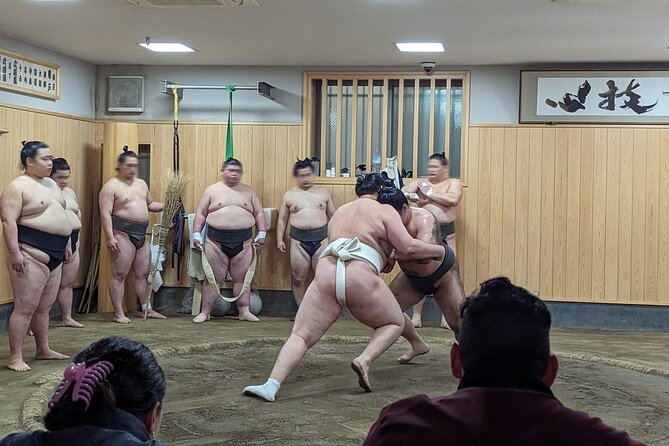
A wrestler’s morning, up close. In Tokyo, you get into a sumo stable for practice, with an English guide explaining what you are watching and why. I love the small group size and the donations included in your ticket price. The one catch: you sit on a cushion on a flat floor with no chairs for the main viewing stretch.
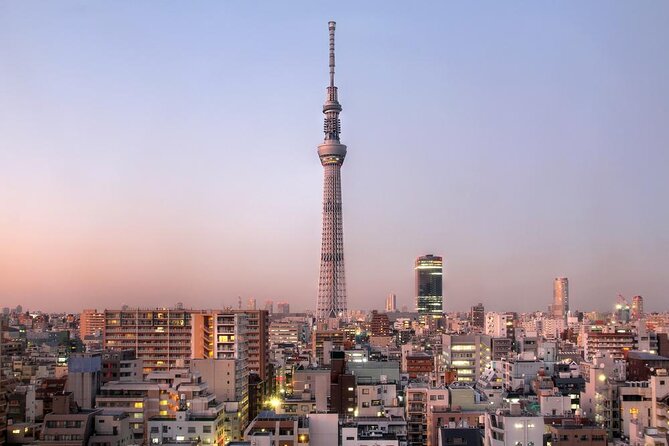
This tour also starts with a proper setup, not a random meeting point and a rush. At Tokyo Skytree, you get a short briefing on sumo viewing basics, plus a look at one of Tokyo’s most eye-popping landmarks. Then you move on to the Naruto-beya Sumo Stable area for the real action.
Guides can be names like Joji, Dawn, Jeff, or Aki, and they tend to start with a short lecture plus practical guidance so you can follow the routines. You’ll be close enough to feel the intensity, and if the session allows it, you may also get a photo moment with wrestlers. Just plan your morning carefully, this is an early start.
Key highlights from morning sumo practice in Tokyo
- Stable access you cannot easily arrange alone, with donations included in your ticket
- A Skytree briefing first, so you understand the rules before you sit down
- Two hours inside the stable watching warmups and practice bouts up close
- English guidance with practical handouts and clear explanations, including etiquette
- Chanko nabe lunch after practice, plus a possible photo session with wrestlers
Tokyo Skytree stop: the rules briefing before you enter sumo world
The day starts at 7:30 am at Tokyo Skytree Station, right around Oshiage. The point of that early start is simple. You get to see sumo practice in its home setting, while the stable is still in training mode, not all cleaned up for spectators.
You begin with a short stop at Tokyo Skytree, one of the most visually dramatic structures in Tokyo. The briefing is the useful part, though. Your guide walks you through basic viewing rules and how to enjoy sumo practice respectfully. Since sumo has formal routines, the “watching etiquette” matters, and you do not want to guess.
It helps that this stop is quick, about 30 minutes, and the admission ticket there is free as part of the experience. So you are not paying for a sightseeing detour. You are using that time to get oriented, then moving directly toward where the action is.
Also note a practical reality: Skytree mornings can feel cold or crisp depending on the season. Dress in layers. Once you are seated on the floor later, you will be glad you did.
More sumo experiences in Tokyo:
- Tokyo: Sumo Show Experience with Chicken Hot Pot and a Photo
★ 4.8 · 6,678 reviews - Tokyo: Sumo Show and Dining Experience
★ 4.8 · 2,742 reviews - the SUMO show
★ 5.0 · 1,960 reviews
Inside Naruto-beya stable: how the practice is actually watched
After Skytree, you head to the stable area in Sumida, with the tour focusing on practice at Naruto-beya Sumo Stable. This is the heart of the experience, and it is why people book it.
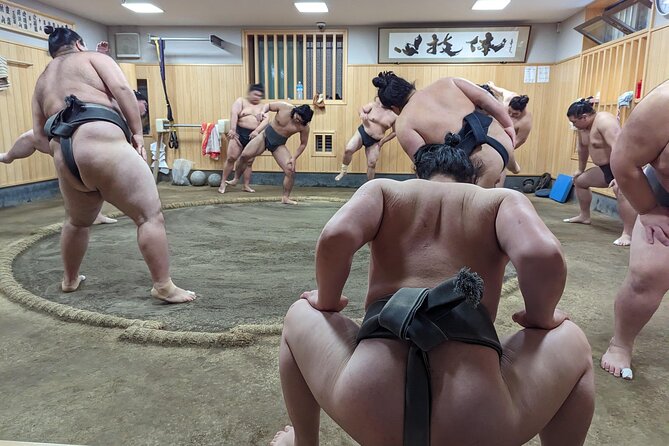
The viewing portion is about two hours. You sit inside the stable and watch the wrestlers warm up and go through practice bouts. This is not a distant look from a protected seat. You are in the same training space, close enough that the whole rhythm of the session feels real.
There is also a strong “small group” factor. The maximum group size is 10, and that matters because it affects how smoothly you can get instructions and how much your guide can keep an eye on the flow. When you are learning the rules on the spot, more space and fewer people reduces confusion.
Here is the big consideration: you must sit on a cushion on a flat floor. There are no chairs. That means your comfort depends on how you handle kneeling and sitting for a while. Bring socks, wear breathable layers, and consider simple knee support if you need it. If sitting on the floor is a deal-breaker, this tour will feel long.
One more on-the-ground detail that affects your plan: there are no toilets available during the stable session. Since the main viewing is around two hours, it is smart to use the restroom before you get going and keep water in mind.
English guidance that turns rituals and moves into something you can follow
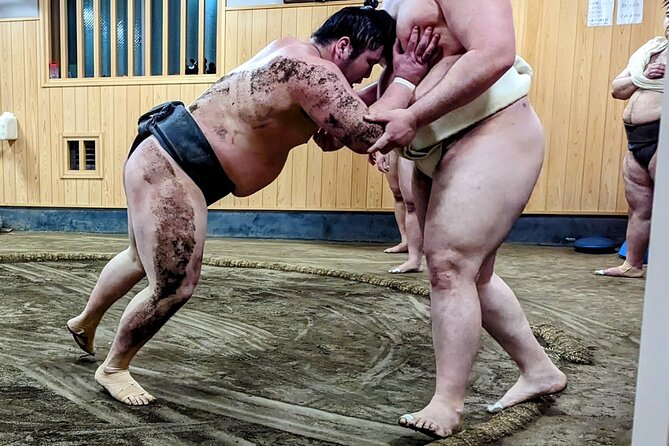
Sumo can look confusing if you just watch motion without context. The good news is that this tour does not throw you into the ring with zero explanation.
Before the stable viewing, your guide gives you a short lecture on sumo basics and what to pay attention to. Expect a focus on rules and routines for watching in the stable setting. That instruction is especially valuable because practice is not the same as a full tournament match. You are seeing preparation and repetition, not just one dramatic result.
Many guides also provide written information, plus profiles of the wrestlers who are training. In my view, this is what turns a cool photo moment into a memory you can actually interpret later. When you know the basics, you notice the timing, the discipline, and how the warmups connect to the bouts.
You will also learn about sumo’s traditional Shinto roots. The tour keeps this at a human, understandable level. You are not getting stuck in textbook detail. You are getting just enough background so the rituals feel meaningful, not random.
Guides with names like Joji, Dawn, Jeff, or Aki have been known to combine a lecture, handouts, and step-by-step guidance in English. That pattern is what you want: someone who can explain quickly and also help you figure out what to do when it matters.
Donations to the stable: what your ticket supports and how to act
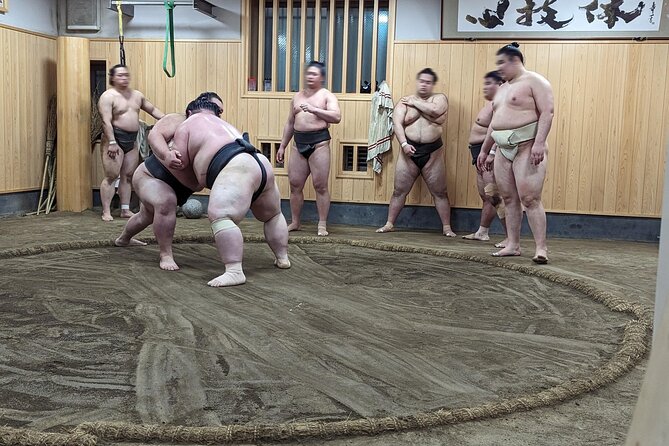
Your ticket includes donations to the stable. That is one of the quiet value points of this experience. It is not just paying for access. You are supporting the people who run the stable and maintain training routines.
In practical terms, this changes the tone of the tour. Your guide will set expectations for respectful behavior while watching. That matters because stables are living, working spaces. You are there because the stable allowed it, so you should act like a respectful student, not a casual spectator.
So what should you actually do? Follow the seating and movement guidance from your guide. Stay attentive during the briefing, because the rules you are given are meant to keep you and the wrestlers comfortable. If there is a moment for photos, follow instructions about timing and positioning.
Also remember that you are in a small group. That reduces noise and chaos, which helps everyone. If you like experiences where you are not competing with a crowd, this format is a big win.
A few more Tokyo days worth comparing
- Mt Fuji and Hakone 1-Day Bus Tour Return by Bullet Train
★ 5.0 · 26,383 reviews - 1-Day Tokyo Bus Tour
★ 5.0 · 14,250 reviews - Tokyo: TOKYO SKYTREE® Admission ticket
★ 4.5 · 11,192 reviews - Tokyo: teamLab Planets TOKYO Digital Art Museum Entry Ticket
★ 4.6 · 9,779 reviews
Chanko nabe lunch after practice: refuel the sumo way after training
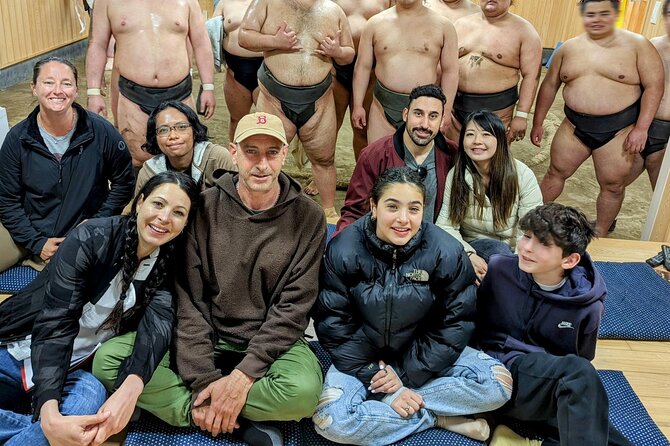
After the training viewing, you refuel with lunch of chanko nabe, the traditional wrestlers’ food. This is one of those rare tour add-ons that actually makes sense.
Why? Because it matches the day. You spend the morning watching practice routines at the stable. Then you eat the type of meal that belongs to that world. Instead of rushing off to find lunch near a station, you stay in the flow and you get something culturally grounded.
Chanko nabe is hearty and warming, which is exactly what you want after a morning session that can involve cold air, early waking, and floor seating. Even if you are not a “foodie,” this meal acts like a reset button. It also gives you a low-stress end to the experience before you head to the rest of your day.
Since the tour duration is about three hours, lunch timing is built into the schedule rather than added as an afterthought. That makes it easier to plan your next stop in Tokyo.
Price and timing: is $99.08 good value for this early morning access?
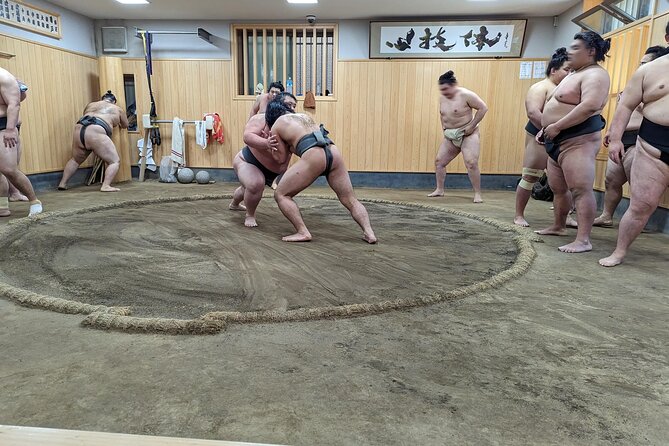
At $99.08 per person, this tour does not try to look cheap. But it also does not pretend it is a random bus ride.
Here is what you are paying for:
- Guided access to a stable, something that is difficult to arrange alone
- English guidance from a local certified expert guide
- Donations included in your ticket price
- A structured morning format, about 3 hours total
- A practical sumo briefing before you sit down
- Chanko nabe lunch, plus a possible photo session
The pricing feels more reasonable when you consider the alternative. If you try to do this on your own, you might find it hard to know where to go, how to observe appropriately, and how to interpret what you are seeing once you get there. This tour solves that for you, with a small group and a guide focused on explanation, not just logistics.
Booking tends to happen ahead of time, and on average it is reserved about 19 days in advance. That tells you something: slots are limited, and early mornings are popular. If you know you want this, I would not leave it to the last minute.
Group discounts can also help, depending on how the schedule is running. Either way, you are getting more “guided value” than you often do in sightseeing-only tours.
Best fit for you, and the one big limitation
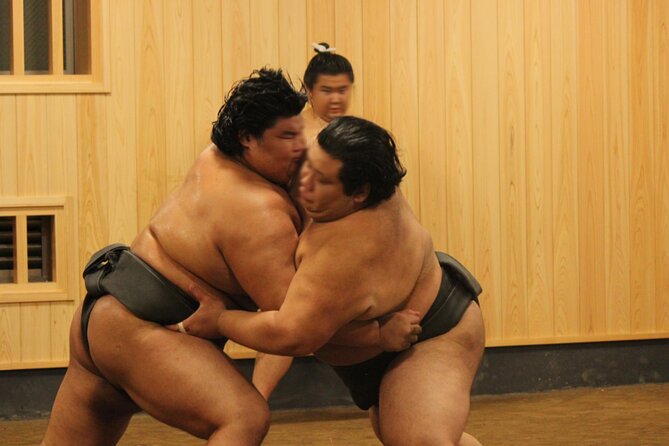
This is a great choice if you want:
- Sport plus culture, with real training atmosphere
- Close-up viewing without a huge crowd barrier
- Clear guidance so you actually understand what you are seeing
- A morning activity that does not feel like another generic photo stop
It is also ideal for people who like rules and structure. The tour teaches you what to expect, how to behave, and what to look for. That makes the time on the floor feel less like waiting and more like learning.
The limitation is the floor seating. If you struggle with long periods on a cushion, or if no-joice seating is uncomfortable for you, this is the one reason to pause. There are no chairs, and the stable session is about two hours.
Also factor in that there are no toilets during the stable session. That is not a “gotcha,” but it is a real constraint. Plan early, use the restroom before you meet, and keep your schedule simple.
Should you book morning sumo practice viewing in Tokyo?
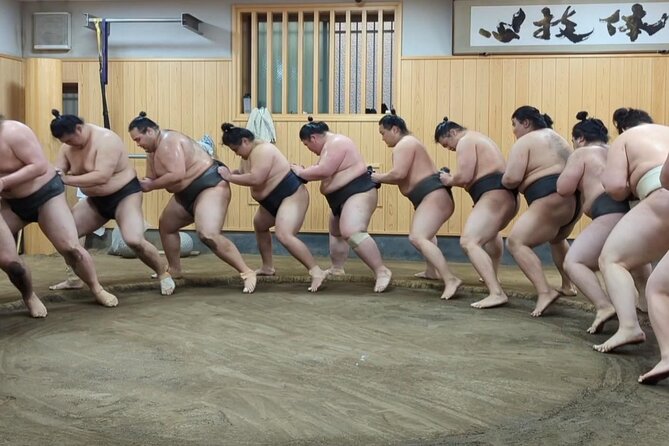
If you like the idea of seeing sumo as training, not just as a show, this is an excellent book. The stable access, the donations included, and the way the guide helps you understand what you are watching are the big reasons it works.
I would book it if you are an early riser who enjoys learning as you go. If you cannot do floor seating comfortably or you need on-site restroom access, you may want to skip this specific format and look for an option that fits your needs better.
Bottom line
For many people, this is the most “Tokyo, right now” experience of the trip. You get a morning window into a world that is hard to access without help, and you leave with a better understanding of the rituals behind the sport.
FAQ
Where does the tour start and where does it end?
The tour starts at Tokyo Skytree Station (1-chōme-1-4 Oshiage, Sumida City, Tokyo 131-0045). It ends at the sumo stable, Naruto-beya Sumo Stable (1-chōme-22-16 Mukōjima, Sumida City, Tokyo 131-0033).
What time does the morning sumo practice tour begin?
The start time is 7:30 am.
Is hotel pick-up or drop-off included?
No. Hotel pick-up and drop-off are not included.
Do you have chairs at the stable during the practice viewing?
No. You must sit on a cushion on a flat floor, and there are no chairs available.
Are restrooms available during the stable viewing?
The experience includes no toilets during the session, so it is best to use the restroom before the stable portion.
What is the cancellation and bad-weather policy?
You can cancel for free up to 24 hours in advance for a full refund. If the experience is canceled due to poor weather, you will be offered a different date or a full refund.
Fresh options around Tokyo
- Tokyo: Nikko Kegon Falls Lake Chuzenji Toshogu Temple & More★ 4.9 · 12 reviews
- Tokyo: Samurai History Walking Tour★ 5.0 · 12 reviews
- Harajuku: Kawaii Fashion and Pop-Culture Tour★ 4.7 · 12 reviews
- Tokyo: Mt. Fuji & Lake Kawaguchi Instagram Full Day Trip★ 4.1 · 12 reviews
- Shibuya Tokyo: Modern Kintsugi Workshop in Shibuya★ 5.0 · 12 reviews
- Tokyo: GTR Guided Daikoku Experience at Night★ 5.0 · 12 reviews
- Tokyo: Daikoku JDM Car Culture Tour★ 4.6 · 12 reviews
- Mt Fuji Private Day Trip from Tokyo with English speaking driver★ 5.0 · 13 reviews
Morning, compared.
Kyoto Early Morning Tour with English-Speaking Guide
Read our review →Early Morning Tour with English-Speaking Guide
Read our review →
World Heritage Shirakawa-go Morning Guided Tour
Read our review →
Nara Early Morning Tour (Kyoto or Osaka Departure Available)
Read our review →

Hiroshima in a Nutshell: Morning Bike Adventure
Read our review →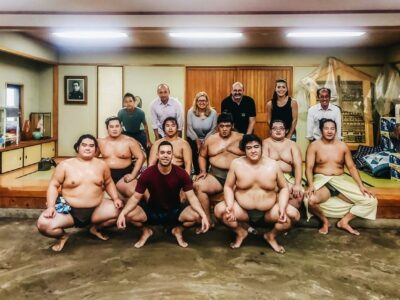
Browse the lists this tour appears in