
Reviewed · COOKING CLASSES
Small-Group Osaka-Style Okonomiyaki Cooking Class
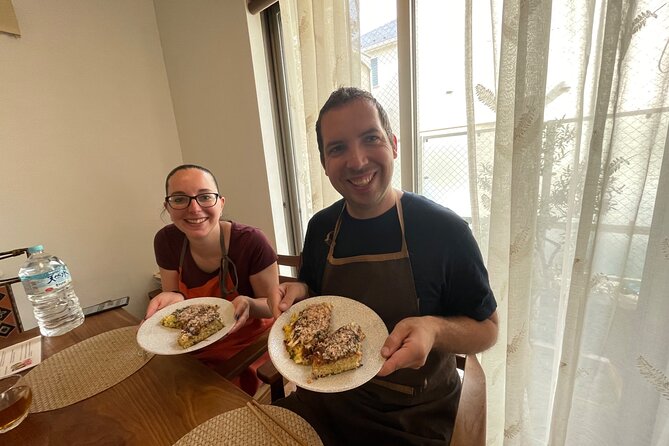
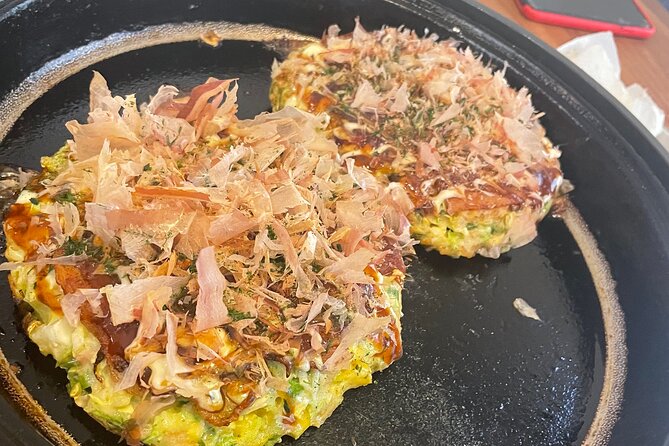
Two hours, one pan, serious joy. This small-group Osaka-style okonomiyaki class is set up like a home visit, not a tourist studio, so you get practical skill plus real conversation time in Tokyo. You learn how to make it fluffy, pick your own ingredients, and get guidance on Japanese staples like dashi and okonomiyaki sauce.
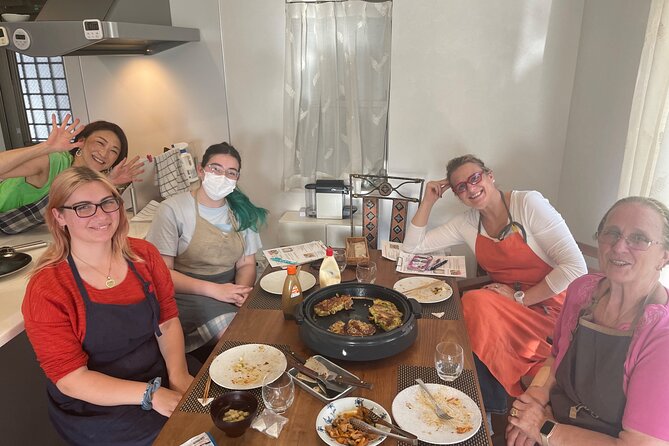
I really like that the group stays tiny, max 5 people, which means you are not waiting around for help. I also love the focus on technique you can reuse, like flipping and layering for a fluffy result, plus the way the instructor explains substitutes when ingredients are hard to find back home.
One consideration: the lesson is hosted at a local home in the Asagaya area, so plan for a short walk and a little local logistics after meeting at NewDaysJapan. If you want a class that feels fully “hands-off” or purely theoretical, this setup is not really that kind.
Key Things To Know Before You Cook
- Small group, hands-on attention so you can ask questions while you work the griddle.
- Homestay-like setting with a calmer, more personal vibe than a commercial cooking studio.
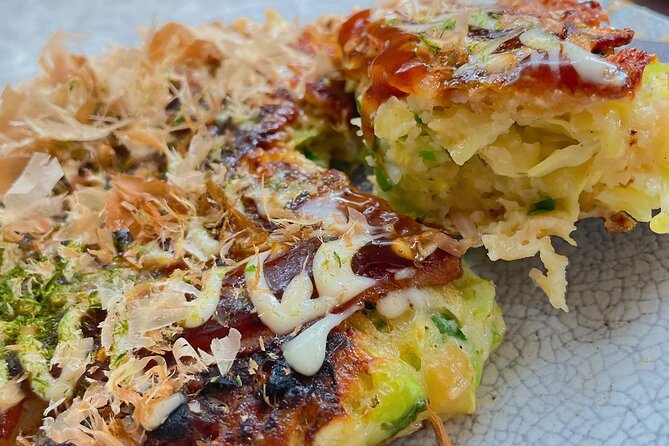
- Fluffy okonomiyaki technique including tips for layering and flipping for the right texture.
- Ingredient flexibility where you choose fillings and adjust for vegetarian or vegan diets.
- Substitution guidance so you can recreate the results even if you cannot find Japanese pantry items.
- While-you-wait cooking includes stir-fried pork and kimuchi for a savory break from just watching.
Why This Osaka-Style Okonomiyaki Class Feels Like A Real Local Moment
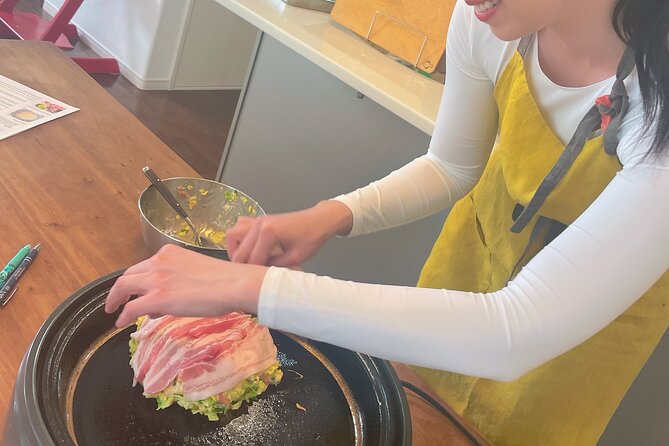
Osaka-style okonomiyaki is all about feel. You are not just following a recipe, you are building texture, heat control, and timing into a single pancake-style dish. That is exactly why this class works so well. The kitchen rhythm is fast enough to keep you engaged, but structured enough that you learn what to do and why.
The biggest difference from many Tokyo cooking classes is the setting. This is a local home experience, described as homestay-like rather than studio-like. That matters because it changes the energy. You tend to ask more questions. You also get more comfort from the host, who encourages you to learn not only what to cook, but how daily life connects to food.
And you are not stuck with one fixed filling. Okonomiyaki can be made with many ingredients, and you get to pick what goes inside. For people who love customizing food, this is fun. For people with dietary needs, it becomes practical, because you are guided on adjustments instead of forced into one option.
More Cooking Classes in Tokyo
- Ramen & Gyoza Cooking Class in Tokyo with Local Supermarket Visit
★ 5.0 · 823 reviews - Tokyo: Easy Ramen Cooking Experience in Kabukicho, Shinjuku
★ 4.6 · 321 reviews - Ramen and Sushi Cooking Class with Sake Pairing Set in Tokyo
★ 5.0 · 291 reviews
Getting There From Asagaya: The Meeting Point You Should Find First
The class starts at NewDaysJapan at Asagaya Station in Tokyo, in Suginami City. The address is listed as 166-0004 Tokyo, Suginami City, Asagayakita, 3-chōme 3361, near JR Asagaya Station, 2F, outside the ticket gates (concourse).
Here is the practical takeaway: arrive a little early and get your bearings before you meet up. The meeting point is inside the station area, which is helpful, but the host then takes you to the home kitchen. In at least some cases, people have been helped with station pickup and drop-off because the home is a short distance away, so you should feel okay asking about the easiest route once you get the message from the organizer.
If you are used to big-group tours, this may feel more personal. You will likely get direct guidance from the host, but you still want to show up on time so the 2-hour flow stays smooth.
Also note the tour is near public transportation, and the class is limited to up to 5 travelers, which usually means less waiting and more time cooking.
From Dashi To Sauce: Building The Flavor Base Correctly
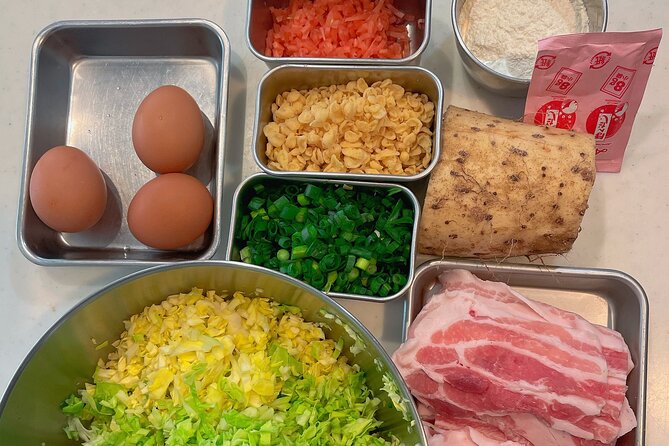
Most okonomiyaki gets either saved or ruined by the ingredients that support the batter and toppings. In this class, you start with explanations about core Japanese components such as dashi and okonomiyaki sauce. You do not just hear names. You learn what they do for flavor and how the dish comes together.
That “why” part is what makes the lesson useful after you leave. You will be better at choosing substitutes, because you understand what role an ingredient plays. If you have ever followed a recipe where an item is missing and the whole result changes, you already know how valuable that is.
Then comes the centerpiece: how to make okonomiyaki fluffy. The class focuses on tips that help you avoid the common pancake problems, like a batter that turns out too dense or a pancake that does not set well for flipping.
You will also learn what makes a good texture as the pancake cooks. The goal is not just taste. It is a pleasing bite, with enough structure to flip without falling apart, and enough lift to feel like the Osaka-style version people chase when they travel.
The Fluffy Okonomiyaki Process: Layer, Flip, Top
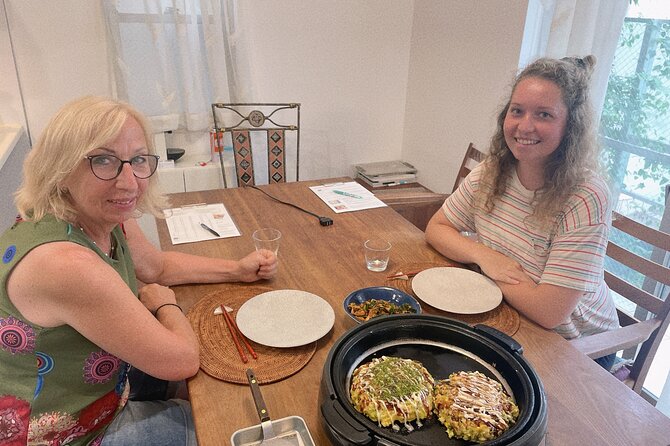
Once the flavor basics are in place, it becomes hands-on work. The class is built around you actively making your own okonomiyaki with support from the instructor.
The workflow you can expect is simple in concept:
- Prepare and season your batter base with the guidance provided.
- Layer your chosen ingredients.
- Cook, then flip after it is properly set.
- Finish with toppings and sauce choices that match your taste.
The flipping is where this becomes more than a cooking demo. You learn timing and technique so you can turn the pancake over with confidence. If you have ever tried to flip something in your own kitchen and ended up with a mess, you will appreciate the coaching style here.
Layering is the other key. Osaka-style okonomiyaki often feels more satisfying because ingredients are distributed in a way that supports both flavor and texture. In this class, you practice that layering idea rather than dumping everything in randomly.
Then you add toppings. This is the fun part where your taste matters. You can adjust flavors based on what you like, and you get the instructor’s support to make it delicious without needing a perfect Japanese pantry shelf.
Same corner of Japan, a different kind of day:
- Mt Fuji and Hakone 1-Day Bus Tour Return by Bullet Train
★ 5.0 · 26,383 reviews - 1-Day Tokyo Bus Tour
★ 5.0 · 14,250 reviews - Tokyo: TOKYO SKYTREE® Admission ticket
★ 4.5 · 11,192 reviews - Tokyo: teamLab Planets TOKYO Digital Art Museum Entry Ticket
★ 4.6 · 9,779 reviews
Choosing Fillings And Adapting For Vegetarian Or Vegan Needs
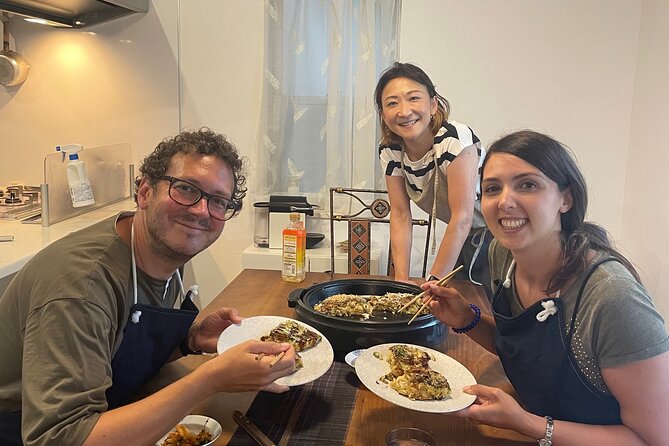
One of the most practical strengths of this class is that you get to choose what goes inside. That flexibility matters because okonomiyaki is naturally adaptable. You are not locked into one “correct” version, so your dish can fit your preferences.
The class also explicitly supports vegetarian and vegan options, with adjustments possible for other dietary restrictions. The approach here is not just offering a separate plate. You are guided on how to make a satisfying end result with substitutions where needed.
The instructor also explains replacements for ingredients you may not find in your home country. That is a big deal, because the difference between an okonomiyaki recipe that only works in Japan and one that works at home is almost always ingredient access. Here, you get a roadmap so you can shop smarter and still get the flavor and texture you want.
Think of it like cooking with fewer limits. You leave with a method, not just a meal.
Pork And Kimuchi Time: What You Do While Waiting
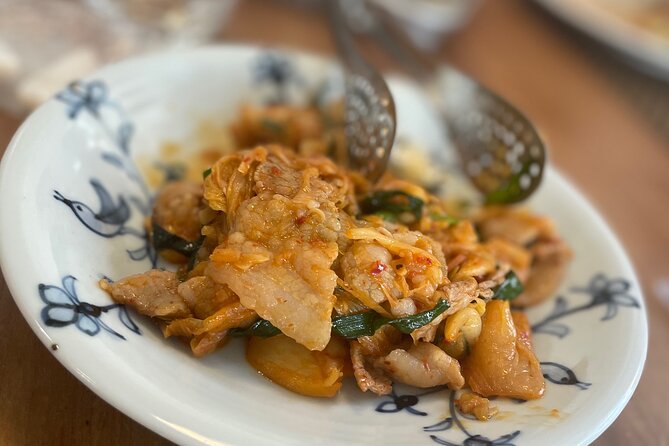
Okonomiyaki is not instant. There is cooking time while the pancake sets and develops a crust. Instead of filling that gap with awkward waiting, you cook other savory items during the process.
While your okonomiyaki cooks, you make stir-fried pork and kimuchi. It adds variety and keeps the pace feeling like a full meal experience. It also helps you learn that Japanese cooking can be more than one dish. You are practicing flavor-building across two preparations, which gives you a better sense of how a home meal might be assembled.
This part is also a morale booster. You see real food progress while you wait to flip and finish your okonomiyaki. When the main dish is ready, you are not hungry and impatient. You are ready to eat.
Dining Moment: Itadakimasu And Eating Like You Mean It
After cooking, you gather for the meal and say Itadakimasu, then enjoy what you made. That small ritual matters. It is part of how food culture stays human, even during a class.
From a value perspective, this is not a snack break. This is a real sit-down meal component where you taste your own okonomiyaki and the accompanying stir-fry. For many people, the best part of cooking classes is the first bite, because it tells you whether the technique you worked on actually delivered.
If you cooked with dietary needs, this is also where you get reassurance. You can taste the result and understand that vegetarian or vegan versions can still feel complete and satisfying.
English-Friendly, Question-Friendly Teaching With Eri
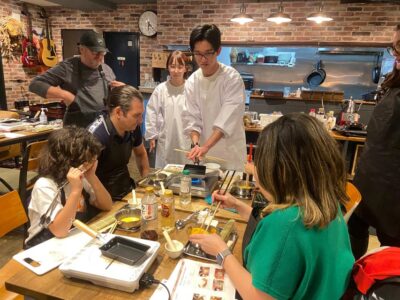
A big part of what makes a cooking class enjoyable is communication. Here, the instructor speaks English good enough, and you are encouraged to ask anything.
In particular, Eri is the name that shows up in the experiences people share, and the consistent theme is that she helps you correct small mistakes before they turn into big issues. One common lesson people take home is how to avoid doing the same wrong technique when they try okonomiyaki later in their own kitchen.
There is also a pattern of patience that shows up especially when cooking with multigenerational groups. People have brought a grandmother, and the class works because the pace is supportive and the teaching is friendly.
That question-friendly teaching style is one reason this class stands out. You are not just watching someone else cook. You are cooking, and you get help when your pan needs it.
Price And Value: Is $150 Fair For A 2-Hour Home-Class?
At $150 per person for about 2 hours, you should think about what you are paying for.
You are paying for:
- A tiny group (maximum 5), which creates real hands-on time.
- A host-led lesson in a local home, not a tourist factory kitchen.
- Ingredient explanations and practical cooking coaching for the fluffy texture.
- Customization support, including vegetarian and vegan options.
- Substitution guidance for making it again at home.
- A meal that includes okonomiyaki plus stir-fried pork and kimuchi.
Compared to just eating okonomiyaki in Tokyo, the value is not the food alone. It is the method. If you want to recreate this at home, the technique coaching and substitution tips can easily be worth more than one restaurant meal, especially if you plan to cook Japanese food after your trip.
Compared to big commercial classes, the value is in the attention. With a small group, you spend less time waiting and more time cooking. That is what you want for a dish like okonomiyaki where flipping and timing are everything.
If you are a confident home cook who already knows the basics, you may learn new ways to adjust. If you are new, this class is a strong starting point because it teaches fundamentals like dashi, sauce, layering, and texture.
Who This Class Is Best For
This is a great fit if:
- You want a cooking class that feels like an actual Tokyo home visit.
- You care about learning the technique for fluffy okonomiyaki, not just tasting it.
- You want to customize fillings and learn what substitutions can replace missing ingredients.
- You need vegetarian or vegan accommodations and want real guidance, not an afterthought.
- You like asking questions and getting feedback as you cook.
It may be less ideal if:
- You want a very formal, lecture-heavy class.
- You are short on time and do not want any transportation to the home kitchen after the station meeting.
Should You Book This Osaka-Style Okonomiyaki Cooking Class?
I would book it if you want skills you can reuse. The combination of fluffy technique, ingredient flexibility, and substitution guidance makes it more than a one-time meal. And the small group size keeps it friendly, practical, and interactive.
If you are traveling with dietary needs, the class is clearly designed to adjust, and you will not feel like you have to compromise your eating experience. If you are traveling solo, the homestay-like vibe can be a big plus because you still get conversation and personal attention.
If you prefer strict anonymity and fully packaged entertainment, you might prefer a larger studio class. But if you want to cook like a visitor who actually learns something, this one is an easy yes.
FAQ
How many people are in the class?
The class has a maximum of 5 travelers, so it stays small and hands-on.
How long does the cooking class last?
It runs for about 2 hours.
Where do we meet, and where does it end?
You meet at NewDaysJapan near JR Asagaya Station (2F, outside the ticket gates). The experience ends back at the meeting point.
Is the class available for vegetarian or vegan diets?
Yes. Vegetarian and vegan options are available, and adjustments can be made for dietary restrictions.
Does the instructor explain ingredients and substitutions?
Yes. The class explains Japanese ingredients like dashi and sauce, and it includes substitutes when ingredients are hard to find in your home country.
What food do you make besides okonomiyaki?
While waiting for the okonomiyaki to finish, you also make stir-fried pork and kimuchi.
Is there free cancellation?
Yes. You can cancel up to 24 hours in advance for a full refund.
Fresh options around Tokyo
- Private Harajuku Omotesando Architecture Tour★ 4.9 · 18 reviews
- Tokyo Shopping Street Hopping Private Tour with Government Licensed Guide★ 5.0 · 18 reviews
- Tokyo: Private Mount Fuji and Hakone Day Trip with Guide★ 4.5 · 18 reviews
- Hakone Private One Day Tour From Tokyo: Mt Fuji, Lake Ashi, Hakone National Park★ 5.0 · 18 reviews
- Shinto Shrine Tour: Explore Japanese Culture in Tokyo★ 5.0 · 18 reviews
- PERFECT 1 Day Tokyo Highlights Tour with a Private Car★ 5.0 · 19 reviews
- Tokyo: Shinjuku Bar Hopping & Karaoke Night Tour★ 4.9 · 19 reviews
- Night E-Scooter Ride to Tokyo Tower – No License Needed★ 4.9 · 19 reviews
Cooking Classes, compared.

Ramen Cooking Class at Ramen Factory in Kyoto
Read our review →
Ramen & Gyoza Cooking Class in Tokyo with Local Supermarket Visit
Read our review →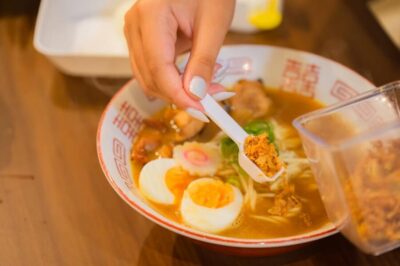
Ramen Cooking Class at a Ramen Factory with Souvenir
Read our review →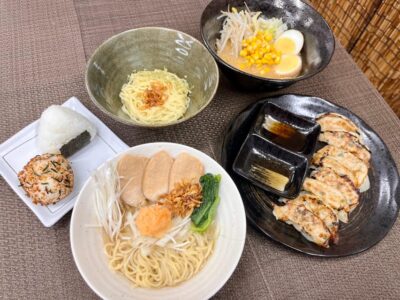
Japanese Washoku Bento Small Group Cooking Class
Read our review →
Easy Ramen Cooking Experience in Kabukicho, Shinjuku
Read our review →
Ramen and Sushi Cooking Class with Sake Pairing Set in Tokyo
Read our review →Browse the lists this tour appears in