
Reviewed · CASTLE TOURS IN OSAKA
Learning Zen of Japanese Calligraphy in kimono near Osaka Castle
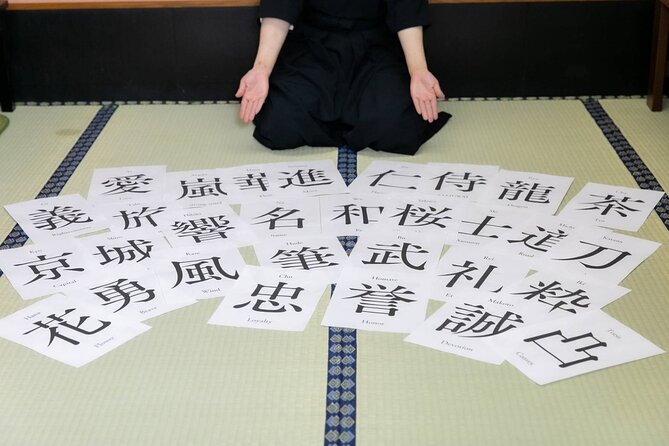
Osaka Castle area has a calm side, right on your schedule. In this small-group shodo class, you’ll get dressed in traditional clothing, learn Japanese calligraphy from a professional teacher, then leave with your finished writing and digital photos. I like that you can choose your own kanji to practice, and I also like the pace: it’s structured, but you still get hands-on coaching.
One thing to plan for: you’ll be changing into kimono-style clothing and sitting at practice for about an hour, so it’s not the best fit if you have back issues or similar concerns.
Key things I’d bet on
- Kimono first, calligraphy second, so the experience starts with Japanese etiquette and posture
- You choose your kanji, then learn the stroke order and how to control the brush
- Hands-on technique, including core strokes like tome, hane, and harai
- A surprise kanji moment, where your foreign name can be written in kanji on a wooden tag
- Photo coverage without fuss, with images sent to your email
- Max 10 people, so the teacher can actually guide you as you practice
Osaka Castle Park Makes This Feel Like a Real Stop, Not a Random Add-On
This experience sits in the Osaka Castle area, where it’s easy to pair with a daytime stroll around the landmark grounds. The biggest advantage is mental, not just practical. You’re already in a heritage zone, so switching into kimono and learning shodo feels like it belongs, instead of feeling like a theme-park detour.
The class itself runs about 1 hour, so it works well if you want something hands-on without losing half a day. If you’re visiting Osaka Castle and you want a cultural activity that doesn’t require any prior Japanese skill, this is a strong match.
More Castle Tours in Osaka
- Osaka Castle: Museum and Tower Entry Ticket
★ 4.5 · 2,380 reviews - Ultimate Osaka Walking Tour: Castle, Dotonbori & Hidden Gems
★ 5.0 · 862 reviews - Osaka Castle Walking Tour and Castle Tower Admission
★ 5.0 · 561 reviews
Dressing into Kimono, Hakama, and the Art of Getting Comfortable
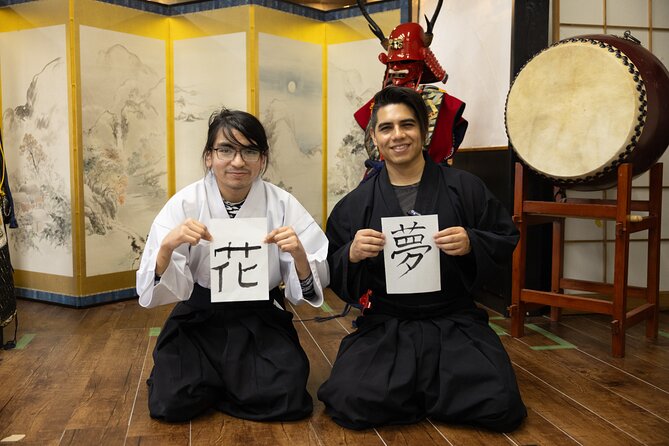
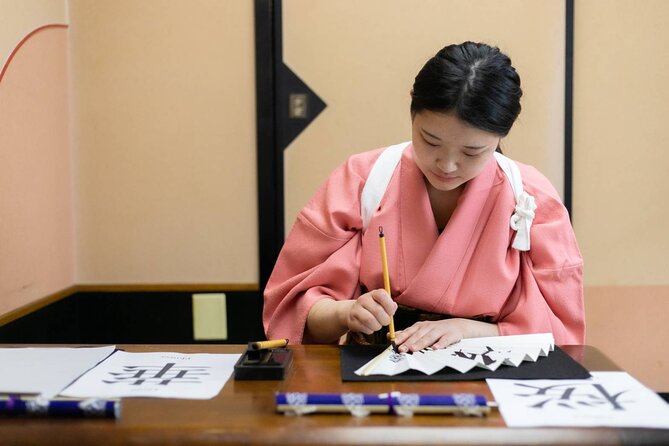
Before you touch a brush, you change into traditional Japanese attire. Depending on what you’re fitted with, this can include kimono and other traditional clothing like hakama. The staff will help you get sorted, but do yourself a favor: use the restroom before dressing. It sounds basic, but it keeps the whole session smooth.
Photo-wise, you’re not just wearing the outfit, you’re using it. The class includes a photo shoot where you can be photographed in kimono alongside your artwork. You also have the option of adding a hair accessory upgrade: Wagami (collected hair + kanzashi) is a paid option at ¥3,300 per person.
Practical note: the experience instructions mention you may sweat easily while wearing hakama or armor and doing related movement. Even if you’re not doing anything intense, plan for warm clothing under layers you can adjust, and expect a little physical effort during the fitting.
From Decorative Writing to Shodo: How the Teacher Frames the Whole Session
One of the best parts of shodo is that it’s not only about making pretty characters. You’re learning a mindset, plus tool control. In this class, the teacher starts by explaining differences between calligraphy as it’s often presented overseas and Japanese shodo.
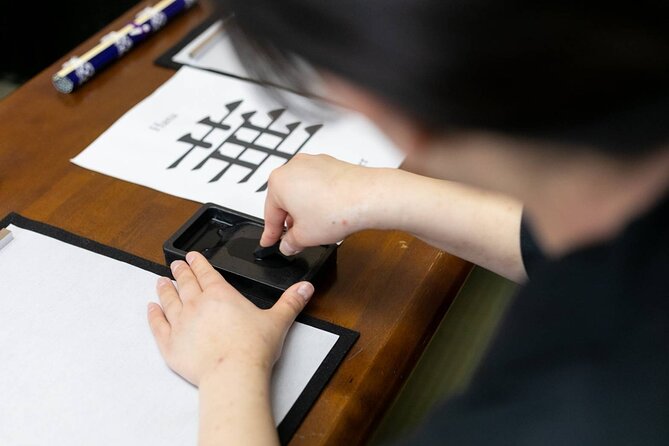
You’ll also get clear guidance on the tools, including how to hold the brush and how to approach practice. This matters because brush calligraphy is unforgiving in a good way. If your grip is off or your pressure changes, the strokes tell on you instantly.
You don’t need a background in Japanese writing. The class is designed for all skill levels, and it explicitly welcomes kids too. So if you’re worried you’ll look awkward, relax. The goal is correct technique and steady progress, not perfection on the first try.
Choosing Your Kanji, Then Training Your Hand with Tome, Hane, and Harai
Here’s where the class turns from cultural show-and-tell into real skill-building. You pick a favorite Japanese kanji to challenge yourself. Kanji are often described as extremely difficult for learners, and the selection gives you something meaningful to focus on, not just random practice characters.
Then comes the core technique training. You learn how to execute the basic movements that make Japanese brushwork look intentional. The class highlights the foundational brush movements:
- tome
- hane
- harai
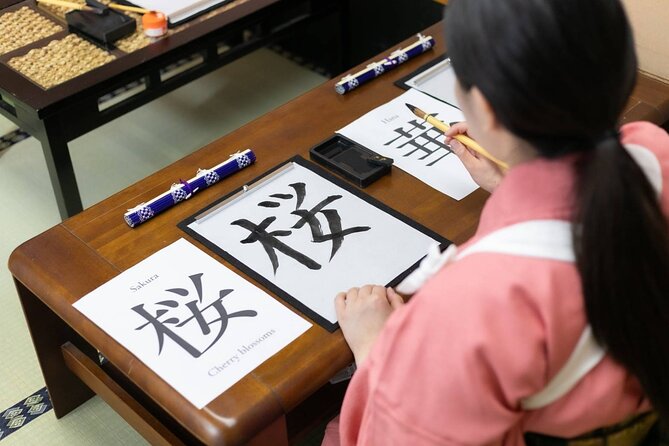
After that, you practice. You also learn stroke order, so your kanji isn’t just drawn, it’s built correctly. That stroke-order step is crucial for long-term learning, because it trains muscle memory. Even if you never become a calligraphy student, you walk away with a better understanding of how each character is constructed.
More kimono experiences in Osaka:
- Osaka: Sumo Show & Experience w/ Optional Kimono & Hot Pot
★ 4.5 · 609 reviews - Kimono Tea Ceremony at Kyoto Maikoya, NISHIKI
★ 5.0 · 911 reviews - Kyoto: Kimono Rental with Hairstyling and Accessories
★ 4.8 · 653 reviews - Kyoto: Kimono Tea Ceremony at Orizuruya Gion
★ 4.9 · 618 reviews
The Wooden Tag Surprise and Your Final Draft Moment
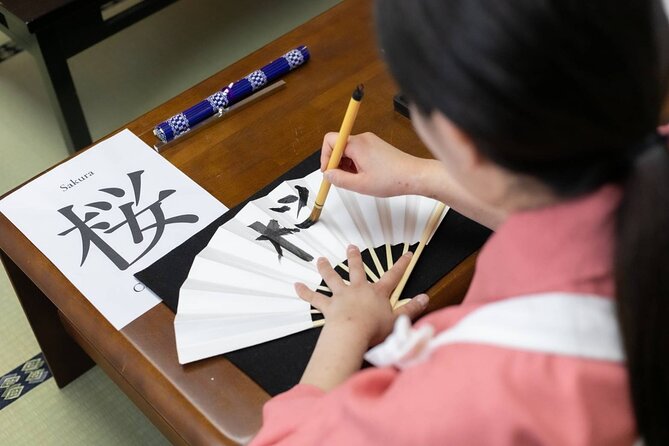
You’ll work through guided practice, then you hit the parts that feel most personal. One is the surprise segment where the teacher writes participants’ foreign names on wooden tags using the kanji characters they have chosen.
That little tag moment is more than cute. It’s a fast way to connect your name to the writing system. It gives your final kanji effort a sense of identity, which is exactly what makes the practice stick.
Finally, you write a final draft that pulls together what you learned. This is your chance to apply the brush movements and stroke order without stopping every second. You’ll still have support, but you’re doing the writing, and you’ll see how your strokes improve from the earlier practice sheets.
In some runs, the final work may be created on a take-home format like a fan, and there may be optional upgrades like a wall hanging. Since those details aren’t guaranteed, treat it as a possibility and ask the teacher on the day if you want to know what format your session includes.
Photo Shoot and Digital Photos You Actually Receive
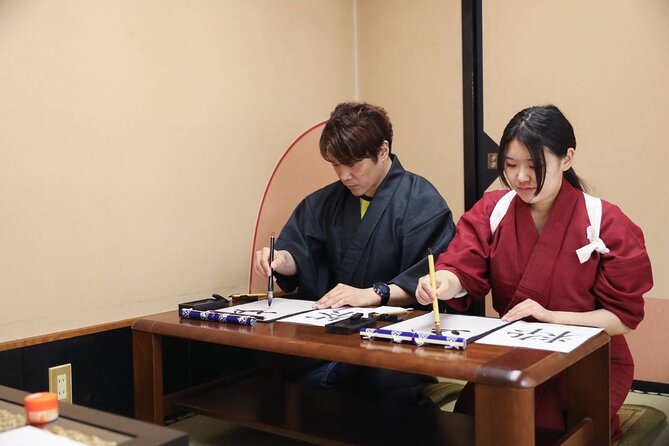
The experience doesn’t end when you set the brush down. You’ll capture your kimono outfit and your artwork during a photo shoot. The practical win here is that you aren’t stuck trying to coordinate group photos with your phone.
On top of that, the photography is handled for you, and the digital photos are sent to your designated email address. That means you can share them later, print them, and add them to your travel album without hoping you got the lighting right during the moment.
If you prefer to take your own shots, smartphone photography is allowed as long as you don’t take selfies or photograph other guests. Fixed tripods and video recording are not allowed, since that can disrupt the class flow for others.
Who This Class Is Best For, and Who Should Rethink It
This is a great fit if you want:
- a hands-on cultural activity in Osaka Castle area
- something you can do with kids (it’s open to all skill levels)
- instruction that includes both technique and cultural context
- a short time commitment of about one hour
It’s also a good choice if you’ve never written kanji before. The structure guides you from mindset and tool basics into technique, stroke order, and a final piece. The class feels beginner-friendly because the teacher builds step by step.
Who should be cautious:
- The instructions say it’s not recommended for people with back problems.
- It’s also not recommended for people with heart conditions.
- It’s not stroller accessible, and there are rules about arrival time and participation that may affect people with mobility constraints.
- Pets are not suitable for the experience.
If you fall into a health or mobility category, it’s smart to skim the class precautions first so you can choose a day when you can sit comfortably and focus.
Price and Value: Why $43.59 Can Make Sense Here
At $43.59 per person, you’re paying for far more than a single craft lesson. Here’s what’s bundled in:
- instruction from a professional shodo teacher
- traditional attire such as kimono and possibly hakama
- translation help (English, with requests for other languages possible)
- photography, with images sent to your email
- your practice and final writing as a take-home souvenir
Could you buy a brush and ink and learn from online videos? Sure. But brush technique and stroke order are hard to self-teach accurately. And the kimono dressing plus photo coverage is the kind of value that’s hard to replicate on your own during a tight Osaka itinerary.
Also, the class is small, with a maximum of 10 travelers. That matters for value because it usually means more teacher attention, fewer people waiting, and better feedback while you’re practicing strokes.
Getting the Most from Your Hour: Simple Tips That Save Time
You’ll have the smoothest experience if you prep like a pro:
- Plan to arrive with buffer time. If you’re more than 30 minutes late, entry can be refused.
- Use the restroom before dressing in kimono.
- Wear clothing that’s easy to change in and out of, since fitting takes time.
- If you’re taking smartphone photos, remember: no selfies, and don’t shoot other guests.
- Avoid fixed tripods and video recording.
- Be ready to sign a liability waiver before the experience.
One more smart move: go in with one kanji you’re genuinely curious about. The class gives you a chance to choose your favorite character, and that personal choice makes the practice more fun and less robotic.
Should You Book This Osaka Castle Calligraphy Class?
If you want a short, meaningful activity that mixes Japanese culture, hands-on shodo, and kimono photos, I’d book this. It’s beginner-friendly, kid-friendly, and structured in a way that actually teaches you brush control instead of just showing you how it’s done.
I’d skip it only if you know you can’t comfortably sit and practice in traditional attire, or if your health makes it risky. Otherwise, it’s one of those experiences that turns Osaka Castle time into a memory with your own handwriting at the center.
FAQ
How long is the Japanese calligraphy in kimono class?
It’s about 1 hour.
What’s included in the price?
You get shodo lessons, traditional Japanese attire (like kimono and hakama), photography with data sent to your email, and teaching support through the session. Gratuities and taxes are listed as tips, and the Wagami hair accessory is an extra paid option.
Can kids participate if they have no experience?
Yes. The class is open to all skill levels, so kids can join.
Do I need to know Japanese to take the class?
No. English support is available, and the experience also includes an English-Japanese or Chinese-Japanese translator depending on the setup. Other languages can be requested, but accommodation is not guaranteed.
Can I take photos with my smartphone?
Yes, smartphone photography is permitted for personal use, as long as you do not take selfies or photograph other guests. Fixed tripods and video recording are not allowed.
What’s the group size?
The experience has a maximum of 10 travelers.
Is the class accessible for strollers?
No, it’s not stroller accessible.
What if I’m more than 30 minutes late?
If you are more than 30 minutes late for your reservation, entry may be refused.
Is there free cancellation?
Yes. You can cancel for a full refund up to 24 hours in advance of the experience start time.
More Castle Tours near Osaka
- From Osaka: Himeji Castle, Arima Onsen & Mt. Rokko Day Tour
★ 4.6 · 339 reviews - 5-Hour Osaka Bike Tour to the Neighborhood of Osaka Castle
★ 5.0 · 319 reviews - Osaka Castle Guided Tour
★ 4.7 · 249 reviews - Osaka: Castle History Walking Tour / Castle Tower Admission
★ 4.9 · 230 reviews
Fresh options around Osaka
- Osaka: Private Tea Ceremony and Calligraphy Experience★ 5.0 · 50 reviews
- Kyoto and Nara UNESCO Highlights Full-day Tour From Osaka★ 4.5 · 50 reviews
- Osaka: Solaniwa Onsen Hot Spring Visit★ 4.6 · 51 reviews
- Sushi and Japnese foods cooking class in Osaka★ 5.0 · 51 reviews
- Kyoto 1 Day Tour from Osaka★ 4.0 · 54 reviews
- Samurai Show, Tea Ceremony, Japanese Traditional Activities★ 5.0 · 56 reviews
- A Tour to Explore the Symbol of Osaka: Osaka Castle★ 4.5 · 56 reviews
- Calligraphy Workshop in Namba, Dotonbori★ 5.0 · 57 reviews
Castle Tours in Osaka, compared.
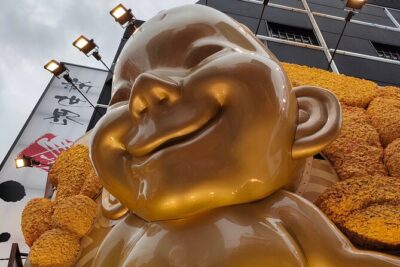
Ultimate Osaka Walking Tour: Castle, Dotonbori & Hidden Gems
Read our review →
Osaka Castle Walking Tour and Castle Tower Admission
Read our review →
Himeji Castle, Arima Onsen & Mt. Rokko Day Tour
Read our review →
5-Hour Osaka Bike Tour to the Neighborhood of Osaka Castle
Read our review →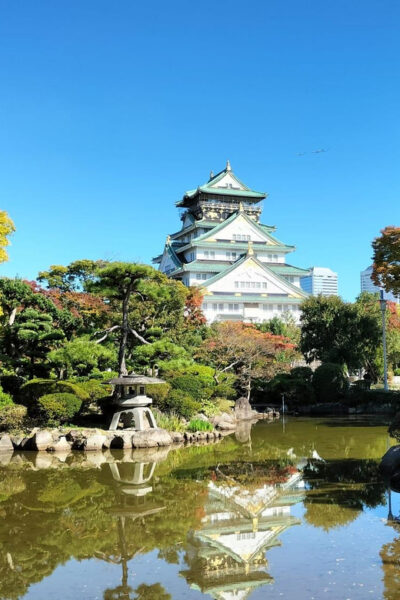

Castle History Walking Tour / Castle Tower Admission
Read our review →
Osaka Highlights: 4-Hour Walking Tour with Castle
Read our review →Browse the lists this tour appears in