
Reviewed · KIMONO EXPERIENCES
Tea ceremony experience with simple kimono in Okinawa
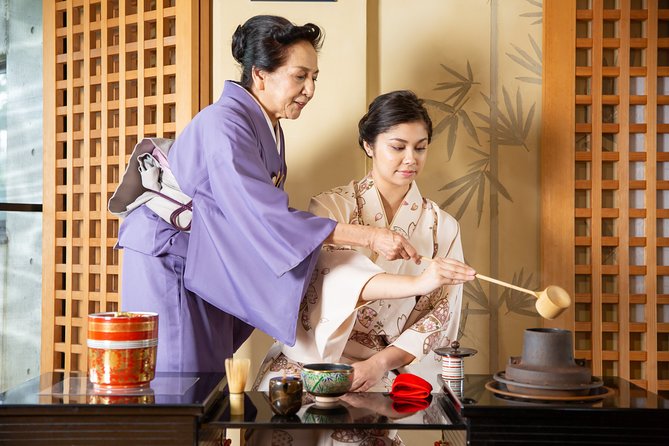
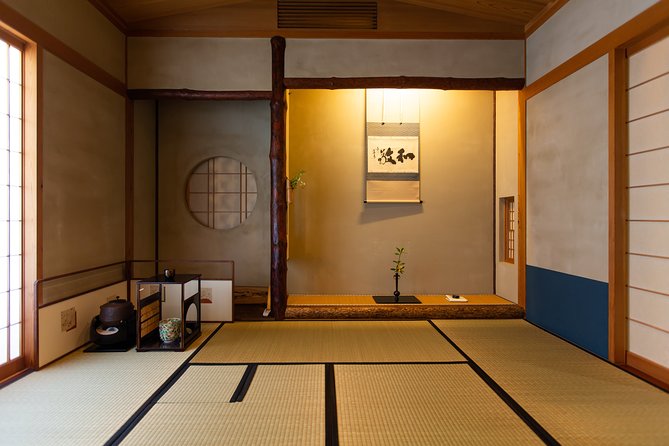
A tea room can feel like time travel. At Sasagirian (笹桐庵) in Onna, you step into a real Japanese tea setting, in Okinawa, with a calm instructor-led flow and a simple kimono change that instantly makes the day feel special. You even get a look at the tea room details, from the hanging scroll to the utensils, before you sit down in the tea ceremony space.
I really like two things about this experience. First, the pace and teaching are practical, you learn how to enter the tea space, what to notice, and how to handle the tools properly. Second, you get to experience the full sequence: Okinawan and Japanese sweets, then the bitter tea, then making and tasting your own green tea, including matcha.
One thing to consider is that this is a structured class in a traditional setting and it runs about 1 hour 15 minutes, so it is not a long, free-form cultural stop. Also, the tour requires good weather, so plan for possible rescheduling.
Key things I’d pay attention to before you go
- Simple kimono, tea room entry, and hand cleansing as the first steps
- Ryurei-style seating with a set tea flow, including sweets and bitter tea
- Tea utensils plus manners, including how to handle a silk cloth and cleanse tools
- Hands-on matcha making, where you add matcha green tea and hot water and then taste your own
- Photo moment in front of a gold folding screen
- Small group size (maximum 6), which keeps it calm and easy to follow
Sasagirian (笹桐庵) in Onna: where the day starts
This tea ceremony happens at Sasagirian (笹桐庵) in Onna-son, specifically at a cultural experience facility at 1765-8 Nakama, Onna, Kunigami District, Okinawa. The start and end are at the same meeting point, so you are not hunting across town while your tea timing slips away.
What I like about the setup is that it feels like a genuine place of practice, not a staged show. The experience includes reverence for the tea room itself, so you spend time looking closely at the hanging scroll, the flower arrangements, and the tea tools before you even taste anything. That matters because the ceremony is not only about drinking tea, it is about paying attention in the right order.
Also, the location is described as near public transportation. If you are building a day around a few different Okinawa activities, this one can slot in without wrecking your whole schedule.
More tea ceremonies in Okinawa & Islands:
- Kyoto: Tea Ceremony in a Traditional Tea House in Kiyomizu
★ 4.9 · 3,519 reviews - Kyoto: Tea Ceremony Ju-An at Jotokuji Temple
★ 4.9 · 3,207 reviews - Kyoto: 45-Minute Tea Ceremony Lesson Experience
★ 4.3 · 2,378 reviews
Kimono change and entering the tea room the right way
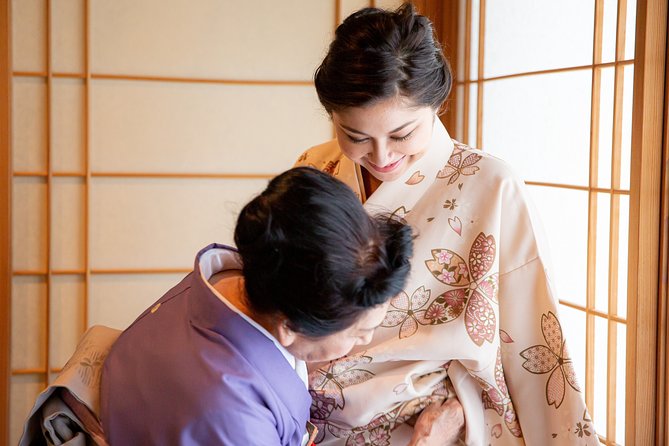
The flow starts with changing into a simple kimono. Then comes a short sequence that sets the tone: you cleanse your hands and learn how to enter through the tea room’s small entrance.
That small entrance detail is worth noting. It is not just a quirky fact, it shapes your body position and attention immediately. You are nudged to slow down and do things carefully, the same way tea etiquette starts in many traditional settings. If you like cultural experiences that teach you a routine you can repeat later, this start is a good match.
You will also be introduced to the tea room by your instructor. Part of the lesson is learning the manners of the room, including taking in what is displayed there, such as the hanging scroll, flowers, and the tea tools arranged for the ceremony. It gives you context for what you are about to do next, instead of jumping straight into sipping.
Ryurei-style table seating: sweets first, then the bitter tea
After you learn the tea room basics, you move to the room with Ryu-Rei-style tables and chairs for the ceremony. This is not the super-compact, floor-seiza-only version that some people fear. Your experience is set up so most people can participate, and there is even a clear yes for guests who cannot sit up.
At the seating stage, the tea ceremony follows a set rhythm. You enjoy Japanese and Okinawan sweets first. Then you shift to the bitter tea portion. This order is not random. The sweetness helps your palate settle so you can actually notice the character of the tea that comes after.
If you are traveling with people who worry they will not like bitter flavors, this part helps. You get food, you get a guided explanation through the steps, and you get to taste the full arc of the ceremony in one clean session.
Tea tools and silk cloth handling: the etiquette you can use again
One of the most praised parts of this experience is how detailed the instruction feels. You do not just watch. You learn what each tea tool is for and how to treat it with care.
A key moment in the process is learning how to handle a silk cloth and cleanse the tea tools. This is the kind of detail that often disappears in shorter, more touristy demonstrations. Here, it is part of your actual participation. When you handle items the way you were taught, the ceremony stops being abstract.
You also learn the manners behind the actions, including appreciating the room details before moving into the tasting portion. That combination, manners plus tool handling, is what makes the experience stick. You walk away with a mental checklist you can actually remember, not just a vague sense that tea was served.
More kimono experiences in Okinawa & Islands:
- Traditional Japanese Costumes “Kimono”, “Yukata”, “Ryuso”, “Photograph Course “Hair Set & Lipstick & Kimono & Photography”
★ 5.0 · 17 reviews - Kimono Tea Ceremony at Kyoto Maikoya, NISHIKI
★ 5.0 · 911 reviews - Kyoto: Kimono Rental with Hairstyling and Accessories
★ 4.8 · 653 reviews - Kyoto: Kimono Tea Ceremony at Orizuruya Gion
★ 4.9 · 618 reviews
Making matcha and tasting your own green tea
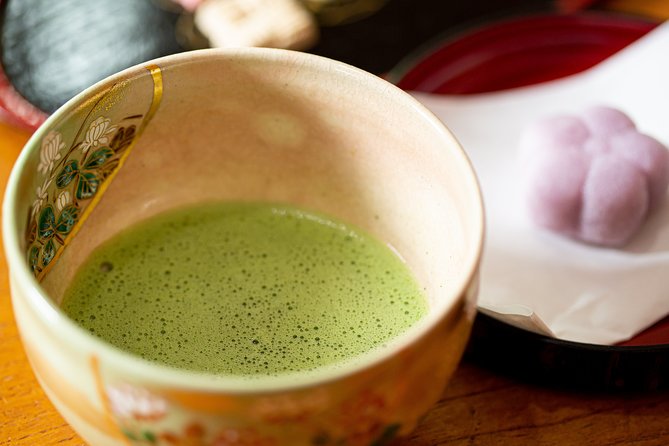
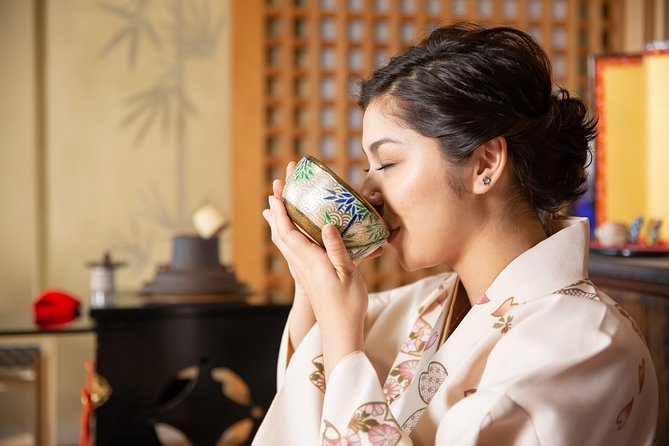
This is the hands-on centerpiece of the class. You add matcha green tea and hot water into the tea bowl, then learn how to make your own tea and taste what you prepared.
Two things make this valuable for your trip. First, matcha is one of those foods people try in Okinawa, but few people learn the basic workflow in a guided, traditional context. Second, tasting your own tea closes the loop. You do not only learn etiquette in theory, you feel how the tea tastes after the steps you just followed.
The lesson stays practical. You are given a sequence, you perform the actions, and then you get to taste. That is a strong format when you want something cultural but not too long or complicated.
Photos in front of the gold folding screen and changing cloths again
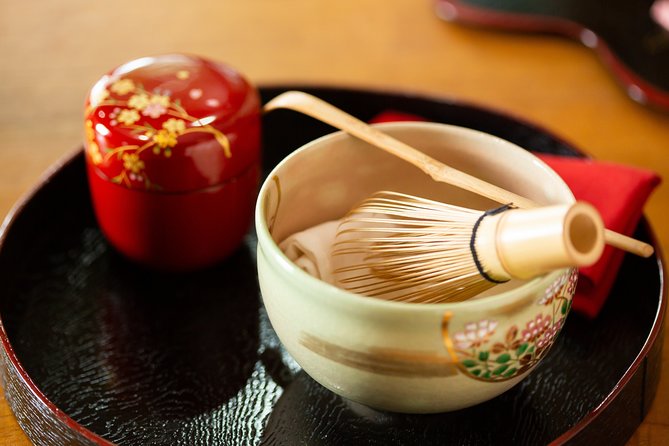
There is a clear photo moment in the program, in front of a gold folding screen. If you like cultural activities that include a couple of well-timed photo chances without dragging, this fits well. It is a simple payoff after the work of changing, learning, and tasting.
You also change cloths during the experience. That adds a fun visual element, but it also explains why the session needs about 1 hour 15 minutes. The time is spent for a reason, not just because the schedule is packed.
Bring the mindset that photos come after instruction, not before. You will get a better experience if you follow the flow instead of rushing ahead.
Group size, who can join, and how to plan your day
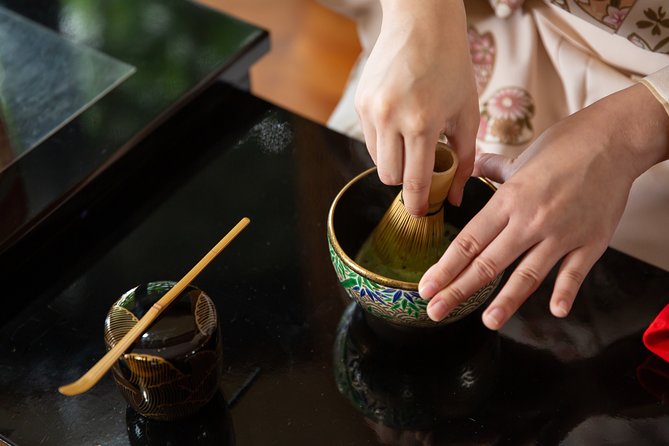
This activity runs with a small group, maximum 6 travelers, with a minimum of 2. That small cap is a big deal. In a setting like a tea room, you want the lesson to stay personal, and a small group helps the instructor manage pacing and keep the atmosphere calm.
Time-wise, expect about 1 hour 15 minutes. It is long enough to go through the full ceremony arc, but short enough that it is easy to fit into a larger Okinawa day.
Age and seating notes from the experience details are straightforward:
- You can participate if you are over 4 years old.
- Children under 3 cannot participate.
- You can participate even if you cannot sit up.
That last point is useful if you are traveling with older relatives, or if you know you do not do well on low seating. It means the experience is designed with more body types in mind than some traditional demonstrations.
This tour also works well for families and multi-generational groups, since the teaching includes guidance through the steps and the overall flow is easy to follow from start to finish.
Price and value: is $85.39 per person worth it
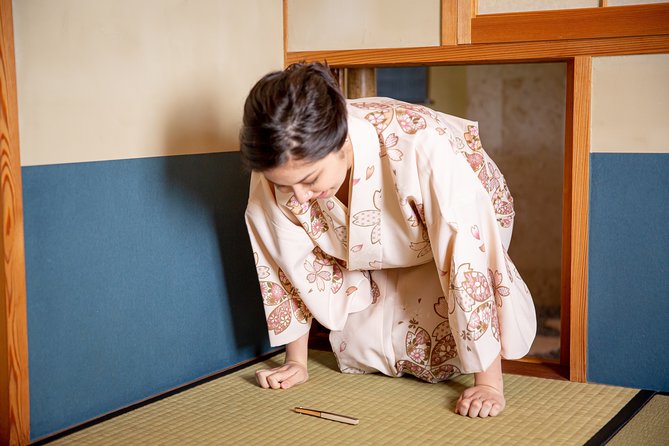
At $85.39 per person, this is not a budget snack stop. But for what you get, I think it lands in the fair value range, especially if you care about doing something hands-on.
Here is what that price supports:
- A simple kimono change, not just a photo moment in costume
- A guided walkthrough of entering the tea room and learning manners
- Time at Ryu-Rei-style seating for both sweets and bitter tea
- Instruction on tea tools, including how to handle the silk cloth and cleanse utensils
- Hands-on matcha making plus tasting what you made
- A scheduled photo moment at the gold folding screen
When you look at it like that, you are paying for a full guided lesson and participation, not only for tea tasting. The session is also capped at a small group size, so you are not squeezed in with a giant crowd.
One more value angle: the experience requires reservation at least 3 days before, and it is an activity that is commonly booked in advance. That signals demand, and it often means the provider keeps the sessions structured and consistent.
Weather and practical tips so the tea stays calm
This experience requires good weather. If conditions are poor, you will be offered a different date or a full refund. That is good news for decision-making, but it also means you should not place this at the very end of a trip with no backup day.
A few practical tips that help you enjoy it:
- Arrive ready for a clothing change. The program includes changing into a kimono and changing cloths again later.
- Plan your timing with the fact that it starts and ends at the meeting point at Sasagirian.
- Bring patience for a slower traditional pace. This is not a rushed tasting, it is a guided sequence.
- If you care about photos, keep in mind they are built into the program at the gold folding screen moment.
Also, you get a mobile ticket, and you receive confirmation at booking. That makes it easier to travel light, and you do not need to scramble for paper vouchers.
Should you book this Okinawa tea ceremony?
If you want a culture experience that teaches you more than the basics, I think you should book this. It is a clean one-session lesson that includes kimono, tea room etiquette, sweets and bitter tea, tool handling, and the hands-on moment of making matcha and tasting it.
I would especially recommend it if:
- You are traveling with someone who enjoys instruction and likes to learn routines.
- You want a calm break from busy sightseeing.
- You need a traditional activity that still works if sitting up is difficult.
- You want a smaller group experience, max 6, rather than a crowd.
I might skip it if you are looking for a long day with lots of roaming or if you cannot be flexible about weather. Otherwise, this is one of those Okinawa stops where you leave with something practical in your head, plus a sensory memory that lasts longer than photos.
FAQ
How long is the tea ceremony experience?
It lasts about 1 hour 15 minutes.
What is the price per person?
The price is $85.39 per person.
Where do I meet, and where does it end?
You start at Japanese Cultural Experience Facility Sasagirian (笹桐庵) at 1765-8 Nakama, Onna, Kunigami District, Okinawa 904-0401, Japan, and the activity ends back at the same meeting point.
Is there a group size limit?
Yes. The maximum is 6 travelers.
Can I participate if I cannot sit up?
Yes, you can still participate even if you cannot sit up.
What are the age rules for children?
Children under age 3 cannot participate, and it is possible for children over age 4 to participate.
Fresh options around Okinawa & Islands
- Exclusive Private Full Day Okinawa Island Tour with a Local Guide★ 5.0 · 16 reviews
- Port Pick-Up: Naha Private Tour Licensed Guide& Vehicle★ 4.5 · 16 reviews
- Okinawa:Kerama Islands experience Diving/Snorkeling/WhaleWatching★ 4.5 · 16 reviews
- Spirit of Ishigaki: Explore the land and Lore★ 5.0 · 16 reviews
- Iriomote island: Mangrove River SUP or Canoe Cruising Tour★ 4.7 · 16 reviews
- Turtle Snorkeling in Ishigaki – Fluent English! Small Group!★ 5.0 · 17 reviews
- Traditional Japanese Costumes “Kimono”, “Yukata”, “Ryuso”, “Photograph Course “Hair Set & Lipstick & Kimono & Photography”★ 5.0 · 17 reviews
- Okinawa West Coast 3-Hour Paddle-boarding adventures★ 5.0 · 17 reviews
Kimono Experiences, compared.
Sumo Show & Experience w/ Optional Kimono & Hot Pot
Read our review →
KYOTO Tea Ceremony with kimono near by Imamiya Jinjya Shrine
Read our review →
Kimono and Tea Ceremony Experience at Cultural Asset
Read our review →
Browse the lists this tour appears in