
Reviewed · CYCLING TOURS
Full Day Biking Tour Exploring the Best of Kyoto
Kyoto by bike beats the stampede. This small-group tour gets you gliding between big sights and quieter streets, so you see more than walking while still having time for questions. I also love that lunch and bottled water are included, which keeps the day steady instead of turning into a constant search for food.
The tradeoff is that it is a full day. Plan on 7 to 8 hours in the saddle with a ride that is mostly friendly but still physical, and you should be ready to manage your stuff with a front pouch only meant for small items.
Key points before you pedal
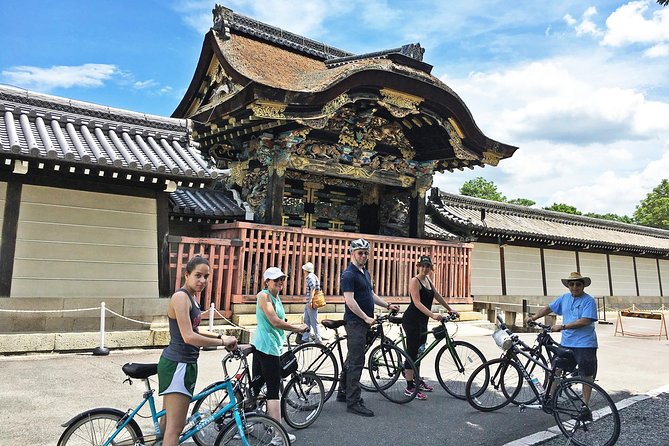
- A small-group ride (max 8) keeps the pace human and the stories detailed.
- Helmet and a quality bike are included, so you are not hunting gear on arrival.
- Big-ticket Kyoto in one day: Kinkakuji, Gion, and Fushimi Inari, plus calmer temples too.
- Guide routing for the toughest crowd zones helps you dodge the worst bottlenecks.
- Included lunch keeps your energy up for the afternoon temples.
- Back-street cycling is part of the fun, not just a way to commute between sites.
Why this Kyoto bike day feels smarter than walking
Kyoto can be a lot on foot, mainly because the sights are spread out and the popular lanes get crowded fast. This tour solves that with a bicycle plan that lets you cover ground without feeling like you are trapped on a bus.
I like that the day mixes well-known landmarks with places that many first-timers skip. You get the wow factor of the Golden Pavilion and Fushimi Inari, but you also spend time at temple and shrine stops that feel calmer and more local. Guides like Karl, Jay, Indra, Juan, Paul, and Jamie (different groups, same vibe) tend to treat the day as a story, not a checklist.
One more practical win: you are not just moving, you are also pausing. Each stop has time built in, so you are not rushing through temples like you are speed-running a museum.
More Bike Tours in Kyoto
- Hidden Kyoto E-Biking tour
★ 5.0 · 1,843 reviews - Bike Tour Exploring North Kyoto plus Lunch
★ 5.0 · 1,087 reviews - Arashiyama Bamboo Forest & Hidden Gems Bike Tour (Early Bird)
★ 5.0 · 613 reviews
Start at Cycle Kyoto, get fitted fast, then roll out
You begin at Cycle Kyoto, at 7 Higashikujō Nishisannōchō in Minami Ward, and the tour ends back at the same meeting point. The shop is near public transportation, and one guide I noticed gets groups moving quickly once everyone is checked in and fitted.
You meet your guide and the other riders, then you get your bike set up and a helmet placed properly. The bike is listed as a high-quality Cannondale, and the ride style is built for safety and flow. A couple of riders noted the route stays mostly flat and uses smaller streets, which matters because Kyoto traffic can look chaotic from a distance.
Bring a bike-friendly attitude. You do not need to be an athlete, but you do need to be comfortable riding for long stretches. The tour is aimed at people with moderate physical fitness.
Nishi Honganji: a huge wooden temple with less fuss
One of the nicest parts of this tour is how it starts away from the loudest tourist magnets. You visit Nishi Honganji, described as one of the least visited religious sites in the city and also as one of the largest wooden buildings in the world.
This is the kind of stop where you slow down, look up, and realize Kyoto is not only about one famous courtyard or one iconic gate. In a short window of time, you get a real sense of scale and craft, and you also get context so the place feels more meaningful than a quick photo stop.
A practical note: it is a short visit, so bring your eyes, not your stopwatch. If you like architecture and religious spaces, you will enjoy this more than rushing past it.
Kitano Tenmangu: a shrine with local rhythm
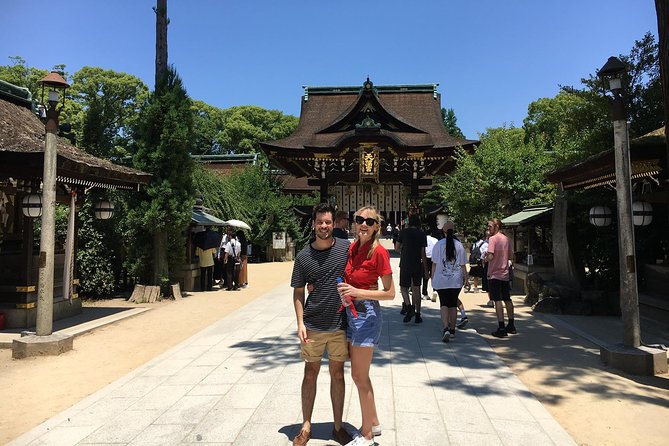
Next comes Kitano Tenmangu. This shrine has a tranquil mood, and the tour time is designed so you can notice what shrine life feels like day to day, not just what it looks like in brochures.
You get a bit of time to join local shrine goers in their routines. That small change, from sightseeing to observing, is exactly the sort of texture that makes Kyoto feel real. The guide also tends to explain what you are seeing so you understand the shrine as something lived in, not just staged for visitors.
Potential drawback: because this is a shrine stop, the atmosphere changes if you arrive during a busier period. Still, your guide is there to help you time your wandering.
Same corner of Japan, a different kind of day:
- PERFECT KYOTO 1-Day Bus Tour
★ 5.0 · 13,518 reviews - Kyoto: Fushimi Inari, Kinkakuji, Bamboo Grove 1 Day Bus Tour
★ 4.8 · 4,316 reviews - Kyoto: Tea Ceremony in a Traditional Tea House in Kiyomizu
★ 4.9 · 3,519 reviews - Kyoto Geisha Walking Tour: Gion District & Hidden Gems
★ 4.7 · 3,273 reviews
Kinkakuji Golden Pavilion: the highlight stop that still has room to breathe
Then you hit Kinkakuji, the Golden Pavilion. The tour includes admission here, and you get about 30 minutes on site. That might sound short until you realize how quickly a crowd can take over at the most famous Kyoto attractions.
What I like about this tour approach is that you are not sent into chaos alone. The guide gives commentary, and you also get practical breaks to grab an ice cream and take a breath. If you want to revisit this place later, you will have the mental map already.
One consideration: Kinkakuji is famous for a reason, so even with guide help, it is still busy. If you hate crowds, use your time wisely, look first from key viewpoints, then step out of the densest areas while you still have time to enjoy the surroundings.
Riding past imperial grounds: where the city gets quieter
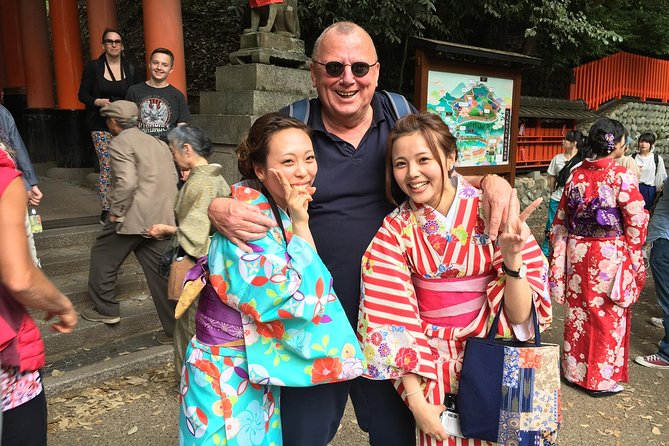
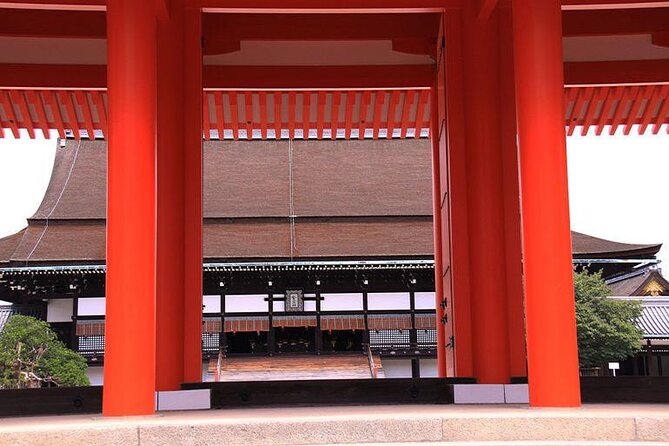
Between the big highlights, the ride includes time passing through the grounds of the former seat of Japan’s imperial family. This is a cool contrast to the dense lanes around the most famous neighborhoods.
On a bicycle, you get a different pacing than a walking tour. You can see how the spaces open up and how the city shifts from everyday streets into more ceremonial terrain. Even if you only get a window to look around, the ride gives you a sense of scale and placement that you miss when you just arrive on foot.
This is also where the day’s timing matters. If you are getting tired, this stretch is a good moment to reset, refocus, and keep moving at a steady effort.
Gion by bike: geisha district vibes without the daily scramble
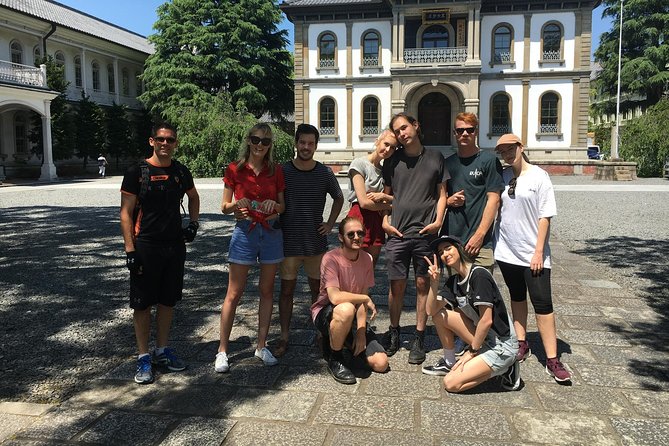
Gion is the stop that most people picture first when they hear Kyoto. Here you spend about 15 minutes, and the guide frames it as a district full of secrets and stories, not just a set of photogenic streets.
Because you arrive as part of a small-group ride, you get more structure than you would if you wandered in alone. The guide may even help you spot details that are easy to miss, like how side streets change character once you are a few turns in. You might catch a glimpse of entertainers, but the bigger value is understanding the district’s role and routines.
One honest consideration: Gion is still Gion, meaning it can feel like a show. If you want quiet, aim to look for quieter lanes within the area and use the guide’s timing to avoid clustering in the busiest pockets.
Tofukuji: a short stop with one big payoff
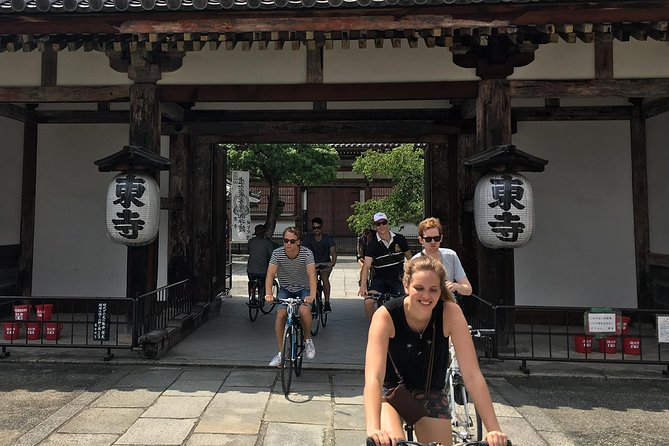
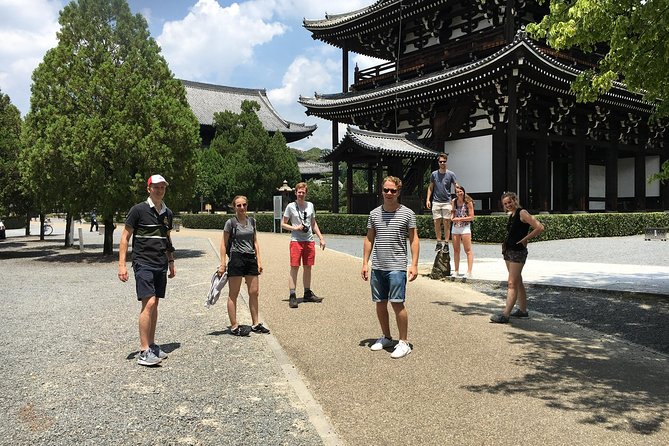
Tofukuji comes next, with only about 5 minutes of time. At first, that might sound too brief. Then you realize the tour is not trying to replace a full visit. It is using cycling to move you through the day and give you a sampler.
What makes Tofukuji worth that quick stop is the viewpoint from the bridge and the spacious surroundings. Even a brief pause can feel satisfying when you are standing in the right place and seeing the scene open up.
If you are the type who likes depth, you will likely want to return later. But as a tour stop, it works as a visual breather.
Fushimi Inari Taisha: torii gates, guided paths, and less stress
Fushimi Inari Taisha is the most visited attraction in Kyoto, and it can be tough to navigate. Your guide handles route choice so you can enjoy the torii gates experience with fewer problems.
You get about 20 minutes here, which is a sweet spot for first-time visitors. It is long enough to feel the sweep of the torii and short enough that you are not trapped for hours in the busiest stretches. A guide also shares the story and economics behind the torii gates, including why there are 13,000 of them. That kind of context makes the climb feel less like a climb and more like a guided lesson you can see.
Practical consideration: even with routing help, this area can be crowded. If you are sensitive to crowds, focus on the viewpoints you like most early, then move with your group to keep momentum.
Lunch and bottled water: keeping the day fun, not miserable
A long cycling day needs two things: fuel and hydration. This tour includes bottled water and a hearty Japanese lunch. That sounds basic, but in practice it is a big deal, because it prevents the day from splitting into two separate missions, sightseeing and food hunting.
People also described the lunch as delicious and often in a more local-feeling place, including noodle-house style meals. The guide tends to use the lunch break to keep the group in sync and ready for the afternoon temples.
You will still work up a sweat. Even riders who said the ride is generally easy noted they ended the day exhausted, mainly because you are active for hours and you are doing short walks at each stop.
The bikes, the pace, and the small gear reality check
The tour is built for comfortable cycling. Still, it is a full day, so you should think about your body and your habits.
The route is described as safe and easy to follow, with a general feel that it stays mostly flat. That helps, but do not assume it is effortless. The length of the day is the real physical challenge.
Gear matters too. One practical note from riders: the bike has a small pouch for your phone and wallet. If you bring a backpack, you likely have to carry it all day, and that can get annoying. If you are going to bring a bag, keep it light and small.
Also, check dietary needs ahead of time. The tour explicitly asks that dietary requirements be known ahead of time, so this is not a last-minute fix.
Price and value: how $119.38 adds up in Kyoto
At $119.38 per person, this is not a cheap souvenir. The value comes from what you get bundled together.
You receive a bicycle and helmet, plus lunch and bottled water. You also pay for guide-led routing that gets you through multiple major sights in one day without you spending hours planning on maps. Kinkakuji admission is included, while several other stops are listed as free admission.
You are also buying time. In Kyoto, saving time is often the real luxury, because transit between neighborhoods and crowd management can eat your day. This tour is essentially a guided way to turn a full day into a meaningful route.
The one caution is fit. If you do not genuinely want to cycle, or if long saddle time is not your thing, the cost becomes harder to justify. But if you are happy riding and want a structured tour with real momentum, the price starts to make sense quickly.
Should you book this Kyoto best-of biking tour?
Book it if you want a single-day Kyoto overview that still feels personal. This tour is a strong match for active travelers who like history and culture, but also want practical pacing. You get major landmarks like Kinkakuji, Gion, and Fushimi Inari, while also getting stops that add balance, like Nishi Honganji and Kitano Tenmangu.
Skip it or reconsider if you hate cycling or you cannot commit to a full day of moderate physical effort. Also, if you want to spend long hours inside sites rather than short guided pauses, this format may feel too fast.
If you do book, come with a small bag plan, dress for sweat, and trust the guide’s route choices. The best part is not just checking off famous names, it is experiencing Kyoto’s different moods in the same day, from temple calm to shrine energy to Gion street texture, all on two wheels.
FAQ
What does this full-day Kyoto biking tour include?
It includes the use of a bicycle and a helmet, bottled water, and lunch. You also get guided stops at Kyoto highlights, with admission for Kinkakuji included.
How long is the tour?
The tour runs about 7 to 8 hours.
Is this tour physically demanding?
It is intended for people with moderate physical fitness. You must be comfortable riding a bike, since you will spend most of the day cycling.
What are the age requirements?
Riders must be at least 13 years old and be comfortable riding a bike.
Can the tour accommodate dietary requirements?
You need to share dietary requirements ahead of time, so the lunch can work for your needs.
What happens if the weather is poor or I need to cancel?
The tour requires good weather. If it is canceled due to poor weather, you will be offered a different date or a full refund. You can also cancel for free up to 24 hours in advance for a full refund.
Fresh options around Kyoto
- Kyoto: Quiet and Graceful Tea Ceremony★ 4.5 · 19 reviews
- Oboro | Mindful Tea Ceremony in a 100-Year-Old Kyoto Teahouse★ 5.0 · 19 reviews
- Ikebana Traditional Japanese Art of Flower Arranging★ 4.5 · 19 reviews
- Kyoto Satoyama Cycling with Lunch and English Guide★ 5.0 · 19 reviews
- Kyoto International Party Solo Friendly Expats and Locals★ 5.0 · 19 reviews
- Tea Ceremony Experience in Traditional Kyoto Townhouse★ 5.0 · 19 reviews
- Kyoto: Amanohashidate Ine Funaya Tour★ 4.4 · 19 reviews
- Kyoto Private Food Tours with a Local Foodie: 100% Personalized★ 4.5 · 19 reviews
Cycling Tours, compared.
3h Tokyo E-Bike Tour: Hidden Gems, and Local Life with guide
Read our review →
Arashiyama Bamboo Forest & Hidden Gems Bike Tour (Early Bird)
Read our review →
Hiroshima in a Nutshell: Morning Bike Adventure
Read our review →Browse the lists this tour appears in